Daily Archives: October 8, 2007

FEATURE: Crime of the century

The People vs. the Profiteers

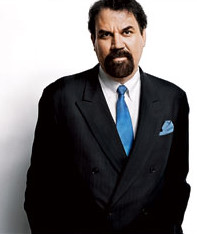
In his functional home-office in Orlando, and at the Beltway headquarters of his law firm, Grayson & Kubli, [Alan] Grayson spends most of his days and many of his evenings on a lonely legal campaign to redress colossal frauds against American taxpayers by private contractors operating in Iraq. He calls it “the crime of the century.”

grayson.jpgHis obvious adversaries are the contracting corporations themselves—especially Halliburton, the giant oil-services conglomerate where Vice President Dick Cheney spent the latter half of the 1990s as C.E.O., and its former subsidiary Kellogg, Brown & Root, now known simply as KBR. But he says his efforts to take on those organizations have earned him another enemy: the United States Department of Justice.

Over the past 16 years, Grayson has litigated dozens of cases of contractor fraud. In many of these, he has found the Justice Department to be an ally in exposing wrongdoing. But in cases that involve the Iraq war, the D.O.J. has taken extraordinary steps to stand in his way. Behind its machinations, he believes, is a scandal of epic proportions—one that may come to haunt the legacy of the Bush administration long after it is gone. [complete article]

Facebooktwittermail

NEWS & EDITOR’S COMMENT: Will Blackwater face Iraqi law?

NEWS: Will Blackwater face Iraqi law?
Iraqi authorities seek Blackwater ouster

Iraqi authorities want the U.S. government to sever all contracts in Iraq with Blackwater USA within six months. They also want the firm to pay $8 million in compensation to families of each of the 17 people killed when its guards sprayed a traffic circle with heavy machine gun fire last month.

The demands — part of an Iraqi government report examined by The Associated Press — also called on U.S. authorities to hand over the Blackwater security agents involved in the Sept. 16 shootings to face possible trial in Iraqi courts.

The tone of the Iraqi report appears to signal further strains between the government of Prime Minister Nouri al-Maliki and the White House over the deaths in Nisoor Square — which have prompted a series of U.S. and Iraqi probes and raised questions over the use of private security contractors to guard U.S. diplomats and other officials.

Al-Maliki ordered the investigation by his defense minister and other top security and police officials on Sept. 22. The findings — which were translated from Arabic by AP — mark the most definitive Iraqi positions and contentions about the shootings last month. [complete article]

Blackwater chief at nexus of military and business

Erik D. Prince, the crew-cut, square-jawed founder of Blackwater USA, the security contractor now at the center of a political storm in both Washington and Baghdad, is a man seemingly born to play a leading role in the private sector side of the war efforts in Iraq and Afghanistan.

He is both a former member of the Navy Seals and the scion of a fabulously wealthy, deeply religious family that is enmeshed in Republican Party politics. As a result, the 38-year-old Mr. Prince stands at the nexus between American Special Operations, which has played such a critical role in the war operations, and the nation’s political and business elite, who have won enormous government contracts as war operations have increasingly been outsourced.

Republican political connections ran deep in his family long before Mr. Prince founded Blackwater in 1997. When he was a teenager, religious conservative leaders like Gary Bauer, now the president of American Values, were house guests. James C. Dobson, the founder of the evangelical organization Focus on the Family, gave the eulogy at his father’s funeral in 1995. “Dr. and Mrs. Dobson are friends with Erik Prince and his mother, Elsa Broekhuizen,” Focus on the Family said in a statement. [complete article]

See also, Iraqis tell of guards’ reckless behavior (LAT) and State Dept. ignored Blackwater warnings (LAT).

Editor’s Comment — It has frequently been reported that Blackwater operates in Iraq with legal immunity. Now AP reports that the Iraqi government says otherwise:

It said Blackwater’s license to operate in Iraq expired on June 2, 2006, meaning it had no immunity from prosecution under Iraqi laws set down after the fall of Saddam Hussein in 2003.

What’s Erik Prince’s response to that?

Facebooktwittermail

NEWS: Petraeus pumps up the Iran-threat rhetoric

U.S. calls Iranian official part of elite force

On several occasions American military commanders have said the elite Quds Force of the Revolutionary Guard in Iran was responsible for supplying anti-American militia forces here with particularly lethal bombs that have been used to kill American troops. The Bush administration has been considering whether to classify the Revolutionary Guard as a terrorist group.

But Sunday appeared to be the first instance in which the Americans had publicly asserted that Iran’s top diplomat in Iraq was himself a member of the Revolutionary Guard.

The accusation was made by Gen. David H. Petraeus, the top American military commander, who made the remarks to CNN while he was traveling with a small group of reporters to a military base on the Iranian border. He said, “We have absolute assurance” that a number of Iranians detained by the Americans in Iraq were members of the Quds Force.

“The Quds Force controls the policy for Iraq; there should be no confusion about that either,” General Petraeus said. “The ambassador is a Quds Force member. Now he has diplomatic immunity and therefore he is obviously not subject — and he is acting as a diplomat.”

General Petraeus did not provide details on how he knew that the ambassador, Hassan Kazemi-Qomi, who has held talks with the American ambassador, Ryan C. Crocker, belonged to the Quds Force. Iranian Embassy officials could not be reached Sunday night to comment on the general’s assertions. [complete article]

Facebooktwittermail

NEWS: Turkey’s Kurdish dilemma

Upsurge in Kurdish attacks raises pressure on Turkish prime minister to order Iraq invasion

Turkey’s prime minister, Recep Tayyip Erdogan, came under intense pressure last night to order an invasion of northern Iraq following the deadliest attacks for over a decade on the Turkish military and civilians by separatist Kurdish guerrillas.

Mr Erdogan, who has resisted demands from the Turkish armed forces for the past six months for a green light to cross the border into Iraqi Kurdistan, where the guerrillas are based, called an emergency meeting of national security chiefs to ponder their options in the crisis, a session that some said was tantamount to a war council.

A Turkish incursion is fiercely opposed by Washington since it would immensely complicate the US campaign in Iraq and destabilise the only part of Iraq that functions, the Kurdish-controlled north. [complete article]

Facebooktwittermail

NEWS: The Iraqi power struggle

Top Iraqis pull back from key U.S. goal

For much of this year, the U.S. military strategy in Iraq has sought to reduce violence so that politicians could bring about national reconciliation, but several top Iraqi leaders say they have lost faith in that broad goal.

Iraqi leaders argue that sectarian animosity is entrenched in the structure of their government. Instead of reconciliation, they now stress alternative and perhaps more attainable goals: streamlining the government bureaucracy, placing experienced technocrats in positions of authority and improving the dismal record of providing basic services.

“I don’t think there is something called reconciliation, and there will be no reconciliation as such,” said Deputy Prime Minister Barham Salih, a Kurd. “To me, it is a very inaccurate term. This is a struggle about power.” [complete article]

Facebooktwittermail

OPINION: An Iraqi show of unity

A different strategy actual Iraqis support

Sept. 30 saw a rare display of Iraqi-American unity in Baghdad: The U.S. embassy as well as scores of Iraqi politicians joined forces in condemning a U.S. Senate resolution to impose a federal state structure on all parts of Iraq.

In general, there was agreement that the proposal which had been introduced by Sen. Joseph Biden constituted gross interference in Iraqi internal affairs. Iraq already has a specific and very elaborate procedure for deciding the federalism issue, but both the timeline (nothing will start until April 1, 2008) as well as the size and number of the future federal entities (to be decided by popular referendums on the basis of grass-roots initiatives) are clearly at variance with the Senate’s proposal of an “international conference” intended to accelerate and simplify matters.

For once, it seemed as if the Bush administration and the Iraqis were united in stressing the virtues of a unified Iraq capable of recovering from sectarian distrust.

There was one anomaly in this picture of Iraqi-American unity of purpose: The main forces that pulled together to condemn the Senate’s decision were mostly from parties that are being largely ignored by the Bush administration. They included Sadrists, the Fadila party, independents and Daawa members of the United Iraqi Alliance, the Tawafuq bloc, and secular groups like Iraqiyya and National Dialogue Front. All in all, they made up a strong Shiite-Sunni alliance accounting for more than a simple majority in Iraq’s parliament.

By way of contrast, all of Washington’s principal allies in Iraq were absent. The Kurds enthusiastically welcomed the Senate decision, and the Islamic Supreme Council of Iraq wavered in its response, probably understanding some obvious parallels between the Senate proposal and their own scheme for a Shiite region, but also sensing a public opinion blowing in a different direction. [complete article]

Facebooktwittermail

NEWS: Troops withdrawals from Iraq

UK says to reduce Iraq force to 2,500 from spring

Britain will reduce its force in Iraq — now numbering more than 5,000 — to 2,500 troops from spring next year, Prime Minister Gordon Brown said on Monday.

Brown also promised a resettlement package for some Iraqis who had worked with British forces for more than a year to move within Iraq or apply to come to Britain. [complete article]

100,000 U.S. troops could leave soon: Iraq president

At least 100,000 U.S. troops could return home from Iraq by the end of 2008, Iraqi President Jalal Talabani said in an interview aired on Sunday although he proposed that several American military bases stay in Iraq.

Speaking on CNN television, Talabani envisioned faster U.S. troop reductions than U.S. commanders have discussed in public. But he stressed that the pace of withdrawal was up to those commanders and did not explain why he foresaw a faster pullout. [complete article]

Facebooktwittermail

ANALYSIS: Secularism and Islamism

ANALYSIS:
Secularism and Islamism in the Arab world

Secularism in the political leadership in the Arab world has had a very short life-span if put into historical context. It became a dominant political current for a few decades in the latter half of the twentieth century, and today is seeing a near complete collapse in political movements struggling for independence and development in the region. Different Islamic leaders have been the main political inspiration for Arabs in their liberation movements. Salahuddin al-Ayoub, more popularly known as Saladin, who liberated Jerusalem from the Crusaders in the twelfth century is probably the Islamic leader most widely known outside of the region. Saladin’s legacy remains a profound source of inspiration for Arabs, especially so for radical Islamists who not only see the parallels with today’s military invasions and occupations, but directly employ this history in their political agitation in their fight against what they consider as the modern-day Crusaders. More recently, Political Islam was at the forefront of the fight against colonialism in the twentieth century. There are examples of movements and leaders from every Arab country, but some of the more well-known include Sheikh Izz al-Din Qassam, after who Hamas have named their armed wing. Sheikh Al-Qassam was killed by the British colonialists in Palestine in an armed confrontation; his death sparked what some call the First Palestinian Intifada from 1936 to ‘39. In Iraq Shia Islamists united with their Sunni counterparts against the British colonialists in 1920, a popular uprising from which one of biggest present-day Iraqi Islamist insurgent groups, the ‘Brigades of the 1920 Revolution,’ takes their name. Shia Islamism in Iraq can also be linked to the emergence of the Lebanese Hezbollah. Shia Islamist scholars such as Fadlallah, a prominent radical Shia scholar based in Lebanon who has close ties to Hezbollah, were immigrants to Lebanon from the religious centres of Iraq and Iran. On a theoretical level it has been the ideas of Muhammad Abdu and Al-Afghani in the nineteenth century, and further back to Ibn-Tammiyah from the fourteenth century who have been some of the most important contributors to Islamist ideology. [complete article]

Facebooktwittermail

NEWS: War on terrorism boosts al Qaeda

Report says war on terror is fueling al Qaeda

Six years after the September 11 attacks in the United States, the “war on terror” is failing and instead fueling an increase in support for extremist Islamist movements, a British think-tank said on Monday.

A report by the Oxford Research Group (ORG) said a “fundamental re-think is required” if the global terrorist network is to be rendered ineffective.

“If the al Qaeda movement is to be countered, then the roots of its support must be understood and systematically undercut,” said Paul Rogers, the report’s author and professor of global peace studies at Bradford University in northern England. [complete article]

Facebooktwittermail

NEWS: The opium or the people?

Afghans pressed by U.S. on plan to spray poppies

American officials thought they had the Karzai administration’s support late last year to begin a small-scale pilot program for ground spraying in several provinces. But that plan was derailed in January after an American-educated deputy minister of public health presented health and environmental concerns about glyphosate at a meeting of the Karzai cabinet, Afghan and American officials said.

Since then, Mr. Karzai has said he opposes spraying of any kind.

“President Karzai has categorically rejected that spraying will happen,” Farooq Wardak, Afghanistan’s minister of state for parliamentary affairs, said in a recent interview. “The collateral damage of that will be huge.”

Yet in the weeks since the latest United Nations drug report, the Bush administration’s lobbying appears to have made new headway. It has already won the backing of several members of Mr. Karzai’s government and the spray advocates here are now trying to swing other key Afghan officials and Mr. Karzai himself, one high-level Afghan official said.

“We are working to convince the key ministers and President Karzai to accept this strategy,” said the official, who supports spraying but asked not to be identified because of the issue’s political delicacy. “We want to convince them to show some power. The government has to show its power in the remote provinces.” [complete article]

Editor’s Comment — So a show of power — destroying farmers’ crops and livelihood — is going to win over the populations in the remote provinces is it?

Facebooktwittermail