Monthly Archives: August 2009

Murder, torture, sexual orientation and gender in Iraq

Murder, torture, sexual orientation and gender in Iraq

Iraqi militias are carrying out a spreading campaign of torture and murder against men suspected of homosexual conduct, or of not being “manly” enough, and Iraq authorities have done nothing to stop the killing, Human Rights Watch said in a report released today. Human Rights Watch called on Iraq’s government to act urgently to rein in militia abuses, punish the perpetrators, and stop a new resurgence of violence that threatens all Iraqis’ safety.

The 67-page report, “‘They Want Us Exterminated’: Murder, Torture, Sexual Orientation and Gender in Iraq,” documents a wide-reaching campaign of extrajudicial executions, kidnappings, and torture of gay men that began in early 2009. The killings began in the vast Baghdad neighborhood of Sadr City, a stronghold of Moqtada al-Sadr’s Mahdi Army militia, and spread to many cities across Iraq. Mahdi Army spokesmen have promoted fears about the “third sex” and the “feminization” of Iraq men, and suggested that militia action was the remedy. Some people told Human Rights Watch that Iraqi security forces have colluded and joined in the killing. [continued…]

Iraq may hold vote on U.S. withdrawal

US troops could be forced by Iraqi voters to withdraw a year ahead of schedule under a referendum the Iraqi government backed Monday, creating a potential complication for American commanders concerned about rising violence in the country’s north.

Prime Minister Nouri al-Maliki’s move appeared to disregard the wishes of the U.S. government, which has quietly lobbied against the plebiscite. American officials fear it could lead to the annulment of an agreement allowing U.S. troops to stay until the end of 2011, and instead force them out by the start of that year.

The Maliki government’s announcement came on the day that the top U.S. general in Iraq proposed a plan to deploy troops to disputed areas in the restive north, a clear indication that the military sees a continuing need for U.S. forces even if Iraqis no longer want them here. [continued…]

Facebooktwittermail

When it comes to terrorist suspects in detention, Obama is finding that Bush set a difficult precedent to break

Overdue process

The cavernous room in the U.S. District Court in Washington, D.C., was nearly empty, except for a few journalists holding yellow legal pads. A small parade of government lawyers marched in and rested their briefcases on their desks before approaching the trio of lawyers representing Mohammed Jawad, an Afghan national who was detained in 2002 after being accused of throwing a grenade at an American convoy, injuring several American soldiers. He was between 12 and 17 years old at the time and has been in U.S. custody for seven years. The hearing, held in June, was not related to Jawad’s guilt or innocence. Rather, it was his habeas corpus proceeding — the legal challenge to the government’s ability to hold him in the first place.

It is widely believed that Jawad’s confession, offered to Afghan authorities shortly after his capture, was coerced through torture. Jawad is illiterate, and the confession was written in a dialect he didn’t speak, accompanied by a separate page bearing only his thumbprint. His military defense attorney, Maj. Eric Montalvo, says that as soon as Jawad was asked about the incident in a language he could understand, he denied everything. Then, Montalvo says, Jawad was handed over to American interrogators who tortured him (“They did things that were classified”). After Jawad attempted suicide in his Guantánamo cell in 2003, he was subjected to the government’s “frequent flyer” program, in which the detainee is moved from cell to cell every few hours for days or weeks on end, in order to deny him sleep.

Because Jawad was technically captured “on the battlefield,” he appeared before a military commission in 2007. At the hearing, the presiding judge threw out the coerced confessions and the original prosecutor, Lt. Col. Darrel Vandeveld, resigned in disgust, penning a letter in which he denounced the commissions as a travesty. Jawad has been denied a criminal trial, where his culpability might be determined according to the high standards of federal courts. “Under the Bush administration, there was this attempt to blur the criminal-justice system and the military-justice system and create this hybrid system that lacked due-process safeguards,” says Stacy Sullivan, a counterterrorism adviser for Human Rights Watch. “We hoped that during the Obama administration we’d be able to put those pieces back where they belong. That doesn’t seem to be happening.” [continued…]

Facebooktwittermail

Will Iran’s Larijani brothers challenge Ahmadinejad?

Will Iran’s Larijani brothers challenge Ahmadinejad?

The brothers Larijani — often referred to as the Kennedys of Iran — are emerging as a powerful counterweight to President Mahmoud Ahmadinejad from within the conservative camp. And unlike other Ahmadinejad rivals, the Larijanis are fully endorsed by Iran’s Supreme Leader, Ayatullah Ali Khamenei.

The Aug. 15 appointment of Sadegh Larijani as head of Iran’s judiciary puts Larijanis in control of two out of the three branches of Iran’s government. Older brother Ali Larijani is speaker of parliament.

Over the past 30 years, the five sons of a senior cleric have been a major force in Iran’s power structure, either serving in or running for positions including the presidency and various diplomatic roles as well as posts in Cabinet ministries, the Council of Guardians, the legislature, the powerful National Security Council, the judiciary, Iran’s top broadcasting authority and even the Revolutionary Guards. Over the past year, they have consolidated their power. [continued…]

Militarization of the Iranian judiciary

In 2001, Sadeq Larijani was the youngest jurist ever to be appointed to the Guardian Council, the twelve-person body responsible for approving all laws passed by the Majlis and for supervising elections. In the course of his Guardian Council activities, he has tried to remain under the radar by avoiding public appearances and media interviews. He has also made every effort to keep his relationships with Khamenei, the intelligence apparatus, and the IRGC under wraps. [continued…]

Khomeini ally now leads Iran dissidents

Three decades ago, Moshen Sazegara quit his studies at the University of Illinois to join Ayatollah Ruhollah Khomeini’s return from exile to lead Iran’s Islamic revolution.

A close aide to Ayatollah Khomeini, Mr. Sazegara was a founder of Iran’s Revolutionary Guard, but an eventual falling-out with the clerical regime sent him back to the United States as an exile.

Today, he has become a global leader for Iranian dissidents who have risen up in opposition to President Mahmoud Ahmadinejad and the clerics who have endorsed his disputed re-election. [continued…]

Clerics’ call for removal challenges Iran leader

A group of Iranian clerics has issued an anonymous letter calling Iran’s supreme leader a dictator and demanding his removal, the latest and perhaps strongest rhetorical attack on him yet in the country’s post-election turmoil.

While the impact of the clerics’ letter, posted late Saturday on opposition Web sites, may have been diluted by the withholding of their signatures, two Iranian experts vouched for its authenticity. Its publication followed other unusual verbal attacks on the leader, Ayatollah Ali Khamenei, in recent days.

Last week a group of former lawmakers issued their own letter calling his qualifications into question. A day earlier, a member of the state body empowered to dismiss Ayatollah Khamenei called for an “emergency meeting” to address criticisms. [continued…]

Iran’s chilling show trials

Iran today is doing what all aging revolutionary regimes seem to do—transforming itself into the image of the very regime it displaced. Just as middle-aged men and women look in the mirror and are surprised to see their fathers and mothers looking back at them, revolutionaries are startled to see themselves inexorably turning into the tyrants they thought they had banished forever.

To put it another way, “Revolutions revolve—360 degrees.” This aphorism, invented years ago by Charles Issawi, the late Egyptian-born Middle East historian at Columbia, captures nicely in four words the typical lifecycle of the great revolutions.

So, even in the absence of hard reporting on the ground, we can tease out some useful insights about the situation in Iran by looking at the experiences of the French or Chinese or Russian revolutions. We should not expect a perfect match. Each of those revolutions had its own political, cultural, and temporal context which made it distinct. However, as Mark Twain observed, “The past does not repeat itself, but it rhymes.” So let’s look for rhymes. [continued…]

Facebooktwittermail

Israel envoy to U.S.: We have no plan to strike Iran

Israel envoy to U.S.: We have no plan to strike Iran


ZAKARIA: Let’s talk about Iran.

John Bolton has recently said that he believes that Israel is likely to attack Iran by the end of this year. Is that true?

OREN: I don’t think it’s true. I think that we are far from even contemplating such things right now.

The government of Israel has supported President Obama in his approach to Iran, initially the engagement, the outreach to Iran. The prime minister…

ZAKARIA: You’re just saying this, Michael. You don’t really — it is well known that the government of Israel was deeply uncomfortable and nervous about the idea of an engagement with Iran.

OREN: We were. But we were greatly comforted during the prime minister’s visit here in May, when the president told the prime minister, sure, that there would be a serious reassessment of the engagement policy before the end of the year.

And we are further reassured now that that end-of-the-year deadline has been moved up to September. We actually have a date when it’s going to occur.

We are comforted by the fact that the administration, in the aftermath of recent events in Iran, has exhibited greater willingness to consider formulating a package of serious sanctions against Iran, even now in advance of the reassessment.

ZAKARIA: Isn’t it true that we now know something about Iran that we weren’t quite sure about, which is, there are many moderates in Iran, both on the streets of Tehran and the rest of the country, but also within the government.

OREN: Unquestionably. We know that the Iranian — certainly, the Iranian people, but even the Iranian leadership, is not as monochromatic as we thought, that there are dissenters. Not necessarily moderates in the sense of their relationship with Israel, but moderates certainly in an internal Iranian context.

But what concerns us, at the end of the day, is not so much a change of personalities, but a change of policy. We would like to see an Iranian willingness to desist from supporting terrorist groups, Hezbollah, Hamas. We’ve seen none of that; on the contrary, business as usual.

We would like to see indications of Iranian willingness to suspend the enrichment of uranium. We’d like to see a willingness evinced on the part of the Iranians to stop producing the centrifuges that enrich that uranium. We’ve seen none of that. On the contrary, we see business as usual for the Iranians, even in their rhetoric across the board. [continued…]

Throwing Ahmadinejad a lifeline

The economics of a gasoline embargo simply doesn’t make sense. Iran imports roughly 40 percent of its domestic gasoline consumption at world prices and then sells it along with domestically refined gasoline at a government-subsidized price of about 40 cents per gallon. As a result, domestic gasoline consumption is high. It is also smuggled and sold to neighboring countries.

Over the past 10 years, this policy has cost Iran in the range of 10 to 20 percent of its G.D.P. annually, depending on world prices and the government-mandated pump price. Yes, a whopping 10 to 20 percent of G.D.P. In need of additional revenues, the regime has wanted to eliminate this subsidy, raise the price to world levels and reduce consumption, but has been paralyzed by the specter of a domestic backlash.

Even assuming that a gasoline embargo would be effective, what would be its result? Consumption would decline by 40 percent and government revenues would go up, because no payment would be needed for gasoline imports.

If Tehran allowed the reduced supply of gasoline to be sold at a price that would equate demand to supply, the price would increase to a level that would eliminate the subsidy, meaning no subsidy for imported gasoline and no subsidy for domestically refined gasoline. The government would have more revenue to spend elsewhere. The sanctions would have done what Tehran has wanted to do for years and the government would not be held responsible! [continued…]

Facebooktwittermail

Mubarak to tell U.S. Israel must make overture

Mubarak to tell U.S. Israel must make overture

In White House meetings beginning Monday, President Hosni Mubarak of Egypt is expected to tell the Obama administration that Arab nations want peace, but are unwilling to abide Mr. Obama’s call to make good-faith concessions to Israel until Israel takes tangible steps like freezing settlements, an Egyptian official said.

As part of its effort to resuscitate the peace process, the Obama administration has asked Arab countries to make small but symbolic gestures to normalize relations with Israel, like allowing planes to fly through their airspace or improving cultural ties. The administration has also asked Israel to freeze all growth in settlements.

So far, neither side has agreed to Mr. Obama’s proposed first steps, and so the president is expected to look to Mr. Mubarak for help in breaking the latest Middle East deadlock, regional analysts said. [continued…]

Too gung-ho? Israel military rabbis draw criticism

Most Israelis expect their military rabbis to confine themselves to such tasks as making sure the army provides kosher food and respects the Sabbath. But lately, some of them are asserting their own idea of Jewish virtue at the risk of stepping into the country’s culture wars.

Some critics worry that the rabbinate and its charismatic chief, Brig. Gen. Avichai Rontzki, are infusing a militant mix of Judaism and nationalism into a traditionally secular institution that embodies the Israeli consensus.

On the Palestinian side, Islamic hard-liners already see their war with Israel through an uncompromising religious lens, and the rabbinate’s critics warn that the Jewish state must not follow suit and risk pushing the conflict closer to a zero-sum holy war. [continued…]

Facebooktwittermail

Afghanistan’s tyranny of the minority

Afghanistan’s tyranny of the minority

As the debate intensifies within the Obama administration over how to stabilize Afghanistan, one major problem is conspicuously missing from the discussion: the growing alienation of the country’s largest ethnic group, the Pashtun tribes, who make up an estimated 42 percent of the population of 33 million. One of the basic reasons many Pashtuns support the Taliban insurgency is that their historic rivals, ethnic Tajiks, hold most of the key levers of power in the government.

Tajiks constitute only about 24 percent of the population, yet they largely control the armed forces and the intelligence and secret police agencies that loom over the daily lives of the Pashtuns. Little wonder that in the run-up to Thursday’s presidential election, much of the Taliban propaganda has focused on the fact that President Hamid Karzai’s top running mate is a hated symbol of Tajik power: the former defense minister Muhammad Fahim.

Mr. Fahim and his allies have been entrenched in Kabul since American forces overthrew the Taliban in 2001 with the help of his Tajik militia, the Northern Alliance, which was based in the Panjshir valley north of the capital. A clique of these Tajik officers, known as the Panjshiris, took control of the key security posts with American backing, and they have been there ever since. Washington pushed Mr. Karzai for the presidency to give a Pashtun face to the regime, but he has been derided from the start by his fellow Pashtuns with a play on his name, “Panjshir-zai.” [continued…]

Facebooktwittermail

Inside the Taliban: ‘The more troops they send, the more targets we have’

Inside the Taliban: ‘The more troops they send, the more targets we have’

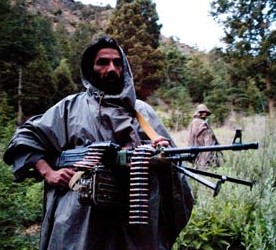
Instead of the trademark Taliban uniforms of turbans, eyeliner and flip-flops, these men wore Russian and Nato poncho raincoats over their shalwars, and boots and trainers. Most striking was the way they held their guns. Instead of carrying them in the standard militia style, on their shoulders or holding them like walking sticks, they wore them strapped around their chests, one hand by the trigger and the other holding the muzzle down. They stood just like the Americans.
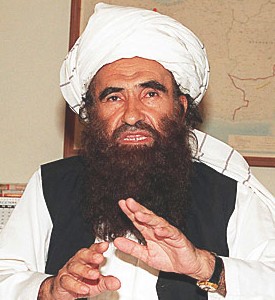
The stout commander, Mawlawi Jalali, sat surrounded by his men. One carried the white flag of the Taliban and another a video camera, which he kept pointed at me at all times.

“We are Afghans fighting the jihad and defending our country under the leadership of Jalaluddin Haqqani,” the commander said. He spoke in a schoolmasterly tone. As well as being a commander, Mawlawi Jalali is a teacher in Haqqani’s madrasa.
“The Americans toppled the emirate [of the Taliban] and we are fighting to bring it back. When the Taliban were here the jihad was only in Afghanistan. Now, thanks to the Americans, the jihad has spread to many other countries.”

How did he plan to pursue his holy war? “We use different tactics: mining the streets, fighting and direct attacks. Here in this camp we make all the preparations and have all the men we need for these different tactics.”

What about the new American surge, I asked. Did it concern him?

“We attack the towns, like in Wazi Zadran, where there is a strong American and Afghan garrison, and mine the streets every day. We average two or three attacks a day against the Americans and their allies. The more troops they send, the more targets we have, so it’s good.” [continued…]

Why Taliban leaders prefer dead diplomats

Also, the Taliban do not get most of their money from narcotics, as is often said, but they receive a significant amount from private donors in the Gulf or elsewhere in the Islamic world who are much less keen to pay for violence directed at voting Afghans than strikes on western troops or their “stooges”.

So it makes sense that the Taliban, or in this case probably the allied insurgent group led by hardline cleric and warlord Jalaluddin Haqqani, have preferred to launch the first genuinely spectacular strike since the beginning of the election campaign against a diplomatic western target.

As their spokesman explained, rather than hit the military, the Taliban would have preferred dead diplomats. Though a bomb outside the Isaf headquarters would show the insurgents’ ability to strike anywhere, their key target is international public opinion. Given the number of journalists and TV crews in the Afghan capital to cover the elections, a spectacular suicide bombing was always going to be an easy way of getting the media coverage that they need. [continued…]

Afghanistan passes ‘barbaric’ law diminishing women’s rights

Afghanistan has quietly passed a law permitting Shia men to deny their wives food and sustenance if they refuse to obey their husbands’ sexual demands, despite international outrage over an earlier version of the legislation which President Hamid Karzai had promised to review.

The new final draft of the legislation also grants guardianship of children exclusively to their fathers and grandfathers, and requires women to get permission from their husbands to work.

“It also effectively allows a rapist to avoid prosecution by paying ‘blood money’ to a girl who was injured when he raped her,” the US charity Human Rights Watch said. [continued…]

Facebooktwittermail

If they won’t make peace we may have to make it for them

If they won’t make peace we may have to make it for them

Until now the Obama administration has clung to the basic assumptions of the Oslo process: incremental steps on both sides build the confidence necessary to negotiate a bilateral agreement on final-status issues such as borders, Jerusalem and refugees. Plainly that approach has failed so far, and it’s hard to see it succeeding simply because there is a new cast of actors in the lead roles. The problem may be in the script rather than the casting.

There is no domestic political pressure on Netanyahu to make the territorial compromises necessary for a deal. On the contrary, his once precarious domestic political position has been strengthened by his resistance to the settlement freeze demands, and Israelis are unlikely to accept the conflict that would erupt if their government tried to evict thousands of West Bank settlers under a peace agreement. Nor are the Palestinians inclined to make compromises that the refugees would consider surrender of their rights.

In the absence of domestic pressure on either side to force a compromise, restarting talks would be either a repeat of the Annapolis failure or a demonstration that the gap between the two sides cannot be bridged by mutual consent. Either way, the parameters of a two-state solution will have to be prescribed by the international community, just as they were in 1947 – except this time with enough international clout and domestic support to prevent a repeat of the tragedy that followed the last UN partition of Palestine. [continued…]

Facebooktwittermail

Jund Ansar Allah group was armed by Fatah operatives, Hamas claims

Jund Ansar Allah group was armed by Fatah operatives, Hamas claims

Jund Ansar Allah is one of several tiny radical Islamist groups that have popped up in the Gaza Strip in the past few years.

These groups have openly challenged the Hamas government on the grounds that it has not imposed Islamic law (Shari’a).

The radical groups want to see a regime similar to the one in Sudan and other Islamic countries, where thieves have their arms amputated and those found guilty of adultery are stoned to death.

Some have claimed that these groups are either linked to or inspired by al-Qaida, but so far there is no evidence to back up their claim.

Hamas officials, however, say that many of the leaders and members of these groups were in fact affiliated with the former Fatah-controlled security forces or with militias belonging to Fatah in the Gaza Strip.

A senior Hamas official told The Jerusalem Post over the weekend that Jund Ansar Allah received its weapons from former Fatah policemen and security officials in the southern Gaza Strip.

The official said he did not rule out the possibility that Fatah leaders in the West Bank were trying to use radical Islamic groups to undermine the Hamas government. [continued…]

Al-Qaeda affiliated group declares war on Hamas

Al-Qaeda loyalists in Gaza declared war on Hamas Saturday after violent shootouts left 24 people dead, including Jund Ansar Allah leader Abdel-Latif Moussa.

In a message posted by al-Qaeda’s websites the Islamic Swords of Justice, a group affiliated with the Salafi movement, vowed to avenge the deaths. “We tell our people who witnessed this crime that this is not over, and war is on its way,” the message said. [continued…]

Profile: Jund Ansar Allah

Operating initially in Rafah and Khan Younis, Jund Ansar Allah spread rapidly throughout Gaza and, until Friday’s raid, claimed to have 500 members, including a number of foreign fighters.

It is said to have a military base in a former Israeli settlement, from which it carried out a number of minor attacks on Israeli forces during the first half of the year, according to its website.

On 8 June, however, the group came to public attention with a spectacular, if unsuccessful, raid on the Karni border crossing.

At least three of its fighters were shot dead by Israeli troops after 10 rode into battle on horses laden with large quantities of explosives. [continued…]

Facebooktwittermail

New Israeli rules curb travel from West Bank

New Israeli rules curb travel from West Bank

In an echo of restrictions already firmly in place in Gaza, Israel has begun barring movement between Israel and the West Bank for anyone holding a foreign passport, including humanitarian aid workers and thousands of Palestinian residents.

The new policy is designed to force foreign citizens to choose between visiting Israel, including East Jerusalem, which Israel has annexed illegally, and the West Bank. In most cases, travel between the two areas will no longer be possible.

The new regulation is in breach of Israel’s commitments under the Oslo accords to western governments that their citizens would be given continued access to the occupied territories. [continued…]

Ezra Nawi: Jewish pacifist facing jail for aiding Arabs

A plumber by trade, Ezra Nawi is a Jewish member of a small band of Israeli peace activists who put themselves on the line week in and week out by traveling to the stony hills outside Hebron to help Palestinians defend their land against right-wing Jewish settlers. And he has the lumps to show for it. Four years back, some settlers at Susya had tried to drive a Palestinian family off their land by tossing a dead dog into their well in order to poison the family’s water. The following day, Palestinians hauled the dog out of the well and were trying to draw water under the protection of Nawi and some other volunteers from an Jewish-Arab peace group known as Ta’ayush. Masked settlers appeared, smashed one activist with the butt of a gun and broke a long wooden stick over Nawi’s head.
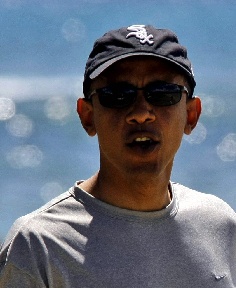
Nawi reacted as he always has — by holding his ground — without resorting to violence. In his many confrontations over the years with Israeli police, soldiers and settlers, Nawi has never struck back, say his colleagues at Ta’ayush. “Non-violence is Ezra’s natural affinity,” says David Shulman, a Ta-ayush member and professor of Sanskrit who has on multiples occasions witnessed Nawi’s encounters with settlers and police. “He is amazingly gentle and empathetic. He’s not capable of violence.” [continued…]

Facebooktwittermail

Moussavi forms ‘grass-roots’ movement in Iran

Moussavi forms ‘grass-roots’ movement in Iran

The Iranian opposition leader Mir Hussein Moussavi announced the formation of a new social and political movement on his Web site on Saturday, following through on a promise made last month and defying a renewed government campaign of intimidation aimed at him and his supporters.

The movement is not a political party — which would require a government permit — but a “grass-roots and social network” that will promote democracy and adherence to the law, Mr. Moussavi wrote in a statement on his site. It is to be known as the Green Way of Hope, in deference to the signature bright green color of his campaign for the June 12 presidential election, which he maintains was rigged in favor of President Mahmoud Ahmadinejad.

The announcement was Mr. Moussavi’s first major public statement since the Iranian authorities stepped up their pressure on the opposition by opening a mass trial two weeks ago. Prosecutors have accused Mr. Moussavi’s campaign of links to a vast conspiracy to bring down the Iranian government. After he and many others denounced the trial, the chief prosecutor issued a stark warning that anyone questioning the trial’s legitimacy could in turn be prosecuted. [continued…]

Hard-line cleric named Iran’s judiciary chief

Iran’s supreme leader appointed a hard-line cleric as the country’s new judiciary chief at the end of his predecessor’s term, state television reported Saturday.

Sadeq Larijani’s appointment does not appear to be related to the turmoil that has wracked Iran after the disputed June presidential election. But the new judiciary chief will face an early test in determining how to respond to allegations that opposition protesters detained after the election were tortured to death. [continued…]

The Revolutionary Guards: gaining power in Iran

The shadowy Revolutionary Guards already oversee a 130,000-strong parallel army and run large swatches of Iran’s economy, from dentist clinics to the country’s controversial nuclear program. But signs have emerged in recent weeks that the élite military arm isn’t satisfied: it may just want to run the entire Islamic republic.

The Islamic Revolutionary Guards Corps (IRGC), or Sepah for short in Farsi, is widely believed to have played a large role in orchestrating the crackdown on political dissidents and protesters following the disputed presidential election. Its political influence within the regime has always far exceeded the actual army’s, and it has increased exponentially since President Mahmoud Ahmadinejad was elected to office in 2005. But the speculation among Iranian opposition sources is that, these days, the IRGC’s powerful patron — whose second term officially began last week — has now become its puppet, falling under the influence of a gang of security chiefs (the so-called New Right) that harbor schemes to further radicalize the regime or topple it in a military takeover. [continued…]

Iran tries more activists in post-election turmoil

Iran on Sunday put on trial 25 more activists and opposition supporters, including a Jewish teenager, for their alleged involvement in the turmoil following the recent presidential election.

Iranian President Mahmoud Ahmadinejad has attempted to paint those who took to the streets after the June election to protest his disputed victory as agents of foreign enemies seeking to topple the country’s Islamic system. [continued…]

Facebooktwittermail

Idle Iraqi date farms show decline of economy

Idle Iraqi date farms show decline of economy

Late July and early August is date harvesting season in Iraq, when within the span of a few weeks the desert sun turns hard green spheres into tender, golden brown fruit prized for its sweetness.

But here in Iraq, one of the places where agriculture was developed more than 7,000 years ago, there are increasing doubts about whether it makes much sense to grow dates — or much of anything for that matter.

As recently as the 1980s, Iraq was self-sufficient in producing wheat, rice, fruits, vegetables, and sheep and poultry products. Its industrial sector exported textiles and leather goods, including purses and shoes, as well as steel and cement. But wars, sanctions, poor management, international competition and disinvestment have left each industry a shadow of its former self.

Slowly, Iraq’s economy has become based almost entirely on imports and a single commodity. [continued…]

The sheikh down

It’s a bright day in February, and I am in a pink villa on the outskirts of Fallujah, sitting with a tribal sheikh and a Marine commander as they hunch over a plate of truffles. The sheikh is Eifan Saddun al-Isawi, a charming 33-year-old Iraqi in a red-checkered kaffiyeh, a brown dishdasha, and DKNY wraparound sunglasses who uses phrases like “sons of bitches” when he talks about Al Qaeda with Americans. He is the head of Fallujah’s Sahwa, or Awakening, council, the Sunni militia hired by the United States in early 2007 to fight its enemies in Iraq, and he’s become one of the American military’s go-to guys in the city, as evidenced by the photos on his walls of him with George W. Bush and Barack Obama.

The American officer, Lt. Colonel Chris Hastings, apologizes for forgetting to bring Eifan “magazines with pictures of pretty ladies” and congratulates him for winning a seat in the provincial elections. He proceeds to tell Eifan to make sure that a certain someone the Marines are “concerned” about doesn’t make it into local politics. Eifan assures him he’ll see to it.

Hastings also needs Eifan on the hearts-and-minds front: The Marines recently killed a teacher strapped with a suicide belt, and Hastings wants the sheikh to convince his community that the Americans aren’t bloodthirsty warmongers. The Awakening councils don’t officially work for the Americans anymore—the Iraqi government now pays the $300-a-month salaries of Eifan’s men—but Eifan obliges immediately. “Give me pictures and I will give it to all the imams and sheikhs to show them he was wearing a belt,” he says. He then presses the lieutenant colonel to release some of his friends from prison (Hastings agrees), offers him an antique hunting rifle (Hastings declines), and steers the talk back to the topic he’s been hinting at throughout the meeting: American cash.

“Just tell the colonel to give me the contract. Come on, man. You know I’ll do a good job,” he says. Over the years, Eifan’s gotten used to the way Americans do business in Iraq. Working with them has made him a millionaire. [continued…]

Minorities trapped in northern Iraq’s maelstrom

Kamal Ahmed woke up before the crack of dawn and went to the village mosque where he serves as the muezzin.

After calling the people to prayer, he went back to sleep on the roof of his house in a metal post bed covered with a mosquito net, a common practice in Iraq during the sweltering summer months. Minutes later, a huge explosion brought down half of the two-floor house. His side of the house remained miraculously intact, but three members of his family, who were asleep inside, were crushed to death.

Two explosions, which obliterated a large swath of this village of nearly 10,000 people near the northern Iraqi city of Mosul on Monday, killed 34 people and wounded almost 200. The village is inhabited by Shiite Shabaks, a Kurdish-speaking minority. [continued…]

Facebooktwittermail

Sometimes it’s not your war, but you sacrifice anyway

Sometimes it’s not your war, but you sacrifice anyway

To outsource the wars in Iraq and Afghanistan, the United States has turned to the cheapest labor possible. About two-thirds of the 200,000 civilians working under federal contracts in the war zones are foreigners. Many come from poor, Third World countries. Others are local hires.

These low-paid foreign workers face many of the same risks soldiers do. Mortars have killed Filipinos who served meals in mess halls. Assassins have targeted Iraqis translating for soldiers. Roadside bombs have ripped into trucks driven by Turkish nationals. These workers have been wounded like soldiers. They have died like soldiers.

The United States has a system to provide care for such civilian casualties. Developed in the 1940s, it is an obscure type of workers’ compensation insurance, funded by taxpayers and overseen by the Labor Department. Mandated by a law called the Defense Base Act, the system requires almost every federal contractor working abroad to purchase insurance to cover injuries arising from work or war, for all employees, American or foreign.

American civilian workers have had trouble enough getting payment for their injuries. AIG, the primary provider of such insurance, has battled them over everything from prosthetic legs to treatment for post-traumatic stress disorder, according to court records and interviews. But at least the Americans have a fighting chance.

For foreign workers, the system has not even come close to delivering on its promises. In Nepal, I spoke with a family in a remote valley of tumbling rivers and jewel-green rice fields. After neighbors heard news reports over the radio, the family watched an Internet video that showed that their son had been executed in a dusty ditch in western Iraq on his way to work at a base for U.S. soldiers. Neither the company nor the United States had made any effort to contact them. The elderly couple, who had relied upon their son’s salary, wondered how they would survive. [continued…]

Facebooktwittermail

A thousand little Gitmos

A thousand little Gitmos

The last person to see Syed Mehmood Hashmi as a free man was his friend Mohammed Haroon Saleem, who on June 6, 2006, drove Hashmi to London’s Heathrow Airport, walked him to the security checkpoint, and watched him hoist his bag and head for the gate. But Hashmi never made his flight. At passport control, constables pulled him from the line and told him they had an extradition warrant on behalf of the US government. He was to be charged with aiding Al Qaeda.

Today Hashmi, who is 29, sits in a windowless cell, in solitary confinement. He is not allowed to watch television or listen to the radio or read a newspaper unless it is at least 30 days old and censored. He is not allowed to speak to guards, other inmates, or the media, or to write anyone but his attorney and his family (once a week on three single-sided pages). The only people cleared to visit, besides his lawyer, are his mother and father, but he couldn’t see them for three months after he was caught shadowboxing in his cell—an infraction that cost him visiting privileges. Hashmi’s lawyer, Sean Maher, says the isolation is slowly driving his client mad.

Hashmi is not in Guantanamo Bay, nor is he an enemy combatant. He’s a US citizen, born in Pakistan and raised in Flushing, Queens, facing trial in federal court in Manhattan. His home for the past two years has been the Special Housing Unit at the Metropolitan Correctional Center, a stone’s throw from the Brooklyn Bridge. Hashmi might be guilty, he might not. We may never know—because when he goes before judge and jury later this year he won’t get a fair trial. Much of the government’s evidence against him is secret, and he can’t see it because he doesn’t have a security clearance. Maher, who does have a security clearance, can’t see much of it either. Maher finds this incredible.

“There are cases across the country where men are being convicted and given astronomical sentences under the most inhumane and draconian conditions possible,” says Maher. “Animals at the Bronx Zoo get treated better than this.” [continued…]

Facebooktwittermail

Obama is not delivering the goods

Obama’s America is not delivering the goods

With great sorrow and deep consternation, we hereby declare the death of the latest hope. Perhaps rumors of its death are greatly exaggerated, to paraphrase the famous quote by Mark Twain, but the fears are being validated day after day. Barack Obama’s America is not delivering the goods. Sharing a glass of beer with a racist cop and a pat on the back of Hugo Chavez are not what we hoped for; wholesale negotiations on freezing settlement construction are also not what we expected. Just over six months after the most promising president of all began his term, perhaps hope has a last breath left, but it is on its deathbed.
He came into office amid much hoopla. The Cairo speech ignited half the globe. Making settlements the top priority gave rise to the hope that, finally, a statesman is sitting in the White House who understands that the root of all evil is the occupation, and that the root of the occupation’s evil is the settlements. From Cairo, it seemed possible to take off. The sky was the limit.

Then the administration fell into the trap set by Israel and is showing no signs of recovery.

A settlement freeze, something that should have been understood by a prime minister who speaks with such bluster about two states – a peripheral matter that Israel committed to in the road map – has suddenly turned into a central issue. Special envoy George Mitchell is wasting his time and prestige with petty haggling. A half-year freeze or a full year? What about the 2,500 apartment units already under construction? And what about natural growth? And kindergartens?

Perhaps they will reach a compromise and agree on nine months, not including natural growth though allowing completion of apartments already under construction. A grand accomplishment.

Jerusalem has imposed its will on Washington. Once again we are at the starting point – dealing with trifles from which it is impossible to make the big leap over the great divide.

We expected more from Obama. Menachem Begin promised less, and he made peace within the same amount of time after he took office. When the main issue is dismantling the settlements, the pulsating momentum that came with Obama is petering out. Instead, we are paddling in shallow water. Mitchell Schmitchel. What’s in it for peace? Prime Minister Benjamin Netanyahu will once again meet him in London at the end of the month. A “magic formula” for a settlement freeze may be found there, but the momentum is gone.

Not in Israel, though. Here people quickly sensed that there is nothing to fear from Obama, and the fetters were taken off. Defense Minister Ehud Barak was quick to declare that there is no Palestinian partner, even after the Fatah conference elected the most moderate leadership that has ever been assembled in Palestine. Afterward, in a blatant act of provocation, he brought a Torah scroll into the heart of the Muslim Quarter in the Old City of Jerusalem, in full view of television cameras, just so America can see who’s boss around here.

Deputy Prime Minister Eli Yishai and Knesset Speaker Reuven Rivlin, another two politicians who smell American weakness, were quick to declare during a visit to Ma’aleh Adumim that Israel will not freeze any construction. To hell with Obama. The settlers continue to move into more homes in East Jerusalem, Netanyahu is silent and Israelis sense that the “danger” has passed. Israel is once again permitted to do as it pleases. The landlord has once again gone insane. Except that the landlord has gone insane because the real landlord is showing signs of weakness, signs of folding, signs of losing interest in events in the region that most endangers world peace.

Nothing remains from the speeches in Cairo and Bar-Ilan University. Obama is silent, and Yishai speaks. Even “Israel’s friends” in Washington, friends of the occupation, are once again rearing their heads.

One source familiar with Obama’s inner circle likened him this week to a man who inflates a number of balloons every day in the hope that one of them will rise. He will reach his goal. The source compared him to Shimon Peres, an analogy that should insult Obama. The trial balloons the U.S. president sends our way have yet to take off. One can, of course, wait for the next balloon, the Obama peace plan, but time is running out. And Israel is not sitting idly by.

The minute Jerusalem detected a lack of American determination, it returned to its evil ways and excuses. “There is no partner,” “Abu Mazen is weak,” “Hamas is strong.” And there are demands to recognize a Jewish state and for the right to fly over Saudi Arabia – anything in order to do nothing.

An America that will not pressure Israel is an America that will not bring peace. True, one cannot expect the U.S. president to want to make peace more than the Palestinians and Israelis, but he is the world’s responsible adult, its great hope. Those of us who are here, Mr. President, are sinking in the wretched mud, in “injury time.”

Editor’s Comment — When an 11 year-old gets the privilege of going to The White House to interview the president and the kid respectfully observes, “I notice as president you get bullied a lot,” it’s time to sit up straight.

Obama’s lack of backbone is apparent to a child and his method for handling getting bullied — “if I’m doing a good job, I’m doing my best, and I’m trying to always help people, then that keeps me going” — might make him feel better but it does little to push back those who are emboldened by his weakness.

Is Obama capable of imposing his will? After six months we should know the answer to that question. The fact that we don’t is a problem.

Facebooktwittermail

Hamas: Head of Al-Qaida affiliate killed in Gaza

Hamas: Head of Al-Qaida affiliate killed in Gaza


Hamas security said Saturday that the leader of an Al-Qaida-inspired group in the Gaza Strip has been killed during a fierce gun battle that began on Friday.

Abdel-Latif Moussa, the leader of Jund Ansar Allah, was killed when fighting resumed with Hamas forces after dawn Saturday, Ihab Ghussein, a Hamas Interior Ministry spokesman, told The Associated Press.

He said Moussa detonated an explosives vest he was wearing during the fighting.

“The so-called Moussa has committed suicide…killing a mediator who had been sent to him to persuade him and his followers to hand themselves over to the government,” Ghussein said. Continue reading

Facebooktwittermail

People Not Places: greatest hip-hop song for Palestinians ever

People Not Places: greatest hip-hop song for Palestinians ever


This docu-music-video is based on the song of the same name by Invincible featuring Abeer and Suhell Nafar (DAM). Invincible plays two characters in the video: a Birthright Israel tour recruiter, styled as a used car salesman; and herself, subverting the recruiter’s mission by exposing the buried Palestinian significance of each location in the tour.

Invincible exposes the process of historic and continued colonization of Palestine as being even deeper than land seizure and ethnic cleansing, but one that attempts to erase the indigenous language, culture, and memory of Palestinians.
Intertwined with the music video are interviews that expose how Zionist claims to a Jewish “birthright” to Palestine have come at the expense of the Palestinian Right of Return to their indigenous land. These interviews show how the Right of Return of Palestinians is interconnected with the resistance of occupied and displaced refugee communities globally, from Turtle Island to Puerto Rico and beyond.

People Not Places is featured on Invincible’s ShapeShifters album, available in the EMERGENCE Store.

Read lyrics and explanations for People Not Places. [continued…]

Settlers at odds over Bnei Adam outpost

Settlers residing at the illegal West Bank outpost of Bnei Adam have recently asked Rabbi Mordechai Eliyahu to rule on whether they should comply with the State’s eviction order.

Rabbi Eliyahu asked Rabbi Haim Drukman, the head of the Bnei Akiva yeshivot center to make the final ruling, and the latter said the settlers should comply with the order – which the Head of the Benyamin Council, Avi Roeh, agreed to as well.

The ruling, however, has left the settles conflicted, as some agree to a consensual evacuation and some still oppose it. A settlers’ group calling itself “the committee for the cessation of the cooperation with the enemy” distributed flyers through the West Bank Thursday, calling on settlers to disregard the ruling. [continued…]

Facebooktwittermail

Abdullah Abdullah throws down election gauntlet to President Karzai

Abdullah Abdullah throws down election gauntlet to President Karzai

“Without rigging, Karzai will lose the vote in southern Afghanistan,” Dr Abdullah told The Times. “People are crossing ethnic, linguistic and regional lines.”

At the last election in 2004, Mr Karzai won in the first round with 55.4 per cent of the vote and vowed to eradicate terrorism, poverty, corruption and the opium trade.

Five years on, he has not only failed on all of those counts; a Taleban insurgency has enveloped most of the country and international forces have suffered their bloodiest month since 2001.

The election is seen not just as a test of his popularity but of the entire international mission in Afghanistan. “The legitimacy of the international community’s involvement in Afghanistan is at stake in this election,” said Thomas Ruttig, co-director of the Afghanistan Analysts’ Network. “These British soldiers — if they’ve died for something that ends in a mess then you simply can’t defend it.” [continued…]

The future of Afghanistan

In two weeks, or six if there is a run-off, Afghanistan will have a new president for the next five years. Whether in five years the new president will still have Afghanistan is uncertain. It depends not on the elections themselves but on what happens afterwards.

These elections, as part of a broader strategic review, will, it is hoped, re-energise the troubled international effort to secure and stabilise Afghanistan by bringing a new legitimacy to a government elected by an imperfect but theoretically universal suffrage.

However, as Benazir Bhutto once explained to me patiently and somewhat ironically given the records of her own governments, if in developed countries a leader’s legitimacy comes from being chosen in free and fair elections, in her own Pakistan and in states like it, legitimacy comes more from post-election performance. This needs to be nuanced, of course, as all such generalisations do, but it is nonetheless fair to say that there are few Afghans who have much confidence in the electoral process itself, justifiably given the scale of potential fraud and the security problems. So it is what happens post-election that will determine whether the winner is seen by the population generally to deserve their position or not. [continued…]

Suicide blast kills at least seven, injures dozens in Kabul

Just five days before a presidential election that the Taliban has vowed to thwart, a massive suicide car bomb exploded outside the U.S. military headquarters in Kabul on Saturday morning, killing seven people and wounding scores of others in the largest attack in the capital in months.

The 8:30 a.m. blast, on the main road outside the concrete barriers that wall off the U.S. and NATO headquarters, along with the U.S. Embassy, was the first major in Kabul since February, when Taliban insurgents attacked three government buildings, killing at least 19 people. The explosion Saturday set cars on fire, crumbled concrete walls and shattered windows of buildings hundreds of yards from the explosion site. [continued…]

Facebooktwittermail