
Daily Archives: September 2, 2009

How the Taliban are winning the war

Warlord’s defection shows Afghan risk

Ghulam Yahya, a former mayor of this ancient city along the Silk Road, battled the Taliban for years and worked hand in hand with Western officials to rebuild the country’s industrial hub.
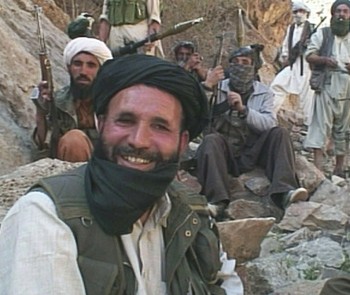
Now, Mr. Yahya is firing rockets at the Herat airport and nearby coalition military headquarters. He has kidnapped soldiers and foreign contractors, claimed the downing of an Afghan army helicopter and planted bombs in central Herat — including one that killed a district police chief and more than a dozen bystanders last month.

Mr. Yahya’s stranglehold over the outskirts of Herat has destabilized a former oasis of calm and relative prosperity. “The security situation here is critical,” said Herat’s current mayor, Mohammed Salim Taraki.

The warlord’s odyssey from friend to foe shows how disillusionment with the Western-backed administration of President Hamid Karzai has pushed even some former enemies of the Taliban into the insurgency. Violence is rapidly spreading beyond the ethnic Pashtun heartland of southern and eastern Afghanistan, where much of the countryside already is in rebel hands, into parts of the country that were considered safe just a few months ago. [continued…]

U.S. to boost combat force in Afghanistan

U.S. officials are planning to add as many as 14,000 combat troops to the American force in Afghanistan by sending home support units and replacing them with “trigger-pullers,” Defense officials say.

The move would beef up the combat force in the country without increasing the overall number of U.S. troops, a contentious issue as public support for the war slips. But many of the noncombat jobs are likely be filled by private contractors, who have proved to be a source of controversy in Iraq and a growing issue in Afghanistan.

The plan represents a key step in the Obama administration’s drive to counter Taliban gains and demonstrate progress in the war nearly eight years after it began. [continued…]

Taliban surprising U.S. forces with improved tactics

The Taliban has become a much more potent adversary in Afghanistan by improving its own tactics and finding gaps in the U.S. military playbook, according to senior American military officials who acknowledged that the enemy’s resurgence this year has taken them by surprise.

U.S. rules of engagement restricting the use of air power and aggressive action against civilians have also opened new space for the insurgents, officials said. Western development projects, such as new roads, schools and police stations, have provided fresh targets for Taliban roadside bombs and suicide attacks. The inability of rising numbers of American troops to protect Afghan citizens has increased resentment of the Western presence and the corrupt Afghan government that cooperates with it, the officials said.

As President Obama faces crucial decisions on his war strategy and declining public support at home, administration and defense officials are studying the reasons why the Taliban appears, for the moment at least, to be winning. [continued…]

Deputy intelligence chief is slain in Afghanistan

The second-ranking intelligence official in Afghanistan and a prominent ally of President Hamid Karzai was assassinated by a suicide bomber on Wednesday morning in a blast that also killed 15 others outside the main mosque in the official’s hometown, near Kabul, officials and witnesses said.

The official, Dr. Abdullah Laghmani, was the deputy director of the National Directorate for Security.

“As an intelligence expert, he knew a lot about Al Qaeda, and he was a person who was very actively fighting against the Taliban and against Al Qaeda in the 34 provinces of Afghanistan,” said the provincial governor, Mutfullah Mashal, in an interview at the scene of the attack here in the capital of the eastern province of Laghman. “His loss is really a major loss.” [continued…]

$600 for a Kalashnikov – a sign of bloodshed to come in Afghanistan

The price of Kalashnikovs has doubled in Afghanistan. For a country awash with arms, the fact that the weapons are now fetching $600 apiece is a cause of some surprise, but a surge of demand is to blame for the increase, with a steady stream of weapons said to be heading for the north.

This is the Tajik constituency of Abdullah Abdullah, the presidential candidate who claims the election is being stolen by the incumbent Western-backed President, Hamid Karzai. [continued…]

U.N. sees Afghan drug cartels emerging

Afghanistan’s production of opium, the raw material for heroin, declined by 10 percent this year, and the amount of land used to cultivate opium fell by 22 percent, according to a report from the United Nations Office on Drugs and Crime that is to be formally released Wednesday.

The smaller harvest, largely attributed to market forces and heightened interdiction efforts, is a rare bit of good news for the United States and the coalition of Western governments whose troops and taxpayers are supporting what even American commanders describe as a deteriorating situation as the war approaches its ninth year.

But while United Nations officials suggested that some opium-trafficking guerrillas were now less focused on Taliban ideology, they also reported that perhaps more than 10,000 tons of illegal opium — worth billions of dollars and enough to satisfy at least two years of world demand — is now secretly stockpiled. They said they were concerned that part of this stockpile could be a “ticking bomb” in the hands of people who could use it to pay for “sinister scenarios.”

Opium is easily smuggled and stored and “is an ideal form of terrorist financing,” Antonio Maria Costa, the executive director of the United Nations Office on Drugs and Crime, said in an interview. “It’s a huge amount of money to have in the wrong hands.” He called on intelligence agencies to investigate the stockpiles. [continued…]

Contractors outnumber U.S. troops in Afghanistan

Civilian contractors working for the Pentagon in Afghanistan not only outnumber the uniformed troops, according to a report by a Congressional research group, but also form the highest ratio of contractors to military personnel recorded in any war in the history of the United States.

On a superficial level, the shift means that most of those representing the United States in the war will be wearing the scruffy cargo pants, polo shirts, baseball caps and other casual accouterments favored by overseas contractors rather than the fatigues and flight suits of the military.

More fundamentally, the contractors who are a majority of the force in what has become the most important American enterprise abroad are subject to lines of authority that are less clear-cut than they are for their military colleagues. [continued…]

Report details misbehavior by Kabul embassy guards

Private security contractors who guard the U.S. Embassy in Kabul have engaged in lewd behavior and hazed subordinates, demoralizing the undermanned force and posing a “significant threat” to security at a time when the Taliban is intensifying attacks in the Afghan capital, according to an investigation released Tuesday by an independent watchdog group.

The Project on Government Oversight (POGO) launched the probe after more than a dozen security guards contacted the group to report misconduct and morale problems within the force of 450 guards who live at Camp Sullivan, a few miles from the embassy compound.

The report highlighted occasions when guards brought women believed to be prostitutes into Camp Sullivan and videotaped themselves drinking and partially undressed. It also outlined communications problems among the guards, many of whom don’t speak English and have trouble understanding orders from their U.S. supervisors. [continued…]


Facebooktwittermail

Afghan tribal leaders call for Karzai to quit after detailing election fraud

Afghan tribal leaders call for Karzai to quit after detailing election fraud

Hundreds of tribal elders and officials from southern Afghanistan gathered in Kabul yesterday to protest against alleged electoral fraud that robbed entire districts of their votes and allocated them to President Karzai.

In a string of searing testimonies, community leaders told of villages that had been too terrified to vote because of Taleban threats — yet had mysteriously produced full ballot boxes. They said that most of the phantom votes had been cast for Mr Karzai, often by his own men or tribal leaders loyal to him.

“How is it that in a district which a governor can only visit once every two years, where it’s too dangerous for the police to go, where even Nato can’t fly — how come there were 20,000 votes collected?” asked Hamidullah Tokhy, a tribal elder from Kandahar province. [continued…]

Tribal leaders say Karzai’s team forged 23,900 votes

Just a week before this country’s presidential election, the leaders of a southern Afghan tribe called Bariz gathered to make a bold decision: they would abandon the incumbent and local favorite, Hamid Karzai, and endorse his challenger, Abdullah Abdullah.

Mr. Abdullah flew to the southern city of Kandahar to receive the tribe’s endorsement. The leaders of the tribe, who live in a district called Shorabak, prepared to deliver a local landslide.

But it never happened, the tribal leaders said.

Instead, aides to Mr. Karzai’s brother Ahmed Wali — the leader of the Kandahar provincial council and the most powerful man in southern Afghanistan — detained the governor of Shorabak, Delaga Bariz, and shut down all of the district’s 45 polling sites on election day. The ballot boxes were taken to Shorabak’s district headquarters, where, Mr. Bariz and other tribal leaders said, local police officers stuffed them with thousands of ballots.

At the end of the day, 23,900 ballots were shipped to Kabul, Mr. Bariz said, with every one marked for President Karzai. [continued…]

First the votes, now the complaints pile up in Afghanistan

In a low-slung building tucked behind concrete blast barriers on the edge of the Afghan capital, the plain brown envelopes are opened one by one, and the complaint forms inside smoothed out and scrutinized by weary-eyed workers.

One handwritten account tells of a gunman turning up at a polling place. Another describes a candidate brazenly handing out cash bribes. Yet another reports a ballot box filled with votes only moments after the start of polling.

Nearly two weeks after Afghanistan’s troubled presidential election, the task of sorting out allegations of fraud and intimidation has swelled. More than 2,000 complaints have poured into the Electoral Complaints Commission, a U.N.-backed body given the responsibility of determining the validity of claims of election misconduct. As the vote tally slowly advances, that task becomes more and more crucial. [continued…]

Facebooktwittermail

Liberation, not a fictitious Palestinian “state”

Liberation, not a fictitious Palestinian “state”

Late last month, Salam Fayyad, the appointed Palestinian Authority (PA) prime minister in Ramallah, made a surprise announcement: he declared his intention to establish a Palestinian state in the West Bank and Gaza Strip before the end of 2011 regardless of the outcome of negotiations with Israel.

Fayyad told the London Times that he would work to build “facts on the ground, consistent with having our state emerge as a fact that cannot be denied.” His plan was further elaborated in a lengthy document grandly titled “Program of the Thirteenth Government of the Palestinian National Authority.”

The plan contains all sorts of ambitious ideas: an international airport in the Jordan Valley, new rail links to neighboring states, generous tax incentives to attract foreign investment, and of course strengthening the “security forces.” It also speaks boldly of liberating the Palestinian economy from its dependence on Israel, and reducing dependence on foreign aid.

This may sound attractive to some, but Fayyad has neither the political clout nor the financial means to propose such far-reaching plans without a green light from Washington or Tel Aviv. [continued…]

Jewish settlers plan massive construction

The accelerating pace of Jewish settlement expansion in East Jerusalem this year may spur violence between Israelis and Palestinians in the city and cripple new efforts by the Obama administration to kick-start peace talks, an Israeli anti-settlement group warned yesterday.

The “massive” construction being planned by Jewish settlers within Palestinian neighbourhoods in East Jerusalem is likely to prompt clashes, said Yudith Oppenheimer, the executive director of Ir Amim, a Jerusalem-based advocacy group.

“There is a combination of factors, including settlers invading Palestinian neighbourhoods, already annoying with their presence and control of houses and land and their mass construction plans when, next door, Palestinian neighbours cannot even build a balcony because they do not get a permit. This creates the conditions for violence,” she said. [continued…]

Facebooktwittermail

How the US Congress plans on supporting the Iranian Revolutionary Guard

Buying American in Tehran

American sanctions against this country are not only obviously ineffective, … they often have unintended consequences that hurt American interests.

President George W. Bush’s 2005 sanctions on financial assets, meant to crack down on rogue banks facilitating Iran’s nuclear program, had two unforeseen side effects. Freezing the financial assets of these banks increased the price of credit, making it more costly for honest financial firms like ours to operate. It also increased the value of Western goods like TV satellite dishes, cigarettes and alcohol, which the Revolutionary Guards sell on the black market, netting an estimated $12 billion a year.

Today, five members of the United Nations Security Council and Germany are to meet to consider cutting off Iran’s supply of imported gasoline and diesel — which accounts for 40 percent of the country’s total consumption — if the regime does not agree to restart negotiations over its nuclear weapons program by the end of this month. Sadly, though, the only people such sanctions would hurt would be the poor, who would face higher prices for food and bus fare.

Sanctions against foreign investment firms hurt ordinary Iranians, too, because those businesses pour money into companies that make medicine and build roads and housing, providing jobs for the millions of young Iranians who graduate each year with limited job prospects.

Further isolating Iran economically may in fact play right into the hands of Revolutionary Guard hard-liners. Tougher sanctions would rally this fratricidal conservative bloc against an old common enemy and help the Guards’ many businesses, which include smuggling goods through secret landing spots on the coast. [continued…]

Iran says it’s ready to reopen nuclear talks

Iran’s top nuclear negotiator said Tuesday that the country was prepared to resume talks with world powers over its contentious nuclear technology program and that it had prepared a package of proposals for discussions.

Saeed Jalili, secretary of Iran’s Supreme National Security Council and its point person on the nuclear issue, did not disclose details of the package but said that it would be an updated version of one submitted last year. That package was criticized by Western countries for failing to address key points of disagreement.

Still, Jalili’s comments were the most substantive official remarks on the nuclear issue since the contentious June 12 election and could give the Obama administration, which has offered to have direct talks with Iran on its nuclear program, an opportunity to try to engage Tehran before resorting to a fresh round of sanctions. [continued…]

Purge of Iranian universities is feared

As Iran’s universities prepare to start classes this month, there is growing concern within the academic community that the government will purge political and social science departments of professors and curriculums deemed “un-Islamic,” according to academics and political analysts inside and outside Iran.

The fears have been stoked by speeches by the supreme leader, Ayatollah Ali Khamenei, and by President Mahmoud Ahmadinejad, as well as by confessions of political prisoners, that suggest that the study of secular topics and ideas has made universities incubators for the political unrest unleashed after the disputed presidential election in June.

Ayatollah Khamenei said this week that the study of social sciences “promotes doubts and uncertainty.” He urged “ardent defenders of Islam” to review the human sciences that are taught in Iran’s universities and that he said “promote secularism,” according to Iranian news services. [continued…]

Facebooktwittermail