Monthly Archives: October 2009

The myth of “America”

The myth of “America”

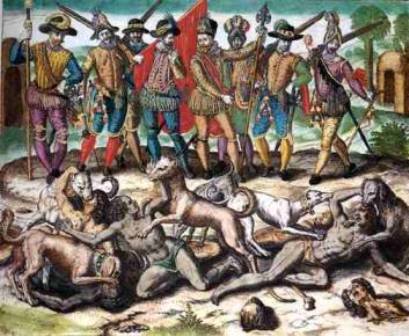
Catholic priest Bartolome de las Casas, in the multi-volume “History of the Indies” published in 1875, wrote, “… Slaves were the primary source of income for the Admiral (Columbus) with that income he intended to repay the money the Kings were spending in support of Spaniards on the Island. They provide profit and income to the Kings. (The Spaniards were driven by) insatiable greed … killing, terrorizing, afflicting, and torturing the native peoples … with the strangest and most varied new methods of cruelty.”

This systematic violence was aimed at preventing “Indians from daring to think of themselves as human beings. (The Spaniards) thought nothing of knifing Indians by tens and twenties and of cutting slices off them to test the sharpness of their blades…. My eyes have seen these acts so foreign to human nature, and now I tremble as I write.”

Father Fray Antonio de Montesino, a Dominican preacher, in December 1511 said this in a sermon that implicated Christopher Columbus and the colonists in the genocide of the native peoples:

“Tell me by what right of justice do you hold these Indians in such a cruel and horrible servitude? On what authority have you waged such detestable wars against these people who dealt quietly and peacefully on their own lands? Wars in which you have destroyed such an infinite number of them by homicides and slaughters never heard of before …”

In 1892, the National Council of Churches, the largest ecumenical body in the United States, is known to have exhorted Christians to refrain from celebrating the Columbus quincentennial, saying, “What represented newness of freedom, hope, and opportunity for some was the occasion for oppression, degradation and genocide for others.”

Yet America continues to celebrate “Columbus Day.” [continued…]

Facebooktwittermail

The world’s first terrorists

The world’s first terrorists

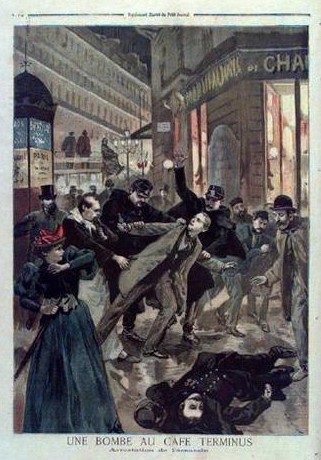
Imagine it. A network of violent radicals is picking off the world’s leaders one by one. They have killed the American president, the Russian head of state, the French president, the Austrian head of state, and the Spanish prime minister.

Bomb attacks are ripping through the world’s richest cities: explosions devastate Wall Street, the London Underground, a theatre in Barcelona, cafés in Paris, parades in Moscow. The police profile of a typical bomber warns: “He walks to his death with courage and no regrets.” There is panic, and governments launch programs of torture and deportation targeted at immigrant communities. Yet still the radicals wash defiantly across the world, killing as they go. They say they have “only one aim, one science: destruction.”

It sounds like a feverish novel about al-Qa’ida, set 30 years from now. But it has already happened. It is a story from our past. In the late 19th and early 20th century, anarchist bombers did all this. They were prepared to die for their beliefs. They lived in the same places as today’s Islamists — such as Whitechapel, in east London — and they struck the same targets, like lower Manhattan on a clear September morning.

In a new documentary — The Enemy Within, by Joe Bullman — young Islamists read the words of yesterday’s Jewish anarchists, from their writings and trial transcripts. While the societies they dream of building after the bombs are very different, their rage, their alienation, and their tactics are almost identical. The words fit so easily into their mouths that the Islamists say it is “creepy.” [continued…]

Facebooktwittermail

Israeli Nobel prize winner: Release all terrorists

Israeli Nobel prize winner: Release all terrorists

Professor Ada Yontah, who became the first Israeli woman to win a Nobel Prize this week, shared her political views in an interview with Army Radio on Saturday.

Referring to the Shalit affair, Yonath said that regardless of the deal “Anyone who is imprisoned in Israel who is not just a criminal but what we refer to as a terrorist, with or without blood on his hands – these definitions too are unclear to me – should not be imprisoned here.”

“We need to think of ways to ensure that people would not be motivated to kill and get killed,” Professor Yonath said. She stressed that responsibility for solving the problem should not lie solely with Israel, but noted that Israel “should do its best” to solve it.

Asked whether Israel should solve its political problems by releasing all terrorists, Yonath replied: “It’s not just a political issue, these are people who usually have no hope for the future, no reason to want to live, and therefore they don’t care if others don’t live…It doesn’t happen to those who have options for life…we can change that.” [continued…]

Facebooktwittermail

Afghanistan – the proxy war

Afghanistan – the proxy war

Obama ran for the presidency promising change. The doves sense correctly that Obama’s decision on Afghanistan may well determine how much – if any – substantive change is in the offing.

If the president assents to McChrystal’s request, he will void his promise of change at least so far as national security policy is concerned. The Afghanistan war will continue until the end of his first term and probably beyond. It will consume hundreds of billions of dollars. It will result in hundreds or perhaps thousands more American combat deaths – costs that the hawks are loath to acknowledge.

As the fighting drags on from one year to the next, the engagement of US forces in armed nation-building projects in distant lands will become the new normalcy. Americans of all ages will come to accept war as a perpetual condition, as young Americans already do. That “keeping Americans safe’’ obliges the United States to seek, maintain, and exploit unambiguous military supremacy will become utterly uncontroversial.

If the Afghan war then becomes the consuming issue of Obama’s presidency – as Iraq became for his predecessor, as Vietnam did for Lyndon Johnson, and as Korea did for Harry Truman – the inevitable effect will be to compromise the prospects of reform more broadly.

At home and abroad, the president who advertised himself as an agent of change will instead have inadvertently erected barriers to change. [continued…]

Civilian goals largely unmet in Afghanistan

Even as President Obama leads an intense debate over whether to send more troops to Afghanistan, administration officials say the United States is falling far short of his goals to fight the country’s endemic corruption, create a functioning government and legal system and train a police force currently riddled with incompetence.

Interviews with senior administration and military officials and recent reports assessing Afghanistan’s progress show that nearly seven months after Mr. Obama announced a stepped-up civilian effort to bolster his deployment of 17,000 additional American troops, many civil institutions are deteriorating as much as the country’s security.

Afghanistan is now so dangerous, administration officials said, that many aid workers cannot travel outside the capital, Kabul, to advise farmers on crops, a key part of Mr. Obama’s announcement in March that he was deploying hundreds of additional civilians to work in the country. The judiciary is so weak that Afghans increasingly turn to a shadow Taliban court system because, a senior military official said, “a lot of the rural people see the Taliban justice as at least something.” [continued…]

How to rig an election

No one will ever know how Afghans voted in their country’s presidential elections on Aug. 20, 2009. Seven weeks after the polling, the U.N.-backed Electoral Complaints Commission (ECC) is still trying to separate fraudulent tallies from ballots. In some provinces, many more votes were counted than were cast. E.U. election monitors characterize 1.5 million votes as suspect, which would include up to one-third of the votes cast for incumbent President Hamid Karzai. Once fraud occurs on the scale of what took place in Afghanistan, it is impossible to untangle.

Afghanistan’s fraudulent elections complicate President Obama’s job as he weighs a recommendation from General Stanley McChrystal, his top commander there, to send as many as 40,000 additional troops to support a beefed-up counterinsurgency strategy. But for that strategy to work, the U.S. needs a credible Afghan partner, which Afghanistan’s elections now seem unlikely to produce. [continued…]

U.N. official acknowledges ‘widespread fraud’ in Afghan election

A top United Nations official acknowledged publicly for the first time on Sunday that the country’s presidential election had been marred by “widespread fraud,” but said he has worked to ensure that the irregularities get documented.

Flanked by the ambassadors to the United States, Britain, France and Germany at a news conference, Kai Eide, the top United Nations official here, affirmed that the Aug. 20 election was tainted but insisted that he had pursued all claims of fraud that he was able to verify

“There was widespread fraud, but any specific figure would be pure speculation,” he said.

His remarks were intended to rebuff allegations by his former deputy that he was covering up fraud to benefit President Hamid Karzai. The deputy, the American diplomat Peter Galbraith, was fired this month after making his accusation public. [continued…]

Pakistani police had warned army about a raid

The mastermind of the militant assault on Saturday that shook the heart of the Pakistani military was behind two other major attacks in the last two years, and the police had specifically warned the military in July that such an audacious raid was being planned, police and intelligence officials said Sunday.

The revelation of prior warning was sure to intensify scrutiny of Pakistan’s ability to fight militants, after nine men wearing army uniforms breached the military headquarters complex in Rawalpindi and held dozens hostage for 20 hours until a commando raid ended the siege. In all, 16 people were killed, including eight of the attackers, the military said.

The surviving militant, who was captured early Sunday morning, was identified as Muhammad Aqeel, who officials said was a former soldier and the planner of this attack and others. Mr. Aqeel, who is also known as Dr. Usman because he had once worked with the Army Medical Corps before dropping out about four years ago, is believed to be a member of Lashkar-e-Jhangvi, a militant group affiliated with Al Qaeda and the Pakistani Taliban. [continued…]

Facebooktwittermail

Diplomacy in the lead on Iran nuclear issue — for now

Diplomacy in the lead on Iran nuclear issue — for now

Agreement to open Iran’s hidden nuclear complex to inspection has reduced talk of military action and put diplomacy back on track — at least for a while. But even as the U.S. tries to build international pressure, emerging details suggest it might already be too late for an armed strike.

Everything about Iran’s newly disclosed site near the holy city of Qom complicates the task for the two most likely attackers, the U.S. and Israel. Iranian officials say that’s precisely why they built the facility on an elite military base, fortified with steel and concrete, and buried under a mountain.

Less than a week after President Obama revealed that the U.S. knew about the site, Iran agreed to open it to inspectors from the International Atomic Energy Agency. In a subsequent visit to Tehran, IAEA Director-General Mohamed ElBaradei said inspectors would visit Oct. 25. [continued…]

Facebooktwittermail

Bombings outside Iraq reconciliation meeting kill 23

Bombings outside Iraq reconciliation meeting kill 23

A series of apparently coordinated bombings aimed at a meeting for national reconciliation killed 23 people and wounded 65 others in western Iraq on Sunday, but they did not injure the officials who were at the gathering, the authorities said.

The bombings, which occurred in Ramadi, the capital of Anbar Province, were the latest in a string of deadly attacks in the province during the past few months that have focused on tribal leaders and members of Iraqi security forces and Awakening Councils.

The province had been among the more peaceful in Iraq during the past two years after many tribal leaders dropped allegiances to Al Qaeda in Mesopotamia, an extremist Sunni Arab group, and joined Awakening Councils that linked with the American military and the Iraqi government. [continued…]

Facebooktwittermail

Muslims in U.S. feel unfairly implicated in the war on terror

Muslims in U.S. feel unfairly implicated in the war on terror

As the FBI pursues one alleged terrorist plot after another, Muslim Americans are grappling with a widespread sense that the government thinks they all could be terrorists.

In dozens of interviews across the country, McClatchy has found that the government’s search for the enemy within is threatening to divide and destroy America’s Muslim communities.

“It’s not a guilty complex; it’s the stigma of being a Muslim and constantly having to defend religion,” said Edina Lekovic, the communications director for the Muslim Public Affairs Council. “It causes people to give up and say, ‘Why should I bother? No one likes me. Why should I keep trying?’ ”

Americans of all faiths support the government’s efforts to keep them safe, but the war on terrorism looks different to those who find themselves under constant scrutiny because of their religion, ethnicity or both. [continued…]

Facebooktwittermail

Former US diplomat holds secret stake in Kurdish oil field

Former US diplomat holds secret stake in Kurdish oil field

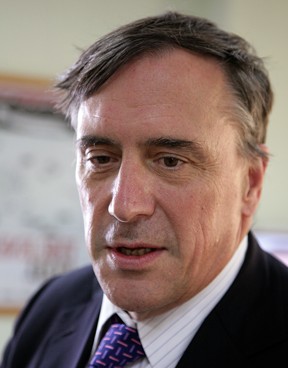
It is widely known that the former US diplomat Peter Galbraith has been one of the most prominent figures in shaping the state structure of Iraq in the period after 2003, especially with his vocal advocacy of various forms of radical decentralisation and/or partition solutions for Iraq’s political problems that are reflected in his books and numerous articles in the New York Review of Books, especially in the period from 2004 to 2008. Until now, though, it has generally been assumed that Galbraith’s fervent pro-partition propaganda was rooted in an ideological belief in national self-determination and a principled view of radical federalism as the best option for Iraq’s Kurds. Many have highlighted Galbraith’s experience as a former US diplomat (especially in the Balkans in the 1990s) as key elements of his academic and policy-making credentials.
Today, however, it has emerged that the realities were probably rather different. For some time, Norway’s most respected financial newspaper, Dagens Næringsliv (DN), has been focusing on the operations of DNO, a small Norwegian private oil company in Kurdistan, especially reporting on unclear aspects concerning share ownership and its contractual partnerships related to the Tawke field in the Dahuk governorate. One particular goal has been to establish the identity of a hitherto unknown “third party” which participated with DNO in the initial production sharing agreement (PSA) for Tawke between 2004 and 2008, but was squeezed out when this deal was converted to a new contract in early 2008, prompting a huge financial claim of around 500 million US dollars against DNO which has yet to be settled. Today, DN claims to present proof that one of the two major “mystery stake-holders” involved in the claim was none other than Peter Galbraith, who allegedly held a five-percent share in the PSA for Tawke from June 2004 until 2008 through his Delaware-based company Porcupine. Galbraith’s partner was the Yemenite multi-millionaire Shahir Abd al-Haqq, whose identity was revealed by the same newspaper earlier this month. DN has published documents from Porcupine showing Galbraith’s personal signature, and today’s reports are complete with paparazzi photographs of Galbraith literally running away from reporters as they confront him in Bergen, where he is currently staying with his Norwegian wife. He refused to give any comment citing potential legal complications. [continued…]
(H/t to Helena Cobban.)

Facebooktwittermail

Israel appeals for solidarity among international war criminals

Israel appeals for solidarity among international war criminals

Israeli officials on Sunday criticized the British Ambassador to the United Nations John Sawers for backing a controversial United Nations report into Israel’s conflict with Hamas in Gaza last winter, saying that such support could backfire when Britain tries to conduct its own war on terror.

The investigation into the three-week conflict, sparked by rocket fire from Gaza on Israel’s southern communities, was headed by South African judge Richard Goldstone. Israel has dismissed the report as one-sided, while the U.S. is believed to have pressed Palestinian President Mahmoud Abbas to refrain from supporting its findings.

Sawers told Israel’s Army Radio on Sunday morning that he supports the findings of the Goldstone commission, and called for both Israel and the Palestinians to investigate its conclusions.

“London is waging its own war against terror, and they might find themselves with their hands tied if they back Goldstone’s recommendations,” the Israeli officials said. [continued…]

Hundreds of war crimes lawsuits filed against Israelis

Almost 1,000 lawsuits alleging war crimes by Israeli ministers and military personnel have now been filed around the world, Israel has admitted.

And the situation could become immeasurably worse for Israel’s politicians and soldiers as efforts continue to have the Goldstone report, which accuses Israel and Hamas of crimes against humanity during last winter’s Gaza Strip invasion, raised at the United Nations.

Last week, Moshe Yaalon, one of four deputies to Benjamin Netanyahu, the prime minister, cancelled a planned fundraising trip to Britain because he feared arrest on war-crimes warrants issued by human rights and pro-Palestinian groups.

The week before, the defence minister, Ehud Barak, only avoided arrest on a visit to the British Labour Party conference in Brighton after a court ruled that he had diplomatic immunity.

Israelis travelling without such diplomatic protection now face the possibility of arrest in many countries across the globe, including Norway, New Zealand, the United Kingdom, Holland and Canada.

Human rights lawyers are using the principle of universal jurisdiction in international law to file suits worldwide for war crimes, genocide, torture and crimes against humanity.

According to Avigdor Lieberman, Israel’s foreign minister and a hardline nationalist, the estimated 964 international lawsuits now outstanding represent “a campaign to delegitimise Israel”. [continued…]

Turkey bans Israel from international air force drill

Turkey announced on Sunday the cancellation of an international air force drill at one of the country’s air force bases, which was to include Israeli jets.

Turkish Prime Minister Recep Tayyip Erdogan has been under pressure recently to exclude Israel from the drill, on the grounds that Israel should not be allowed to participate while its planes are bombing the Gaza Strip

Turkey, a secular country ruled by an Islamic-oriented party, had long been Israel’s best friend in the Muslim world. But ties have cooled sharply over Turkish Prime Minister Recep Tayyip Erdogan’s sharp criticism of Israel’s winter war in the Gaza Strip, especially in light of a televised fracas between President Shimon Peres and Erdogan at the Davos Conference this past January. [continued…]

Facebooktwittermail

The pieces are in place, but no one wants an intifada

The pieces are in place, but no one wants an intifada

Nowhere is Israel’s defiance of Mr Obama’s demand for a settlement freeze more dangerous than in Jerusalem, and it is activists inside Israel (particularly Raed Salah of the Islamic Movement of the North) who are rallying opposition to what they see as Israeli efforts to take over the Muslim holy sites (although Israel insists it has no intention of doing so). And there are elements on the Israeli side who have an interest in sabotaging any new peace initiatives by provoking confrontation in Jerusalem. A single protest turning violent could start a firestorm across the Middle East.

With Gaza under siege, much of it still rubble because Israel’s blockade has prevented construction materials from entering the territory, the potential for a new outbreak is higher still.

Despite the similarities with 2000, however, it’s worth remembering the adage that you never step into the same river twice. There are also differences: the Palestinian population is battered, and could not easily sustain another round of confrontation. Its leadership is more fractured than ever, with no Arafat figure capable of uniting even the disparate factions of Fatah, while the motives of Hamas are complex: it has been gaining steadily on the diplomatic front during the calm in Gaza over the past 10 months, and from its indirect negotiations with Israel over ceasefires and prisoner exchanges. Gazans expect them to deliver real improvements to their lives, not another pummelling by Israel. [continued…]

Facebooktwittermail

Obama has betrayed mission to forge Mideast peace

Obama has betrayed mission to forge Mideast peace

What has the new Nobel laureate done so far in our region? Mitchell Shmitchell, a bitter and lost struggle over settlement expansion, a bizarre struggle against the Goldstone report, a disgraceful silence about the Gaza siege, and the ultimate proof that there’s nothing new under the Middle Eastern sun. It’s not Obama who “can,” it’s Israel. Israel can twist the arms of any president. You don’t want to freeze the settlements? Okay, never mind. You don’t want to take responsibility for the crimes in Gaza? Okay, never mind. You don’t want to end the occupation? Okay, never mind. This is not the conduct of a Nobel laureate and president.

A consolation prize: Perhaps the Nobel will serve as a catalyst, a kind of alarm clock ringing to wake the laureate in the final minute. Unlike in Afghanistan and Iraq, in this region he will not need to shed American blood to secure peace. It’s enough to show political determination, apply pressure and use Israel’s isolation and dependency for the cause of peace. Israel needs a friend to save it from itself.

Obama now needs to choose whether to join the laureates-in-vain – from Henry Kissinger to Yitzhak Rabin, Shimon Peres and Yasser Arafat – or join the great ones, like Martin Luther King, Jr., Nelson Mandela, Mikhail Gorbachev, Aung San Suu Kyi and Mother Teresa. It’s true, no one has ever won the prize twice (except the International Committee of the Red Cross), but no one has won it on a down payment, either. If Obama brings peace to the Middle East, perhaps Oslo will change its ways once more and grant him the Nobel again – once as a down payment, once by right. Congratulations, Mr. President, now it’s time to settle your debt. [continued…]

Obama, man of peace? No, just a Nobel prize of a mistake

Isn’t there anyone in the White House to remind Mr Obama that the Israelis have never obliged a US president who asked for an end to the building of colonies for Jews – and Jews only – on Arab land? Bill Clinton demanded this – it was written into the Oslo accords – and the Israelis ignored him. George W Bush demanded an end to the fighting in Jenin nine years ago. The Israelis ignored him. Mr Obama demands a total end to all settlement construction. “They just don’t get it, do they?” an Israeli minister – apparently Prime Minister Benjamin Netanyahu – was reported to have said when the US Secretary of State, Hillary Clinton, reiterated her president’s words. That’s what Avigdor Lieberman, Israel’s crackpot foreign minister – he’s not as much a crackpot as Mahmoud Ahmadinejad, but he’s getting close – said again on Thursday. “Whoever says it’s possible to reach in the coming years a comprehensive agreement,” he announced before meeting Mr Obama’s benighted and elderly envoy George Mitchell, “… simply doesn’t understand the reality.”

Across Arabia, needless to say, the Arab potentates continue to shake with fear in their golden minarets. That great Lebanese journalist Samir Kassir – murdered in 2005, quite possibly by Mr Obama’s new-found Syrian chums – put it well in one of his last essays. “Undeterred by Egypt since Sadat’s peace,” he wrote, “convinced of America’s unfailing support, guaranteed moral impunity by Europe’s bad conscience, and backed by a nuclear arsenal that was acquired with the help of Western powers, and that keeps growing without exciting any comment from the international community, Israel can literally do anything it wants, or is prompted to do by its leaders’ fantasies of domination.” [continued…]

Facebooktwittermail

A dogged Taliban chief rebounds, vexing U.S.

A dogged Taliban chief rebounds, vexing U.S.

In late 2001, Mullah Muhammad Omar’s prospects seemed utterly bleak. The ill-educated, one-eyed leader of the Taliban had fled on a motorbike after his fighters were swiftly routed by the Americans invading Afghanistan.

Much of the world celebrated his ouster, and Afghans cheered the return of girls’ education, music and ordinary pleasures outlawed by the grim fundamentalist government.

Eight years later, Mullah Omar leads an insurgency that has gained steady ground in much of Afghanistan against much better equipped American and NATO forces. Far from a historical footnote, he represents a vexing security challenge for the Obama administration, one that has consumed the president’s advisers, divided Democrats and left many Americans frustrated.

“This is an amazing story,” said Bruce Riedel, a former Central Intelligence Agency officer who coordinated the Obama administration’s initial review of Afghanistan policy in the spring. “He’s a semiliterate individual who has met with no more than a handful of non-Muslims in his entire life. And he’s staged one of the most remarkable military comebacks in modern history.” [continued…]

Facebooktwittermail

More questions about hijacked ship, Arctic Sea

More questions about hijacked ship, Arctic Sea

The eight men who were said to have commandeered a cargo ship in the Baltic Sea in July were locked up weeks ago. They were declared pirates, hunted down by the Russian Navy, captured without a fight and marched before television cameras to a Moscow jail.

But the swashbuckling tale, rather than ending there, has instead grown more mysterious.

What exactly befell the ship, called the Arctic Sea, is still largely unknown. In fact, nearly eight weeks after it was supposedly liberated by the Russian Navy, the ship is said to remain at sea under military control and has yet to make port for needed repairs. Four members of the ship’s crew have not been able to leave, despite repeated calls by their families for their release.

A dearth of official information has intensified the mystery surrounding the ship, whose travails have whipped up relentless speculation since it lost contact off the coast of Portugal in late July.

And as if the situation were not grounds enough for conspiracy theories, a bizarre detail has emerged: after seizing the ship, the hijackers sought to change its name by painting a new one on its hull, Russian officials said. The new name happened to be one that was already registered to a North Korean ship. [continued…]

Facebooktwittermail

Barack Obama to follow in Shimon Peres’ footsteps

Barack Obama to follow in Shimon Peres’ footsteps

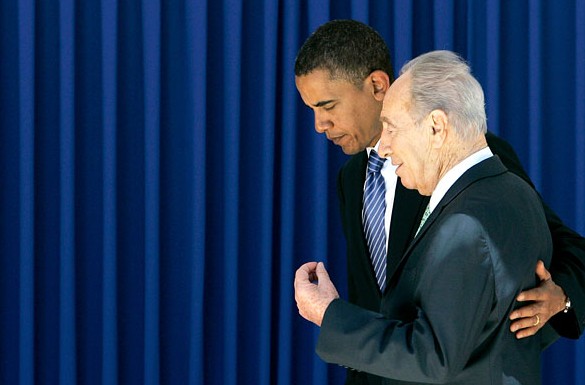
“Very few leaders if at all were able to change the mood of the entire world in such a short while with such profound impact. You provided the entire humanity with fresh hope, with intellectual determination, and a feeling that there is a lord in heaven and believers on earth.

“Under your leadership, peace became a real and original agenda. And from Jerusalem, I am sure all the bells of engagement and understanding will ring again. You gave us a license to dream and act in a noble direction.” Nobel Peace Prize laureate and President of Israel, Shimon Peres.

_____

It’s important not to rush to judgment on Obama — unless the judgment is glowing, then it’s full steam ahead.

If the so-called “reality-based community” still existed, then the very same people who have been suggesting that Obama critics hold their fire should now be insisting the Nobel committee jumped the gun.

Unfortunately that isn’t happening as much as it should. Why? Obama loyalists feel personally embattled. The impulse to grasp on to this fleeting object of relief is for some, irresistible. It’s a quick salve to those whose own unflinching loyalties portend humiliations that lurk down the road.

Realists can’t indefinitely remain true believers. True believers eventually abandon realism.

European Commission President Jose Manuel Barroso said: “The award of the prize to President Obama, leader of the most significant military power in the world, at the beginning of his mandate, is a reflection of the hopes he has raised globally with his vision of a world without nuclear weapons.”

There’s a note of realism there — this is about hopes raised, not accomplishments. The problem is, hope can only be raised so far and for so long. It’s power and durability depends on a strengthening conviction that hope is on a trajectory that leads to actuality. The longer that trajectory remains unclear, the more likely it will be that hope has instead provided the foundation for disappointment, cynicism and bitterness.

Obama traded on hope as a path to power but now he has the power he has to dispense with a large measure of hope. Governance is about deliverables.

It’s not surprising that the Nobel Peace Prize committee have chosen to endorse Obama’s nuclear disarmament initiative. But whether that goal has actually raised hopes globally is something I’m skeptical about. Disarmament is on Obama’s wish-list, but since — in the name of realism — he warned that this might not be accomplished in his lifetime, and since a goal is a dream with a deadline, thus far Obama has merely inspired hope in a dream. Ronald Reagan had that dream too.

Is there a sliver of a silver lining here? Maybe. It’s possible that the Nobel Peace-Prize winning president might feel inhibited from using the Pentagon’s newly-ordered 30,000lb Massive Ordnance Penetrator for destroying nuclear facilities in Iran. On the other hand, he might be persuaded that the destruction of Iran’s nuclear program is a necessary step on the path to nuclear disarmament.

* * *

A few other responses.

Mickey Kraus:

Turn it down! Politely decline. Say he’s honored but he hasn’t had the time yet to accomplish what he wants to accomplish. Result: He gets at least the same amount of glory–and helps solve his narcissism problem and his Fred Armisen (‘What’s he done?’) problem, demonstrating that he’s uncomfortable with his reputation as a man overcelebrated for his potential long before he’s started to realize it. … Plus he doesn’t have to waste time, during a fairly crucial period, working on yet another grand speech. … And the downside is … what? That the Nobel Committee feels dissed? … P.S.: It’s not as if Congress is going to think, well, he’s won the Nobel Peace Prize so let’s pass health care reform. But the possibility for a Nobel backlash seems non-farfetched.

The Taliban:

Taliban spokesman Zabihullah Mujahid said it was absurd to give a peace award to a man who had sent 21,000 extra troops to Afghanistan to escalate a war.

“The Nobel prize for peace? Obama should have won the ‘Nobel Prize for escalating violence and killing civilians’,” he told Reuters by telephone from an undisclosed location.

“When Obama replaced President Bush, the Afghan people thought that he would not follow in Bush’s footsteps. Unfortunately, Obama actually even went one step further.”

Gideon Rachman:

The prize is clearly an award of huge significance, awarded after only the deepest reflection, and won only by demi-Gods.

Maria Farrell:

President Obama has changed how the world feels about America. He’s lifted the planet’s mood. This guy is global Prozac.

Facebooktwittermail

Our exclusive right to self-defense

Our exclusive right to self-defense

Virtually all of Israel is now speaking in one voice against the Goldstone report, against any attempt to blame us over the war in Gaza. We’ve honed our message to a sharp point and, inspired by Prime Minister Binyamin Netanyahu’s performance at the UN, we’re delivering it with just the right tone of outrage:

How dare anyone deny us the right to self-defense! How dare anyone deny us the right to fight back against terrorism!

Very nice. Puts everyone else on the defensive. The right to self-defense is up there with motherhood and apple pie – who’s going to come out against it, especially for us, for Israel, for the Jews, for the people of the Holocaust?

The right to self-defense – perfect.

But I’d like to ask: Do the Palestinians also have the right to self-defense?

We probably wouldn’t admit it out loud, but in our heads we would say – again, in one voice – “No!”

This is the Israeli notion of a fair deal: We’re entitled to do whatever the hell we want to the Palestinians because, by definition, whatever we do to them is self-defense. They, however, are not entitled to lift a finger against us because, by definition, whatever they do to us is terrorism. [continued…]

Facebooktwittermail

Give peace a chance, says Mitchell. Fat chance, says Lieberman.

No chance of peace for years, says Israel’s Foreign Minister

There is no chance of an early solution to the Israeli-Palestinian conflict and people must “learn to live with it”, the Israeli Foreign Minister warned yesterday.

“Anyone who says that within the next few years an agreement can be reached ending the conflict… simply doesn’t understand the situation and spreads delusions, ultimately leading to disappointments and an all-out confrontation here,” Avigdor Lieberman said in a radio interview.

He added: “I am going to say very clearly: there are conflicts that have not been completely solved and people have learnt to live with it, like Cyprus.”

Mr Lieberman, the head of the far-right Yisrael Beitenu party, suggested that a long-term, interim deal with the Palestinians could ensure prosperity, security and stability, but tougher questions should be left until later.

“We have to be realistic,” he said. “We will not be able to reach agreement on core and emotional subjects like Jerusalem and the right of return of Palestinian refugees.” [continued…]

Palestinians change course on UN report

The Palestinian leadership has quickly backtracked in its approach to a U.N. report accusing Israel of possible war crimes in Gaza, in what its top diplomat acknowledged Thursday is erupting into a “clear crisis” for its people. [continued…]

UN Security Council to discuss Gaza report next week

A divided U.N. Security Council will meet next week at the request of Arab countries to discuss a U.N. report on war crimes committed by both Palestinian militants and Israel’s army during last December’s conflict in the Gaza Strip.

The Security Council’s monthly meeting on the Middle East was scheduled for October 20, but after a request from council member Libya that some western diplomat’s characterized as a bit of a “surprise”, the 15-member body agreed in closed consultations Wednesday to move up its session to October 14. [continued…]

After Goldstone, Hamas faces fateful choice

Naming collaboration — even treason — for what it is has always been a painful taboo among Palestinians, as for all occupied peoples. It took the French decades after World War II to begin to speak openly about the extent of collaboration that took place with the Nazi-backed Vichy government. Abbas and his militias — who for a long time have been armed and trained by Israel, the United States and so-called “moderate” Arab states to wage war against the Palestinian resistance — have relied on this taboo to carry out their activities with increasing brazenness and brutality. But the taboo no longer affords protection, as calls for Abbas’ removal and even trial issued from Palestinian organizations all over the world.

Hamas too seems to have been taken by surprise at the strength of reaction. Hamas leaders were critical of Abbas’ withdrawal of the Goldstone resolution, but initially this was notably muted. Early on, Khaled Meshal, the movement’s overall leader, insisted that despite the Goldstone fiasco, Hamas would proceed with Egyptian-mediated reconciliation talks with Fatah and smaller factions scheduled for later in the month, stating that reaching a power-sharing deal remained a “national interest.”

As the tremors continued, however, Hamas leaders escalated their rhetoric — seemingly following, not leading, public opinion. Mahmoud Zahar, a prominent Hamas leader in the Gaza Strip, labeled Abbas a “traitor” and urged that he be stripped of his Palestinian nationality. Prime Minister Ismail Haniyeh, speaking before a hastily convened session of the Palestinian Legislative Council, said Abbas was personally responsible for the “crime” committed in Geneva, and a senior officer from the Hamas-controlled Gaza police force held a press conference to announce that Abbas and his associates would be subject to arrest if they set foot in Gaza. [continued…]

Netanyahu, the tunnels opener

Last week, an incident that could have set the entire Middle East on fire was prevented. Netanyahu’s secret plan to visit a disputed tunnel in the East Jerusalem Palestinian neighborhood of Silwan, at the site known as Ir David (the City of David), was canceled, probably with some international intervention. Am I exaggerating the danger? No. Judging from past experience, provocations in Jerusalem never end well, and with the tensions in Jerusalem clearly rising in recent weeks, the potential for an explosion is very real. [continued…]

Israel considers recalling its ambassador to Sweden

Israel is considering recalling its ambassador to Stockholm in light of Swedish Foreign Minister Carl Bildt’s remarks in support of a UN report claiming war crimes were committed by both sides during the Israel-Hamas Gaza conflict.

Bildt told reporters in Stockholm Thursday that South African jurist Richard Goldstone, who headed the investigation into the war, is a person with “high credibility” and “high integrity” and that his report carries weight.

Deputy Foreign Minister Danny Ayalon called to re-examine Israel’s relations with Sweden. [continued…]

Facebooktwittermail

Afghan war debate now leans to focus on Al Qaeda

Afghan war debate now leans to focus on Al Qaeda

President Obama’s national security team is moving to reframe its war strategy by emphasizing the campaign against Al Qaeda in Pakistan while arguing that the Taliban in Afghanistan do not pose a direct threat to the United States, officials said Wednesday.

As Mr. Obama met with advisers for three hours to discuss Pakistan, the White House said he had not decided whether to approve a proposed troop buildup in Afghanistan. But the shift in thinking, outlined by senior administration officials on Wednesday, suggests that the president has been presented with an approach that would not require all of the additional troops that his commanding general in the region has requested.

It remains unclear whether everyone in Mr. Obama’s war cabinet fully accepts this view. While Vice President Joseph R. Biden Jr. has argued for months against increasing troops in Afghanistan because Pakistan was the greater priority, Secretary of State Hillary Rodham Clinton and Defense Secretary Robert M. Gates have both warned that the Taliban remain linked to Al Qaeda and would give their fighters havens again if the Taliban regained control of all or large parts of Afghanistan, making it a mistake to think of them as separate problems. [continued…]

Afghan Taliban say they pose no threat to the West

The Afghan Taliban pose no threat to the West but will continue their fight against occupying foreign forces, they said on Wednesday, the eighth anniversary of the U.S.-led invasion that removed them from power.

U.S.-led forces with the help of Afghan groups overthrew the Taliban government during a five week battle which started on October 7, 2001, after the militants refused to hand over al Qaeda leaders wanted by Washington for the September 11 attacks on America.

“We had and have no plan of harming countries of the world, including those in Europe … our goal is the independence of the country and the building of an Islamic state,” the Taliban said in a statement on the group’s website www.shahamat.org. [continued…]

War of the worlds

An unremarkable paragraph in a piece in my hometown paper recently caught my eye. It was headlined “White House Believes Karzai Will Be Re-elected,” but in mid-report Helene Cooper and Mark Landler of the New York Times turned to Afghan War commander General Stanley McChrystal’s “redeployment option.” Here’s the humdrum paragraph in question: “The redeployment option calls for moving troops from sparsely populated and lawless areas of the countryside to urban areas, including Kandahar and Kabul. Many rural areas ‘would be better left to Predators,’ said an administration official, referring to drone aircraft.”

In other words, the United States may now be represented in the Afghan countryside, as it already is in the tribal areas on the Pakistani side of the border, mainly by Predators and their even more powerful cousins, Reapers, unmanned aerial vehicles with names straight out of a sci-fi film about implacable aliens. If you happen to be an Afghan villager in some underpopulated part of that country where the U.S. has set up small bases — two of which were almost overrun recently — they will be gone and “America” will instead be soaring overhead. We’re talking about planes without human beings in them tirelessly scanning the ground with their cameras for up to 22 hours at a stretch. Launched from Afghanistan but flown by pilots thousands of miles away in the American West, they are armed with two to four Hellfire missiles or the equivalent in 500-pound bombs. [continued…]

Facebooktwittermail

Iran: Can the U.S. take ‘yes, but’ for an answer?

Iran: Can the U.S. take ‘yes, but’ for an answer?

The U.S. and its allies had sought to prevent Iran from achieving a “breakout” capacity — i.e., assembling sufficient civilian nuclear infrastructure to allow it to move relatively quickly to build a bomb should it choose to break out of the NPT, in the manner that a country like Japan is capable of doing. That goal required Iran to give up exercising its right to enrich uranium. There’s no sign of Iran moving in that direction, but if it shows new flexibility in negotiating further safeguards against weaponization of its nuclear output, that will create a new dilemma for the Obama Administration: whether or not the U.S. and its allies, particularly Israel, can live with an outcome that leaves Iran with “threshold” capacity, even under greater safeguards.

While under attack in a Senate subcommittee from Republicans who are skeptical over the Geneva talks, Deputy Secretary of State Jim Steinberg suggested on Tuesday, according to CNN, that “one reason for the Obama Administration’s engagement toward Iran was to secure international support for sanctions if Iran continued to defy international demands.” The argument works if Iran stonewalls; but if it offers counterproposals deemed reasonable by China, Russia and some Europeans, winning support for further sanctions would become even harder. And that’s a game the Iranians may be ready to play, by refusing to give up uranium enrichment but at the same time showing new openness to measures aimed at strengthening international confidence in the peaceful intent of its nuclear program. Tehran is far more likely to tailor its positions to what will be acceptable to Russia, China and some of the Europeans than it is to heed the demands put forward by the U.S. and its key allies. [continued…]

CIA knew about Iran’s secret nuclear plant long before disclosure

In an interesting reversal of roles from the Bush era, the Europeans were pushing for the plant to be outed at once, while the U.S. was more cautious. “The Americans seem to have become more patient as their dossier on Iran has gotten fuller, while the Europeans are getting more anxious about taking care of this matter as they’ve learned more,” says Jacquard.

From then on, the challenge was to keep the information secret. Panetta said he ordered the presentation to be readied “in the event that that information leaked out or that [the Obama Administration] wanted to present it to the International Atomic Energy Agency.” British, French and Israeli intelligence agencies were involved in creating the presentation, he added.

U.S. officials believe that it was only when Iran found out that its cover had been blown that it chose to own up to the plant’s existence — although how it might have learned of Washington’s discovery remains unclear. On the eve of the U.N. General Assembly last month, the Iranians sent the IAEA a terse note, acknowledging the presence of the Qum facility. The next day, Panetta dispatched a team to the IAEA’s headquarters in Vienna to make the presentation. [continued…]

Is the U.S. preparing to bomb Iran?

The notification says simply, “The Department has an Urgent Operational Need (UON) for the capability to strike hard and deeply buried targets in high threat environments. The MOP is the weapon of choice to meet the requirements of the UON.” It further states that the request is endorsed by Pacific Command (which has responsibility over North Korea) and Central Command (which has responsibility over Iran).

The request was quietly approved. On Friday, McDonnell Douglas was awarded a $51.9 million contract to provide “Massive Penetrator Ordnance Integration” on B-2 aircraft.

This is not the kind of weapon that would be particularly useful in Iraq or Afghanistan, but it is ideally suited to hit deeply buried nuclear facilities such as Natanz or Qom in Iran. [continued…]

Iran blames U.S. in disappearance of scientist

Iran’s foreign minister on Wednesday accused the United States of being involved in the disappearance of an Iranian scientist with alleged links to Iran’s nuclear program.

The charge comes less than a week after Iran reached tentative accords with the United States and other major powers on addressing questions about its nuclear ambitions, including letting international inspectors visit its newly disclosed uranium-enrichment site near Qom. The charge also comes as the United States has raised questions about Americans being held in Iran.

The scientist, Shahram Amiri, vanished during a pilgrimage to Saudi Arabia four months ago; Iran previously called on Saudi Arabia to help locate him. He is a researcher at Malek Ashtar University, which is connected to Iran’s Revolutionary Guard Corps and was listed by the European Union last year as an entity linked to Iran’s nuclear activities or weapon delivery systems. [continued…]

Iran plans to cut subsidised gasoline quota

Iran plans to nearly halve the amount of gasoline that motorists can buy at a heavily subsidised price, state television reported on Thursday, in what could be a politically controversial proposal.

It quoted Oil Minister Massoud Mirkazemi as saying that under the plan, to be considered by parliament next week, the quota of subsidised gasoline would be reduced to 55 litres per month from 100 litres now.

The proposal comes as the United States and its European allies explore ways of targeting fuel imports into Iran if it continues to press on with its nuclear programme. [continued…]

Facebooktwittermail