Monthly Archives: January 2010

Obama confidant’s spine-chilling proposal

Obama confidant’s spine-chilling proposal

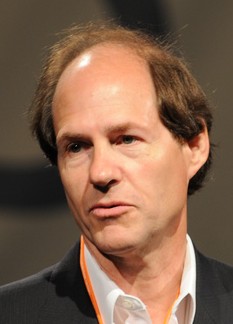
Cass Sunstein has long been one of Barack Obama’s closest confidants. Often mentioned as a likely Obama nominee to the Supreme Court, Sunstein is currently Obama’s head of the Office of Information and Regulatory Affairs where, among other things, he is responsible for “overseeing policies relating to privacy, information quality, and statistical programs.” In 2008, while at Harvard Law School, Sunstein co-wrote a truly pernicious paper proposing that the U.S. Government employ teams of covert agents and pseudo-“independent” advocates to “cognitively infiltrate” online groups and websites — as well as other activist groups — which advocate views that Sunstein deems “false conspiracy theories” about the Government. This would be designed to increase citizens’ faith in government officials and undermine the credibility of conspiracists. The paper’s abstract can be read, and the full paper downloaded, here.

Sunstein advocates that the Government’s stealth infiltration should be accomplished by sending covert agents into “chat rooms, online social networks, or even real-space groups.” He also proposes that the Government make secret payments to so-called “independent” credible voices to bolster the Government’s messaging (on the ground that those who don’t believe government sources will be more inclined to listen to those who appear independent while secretly acting on behalf of the Government). This program would target those advocating false “conspiracy theories,” which they define to mean: “an attempt to explain an event or practice by reference to the machinations of powerful people, who have also managed to conceal their role.” Sunstein’s 2008 paper was flagged by this blogger, and then amplified in an excellent report by Raw Story’s Daniel Tencer. [continued…]

Editor’s Comment — Glenn Greenwald’s whole analysis is well worth reading but I’ll make a couple of points. If Sunstein gave more attention to where conspiracy theories come from, he’d come at this issue from a completely different direction.

Buried deep in his paper is the following remark:

… we have conjectured that there is a causal link between the prevalence of conspiracy theories and the relative absence of civil liberties and a well-functioning marketplace of ideas, so it is unsurprising that such theories are even more widespread in the Muslim world than in the United States.

But as soon as has he makes this important observation he goes on to imply that the US government can exploit political repression overseas to its advantage. He notes that in the foreign arena “the U.S. enjoys greater freedom of action, in part because domestic U.S. politics will tolerate some actions abroad that it would not tolerate if taken at home.”

What Sunstein fails to do is look at the psychological dynamics in play in situations that provide fertile ground for the proliferation of conspiracy theories.

The US, relative the Middle East, might enjoy the protection of civil liberties and a marketplace of ideas — though I don’t know that anyone could seriously describe the latter as well-functioning — yet the appetite for conspiracy theories here, particularly relating to 9/11, is huge.

This is a reflection of two things:
1. Massive and historically deep-rooted mistrust of government, and
2. The widespread and well-founded belief that the citizens of this country exercise little influence over the workings of government.

Both of these factors (and especially the second one) serve to reinforce a profound sense of the grossly inequitable distribution of political power and a subjective experience in which government appears all-powerful and the individual essentially powerless.

The instinctive response to feelings of powerlessness is to grasp hold of a narrative of agency. Rather than feel that we are living in a world out of control, we prefer to believe that the control we lack is possessed by someone or something else. That might be a supposedly benign entity such as a loving God, or alternatively a cloaked and dangerous entity: the US government, a global Zionist conspiracy, aliens… you name it.

The psychological comfort that a belief in malevolent agency provides, is that it tells us we are not truly impotent but we have been deprived of the opportunity to exert our natural power. We are imprisoned but we can still rattle the bars.

Circling back to the problem that Sunstein wants to address, a real solution would not involve any of his preferred Orwellian machinations.

If the US government wants to challenge dangerous conspiracy theories it needs to pursue two far-reaching political goals:

1. Make government more trustworthy.
2. Turn “government of the people, by the people, for the people” into a reality.

For as long as neither of these goals have effectively been accomplished, conspiracy theories will remain popular. They should be seen for what they are: a symptom of an underlying socio-political disease; not the disease itself. People who think like Sunstein are part of the problem; not the solution.


Facebooktwittermail

Welcome to Hebron

Leila Sarsour, who is 17 years old, lives in Hebron in the Israeli-occupied West Bank in Palestine. She has a dream that everyone can live in peace, but she and her schoolmates are exposed daily to harassment, violence and intimidation from Israeli settlers.

For the Palestinian school girls in the city of Cordoba School in Hebron in the West Bank, it is impossible to remain unaffected by the Israeli occupation. The school is surrounded by military checkpoints, barbed wire and fanatical Israeli settlers. The path to school has become a path of degradation. Leila and her classmates are exposed daily to the indifference of the Israeli soldiers and laughter and stones from settlers. But in spite of constant harassment and racist slogans, Leila retains a belief and hope in peace and justice. She refuses to let bitterness and hatred to control her life: “We can all live together. Muslim, Jew or Christian, there is no reason to hate each other,” she says in Terje Carlsson’s documentary Welcome to Hebron.

Facebooktwittermail

Obama pledges aid to Haiti

Obama pledges aid to Haiti

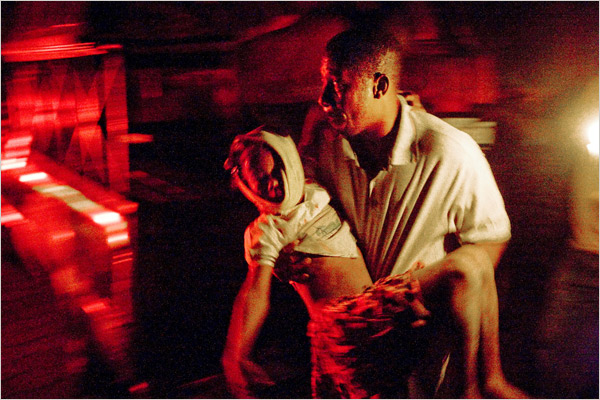
President Obama on Thursday promised $100 million along with more American troops for the relief effort in Haiti, vowing that the United States would stand with the impoverished nation as it grappled with the devastation of its capital city.

The Pentagon sent 125 soldiers from the 82nd Airborne Division based at Fort Bragg, N.C., and said that by the end of the week their number would grow to 3,000. Military officials said their primary mission would be to provide security as aid began to arrive.

Those Army troops will be supplemented in the coming days by 2,000 Marines from Camp Lejeune, N.C., who are scheduled to arrive in Haiti by Monday. [continued…]

Editor’s Comment — How much is $100 million?

As much as the US Department of Defense spends in one hour, each hour, 24/7, 365 days a year. (In this case the DoD is of course making a major effort to help the people of Haiti so the US contribution will be more than $100 million.)

But since the United States is expected to spend over $880 billion on defense in 2010, it’s worth asking: Forgetting about the humanitarian imperative, which makes a more significant contribution to the US national security? A $100 million spent on relief work in Haiti or $100 million spent on the war in Afghanistan? (Before Obama announced his surge plan, the war was estimated to be costing $133 million a day.)

Facebooktwittermail

To be Israeli today

To be Israeli today

To be Israeli today is to organize your thinking around the enemy. Without the enemy, you can’t understand the world or your place in it. Without the enemy, you don’t know what you want – except more money, which is the default goal of the whole human race.

What else do Israelis want? We want security! We want those bastards to leave us alone! We want the enemy to go away! Fear and aggression toward the enemy – that’s all that drives us anymore, that and the desire for more money.

And even if we make more money, what do we want to do with it? Invest it in improving the country, in improving the world? Is that what the start-up nation stands for?

When we think of the economy, we think of “me.” But when we think of “us,” we think first and last of “them.” Of course, there are loads and loads of generous, public-spirited Israelis doing great things individually or in groups. But when we’re all together as a nation, all we see is the enemy. Stopping the enemy is the only national project we have left. It’s the only issue that gets people’s attention for more than a day.

As for the Jewish part of being Israeli, Judaism in this country is overwhelmingly tribal, to the point of belligerency. Israeli-style Judaism feeds this us-against-them mentality like nothing else except, maybe, the national cult of the military. [continued…]

Editor’s CommentAndrew Sullivan writes:

The Netanyahu government has all but declared war on the Obama administration and then openly disses a vital ally, Turkey. The slow cultural shifts in Israel – toward ever more arrogance, more fundamentalism, more Russian immigrant racism, contempt for the Muslim world, military adventurism, and the daily grinding of the Palestinians on the West Bank and pulverization and inhumane blockade of the people of Gaza … well maybe some others can explain it.

All I can say is: it saddens me, as a longtime lover of the Jewish state. It does not represent the historic mainstream of liberal Jewish society, it is a betrayal of many Jewish virtues that goyim like me deeply admire, and it seems designed for war as some kind of eternal and uplifting state of mind. I hope Israel shifts soon. For Israel’s sake.

It’s good that Sullivan is helping pull the issue of Israel into mainstream American discourse, but is he really as perplexed as he presents himself? Is the history of Palestinian dispossession really so murky that he must depend on others to explain what’s going on here?

He sounds like an aging aunt bemused about the downfall of a nephew she used to dote upon: He used to be such a nice boy but then he started taking drugs. I just don’t know what happened to him.

Facebooktwittermail

Turkish human rights group: Arrest Barak when he arrives here

Turkish human rights group: Arrest Barak when he arrives here

espite the intensifying crisis between Israel and Turkey, Defense Minister Ehud Barak is insisting to follow through with his scheduled plans to visit Turkey next week. However, on Thursday it became clear that an arrest warrant may await him there.

One of the major human rights organizations in Turkey, Mazlumder, requested from the Turkish state prosecution to order that Barak be arrested upon landing in the country for what they call “his responsibility for war crimes during Operation Cast Lead.”

A statement published Wednesday night by the Istanbul branch of Mazlumder claimed that the request is rooted in the right of universal jurisdiction and Article CMK98 of Turkish law. [continued…]

U.S. to store $800 million in emergency gear in Israel

The U.S. Army will double the value of emergency military equipment it stockpiles on Israeli soil, and Israel will be allowed to use the U.S. ordnance in the event of a military emergency, according to a report in Monday’s issue of the U.S. weekly Defense News.

The report, written by Barbara Opall-Rome, the magazine’s Israel correspondent, said that an agreement reached between Washington and Jerusalem last month will bring the value of the military gear to $800 million.

This is the final phase of a process that began over a year ago to determine the type and amount of U.S. weapons and ammunition to be stored in Israel, part of an overarching American effort to stockpile weapons in areas in which its army may need to operate while allowing American allies to make use of the ordnance in emergencies. [continued…]

Bomb in Jordan misses convoy of Israeli diplomats

A roadside bomb exploded near a convoy of vehicles carrying Israeli diplomats in Jordan on Thursday, but no one was injured, according to Israeli and Jordanian officials.

“All I can say at this moment is there was an attack that targeted an Israeli embassy vehicle,” foreign-ministry spokesman Yigal Palmor said. “The Israeli embassy staff in the vehicle were not injured. The vehicle proceeded.”

A senior Israeli official said Israel’s ambassador to Jordan, Danny Nevo, wasn’t in the convoy, but refused to specify who was. [continued…]

Facebooktwittermail

Ex-IAEA chief injects life into Egypt’s politics

Ex-IAEA chief injects life into Egypt’s politics

The U.N.’s former nuclear chief has yet to return home to his native Egypt after almost a quarter century monitoring the world’s atomic programs, but the 2005 Nobel Peace Prize winner has already created the biggest political stir in his homeland in years by hinting at a new career in politics.

Mohamed ElBaradei may one day regret plunging into Egypt’s politics — where challenges to the regime have been few and swiftly dealt with — but his move has injected fresh hope into the country’s stagnant political atmosphere.

Egypt has been ruled for nearly 30 years by Hosni Mubarak, now 81, who appears to be trying to set up a political dynasty by grooming his son to succeed him. [continued…]

Facebooktwittermail

Suicide attack reveals threat to Obama’s Afghanistan plan

Suicide attack reveals threat to Obama’s Afghanistan plan

The bombing has focused new attention on the Haqqani network, an Afghan insurgent group that U.S. intelligence officials said is based in North Waziristan, has ties to members of the Pakistani military’s Inter-Services Intelligence agency and probably played a key role in the suicide bombing.

The relative sophistication of the attack, especially in contrast to the attempted Christmas Day bombing of a Northwest Airlines jet, suggests that the militants who been planned and ran it may have received some training or advice from rogue ISI officers, the officials said.

For example, they said, the bomber, 32-year-old Jordanian Humam Khalil Abu Mulal al Balawi, spent most of 2009 in Pakistan and traveled to Khost from Pakistan, and he managed to evade the counter-intelligence tools that customarily are used to assess whether a potential agent is reliable, they said.

“Pakistan has to decide whether Haqqani is an asset or a liability. At the moment, I think they’re veering towards liability, but it’s not clear,” said a Western official in Afghanistan, who couldn’t be named because he isn’t authorized to discuss the subject publicly. [continued…]

Facebooktwittermail

Yemen clerics warn US to stay out or face jihad

Yemen clerics warn US to stay out or face jihad

Yemen’s association of clerics warned yesterday they would call for jihad in the case of foreign military intervention amid growing concern that the United States might carry out direct strikes against al Qa’eda militants in the country.

“If any party insists on aggression, or invading the country or carrying out military or security intervention, then jihad becomes obligatory according to Islam,” said a statement signed by 150 clerics, announced at a meeting of dozens of prominent religious leaders.

The clerics, led by Sheikh Abdulmajeed al Zindani, a hardliner labelled by the US as a “global terrorist”, met amid heavy security at the historic al Mashhad mosque in Sana’a. [continued…]

Facebooktwittermail

Haiti, the devil and Pat Robertson

Haiti, the devil and Pat Robertson

Pat Robertson is at it again. The purported Christian minister who suggested assassinating Venezuela leader Hugo Chavez and nuking the U.S. State Department, the reputed follower of Jesus who blamed the 9/11 terrorist attacks and Hurricane Katrina on pagans, abortionists, feminists, gays and lesbians, is now attributing the Haitian earthquake to Haiti’s “pact to the devil.”

“Something happened a long time ago in Haiti and people might not want to talk about,” Robertson said Tuesday on his 700 Club show. “They were under the heel of the French, you know Napoleon the third and whatever. And they got together and swore a pact to the devil. They said ‘We will serve you if you will get us free from the prince.’ True story. And so the devil said, ‘Ok it’s a deal.’ And they kicked the French out. The Haitians revolted and got something themselves free. But ever since they have been cursed by one thing after another.” [continued…]

Editor’s Comment — Stripped to their psychological core, there are two responses that animate life: attraction and recoil. The interplay of these two movements operates in one of its most complex ways when we witness the suffering of others. Do we empathize and through our imagination enter into that suffering, or do we move with the core and instinctive reflex which is to step away? Inevitably and in infinitely varying degrees we do both.

Pat Robertson, with his warm and fuzzy, how tragic — but those Haitians had it coming, offers a salve to the selfish response by suggesting that this disaster is an act of divine retribution. In so doing he creates a space for sympathy with no empathy. White suburban evangelical Americans can be charitable but sleep soundly knowing that since they have not made a pact with the devil, they should have no fear that they might suffer like the Haitians.

Meanwhile, for those of us who see neither the divine nor the demonic at work in nature, we have another reminder that since misery is never far away our only hope will be found in mutual aid.

How you can help.

World races against time to aid Haiti

resident Barack Obama says “one of the largest relief efforts in our recent history” is moving toward Haiti. Some U.S. resources already are on the ground providing water and medicine, search and rescue efforts and airlifts of the injured.

Speaking to reporters Thursday at the White House, Obama said the U.S. government is making an initial investment of $100 million for the earthquake relief effort in Haiti. He said the amount would grow over the year.

He said it will take hours “maybe days” to get the full U.S. relief contingent on the ground, because of the damaged roads, airport, port and communications. He acknowledged that “none of this will seem quick enough” to the many suffering. [continued…]

Facebooktwittermail

Report: Turkey warns Lebanon that Israel may be planning attack

Report: Turkey warns Lebanon that Israel may be planning attack

Turkish Prime Minister Recep Tayyip Erdogan this week warned Lebanese leaders that Israel may be planning an attack on its northern neighbor, Lebanese sources told the London-based Arabic language daily A-Sharq al-Awsat on Thursday.

At a meeting in Ankara with Lebanese Prime Minister Saad Hariri and President Michel Suleiman on Monday, Erdogan declared that Israel was endangering world peace by using exaggerated force against the Palestinians, breaching Lebanon’s air space and waters and for not revealing the details of its nuclear program.

Erdogan called on the five permanent members of the United Nations Security Council to pressure Israel over its nuclear program in the same way that the international community has been dealing with Iran. “Israel never denied that it has nuclear weapons,” said Erdogan. “In fact, it has admitted to such.” [continued…]

Turkish-Israeli tension on the axis of the ‘Damascus Province’

As Turkish-Israeli relations turn sour, Turkey has lifted the visas to all Arab countries neighboring Israel and a political-economic integration is being pursued.

This means being a “center of power” in the region.

But if you pay attention to Erdoğan’s remark on Israel the other day in the press conference with Hariri, you realize that Turkish Prime Minister said: “Israel says ‘I am the power of the region’ because there is an imbalance of opportunities. We never approve of this picture. We will continue to be with the aggrieved.”

Against a state that declares itself to be the power of the region just because of having more opportunities than the others, Turkey gathers the “aggrieved” around it, lifts visas, engages in serious economic ties and does all these by applying “soft power” only.

We should expect more reactions to come because Turkey and its prime minister have made serious moves against Israel and have caused debates both at in the region and outside it. [continued…]

Danny Ayalon should resign for provoking shameful crisis vis-à-vis Turkey

Diplomatic crises are a dime a dozen these days, but the most recent one, orchestrated by Deputy Foreign Minister Danny Ayalon, has delivered a gut-wrenching blow to Israel’s dignity.

The Turkish television show that enraged the Foreign Ministry is indeed insulting, and somewhat reminiscent of an earlier crisis involving Swedish tabloid Aftonbladet. In that case too, the Foreign Ministry came out with guns blazing. A silly and wholly unsubstantiated tabloid article that could have gone totally unnoticed was turned into a battle with the Swedish government.

Like the Swedish tabloid article, the Turkish television show was given more credibility by Israel’s vehement response to it. However, the crisis with Turkey had far more devastating results, as it ended with an official apology to a state now widely viewed as biased against Israel – a state which Prime Minister Benjamin Netanyahu believes is inching closer to Iran every day. [continued…]

Ayalon apologizes following Turkish deadline

Ayalon’s office said later Wednesday that “now, following President Peres’ appeal and with respect to his request, a letter has been sent from the deputy foreign minister to the Turkish ambassador to Israel.”

The deputy foreign minister addressed the Knesset on Wednesday evening and said that “Israel will eventually benefit, and I believe that the relations between Israel and Turkey will also benefit” from the diplomatic incident.

The deputy minister was asked by Knesset Member Carmel Shama (Likud), “Was everything that happened preplanned?” Ayalon responded, “I think we should leave an element of surprise for our rivals and enemies… Let’s leave it, let them decide.” [continued…]

Facebooktwittermail

The meritocracy and Jewish kinship network

The meritocracy and Jewish kinship network

A lot of people are talking about David Brooks’s distastefully-smug column in the Times yesterday about Jewish achievement, in which he says that we are 2 percent of the U.S. population and 25 percent of this and that. And that we get all the patents in the Middle East while the Arabs smoke hookahs.

He asks how this can be, and talks about our incredible culture. I agree: it’s a helluva bookish culture. Though that same intellectual culture is going out the window now that the chief occupation of Jewish leadership is saying, Repeat after us, apartheid is democracy.

But I’d like to inject a realistic note here. How much of Jewish achievement reflects the fact that Jews look out for one another? When I had to get a partner on this website to keep it going, I was most comfortable getting another Jew. Years ago when I was at the Harvard Crimson newspaper, my Irish-Catholic friend Mary Ridge informed me that it was a “Jewish club”–we selected for our own kind; and the Crimson produced a lot of professional journalism talent. I have gotten most of my journalism work from Jewish bosses. [continued…]

Facebooktwittermail

Sharon’s real legacy – keeping the Arabs out of sight

Sharon’s real legacy – keeping the Arabs out of sight

Let’s assume the optimistic forecast by special U.S. envoy George Mitchell comes true and in two years the establishment of an independent Palestine is declared at a ceremony. The event will be broadcast on prime time, but most Israelis will opt to view “Big Brother 6,” “Survivor 7” or whatever the next television hit is. Viewers will behave this way not because they oppose a Palestinian state but because they are indifferent. Palestine-shmalestine simply does not interest them.

Most Israelis today are cut off from the conflict with the Palestinians and do not interact with them. From their point of view, the Palestinians are blurry figures during TV newscasts: Mahmoud Abbas and Ismail Haniyeh speak, women covered from head to toe mourn in a tent, men run with a stretcher after an ambulance, men concealing their faces fire Qassam rockets. Israelis have no interest in knowing anything further. Nablus and Ramallah are about 40 minutes by car from Tel Aviv, but in the eyes of Tel Avivians they are on a different planet. New York, London and Thailand are much closer.

The settlers beyond the separation fence are the only Israelis who see Palestinians, mostly through car windows on the roads they share. The settlers, like the Palestinians, are disconnected from the residents of the Tel Aviv region, Haifa or Be’er Sheva, who hardly ever cross the fence. They have no business in Elon Moreh, Yitzhar or Psagot. The big settlements like Ma’aleh Adumim and Ariel can be reached almost without having to see Palestinians. [continued…]

Facebooktwittermail

Rawabi, and the American mission to civilize the West Bank

Rawabi, and the American mission to civilize the West Bank

The Palestinian Authority, in coordination with the American government, is building a new settlement in the West Bank. This one is intended to provide 40,000 “Palestinians with homes in an American-style development.” The Huffington Post carries the whole story.

When I first heard about the Rawabi plan I was repulsed. It took some time for me to distill exactly what made me so uncomfortable. It wasn’t the Pavlovian conditioning; direct exposure to the Jewish settler colonies in the West Bank and Gaza has created a psychological association between objectively neutral architectural features – red-tiled roofs, trimmed hedges, cul-de-sacs – and racism and apartheid for me. It wasn’t that though; Rawabi seemed more profoundly wrong.

Rawabi is a painful outgrowth of the continued obliteration of Palestine. Here is something so clearly alien, something so obviously conceived in an alien mind, masquerading as Palestinian. Some State Department bureaucrat was saying to me, “We are destroying you and your culture to recreate you in our image.” Palestinian cities and towns, which grow organically – really, an amalgamation of family homes and municipal buildings – are now qualitatively inferior. The Palestinian village is old, antiquated, disorganized, dysfunctional, anarchical, loud and dirty. By contrast, Rawabi is new, organized, efficient, beautiful, clean, ordered and ‘American.’ Rawabi is the tangible materialization of the American mission civilisatrice in the West Bank, not to mention the project to alienate Palestinians from one another. [continued…]

Facebooktwittermail

Regime change in Tehran?

Regime change in Tehran?

The dramatic images of protestors in Iran fearlessly facing — and sometimes countering — the brutal attacks of the regime’s security forces rightly gain the admiration and sympathy of viewers in the West. They also leave many Westerners assuming that this is a preamble to regime change in Tehran, a repeat of history, but with a twist. After all, Iran has the distinction of being the only Middle Eastern state that underwent a revolutionary change — 31 years ago — which originated as a mild street protest.

Viewed objectively, though, this assumption is over-optimistic. It overlooks cardinal differences between the present moment and the 1978-1979 events which led to the overthrow of the Shah of Iran and the founding of an Islamic Republic under Ayatollah Ruhollah Khomeini. History shows that a revolutionary movement triumphs only when two vital factors merge: it is supported by a coalition of different social classes and it succeeds in crippling the country’s governing machinery and fracturing the state’s repressive apparatus. [continued…]

How the Iranian uprising has transformed Shiism

The Green Movement is a revolt against theocracy. Most of its adherents are young Iranians with little or no religious motivation. Yet, an iconic figure of the revolt was the nation’s highest-ranking cleric, Grand Ayatollah Hussein Ali Montazeri; and, last month, Ashura, a holy day celebrating martyrdom, occasioned some of the movement’s most massive protests.

Perhaps the fact that the movement has acquired a Shia veneer shouldn’t be terribly surprising. During the past century, no social movement in Iran has succeeded without draping itself in religion or without a strong Shia contingent in its leadership. [continued…]

Facebooktwittermail

George W. Obama

George W. Obama

Before President Obama, it was grimly accurate to write, as I often did in the Voice, that George W. Bush came into the presidency with no discernible background in constitutional civil liberties or any acquaintance with the Constitution itself. Accordingly, he turned the “war on terror” over to Dick Cheney and Donald Rumsfeld—ardent believers that the Constitution presents grave obstacles in a time of global jihad.

But now, Bush’s successor—who actually taught constitutional law at the University of Chicago—is continuing much of the Bush-Cheney parallel government and, in some cases, is going much further in disregarding our laws and the international treaties we’ve signed.

On January 22, 2009, the apostle of “change we can believe in” proclaimed: “Transparency and the rule of law will be the touchstones of my presidency.” But four months into his first year in command, Obama instructed his attorney general, Eric Holder, to present in a case, Jewel v. National Security Agency, a claim of presidential “sovereign immunity” that not even Dick Cheney had the arrant chutzpah to propose. [continued…]

Poll: Most Americans would trim liberties to be safer

After a recent attempted terrorist attack set off a debate about full-body X-rays at airports, a new McClatchy-Ipsos poll finds that Americans lean more toward giving up some of their liberty in exchange for more safety.

The survey found 51 percent of Americans agreeing that “it is necessary to give up some civil liberties in order to make the country safe from terrorism.”

At the same time, 36 percent agreed that “some of the government’s proposals will go too far in restricting the public’s civil liberties.” [continued…]

The U.S. military, al-Qaeda, and a war of futility

In his book on World War II in the Pacific, War Without Mercy, John Dower tells an extraordinary tale about the changing American image of the Japanese fighting man. In the period before the surprise attack on Pearl Harbor, it was well accepted in military and political circles that the Japanese were inferior fighters on the land, in the air, and at sea — “little men,” in the phrase of the moment. It was a commonplace of “expert” opinion, for instance, that the Japanese had supposedly congenital nearsightedness and certain inner-ear defects, while lacking individualism, making it hard to show initiative. In battle, the result was poor pilots in Japanese-made (and so inferior) planes, who could not fly effectively at night or launch successful attacks.

In the wake of their precision assault on Pearl Harbor, their wiping out of U.S. air power in the Philippines in the first moments of the war, and a sweeping set of other victories, the Japanese suddenly went from “little men” to supermen in the American imagination (without ever passing through a human phase). They became “invincible” — natural-born jungle- and night-fighters, as well as “utterly ruthless, utterly cruel and utterly blind to any of the values which make up our civilization.”

Sound familiar? It should. Following September 11, 2001, news headlines screamed “A NEW DAY OF INFAMY,” and the attacks were instantly labeled “the Pearl Harbor of the twenty-first century.” Soon enough, al-Qaeda, like the Japanese in 1941, went from a distant threat — the Bush administration, on coming into office, paid next to no attention to al-Qaeda’s possible plans — to a team of arch-villains with little short of superpowers. After all, they had already destroyed some of the mightiest buildings on the planet, were known to be on the verge of seizing weapons of mass destruction, and, if nothing was done, might soon enough turn the Muslim world into their “caliphate.” [continued…]

Facebooktwittermail

Israel’s hopeless quest for respect

Israel’s hopeless quest for respect

As Israeli-Turkish relations hit a new low with the threat that Turkey might withdraw its ambassador, Israel’s foreign minister Avigdor Lieberman said he expects Israel to be treated with “dignity and respect” by Turkey.

The sign of respect Lieberman is looking for would be for the Turkish government to censor Turkish media by banning a TV show that depicts Israeli soldiers as war criminals. Israel’s war on free speech continues on many fronts without much success — other than in America.

The slide in relations between the two major regional powers began with Israel’s war on Gaza. In Davos, Turkish prime minister Recep Tayyip Erdogan stood up for Turkish dignity by refusing to be silenced after Israeli president Shimon Peres launched a bombastic tirade in defense of Israel’s right to wage war.

Though in the eyes of the Western media the Davos incident was seen as a “spat”, much more importantly in Turkey and across the Middle East, Erdogan was seen as a national leader unwilling to countenance disrespect from an Israeli leader — however much the latter might act out, used as he is to being coddled by the West.

Now we have Lieberman, whose diplomatic talent has been shaped by his experience working as a nightclub bouncer, endorsing a plan that was designed to teach Turkey a lesson. Deputy Foreign Minister Danny Ayalon seemed to think that if the Turkish ambassador was forced to look up to him — literally — humiliation would deliver in its wake, respect.

This is how the meeting unfolded where the Israeli minister conveyed to Turkey’s ambassador Oguz Celikkol how offensive Israel finds “Valley of the Wolves”.

During the photo-op at the start of the meeting, Ayalon reportedly told the photographers in Hebrew: “Pay attention that he is sitting in a lower chair and we are in the higher ones, that there is only an Israeli flag on the table and that we are not smiling.” Celikkol’s associates told Israeli Army Radio on Tuesday that the meeting with Ayalon was the most humiliating event he had experienced in 35 years as a diplomat.

Those in Israel who understand something about the way diplomacy works know that Ayalon made a huge blunder. He now faces criticism even from inside his own party, Israel Beiteinu.

“He is finished politically,” an Israel Beiteinu official told The Jerusalem Post. “This ruins his reputation as a diplomat. It is a stain that cannot be erased. He damaged Lieberman and first and foremost himself.”

Minister of Industry, Trade and Labor Binyamin Ben-Eliezer said: “The respect for Israel is not judged by how you humiliate an ambassador; humiliation doesn’t help, it only harms.”

While Ben-Eliezer and others indicate that political realism still exists in Israel, Ayalon’s mistake was less that of pure error of judgment than that of representing an Israeli mentality too faithfully.

Alon Liel, a former Israeli ambassador to Turkey, facetiously told Israeli Army Radio that “a new sort of diplomacy” had been invented, and that Lieberman had “made up a new way of reprimanding.”

“This time, they made him sit on a low chair, next time maybe they’ll make him crawl, and who knows, maybe the time after that they’ll beat him up at the entrance,” Liel said.

The former Israeli ambassador’s intention might have been to mock Lieberman, but the idea that contempt generates respect serves as a foundation stone for Zionism. Israel’s struggle to pacify its opponents has since 1948 been a relentless effort to demonstrate who stands above and who must crouch below.

Israel has placed all its bets on the effectiveness of coercion — an investment from which it is difficult to move away. There is no easy road that leads from contempt to mutual respect. Indeed, in those whose nature it is to treat others with contempt there is an underlying assumption that respect is something which will never be freely conferred.

What Danny Ayalon and those Israelis who are cast in the same mold repeatedly and unwittingly display is their own lack of dignity. They have no idea how profound a difference there is between demanding respect and being worthy of respect.

Facebooktwittermail

Iranian scientist killed by bomb had opposition links

Iranian scientist killed by bomb had opposition links

An Iranian nuclear physicist with ties to the reformist movement led by the opposition leader, Mir Hossein Moussavi, has been killed by a bomb near his home.

Dr Moussad Ali-Mohammadi was leaving his house on his way to work at Tehran University when the bomb, attached to a motorbike, went off, killing him instantly.

The Iranian authorities said they suspected the hand of exiled opposition movements working on behalf of America and Israel, a charge denied by Washington.

They drew parallels with the disappearance of a scientist attached to the country’s nuclear programme while on a pilgrimage in Saudi Arabia, who the authorities say was kidnapped and handed over to the Americans.

But Dr Ali-Mohammadi’s academic work was highly theoretical and the body responsible for the country’s nuclear research programme, which has brought Iran into conflict with the West, said he had no connection with it.

Opposition movement supporters also said he was on a list of 240 academic backers of Mr Moussavi published before last year’s disputed election. [continued…]

Editor’s Comment — It comes as little surprise that the Iranian government would be quick to accuse Israel and the US of being behind this assassination. The US is currently operating a far from covert assassination program in Pakistan and less than a year ago it was reported that Israel had launched a program specifically targeting Iran’s top nuclear scientists.

Last February, The Telegraph reported:

Israel has launched a covert war against Iran as an alternative to direct military strikes against Tehran’s nuclear programme, US intelligence sources have revealed.

It is using hitmen, sabotage, front companies and double agents to disrupt the regime’s illicit weapons project, the experts say.

The most dramatic element of the “decapitation” programme is the planned assassination of top figures involved in Iran’s atomic operations.

Israel is also widely assumed to have been behind the assassination of Imad Mughniyeh, a leading member of Hezbollah, in Damascus two years ago.

Governments that sanction or instigate assassinations have a hard time pleading innocence.

So, does this mean that Mossad is the prime suspect in this case? Probably not. More likely this was instigated by the regime itself. The killing would send multiple messages:

1. The official line – foreign enemies of the state are on the lose and Iranians must stand together to face this threat.
2. Those who support the opposition are risking their lives by doing so.
3. Any Iranian nuclear scientists who might consider defection have been served notice that they might meet the same fate.

Facebooktwittermail