Monthly Archives: January 2011

Holocaust survivors warn of stirrings of neo-fascism in Israel

The Daily Telegraph reports:

Until this month, the shadowy Lehava organisation was best known for issuing an eccentric demand in March urging Bar Refaeli, an Israeli model, not to marry Leonardo DiCaprio, the American actor, because he is a gentile.

But in recent weeks it has taken on a more sinister hue by spearheading a series of actions that included a rally in the coastal city of Bat Yam to denounce Jews who rent their homes to Arabs.

In the broader political spectrum, Lehava may represent a tiny minority of malcontents but there is growing unease in Israel after the message about renting homes was effectively endorsed by 300 rabbis.

The rabbis, some of them of senior rank, signed up to an edict issued last month that declared: “It is forbidden in the Torah to sell a house or a field in the land of Israel to a foreigner.”

With its undertones reminiscent of 1930s Berlin, where Jews were relegated to second-class status and denied the right to rent German-owned properties, the pronouncement has appalled Holocaust survivors.

“As someone who suffered as a Jew and underwent the Holocaust, I remember the Nazis throwing Jews out of their apartments and city centres in order to create ghettos,” said Noah Flug, the chairman of the International Association of Holocaust Survivors.

“I remember how they wrote on benches that no Jews were allowed, and of course it was prohibited to sell or rent to Jews. We thought that in our country this wouldn’t happen.”

Facebooktwittermail

Why EL PAÍS chose to publish the leaks

Javier Moreno, the editor of the Spanish newspaper EL PAÍS, writes:

Two senior journalists from EL PAÍS met with Assange in Switzerland on several occasions, but I have only met him once, although I have spoken to him on the telephone several times. Those conversations were limited to establishing a timetable for publication of the leaked documents, and to agree on measures to protect the lives of people who might face the death sentence, or were operating in countries where there were no legal guarantees.

It is also important to establish that at no time did Assange ask for money in return for providing access to the leaked documents, nor would EL PAÍS have agreed to such terms. The documents’ reliability are beyond question, and nobody – not even opponents of their publication – have questioned their authenticity. The obstinate focus on Assange and his methods, the scrutiny of his motivations, and the repeated attempts to destroy his personal reputation all reflect the colossal lack of respect that US diplomats show for the laws, rules and procedures in the countries where they carry out their missions – beginning with Spain, if the published cables are anything to go by.

We must not lose sight of the fact that the important thing about the WikiLeaks revelations are the revelations themselves, despite the media choosing to focus a substantial amount of its coverage on supposed shady deals that the newspapers involved have cut with Assange; on the way that WikiLeaks is financed; the organization’s alleged lack of transparency; and, worse still, on the allegations of sexual impropriety on his part.

Leaving aside the debate about the future of journalism and new technology in the WikiLeaks age, there is no doubting that the information made available by the whistleblower site is of paramount interest, despite the efforts of governments to hide or ignore the damage that they have caused. For example, after three weeks of revelations, it is now abundantly clear that the US Embassy in Madrid pressured, conspired, and did everything in its power to achieve goals that no ambassador would ever have dared suggest in public, much less insist upon.

Even the least attentive observer cannot fail to be shocked by the maneuvers to shut down three investigations by the High Court that affected the United States, or by the efforts to force Spanish companies and banks to cease trading with Iran, even though they were acting within the boundaries of international law.

Fortunately, Spain’s judges are fiercely independent – as the US ambassador bitterly pointed out on more than one occasion. By the same token, this country’s business and financial community knew that it was not breaking international law by trading with Iran. Nevertheless, the US Embassy exercised obscene pressure in a bid to achieve its aims, as the leaked documents published by EL PAÍS show.

6. A question of ethics. I don’t know who gave the order. I don’t know if came directly from Washington, or if the US ambassador came up with the idea himself. But it is clear from the cables that the US Embassy in Madrid was determined to stop Spanish companies from doing business with Iran. To this end, the Embassy did not hesitate to employ whatever method it deemed necessary, with no heed to the potential costs. And those costs were high. It was equally aggressive in trying to derail Spanish judicial inquiries into torture at Guantánamo, the CIA’s kidnapping of suspected Islamic militants, and the killing by US troops in Iraq of a Spanish cameraman in 2003.

It may yet emerge that the US Embassy broke the law in pursuing its country’s perceived interests. But in any event, what the WikiLeaks cables show is an all-too close relationship between the US Embassy, Spanish government and judicial officials that can only be a threat to the democratic health of this country.

Facebooktwittermail

» Something completely different «

Something completely different” is a new feature on War in Context where you can expect to find items that have little or nothing to do with the Middle East or the United States’ imperial misadventures.

Why greater equality makes societies stronger
Nicholas Kristoff writes:

John Steinbeck observed that “a sad soul can kill you quicker, far quicker, than a germ.”

That insight, now confirmed by epidemiological studies, is worth bearing in mind at a time of such polarizing inequality that the wealthiest 1 percent of Americans possess a greater collective net worth than the bottom 90 percent.

There’s growing evidence that the toll of our stunning inequality is not just economic but also is a melancholy of the soul. The upshot appears to be high rates of violent crime, high narcotics use, high teenage birthrates and even high rates of heart disease.

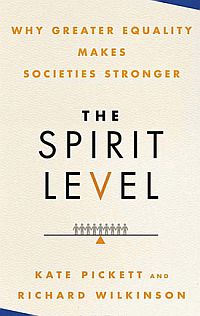
That’s the argument of an important book by two distinguished British epidemiologists, Richard Wilkinson and Kate Pickett. They argue that gross inequality tears at the human psyche, creating anxiety, distrust and an array of mental and physical ailments — and they cite mountains of data to support their argument.

“If you fail to avoid high inequality, you will need more prisons and more police,” they assert. “You will have to deal with higher rates of mental illness, drug abuse and every other kind of problem.” They explore these issues in their book, “The Spirit Level: Why Greater Equality Makes Societies Stronger.”

The heart of their argument is that humans are social animals and that in highly unequal societies those at the bottom suffer from a range of pathologies. For example, a long-term study of British civil servants found that messengers, doormen and others with low status were much more likely to die of heart disease, suicide and some cancers and had substantially worse overall health.

There’s similar evidence from other primates. For example, macaque monkeys are also highly social animals, and scientists put them in cages and taught them how to push a lever so that they could get cocaine. Those at the bottom of the monkey hierarchy took much more cocaine than high-status monkeys.

Other experiments found that low-status monkeys suffered physical problems, including atherosclerosis in their arteries and an increase in abdominal fat. And as with monkeys, so with humans. Researchers have found that when people become unemployed or suffer economic setbacks, they gain weight. One 12-year study of American men found that when their income slipped, they gained an average of 5.5 pounds.

The correlation is strong around the world between countries with greater inequality and greater drug use. Paradoxically, countries with more relaxed narcotics laws, like the Netherlands, have relatively low domestic drug use — perhaps because they are more egalitarian.

Professors Wilkinson and Pickett crunch the numbers and show that the same relationship holds true for a range of social problems. Among rich countries, those that are more unequal appear to have more mental illness, infant mortality, obesity, high school dropouts, teenage births, homicides, and so on.

They find the same thing is true among the 50 American states. More unequal states, like Mississippi and Louisiana, do poorly by these social measures. More equal states, like New Hampshire and Minnesota, do far better.

So why is inequality so harmful? “The Spirit Level” suggests that inequality undermines social trust and community life, corroding societies as a whole. It also suggests that humans, as social beings, become stressed when they find themselves at the bottom of a hierarchy. [Continue reading.]

Facebooktwittermail

What really happened in Bilin and how the New York Times got it wrong

The New York Times‘ Israeli reporter, Isabel Kershner, didn’t witness the demonstration in Bilin that resulted in Jawaher Abu Rahme losing her life.

Felice Gelman was there and describes how the Times got the story wrong:

I can say that Isabel Kershner’s comment in the New York Times, that these demonstrations “inevitably end in clashes, with young Palestinians hurling stones and the Israeli security forces firing tear gas, stun grenades and rubber bullets” completely reverses the course of events. The IOF commenced firing tear gas long before any demonstrators neared them. There was little stone throwing during the demonstration and it did not commence until long after the tear gas.

For a group of demonstrators that got closer than I did (maybe 100 yards or so from the IOF), the soldiers fired a tear gas barrage in front of them, then behind them — trapping them. Then numerous tear gas canisters were fired into the center of the group — clearly a punitive, not defensive, action.

In addition, the IDF spokeman is claiming that Jawaher Abu Rahme was released from the Ramallah hospital and died at home. This is just an effort to complicate the chain of evidence that she was asphyxiated by tear gas. She died at 9 am in the morning at the hospital and many people, including Andrew el Kadi, waited there until her body was brought out to be taken to Bil’in for burial.

New York Times — all the news that’s fit to print!

Facebooktwittermail

Demonstrators ‘return’ tear gas canisters to US ambassador home over the killing of a Bil’in protester

Joseph Dana reports:

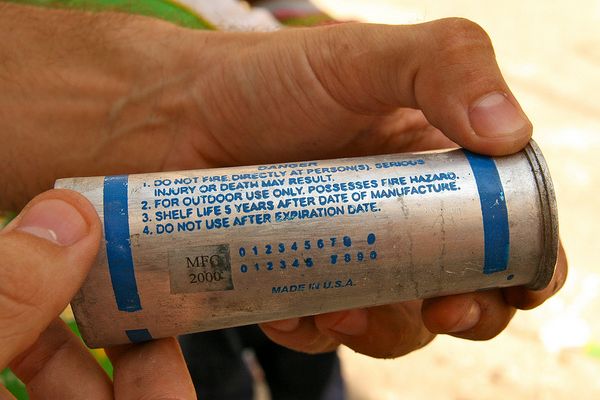
Israeli activists protesting the killing of Bil’in’s Jawaher Abu Rahmah ‘returned’ spent tear gas canisters to the residence of the American ambassador to Israel late Saturday evening. Jawaher Abu Rahmah, 36, was evacuated to the Ramallah hospital yesterday after inhaling massive amounts of tear-gas during the weekly protest in Bil’in, and died of poisoning this morning. The tear gas used by the Israeli forces in Bil’in is manufactured by Combined Systems Inc.; a United States company based in Jamestown, Pennsylvania. This is the first protest where empty tear gas canisters have been returned to an ambassador’s home.
Approximately twenty five Israeli protesters gathered in front of the residence of American ambassador to Israel, James B. Cunningham around 1am local time. The protesters ‘returned’ loads of spent tear gas canisters collected in the West Bank village of Bil’in in protest of the murder of Bil’in’s Jawaher Abu Rahmah. The demonstrators also made noise throughout the Ambassador’s neighborhood informing residents of how American military aid to Israel is being used to kill unarmed and nonviolent demonstrators in the West Bank. They chanted, “one, two, three, four stop the occupation stop the war. Five, six, seven, eight end the funding (US) end the hate.”

Five demonstrators were arrested in the action and are currently being held in detention.

Facebooktwittermail

Bradley Manning and the case against solitary confinement

Lynn Parramore lays out the reasons why solitary confinement is a form of torture.

The degree of civilization in a society can be judged by entering its prisons.
~Fyodor Dostoevsky

In the earliest days of our Republic, a group of well-meaning Philadelphia Quakers set out to reform the prison system. The idea was to remove convicts from the mayhem and corruption of overcrowded jails to solitary cells where sinners would return to mental and spiritual health through reflection. In the Walnut Street Jail, no windows would distract the prisoners with street life; no conversation would disturb their penitence. Alone with God, they would be rehabilitated.

There was a small problem. Many of the prisoners went insane. The Walnut Street Jail was shut down in 1835.

But the word penitentiary became part of the language, and the idea of placing prisoners in solitary confinement did not die. It seemed so reasonable – so much better than chain gangs or public stocks. New prisons opened to test the theory that solitude might bring salvation to criminals.

Charles Dickens had a keen interest in prison conditions, having witnessed his father’s detention in a Victorian debtor’s prison. When he heard about the latest American innovation in housing convicts, he came to see for himself. At Philadelphia’s Eastern State Penitentiary, the wretches he found in solitary confinement were barely human spectres who picked their flesh raw and stared blankly at walls. His on-the-spot conclusion: Solitary confinement is torture. [Continue reading.]

Facebooktwittermail

How WikiLeaks enlightened us in 2010

CBS News has put together a fairly detailed summary of the major revelations provided by WikiLeaks:

WikiLeaks has brought to light a series of disturbing insinuations and startling truths in the last year, some earth-shattering, others simply confirmations of our darkest suspicions about the way the world works. Thanks to founder Julian Assange’s legal situation in Sweden (and potentially the United States) as well as his media grandstanding, it is easy to forget how important and interesting some of WikiLeaks’ revelations have been.

WikiLeaks revelations from 2010 have included simple gossip about world leaders: Russia’s PM Vladimir Putin is playing Batman to President Dmitri Medvedev’s Robin; Iranian President Mahmoud Ahmadinejad is crazy and was once slapped by a Revolutionary Guard chief for being so; Libya’s Col. Muammar el-Qaddafi has a hankering for his voluptuous blond Ukrainian nurse; and France’s President Nicholas Sarkozy simply can’t take criticism.

However, WikiLeaks’ revelations also have many major implications for world relations. The following is a list of the more impactful WikiLeaks revelations from 2010, grouped by region. [Continue reading.]

Facebooktwittermail

8 smears and misconceptions about WikiLeaks spread by the media

AlterNet reports:

The corporate media’s tendency to blare misinformation and outright fabrications has been particularly egregious in coverage of WikiLeaks. As Glenn Greenwald has argued, mainstream news outlets are parroting smears and falsehoods about the whistleblower site and its founder Julian Assange, helping to perpetuate a number of “zombie lies” — misconceptions that refuse to die no matter how much they conflict with known reality, basic logic and well-publicized information.

Here are the bogus narratives that keep appearing in newspapers and on the airwaves.

1. Fearmongering that WikiLeaks revelations will result in deaths. So far there’s no evidence that WikiLeaks’ revelations have cost lives. In fact, right before the cables were released, Pentagon officials admitted there were no documented instances of people being killed because of information exposed by WikiLeaks’ previous document releases (and unlike the diplomatic cables, the Afghanistan files were unredacted).

That’s not to say that the exposure of secret government files can’t somehow lead to someone, somewhere, someday, being hurt. But that’s a pretty high bar to set, especially by a government engaged in multiple military operations — many of them secret — that lead to untold civilian casualties.

2. Spreading the lie that WikiLeaks posted all the cables. WikiLeaks has posted fewer than 2,000 of the 251,287 cables in its possession. The whistleblower released those documents in tandem with major news outlets including the Guardian, El Pais and Le Monde, and used most of the redactions employed by those papers to protect the identities of people whose lives could be endangered by exposure. The AP detailed this process in a December 3 article, but this did not stop officials and pundits from howling that WikiLeaks “indiscriminately” dumped all the cables online. Much of the media mindlessly repeated the claim.

Greenwald and others have battled to kill the myth that the whistleblower site threw up all the cables without taking any precautions to protect people, but it keeps coming up. Just this week NPR issued an apology for all the times contributors and guests have implied or outright voiced the falsehood that WikiLeaks blindly posted all the cables at once.

3. Falsely claiming that Assange has committed a crime regarding WikiLeaks. The State Department is working really hard to pin a crime on Julian Assange. The problem is that so far he doesn’t appear to have broken any laws. Assange is not a U.S. citizen, he does not work for the U.S. government, and the documents WikiLeaks posted were procured by someone else. As Greenwald has repeatedly pointed out, it’s not against the law to publish classified U.S. government information. If it were, hundreds of journalists would be in prison right now. [Continue reading.]

Facebooktwittermail

Don’t be distracted by body scanners: government spying and the Fourth Amendment

Martin Lijtmaer writes:

On December 15, Bill of Rights Day, the uproar over body scanners had brought the Fourth Amendment to the front of the public debate. There are legitimate reasons to be upset over invasive, costly and arguably ineffective measures adopted in the guise of protecting national security. But the call to arms over body scanners is a distraction.

First, it’s debatable whether body scanners violate the Fourth Amendment. There is a plausible argument that such security measures are reasonable in light of potential hijacking threats. With 9/11 still etched in our national psyche, it’s hard to imagine that courts would deem body scanners unconstitutional.

Second and more important, the uproar over body scanners distracts us from far more egregious constitutional violations routinely committed by our government.

The Fourth Amendment explicitly prohibits authorities from conducting “unreasonable searches and seizures” and requires judicially authorized warrants based on “probable cause” that “particularly describ[es] the place to be searched and the persons or things to be seized.” Thanks to the Fourth Amendment, police must reasonably suspect criminal activity before conducting a stop and, absent rare exceptions, must secure a warrant, signed by a judge, before conducting a search.

However, in the wake of 9/11, federal agencies have fully ignored these constitutional restraints.

Let’s take, for example, the rampant use of national security letters (NSLs) by the FBI. NSLs are requests for information targeting an individual, but issued to third parties, such as Internet service providers, financial institutions or libraries. The Fourth Amendment requires that such information be obtained through a search warrant signed by a judge, supported by probable cause and specifically describing both the target of the warrant and reason for it.

However, the FBI employs NSLs unrestrained by any of these constitutional requirements. In other words, the FBI can access your highly personal and private information on a whim. And it has not used this power sparingly.

Facebooktwittermail

PULSE’s 2010 top tens

PULSE:

In response to the curious choices in Foreign Policy magazine’s ’Top 100 Global Thinkers’ list last year, we decided to publish our own. In 2010, Foreign Policy‘s selections were even more abysmal: among others it included Robert Gates, Ben Bernanke, Hillary Clinton, David Cameron, Thomas Friedman, Ahmed Rashid, Ayaan Hirsi Ali, Bjorn Lomborg, Richard Clarke, Madeleine Albright, Salam Fayyad…and John Bolton! Would anyone outside FP’s editorial board confuse any of these names for a thinker? Once again, it appears FP chooses based on how closely an individual’s work aligns with the global military and economic agenda of the US government. Once again, we asked our writers and editors to nominate their own top 10 global thinkers. The following list was the result. Tony Judt, Chalmers Johnson… [Continue reading.]

PULSE’s top ten media figures:

This list is an attempt to honor those individuals and institutions responsible for exemplary reportage and awareness-raising in 2010. It is aggregated from the suggestions of PULSE writers and editors and is comprised of journalists, editors and publishers who have shown a commitment to challenging power, holding it to account, highlighting issues pertaining to social justice and producing output that bucks conventional wisdom and encourages critical thinking. Julian Assange, Helen Thomas… [Continue reading.]

Facebooktwittermail

Israel continues to meet non-violence with violence as West Bank protester is killed

Joseph Dana reports:

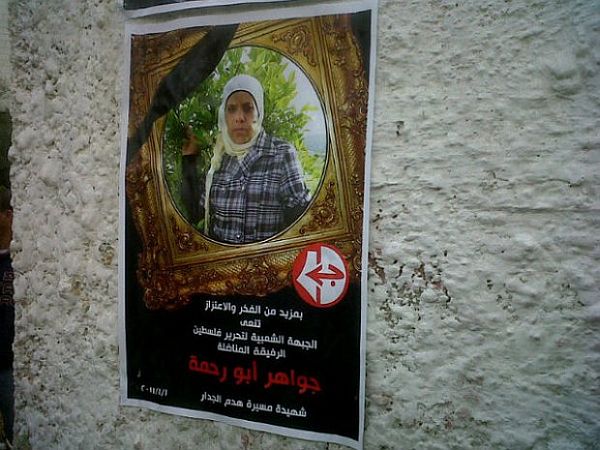
Jawaher Abu Rahmah, 36, was evacuated to the Ramallah hospital yesterday after inhaling massive amounts of tear-gas during the weekly protest in Bil’in, and died of poisoning this morning. Abu Rahmah was the sister of Bassem Abu Rahmah who was also killed during a peaceful protest in Bil’in on April 17th, 2010.

Doctors at the Ramallah hospital fought for Jawaher Abu Rahmah’s life all night at the Ramallah Hospital, but were unable to save her life. Abu Rahmah suffered from severe asphyxiation caused by tear-gas inhalation yesterday in Bil’in, and was evacuated to the Ramallah hospital unconscious. She was diagnosed as suffering from poisoning caused by the active ingredient in the tear-gas, and did not respond to treatment.

Jawaher Abu Rahmah was the sister of Bil’in activist, Bassem Abu Rahmah, who was shot dead with a high velocity tear-gas projectile during a demonstration in the village on April 17th, 2009.

Ahmed Moor, who participated in yesterday’s demonstration, adds:

The Israelis used two types of gas canisters. The first, which you can see in this short video I took (below), is a fist-sized bulbous rubber projectile. It begins to dispense gas in air, causing it to spin wildly and change directions before it hits the ground. Its trajectory is very hard to predict.

The second type of canister is the more deadly kind – the kind that killed Bassem Abu Rahmah in 2009. It’s also used liberally by the young supremacists in uniform. Yesterday the steel canisters, about fifty percent larger than a neat stack of quarters, were fired directly at protesters. Their trajectory is more or less straight, but they come at you much faster.

And the gas. Well, ‘tear gas’ is a bad name for it. It feels like a million blue shards of glass tearing at your alveoli and shredding your eyes. You can’t see and double over, trying not to breathe. Acid tears are streaming down your face, but the overwhelming sensation is of being bombarded and suffocated. You’re ensconced in darkness and your thoughts are disrupted – you only want to get away. And every breath tears at your insides; vicious animals live in your lungs. I’d rather not breathe than take one more anguished, searing, charred breath. Then, you don’t have a choice; you can’t breathe. You’re struggling to run and are overcome by dizziness. Other people help you escape.

Only Jawaher Abu Rahmah didn’t escape.

Facebooktwittermail