Monthly Archives: January 2011

Why America is like imperial Spain

Michael Vlahos writes:

The Spain of Quixote was in 1568 a world empire — and the king’s holdings covered the globe. Its fleets and armies seemed to be everywhere. So, too, is the United States today. With 700 overseas bases, its military personnel are equally omnipresent.

Spanish world authority in the 16th century and that of the United States today are at the core challenged not by “peer competitors” — but by marginal non-state communities at the very rim of civilization itself. How did this happen?

Spain for its part faced insurgents in a place that had only recently become part of its realm, such as the northern provinces of the Netherlands. Areas like Friesland had always been fractious, and no big state had ever succeeded in taming them. Sound familiar?

The Netherlands had for so long been a menagerie of principalities with only the loosest governance. Spain took over and began to make something new — the essence of nation building. In addition, the Spanish effort was determinedly focused on a “whole of government” solution, with their Catholic Church franchise prefiguring the U.S. State Department’s heavy involvement in Afghanistan today. [Continue reading…]

Part Two: Imperial self-destructive perseverance

Facebooktwittermail

Worse than Bush

While George W Bush was president it was possible to sustain what turned out to be a naive hope: that much of the harm he had done could be undone once he was out of office and the neoconservatives had been dislodged from power. But the harm personified by Bush and Cheney is now being institutionalized and by the removal of ideological baggage, lightened, with the effect that the post-Bush era is nowhere near in sight.

As President Obama sucks up to Wall Street (a sure way of financing his 2012 campaign, given that he will not be able to rely on the same level of grassroots support he enjoyed in 2008) and as his Justice Department argues that whistle-blowers are more dangerous than Americans who commit treason, Glenn Greenwald notes that the latest neocon singing Obama’s praise is Dick Cheney:

In the early months of Obama’s presidency, the American Right did to him what they do to every Democratic politician: they accused him of being soft on defense (specifically “soft on Terror”) and leaving the nation weak and vulnerable to attack. But that tactic quickly became untenable as everyone (other than his hardest-core followers) was forced to acknowledge that Obama was embracing and even expanding — rather than reversing — the core Bush/Cheney approach to Terrorism. As a result, leading right-wing figures began lavishing Obama with praise — and claiming vindication — based on Obama’s switch from harsh critic of those policies (as a candidate) to their leading advocate (once in power).

As early as May, 2009, former Bush OLC lawyer Jack Goldsmith wrote in The New Republic that Obama was not only continuing Bush/Cheney Terrorism policies, but was strengthening them — both because he was causing them to be codified in law and, more important, converting those policies from right-wing dogma into harmonious bipartisan consensus. Obama’s decision “to continue core Bush terrorism policies is like Nixon going to China,” Goldsmith wrote. Last October, former Bush NSA and CIA Director Michael Hayden — one of the most ideological Bush officials, whose confirmation as CIA chief was opposed by then-Sen. Obama on the ground he had overseen the illegal NSA spying program — gushed with praise for Obama: “there’s been a powerful continuity between the 43rd and the 44th president.” James Jay Carafano, a homeland-security expert at the Heritage Foundation, told The New York Times’ Peter Baker last January: “I don’t think it’s even fair to call it Bush Lite. It’s Bush. It’s really, really hard to find a difference that’s meaningful and not atmospheric.”

Those are the nation’s most extreme conservatives praising Obama’s Terrorism policies. And now Dick Cheney himself — who once led the “soft on Terror” attacks — is sounding the same theme. [Continue reading…]

Facebooktwittermail

The brutal truth about Tunisia

Robert Fisk writes:

The job of the Arab potentates will be what it has always been – to “manage” their people, to control them, to keep the lid on, to love the West and to hate Iran.

Indeed, what was Hillary Clinton doing last week as Tunisia burned? She was telling the corrupted princes of the Gulf that their job was to support sanctions against Iran, to confront the Islamic republic, to prepare for another strike against a Muslim state after the two catastrophes the United States and the UK have already inflicted in the region.

The Muslim world – at least, that bit of it between India and the Mediterranean – is a more than sorry mess. Iraq has a sort-of-government that is now a satrap of Iran, Hamid Karzai is no more than the mayor of Kabul, Pakistan stands on the edge of endless disaster, Egypt has just emerged from another fake election.

And Lebanon… Well, poor old Lebanon hasn’t even got a government. Southern Sudan – if the elections are fair – might be a tiny candle, but don’t bet on it.

It’s the same old problem for us in the West. We mouth the word “democracy” and we are all for fair elections – providing the Arabs vote for whom we want them to vote for.

In Algeria 20 years ago, they didn’t. In “Palestine” they didn’t. And in Lebanon, because of the so-called Doha accord, they didn’t. So we sanction them, threaten them and warn them about Iran and expect them to keep their mouths shut when Israel steals more Palestinian land for its colonies on the West Bank.

Facebooktwittermail

Change without change in Tunisia’s “unity” government

Before it was even clear it was a revolution, the Tunisian uprising had been dubbed the Jasmine Revolution — as though revolutionary change was about to sweep the Arab world as rapidly as color revolutions transformed former Soviet states.

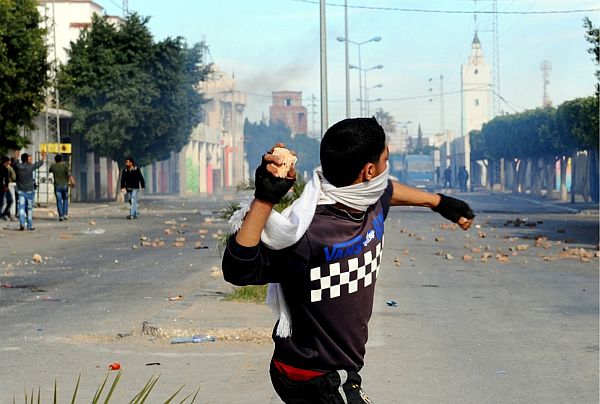
That might still happen, but the name most fitting for what has happened in Tunisia is the name used on the streets of Tunis: intifada. The eventual outcome of the uprising remains unknown.

The Guardian reports:

There was little sign of jubilation in Tunisia today when the prime minister announced his new “unity” government. Even though several opposition figures were included, Tunisians who had spent the past few weeks battling to oust the president, Ben Ali, expressed disappointment. There were too many old faces in the “new” regime, especially in key ministries such as defence, interior, finance and foreign affairs.

The prime minister himself, 69-year-old Mohamed Ghannouchi, is a Ben Ali loyalist of long standing, having served since 1999. In Tunisia, he became known as “Monsieur Oui Oui” for always saying yes to the president.

To many ordinary Tunisians, these are worrying signs. In the words of a trade unionist quoted on Twitter: “Tunisia has got rid of the dictator but hasn’t got rid of the dictatorship yet.”

The veteran Tunisian dissident and journalist Taoufik ben Brik writes (in French — translation provided by Issandr El Amrani):

In Tunisia, as elsewhere, a tyrant can hide another. Mohamed Ghannouchi, Ben Ali’s prime minister, and Fouad Mebazaa, the speaker of parliament (unelected) and right hand of Ben Ali have taken over a vacant presidency. Change without change. We’ve cut off the duck’s head, but the body continues to move. Ben Ali ran off, but left behind a whole system that relies on three Ps: Police, Profiteers and Party. Here, everything depends on the karakouz, the Turkish shadow puppet theater. And we know all too well who is puppeteer and who is puppet. No one is fooled. Power is still in the hands of Ben Ali’s old stalwarts. “A bloodbath would not make them back down” is the general opinion. The police, the ruling RCD party and the profiteers won’t let go that easily. They are not a charity.

Power is never relinquished without a struggle and in Tunisia the struggle continues.

AFP now reports:

The resignation of three ministers rocked Tunisia’s fledgling unity government on Tuesday as protesters vented their anger at the new leadership just days after the ouster of the Arab state’s strongman.

The ministers, representing Tunisia’s main trade union, announced their withdrawal after the union refused to recognise an administration that contains eight ministers from president Zine El Abidine Ben Ali’s discredited regime.

“We are resigning from the government after a call from our union,” said Houssine Dimassi, training and employment minister in the transitional unity government unveiled only on Monday.

Dimassi said the two other ministers resigning were Abdeljelil Bedoui, a minister working in the prime minister’s office, and Anouar Ben Gueddour, a junior transport minister.

Facebooktwittermail

Stuxnet attack on Bushehr: Russia warns of ‘Iranian Chernobyl’

Following Saturday’s New York Times report that the Stuxnet malware targeting Iran’s nuclear program was a joint US-Israeli operation, the Daily Telegraph reports that Russian nuclear scientists are concerned that the Bushehr nuclear plant could suffer catastrophic damage.

Fuel rods were inserted in the new reactor at the end of November and the plant is due to start producing electricity in the coming weeks. Ralph Langner, whose German team first identified Iran’s nuclear program as Stuxnet’s target, says the plant’s steam turbine is vulnerable to attack and in November wrote: “If you blow a 1000 Megawatt turbine, you will very likely be able to see the impact by satellite imagery.”

Con Coughlin writes:

Russian scientists working at the plant have become so concerned by Iran’s apparent disregard for nuclear safety issues that they have lobbied the Kremlin directly to postpone activation until at least the end of the year, so that a proper assessment can be made of the damage caused to its computer operations by Stuxnet.

The Iranian government is bitterly opposed to any further delay, which it would regard as another blow to national pride on a project that is more than a decade behind schedule. While Western intelligence officials believe Iran’s nuclear programme is aimed at producing nuclear weapons, Iran insists the project’s goals are peaceful.

The Russian scientists’ report to the Kremlin, a copy of which has been seen by The Daily Telegraph, concludes that, despite “performing simple, basic tests” on the Bushehr reactor, the Russian team “cannot guarantee safe activation of the reactor”.

It also accuses the Iranian management team, which is under intense political pressure to stick to the deadline, of “not exhibiting the professional and moral responsibility” that is normally required. They accuse the Iranians of having “disregard for human life” and warn that Russia could find itself blamed for “another Chernobyl” if it allows Bushehr to go ahead.

While it’s natural that the Russians would be concerned about being blamed, in such a scenario it’s a bit difficult to see how US interests would be served if vital shipping lanes and America’s Gulf allies were also put in jeopardy.

An American expert in nuclear intelligence told the New York Times “that Israel worked in collaboration with the United States in targeting Iran, but that Washington was eager for ‘plausible deniability'” — plausible deniability that the US no longer has.

Does this raise the possibility that the US might need to discreetly intervene to prevent an Israeli-made disaster?

Facebooktwittermail

In the Middle East, no one thinks Obama is serious about democracy

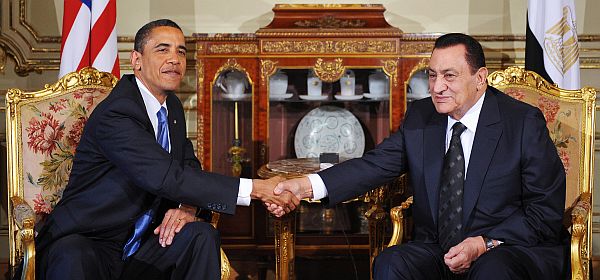
In Washington, when a cabinet level official is facing calls for his resignation, he is likely to take cover behind that regal phrase, “I serve at the president’s pleasure.” Most of the Arab world’s autocratic leaders could use the same expression since most would find their positions untenable without American support.

Last Wednesday, when Hillary Clinton said “we are not taking sides,” as demonstrators clashed with Tunisian security forces, she could have dispensed with protocol and said with more honesty, “we are no longer taking sides.”

Up until that moment the United States had unequivocally taken sides with Tunisia’s dictatorial ruler, Zine el-Abidine Ben Ali, but thereafter he knew he was on his own. He rapidly lost his grip on power.

The Obama administration’s relationship with the Tunisian regime was mirrored on a smaller scale by that of the Washington Media Group, a consulting firm that severed its contract with the Tunisian government on January 6.

“We felt on principle that we could not work for a government that was shooting its own citizens and violating their civil rights with such abuse,” said WMG’s President Gregory L. Vistica. Was he claiming that his client’s record had suddenly taken a turn for the worse, or that his firm had only just discovered it had principles?

The point is that WMG, just like the US government, prefers to blur the distinction between statements of principle and actions of self-interest.

On Friday, when President Obama said, “I applaud the courage and dignity of the Tunisian people,” observers across the region might have appreciated the sentiment yet seen no reason to attach much gravity to his words. After, Ben Ali had already fled.

“No one thinks Obama is serious about democracy,” says Shadi Hamid from Brookings Doha Center. “In some ways they have given up hope. And that I think is one of the key post-Cairo Speech stories: that after a lot of optimism about Obama’s election, people realized that when it comes to the issue of democracy-promotion in the Arab world — and that is a very important one for many Arabs — Obama’s really not on board.”

What more damning an indictment could be made against an American president than to say that he does not support democracy?

Hamid is joined in conversation with fellow Middle East analyst Issandr El Amrani from The Arabist, for a fascinating discussion on the implications on the people’s uprising in Tunisia.

Facebooktwittermail

Social media and the internet as an arena for revolutionary fantasy

On Friday, Andrew Sullivan — who heralded Iranian unrest 18 months ago as the Twitter revolution — was quick to dub the popular uprising in Tunisia a “WikiLeaks revolution” :

There seems little doubt that the Wikileaks-released cable describing the opulence of now former president Ben Ali’s lifestyle played a key part in bringing him down.

But what did WikiLeaks reveal?

In a July 2009 cable published by The Guardian on December 7, US Ambassador Robert F. Godec wrote:

The problem is clear: Tunisia has been ruled by the same president for 22 years. He has no successor. And, while President Ben Ali deserves credit for continuing many of the progressive policies of President Bourguiba, he and his regime have lost touch with the Tunisian people. They tolerate no advice or criticism, whether domestic or international. Increasingly, they rely on the police for control and focus on preserving power. And, corruption in the inner circle is growing. Even average Tunisians are now keenly aware of it, and the chorus of complaints is rising. Tunisians intensely dislike, even hate, First Lady Leila Trabelsi and her family. In private, regime opponents mock her; even those close to the government express dismay at her reported behavior. Meanwhile, anger is growing at Tunisia’s high unemployment and regional inequities. As a consequence, the risks to the regime’s long-term stability are increasing.

Average Tunisians were keenly aware of the corruption of their rulers, hated the president’s wife and his family and were expressing growing anger about unemployment — and all of this put the regime at risk. And yet — here’s the inexplicable element — somehow, all of these observable facts once encapsulated in a cable from the US embassy and then leaked by WikiLeaks became a “revelation” confirming what the average Tunisian already knew.

Tunisia is a small country that usually garners little international attention, so WikiLeaks can be given some credit for enlightening the rest of the world about the political instability of this Arab backwater, but to claim that WikiLeaks “played a key part” in bringing down the Tunisian president seems a bit of a stretch.

If the cable did include an important revelation, it was one unlikely to fuel Tunisians’ revolutionary fervor: that the Obama administration was being advised by it embassy to be less openly critical of the regime than the Bush administration had been.

For several years, the United States has been out in front — publicly and privately — criticizing the GOT [Government of Tunisia] for the absence of democracy and the lack of respect for human rights. There is a place for such criticism, and we do not advocate abandoning it. We do recommend a more pragmatic approach, however, whereby we would speak to the Tunisians very clearly and at a very high level about our concerns regarding Tunisia’s democracy and human rights practices, but dial back the public criticism.

In other words, the United States under Barack Obama’s presidency, would not stray from the longstanding American approach which attaches a higher value to stability than democracy — that sees US interests deeply invested in the continuity of autocratic rule in most of the Arab world’s so-called “moderate” states.

If dictators in the Middle East are seen as the bulwark preventing the rise to power of Islamists, then the US will nod in the direction of the oppressed by making calls for “democratic reform” even if the prospect of democracy is nowhere in sight. Indeed, democratic reform rather than being a stepping stone towards democracy is more likely seen as a preferable substitute, since democracy itself opens the door to those dreaded Islamists.

If the current administration preferred a “pragmatic” approach towards Tunisia and the instrumental role of WikiLeaks has been overstated, what about the influence of social media? Yesterday, Ben Wedeman from CNN tweeted: “No one I spoke to in Tunis today mentioned twitter, facebook or wikileaks. It’s all about unemployment, corruption, oppression.”

Jamal Dajani, who was in Tunis at the beginning of the month, writes:

It is very easy, but over-simplistic and naive to decide on a social media interpretation for the Jasmine Revolution, as we have been witnessing by many bloggers and self-appointed Middle East experts, many of whom neither speak Arabic nor have spent an extended period of time in the Middle East. They desperately want to convince us that Tunisians needed an external technological Western invention in order to succeed. A Twitter revolution of some sorts, as they previously labeled the Iranian Velvet Revolution, as though Arab masses were not capable on their own of saying “enough is enough.”

Certainly social media was used as a communication tool for Tunisians to air their frustrations with the economy, unemployment, censorship, and corruption. But many factors lead to its success, such as a well organized trade unions movement, and the most potent weapon in the Arab world, the youth.

Likewise during the 2009 summer uprising in Iran, Twitter only had a very minor role. In the London Review of Books, James Harkin notes:

In 2009, according to a firm called Sysomos which analyses social media, there were 19,235 Twitter accounts in Iran – 0.03 per cent of the population. Researchers at al-Jazeera found only 60 Twitter accounts active in Tehran at the time of the demonstrations, which fell to six after the crackdown.

Also, to the extent that the internet and social media did serve as revolutionary tools in Iran, they also served as a means to thwart the revolution.

Evgeny Morozov writes:

As we know from the post-protest crackdown in Iran, the Internet has proved a very rich source of incriminating details about activists; the police scrutinized Facebook groups, tweets, and even email groups very closely. Furthermore, the Iran government may have also analyzed Internet traffic and phone communications related to the opposition.

Now, Tunisia is no in Iran. Its long-ruling dictator is now gone and the new government is unlikely to engage in repressions on the same scale. Yet if Ben Ali’s regime didn’t fall, it appears certain to that the authorities would be brutally going after anyone who has ever posted a damning Facebook post or an angry email. As we have seen in the few weeks leading to Ali’s exit, the Tunisian cyber-police have proved to be far more skilled in Internet repression than their counterparts abroad: it’s safe to assume they would have dug as much evidence as the Iranians.

This brings me to a somewhat depressing conclusion: if the dictator doesn’t fall in the end, the benefits of social mobilization afforded by the Internet are probably outweighed by its costs (i.e. the ease of tracking down dissidents – let alone organizers of the protests).

It’s easy those of us in the West to celebrate a distant revolution from the comfort of an armchair, facing no risk of getting shot or being imprisoned, yet experiencing an illusion of participation through the immediacy of social media.

Swiftly named the Jasmine Revolution and now viewed as a domino that might lead to the collapse of authoritarian regimes across the region, it’s too early to know whether this is indeed a revolution.

AFP reports that Prime Minister Mohammed Ghannouchi:

… held consultations with the leaders of the main opposition parties in Tunis on the formation of a national unity government to fill the power vacuum left by Ben Ali’s abrupt departure after 23 years in power.

Two parties banned under Ben Ali — the Communist party and the Islamist Ennahdha party — have been excluded from the government talks.

Whatever the eventual outcome of the turmoil now raging in Tunisia, it may end up causing as much alarm on the Arab street as it does among the autocratic rulers. As Stephen Walt warns:

Tunisia’s experience may not look very attractive over the next few weeks or months, especially if the collapse of the government leads to widespread anarchy, violence and economic hardship. If that is the case, then restive populations elsewhere may be less inclined to challenge unpopular leaders, reasoning that “hey, our government sucks, but it’s better than no government at all.”

Brian Whitaker notes the fallout from Tunisia has already spread to Libya where demonstrators have clashed with security forces.

Will it develop into anything bigger? A month ago, I would have said the likelihood of that was zero. Post-Tunisia, though, it’s difficult to be quite so sure..

We can expect to see many more incidents like this over the coming months in various Arab countries. Inspired by the Tunisian uprising, people are going to be more assertive about their grievances and start probing, to see how far they can push the authorities. In the light of Tunisia we can also expect a tendency, each time disturbances happen, to suggest (or hope) that they are the start of some new Arab revolution. The reality, though, is that almost all of them will quickly fizzle out or get crushed. But one day – who knows when? – another of them will grow wings and bring down a regime.

Contrary to what many people imagine, protests and even large-scale riots are not uncommon in the Arab countries. They occur mostly in marginalised regions or among marginalised sections of the population and, normally, they pose no great threat to the regime.

Last month – one day before the trouble started in Tunisia – there was a Sunni-versus-Shia riot in the Saudi city of Medina. Eight hundred people are said to have taken part; windows were smashed and dozens of cars damaged or destroyed. Outside the kingdom, hardly anyone noticed.

Facebooktwittermail

What was Israel’s connection to the AQ Khan nuclear network?

The New York Times reports that the Stuxnet worm which was designed to attack Iran’s nuclear enrichment program was a joint US-Israeli operation. One of the crucial elements in developing the plan was being able to test the malware’s ability to disable P-1 centrifuges — the type that Iran employs in cascades of thousands of centrifuges in it Natanz enrichment facility. Israel has row upon row of this type of centrifuge at its clandestine nuclear weapons production facility in Dimona.

The question is: how did Israel come to possess so many P-1 centrifuges? Did Israel obtain the centrifuges from AQ Khan?

The CIA was tracking the AQ Khan network for decades before it eventually shut it down in 2003. Douglas Frantz, co-author of Fallout: The True Story of the CIA’s Secret War on Nuclear Trafficking, told NPR: “By the time they finally acted in 2003, an enormous amount of the world’s most dangerous technology had been sold to the world’s most dangerous regimes. And that, in our view, was a policy failure, a policy failure of enormous proportions, really.”

Perhaps the most secretive part of the Stuxnet story centers on how the theory of cyberdestruction was tested on enrichment machines to make sure the malicious software did its intended job.

The account starts in the Netherlands. In the 1970s, the Dutch designed a tall, thin machine for enriching uranium. As is well known, A. Q. Khan, a Pakistani metallurgist working for the Dutch, stole the design and in 1976 fled to Pakistan.

The resulting machine, known as the P-1, for Pakistan’s first-generation centrifuge, helped the country get the bomb. And when Dr. Khan later founded an atomic black market, he illegally sold P-1’s to Iran, Libya, and North Korea.

The P-1 is more than six feet tall. Inside, a rotor of aluminum spins uranium gas to blinding speeds, slowly concentrating the rare part of the uranium that can fuel reactors and bombs.

How and when Israel obtained this kind of first-generation centrifuge remains unclear, whether from Europe, or the Khan network, or by other means. But nuclear experts agree that Dimona came to hold row upon row of spinning centrifuges.

“They’ve long been an important part of the complex,” said Avner Cohen, author of “The Worst-Kept Secret” (2010), a book about the Israeli bomb program, and a senior fellow at the Monterey Institute of International Studies. He added that Israeli intelligence had asked retired senior Dimona personnel to help on the Iranian issue, and that some apparently came from the enrichment program.

Facebooktwittermail

Obama’s telling misalignment

“When we align our values with our actions, great things can happen,” says Bemporad Baranowski Marketing Group (BBMG), a New York-based branding agency dedicated to nonprofits and socially responsible businesses.

President Obama shares the same philosophy.

Addressing the memorial service in Tucson this week, Obama said:

We recognize our own mortality, and we are reminded that in the fleeting time we have on this Earth, what matters is not wealth, or status, or power, or fame -– but rather, how well we have loved — and what small part we have played in making the lives of other people better.

And that process — that process of reflection, of making sure we align our values with our actions –- that, I believe, is what a tragedy like this requires.

When two things are brought into alignment, repositioning can take place from both sides, but just as wheels can get knocked out of alignment with the chasis of a car, when it comes to values and actions, it is most often our actions that need moving into alignment with our values — not the other way around.

Americans score high when it comes to cherishing high values — the fall comes in our failing to align our actions with our values.

Mr Compromise might not be able to spot the difference. A man who so reflexively yields to pressure sees all things as relative. He yields so easily because he lacks an anchor to an unyielding center.

Facebooktwittermail

Who grows thorns will reap wounds

Peter Beaumont writes:

One of Tunisia’s most famous poets, Abou al-Kacem Echebbi, whose face adorns the 30-dinar note, is best known in the wider Arab world for several verses that warn tyrants they will face bloody insurrection. “Who grows thorns will reap wounds,” Echebbi wrote – a line that the country’s dictatorial president, Zine al-Abidine Ben Ali, might be reflecting on in his place of exile, Saudi Arabia.

He may not, however, be the only leader in the region to be doing so. For what has happened in Tunisia, a country which Ben Ali and his cronies controlled since he seized power in 1987, has a message for other regimes whose democratic credentials are less than shining. While it is not clear what Tunisia’s path will be after Friday’s insurrection, the complaints of the protesters are familiar across the region and have also, in some cases, prompted demonstrations. Algeria, home to an often restless young population, has seen protests about unemployment and food prices which began on 5 January and prompted a harsh crackdown. In Jordan, which saw demonstrations last week in five cities, the calls were very similar. There, too, the country’s leader was assailed with demands to resign.

Nowhere has the link between the removal of Ben Ali and other countries been clearer than in Cairo, where on Friday night protests were held by opposition members outside the Tunisian embassy. Their message was explicit: President Hosni Mubarak should follow Ben Ali’s example and leave his country, too.

Adla Massoud writes:

Abdel Bari Atwan, editor of the London-based Al-Quds Al-Arabi, says Tunisian people deserved to be thanked twice: “for proving that the Arab street is not dead as many had expected and is capable of waging an intifada and making sacrifices for change, and for exposing the Arab regimes that claimed to care about human rights and the values of justice and democracy.”

With the emergence of a large layer of educated youth who have no job prospects and no future, the Arab people have reached a boiling point.

They have had enough of chronic unemployment; economic deprivation; rising food prices; insufficient public investment; rampant corruption; and an authoritarian political system that gave Ben Ali twenty three years of corrupt rule.

In Egypt, the President Hosni Mubarak will have held power for three decades this year, and is getting set for another term. In Libya, Muammar Gadaffi has been in power since 1969. The Assads have ruled Syria since 1970.

“The widespread demonstrations in Tunisia” writes political analyst Rami Khouri “mirror a universal pattern of change by citizens who reach a breaking point and go out into the street to brave the bullets of the eternal ruler’s military and security services. When citizens are no longer afraid of the ruler’s bullets, the ruler’s days are numbered.”

Chatham House’ Middle East expert Nadim Shehadi says, “It was an unsustainable economic and political model that has survived for over 30 years and with numerous equivalents in the region. Its persistence has done countless damage and its demise will hopefully serve as an example.”

The biggest challenge facing the Arab world today is youth unemployment. The region has the highest unemployment rate in the world. The current unemployment rate stands at sixteen per cent, eighty per cent of that figure is made up of a youth population of 130 million. A staggering twenty five percent of youth between the ages of 15 and 29 are unemployed.

Describing the path through which Ben Ali rose to power in a bloodless coup in 1987, Paul Legg writes:

In the months leading up the coup, Tunisia watchers could see that Ben Ali was the darling of the western embassies. Well known to the French and American militaries, he was someone the diplomats believed could be trusted to maintain Tunisia’s secular, pro-western policies and keep the country out of the orbit of its dangerous, larger neighbour, Gadaffi’s Libya. Ben Ali had no need of outside support to plan and carry out his seizure of power, but he did so confident in the knowledge of western support.

Ben Ali took power with the familiar promise to move Tunisia towards democracy, but when he organised the country’s first multi-candidate election in 1999, he won with a farcical 99.44% of the vote. This earned him the nickname Mr 99%, although he was also known as Ben A Vie (president-for-life). His own giant posters were soon replacing Bourguiba’s on street corners. Ben Ali’s offer to the Tunisian people was stability, foreign investment, jobs and improved living standards. The price was near-zero tolerance of dissent, a slavish media and an all-inquiring police force. His supporters say the crushing of the Tunisian Islamist movement at the start of the 1990s spared Tunisia the type of conflagration soon to engulf neighbouring Algeria. Critics point to the thousands of human rights activists, politicians and journalists caught up in the crackdown, many of whom were tortured and sentenced to back-breaking labour.

Most Tunisians were prepared to accept Ben Ali’s tradeoff of economic progress in return for total control. The recent downturn in the Tunisian economy with rising joblessness and higher prices showed that Mr 99% was no longer able to deliver his side of the deal. The added toxic ingredient was allegations of personal and family corruption focused on Ben Ali’s second wife, Leila Trabelsi. Loathed by many Tunisians and dubbed by some as the Imelda Marcos of the Maghreb, she allegedly helped her extended family to acquire huge economic holdings across Tunisia. Ben Ali is not the first former dictator to have learned the danger of having a deeply unpopular spouse.

Facebooktwittermail

Will Tunisia be a turning point for Arab democracy?

Michael Hanna writes:

For observers throughout the Arab world, the significance of the Tunisian uprising is near-impossible to understate. During this era of retrenchment by aging descendants of revolutionary regimes, the prospect of democratic change had long-ago vanished as a believable possibility. The closest point of reference to the civil unrest in Tunisia is the protest movement that erupted in Iran following the contested presidential elections of June 2009. But the significance of Iran’s post-election events has been minimal in the Arab world, reflecting the Arab-Iranian cultural chasm and the ingrained sense of Arab chauvinism that guides Arab perceptions of international affairs. The Shiite theocracy established in the wake of the 1979 Iranian revolution has always been something of a curiosity for the Arab world and its heavily Sunni population. While the chimerical dreams of Arabism are long gone, events within the Arabic-speaking world – such as Tunisia’s protests – carry special resonance. Since Arab nationalism’s heyday under the 1950s and ’60s stewardship of Egyptian president Gamal ‘Abd al-Nasser, that collective identity has remained, held together by shared media and culture. The role once played by the radio broadcasts of Sawt al-‘Arab (Voice of the Arabs), the Egyptian-run radio station established during the Nasser era, is now filled by the saturation coverage of such Arab satellite stations as al-Jazeera and al-‘Arabiyya. The networks often focus on intra-Arab issues. The protests on the streets of Tunisia were seen far and wide, in real time, by millions of Arabs, with no need for translation or cultural filtering.

With Tunisia’s reputation as something of a stable but sleepy backwater, the events of recent weeks have come as a complete surprise to the world. The uprising remains in flux, its ultimate outcome unclear, and there is no certainty that the country is on its way to a democratic transition, let alone a smooth one. However, the demonstration effect of this uprising is likely not lost on the region’s aging autocrats. A pilot who refused to fly Ben Ali’s family out of Tunisia, interviewed on live television, explained that they were “war criminals.” As the region’s other autocratic rulers retire to bed, this forthright message will be a chilling reminder that their people’s quiescence is not guaranteed, nor is it the same thing as legitimacy. If nothing else, the protests have demonstrated that an Arab head-of-state can be toppled from below and, for leaders as well as activists, have expanded popular notions of the possible. While the U.S. invasion of Iraq and the protests of the “green movement” in Iran have had far-ranging regional ramifications, when it comes to promoting Arab democracy, Tunisia’s 2011 uprising may eclipse them both.

As much as democracy poses a threat to the Arab world’s autocratic leaders, it also threatens Israel. If a day ever comes that the Jewish state is surrounded by democracies, its real identity as a racist ethnocracy will be fully exposed.

Facebooktwittermail

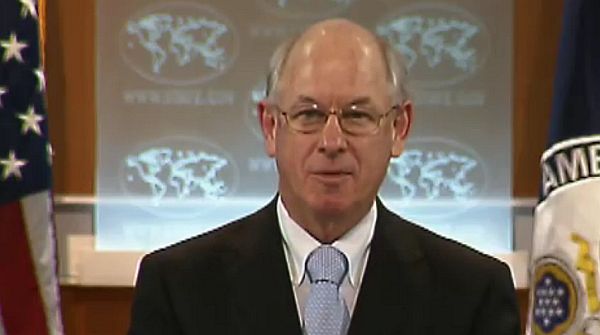
State Department clueless on Tunisia

The mystique of American power is sustained in no small measure by the ability of US government officials to convey the impression that they understand global affairs. In the last 48 hours the State Department has clearly shifted into overdrive in an effort to portray the US as being fully engaged with and attuned to fast moving events in the Arab world. “We’re ahead of the game,” the overarching message seems to be.

Hence the Christian Science Monitor provides this on-message piece of reporting under a headline emphasizing the prescience of the secretary of state: “Events in Tunisia bear out Hillary Clinton’s warning to Arab world”:

A day after Secretary of State Hillary Rodham Clinton warned Arab states that they risked “sinking into the sand” if they did not clean up corruption and quicken their glacial pace of political and economic reform, those sands took one of the Arab world’s long-reigning leaders.

Tunisia’s President Zine El Abidine Ben Ali on Friday fled the North African country he ruled in autocratic fashion for 23 years, chased away by a month of street protests that started in provincial cities but engulfed the capital, Tunis, this week. The country’s prime minister, Mohammed Ghannouchi, assumed temporary power. [Temporary turned out to mean for a day. He’s now been ousted and replaced by speaker of parliament, Fouad Mebazaa.]

In a statement Friday afternoon, President Obama hailed the “courage and dignity of the Tunisian people,” and said the United States joined the rest of the world in “bearing witness to this brave and determined struggle.” He called on the Tunisian government to “hold free and fair elections in the near future that reflect the true will and aspirations of the Tunisian people.”

Eleven days ago, State Department spokesman PJ Crowley didn’t make it sound like the US was paying close attention to what was happening in Tunisia. This was how he covered the issue on January 4:

QUESTION: On Tunisia, there’s continued, sort of, civil unrest there, and I was just wondering –

MR. CROWLEY: What country?

QUESTION: Tunisia. Tunisia. And I was wondering what you made of the situation there.

MR. CROWLEY: Actually, I didn’t get updated on Tunisia today. So we’ll save that question –

QUESTION: When was the last time you did get updated on Tunisia? (Laughter.)

The next day, Crowley seemed surprised that questions about Tunisia were still being raised. The sum of the State Department’s concern seemed to be the extent to which unrest might affect American travelers.

QUESTION: Do you have any reaction to the recent unrest in Tunisia?

MR. CROWLEY: Tunisia makes an appearance for the second day in a row. I mean, last month, there were some demonstrations that occurred in Tunisia over a several-day period. They appeared to us to be triggered by economic concerns and not directed toward Westerners or Western interests. As we do in various places around the world where we have concerns about the safety of our citizens, we did put out a Warden Message right at the end of the year urging Americans to be alert to local security developments, but – and it’s best to avoid these demonstrations, even ones that can appear peaceful.

QUESTION: But aren’t you concerned about economic reforms in Tunisia, or –

MR. CROWLEY: That is something that is part of our ongoing dialogue with Tunisia.

I guess the first question for Crowley on Monday should be: does the US still have an ongoing dialogue with Tunisia, or is it now simply in what has so often been the Obama administration’s default position — closely monitoring the situation?

That this administration expends so much of its energy making feeble gestures to demonstrate that it is on top of the situation, reflects a bigger problem — as one former State Department official recently noted in a different context — “which is that of a dysfunctional administration in which no one is in charge.”

Facebooktwittermail

Tunisia’s overthrown president flees to the ‘refuge of dictators’: Saudi Arabia

Egypt’s Al Ahram reports:

The Arab Network for Human Rights Information (ANHRI) on Saturday condemned Saudi Arabia’s decision to grantasylum to Zine El Abidine Ben Ali, Tunisia’s overthrown president, in a statement entitled “Tunisia’s deposed dictator receives hospitality from Saudi Arabia’s dictator”.

The announcement said that Ben Ali should be tried in front of a Tunisian court for the crimes he committed against the Tunisian people during his 23 years in office.

The statement called Ben Ali the ‘Arab Pinochet’, in reference to Chili’s ex-president and added that Saudi Arabia’s decision to take in Ben Ali after he was refused entry to many countries including France — an outspoken supporter of the 74-year-old leader – indicated to what lengths Arab dictators would go to support each other.

The ANHRI warned that Saudi Arabia is becoming a “refuge for dictators” since it had, in the past, received Uganda’s Idi Amin and Pakistan’s Nawaz Sharif.

Facebooktwittermail

Will the Tunisian revolution lead to democracy?

Professor Emma Murphy writes:

Zine al-Abidine Ben Ali came to power in 1987 through a constitutional coup and he appears to have been removed from power through a constitutional coup.

The key here on both occasions was not the constitution but the army.

In 1987 the army moved to secure stability as an increasingly senile and paranoid President Bourguiba threatened to bring the country to a political and economic crisis.

Today it has moved to restore that same stability by removing a president whose person and family have become synonymous with corruption, growing wealth disparities, and political repression.

The question now is whether the interim leadership council will be used to move the country towards a democratic future through meaningful political reforms, free and fair elections, a liberalised media and a new inclusive approach to rule, or whether this is a stalling tactic by the army and the regime elite to quell protests and then restore their grip on power.

Patrick Cockburn notes:

Conditions vary across the Arab world but there is plenty in common between the situation in Tunisia and that in Algeria, Jordan and Egypt. Economic and political stagnation is decades old. In some states this is made more tolerable by access to oil revenues, but even this is not enough to provide jobs for educated youths who see their path blocked by a corrupt elite.

There are echoes of the Tunisian crisis in other countries. In Jordan the security forces have been battling rioters in Maan, a traditional site of unrest in the past where the government has difficulty coping. In Kuwait there was an attack by security forces in December on academic and members of parliament. Food prices have been going up.

Yet all these regimes that are now in trouble had a carefully cultivated image in the west of being “moderate” and anti-fundamentalist. In the aftermath of the invasion of Iraq, President George Bush and Tony Blair made much of their democratic agenda for the Middle East, but when one of the few democratic elections to take place in the region produced victory for Hamas among the Palestinians of Gaza and the West Bank, the US did everything to thwart the outcome of the poll.

The Middle East still has a reputation for coups but a striking feature of the region since the early 1970s is how few of the regimes have changed. The forces behind the Tunisian events are not radically new but they are all the more potent for being so long suppressed.

Western governments have been caught on the hop because explosions of social and economic frustration have been long predicted but have never happened. The extent of the uprising is yet to be defined and the Tunisian army evidently hopes that the departure of Mr Ben Ali may be enough for the government to restore its authority. The generals could be right, but the shootings over the last month failed to work. There is no particular reason why the same tactics should start to work now.

Facebooktwittermail

The first Middle Eastern revolution since 1979

Juan Cole writes:

Tunisian President Zine al-Abidin Bin Ali has fled the country before the advancing crowds pouring in to the capital’s center. A French eye-witness said of the masses thronging Bourguiba Avenue that “it was black with people.” The Speaker of Parliament is caretaker leader of the country. The dramatic events in Tunisia yesterday and today may shake the Middle East, as my colleague Marc Lynch suggested. As usual, the important news from the region is being ignored by US television news.

In some ways, the Tunisian Revolution is potentially more consequential for the Middle East than had been the Iranian one. In Iran, Shiite ayatollahs came to power on the back of a similar set of popular protests, establishing a theocracy. That model appealed to almost nobody in the Middle East, with the exception of Shiites in Iraqi and Lebanese slums; and theocratic Shiite Arabs were a minority even in their own ethnic group. Proud Sunni Arab nationalists, in Egypt, Syria, and elsewhere, saw nothing to like there, even though they were saddled with a motley assortment of authoritarian presidents for life, military dictators, kings and emirs. Iranian leaders were shocked and dismayed to find that they had made a ‘revolution in one country.’ Their influence would come from championing the (Sunni) Palestinians and supporting Lebanon when it was attacked by Israel, not from their form of government. Iran was not like the French revolutionary republic, which really did become a model over time for much of Europe. It was an odd man out.

The Enlightenment principle of popular sovereignty has been mostly absent in the Arab world, and elections have been an odd Soviet-style shadow play, merely for show lest the dictators and kings be seen to be medieval in lacking anything called a parliament. Lebanon has been an exception, but with a population of 4 million it is a tiny country. The Kuwait parliament has shown signs of life, but in a constitutional monarchy where it was considered gauche to sharply question a cabinet minister related to the king, those are baby steps. It is too soon to tell if American-sponsored elections in Occupied Iraq are sustainable, and you can’t talk about popular sovereignty in a country occupied by foreign troops.

The Guardian reports:

For the first time – in a state where there is estimated to be one police officer for every 40 adults, two thirds of them in plain clothes, and people are afraid of even discussing politics in private for the informers on every corner – people took to the streets today chanting: “Ben Ali out!” and carrying banners saying “Ben Ali murderer!” They railed against his family and that of his loathed wife, Leila Trabelsi, seen as a cross between Imelda Marcos and Catherine de Medici. “Trabelsi thieves!” read one banner, against the woman whose family is reviled for taking tasty slices of state business and contracts, and plundering Tunisia’s wealth. Tonight there were reports that some of her family’s coastal villas and businesses had been attacked and ransacked.

“Today in Tunis people have said their last word. The people want Ben Ali out, along with his corrupt government which has no credibility,” said Mokhtar Aidoudi, a lawyer who was among the protesters. “We want to be able to express ourselves, a free press,” said a 20-year-old medical student from Sousse. She railed against the suppression of websites in a nation which lawyers say is the world leader in surveillance and internet censorship, rivalling North Korea and China.

“This is it,” said Hussein Bouchabar, a maths teacher who was taken from his classroom in the late 80s and imprisoned for four years for holding views contrary to the regime. Since his release, he has never found work and sells vegetables in a souk. Like others with him at the protest, militia regularly came to his house, to search and ransack it. His phones were tapped, his children could not get university scholarships. “This country is 10 million people living in an open prison, we hope that can change,” said a bus driver protesting with him, who showed his ankle swollen from a beating by police.

Facebooktwittermail

Tunisia sends a message to the Arab world


The BBC reports:

A state of emergency has been declared in Tunisia amid protests over corruption, unemployment and inflation.

The decree bans more than three people from gathering together in the open, and imposes a night-time curfew.

Tunisian President Zine al-Abidine Ben Ali has dismissed his government and dissolved parliament, and called new elections within six months.

Thousands have gathered in the capital Tunis, urging the president to quit.

Hashem Ahelbarra writes:

Those who watched President Ben Ali delivering his most recent speech noticed a man with a trembling voice saying the opposite of what he stood for.

He said that he was sorry, that he’s been duped by his entourage, that now he got the message and that he will leave power in 2014.

Was he genuine or just buying time.? He is definitely in damage control mode, and while we don’t know for sure what his next move will be, it’s pretty much obvious that the glass ceiling of fear has been for ever shattered in Tunisia and that the police state that Ben Ali created in 1987 when he came to power in a coup seems to be disintegrating.

Simon Tisdall writes:

The trouble started last month when Mohammed Bouazizi, 26, an unemployed graduate, set himself on fire outside a government building in protest at police harassment. Bouazizi’s despairing act – he died of his injuries last week – quickly became a rallying cause for Tunisia’s disaffected legions of unemployed students, impoverished workers, trade unionists, lawyers and human rights activists.

The ensuing demonstrations produced a torrent of bloodshed at the weekend when security forces, claiming self-defence, said they killed 14 people. Independent sources say at least 50 died and many more were wounded in clashes in the provincial cities of Thala, Kasserine and Regueb. The latest reports spoke of continuing clashes in El-Kef and Gafsa.

Despite Ben Ali’s assertions, there is no evidence so far of outside meddling or Islamist pot-stirring. What is abundantly plain is that many Tunisians are fed up to the back teeth with chronic unemployment, especially affecting young people; endemic poverty in rural areas that receive no benefits from tourism; rising food prices; insufficient public investment; official corruption; and a pseudo-democratic, authoritarian political system that gave Ben Ali, 74, a fifth consecutive term in 2009 with an absurd 89.6% of the vote.

In this daunting context, Ben Ali’s emergency job creation plan, announced this week, looks to be too little, too late.

If this long tally of woes sounds familiar, that’s because it’s more or less ubiquitous. Across the Arab world, with limited exceptions in Lebanon, Palestine and Iraq, similar problems obtain to a greater or lesser degree.

Gideon Rachman, currently in Dubai, writes:

In the wake of 9/11, the Americans decided that the Saudi autocracy was thoroughly corrupt and was stoking up radicalism in the Middle East. In 2005 Condi Rice, then Secretary of State, made a famous speech in Cairo calling for democratic reforms in the region. But the election of Hamas in Gaza demonstrated to the Americans that Islamists were quite likely to win free elections. The House of Saud and Hosni Mubarak suddenly looked like quite good bets, again.

Now the Americans seem to be tentatively re-embracing the cause of reform in the Middle East. Perhaps, they have been spooked by events in Tunisia. In any case, Hillary Clinton has just made a big speech down the coast in Qatar, calling for social and political reforms. The Americans seem to be trying to get ahead of events. But I suspect events will get ahead of them.

As the principal backer of autocratic rulers across the region, the only useful thing the US government can do is stand out of the way.

Facebooktwittermail

After the collapse of the Lebanese government — what next?

Lebanon’s government collapsed on Wednesday while Prime Minister Saad Hariri was in Washington. It wasn’t until today that he returned to Beirut.

Robert Fisk writes:

There are many who believe that Lebanon will now descend into a civil war, similar to the fratricidal conflict which it endured from 1976 to 1980. I doubt it. A new generation of Lebanese, educated abroad – in Paris, in London, in America – have returned to their country and, I suspect, will not tolerate the bloodshed of their fathers and grandfathers.

In theory, Lebanon no longer has a government, and the elections which were fairly held and which gave Saad Hariri his cabinet are no more. President Michel Suleiman will begin formal talks on Monday to try to create a new government.

But what does Hezbollah want? Is it so fearful of the Hague tribunal that it needs to destroy this country? The problem with Lebanon is perfectly simple, even if the Western powers prefer to ignore it. It is a confessional state. It was created by the French, the French mandate after the First World War. The problem is that to become a modern state it must de-confessionalise. But Lebanon cannot do so. Its identity is sectarianism and that is its tragedy. And it has, President Sarkozy please note, a French beginning point.

The Shias of Lebanon, of which Hezbollah is the leading party, are perhaps 40 per cent of the population. The Christians are a minority. If Lebanon has a future, it will be in due course be a Shia Muslim country. We may not like this; the West may not like this. But that is the truth. Yet Hezbollah does not want to run Lebanon. Over and over again, it has said it does not want an Islamic republic. And most Lebanese accept this.

But Hezbollah has made many mistakes. Its leader, Hassan Nasrallah, talks on television as if he is the President. He would like another war with Israel, ending in the “divine victory” which he claims his last war, in 2006, ended in. I fear the Israelis would like another war too. The Lebanese would prefer not to have one. But they are being pushed further and further into another war which Lebanon’s supposed Western friends seem to want. The Americans and the British would like to hurt Iran. And that is why they would like Hezbollah to be blamed for Mr Hariri’s murder – and for the downfall of the Lebanese government.

Nicholas Noe sees the greatest threat of war emanating from Israel, which having downgraded the threat from Iran, sees Hezbollah as its most immediate military threat. If such a war is to be averted, Washington will need more courage and imagination than have thus far been in evidence.

The Obama administration seems to believe that in order to stave off the logic of approaching war, it should try to manoeuvre Hezbollah into a tough position, thereby restraining it from pushing at the military red line. According to this thinking, to have accepted a Saudi-Syrian sponsored agreement regarding the Hariri tribunal actually would have only emboldened Hezbollah.

This approach is clearly less triumphal than during the heady Bush years (reflecting the changed balance of power in the Middle East as well as a less violence-focused mindset) but the overall direction is similar: throw whatever short-term pressure tools you have against the problem, rhetorically back up your narrow set of “friends” and hope for a miracle, since productive negotiations are essentially unrealistic – this time less because of “evil” opponents than an immovable Israeli ally.

The problem, however, is that Hezbollah will not be substantially boxed in by an indictment from the tribunal, since its domestic enemies are so militarily weak. Moreover, the party is apparently betting that an Israeli “pre-emptive” strike would overwhelm any domestic opposition, especially given Israel’s long history of obtusely, and sometimes wantonly attacking Lebanon as a whole.

Finally, the scent of domestic turmoil and indigenous opposition to Hezbollah is likely to entice Israel further into believing that the time is ripe for a strike against it.

All of which means the Obama administration really only has one good option. The current political breakdown in Lebanon will not be solved without bold steps towards peace that will involve concessions, especially, and perhaps most importantly, via the Syrian track.

Facebooktwittermail