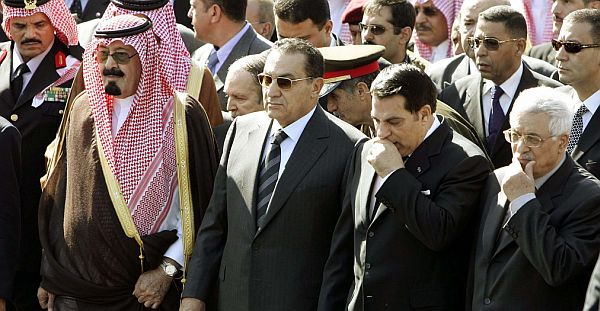
Peter Singer writes:
The situation in Libya [has become] a test of how seriously the international community takes the idea of a responsibility to protect people from their rulers. The idea is an old one, but its modern form is rooted in the tragic failure to intervene in the Rwandan genocide in 1994. A subsequent UN inquiry concluded that as few as 2,500 properly trained military personnel could have prevented the massacre of 800,000 Tutsis.
Former US President Bill Clinton has said that the mistake he most regrets making during his presidency was his failure to push for intervention in Rwanda. Kofi Annan, who was then UN Under-Secretary-General for Peace-Keeping Operations, described the situation at the UN at the time as a “terrible and humiliating” paralysis.
When Annan became Secretary-General, he urged the development of principles that would indicate when it is justifiable for the international community to intervene to prevent gross violations of human rights. In response, Canada’s government established an International Commission on Intervention and State Sovereignty, which recommended that military intervention could be justified, as an extraordinary measure, where large-scale loss of life is occurring or imminent, owing to deliberate state action or the state’s refusal or failure to act. These principles were endorsed by the UN General Assembly at its special World Summit in 2005 and discussed again in 2009, with an overwhelming majority of states supporting them.
The principle fits the situation in Libya today. Yet the Security Council resolution contains no mention of the possibility of military intervention – not even the imposition of a no-fly zone over Libya to prevent Gaddafi from using planes to attack protesters.
One body with a special concern to transform the idea of the responsibility to protect into a cause for action is the Global Center for the Responsibility to Protect, at the City University of New York. It has called on UN members to uphold their 2005 commitments and put the responsibility to protect into action in Libya. It urges consideration of a range of measures, several of which were covered by the Security Council resolution, but also including a no-fly zone.
In addition to arguing that the responsibility to protect can justify military intervention, the International Commission on Intervention and State Sovereignty recommended a set of precautionary principles. For example, military intervention should be a last resort, and the consequences of action should not be likely to be worse than the consequences of inaction.
Whether these precautionary principles are satisfied in Libya requires expert judgment of the specifics of the situation. No one wants another drawn-out war like those in Iraq and Afghanistan. But Libya is not Iraq or Afghanistan – its population is only about one-fifth of either country’s, and there is a strong popular movement for a democratic form of government. Assuming that foreign military forces rapidly overwhelmed Gaddafi’s troops, they would soon be able to withdraw and leave the Libyan people to decide their own future.
Seumas Milne writes:
Those calling for western military action in Libya seem brazenly untroubled by the fact that throughout the Arab world, foreign intervention, occupation and support for dictatorship is regarded as central to the problems of the region. Inextricably tied up with the demand for democratic freedoms is a profound desire for independence and self-determination.
That is clear in reaction on the ground in Libya to the threat of outside intervention. As one of the rebel military leaders in Benghazi, General Ahmad Gatroni, said this week, the US should “take care of its own people, we can look after ourselves”.
No-fly zones, backed by some other opposition figures, would involve a military attack on Libya’s air defences and, judging from the Iraqi experience, be highly unlikely to halt regime helicopter or ground operations. They would risk expanding military conflict and strengthening Gaddafi’s hand by allowing the regime to burnish its anti-imperialist credentials. Military intervention wouldn’t just be a threat to Libya and its people, but to the ownership of what has been until now an entirely organic, homegrown democratic movement across the region.
Timothy Garton Ash writes:
A decade ago an independent international commission that elaborated on the idea of “responsibility to protect” spelled out six criteria for deciding whether military action is justified. Essentially a modernised version of centuries-old Catholic standards for “just war”, these criteria are: right authority, just cause, right intention, last resort, proportional means, and reasonable prospects. Bitter experience, from Kosovo to Afghanistan, has taught us that “reasonable prospects” (ie of success) may be the most difficult to judge and achieve.
Applying these criteria, I remain unconvinced that a no-fly zone over Libya is justified – at the time of writing. If it turns out that Gaddafi does still have a secret stock of chemical weapons, and can drop them from the sky, this judgment could change overnight. We should prepare contingency plans. But we have not yet exhausted all other avenues, including trying to pry Gaddafi’s cronies away from him by fair means and foul. A no-fly zone would be very difficult to enforce, and might not have anything more than a marginal impact on the ground.
Above all, any form of armed intervention by the west – and the US military says a no-fly zone would require initial bombing of Libyan radar and anti-aircraft facilities – would spoil the greatest pristine glory of these events, which is that they are all about brave men and women liberating themselves.





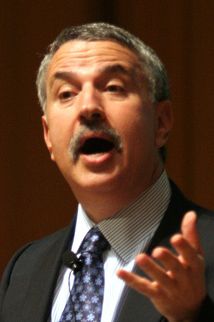 Future historians will long puzzle over how I was given an international platform to freely pontificate on the Arab people and be remunerated handsomely for it. It is true that I am not the only person in the world who formulates dubious theories based on scant or no evidence which I then harangue people with. Other people do it. They are called taxi drivers. But they are not as rich as me and haven’t been awarded three Pulitizer Prizes.