Monthly Archives: September 2011

Rights groups rally to oppose U.S. aid to Uzbekistan

The Washington Post reports:

Human rights groups are lining up to pressure Congress not to authorize the provision of U.S. military aid to the Central Asian country of Uzbekistan, even though such assistance could prove crucial to getting supplies into and out of Afghanistan.

With the Obama administration weighing whether to request a waiver that would allow military aid to Uzbekistan for the first time since 2005, the groups recently sent a letter to members of the Senate pleading with them to oppose any such move, saying, “Uzbekistan’s status as a strategic partner to the United States should not be allowed to eclipse concerns about its appalling human rights record.”

The issue of military aid to Uzbekistan is a complicated one, but goes to the heart of the U.S.-led military campaign in Afghanistan. Uzbekistan has been prohibited from receiving military aid since government security forces there massacred demonstrators six years ago, and the authoritarian state has carried out a host of human rights abuses since that time.

For Washington, however, the government of Islam Karimov matters more now than perhaps at any other time in the history of their relationship.

U.S. military officials remain leery that Pakistan, a sometimes fickle ally, could cut off its supply routes to American troops in Afghanistan — as it has done for limited stretches in the past. And if that happens, Uzbekistan becomes the best transhipment point into the war zone.

Facebooktwittermail

Egypt’s Emergency Law needs to go

Issandr El Amrani writes:

Tomorrow is is set to be the “Friday of Deafening Silence,” the latest in “million-man” protests to take place since Hosni Mubarak was deposed on February 11. Yes, it’s a silly name. But this could be one of the more important protests that has taken place in a while.

Unfortunately, the picture has been muddied by last week’s break-in at the Israeli embassy and the raids on interior ministry facilities, which are in part reported to have been attempts at destroying criminal records, etc. Considering the rather surprising reaction to the embassy incident — almost unanimous condemnation by political parties, activist groups, media figures, etc. including many Islamists of the embassy break-in and the other events of the day — the current atmosphere is somewhat confused. On the one hand, last week’s incidents have really driven home the need (and perhaps even more importantly, the public’s desire) for greater order, and the difficult task of simultaneously empowering the ministry of interior to do its job and reforming it.

The ruling SCAF’s reaction to the events, though, are a turn more dramatic and dangerous than the embassy break-in itself. The SCAF has decided not only to reinstate the full force of the Emergency Law Mubarak and his police used to rule for 30 years, but also Mubarak-like restrictions on media and other sundry measures, such as criminalizing (again, under the Emergency Law) “attacks on freedom of work”. At a time when workers’ movements are gathering in a steadily growing number of strikes (teachers, postal workers, etc.) to insure that the social part of the revolution makes gains, it is plain that SCAF is using the embassy incident to advance a draconian security agenda. Combined with the lingering debate over the electoral law, the lack of clarity on the transition process (notably suggestions that SCAF may handpick the members of a constituent assembly and the lack of a date for the presidential elections) and the unresolved question of the use of military tribunals (which may be replaced under the emergency law by “Emergency Courts” which are equally problematic), one gets the sense of “Mubarakism without Mubarak.”

Amnesty International says:

The Egyptian military authorities’ expansion of the emergency law is the greatest erosion of human rights since the resignation of President Hosni Mubarak earlier this year, Amnesty International said today.

The Supreme Council of the Armed Forces (SCAF) broadened the application of the Mubarak-era emergency law early this week following clashes between demonstrators and security forces at the Israeli embassy last Friday. The confrontation resulted in three reported deaths and some 130 arrests.

Restricted in 2010 to terrorism and drug crimes, the emergency law has now reverted to its original scope, covering offences that include disturbing traffic, blocking roads, broadcasting rumours, possessing and trading in weapons, and “assault on freedom to work” according to official statements.

“These changes are a major threat to the rights to freedom of expression, association and assembly, and the right to strike,” Philip Luther, Amnesty International’s Deputy Director for the Middle East and North Africa. “We are looking at the most serious erosion of human rights in Egypt since Mubarak stepped down.”

“The military authorities have essentially taken Egypt’s laws back to the bad old days. Even President Mubarak limited the scope of the emergency law to terrorism and drug offences in May last year,” said Philip Luther.

Facebooktwittermail

Tunisia is leading the way on women’s rights in the Middle East

Brian Whitaker writes:

Last December, Tunisians rose up against their dictator, triggering a political earthquake that has sent shockwaves through most of the Middle East and north Africa. Now, Tunisia is leading the way once again – this time on the vexed issue of gender equality.

It has become the first country in the region to withdraw all its specific reservations regarding Cedaw – the international convention on the elimination of all forms of discrimination against women.

This may sound a rather obscure and technical matter but it’s actually a very important step. It reverses a long-standing abuse of human rights treaties – especially in the Middle East – where repressive regimes sign up to these treaties for purposes of international respectability but then excuse themselves from some or all of their obligations.

Saudi Arabia, for example, operates the world’s most blatant and institutionalised system of discrimination against women – and yet, along with 17 other Arab states, it is also a party to Cedaw. It attempts to reconcile this position through reservations saying it does not consider itself bound by any part of the treaty which conflicts “with the norms of Islamic law”.

In effect, the Saudi government claims the right to ignore any part of Cedaw it doesn’t like. The “norms of Islamic law” is a meaningless phrase because the Sharia has never been formally codified. There are various methods of interpreting it and scholars often disagree in their interpretations. The “norms of Islamic law” thus means whatever the Saudis choose it to mean.

Facebooktwittermail

Ambassadors as human shields in Syrian revolt

Julian Borger writes:

The American and French ambassadors to Damascus now have some company as occasional human shields for the Syrian protest movement. At the vigil on Sunday of Giyath Matar, a human rights activist tortured and killed in custody, Robert Ford and Eric Chevallier were joined by other western envoys, including the UK’s Simon Collis, and representatives from Germany, Canada, Japan, Netherlands and the EU.

British diplomats said that if Collis had been in the country at the time he would have joined Ford and Chevalier on their celebrated trips to Hama in July, which drew attention to the threat of a bloodbath in the opposition stronghold. Ford’s high-profile role in particular led to violent pro-government protests outside the US embassy and a ban on diplomats travelling without specific permission.

The measure of protection provided by the coordinated diplomatic presence is limited. The Washington Post’s Liz Sly tweeted that the funeral tent at the Matar wake was trashed by security forces an hour later. And the risk to the diplomats is real. It is an uncomfortable and somewhat bizarre position to be in being the diplomatic representative of a country openly calling for the toppling of the host regime. Ford has noted on his Facebook page that he has received death threats, but British diplomats say there will be more such public appearances at opposition events.

“We have said we will stand with the Syrian people, whether that means grieving with them or talking to the opposition,” a diplomat said. He added that it was critical that the Syrian protesters should not feel forgotten by the world while the focus is on Libya and the Palestinian resolution next week at the UN.

Facebooktwittermail

How can Israel survive without growing up?

“Which prosperous ally gets $3 billion a year in aid, and a veto power over America’s entire Mid-East foreign policy? Which ally refuses to cooperate with its military and political protector – even to the point of humiliating a duly elected American president? Which ally violates the Non-Proliferation treaty and manages to get its super-power protector to maintain total silence on this glaring fact? Which ally is threatening conventional warfare if its own nuclear monopoly in the region is in any way threatened?” asks Andrew Sullivan.

“Israel is the exception to every rule. And its intransigence is beginning to force the US toward a horrible choice between allying ourselves with the tectonic democratic forces in the region, or backing a fundamentalist-dominated state bent on expansion and war.”

Sullivan hasn’t turned into a fringe anti-Zionist blogger. He’s merely echoing views that are expressed much more freely in Washington than mainstream media reports generally reveal.

Robert Gates, having served as defense secretary for both presidents Bush and Obama, clearly wasn’t a political maverick when he ran the Pentagon, yet his assessment of Israel was no less blunt than Sullivan’s.

As Bloomberg columnist Jeffrey Goldberg recounted last week:

In a meeting of the National Security Council Principals Committee held not long before his retirement this summer, Gates coldly laid out the many steps the administration has taken to guarantee Israel’s security — access to top- quality weapons, assistance developing missile-defense systems, high-level intelligence sharing — and then stated bluntly that the U.S. has received nothing in return, particularly with regard to the peace process.

Senior administration officials told me that Gates argued to the president directly that Netanyahu is not only ungrateful, but also endangering his country by refusing to grapple with Israel’s growing isolation and with the demographic challenges it faces if it keeps control of the West Bank. According to these sources, Gates’s analysis met with no resistance from other members of the committee.

Gates has expressed his frustration with Netanyahu’s government before. Last year, when Vice President Joe Biden’s visit to Israel was marred by an announcement of plans to build new housing units for Jews in East Jerusalem, Gates told several people that if he had been Biden, he would have returned to Washington immediately and told the prime minister to call Obama when he was serious about negotiations.

Even so, having thoroughly alienated himself from the Obama administration, who does Netanyahu turn to in a desperate situation?

Former Director of the Mossad Efraim Halevy, speaking in New York on Monday night, described the predicament the Israeli prime minister found himself in on Friday as protesters in Cairo were storming the Israeli embassy and six Israelis remained trapped inside.

[Netanyahu] turned to one man, to the President of the United States, and he spoke to him. And the president of the United States, without having much time to consult with Congress, and with the media, and with the analysts and with all of the other people who have to be consulted on major and grave decisions. He took a decision to take up the telephone and get on the line with the powers that be in Egypt, and get them to order the release of these six people, and the detail of the Egyptian commando forces entered and saved them.

I think that this decision by President Obama was a unique decision in many ways. Because I don’t have to tell you, and this was just said time and time and over again this afternoon/this evening, that the United States is not in a position the way it was many years ago in the Middle East, it has its problems, it has its considerations, and rightly so. But I believe the leadership that the President of the United States showed on that night was a leadership of historic dimensions. It was he who took the ultimate decision that night which prevented what could have been a sad outcome—instead of six men coming home, the arrival in Israel of six body bags.

And I want to say to you very openly and very clearly that had there been six body bags, there would have been a much different Israel today than we have been used to seeing over recent years. This would not have been one more incident, one more operation, one event. And the man who brought this about was one man and that was President Barack Hussein Obama.

And I believe it is our duty as Israelis, as citizens of the free world, to say, not simply thank you President Obama, but also we respect you for the way and the manner in which you took this decision.

Note first the ominous way in which Halevy says that had these Israelis died this would not have been “one more incident” — unlike, say, the deaths of six Egyptian border guards shot by Israelis in late August, or the deaths of nine Turkish activists killed by Israeli commandos on board the Mavi Marmara just over a year ago.

But note also that Israel, while pursuing what a senior Israeli official describes as a “porcupine policy” to defend itself, when caught in this particular corner found its prickles of no use and instead was compelled to turn to its only reliable protector, the United States.

As Tzipi Livni, the head of the Kadima Party, told Goldberg: “For Israelis, when they wake up in the morning and ask themselves, what is the general situation today, the litmus test for them is the health of the relationship between Israel and the United States.”

And thus we see the contradiction which is Israel — forever pumping itself up, flexing its muscles and showing its neighbors that no one should risk messing with the mighty Zionist state, yet all the while knowing that without the protection of the United States, Israel’s survival would depend on a revolutionary transformation.

Absent American protection, Israel, for the first time, would have to seriously take on the challenge of getting along with its neighbors and not, as it has for the last two decades, simply use diplomacy as a facade behind which it can pursue its policies of territorial expansion.

Is the West’s spoiled child ready to grow up? And is the United States ready to see that its own patronage is what has allowed the Jewish state to trap itself in such a prolonged adolescence?

Facebooktwittermail

A Palestinian autumn in New York — what to expect at the U.N.

The Associated Press reports:

The Palestinians will ask the Security Council next week to accept them as a full member of the United Nations, the Palestinian foreign minister said Thursday, a move that would defy Washington’s threat to veto the statehood bid.

The remarks by Riad Malki came just ahead of the arrival in the West Bank of a senior U.S. diplomatic team that was in the region in a last-ditch effort to persuade the Palestinians to drop the UN bid. Although Mr. Malki did not close the door on compromise, his comments signalled the chances of breakthrough were slim.

With a diplomatic showdown looming, Israeli Prime Minister Benjamin Netanyahu announced Thursday that he would travel to the UN next week to lead the opposition to the Palestinian initiative.

The emerging scenario would constitute a blow to U.S. diplomacy by forcing Washington to veto a proposal whose outcome – a Palestinian state – in principle is supported by most of the world, including the White House and many in Israel as well.

However, both the U.S. and Israel say a Palestinian state can be established only through negotiations.

It could also drag out the manoeuver at the United Nations for months.

The process would have to play out in the Security Council before the Palestinians turn to the General Assembly, where they are likely to find the needed majority for a lesser form of recognition as a “nonmember observer state.”

Mr. Malki said the Palestinian president, Mahmoud Abbas, will personally submit the Palestinian request for membership to UN Secretary-General Ban Ki-moon after addressing the General Assembly on the afternoon of Sept. 23. In the meantime, he said the Palestinians would listen to suggested alternatives.

Daniel Levy writes:

While neither the United States nor the Palestinians will emerge unscathed from a Security Council showdown, this course of action might actually be the easiest fix for preserving the status quo (undesirable as that is). The Palestinian leadership could rue the injustice of the world and indulge in its favored pastime of righteous indignation, but it would be spared the hard choices associated with going down the path of accumulating leverage and challenging Israel. The journey back to the golden cage of Palestinian Authority (PA) co-habitation with Israeli occupation is a shorter one from the Security Council than it is from the General Assembly.

Israel could much more easily brush off a Palestinian Security Council failure than a General Assembly success. One can imagine Israeli Prime Minister Netanyahu berating Palestinian President Abbas but asserting that he is still ready for negotiations without conditions at any time — a tri-fecta of domestic political win, great PR message, and an easier path for continuing to work with the PA as if nothing had happened (remembering that the continued functioning of the PA and security cooperation are above all an Israeli interest). Israeli messaging might even encourage Congress to maintain its PA and especially PA security funding.

Facebooktwittermail

Israeli diplomats leave Jordan ahead of protest

The New York Times reports:

Israel nearly emptied its embassy here of staff members on Thursday ahead of a planned pro-Palestinian rally outside the gates. But officials denied Israeli press reports that the diplomats had been completely evacuated over fear that the building could be ransacked, in an echo of the attack on the Israeli Embassy in Cairo last week.

Paul Hirschson, a deputy spokesman at the Israeli Foreign Ministry, said that most of the diplomats in Jordan, including the ambassador, had been due to spend the weekend in Israel anyway, and that they had left Jordan a few hours earlier than they normally would have.

“Nothing has been evacuated,” Mr. Hirschson said. “We are watching what is going on.”

The weekend staff remains in Jordan, though Israeli officials would not comment on specifics — who was staying or whether they remained inside the embassy or not.

The embassy would normally close on Thursday after office hours and reopen on Sunday. Mr. Hirschson said he expected the ambassador and all staff members to be back by Sunday.

The demonstration has been called for 6.30 p.m., when the building would be mostly empty.

Earlier, Israel’s Haaretz newspaper and other Israeli news media had reported that a convoy carrying the Israeli diplomats had left Jordan overnight for Israel.

Facebooktwittermail

Tony Judt: Israel is a country fast losing touch with reality

On July 6, 2010, a month before Tony Judt died and shortly after Israel’s deadly attack on the Mavi Marmara, he was interviewed by Merav Michaeli, a columnist for Ha’aretz.

Merav Michaeli: How do you see Israel’s actions in the Flotilla affair?

Tony Judt: The characterization that comes to mind is “autistic.” Israel behaved in a way that suggests it is no longer fully able to estimate, assess or understand the way other people think about it. Even if you supported the blockade (I don’t) this would be an almost exemplary case of shooting oneself in a painful part of the anatomy.

Firstly because it alienates Turkey, who Israel needs in the longer run. Secondly because it was undertaken in international waters and largely at the expense of civilian victims. Thirdly because it was an overreaction. Fourthly because it had the predictable effect of weakening the case for a blockade rather than strengthening it.

In short, this is the action of a country which is fast losing touch with reality.

Michaeli: The raid on the flotilla was far from being the worst of Israel’s behavior over 40 years of occupation, yet the international response to it was the most grievous. Why do you think that is?

Judt: I agree. But what happens in small West Bank towns, in the Israeli Parliament, in Gazan schools or in Lebanese farms is invisible to the world. And Israel was always very good at presenting the argument from “self-defense” even when it was absurd. I think that Israel’s successful defiance of international law for so long has made Jerusalem blind and deaf to the seriousness with which the rest of the world takes the matter.

Finally there is the question of cumulation. From the Six Day War to Lebanon, from Lebanon to the settlements, from the settlements to Gaza, Israel’s credibility has steadily fallen – even as the world’s distance from Auschwitz (the favorite excuse) has lengthened. So Israel is far more vulnerable today than it would have been twenty five years ago.

Michaeli: What do you tell those who say Israel has willingly withdrawn from Gaza and everything that has happened since proves the Israeli claim that there’s no partner for an agreement?

Judt: I tell them that they are talking nonsense, or else prevaricating. Israel withdrew from Gaza but has put it under a punishment regime comparable to nothing else in the world. That is not withdrawal. And of course we all know that there are those who would like to give Palestinians “independence” but exclude Gaza from the privilege. That too was part of the purpose of the withdrawal.

There is a partner. It may not be very nice and it may not be very easy. It’s called Hamas. In the same way the provisional [Irish Republican Army] was the only realistic “partner for peace” with whom London could negotiate; Nelson Mandela (a “terrorist” for the Afrikaaners until his release) was the only realistic “partner for peace”; the same was true of “that terrorist” ([according to Winston] Churchill) Gandhi; the well-known “murderous terrorist” Jomo Kenyatta with whom London fought a murderous war for five years before he became “a great statesman”; not to mention Algeria. The irony is that Washington knows this perfectly well and expects negotiations with Hamas within five years. After all, Israel virtually invented Hamas in the hope of undermining the PLO; well, they succeeded. But they are the only ones who can’t see what has to happen.

Facebooktwittermail

FBI teaches agents: ‘mainstream’ Muslims are ‘violent, radical’

Danger Room reports:

The FBI is teaching its counterterrorism agents that “main stream” [sic] American Muslims are likely to be terrorist sympathizers; that the Prophet Mohammed was a “cult leader”; and that the Islamic practice of giving charity is no more than a “funding mechanism for combat.”

At the Bureau’s training ground in Quantico, Virginia, agents are shown a chart contending that the more “devout” a Muslim, the more likely he is to be “violent.” Those destructive tendencies cannot be reversed, an FBI instructional presentation adds: “Any war against non-believers is justified” under Muslim law; a “moderating process cannot happen if the Koran continues to be regarded as the unalterable word of Allah.”

These are excerpts from dozens of pages of recent FBI training material on Islam that Danger Room has acquired. In them, the Constitutionally protected religious faith of millions of Americans is portrayed as an indicator of terrorist activity.

“There may not be a ‘radical’ threat as much as it is simply a normal assertion of the orthodox ideology,” one FBI presentation notes. “The strategic themes animating these Islamic values are not fringe; they are main stream.”

The FBI isn’t just treading on thin legal ice by portraying ordinary, observant Americans as terrorists-in-waiting, former counterterrorism agents say. It’s also playing into al-Qaida’s hands.

Focusing on the religious behavior of American citizens instead of proven indicators of criminal activity like stockpiling guns or using shady financing makes it more likely that the FBI will miss the real warning signs of terrorism. And depicting Islam as inseparable from political violence is exactly the narrative al-Qaida spins — as is the related idea that America and Islam are necessarily in conflict. That’s why FBI whistleblowers provided Danger Room with these materials.

Over the past few years, American Muslim civil rights groups have raised alarm about increased FBI and police presence in Islamic community centers and mosques, fearing that their lawful behavior is being targeted under the broad brush of counterterrorism. The documents may help explain the heavy scrutiny.

They certainly aren’t the first time the FBI has portrayed Muslims in a negative light during Bureau training sessions. As Danger Room reported in July, the FBI’s Training Division has included anti-Islam books, and materials that claim Islam “transforms [a] country’s culture into 7th-century Arabian ways.”

Facebooktwittermail

Some real shock and awe: racially profiled and cuffed in Detroit

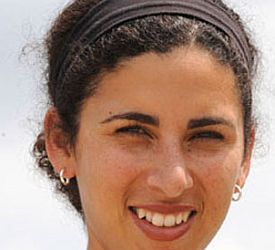
Shoshana Hebshi writes:

Silly me. I thought flying on 9/11 would be easy. I figured most people would choose not to fly that day so lines would be short, planes would be lightly filled and though security might be ratcheted up, we’d all feel safer knowing we had come a long way since that dreadful Tuesday morning 10 years ago.
But then armed officers stormed my plane, threw me in handcuffs and locked me up.

My flight from Denver landed in Detroit on time. I sent a text message to my husband to let him know we had landed and I would be home by dinner. The plane stopped on the tarmac, seemingly waiting to have the gate cleared. We waited. I played on my phone, checking Facebook, scrolling through my Twitter feed. After a while of sitting there, I decided to call my husband to tell him the plane was being delayed and I would call him when I got off the plane.

Just as I hung up the phone, the captain came over the loudspeaker and announced that the airport authorities wanted to move the airplane to a different part of the airport. Must be a blocked gate or something, I thought. But then he said: Everyone remain in your seats or there will be consequences. Sounded serious. I looked out the window and saw a squadron of police cars following the plane, lights flashing. I turned to my neighbor, who happened to be an Indian man, in wonderment. What is going on? Others on the plane were remarking at the police as well. Getting a little uneasy, I decided the best thing for me to do was to tweet about the experience. If the plane was going to blow up, at least there’d be some record on my part.

Stuck on a plane at Detroit airport…cops everywhere

Soon the plane was stopping in some remote part of the airport, far from any buildings, and out the window I see more police cars coming to surround the plane. Maybe there’s a fugitive on the plane, I say to my neighbor, who is also texting and now shooting some photos of the scene outside. He asks me to take a few, as I have a better angle from my window seat. A few dozen uniformed and plainclothes officers are huddled off the side of the plane. I don’t see any guns, and it isn’t clear what’s going on.

So I continued to tweet:

A little concerned about this situation. Plane moved away from terminal surrounded by cops. Crew is mum. Passengers can’t get up.

Then what looked like the bomb squad pulled up. Two police vans and a police communication center bus parked off the road. I started to get nervous and rethink my decision to fly on 9/11.

Cops in uniform and plainclothes in a huddle in rear of plane.

We had been waiting on the plane for a half hour. I had to pee. I wanted to get home and see my family. And I wanted someone to tell us what was going on. In the distance, a van with stairs came closer. I sighed with relief, thinking we were going to get off the plane and get shuttled back to the terminal. I would still be able to make it home for dinner. Others on the plane also seemed happy to see those stairs coming our way.

I see stairs coming our way…yay!

Before I knew it, about 10 cops, some in what looked like military fatigues, were running toward the plane carrying the biggest machine guns I have ever seen–bigger than what the guards carry at French train stations.

My last tweet:

Majorly armed cops coming aboard

Someone shouted for us to place our hands on the seats in front of us, heads down. The cops ran down the aisle, stopped at my row and yelled at the three of us to get up. “Can I bring my phone?” I asked, of course. What a cliffhanger for my Twitter followers! No, one of the cops said, grabbing my arm a little harder than I would have liked. He slapped metal cuffs on my wrists and pushed me off the plane. The three of us, two Indian men living in the Detroit metro area, and me, a half-Arab, half-Jewish housewife living in suburban Ohio, were being detained. [Continue reading…]

Facebooktwittermail

Why does Tripoli not resemble Baghdad?

After entering Libya four days after the fall of Tripoli, Rory Stewart wrote:

There were many reasons to fear that the aftermath of the fall of Tripoli would resemble the first days after the fall of Baghdad. For decades, Libya had been controlled by Gaddafi and his secret police. His sons, allies and a few tribal chiefs had grown fat on largesse, oil, sanctions-busting and the remnants of a state-owned economy. When these men fell, others would scramble to seize what they could. Gaddafi’s civil servants would spend their last moments burning documents and trashing desks, and leave with televisions and armchairs. Their successors would steal the ministry cars. Gaddafi’s cronies would flee for the border with cousins and jewels; and militia groups would squat in their marble-floored villas (with squalid bathrooms because there was no water supply). Gangsters would seize petrol stations; and opportunists would strip the computers from schools and perhaps the beds from hospitals. Garbage and sewage would fill the once tidy streets.

Meanwhile, Islamist brigades might challenge the religious values of the new government. The militias might ask for money to protect businesses. Fights might break out between teenagers with mortars looted from the state arsenals and those with foreign-supplied, truck-mounted anti-aircraft guns. Minor fissures, in the past often irrelevant, between Benghazi and Tripoli, Berber and Arab, desert and coast, Salafi and Brotherhood, tribe and tribe, could suddenly become decisive splits. The villas and the farms, the banks and the hotels of Gaddafi’s children would be up for grabs; so too would be the land transferred illegally by Gaddafi to tribes now out of favour. Others might well fight to gain control of state monopolies; the commissions, agents’ fees and franchises from foreign companies; the contracts from international donors; and $120 billion of overseas Libyan assets. The new self-appointed transitional government, with its expatriate professors, mid-level businessmen and aged dissidents, would struggle. Gaddafi himself predicted much of this.

And it was easy in my first few hours in Libya to find evidence for this way of thinking. Within ten miles of the border, I was stopped at six different checkpoints, manned by teenagers with new-model Kalashnikovs and American rifles. In Bir-al-Ghanam, five pick-up trucks roared into the square and men in clean blue jeans and tight T-shirts leaped out, firing round after round into the air. Who was in control of them? Who could control them? Weapons were everywhere: on the outskirts of Tripoli, I saw, lying on the grass, a gleaming, finned, three-foot live rocket, and nearby, still in its packing case, a seven-foot-long surface-to-air missile.

The militias that clearly were under someone’s control were even more troubling. The man with the long grey beard, combat trousers, aviator shades and quiet voice who told me to get out of my car had the manner of an intelligence officer. The very tall young man in flowing robes with a soft curly beard – whose limousine was waved through the checkpoint with such deference – looked like a Saudi. Mahdi al-Harati, the commander of the Tripoli brigade, who wore his military beret for the Eid prayers, had been the only member of his family not to be imprisoned as an Islamist; he had lived in Dublin, run Islamic relief organisations, sailed on the Gaza flotilla and been shot by Israeli special forces. What were his views? And what of Abdul Hakim Belhadj, who was on the military council and was detained by the CIA in 2004 because of his links to al-Qaida?

The interior minister, in his grey suit and grey tie, held a press conference flanked by overweight mustachioed men in police uniform with colonels’ tabs. One of them told me he had worked in the ‘interrogation’ department under the old regime. ‘When I went to Martyrs’ Square and said I was the interior minister,’ the minister boasted, ‘there was far more shooting in the air than normal – it was to greet me. If you don’t believe me, come with me to the square, I will show you.’ I was not confident of his ability to keep order.

Yet so far Libya has proved, not unpredictably awful but unpredictably good. After 15 years working around interventions, I was watching for any hint of disaster. I noted, for example, that a Berber militia had occupied a prime hotel beside the arch of Marcus Aurelius on the grounds that the owner ‘was a Gaddafi sympathiser’. But even after 24 hours, I couldn’t escape the sense that things were not that bad: that Libyans were delighted and confident, and with justification.

The celebration in the central square that night was far happier, more joyful than any I’d seen in Bosnia, Iraq or Afghanistan. Hundreds of young men in jeans and T-shirts were hanging off cranes, 50 feet in the air. Five-year-olds in bright pink dresses were lining up at popcorn stands. A 50-year-old director of the audit department of the national airline had brought his mother and teenage daughters to see the crowds at midnight. ‘No one in the world has ever seen anything like Gaddafi,’ he said to me. ‘You cannot imagine what it was like. We are just so happy he is gone.’ Like everyone else, he joined in the revolutionary songs, and seemed to know the words. As a mullah tried to make a ponderous statement about God and the martyrs of the revolution, the crowd clapped and chanted: ‘Poor old Gaddafi – it’s time to move on.’

When my new friend the interior minister appeared on stage at two in the morning, in front of the crowd of ten thousand, he had lost his grey tie and his police escort and gained a smile. ‘Young people,’ he began, ‘please, one minute, please – do not fire your weapons in the air – it gives a bad image to the foreigners.’ The crowd continued to fire (one man was hit, it seemed fatally, by a falling bullet) and some teenagers continued to chant. But the minister slowly got the measure of his laughing audience: pausing for long stretches and luring the crowd into moments of silence. Eventually, they even cheered him. And everyone sang the national anthem.

Libya did not look as shabby or dangerous as Iraq. Despite six months of fighting and uncertainty, the lawns in Tripoli were mown, the bougainvillea bushes were bright, and the rubbish was still in garbage bags, not strewn, as in Basra, in suppurating ditches. The shops and petrol stations were reopening, the water supply was beginning to return. The armed 15-year-olds were polite. No one at any of the checkpoints asked for a bribe, or our satellite phones. The Misrata militia in their jeeps were as friendly as the Knights of Zintan in their pick-up trucks. There was little talk of revenge. No one was shooting anyone else.

And to my surprise, there was little looting. In the executive offices, it was not just the furniture and the televisions that were untouched: even the silver ashtrays and gold paperknives were still on the desks. It seemed that no one had slipped even a fountain-pen into their pocket when the government left and the rebels came in. At night, the streets of Tripoli were so jammed with honking cars, waving flags, boys wearing the national colours, that one might imagine Libya had just won the World Cup. The government and the police were not in any position to prevent disorder, but it seemed that the Libyans were not drawn to looting or violence. And no one I spoke to, from expatriate engineers to young gunmen, expected that.

Facebooktwittermail

Islamists emerge in force in new Libya

The Washington Post reports:

In the fight against Gaddafi’s forces, the Islamist militants played an important role among the rebels’ rag-tag forces because of their experience in battles abroad. With a place in the new Libya, most have said that their days as militants are over. The largest of the organizations, the Libyan Islamic Fighting Group, has re-branded itself as the Libyan Islamic Movement for Change.

Some Islamists are blunt in expressing resentment about fellow rebels.

“Secularists don’t like Islamists,” said Ismail Sallabi, an influential cleric who is among nine leaders commanding rebel forces in eastern Libya. Before the revolution, he said, he had never held a weapon. “They want to use Islamists in the fighting stage and then take control.”

“I’m proud to be an Islamist, and this is a historic chance for the West to understand Islamists up close,” Sallabi said.

Libya is a conservative Muslim nation, and its future government will probably reflect that; the governments of Egypt and Iraq are among Arab states that base their governance on Islamic law. While Gaddafi’s government tolerated little in the way of activism, Libya’s Islamist groups appear to have emerged from his reign as the best-organized among political groups, and secularists among Libya’s new leaders appear determined not to alienate them.

One early step intended to rein in Islamists is the creation of a Supreme Security Committee, which has put the most powerful rebel commander, former militant Abdelhakim Belhadj, under civilian control. But in an interview, Ali Tarhouni, a liberal who heads the committee, also sounded a conciliatory note.

The Libyan Islamic Fighting Group is “not al-Qaeda. They don’t have any intention of fighting the West or Europe. This is a group that basically carried arms to topple Gaddafi’s regime,” Tarhouni said. “Their brand of thinking is not geared towards the instability of the rest of the world.”

Even before Gaddafi was ousted from power last month, Islamists and secularists on the Transitional National Council had clashed this summer on whether Islamic law should be the primary source for legislation. Initially, secularists prevailed, winning approval of a provision that established Islamic law as one guidepost for a future Libya, but not the dominant one.

Days later, however, Islamists led by the Libyan Muslim Brotherhood took advantage of the absence of secularists from Benghazi to win passage of a revised provision that made Islamic law the principal law of the land, said a council member involved in the process. He spoke on the condition of anonymity to discuss the fraught subject.

One prominent Islamist, Abdul Razag el-Aradi, a nationalist who is close to the Muslim Brotherhood, described that approach as a compromise intended to appease more conservative Islamists while stopping well short of an approach that would transform Libya into an Islamic country.

“There are two kinds of people we in Libya will completely reject: extremist Islamists and extremist secularists,” Aradi said.

Facebooktwittermail

Saleem Shahzad’s murder, al Qaeda, and the ISI

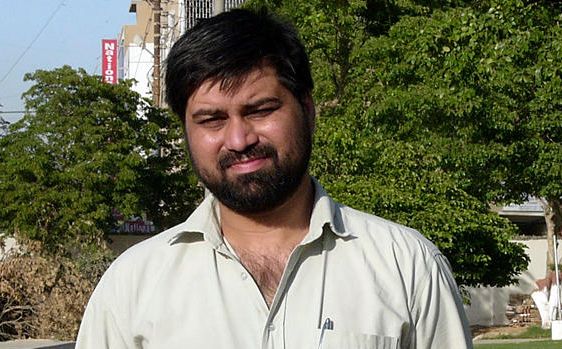
Dexter Filkins writes:

I met Saleem Shahzad nine days before he disappeared, and he seemed to know that his time was running out. It was May 20th, and Islamabad was full of conspiracy theories about the Abbottabad raid: bin Laden was still alive; Kiyani and Pasha had secretly helped the Americans with the raid. Mostly, the public radiated anger and shame.

I had called Shahzad to discuss a pair of stories he’d written about bin Laden. In March, five weeks before the raid in Abbottabad, Shahzad claimed that bin Laden had suddenly come across the radar screens of several intelligence agencies: he was on the move. The story also reported that bin Laden had held a strategy meeting with an old friend, Gulbuddin Hekmatyar, an Afghan mujahideen whom the State Department considers a “global terrorist.” Then, just after the Abbottabad raid, Shahzad published a report claiming that the Pakistani leadership had known that the Americans were planning a raid of some sort, and had even helped. What the Pakistanis didn’t know, Shahzad wrote, was that the person the Americans were looking for was bin Laden. Both stories struck me as possibly dubious, but it was clear that Shahzad had numerous sources inside Pakistani intelligence and other intelligence agencies in the region.

Shahzad and I agreed to meet at a Gloria Jean’s coffee shop, not far from his home. For years, Islamabad was a sleepy town of bureaucrats; however dangerous the rest of Pakistan was, the capital was usually quiet. This was no longer true. In 2008, the Marriott Hotel, only a few miles from Gloria Jean’s, was destroyed by a suicide bomber, who killed or wounded more than three hundred people. Lately, the Kohsar Market—the collection of expensive boutiques where the Gloria Jean’s is situated—had been declared off limits for American Embassy personnel on weekends, out of fear that it would be attacked.

Shahzad and I took our coffees upstairs. He pointed to a table in an alcove by a window. “Welcome to my private office,” he said, with a smile. “No one will be able to hear us here.”

We talked for a few minutes about the Abbottabad raid and the stories he’d written. Shahzad was tall and self-possessed; he had thick black hair and a round face offset by a trim beard. He was warm and expressive, the sort of reporter whom people talked to because he seemed genuinely nice. No wonder he got all those scoops, I thought. He was wearing Western clothes and spoke flawless English. He told me that he knew some of my colleagues, and offered to help me out in any way that he could.

And then Shahzad changed the subject. What he really wanted to talk about was his own safety. “Look, I’m in danger,” he said. “I’ve got to get out of Pakistan.” He added that he had a wife and three kids, and they weren’t safe, either. He’d been to London recently, and someone there had promised to help him move to England.

The trouble, he said, had begun on March 25th, the day that he published the story about bin Laden’s being on the move. The next morning, he got a phone call from an officer at the I.S.I., summoning him to the agency’s headquarters, in Aabpara, a neighborhood in eastern Islamabad. When Shahzad showed up, he was met by three I.S.I. officers. The lead man, he said, was a naval officer, Rear Admiral Adnan Nazir, who serves as the head of the I.S.I.’s media division.

“They were very polite,” Shahzad told me. He glanced over his shoulder. “They don’t shout, they don’t threaten you. This is the way they operate. But they were very angry with me.” The I.S.I. officers asked him to write a second story, retracting the first. He refused.

And then Admiral Nazir made a remark so bizarre that Shahzad said he had thought about it every day since.

“We want the world to believe that Osama is dead,” Nazir said.

Bin Laden was still alive, his whereabouts presumably unknown, when that conversation occurred. I pressed Shahzad. What did they mean by that?

He shrugged and glanced over his shoulder again. They were obviously trying to protect bin Laden, he said.

“Do you think the I.S.I. was hiding bin Laden?” I asked him.

Shahzad shrugged again and said yes. But he hadn’t been able to prove it. (The I.S.I. calls this claim an “unsubstantiated accusation of a very serious nature.”)

Shahzad said that he’d left I.S.I. headquarters that day thinking that he needed to be careful. Now, two months later, there was another reason to worry: a book that he’d written, “Inside Al Qaeda and the Taliban,” was being released in three days, in both Pakistan and the West. The book, written in English, explored even more deeply the taboo subject of the I.S.I.’s relationship with Islamist militants.

“They’re going to be really mad,” Shahzad said.

Facebooktwittermail

U.N. experts say Israel’s blockade of Gaza illegal

Reuters reports:

Israel’s naval blockade of the Gaza Strip violates international law, a panel of human rights experts reporting to a U.N. body said on Tuesday, disputing a conclusion reached by a separate U.N. probe into Israel’s raid on a Gaza-bound aid ship.

The so-called Palmer Report on the Israeli raid of May 2010 that killed nine Turkish activists said earlier this month that Israel had used unreasonable force in last year’s raid, but its naval blockade of the Hamas-ruled strip was legal.

A panel of five independent U.N. rights experts reporting to the U.N. Human Rights Council rejected that conclusion, saying the blockade had subjected Gazans to collective punishment in “flagrant contravention of international human rights and humanitarian law.”

The four-year blockade deprived 1.6 million Palestinians living in the enclave of fundamental rights, they said.

Facebooktwittermail