Monthly Archives: December 2011

Hamas’s Haniya applauds, Israel denounces PLO unity moves

AFP reports: The Hamas premier of Gaza, Ismail Haniya, praised steps toward reconciliation taken by the Islamist group and its former rival Fatah, which were angrily denounced in Israel.

Palestinian president Mahmud Abbas and Hamas chief Khaled Meshaal took steps in Cairo on Thursday towards reforming the Fatah-dominated Palestine Liberation Organisation, such that Hamas could join.

“We want to pursue positive dialogue with Fatah from this point”, Haniya told journalists.

“Practical measures must however be taken, like the liberation of political prisoners from Hamas detained by Fatah,” he said, adding that Fatah must also stop its repeated questioning of Hamas supporters during investigations.

The reconciliation moves drew an angry response from Israel, with one minister saying the Jewish state must now annex more territory to ensure the safety of its citizens in case “terrorist” Hamas gains influence in the West Bank.

“This alarming rapprochement between Abu Mazen (Abbas) and Hamas is aimed at forming a government that one can only say is aimed at bringing about a genocide,” Transport Minister Israel Katz of the right-wing Likud party said.

Facebooktwittermail

Iraq’s fractures widen

Jack Healy reports from Baquba: The governor has fled this uneasy city. Half the members of the provincial council are camped out in northern Iraq, afraid to return to their offices. Peaceful protesters fill the dusty streets, though just days ago angrier crowds blockaded the highways with burning tires and shattered glass.

All of this because the local government here in northeastern Diyala Province recently dared to raise a simple but explosive question, one that is central to the unrest now surging through Iraq’s shaky democracy: Should a post-American Iraq exist as one unified nation, or will it split into a loose confederation of islands unto themselves?

A dire political crisis exploded in Baghdad this week, after an arrest warrant was issued against the Sunni Arab vice president, Tariq al-Hashimi, accusing him of running a death squad. But years of accumulated anger and disenfranchisement are now driving some of the country’s largely Sunni Arab provinces to seek greater control over their security and finances by distancing themselves from Iraq’s Shiite leaders.

Many Sunni leaders have rallied to the cause while top Shiites in Baghdad have fought the efforts, aggravating the sectarian divisions among the country’s political elite.

“They feel that they have no future with the central government,” said Deputy Prime Minister Saleh al-Mutlaq, a prominent Sunni.

This development comes at a moment of rising tensions and could herald a near-breakdown of relations between the countryside and the leaders behind the concrete walls and concertina wire guarding Baghdad’s Green Zone. It has splintered communities within provinces along religious lines, while deepening the sense of political uncertainty pervading Iraq in the days after the American military’s withdrawal.

“We’ve reached a point where the exasperation with the entire political process is so big in Sunni majority areas,” said Reidar Visser, an expert on Iraqi politics and the editor of the blog historiae.org. “They are just fed up and disillusioned.”

On Friday, thousands of protesters marched through largely Sunni cities to condemn the warrant for Mr. Hashimi’s arrest. In Samarra, where the destruction of a Shiite shrine in 2006 set off waves of violence, 2,000 demonstrators filled the streets after Friday Prayer, waving signs that declared, “The people of Samarra condemn the fabricated charges against Hashimi.”

The schism is one thread of a growing battle between Prime Minister Nuri Kamal al-Maliki, a Shiite, and politicians from the political opposition and Iraq’s Sunni Muslim minority.

Security forces who take orders from Mr. Maliki — sometimes personally — have arrested dozens of people tied to opposition politicians in recent weeks. The government accused Mr. Hashimi, the Sunni vice president, of running a death squad from his offices in central Baghdad, a charge he denies. And Mr. Maliki has urged Iraqi lawmakers to unseat his own deputy, Mr. Mutlaq, who frequently inveighs against the prime minister.

A leading political coalition supported by many Sunnis and secular Iraqis has boycotted Parliament, refusing to attend sessions, and its ministers and lawmakers have threatened to resign en masse. An American-backed partnership government uniting Iraq’s three main factions — the Shiite majority, Sunnis and Kurds — appears poised to fall.

Facebooktwittermail

From Pakistan to Afghanistan, U.S. finds convoy of chaos

Bloomberg Businessweek reports: Like a broker tracking the dips and spikes of a volatile but lucrative stock, Mohammad Shakir Afridi has kept a close eye on U.S. troop levels in Afghanistan since the first Americans landed in the country 10 years ago. As president of the Khyber Transport Assn., one of the largest associations of truck owners in Pakistan, Afridi’s biggest contract involves moving military equipment for American and coalition forces through Pakistan to military bases in Afghanistan. The slightest policy shift in Washington can carry major consequences for Afridi and his business.

Sitting on a rooftop in a leafy residential block in Peshawar, the largest city in northwest Pakistan, Afridi slaps the morning paper on the floor beside his mat. “Twenty-four of our boys in one go,” he spits out. A front page photograph shows a field full of coffins draped in Pakistani flags. The soldiers were killed on Nov. 26 when U.S. helicopters and jet fighters from Afghanistan fired on military outposts on the Pakistani side of the border. The relationship between Pakistan and the U.S., which has been rocky for years, hit a new low. While the U.S. military promised to investigate and the NATO chief regretted the “tragic, unintended” incident, the Pakistani Prime Minister said there would be “no more business as usual” with the U.S. Pakistan demanded the U.S. vacate an airbase it was using in the South and choked off all U.S. and coalition military supplies traveling through the country.

Afridi learned of the American attack before the Pakistan military or government had issued any statement; one of his truck drivers called to tell him the border was closed. Afridi was later given orders from the military to halt trucks near the border, and to direct all others to the southern port city of Karachi. He quickly obliged. “It’s serious this time,” Afridi says. “They’ll make the Americans sweat.”

U.S. and Allied forces in Afghanistan get the bulk of their supplies in two ways. The first is the Northern Distribution Network, a web through Central and Eastern Europe and Central Asia that crosses through at least 16 countries, using a combination of roads, railway, air, and water to move supplies in from the north. The chain can be complex and circuitous. One path through the network, for example, might involve military cargo that arrives by sea in Istanbul. From there it travels the width of Turkey on truck and crosses the northern border into Poti, Georgia. In Georgia the equipment goes by rail to Baku in Azerbaijan, where it’s loaded onto a ship bound for the Kazakh Port of Aktau, across the Caspian Sea. Then it’s put on trucks for the 1,000-mile ride through Kazakhstan, then a train through Kyrgyzstan and, finally, into Afghanistan.

The second passage to Afghanistan, known as Pakistani Lines of Communication, begins at the port of Karachi and continues on one of two land routes, north toward the logistical hub at Bagram Airfield or west toward Kandahar. It has always been the primary option for American forces: It’s the shortest and cheapest, requires only one border crossing, and minimal time on the road inside Afghanistan. Nearly 60,000 trucks drive more than 1,200 miles through the length of Pakistan every year carrying supplies and fuel. According to varying figures provided by U.S. and NATO forces, 40 percent to 60 percent of all military supplies used by coalition forces in Afghanistan come through Pakistan. [Continue reading…]

Facebooktwittermail

Pakistan army wants Zardari out but not a coup

Reuters reports: Pakistan’s powerful army is fed up with unpopular President Asif Ali Zardari and wants him out of office, but through legal means and without a repeat of the coups that are a hallmark of the country’s 64 years of independence, military sources said.

Tensions are rising between Pakistan’s civilian leaders and its generals over a memo that accused the army of plotting a coup after the U.S. raid that killed Osama bin Laden in May.

“Who isn’t fed up with Zardari? It’s not just the opposition and the man on the street but people within the government too,” said one military source who asked not to be named.

“But there has to be a proper way. No action is being planned by the army. Even if we tried, it would be very unpopular and not just with the government and the opposition but most Pakistanis too.”

The Pakistani military spokesman declined comment.

General Ashfaq Kayani has pledged to keep the military out of Pakistani politics since taking over as army chief in 2007.

Any coup — Pakistan has had three since independence in 1947 — could further tarnish the military’s public image which has already taken a battering after the bin Laden operation, widely seen in Pakistan as a violation of sovereignty.

But the army remains the arbiter of power and analysts say it has plenty of ways to pressure Zardari to step down, especially if a link is established between him and the memo, which sought the Pentagon’s help in averting a feared coup.

Facebooktwittermail

Why anti-government Americans should be pro-Palestinian

On the right in the U.S., nothing garners political support as easily as preaching the evils of Big Government. But if someone wants to observe big government in one of its most tyrannical expressions, there’s probably no place better to go than the West Bank where Palestinians live under Israeli military rule.

Haaretz reports on the red tape that controls everyday life:

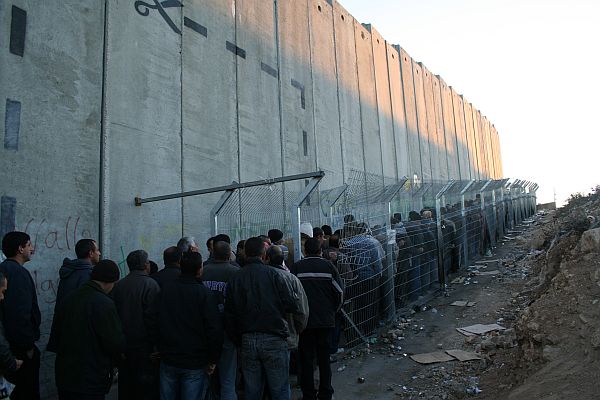
Israel’s Civil Administration issues 101 different types of permits to govern the movement of Palestinians, whether within the West Bank, between the West Bank and Israel or beyond the borders of the state, according to an agency document of which Haaretz obtained a copy.

The most common permits are those allowing Palestinians to work in Israel, or in Jewish settlements in the West Bank. Over the decades, however, the permit regimen has grown into a vast, triple-digit bureaucracy.

There are separate permits for worshipers who attend Friday prayers on the Temple Mount in Jerusalem and for clerics working at the site; for unspecified clergy and for church employees. Medical permits differentiate between physicians and ambulance drivers, and between “medical emergency staff” and “medical staff in the seam zone,” meaning the border between Israel and the West Bank. There is a permit for escorting a patient in an ambulance and one for simply escorting a patient.

There are separate permits for traveling to a wedding in the West Bank or traveling to a wedding in Israel, and also for going to Israel for a funeral, a work meeting, or a court hearing.

The separation fence gave rise to an entirely new category of permits, for farmers cut off from their fields. Thus, for instance, there is a permit for a “farmer in the seam zone,” not to be confused with the permit for a “permanent farmer in the seam zone.”

Human rights organizations have challenged the permit regime on various grounds.

According to a report by the UN Office for the Coordination of Humanitarian Affairs, international agencies operating in the West Bank waste an estimated 20 percent of their working days on permits from the Civil Administration – applying for them, renewing them and sorting out problems.

The checkpoint-monitoring organization Machsom Watch claims that the Shin Bet security service uses the permit regime to recruit informers. Palestinians whose permit requests are rejected “for security reasons” are often invited to meetings with Shin Bet agents, who then offer “assistance” in obtaining the desired permits in exchange for information.

Guy Inbar, spokesman for the Coordinator of Government Activities in the Territories, said in response that the Civil Administration is aware of the issues raised in the article and intends to evaluate them in the coming year as part of its streamlining program.

Facebooktwittermail

‘If Jesus were to come this year, Bethlehem would be closed’

The Guardian reports: If Joseph and Mary were making their way to Bethlehem today, the Christmas story would be a little different, says Father Ibrahim Shomali, a parish priest in the town. The couple would struggle to get into the city, let alone find a hotel room.

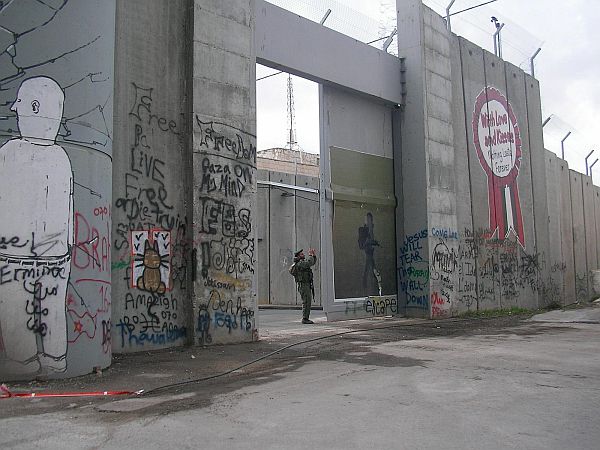
“If Jesus were to come this year, Bethlehem would be closed,” says the priest of Bethlehem’s Beit Jala parish. “He would either have to be born at a checkpoint or at the separation wall. Mary and Joseph would have needed Israeli permission – or to have been tourists.

“This really is the big problem for Palestinians in Bethlehem: what will happen when they close us off completely?”

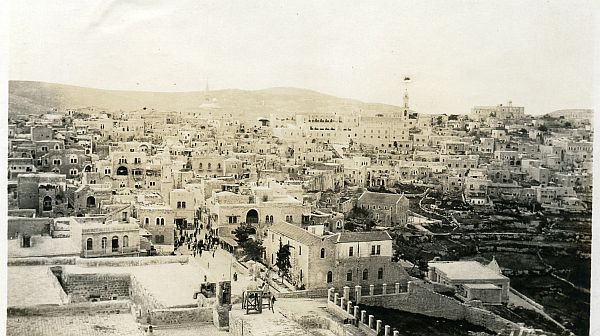
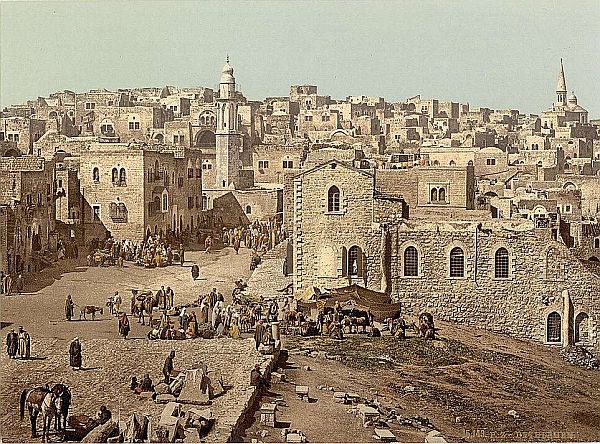
Bethlehem is the heart of Christian Palestine and it swells with pride every Christmas. Manger Square is transformed into a grotto of lights and stalls crowned by a towering Christmas tree. Strings of illuminated angels, stars and bells festoon the streets. But just a few minutes’ drive to the north, the festive atmosphere stops abruptly.

A strip of Israeli settlements built on 18 sq km of what was once northern Bethlehem threatens to cut the city off from its historic twin, Jerusalem. To the Israeli authorities, these have been neighbourhoods of Jerusalem since 1967. One of the settlements, Har Homa, is built on land where angels are said to have announced the birth of Christ to local shepherds. A narrow corridor of land between Har Homa and another settlement, Gilo, still connects Bethlehem to Jerusalem but the construction of Givat Hamatos, a new settlement announced in October, will fill this in a matter of years.

The European Union and United Nations routinely denounce Israel’s unilateral settlement expansion but in October, EU high commissioner Baroness Catherine Ashton warned the construction of Givat Hamatos was “of particular concern as [it] would cut the geographic contiguity between Jerusalem and Bethlehem”.

European concern is not slowing Israel’s progress. Last week, 500 new units were approved for Har Homa and a further 348 in Betar Illit, on Bethlehem’s western boundary. Earlier this month, an additional 267 units were sanctioned for settlements running up to the edge of the city’s southern suburbs, where the Ministry of Defence also gave settlers permission to start a farm on Palestinian land. This is in addition to the 6,782 new apartments already slated for Har Homa, Gilo and Givat Hamatos.

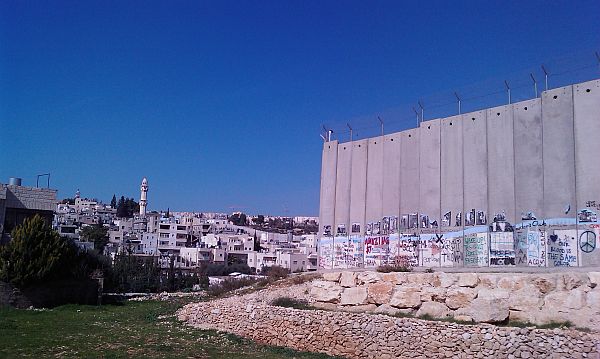
In the short term, the closure won’t make a big difference to everyday life in Bethlehem: the separation wall already prevents Palestinians from entering Jerusalem from the town without an Israeli permit.

But this ring of settlements will permanently change the geography of the biblical landscape: if a peace agreement razes the separation wall, the two cities will remain divided.

Israeli activist Hargit Ofram, director of Peace Now, reads a clear political intention in Israel’s plans: “These efforts are being made to prevent a possible two-state solution because in order for that to work, you would need a viable Palestinian state with its capital in East Jerusalem.

“If that capital is going to be surrounded by settlements, Israel would have to remove them. The more Israel is building, the higher the price of a Palestinian state is becoming.”

A year ago, Mayor Victor Batarseh described the impact of the occupation on the Bethlehem and Palestinian Christians who wish to visit the town to celebrate Christmas.

Facebooktwittermail

Israeli sniper shoots unarmed protester in Nabi Saleh

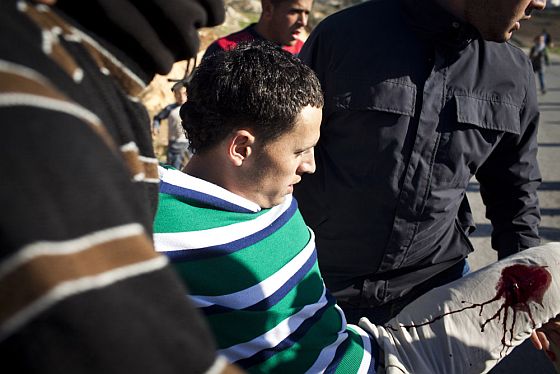
The Popular Struggle Coordination Committee reports: Earlier today, an Israeli military sniper opened fire at demonstrators in the village of Nabi Saleh, injuring one in the thigh. The wounded protester was evacuated by a Red Crescent ambulance to the Salfit hospital. The incident takes place only two weeks after the fatal shooting of Mustafa Tamimi at the very same spot. Additionally, a Palestinian journalist was injured in his leg by a tear-gas projectile shot directly at him, and two Israeli protesters were arrested.

The protester was hit by 0.22″ caliber munitions, which military regulations forbid using in the dispersal of demonstrations. Late in 2001, Judge Advocate General, Menachem Finkelstein, reclassified 0.22” munitions as live ammunition, and specifically forbade its use as a crowd control means. The reclassification was decided upon following numerous deaths of Palestinian demonstrators, mostly children.

Despite this fact, the Israeli military resumed using the 0.22” munitions to disperse demonstrations in the West Bank in the wake of Operation Cast Lead. Since then at least two Palestinian demonstrators have been killed by 0.22” fire:

  • Az a-Din al-Jamal, age 14, was killed on 13 February 2009, in Hebron,
  • Aqel Sror, age 35, was killed on 5 June 2009, in Ni’lin.

Following the death of Aqel Srour, JAG Brig. Gen. Avichai Mandelblit reasserted [PDF] that 0.22” munitions “are not classified by the IDF as means for dispersing demonstrations or public disturbances. The rules for use of these means in Judea and Samaria are stringent, and comparable to the rules for opening fire with ‘live’ ammunition.”

Contrary to the army’s official position, permissive use of 0.22” munitions against demonstrators continues in non life-threatening situations. [Continue reading for more background.]

Protester evacuated after being shot with live ammo in Nabi Saleh today. Picture credit: Oren Ziv/ActiveStills

Facebooktwittermail

Revolution through banking?

Carne Ross writes: It has been clear for some time that the conduct of the banking and financial industry is one very important cause of the 2008 credit crunch. Moreover, for-profit banks by and large fail to deliver services to the poor, deepening poor people’s marginalization from the mainstream economy. The banks relentless pursuit of profit, an intrinsic feature of the industry (as of the broader economy), continues to expose all of us to the risk of another banking crisis which would repeat the enormous harm done last time, above all to the world’s poorest. Sadly, it’s unrealistic to expect Washington to do much to curb the industry, given the banks’ enormous lobbying sway and privileged access to senior officials, regardless which party is in power.

It’s no surprise then that the banks have been an important focus of discussion in the Occupy Wall Street movement. And a new approach to banking may become one of the important ways that Occupy moves forward and starts producing material change.

One evening in Zuccotti Park, I somewhat rashly, and without much forethought, stood up and announced that I wanted to set up a working group to explore alternative systems of banking. I did not have a clear plan but felt that we had to get to the heart of the problem. If we could change banking and make it embody the values of Occupy—equality, transparency, democracy—we might not only change the financial industry for the better, but also change the very nature of the economy—and thus society itself.

Other members of the group share this ambition. Those who have joined the group represent an extraordinary and eclectic mix. There are army vets and unemployed students, but also a large number of financial experts: former derivative traders, SEC regulators, bankers, financial analysts and bloggers and even a professor of financial law. We have no shortage of expertise, and no shortage of determination either.

Over the last several weeks, we have been examining what legislative changes are needed to reform the banking sector: some day soon there may be Occupy-originated proposals and draft legislation, for instance to amend the so-called “Volcker Rule”. One group has split off to explore and design the creation of an ideal bank that would put into practice the values of Occupy. What would this look like? [Continue reading…]

Facebooktwittermail

Did Israel knowlingly supply Iran with internet monitoring equipment?

Bloomberg reports: The clandestine arrangement worked smoothly for years. The Israeli company shipped its Internet- monitoring equipment to a distributor in Denmark. Once there, workers stripped away the packaging and removed the labels.

Then they sent it to a man named “Hossein” in Iran, an amiable technology distributor known to them only by his first name and impeccable English, say his partners in Israel and Denmark.

Israeli trade, customs and defense officials say their departments didn’t know that the systems for peering into Internet traffic, sold under the brand name NetEnforcer, had gone to a country whose leaders have called for the destruction of the Jewish state. Israel’s ban on trade with its enemy failed, even though a paper trail on the deals was available in Denmark.
[…]
Allot Communications Ltd., a Hod Hasharon, Israel-based firm whose stock trades on Nasdaq and the Tel Aviv Stock Exchange and which reported $57 million in sales last year, sold its systems to a Randers, Denmark-based technology distributor.

Workers at that company, RanTek A/S, repackaged the gear and shipped it to Iran, according to four former employees of Allot and RanTek. The shipments were legal under Danish law.
Skirting a Ban

A sale as early as 2006 is corroborated by an export license application filed by RanTek, though the name of the customer in Iran was redacted by Danish authorities who provided the document to Bloomberg News.

The former employees identified the buyer as the technology distributor, Hossein.

The sales skirted a strict Israeli ban that prohibits “trading with the enemy,” including any shipments that reach Iran, Syria and Lebanon.

“This covers everything,” says Gavriel Bar, manager of the Middle East department at Israel’s Ministry of Industry, Trade and Labor. “Imports, exports, direct, indirect. An Israeli company is not allowed to trade with Iran in any way.”

Three former sales employees for Allot say it was well known inside the company that the equipment was headed for Iran. Allot officials say they have no knowledge of their equipment going there and are looking into RanTek’s sales.

The simplest explanation for what was going on here was that Allot wasn’t going to let a trade ban stand in the way of a business opportunity. At the same time, there is little reason to think that the current Israeli government would have misgivings about the Iranian government being provided with additional tools to suppress political dissent. A democratic Iran would be unlikely to abandon its nuclear programme, yet it could not be demonized in the same way as the current regime — Ahmadinejad remains Israel’s worst and best enemy.

Facebooktwittermail

Is Assad’s regime behind the Damascus suicide bombings?

The anonymous Arab journalist who blogs at The Arab Digest examines those reasons that support the idea that the Assad regime is behind these bombings, versus those reasons suggesting Free Syrian Army or Islamist involvement. In his view, the regime itself is more suspect.

One could say the regime is behind it for the following reasons:

1. Friday is a day off which means more civilians will die than security services.
2. Arab League observers just arrived in town, and such operations serve the regime’s reasoning of current events, and justifies to some extent its heavy handedness.
3. Precedence. The regime has allegedly used a suicide bomber in Lebanon’s Hariri assassination.
4. The FSA has denied its involvement, and accused the regime. The Syrian National Council has previously asked the FSA, and reportedly agreed with its leader Riyadh Al-Assaad, to restrict its role to protecting civilian demonstrators.

But on the other hand, there is the following supporting the anti regime FSA/Islamists involvement:

1. The Free Syrian Army was not happy with the Arab League Observers arriving in Syria. They were counting on the Arab League increasing the international and regional isolation of Syria.
2. The Islamists have a history of attacking the Security apparatuses. These events are reminiscent of the 1980s showdown with the regime.
3. There is growing anger in the conservative cities and regions, against Damascus and Aleppo for not joining the revolution. This might be a warning.
4. The FSA is not an organised force. The Islamists have a different cell-based structure and might go about such operations without consulting anyone. In Iraq, they had no political calculations whatsoever except to ruin any political process, and promote Sectarian violence.

Both are strongly supported. Still, I see the regime blamed for the bombings due to the timing, and for it being the main perpetrator in repression and violence (the stronger side in violence, and the violent one in repressing peaceful demonstrations). Also, the fact that the regime quickly accused Al-Qaeda and had a team of media people quickly reporting and analysing this, will draw more suspicions regarding its possible involvement.

Facebooktwittermail

Iraqi vice president: Maliki is becoming a new Saddam

Foreign Policy reports: Shortly before a wave of 15 bombings ripped through Baghdad on Thursday morning, killing more than 60 people, Iraqi Vice President Tareq al-Hashemi warned that a simultaneous political crisis in the country could spiral “beyond control.” In an interview with Foreign Policy on Wednesday from Sulaymaniyah in Kurdistan, a semi-autonomous region where the vice president has fled to evade an arrest warrant, Hashemi declared that the Iraqi political system is “drifting from building democracy to building an autocratic regime” — and implied that Iraq’s prime minister, Nouri al-Maliki, was becoming a new Saddam Hussein.

Earlier this week, Maliki, a Shiite Muslim, accused Hashemi, a Sunni, of running a hit squad targeting government officials during the height of sectarian strife in the country. In a press conference on Wednesday, Maliki went further, casting doubt on the sustainability of power-sharing in Iraq by threatening to replace the current unity government with a majority government if Hashemi’s largely Sunni Iraqiya bloc doesn’t end a boycott of parliament and the cabinet. The political crisis has sparked concern about sectarian violence returning to Iraq just days after the last U.S. troops withdrew from the country.

Hashemi has vehemently denied the charges against him, arguing that they are politically motivated and yet another effort by Maliki to consolidate power. When asked if Maliki has become a Saddam-like figure since assuming power in 2006, as fellow Iraqiya leaders Saleh al-Mutlak and Iyad Allawi have suggested, Hashemi noted that "many of Saddam’s behaviors are now being exercised by Maliki unfortunately." But he added that Saddam rebuilt Iraq in six months after the invasion of Kuwait and the Gulf War in the early 1990s. In contrast, under Maliki’s leadership, Hashemi pointed out, the consulting firm Mercer ranked Baghdad the worst city in the world in terms of quality of life.

Facebooktwittermail