

Daily Archives: February 24, 2008

GUEST CONTRIBUTOR – Roger Morris: America’s shadow in the Middle East

roger-morris.jpgA death in Damascus
By Roger Morris, War in Context, February 24, 2008

It was another car bomb in the Middle East, the victim this time one of those “notorious terrorists” seemingly generic to the landscape. Hezbollah’s Imad Mughniyeh died February 12 in Damascus as he lived most of his forty-five years, in that world of searing blast, mutilation, mayhem, and aftershock of cold fear.

Yet behind fleeting, often hackneyed reports of his death, he was no ordinary figure in the long blood-red line of killers and killed. Given a murderer’s good-riddance by Washington and Jerusalem while a martyr’s memorial from Gaza and Beirut to Baghdad and Tehran, Mughniyeh was emblematic of the gulf between worlds—of atrocities and abject failure of statesmanship on all sides, in which American policy has its own half-century share.
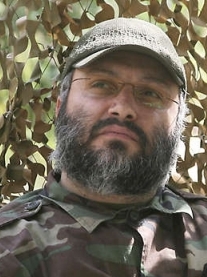
mughniyeh.jpgMillions on his head, Mughniyeh led a largely unseen life. But some of its milestones can be glimpsed from the archive of the past fifty years in the Middle East. It is in part the story of a man, a country, a region pitted against the United States in a shadow war of intervention and resistance, attack and reprisal, most Americans never saw.

No outrage or theology of the oppressed can rationalize the savagery of a Mughniyeh, spiraling vengeance that leaves the non-state terrorist—or the government practicing its own version in the guise of “special operations” or covert action—no better than the evil they claim as justification, and their cause ultimately no less betrayed. But there will be no end to reciprocal brutality and defeat in the Middle East until the history Mughniyeh embodies is understood.

Born in 1963 to Shiite peasant parents in Tayr Dibba, a village in impoverished southern Lebanon, he grew up in a cinder block house with no running water in a Levant of vast inequity, where pre-World War II French colonialism and then postwar U.S. support heedlessly fastened Western control with the proxy political-economic repression by the Maronite Christian minority with its avowedly fascist Phalangist party and militia. That client tyranny, masked by Beirut’s cosmopolitan façade, was perpetuated by the 1958 military intervention of US Marines and the ensuing CIA corruption of Lebanese politics through the 1970s, including millions in covert subsidies to the Phalange and numerous Lebanese politicians.

He was nine in July 1972 when near where he lived in south Beirut’s Shiite slums the city’s first car bomb, planted by the Israelis in retaliation for the recent Lod Airport massacre, blew up the spokesman of the group behind the Lod attack, Palestinian poet Ghassan Kanafani, along with his 17-year-old niece Lamees with him for a shopping trip.

Mughniyeh was thirteen in 1976 when the CIA and Israel covertly backed the invasion of Lebanon by Syria to thwart the emergence of a broad nationalist coalition representing the country’s Islamic majority and supported by the Palestinian Liberation Organization.

He was an eighteen-year-old engineering student at the American University of Beirut in 1981 when the U.S. gave a “green light” to the Israeli invasion of Lebanon in pursuit of the PLO.

He was nineteen in the summer of 1982 when the Israeli Army, with covert U.S. aid, laid siege to Beirut, raking the city with artillery, devastating Shiite neighborhoods. (Osama bin Laden would say later it was the attacks on Beirut’s high-rise apartment buildings that prompted him to retaliate against New York skyscrapers.)

By 1982, like several of his boyhood soccer team, teenage Mughniyeh joined the combined PLO and Lebanese nationalist resistance to the invasion, becoming a sniper along the Green Line. He watched that September as the West negotiated the PLO’s exit from Lebanon with guarantees that U.S. and other peacekeeping troops would protect Palestinian refugee camps from reprisal by hostile Lebanese factions—only to see the US Marine force swiftly withdrawn, leaving Lebanese militias to massacre helpless hundreds at the Shatila and Sabra camps as Israeli forces looked on. Even US officials, Secretary of State George Shultz and National Security Advisor Robert McFarlane, would call the episode “treacherous” and “criminal.”

In April 1983, a bombing of the US Embassy in Beirut killed several CIA agents pivotal in past covert actions in Lebanon, an attack Mughniyeh was later accused of “masterminding.” But there would be no real evidence of his role—only that the bombing was in retaliation for the Marine withdrawal allowing the Shatila and Sabra slaughter as well as earlier interventions.

He was twenty in September 1983 when the U.S. Sixth Fleet intervened in the Lebanese Civil War by firing on rebel forces fighting the reactionary Phalangist regime, the USS Virginia and John Rodgers pounding hills above Beirut with 24,000 pounds of ordnance, soon followed by the battleship New Jersey’s small car-size 2,000-pound shells inflicting untold civilian as well as combatant casualties.

On October 23, 1983, a truck bomb with 12,000 pounds of explosives killed 241 Marines quartered at the Beirut Airport after being sent back to Lebanon. U.S. officials later accused Mughniyeh in the attack, though again there would be no evidence—only that the assault on the Marines was in retaliation for the U.S. naval shelling and other interference in Lebanon’s civil war. “We still do not have the actual knowledge of who did the bombing of the Marine barracks at the Beirut Airport,” Caspar Weinberger, the Secretary of Defense at the time, told PBS in 2001, “and we certainly didn’t then.”

A turning point came for Mughniyeh came in 1985 when he was a twenty-two-year-old bodyguard to Sheikh Mohammad Hussein Fadlallah. A fiery preacher, spiritual mentor to many in the rising political consciousness of Lebanon’s Shiite community, Fadlallah took no political role, opposed violence and sectarian division, and defied growing Iranian influence in Lebanon. But on March 8, 1985—in reprisal for the Marine barracks bombing, and in an operation goaded by the Israelis and funded by the Saudis, both of whom saw Fadlallah as a threat to their own interests in Lebanon—the CIA tried to car-bomb Fadlallah. By chance the cleric escaped harm, but the huge explosion ravaged the poor Shiite area where he lived, wounding 200 and killing 80, among them Fadlallah’s bodyguards and Mughniyeh’s close friends. The next day, a banner hung over the smoking ruins—“Made in the USA.”

With the Fadlallah bombing, Mughniyeh joined the terrorist arm of the increasingly militant political impulse among Lebanon’s Shiites from which Hezbollah soon emerged, and as the resistance movement’s chief of security and intelligence, he joined one of history’s more vicious chain reactions.

Later in 1985 he reportedly interrogated kidnapped CIA agent William Buckley who soon died in captivity, and whose abduction set in motion the Washington sequel of trading arms for hostages that led to the Iran-Contra scandal.

In July 1985 he was involved in the hijacking of TWA Flight 847 with the brutal killing of U.S. Navy diver Robert Stethem, for which Mughniyeh and others were indicted by an American court.

In 1988, he was implicated in the kidnapping and murder of Marine Colonel William Higgins serving with UN peacekeeping forces in Lebanon, a crime a U.S. official would describe as a “blood debt” driving Washington’s further intervention in Lebanon and the region.

Over the 1980s, Mughniyeh conducted much of the Middle East’s shadowy minuet with Washington in which dozens of Western hostages were taken and traded for American arms for the Palestinians and Iranians as well as Hezbollah—the U.S. feeding Iran weapons in its 1980s war with Iraq while supplying the Iraqis intelligence on Iran in a ruthless policy of bleeding both.

Mughniyeh evaded numerous U.S. and Israeli attempts to assassinate him, including a 1994 car bomb that killed his brother. Become mythic, in the West a faceless monster, in the Middle East a tall, handsome, well-dressed hero fluent in English and French, he was widely credited with historic feats, including the deployment of armor-piercing roadside bombs driving Israeli forces from Lebanon in 2000 and 2006, and plaguing the U.S. occupation of Iraq. “When in doubt, and we are always in doubt about this,’ said an ex-CIA official, “blame Mughniyeh.”

His death, predictably, was shrouded in intrigue and menace. As Hezbollah threatened revenge, there were reports that he had been planning some retaliation for the recent Israeli bombing of Syria, that the headrest explosive in his SUV was triggered by satellite as only the U.S. or Israel could have managed, that some of his Syrian hosts may have conspired with the CIA in some new cabal, or even that the killing was faked so that he could go still deeper underground. In the old ceaseless, senseless cycle, reprisals were in the offing.

About his life, as Churchill said of historical tragedy, the terrible ifs accumulate. If in a Lebanon free of any real cold war Russian threat the West had not so reflexively and so long colluded with the colonial oligarchs against a political-economic democracy bringing long-term stability. If there had been from any side an equitable peace between Palestinians and Israelis. And perhaps most decisively, if the U.S. had not continuously thrown its vast weight into the scales—furtively if not always openly—with so little knowledge and sensibility that it ended with enemies America and its Israeli client need never have made.

How history will see Mughniyeh—vicious killer, fierce patriot, or both—will depend, of course, on who writes it in the era’s clashing dogmas. If only his death could teach, this figure who killed so many might yet save lives. But so long as the world’s greatest power lacks the wisdom and courage to face its past culpability and change its course in the Middle East, the key to so much else in its policies at home as well as abroad, one outcome seems sure. In some cinder block hovel in south Beirut, the rubble of Gaza, or the walled-in ghettos of the West Bank, some young man, or woman, is waiting to take his place.

© Roger Morris

(A shorter version of this article ran in Canada’s Globe and Mail February 23.)

Roger Morris, who served on the Senior Staff of the National Security Council under Presidents Johnson and Nixon before resigning over the invasion of Cambodia, is an award-winning historian and author of several books, including Shadows of the Eagle a history of US policy and covert action in the Middle East and South Asia, forthcoming from Knopf in 2008.


Facebooktwittermail

NEWS & VIEWS ROUNDUP: February 24

It’s a scary world. Don’t campaign reporters care?

The last year has thrown a dizzying array of foreign policy challenges at the United States. We deployed an additional 30,000 troops to Iraq. Venezuela’s Hugo Ch¿vez and Iran’s Mahmoud Ahmadinejad blustered their way across the world stage. Russian President Vladimir Putin flirted with a new cold war with Washington. Benazir Bhutto was assassinated in Pakistan.

And, of course, we all continue to live in the chilly shadow of 9/11.

You might imagine that such red-hot foreign policy issues, combined with a wide-open presidential election, would spark a journalistic fire so intense it would force candidates up into trees and out on limbs to defend their foreign policy positions.

But you’d be dreaming.

Battle company is out there

I went to Afghanistan last fall with a question: Why, with all our technology, were we killing so many civilians in air strikes? As of September of last year, according to Human Rights Watch, NATO was causing alarmingly high numbers of civilian deaths — 350 by the coalition, compared with 438 by the insurgents. The sheer tonnage of metal raining down on Afghanistan was mind-boggling: a million pounds between January and September of 2007, compared with half a million in all of 2006.

After a few days, the first question sparked more: Was there a deeper problem in the counterinsurgency campaign? More than 100 American soldiers were killed last year, the highest rate since the invasion. Why were so many more American troops being killed? To find out, I spent much of the fall in the Korengal Valley and elsewhere in Kunar province alongside soldiers who were making life-and-death decisions almost every day — decisions that led to the deaths of soldiers and of civilians.

The myth of the surge

It’s a cold, gray day in December, and I’m walking down Sixtieth Street in the Dora district of Baghdad, one of the most violent and fearsome of the city’s no-go zones. Devastated by five years of clashes between American forces, Shiite militias, Sunni resistance groups and Al Qaeda, much of Dora is now a ghost town. This is what “victory” looks like in a once upscale neighborhood of Iraq: Lakes of mud and sewage fill the streets. Mountains of trash stagnate in the pungent liquid. Most of the windows in the sand-colored homes are broken, and the wind blows through them, whistling eerily. House after house is deserted, bullet holes pockmarking their walls, their doors open and unguarded, many emptied of furniture. What few furnishings remain are covered by a thick layer of the fine dust that invades every space in Iraq. Looming over the homes are twelve-foot-high security walls built by the Americans to separate warring factions and confine people to their own neighborhood. Emptied and destroyed by civil war, walled off by President Bush’s much-heralded “surge,” Dora feels more like a desolate, post-apocalyptic maze of concrete tunnels than a living, inhabited neighborhood. Apart from our footsteps, there is complete silence.

Obama’s brain trust taking shape

When it comes to foreign affairs, Senator Obama’s inner circle of advisers includes a Swahili-speaking Air Force general he met on a trip to Africa; a 30-year-old speechwriter who helped draft the final report from the bipartisan Iraq Study Group, and President Clinton’s first national security adviser, who in 2005 converted to Judaism under the tutelage of the Navy’s chief Jewish chaplain.

Those advisers in order are Scott Gration, Ben Rhodes, and Anthony Lake. They are part of a nine-person team, in contact every day, often by e-mail. The team develops policy positions, clears language for use in comments to the press, and prepares the Democratic candidate who has won all the primaries since Super Tuesday for a dangerous world and a global war.

The audacity of hopelessness

When people one day look back at the remarkable implosion of the Hillary Clinton campaign, they may notice that it both began and ended in the long dark shadow of Iraq.

It’s not just that her candidacy’s central premise — the priceless value of “experience” — was fatally poisoned from the start by her still ill-explained vote to authorize the fiasco. Senator Clinton then compounded that 2002 misjudgment by pursuing a 2008 campaign strategy that uncannily mimicked the disastrous Bush Iraq war plan. After promising a cakewalk to the nomination — “It will be me,” Mrs. Clinton told Katie Couric in November — she was routed by an insurgency.

The Clinton camp was certain that its moneyed arsenal of political shock-and-awe would take out Barack Hussein Obama in a flash. The race would “be over by Feb. 5,” Mrs. Clinton assured George Stephanopoulos just before New Year’s. But once the Obama forces outwitted her, leaving her mission unaccomplished on Super Tuesday, there was no contingency plan. She had neither the boots on the ground nor the money to recoup.

Visiting the torture museum

Sometimes a little stroll through history can have its uses. Take, as an example, the continuing debate over torture in post-9/11 America. Last week, Stephen Bradbury, the head of the Justice Department’s Office of Legal Counsel, testified before the House Judiciary Committee about waterboarding. In defending its use, Bradbury took a deep dive into the past. He claimed that the CIA’s waterboarding of at least three of its prisoners bore “no resemblance” to what torturers in the Spanish Inquisition had done when they used what was then called “the Water Torture.”

As part of his defense of the techniques used by the Bush administration to gain information, Bradbury went out of his way to play the historian, claiming that the water torture of yore differed from today’s American-style version in crucial ways. The waterboarding employed by interrogators during the infamous Spanish Inquisition, he insisted, “involved the forced consumption of a mass amount of water.” This led, he claimed, to the “lungs filling with water” to the point of “agony and death.” The CIA, on the other hand, employed “strict time limits,” “safeguards,” and “restrictions,” making it a far more controlled technique. As he put it: “[S]omething can be quite distressing or uncomfortable, even frightening, [but] if it doesn’t involve severe physical pain, and it doesn’t last very long, it may not constitute severe physical suffering” – and so would not qualify as torture. Bradbury summed up his historical case this way, “There’s been a lot of discussion in the public about historical uses of waterboarding,” but the “only thing in common is the use of water.”

Inside the mind of a Gitmo detainee

As you read this, we expect to be in Guantanamo, meeting with the man President Bush mentions when he talks about the intelligence gained and the lives saved because of “enhanced” interrogation techniques. We represent Saudi-born Abu Zubaydah in a legal effort to force the administration to show why he is being detained. And this week, with our first meeting, we begin the laborious task of sifting fact from fantasy. Yet we worry it may already be too late.

The administration declares with certainty that Zubaydah is a “senior terrorist leader and a trusted associate of Osama bin Laden” who “helped smuggle al-Qaeda leaders out of Afghanistan.” Dan Coleman, a former FBI analyst who was on the team that reviewed Zubaydah’s background file, disagrees, describing him as “insane, certifiable” and saying he “knew very little about real operations, or strategy.” We do not presume to know the truth. So far, we know only what has been publicly reported. But we hope to uncover the facts and present them to those with the power to act upon them.

Justice probes authors of waterboarding memos

An internal watchdog office at the Justice Department is investigating whether Bush administration lawyers violated professional standards by issuing legal opinions that authorized the CIA to use waterboarding and other harsh interrogation techniques, officials confirmed yesterday.

H. Marshall Jarrett, counsel for the Office of Professional Responsibility, wrote in a letter to Democratic lawmakers that his office is investigating the “circumstances surrounding” Justice opinions that established a legal basis for the CIA’s interrogation program, including a now-infamous memo from August 2002 that narrowly defined torture and was later rescinded by the department.

Hamas and Israel should sign a cease-fire agreement

During the past several months I conducted a series of talks with several Hamas leaders in Gaza who approached me to advocate a cease-fire agreement with the government of Israel. I told those leaders that I would not take such a step unless they could deliver a Hamas guarantee that all of the factions in Gaza would adhere to the cease-fire. I proposed that they either undertake a commitment to impose the cease-fire on all factions or secure the agreement of all of them to sign on. I was informed that at least five meetings with leaders of all factions took place at the home of the prime minister of the Hamas-led government, Ismail Haniyya. However, until recently neither was the agreement of all factions secured nor was there a clear decision by Hamas to impose a cease-fire.

Following the issuing of the draft cease-fire agreement by Froman and Amayreh, several Hamas leaders in Gaza told me that they were willing to accept all of the terms of the draft and to make sure that all of the factions in Gaza adhered to it as well. I suggested that a formal statement be issued by Haniyya in Gaza and by Khaled Meshaal in Damascus. Such a formal statement has not yet been issued.

Israeli mayor of bombarded border town offers to break ranks and talk to Hamas

The mayor of Sderot, an Israeli town repeatedly targeted by rockets fired from the Gaza Strip, says in order to save Israeli lives he is ready to talk to Hamas – despite the international ban on contact with the militant Palestinian organisation.

“I would say to Hamas, let’s have a ceasefire, let’s stop the rockets for the next 10 years and we will see what happens,” said Eli Moyal, the mayor, who is a member of the rightwing Likud party. “For me as a person the most important thing is life and I’m ready to do everything for that. I’m ready to talk to the devil.”

Defining victory downward

Why was President Bush’s decision more than a year ago to send another 30,000 troops to Iraq called “the surge”? I don’t know who invented this label, but the word “surge” evokes images of the sea: a wave that sweeps in, and then sweeps back out again. The second part was crucial. What made the surge different from your ordinary troop deployment was that it was temporary. In fact, the surge was presented as part of a larger plan for troop withdrawal.

It was also, implicitly, part of a deal between Bush and the majority of Americans, who want out. The deal was: just let me have a few more soldiers to get Baghdad under control, and then everybody, or almost everybody, can pack up and come home.

In other words: you have to increase the troops in order to reduce them. This is so perverse on its face that it begins to sound zen-like and brilliant, like something out of Sun Tzu’s “The Art of War.” And in General David Petraeus, the administration conjured up its own Sun Tzu, a brilliant military strategist.

The guilty pleasure of Fidel Castro

There’s been predictably little interesting discussion in the United States of Fidel Castro’s retirement as Cuba’s commandante en jefe, maximo etc. That’s because in the U.S. political mainstream, Cuba policy has for a generation been grotesquely disfigured by a collective kow-towing — yes, collective, it was that craven Mr. Clinton who signed into law the Draconian Helms-Burton act that made it infinitely more difficult for any U.S. president to actually lift the embargo, and the equally craven Mrs. Clinton appears to pandering to the same crowd — to the Cuban-American Ahmed Chalabi figures of Miami, still fantasizing about a day when they’ll regain their plantations and poor people of color will once again know their place. But let’s not for a moment forget the mirror-image of that view so common on the left, where Castro’s patent fear of his own people and reluctance to trust them to debate ideas and options (much less hold competitive elections that, in all probability, he’d have easily won) is strenuously rationalized on the basis of the CIA’s repeated efforts to kill him. (Sure, they repeatedly tried to kill Castro, and Washington might like to manipulate Cuba’s politics given half a chance, but those are not sound reasons to imprison economists or avoid discussing policy options even within the Communist Party.)

Seduced by Putin’s smile

When I began what has been a journey of some 10,000 miles across Russia from Murmansk to Vladivostok, my lodestar was Winston Churchill’s aphorism about the Soviet Union being “a riddle wrapped in a mystery inside an enigma”. Having met hundreds of Russians of all types, I now think that there is no riddle, precious little mystery and almost nothing that is enigmatic about Putin’s Russia.

It has been an exhilarating and revelatory experience during which I have met some wonderful people and been on the receiving end of the warmest hospitality, but I have returned more aware than ever before that the Russian people are not like “us”. In a fundamental way they neither belong to the West nor share western values. While family life and social order are just as precious to them as to us, their concepts of justice and freedom have a quite different set of meanings from those to which we are accustomed. Their tormented history and the political culture this has nurtured set them sharply apart from, and frequently at odds with, mainstream western thought.

Putin’s iron grip on Russia suffocates opponents

Over the past eight years, in the name of reviving Russia after the tumult of the 1990s, Mr. Putin has waged an unforgiving campaign to clamp down on democracy and extend control over the government and large swaths of the economy. He has suppressed the independent news media, nationalized important industries, smothered the political opposition and readily deployed the security services to carry out the Kremlin’s wishes.

Facebooktwittermail