
Daily Archives: June 6, 2008

NEWS & VIEWS ROUNDUP: June 7

The unraveling

[The leader of the Libyan Islamic Fighting Group, Noman] Benotman surprised his hosts [in Kandahar in the summer of 2000 at a conference of jihadists from around the Arab world] with a bleak assessment of their prospects. “I told them that the jihadist movement had failed. That we had gone from one disaster to another, like in Algeria, because we had not mobilized the people,” recalls Benotman, referring to the Algerian civil war launched by jihadists in the ’90s that left more than 100,000 dead and destroyed whatever local support the militants had once enjoyed. Benotman also told bin Laden that the Al Qaeda leader’s decision to target the United States would only sabotage attempts by groups like Benotman’s to overthrow the secular dictatorships in the Arab world. “We made a clear-cut request for him to stop his campaign against the United States because it was going to lead to nowhere,” Benotman recalls, “but they laughed when I told them that America would attack the whole region if they launched another attack against it.”

Benotman says that bin Laden tried to placate him with a promise: “I have one more operation, and after that I will quit”–an apparent reference to September 11. “I can’t call this one back because that would demoralize the whole organization,” Benotman remembers bin Laden saying.

After the attacks, Benotman, now living in London, resigned from the Libyan Islamic Fighting Group, realizing that the United States, in its war on terrorism, would differentiate little between Al Qaeda and his organization.

Benotman, however, did more than just retire. In January 2007, under a veil of secrecy, he flew to Tripoli in a private jet chartered by the Libyan government to try to persuade the imprisoned senior leadership of his former group to enter into peace negotiations with the regime. He was successful. This May, Benotman told us that the two parties could be as little as three months away from an agreement that would see the Libyan Islamic Fighting Group formally end its operations in Libya and denounce Al Qaeda’s global jihad. At that point, the group would also publicly refute recent claims by Al Qaeda that the two organizations had joined forces.

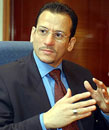
This past November, Benotman went public with his own criticism of Al Qaeda in an open letter to Zawahiri, absorbed and well-received, he says, by the jihadist leaders in Tripoli. In the letter, Benotman recalled his Kandahar warnings and called on Al Qaeda to end all operations in Arab countries and in the West. The citizens of Western countries were blameless and should not be the target of terrorist attacks, argued Benotman, his refined English accent, smart suit, trimmed beard, and easygoing demeanor making it hard to imagine that he was once on the front lines in Afghanistan.

Although Benotman’s public rebuke of Al Qaeda went unnoticed in the United States, it received wide attention in the Arabic press. In repudiating Al Qaeda, Benotman was adding his voice to a rising tide of anger in the Islamic world toward Al Qaeda and its affiliates, whose victims since September 11 have mostly been fellow Muslims. Significantly, he was also joining a larger group of religious scholars, former fighters, and militants who had once had great influence over Al Qaeda’s leaders, and who–alarmed by the targeting of civilians in the West, the senseless killings in Muslim countries, and Al Qaeda’s barbaric tactics in Iraq–have turned against the organization, many just in the past year.

Can Qatar do it again?

Having succeeded in getting erstwhile warring Lebanese factions to get their act together, Qatar is now exploring the prospects of mediating between Fatah and Hamas in the hope of restoring Palestinian national unity.

However, Qatari Emir Sheikh Hamed Bin Khalifa Al-Thani and his influential premier and foreign minister, Sheikh Hamad Bin Jasem, seem to be treading cautiously (some say too cautiously) in the more complicated “Palestinian minefield”.

According to reliable Palestinian sources, Qatar has voiced its “initial willingness” to help “the Palestinian brothers” overcome their differences and re-establish national unity. The same sources were careful, however, to add that Qatari officials — especially Bin Jasem — wouldn’t be in a position to help the Palestinians if they were not willing to help themselves.

U.S. calls a straw poll in Iraq: It may not like the result

In the TV gameshow bubble that substitutes for foreign policy discussion on the U.S. presidential campaign trial, there’s a lot of talk these days about how the U.S. is “winning” in Iraq. The evidence to back this claim is a comparative lull in the death rate in recent months, and the fact that Iraqi government forces are taking more casualties than the Americans. Those proclaiming “victory,” of course, are invariably the same crowd that enthusiastically backed the invasion of Iraq in the first place, and their desire for vindication for their part in authoring what all serious analysts agree has been the most catastrophic strategic blunder in America’s history is all too understandable. (Less understandable is the echo of this position by the Washington Post, which claims the U.S. and the Iraq government are “winning the war” and gaining full control of the country from al-Qaeda and rival militias.)

But the suggestion that a shift or fall in the pattern of violence indicates that the U.S. is “winning” in Iraq betrays the same lack of understanding of dynamics in that country as was so evident in the original decision to invade and occupy Iraq.

Democrats, put down your swords

For Democrats of all persuasions, the conclusion of the primaries should encourage reflection rather than recrimination. Now is the time to listen to the calm counsel that cannot be heard amid the roar of combat, and to think.

Hillary Clinton needs to think about how best to preserve the gains of her campaign without spoiling it all. Barack Obama must consider how best to unite his party while making choices, including a running mate, true to his own instincts and style. Meanwhile their supporters can take deep breaths and try to imagine how they will feel on Nov. 5 if John McCain has won the presidency.

Obama’s Clinton problem surfaces — in GOP ads

Months of bare-knuckled campaign fights, pitched rhetoric and debate jousting produced a treasure chest of sound bites and videos of Clinton ripping Obama as inexperienced, elitist or simply wrong on various issues.

Now that the Democratic primaries are over and Obama has clinched his party’s nomination, the Republicans are ready to pounce.

The Republican National Committee on Wednesday rolled out new ads quoting Clinton criticizing Obama, the first of what likely will be many such ads.

McCain bumbles the delivery

As Democrats buzzed this week about their new de facto nominee, his historic candidacy and the unlikely political demise of Hillary Rodham Clinton, Republican circles were humming with another topic.

The topic: Is there a way John McCain can win the presidency without giving another speech?

That’s overstated, of course, but the concern about McCain’s wooden and stumbling address before a few hundred supporters here Tuesday night – the same evening as Barack Obama’s soaring acceptance address before thousands of screaming fans – has sent something of a shudder through the party and left GOP operatives shaking their heads in dismay.

Adviser says McCain backs Bush wiretaps

A top adviser to Senator John McCain says Mr. McCain believes that President Bush’s program of wiretapping without warrants was lawful, a position that appears to bring him into closer alignment with the sweeping theories of executive authority pushed by the Bush administration legal team.

In a letter posted online by National Review this week, the adviser, Douglas Holtz-Eakin, said Mr. McCain believed that the Constitution gave Mr. Bush the power to authorize the National Security Agency to monitor Americans’ international phone calls and e-mail without warrants, despite a 1978 federal statute that required court oversight of surveillance.

Mr. McCain believes that “neither the administration nor the telecoms need apologize for actions that most people, except for the A.C.L.U. and trial lawyers, understand were constitutional and appropriate in the wake of the attacks on Sept. 11, 2001,” Mr. Holtz-Eakin wrote.

The great divide

Five years after a war allegedly launched to liberate Iraq’s Shiite majority, American forces have been bombing Shiite neighbourhoods in Basra and Baghdad while their snipers and tanks remain on the ground in places like Sadr City.

Iraq seems to have emerged from the worst phase of its civil war, but the victorious Shiite factions have turned their arms on one another in a fight over the spoils, battling for political power in advance of the upcoming provincial elections.

But as the Americans attempt to secure an agreement with the government of Nouri al Maliki to legalise the long-term presence of troops in Iraq, Muqtada al Sadr and his followers remain a formidable obstacle. Whether or not Sadr has been weakened by the clashes in Basra and Sadr City, marginalising the Sadrists will be almost impossible, for they remain the only genuine mass movement in Iraq, with roots that long predate the fall of Saddam.

America’s medicated army

Seven months after Sergeant Christopher LeJeune started scouting Baghdad’s dangerous roads — acting as bait to lure insurgents into the open so his Army unit could kill them — he found himself growing increasingly despondent. “We’d been doing some heavy missions, and things were starting to bother me,” LeJeune says. His unit had been protecting Iraqi police stations targeted by rocket-propelled grenades, hunting down mortars hidden in dark Baghdad basements and cleaning up its own messes. He recalls the order his unit got after a nighttime firefight to roll back out and collect the enemy dead. When LeJeune and his buddies arrived, they discovered that some of the bodies were still alive. “You don’t always know who the bad guys are,” he says. “When you search someone’s house, you have it built up in your mind that these guys are terrorists, but when you go in, there’s little bitty tiny shoes and toys on the floor — things like that started affecting me a lot more than I thought they would.”

Indicted Saudi gets $80 million US contract

The US military has awarded an $80 million contract to a prominent Saudi financier who has been indicted by the US Justice Department. The contract to supply jet fuel to American bases in Afghanistan was awarded to the Attock Refinery Ltd, a Pakistani-based refinery owned by Gaith Pharaon. Pharaon is wanted in connection with his alleged role at the failed Bank of Credit and Commerce International (BCCI), and the CenTrust savings and loan scandal, which cost US tax payers $1.7 billion.

The Saudi businessman was also named in a 2002 French parliamentary report as having links to informal money transfer networks called hawala, known to be used by traders and terrorists, including Al Qaeda.

Interestingly, Pharaon was also an investor in President George W. Bush’s first business venture, Arbusto Energy.

US issues threat to Iraq’s $50bn foreign reserves in military deal

The US is holding hostage some $50bn (£25bn) of Iraq’s money in the Federal Reserve Bank of New York to pressure the Iraqi government into signing an agreement seen by many Iraqis as prolonging the US occupation indefinitely, according to information leaked to The Independent.

US negotiators are using the existence of $20bn in outstanding court judgments against Iraq in the US, to pressure their Iraqi counterparts into accepting the terms of the military deal, details of which were reported for the first time in this newspaper yesterday.

Iraq’s foreign reserves are currently protected by a presidential order giving them immunity from judicial attachment but the US side in the talks has suggested that if the UN mandate, under which the money is held, lapses and is not replaced by the new agreement, then Iraq’s funds would lose this immunity. The cost to Iraq of this happening would be the immediate loss of $20bn. The US is able to threaten Iraq with the loss of 40 per cent of its foreign exchange reserves because Iraq’s independence is still limited by the legacy of UN sanctions and restrictions imposed on Iraq since Saddam Hussein invaded Kuwait in the 1990s. This means that Iraq is still considered a threat to international security and stability under Chapter Seven of the UN charter. The US negotiators say the price of Iraq escaping Chapter Seven is to sign up to a new “strategic alliance” with the United States.

Iran makes the sciences a part of its revolution

Iran’s determination to develop what it says is a nuclear energy program is part of a broader effort to promote technological self-sufficiency and to see Iran recognized as one of the world’s most advanced nations. The country’s leaders, who three decades ago wrested the government away from a ruler they saw as overly dependent on the West, invest heavily in scientific and industrial achievement, but critics say government backing is sometimes erratic, leaving Iran’s technological promise unfulfilled.

Still, Iranian scientists claim breakthroughs in nanotechnology, biological researchers are pushing the boundaries of stem cell research and the country’s car industry produces more cars than anywhere else in the region.

“Iran wants to join the group of countries that want to know about the biggest things, like space,” Richter said to the students during his speech at Sharif University, which draws many of the country’s best students. Every year, 1.5 million young Iranians take a national university entrance exam, or “concours.” Of the 500,000 who pass and are entitled to free higher education, only the top 800 can attend Sharif, considered Iran’s MIT.


Facebooktwittermail

CAMPAIGN 08 & EDITOR’S COMMENT: “Undivided” means open access

Obama clarifies united Jerusalem comment

Presumptive Democratic presidential nominee Barack Obama did not rule out Palestinian sovereignty over parts of Jerusalem when he called for Israel’s capital to remain “undivided,” his campaign told The Jerusalem Post Thursday.

“Jerusalem will remain the capital of Israel, and it must remain undivided,” Obama declared Wednesday, to rousing applause from the 7,000-plus attendees at the American Israel Public Affairs Committee policy conference.

But a campaign adviser clarified Thursday that Obama believes “Jerusalem is a final status issue, which means it has to be negotiated between the two parties” as part of “an agreement that they both can live with.”

“Two principles should apply to any outcome,” which the adviser gave as: “Jerusalem remains Israel’s capital and it’s not going to be divided by barbed wire and checkpoints as it was in 1948-1967.”

He refused, however, to rule out other configurations, such as the city also serving as the capital of a Palestinian state or Palestinian sovereignty over Arab neighborhoods.

“Beyond those principles, all other aspects are for the two parties to agree at final status negotiations,” the Obama adviser said.

Many on the right of the political spectrum among America’s Jews welcomed Obama’s remarks at AIPAC, but the clarification of his position left several cold.

“The Orthodox Union is extremely disappointed in this revision of Senator Obama’s important statement about Jerusalem,” said Nathan Diament, director of public policy for the Union of Orthodox Jewish Congregations. He had sent out a release Wednesday applauding Obama’s Jerusalem remarks in front of AIPAC.

“In the current context, everyone understands that saying ‘Jerusalem… must remain undivided’ means that the holy city must remain unified under Israeli rule, as it has been since 1967,” Diament explained.

“If Senator Obama intended his remarks at AIPAC to be understood in this way, he said nothing that would reasonably lead to such a different interpretation.”

Morton Klein, president of the Zionist Organization of America and another Jewish activist who had originally lauded Obama’s statement, now called the candidate’s words “troubling.”

“It means he used the term inappropriately, possibly to mislead strong supporters of Israel that he supports something he doesn’t really believe,” Klein charged.

But congressman Robert Wexler, a Democrat from Florida with ties to the Jewish community and a long-time supporter of Obama, rejected the idea that the Illinois senator had been misleading with his comments.

“Everyone knows that Jerusalem is a final status issue. That is not a secret to anyone. Senator Obama says emphatically that should the Israelis and the Palestinians negotiate [an agreement], he will respect their conclusions and that he will not dictate a particular resolution.”

And some groups were pleased by the clarification on Jerusalem provided by the campaign.

“There was reaction from some of our base who were taken aback by it and thought he was undermining the peace process,” said Americans for Peace Now spokesman Ori Nir, who described his organization as “gratified” by the clarified position which seems to follow APN’s policy that sovereignty of Jerusalem could be shared in a final peace settlement.

Obama has faced questions about his support for Israel from hawkish quarters of the Jewish community, and his campaign said the speech before AIPAC, following a town hall meeting at a Florida synagogue last month, were key elements in shoring up the Jewish vote, which generally goes to the Democrats.

“We think we’ve gotten a good reaction to the speech and we’re pleased that we’ve gotten a good reaction,” said the campaign adviser of the candidate’s AIPAC address, which received multiple sustained standing ovations.

Palestinian factions though were particularly troubled by the original speech’s original language on an undivided Jerusalem.

“This statement is totally rejected,” said Palestinian Authority Chairman Mahmoud Abbas, whom a top aide described as “disappointed.”

“The whole world knows that holy Jerusalem was occupied in 1967 and we will not accept a Palestinian state without having Jerusalem as the capital of a Palestinian state,” Abbas said.

The Obama campaign adviser said that whatever the international reaction, it was important for the Illinois senator to “make his positions clear.”

“Our main audience is American voters at the moment. Other people want to know where he stands and it’s important that they do know where he stands,” he said.

Speaking generally about the speech, which also stressed the importance of a secure Israel and the need to isolate Hamas, Hamas official Sami Abu Zuhri told Reuters: “Obama’s comments have confirmed that there will be no change in the US administration’s foreign policy on the Arab-Israeli conflict.”

Prime Minister Ehud Olmert, however, called Obama’s address “moving,” adding that he was also impressed by the speeches delivered at the same conference by Democratic rival, Hillary Clinton, and presumptive Republican nominee, John McCain.

Olmert spoke to all three candidates by phone Thursday as he wrapped up a three-day visit to Washington. [complete article]

Editor’s Comment — The Washington Post said:

Obama quickly backtracked today in an interview with CNN.

“Well, obviously, it’s going to be up to the parties to negotiate a range of these issues. And Jerusalem will be part of those negotiations,” Obama said when asked whether Palestinians had no future claim to the city.

Obama said “as a practical matter, it would be very difficult to execute” a division of the city. “And I think that it is smart for us to — to work through a system in which everybody has access to the extraordinary religious sites in Old Jerusalem but that Israel has a legitimate claim on that city.”

That’s probably good enough to back him out of the cul-de-sac he drove into yesterday, but he would surely have been better off not using the word “undivided” in the first place. Anyone who has been concerned about whether Obama can be taken at his word, just got freely handed a reason to be “troubled.”

Facebooktwittermail

NEWS & VIEWS ROUNDUP: June 6

The ignorant American voter

The long Iraq war. The bungled Hurricane Katrina response. The credit crunch. A quick look at the newspapers will give many voters reason to doubt the wisdom of America’s political leaders. Unfortunately, Americans are doing little to educate themselves about their leaders and their policies, says bestselling author and George Mason University historian Rick Shenkman in his new book Just How Stupid Are We? Facing the Truth About the American Voter. Shenkman cites some damning facts to make his case that Americans are ill-prepared to guide the world’s most powerful democracy. Only 2 of 5 voters can name the three branches of the federal government. And 49 percent of Americans think the president has the authority to suspend the Constitution. But, for Shenkman, the severity of the problem snapped into focus after Sept. 11, 2001, when polls showed that a large number of Americans knew little about the attacks and the Iraq war that followed. He blames some of the public’s misunderstanding on the White House message machine, but he argues that Americans did little to seek the truth. “As became irrefutably clear in scientific polls undertaken after 9/11…millions of Americans simply cannot fathom the twists and turns that complicated debates take,” Shenkman writes. Shenkman spoke to U.S. News about the competence of the American voter.

Also, see the Just How Stupid Are We? blog.

Is Barack Obama too naive to be president?

On Tuesday, hours before Obama clinched the Democratic nomination, McCain, signaling the start of the general election, told a crowd in New Orleans, “Americans ought to be concerned about the judgment of a presidential candidate who says he’s ready to talk, in person and without conditions, with tyrants from Havana to Pyongyang.”

And so it’s worth taking a look at what Obama actually said during that July 23 debate. Here is his full reply:

I would [be willing to meet with those leaders], and the reason is this: The notion that somehow not talking to countries is punishment to them—which has been the guiding diplomatic principle of this administration—is ridiculous. … [Ronald Reagan and John Kennedy talked with Soviet leaders because] they understood that we may not trust them, and they may pose an extraordinary threat to us, but we have the obligation to find areas where we can potentially move forward.

Obama added, referring to the countries that the questioner listed, “It is a disgrace that we have not spoken with them.” For instance, he said, we need to talk with Iran and Syria, if only about Iraq, “because if Iraq collapses, they’re going to have responsibilities.”

I would submit there is nothing wrong with any of this. Obama might have done well to focus more intently, at the time, on the phrase “without preconditions”—to parse its meaning and to distinguish the lack of preconditions from the lack of preparations—but, taken in full, and in the context of the question, his reply was the acme of common sense.

Obama already mired on Middle East road

Senator Barack Obama has finally clinched the Democratic party’s nomination for the United States presidency, and already the intense pressures on him to tame broad calls for “change” in the US’s domestic and external policies have chewed away a good deal of his initial sound and fury, already making him look like a business-as-usual candidate.

Obama walks fine line at major pro-Israel meet

Obama’s speech in many ways marked a shift in the usual approach, as it seemed the Illinois senator was encouraging the AIPAC faithful to support his positions, rather than submitting to what the group’s policy agenda otherwise suggested.

“His speech was remarkably different in tone and substance from any other speaker that you heard at the conference,” said Trita Parsi, who heads the National Iranian American Council. “Instead of staying away from the issue, he made a strong case, he didn’t back down from the fact that diplomacy would not only be valuable to U.S. interests, but is also good for Israel’s security.”

Obama and Dean team up to recast the political map

Sixteen months after he launched his campaign for the White House, Sen. Barack Obama may, just now, be entering his campaign’s most perilous stage. Facing a rift of sorts within the Democratic Party and concerns over the scope of his political base, the Illinois Democrat is pursuing an unconventional path to 1600 Pennsylvania Ave: unlike those before him, he has pledged to redraw the electoral map by putting new, traditionally Republican states in play.

Secret plan to keep Iraq under US control

A secret deal being negotiated in Baghdad would perpetuate the American military occupation of Iraq indefinitely, regardless of the outcome of the US presidential election in November.

The terms of the impending deal, details of which have been leaked to The Independent, are likely to have an explosive political effect in Iraq. Iraqi officials fear that the accord, under which US troops would occupy permanent bases, conduct military operations, arrest Iraqis and enjoy immunity from Iraqi law, will destabilise Iraq’s position in the Middle East and lay the basis for unending conflict in their country.

But the accord also threatens to provoke a political crisis in the US. President Bush wants to push it through by the end of next month so he can declare a military victory and claim his 2003 invasion has been vindicated. But by perpetuating the US presence in Iraq, the long-term settlement would undercut pledges by the Democratic presidential nominee, Barack Obama, to withdraw US troops if he is elected president in November.

This raises huge questions over our independence

In 1930 the Anglo-Iraqi treaty was signed as a prelude to Iraq gaining full independence. Britain had occupied Iraq after defeating the Turks in the First World War, and was granted a mandate over the country. The treaty gave Britain military and economic privileges in exchange for Britain’s promise to end its mandate. The treaty was ratified by a docile Iraqi parliament, but was bitterly resented by nationalists. Iraq’s dependency on Britain poisoned Iraqi politics for the next quarter of a century. Riots, civil disturbances, uprisings and coups were all a feature of Iraq’s political landscape, prompted in no small measure by the bitter disputations over the treaty with Britain.

Iraq is now faced with a reprise of that treaty, but this time with the US, rather than Britain, as the dominant foreign partner. The US is pushing for the enactment of a “strategic alliance” with Iraq, partly as a precondition for supporting Iraq’s removal from its sanctioned status under Chapter 7 of the UN Charter. It is a treaty under any other name. It has been structured as an alliance partly to avoid subjecting its terms to the approval of the US Senate, and partly to obfuscate its significance. Although the draft has not been circulated outside official circles, the leaks raise serious alarm about its long-term significance for Iraq’s sovereignty and independence. Of course the terms of the alliance for Iraq will be sweetened with promises of military and economic aid, but these are no different in essence from the commitments made in Iraq’s previous disastrous treaty entanglements.

Smells of Gaza

Like most people who read and watch a lot of news, I’ve seen a fair share of photographs and television footage of the Gaza strip in my life. And unlike some of the places I’ve worked — like Goz Beida in eastern Chad or El Zapote in Guatemala — Gaza is actually a place that many people can locate on a world map, or describe to you on the basis of the images they’ve seen. I’d been expecting the stark contrast between the modern high-rise buildings and the rubble of demolished houses — the bullet holes on both a constant reminders of the ongoing violence between the Israeli military and Palestinian armed groups. So I can’t say it’s the landscapes of Gaza that caught me off guard when I first arrived in the city after crossing the sandy piece of no man’s land between Israel and the Gaza strip. More than anything, it was the smells.

Occupation has cost Israel dear, says report

Israel’s occupied territories and conflict with the Palestinians has undermined the country’s economic growth and has cost at least an extra 36.6bn shekels (£5.7bn) in defence spending over the past two decades, according to an Israeli thinktank.

Calculations by the Adva Centre, an independent policy centre in Tel Aviv, suggest Israel’s economy has been held back, inequality within the country has grown and there have been significant government budget cuts to pay for mounting defence spending.

Iran fumes as Syria nods to Arab world

The strings pulled by Qatar, which helped end the stand-off in Lebanon last May, are now working to orchestrate a rapprochement between Syria, Egypt and Saudi Arabia.

Egyptian President Hosni Mubarak, who meet King Abdullah of Saudi Arabia last weekend in Jeddah, told the Qataris he does not mind mending relations with Damascus, but wants first to see a soothing of tension between the Syrians and Riyadh.

Tension between Damascus and Cairo, after all, had stemmed from sour relations between the Syrians and Riyadh, with regard to Lebanon, and led to the no-show of both Mubarak and Abdullah at the Arab summit in Damascus held in March. Both countries accused the Syrians of prolonging the presidential crisis in Beirut and preventing the election of Michel Suleiman as president. That is now history.

It’s time to talk to Syria

After Iraq invaded Kuwait in 1991, President George H.W. Bush did the improbable and convinced Syrian President Hafez Assad to join an American-led coalition against a fellow Baathist regime.

Today, these leaders’ sons have another chance for a diplomatic breakthrough that could redefine the strategic landscape in the Middle East.

The recent announcement of peace negotiations between Israel and Syria through Turkey, and the agreement between the Lebanese factions in Qatar – both apparently without meaningful U.S. involvement – should serve as a wake-up call that our policy of nonengagement has isolated us more than the Syrians. These developments also help create new opportunities and increased leverage that we can only exploit through substantive dialogue with Syria.

Facebooktwittermail