
Daily Archives: November 7, 2008

EDITORIAL: America’s first Buddhist president

America’s first Buddhist president
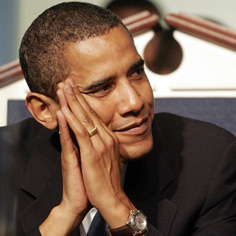
Pssst! Did you hear? Obama’s not a secret Muslim — he’s a Buddhist.

No, this isn’t the latest internet rumor, nor is it intended to become one, but if it turned out that our next president had a secret identity, the discovery that he was a Buddhist would merely seem like confirmation of so many tell-tale signs.

A practitioner of the “Middle Way” who mindfully treads the path between extremes; someone who understands that clear-eyed awareness requires an inner stillness, unruffled by turbulent emotions; someone who discerns truth in the complex web of inter-dependent relations; someone who recognizes that individual well being and our collective destiny are inextricably bound together — you don’t need to know much about Buddhism as a doctrine or a religion to see that in the psychological, social, and philosophical outline I just described, there’s a familiar ring. It sounds a great deal like you-know-who.
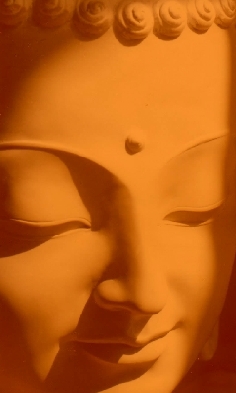
How is it that at the end of one of the longest of political campaigns, after a relentless struggle during which attacks rained down like showers of arrows and then finally at a moment that marks a turning point not only in the history of this nation but for the whole world — how is it that such a moment could be met with the equanimity that Barack Obama displayed on the night of November 4, 2008?

To say that Obama is “cool” is to invest that phrase with way more meaning than it was meant to carry.

Calm, serene, self-assured — none of these phrases quite captures the poise that Obama has displayed over the arc of his presidential campaign or in its fulfillment.

His deft maneuver is that he knows how to reach into the future without stretching out of the present. His understanding of possibility interlocks with his experience of actuality.

This is a perspective and way of being that most people stumble around. It requires a depth of self-knowledge or psychological groundedness sufficient to allay self-doubt. And it requires a fluid form of confidence that has not settled into the mold of a rigid personal identity.

Obama knows his own mind without being confined by it.

*
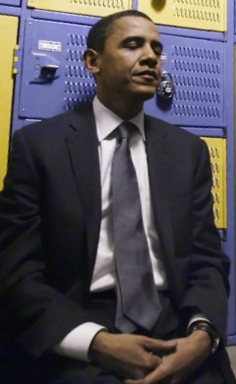
The fact that Obamamania has produced supporters who seem more like devotees is a phenomenon which understandably raised concerns among many observers during the campaign. At the same time it provided another window into Obama’s character.

In a real personality cult, adulation and self-aggrandizement feed upon one another. The beloved and his lovers participate in a collective narcissistic feedback loop.

The only way someone can remain impervious to the insidious effects of the idealized projections of others is by being convinced that in spite of all appearances to the contrary, being at the center of massive attention does not place one at the center of the universe.

When Obama says this is not about me, it’s about you, he really means it. Were it not so, the corrupting effect of so much unalloyed admiration would by now be all too evident.

The paradox of Obama’s arrival at the pinnacle of power is that while so many around him are reveling in a giddy mix of elation, relief, anticipation and amazement, the man at the center of what has become a global fascination is fully engaged yet quietly detached.

Even though Obama is no saint and is just as vulnerable as anyone else to the intoxicating effect of power, he has managed to get this far without being seduced by a mania that, in part, helped elevate him to the presidency.

As he said on the night of his election:

I was never the likeliest candidate for this office. We didn’t start with much money or many endorsements. Our campaign was not hatched in the halls of Washington — it began in the backyards of Des Moines and the living rooms of Concord and the front porches of Charleston.

It was built by working men and women who dug into what little savings they had to give five dollars and ten dollars and twenty dollars to this cause. It grew strength from the young people who rejected the myth of their generation’s apathy; who left their homes and their families for jobs that offered little pay and less sleep; from the not-so-young people who braved the bitter cold and scorching heat to knock on the doors of perfect strangers; from the millions of Americans who volunteered, and organized, and proved that more than two centuries later, a government of the people, by the people and for the people has not perished from this Earth. This is your victory.

I know you didn’t do this just to win an election and I know you didn’t do it for me. You did it because you understand the enormity of the task that lies ahead. For even as we celebrate tonight, we know the challenges that tomorrow will bring are the greatest of our lifetime — two wars, a planet in peril, the worst financial crisis in a century. Even as we stand here tonight, we know there are brave Americans waking up in the deserts of Iraq and the mountains of Afghanistan to risk their lives for us. There are mothers and fathers who will lie awake after their children fall asleep and wonder how they’ll make the mortgage, or pay their doctor’s bills, or save enough for college. There is new energy to harness and new jobs to be created; new schools to build and threats to meet and alliances to repair.

The road ahead will be long. Our climb will be steep. We may not get there in one year or even one term, but America — I have never been more hopeful than I am tonight that we will get there. I promise you — we as a people will get there.

*

Does all of this add up to evidence that the president-elect is a secret Buddhist? Of course not. Let’s simply say we just elected a leader whose understanding of himself brings a rounded intelligence and rooted vision rarely seen in a position of such extraordinary power.


Facebooktwittermail

NEWS & VIEWS ROUNDUP & EDITOR’S COMMENT: November 7

Time to appoint a Middle East envoy

In speech after spell-binding speech, Barack Obama made clear throughout his campaign his intention to restore America’s reputation in the world; that, as he told the vast crowd at his Chicago victory rally, “America’s beacon still burns as bright”. In the Middle East and throughout broad swathes of the Muslim world, that beacon is invisible after eight years of the Bush administration’s bungling. President-elect Obama has a unique chance to rekindle it.

He should signal his intent by naming soon a special envoy for the Middle East with plenipotentiary powers to mediate and negotiate on behalf of his incoming administration. That would be change and it would quickly be perceived as such. Bill Clinton, the former president, is probably the best man for the job.

The debacles of the Bush era, from the invasion of Iraq, through the reckless Anglo-American support of Israel’s 2006 Lebanon war, to the US adoption of an attitude rather than a policy towards Iran, have created a dangerous political vacuum in the region. True, the past year has seen limited conflict resolution managed by Qatar, Saudi Arabia, Egypt and Turkey. While all this should be viewed positively as “local ownership” of regional strategic problems, these efforts may turn out to be band-aids.

The US really is indispensable to the resolution of the region’s most intractable problems – as long as it rediscovers the transformative power of hard-nosed diplomacy.

That means an even-handed final effort to secure a two-states solution offering security to Israelis and justice to the Palestinians. And that can only be obtained through the creation of a viable Palestinian state on nearly all the occupied West Bank with Arab east Jerusalem as its capital, with agreed and equal land swaps, and fair treatment for 4.4m Palestinian refugees, largely through compensation.

That is the essence of the 2002 Arab League peace plan put forward by King Abdullah – who will be in New York and Washington next week with a top-level Saudi delegation – as well as the “parameters” drawn up by Mr Clinton in December 2000, after the collapse of that summer’s Camp David summit.

The Obama team should make clear now that this is also its vision of how to resolve this conflict, at the heart of the region’s combustibility. It might even tilt Israeli voters towards the peace camp in February’s elections. They did, after all, throw out the irredentist Yitzhak Shamir in 1992 after he incurred the displeasure of George H.W. Bush. Yitzhak Rabin, the slain peacemaker, was elected in his stead. [continued…]

Editor’s Comment — Whether or not Bill Clinton would be the best pick as Middle East envoy is questionable, but the suggestion that now is the time to push the 2002 peace plan should be firmly grasped. The Israelis are on the brink of being ready. The real challenge — and the one that all Western powers have so far ducked — is to play a constructive role in rebuilding Palestinian political unity.

Grasping that nettle would probably easier for someone whose ego and public profile would be much less likely to get into the way. This is a job for a professional diplomat with a deep understanding of the region. If throwing a big name at the task held much promise, you’d think by now we would have heard a bit more from The Quartet’s illustrious envoy, Tony Blair.

Evangelical foreign policy is over

With Barack Obama’s election to the presidency, the evangelical moment in US foreign policy has come to an end. The United States remains a nation of believers, with Christianity the tradition to which most Americans adhere. Yet the religious sensibility informing American statecraft will no longer find expression in an urge to launch crusades against evil-doers.

Like our current president, Obama is a professed Christian. Yet whereas George W. Bush once identified Jesus Christ himself as his favorite philosopher, the president-elect is an admirer of Reinhold Niebuhr, the renowned Protestant theologian.

Faced with difficult problems, conservative evangelicals ask WWJD: What would Jesus do? We are now entering an era in which the occupant of the Oval Office will consider a different question: What would Reinhold do?

During the middle third of the last century, Niebuhr thought deeply about the complexities, moral and otherwise, of international politics. Although an eminently quotable writer, his insights do not easily reduce to a sound-bite or bumper sticker.

At the root of Niebuhr’s thinking lies an appreciation of original sin, which he views as indelible and omnipresent. In a fallen world, power is necessary, otherwise we lie open to the assaults of the predatory. Yet since we too number among the fallen, our own professions of innocence and altruism are necessarily suspect. Power, wrote Niebuhr, “cannot be wielded without guilt, since it is never transcendent over interest.” Therefore, any nation wielding great power but lacking self-awareness – never an American strong suit – poses an imminent risk not only to others but to itself. [continued…]

Obama’s victory: a change the world should believe in

The world did not have a vote in the US election. It understood, though, that it had a vital interest in the outcome. John McCain had earned the respect of many leaders around the world. But among most electorates, a victory for the Republican candidate would have been greeted with a collective cry of anguish. Instead, many scores of millions have celebrated America’s choice.

Some, in Mr Obama’s phrase, were huddled around radios in “the world’s forgotten corners”. They see a president-elect of Kenyan ancestry; a politician whose character was formed by childhood years in Indonesia; and a man whose middle name bears testimony to his Muslim forbears.

Europeans see another Mr Obama. Black, certainly, but a product also of America’s familiar east coast: intelligent, urbane and, above all, someone who shares their sensibilities about the necessary balance between power and persuasion in world affairs; Europe’s kind of president.

There, you might say, lies Mr Obama’s genius: abroad as well as at home, he has proved one of those rare politicians who invites others to discover in him their own priorities and preoccupations.

What his overseas admirers share is a sense that in choosing Mr Obama, the US has rediscovered the virtues and values that long underpinned its moral authority. In recent years, the anti-Bushism born of Iraq, Abu Ghraib and Guantánamo has hardened into visceral anti-Americanism. The election confounds the prevailing image (always something of a distortion) of a nation described only by its arrogance and indifference. [continued…]

America’s voters make history

“History will record that on Nov 4, 2008, Barack Hussein Obama was elected the first black president of the United States. It is impossible to overstate what that means to this nation,” wrote the Newsweek columnist, Anna Quindlen.

“America is as much a concept as it is a country, but it is a concept too often honoured in the breach. The Statue of Liberty welcomes with the words ‘Give me your tired, your poor’. Yet generation after generation of immigrants arrived here to face contempt and hatred until the passage of time, the flattening of accents, turned them into tolerated natives. The Declaration of Independence states unequivocally that all men are created equal. Yet for years the politicians and the powerful seemed to take the gender of that noun literally and denied all manner of rights to women.

“But no injustice or prejudice brought to bear by this country against its own people can compare with how it has treated black men and women. Humiliation, degradation, lynchings, beatings, murders. The rights the United States pretended to confer upon all were unthinkingly and consistently denied them: the right to the franchise, to representation, to protection by the justice system….

“As President-elect Obama said when he gave a speech about race earlier this year, speaking of systemic poverty, bad schools and broken families, ‘Many of the disparities that exist in the African-American community today can be directly traced to inequalities passed on from an earlier generation that suffered under the brutal legacy of slavery and Jim Crow’.

“But Obama said something else in that speech, something both simpler and more profound that has special resonance now that his improbable candidacy has prevailed. He made the political spiritual. ‘In the end, then,’ he said, ‘what is called for is nothing more, and nothing less, than what all the world’s great religions demand – that we do unto others as we would have them do unto us.’ He asked the American people to be fair and just, to be kind and generous, to put prejudice behind them and be one people because that is, not a legal or social imperative, but a moral one.” [continued…]

Obama and the dawn of the Fourth Republic

The election of Barack Obama to the presidency may signal more than the end of an era of Republican presidential dominance and conservative ideology. It may mark the beginning of a Fourth Republic of the United States.

In the past generation Bruce Ackerman, Theodore Lowi and I, in different ways, have used the idea of “republics” to understand American history. Since the French Revolution, France has been governed by five republics (plus two empires, a directory and a fascist dictatorship). Since the American Revolution, we Americans have been governed by several republics as well. But because we, like the British, pay lip service to formal continuity more than do the French, we pretend that we have been living under the same government since the federal Constitution was drafted and ratified in 1787-88. Our successive American republics from the 18th century to the 21st have been informal and unofficial.

As I see it, to date there have been three American republics, each lasting 72 years (give or take a few years). The First Republic of the United States, assembled following the American Revolution, lasted from 1788 to 1860. The Second Republic, assembled following the Civil War and Reconstruction (that is, the Second American Revolution) lasted from 1860 to 1932. And the Third American Republic, assembled during the New Deal and the civil rights eras (the Third American Revolution), lasted from 1932 until 2004. [continued…]

Facebooktwittermail