Who is Iraq’s “firebrand cleric”?
Patrick Cockburn interviewed by Mother Jones, March 31, 2008
Mother Jones: In the beginning of your book, you write that Muqtada al-Sadr leads “the only mass movement in Iraqi politics.” Can you elaborate on that, especially given that in the American media we still hear more about the official Iraqi government than some of these other factions?
Patrick Cockburn: It’s always sort of amazing, sitting here in Baghdad, to watch visiting dignitaries—today we had Dick Cheney and John McCain—being received in the Green Zone by politicians who have usually very little support and seldom go outside the Green Zone. Muqtada leads the only real mass movement in Iraq. It’s a mass movement of the Shia, who are 60 percent of the population, and of poor Shia—and most Shia are poor. Otherwise the place is full of sort of self-declared leaders, many of whom spend most of their time outside Iraq. You know, if you want to meet a lot of Iraqi leaders, the best places are the hotels in Amman or in London. In general the government here is amazingly unpopular.
A teachable moment in Basra
By Tony Karon, Rootless Cosmopolitan, April 2, 2008
It should come as no surprise that Prime Minister Nuri al-Maliki’s disastrous offensive against the Mahdi Army of Moqtada Sadr in Basra has had the exact opposite effect of that intended — strengthening rather than weakening Sadr, and making clear that he, and the Iranians, have far greater influence of Iraq’s future than does the Iraqi government or the U.S. That’s because Maliki’s shared the fate of pretty much every similar initiative by the Bush Administration and its allies and proxies since the onset of the “war on terror.”
The pattern is all too common: The U.S. or an ally or proxy launches a military offensive against a politically popular “enemy” group; Bush and his minions welcome the violence as “clarifying” matters, demonstrating “resolve”, or, in the most grotesque rhetorical flourish of all, the “birth pangs” of a brave new world. Each time, the “enemy” proves far more resilient than expected, largely because Bush and his allies have failed to recognize that each adversary’s power should be measured in political support rather than firepower; and the net effect of the offensive invariably leaves the enemy strengthened and the U.S. and its allies even weaker than before they launched the offensive.
Paltry result of Iraqi offensive quiets U.S. withdrawal talk
By Warren P. Strobel and Nancy A. Youssef, McClatchy, April 1, 2008
The Bush administration was caught off-guard by the first Iraqi-led military offensive since the fall of Saddam Hussein, a weeklong thrust in southern Iraq whose paltry results have silenced talk at the Pentagon of further U.S. troop withdrawals any time soon.
President Bush last week declared the offensive, which ended Sunday, “a defining moment” in Iraq’s history.
That may prove to be true, but in recent days senior U.S. officials have backed away from the operation, which ended with Shiite militias still in place in Basra, Iraqi Prime Minister Nouri al Maliki possibly weakened and a de facto cease-fire brokered by an Iranian general.
The other Iraqi civil war
By Pepe Escobar, Asia Times, April 3, 2008
The battle of Basra may be virtually over. But nobody’s talking about the invisible Battle of Mosul.
President George W Bush’s self-described “defining moment” in Iraq amounted to this: General Qassem Suleimani, the head of the Quds Force of the Iranian Revolutionary Guards Corps (IRGC) , brokered a deal in Qom, Iran, between Shi’ite cleric Muqtada al-Sadr’s envoys and Hadi al-Amri, the head of the Badr Organization and number two to Adbul Aziz al-Hakim, the head of the the Supreme Islamic Iraqi Council (SIIC) and a key player of the government in Baghdad. That sealed the end of the battle of Basra.
The IRGC was designated last year by Washington as a terrorist organization. Thus Iranian “terrorists” brokered a peace deal between the two largest Shi’ite parties in Iraq – ending a Baghdad government offensive that was fully authorized and supported by air power by Washington, according to Bush’s National Security Adviser Steven Hadley. Even under Bush logic, “the terrorists” won, and Iran won – once again.
Meanwhile, in northern Iraq, the Kurds are meticulously involved in de facto annexing strategically crucial, oil-rich Tameem province, whose capital is Kirkuk, with reserves of up to 15 billion barrels. Sunni Arabs and Shi’ite Turkmen fear the prospect – and are dead-set against the postponed Kirkuk referendum, which should have been held on December 2007. Prime Minister Nuri al-Maliki’s government in Baghdad knew for sure they would lose this vote and thus see Kirkuk become a part of autonomous Iraqi Kurdistan. So giving the excuse of “administrative problems”, they simply postponed the referendum.
Obama readies plan to reshape the electorate
By Ben Smith, Politico, April 2, 2008
Even as he fends off Senator Hillary Clinton in the Democratic nomination contest, Senator Barack Obama is already turning his attention to the general election, and to an ambitious plan to reshape the American electorate in his favor.
Bringing new voters to the polls “is going to be a very big part of how we win,” said Obama’s deputy campaign manager, Steve Hildebrand, in an interview. “Barack’s appeal to independent voters is also going to be key.”
Hildebrand said the campaign is likely to turn its attention and the energy of its massive volunteer army this fall on registering African-American voters, and voters under 35 years old, in key states.
Hillary’s wrong numbers: Obama polls up, Clinton funds down
Daily Intel, New York Magazine, April 1, 2008
To anyone tracking delegates, it’s been clear for more than a month that Hillary Clinton’s candidacy is in mortal danger. But as long as she was battling Barack Obama at the polls every week, she could hope to control the narrative of the Democratic race, even if she was losing individual contests. And so her campaign kept sprouting new raisons d’être: the wisdom of superdelegates, the enfranchisement of Florida and Michigan, her supposed ability to carry big states.
No more. We’re now halfway through the six weeks between Mississippi and Pennsylvania, and this long interlude has washed away Clinton’s spin. Now her campaign is not only over. It’s obviously over.
Muslim true/false
By John L. Esposito and Dalia Mogahed, Los Angeles Times, April 2, 2008
Winning hearts and minds — the Bush administration, foreign policy wonks, even the U.S. military agree that this is the key to any victory over global terrorism. Yet our public diplomacy program has made little progress on improving America’s image. Few seem to recognize that American ignorance of Islam and Muslims has been the fatal flaw.
How much do Americans know about the views and beliefs of Muslims around the world? According to polls, not much. Perhaps not surprising, the majority of Americans (66%) admit to having at least some prejudice against Muslims; one in five say they have “a great deal” of prejudice. Almost half do not believe American Muslims are “loyal” to this country, and one in four do not want a Muslim as a neighbor.
Meshal: Hamas backs Palestinian state in ’67 borders
By Avi Issacharoff, Haaretz, April 2, 2008Hamas supports the united Palestinian position calling for the establishment of a fully sovereign Palestinian state within the 1967 borders, including Jerusalem, and the right of return for refugees, Hamas politburo chief Khaled Meshal told the Palestinian daily Al-Ayam.
In a special interview with Wednesday’s edition of the paper, Meshal said the Palestinian position had received a vote of consensus during the national accords of 2006 and that this position is considered acceptable to the Arab world at large.
Meshal was asked about the claims by Israel and the United States that Hamas is seeking to destroy Israel. He said Hamas has committed itself to a political plan, which it follows, and called on the Americans, the Europeans and other international entities to conduct themselves in accordance with this political truth, and to judge Hamas based on its political plan, not based on what people may imagine.

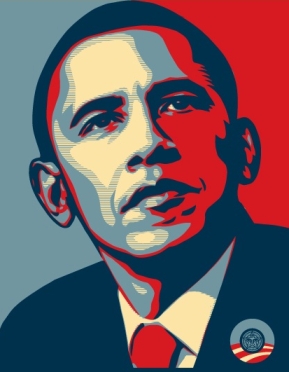 here were signs that Obama’s hard work and extensive television advertising were paying off: various polls showed the race tightening a bit. The talk-show muttering had migrated from Jeremiah Wright to Clinton’s Bosnian sniper-fire fantasy. Hordes of new voters were registering in Pennsylvania. It was not impossible that Obama would turn Clinton’s predicted victory into a closer-than-expected moral defeat.


