
Why I won’t vote for John McCain and why I believe you shouldn’t
T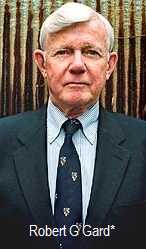 he economy has become the priority issue for voters. But my principal reason for refusing to vote for John McCain has nothing to do with his admitted lack of knowledge of economics, although I did not realize the extent of his ignorance prior to his comments regarding the re-distribution of income. Since presidents encounter considerable constraints on their freedom to control economic programs and policies, this shortcoming is not critical.
It is, rather, the fields of foreign and national security policies, generally regarded as Senator McCain’s strengths, that in my view are his disqualifying weaknesses; and a president has considerable leeway to operate in these areas to the detriment, or benefit, of the United States.
I deeply respect John McCain’s service to our country; and I admire his bravery as a prisoner of war, described by a fellow prisoner as similar to that demonstrated by hundreds of other U.S. prisoners in North Vietnam who also obeyed the code of declining release before those captured earlier.
Unfortunately, however, Senator McCain has demonstrated clearly that he is a dedicated ideologue in the foreign/security policy area, unwilling to consider opinions or even credible evidence contrary to his preconceived notions. In addition, his temperament, marked not only by impatience but also by rude and sometimes hostile behavior, would discourage advisers from bringing to his attention views that might not be consistent with his preconceptions. A president with this combination of significant shortcomings would be a dangerous commander-in-chief, posing an unacceptable risk to the security of the nation.
Senator McCain has adopted, promoted and sustained the position of the so-called neo-conservatives and ultra-nationalists who believed that the United States should capitalize on American military superiority to spread democracy abroad. Overthrowing the Iraqi government was seen as the first step in transforming the politics of the Middle East by converting governments in the region to democracies friendly to the United States and its interests. Senator McCain reportedly has bragged in private conversations that he was the first neocon.
Since Senator McCain has made his positions on U.S. policy and military operations in Iraq a central theme in his campaign, it is useful illustratively to examine his stated views on this central national security issue.
Iraq and Related Matters
- Consistent with the Project for a New American Century’s open letter to the President, Senator McCain co-sponsored the 1998 Iraq Liberation Act that changed the policy of the U.S. government from containing Iraq to overthrowing its regime. The Act also provided funds to Iraqi exile groups seeking regime change in Iraq.
- In September 2000, the Project for the New American Century published a manifesto entitled Rebuilding America’s Defenses. It advocated expanding democracy in seven countries in a five-year period: Iraq, Iran, Syria, Lebanon, Libya, Somalia and Sudan. Randy Scheunemann, then a director of the Project, is Republican candidate McCain’s chief foreign/national security adviser.
- Immediately following the 11 September 2001 terrorist attack, well in advance of the Bush administration’s campaign to sell the American public on the invasion of Iraq, Senator McCain began a repetitive drumbeat promoting that course of action.
- On the day of the 9/11 attack, during an interview with Dan Rather of CBS, he said: “I don’t think there’s any doubt that there are other countries — Iraq, Iran, — who … involve themselves in state-sponsored terrorism.”
- The next day, 12 September 2001, he said “It isn’t just Afghanistan; we’re talking about Syria, Iraq, Iran, … and others.” He added: “There’s a network [of states sponsoring terrorism] that is going to have to be attacked.”
- Six days later, he said: “I think very obviously Iraq is the first country, but there are others – Syria, Iran, … who have continued to harbor terrorist organizations and actually assist them.”
- On 20 September 2001, the Project for a New American Century sent a letter to the President, signed by Randy Scheunemann, urging expansion of the war on terrorism beyond Al Qaeda to Iraq, Iran, Syria and other countries. It stated that failure to make a determined effort remove Saddam Hussein would be “the equivalent of decisive surrender.”
- On 3 October ’01, less than a month after 9/11, while speaking of military operations against the Taliban and Al Qaeda in Afghanistan on the Letterman Late Show, Senator McCain declared: “The second phase is Iraq.”
- Senator McCain advanced misleading and even false assertions not only on Iraqi possession of weapons of mass destruction but also Iraqi ties to international terrorists, including those who committed the 9/11 attacks. On 29 October, he stated: “The evidence is very clear” that the claim made by “Curveball,” an exile discredited by U.S. intelligence, was valid: the alleged meeting of an Iraqi intelligence agent with Mohammed Atta, the leader of the 9/11 attack.
- In December 2001, Senator McCain joined five other senators in signing an open letter to the White House stating: “In the interest of our own national security, Saddam Hussein must be removed from power.”
- Addressing the crew of a U.S. warship on 2 January 2002, he said: “Next up, Baghdad;” the following month, he warned: “A terrorist resides in Baghdad. A day of reckoning is approaching.”
- Along with Senator Joseph Lieberman, he agreed to serve as honorary co-chair of the Committee for the Liberation of Iraq, a lobbying organization formed in 2002 by the chair of the Project for a New American Century to promote the overthrow of Saddam Hussein by military force. The president of the Committee was Randy Scheunemann.
- Senator McCain actively supported Ahmad Chalabi, head of the Iraqi National Congress exile group, who had been exposed as a charlatan not only by the CIA but also the Defense Intelligence Agency.
- In voting for the use of force against Iraq, he called Saddam Hussein “a threat of the first order.” He spoke in favor of removing all members of the Baath party from the Iraqi government and the Iraqi military, decisions generally recognized as disastrous errors. Demonstrating a simplistic misunderstanding of the profound differences, he went so far as to predict that the U.S. occupation of Iraq would be remembered in much the same way as the liberation and rebuilding of Germany and Japan after World War II.
- Speaking of the invasion of Iraq in March 2003, Senator McCain said: “There is no doubt in my mind … that we will be welcomed as liberators.” This despite dire warnings to the contrary from the National Intelligence Council and reports from the CIA, the Department of State’s Bureau of Intelligence and Research and even from organizations within the Department of Defense: the National Defense University and the Army War College, both having held conferences of experts on the likely results of an invasion. He had “no doubt,” because he was unwilling to give any weight to evidence that did not support his ideological commitment. He assured Wolf Blitzer during an interview on CNN: “We’re not going to get into house-to-house fighting;” a flat assertion, without any reservation or qualification of probability, despite authoritative opinions of the likelihood of an insurgency.
- Underscoring his ideological commitment, Senator McCain said in retrospect that even had there been no claims of Iraqi possession of weapons of mass destruction or of Iraqi connection to Al Qaeda, “there’s no question” that he would have voted to authorize the use of military force against Iraq.
This nation cannot run the risk of electing a commander-in-chief who won’t listen and is unwilling to consider persuasive evidence that is contrary to his ideological preconceptions.
- Senator McCain has highlighted his credentials to deal with national security in general, as well as the conflict in Iraq. Yet his public statements reveal that he does not understand the basic nature of counter-insurgency operations, that he lacks knowledge of critical elements of the conflict in Iraq, and that he does not comprehend the basic precept that military force has its own grammar but not its own logic.
- He has said that we did not prevail in the Vietnam war because “we lost the will to fight.” Yet we had U.S. troops in South Vietnam from the late 1950’s until the early 1970’s, for some 15 years. He apparently does not understand that there are some conflicts that American military power cannot resolve.
- As recently as 17 March 2007, Senator McCain walked through a Baghdad market while being guarded by some 100 American troops, with three Blackhawk helicopters and two Apache gunships overhead. He declared: “The neighborhood is safe. We walked down the streets with no body armor on.” He stated that General Petraeus went out every day “in an unarmed Humvee.” A television film showed that the Senator was wearing an armored vest during his tour, and General Petraeus’ staff responded that the general always rode in an especially armored Humvee vehicle.
- On three occasions, Senator McCain asserted that members of Al Qaeda in Iraq were being trained in Iran. After being coached by Senator Lieberman, he finally corrected that basic misunderstanding of the political realities in the region.
- In 2008, Senator McCain claimed that the surge of U.S. combat forces in the late winter and spring of 2007 “began the Anbar awakening” of Sunni tribesmen turning against Al Qaeda in Iraq. This, he said, is “a matter of history.” Yet in January 2007, he had referenced the awakening that had its beginnings in the summer of 2006 as a justification for the decision to surge.
- The purpose of the surge, as announced by the President in January 2007, was to provide breathing space for political accommodation between and among contending Iraqi factions. There indeed has been a reduction in violence in Iraq due to a combination of factors, including the presence of U.S. troops in Baghdad. Yet military operations are not an end in themselves, but are conducted to achieve a political outcome. The purpose of the surge, political accommodation, has not been achieved; in fact, the surge has widened the split among political factions. The some 100,000 Sons of Iraq, mostly Sunnis, armed and paid by the U.S. to provide security, do not support the central government led by a Shiite consortium. Also, the surge of U.S. troops in Baghdad resulted in a substantial increase, estimated at 500,000, in the number of Iraqis displaced into segregated neighborhoods.
- Yet on the 21st of July 2008, Senator McCain declared “We’ve succeeded” in Iraq, apparently failing to understand what all U.S. senior military commanders in Iraq have stated: there is no military solution to the conflict in the complicated and insecure situation in that devastated country. Without a government that earns the loyalty of the majority of Iraqis, and resultant public cohesion, the reduction in violence will continue to be “fragile and reversible,” in the words of Ambassador Crocker, General Petraeus and even the President.
- Senator McCain has expressed his determination to sustain the U.S. military presence in Iraq until we achieve “victory.” As recently as September 2008, President Bush repeated his ambitious current goal for Iraq as a unified, democratic and stable society that could defend, sustain and govern itself, while becoming a reliable ally in the global war on terrorism. Senator McCain has declined recently to define what he means by “victory;” but in the spring of 2008, he related victory to an Iraq that is “a peaceful, stable, prosperous, democratic state,” clearly decades away at best.
- Senator McCain, along with others fixed on regime change in Iraq, did not object when the administration fought the Taliban and Al Qaeda in Afghanistan without the commitment of U.S. ground troops, other than special forces, and turned its attention prematurely to the invasion of Iraq while allowing the majority of the Taliban and the Al Qaeda cadre to escape across the border into the tribal areas of Pakistan. Despite the deterioration of security in Afghanistan, on 2 March 2005 Senator McCain said on CNN: “So far it’s a remarkable success.” The following October, while speaking on Afghanistan, he stated on the Charlie Rose show: “It’s succeeded.”
- Before mid-July 2008, there was no mention of Afghanistan on Senator McCain’s campaign web site. As late as 15 July 2008, however, after having argued that no additional forces were needed in Afghanistan because we had succeeded there, he finally recognized the deteriorating situation and advocated sending 15,000 more troops to Afghanistan. He did not specify how the additional troops might be generated, given his advocacy of maintaining current U.S. troop levels in Iraq. Not long before, he had stated: “Afghanistan is not in trouble because of our diversion to Iraq.”
- In April 2007, when asked by a voter at a town-hall meeting about U.S. policy toward Iran, Senator McCain responded by singing “bomb, bomb, bomb Iran,” which would place U.S. troops in Iraq in jeopardy as well as inciting attacks against U.S. interests in the region and probably elsewhere.
Senator McCain has been a consistent advocate of employing military force, as well as diplomatic and economic measures, to overthrow the governments of non-democratic states. In his 2000 presidential primary campaign, he promoted a strategy of “rogue state rollback.” He has served as a long-term chair of the Republican Institute, an organization dedicated to promoting democracy in closed societies, even though most experts agree that viable democratic reforms cannot be imposed but must be generated locally.
Consistent with his ideological predispositions, Senator McCain also has suggested establishing a League of Democracies to coordinate foreign policies. He has gone so far as to advocate expelling Russia from the G-8, an organization of leading industrial nations established to coordinate international economic policies, in order “to improve their behavior,” while adding Brazil and India to the organization but excluding China. This obviously would result in the alienation of China and Russia, resulting in a confrontational foreign policy rather than encouraging their cooperation on vital issues of international security and their integration into the international community.
Temperament
- The importance of Senator McCain’s temperament, should he become President, is apparently regarded as too politically incorrect to discuss. By his own admission, however, Senator McCain has “a temper, to state the obvious, which I have tried to control with varying degrees of success because it does not always serve my interest or the public’s.” Of greater significance, he also has written: “Often my haste is a mistake, but I live with the consequences without complaint.”
In matters of national security and foreign policy, however, it is the nation that will have to live with the consequences of Senator McCain’s temper and haste should he be elected President of the United States.
The issue of a president’s temperament cannot be ignored because of its relevance to the national security of the United States. James A. Thurber, director for Congressional and Presidential Studies, has observed: “sometimes somebody’s temperament can get in the way of aides telling him the truth, which happened [during the Vietnam war] with LBJ. His temper scared some away, which was not good for anyone…. that’s part of the risk with a strong temper… and so it’s always relevant.”
For the purposes of credibility, the evidence below on Senator McCain’s temperament is from only fellow Republicans or other normally supportive sources, some of whom have endorsed Senator McCain for the presidency.
- John Heintz, executive director of the Arizona Republican Party, reflected on Senator McCain’s outburst following arrangements for a broadcast in 1986, by asking: “What happens if he gets angry in crises” as president? “It’s the president’s job to negotiate and stay calm. I don’t see that he has that quality. That temper, the intolerance: it worries me.”
- Senator McCain has admitted that during his first term as a senator in 1989, he strongly berated Senator Shelby for failing to vote for the confirmation of John Tower as Secretary of defense. He wrote that he brought “my nose within an inch of his as I screamed out my intense displeasure ….”
- In 1992, during a subcommittee gathering, Senator McCain employed profanity to admonish Senator Grassley and refused to apologize. Some shouting and shoving resulted.
- Former Phoenix Mayor Paul Johnson has said that he thought Senator McCain was “in the area of being unstable.”
- As recently as 2007, during a closed-door meeting on immigration, Senator McCain shouted a profanity at Senator John Cornyn (R- TX) in the presence of about 40 other people.
- Karl Rove said of Senator McCain: “Things are personal with him. He sometimes lets his emotions overrule his judgment.”
- Speaking of Senator McCain, Senator Domenici (R-NM) said he doesn’t “want this guy anywhere near a trigger.”
- Senator Thad Cochran (R-Miss) has said: “The thought of McCain as president “sends a cold chill down my spine He is erratic. He is hotheaded. He loses his temper and he worries me.”
- Former Senator Bob Smith of New Hampshire has observed: “I’ve witnessed a lot of his [Senator McCain’s] temper outbursts. It raises questions about stability…. It’s more than just temper – a sneering, condescending attitude. I’ve seen it up close. His temper would place this country at risk in international affairs, and the world perhaps in danger. In my mind, it should disqualify him” from the presidency.
- On 23 September 2008, conservative columnist George F. Will wrote: “It is arguable that McCain, because of his boiling moralism and bottomless reservoir of certitudes, is not suited to the presidency.”
While it is even more politically incorrect to mention, there is also the question of Senator McCain’s age and health.
- Should he be elected president, at age 72 he would be the oldest person to assume the office. At age 72, I was in at least as good health as Senator McCain is now. Now that I have passed my 80th birthday, Senator McCain’s age should he complete a second term as president, I can attest that one’s stamina recedes during this eight year period. Should Senator McCain as president have to pick up the phone at 3:00 am at the beginning of a prolonged crisis, there is a legitimate question as to whether he could remain sufficiently vigorous, alert and focused for a sustained period to deal effectively with it.
- While Senator McCain currently appears healthy, the life expectancy of Vietnam era prisoners of war is below the national average. Moreover, he has suffered three invasions of melanoma cancer, and the possibility of a recurrence with swift and fatal consequences cannot be ignored.
As Senator McCain has warned us repeatedly, the nation is at war. Under these circumstances, one would expect that a candidate who professes to put the country first would select a vice presidential running mate already well qualified to step into the roles of commander- in-chief and leader in the conduct of U.S. foreign policy. Instead, Senator McCain selected Governor Palin, obviously for her appeal to the conservative base of voters and women disenchanted over Senator Clinton’s defeat as the nominee of the Democratic Party. Whatever her other attributes, it is evident that Governor Palin is not prepared to lead the foreign and security policies of the United States. So much for Senator McCain’s claim to put country ahead of politics.
No president can be conversant with all the problems and issues he or she will face. More important than a specific set of experiences are high intelligence, good judgment, a steady and even temperament, and a willingness to consider options presented by advisors who have been selected for their expertise.
A few months ago, I met in a small group with Senator Obama in his office to discuss a contentious security issue. People with different, even opposite, views had been invited to attend. Senator Obama listened carefully and asked penetrating questions, confirming my observations concerning his intelligence and temperament.
Despite his relative lack of experience in the field national security, I believe that Senator Obama possesses the requisite qualifications to serve far more effectively as President of the United States and commander-in-chief of the U.S. military than his opponent, Senator McCain.
– – –
* Lt. General Robert G. Gard, Jr. is Chairman of the Center for Arms Control and Non-Proliferation where his policy work focuses on nuclear nonproliferation, missile defense, Iraq, Iran, military policy, nuclear terrorism, and other national security issues.
During his military career, Gard saw combat in both the Korea and Vietnam wars, and served a three year tour in Germany. He also served as Executive Assistant to two secretaries of defense; the first Director of Human Resources Development for the U.S. Army; Special Assistant to the Assistant Secretary of Defense for International Security Affairs; and President of National Defense University (NDU).
After retiring from the U.S. Army in 1981, after 31 years of distinguished service, Gard served for five years as director of the Johns Hopkins University School of Advanced International Studies Center in Bologna, Italy, and then as President of the Monterey Institute of International Studies from 1987 to 1998. Since 1998, he has been an active consultant in Washington, D.C., on national security issues, including the international campaign to ban anti-personnel land mines.



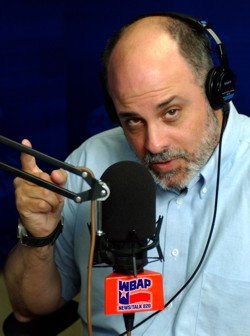 … my greatest concern is whether this election will show a majority of the voters susceptible to the appeal of a charismatic demagogue. This may seem a harsh term to some, and no doubt will to Obama supporters, but it is a perfectly appropriate characterization. Obama’s entire campaign is built on class warfare and human envy. The “change” he peddles is not new. We’ve seen it before. It is change that diminishes individual liberty for the soft authoritarianism of socialism. It is a populist appeal that disguises government mandated wealth redistribution as tax cuts for the middle class, falsely blames capitalism for the social policies and government corruption (Fannie Mae and Freddie Mac) that led to the current turmoil in our financial markets, fuels contempt for commerce and trade by stigmatizing those who run successful small and large businesses, and exploits human imperfection as a justification for a massive expansion of centralized government. Obama’s appeal to the middle class is an appeal to the “the proletariat,” as an infamous philosopher once described it, about which a mythology has been created. Rather than pursue the American Dream, he insists that the American Dream has arbitrary limits, limits Obama would set for the rest of us — today it’s $250,000 for businesses and even less for individuals. If the individual dares to succeed beyond the limits set by Obama, he is punished for he’s now officially “rich.” The value of his physical and intellectual labor must be confiscated in greater amounts for the good of the proletariat (the middle class). And so it is that the middle class, the birth-child of capitalism, is both celebrated and enslaved — for its own good and the greater good. The “hope” Obama represents, therefore, is not hope at all. It is the misery of his utopianism imposed on the individual. [