Daily Archives: December 30, 2009

YEAR IN REVIEW: Imagine living in the West Bank…

YEAR IN REVIEW: Imagine living in the West Bank…

For most Israelis, the occupied West Bank — now mostly concealed behind a barrier far more imposing than the Berlin Wall — could be a million miles away. Even so, thousands really do know what it’s like. They have firsthand experience of the conditions imposed on ordinary Palestinians — they know because during their military service they had a direct role in imposing those conditions.

For the rest of us, beyond hearing testimony, seeing photographs and film, it is really only through an act of imagination that we can transport ourselves there and attempt to understand what it means to be living under military occupation.

The following film was created as a tool to help those of us who take freedom of movement for granted, to have a sense of what it means when that freedom is taken away.

Facebooktwittermail

YEAR IN REVIEW: Israel’s unbroken legacy of righteous victimhood

YEAR IN REVIEW: Some victims we are

The kill ratio was 100-to-1 in our favor. The destruction ratio was much, much greater than that. To this day, thousands of Gazans are living in tents because we won’t let them import cement to rebuild the homes we destroyed. We turned the Gaza Strip into a disaster area, a humanitarian case, and we’re keeping it that way with our blockade.

Meanwhile, here on the Israeli side of the border, it’s hard to remember when life was so safe and secure.

So let’s decide: Who was the victim of Operation Cast Lead, them or us?

No question – us. We Israelis were the victims and we still are. In fact, our victimhood is getting worse by the day. The Goldstone report was the real war crime. The Goldstone report, the UN debates, Amnesty International, Human Rights Watch, the Red Cross, B’Tselem, the traitorous soldiers of Breaking the Silence and the Rabin Academy – those were the true crimes against humanity. This is what’s meant by “war is hell.”

It is we who’ve been going through hell from the war in Gaza. It is we who’ve been suffering.

Gazans? Suffering? What’s everybody talking about?

We let them eat, don’t we?

This imaginary monologue is how we actually see ourselves today. We initiated the war in Gaza, we waged one of the most one-sided military campaigns anyone’s ever seen – and we’re the victims.

We’re fighting off the world with the Holocaust; witness Prime Minister Binyamin Netanyahu at the UN with his Auschwitz props. “We won’t go like lambs to the slaughter again,” vowed his protégé, Finance Minister Yuval Steinitz, in a cabinet discussion of the Goldstone report.

Auschwitz, lambs to the slaughter, Operation Cast Lead. To Israelis today, it’s all of a piece, it’s one story, one unbroken legacy of righteous victimhood.

The truth is that the State of Israel has never been a victim, and our likening of ourselves to the 6 million has been embarrassing from the beginning – but now? After what we did in Gaza? With the stranglehold we have on that society, while we over here live free and easy?

Victims? Lambs to the slaughter? Us?

No, this has gone beyond embarrassing; this is out-and-out shameful.

And, despite our excuses, it’s not that we’re “traumatized” by the past into believing that we’re still weak, still the frightened, powerless Jews about to be led to the gas chambers. Many Holocaust survivors still believe this, and to some very limited extent, this vestigial fear still takes up space in the Israeli mind.

But by now, 64 years after the Holocaust, 42 years after seeing in the Six Day War how strong we’d become, we know, whether we admit it to ourselves or not, that we aren’t the victims anymore. We know we aren’t a continuation of the 6 million but rather a deliberate and stark departure from them.

THE REASON we tell ourselves and the world that we are victims is because we know, whether we admit it to ourselves or not, that victimhood is power. Victimhood is freedom. A victim can’t be told to restrain himself. A victim fighting for survival can’t be accused of abusing his power because, after all, his back is to the wall, he’s desperate.

On the facts, it’s very hard to convince ourselves, let alone the world, that Gaza and its Kassams have pushed Fortress Israel’s back to the wall, that we’re desperate, that we’re struggling to survive. So, to convince ourselves and the world that this really is so, we do two things.

One, we refuse to acknowledge any facts that mar this image of ourselves as victims, and instead go over and over and over only the facts that fit the picture.

We talk only about the thousands of Kassams fired at Sderot; we never mention the thousands of Gazans we killed at the same time.

We talk only about Gilad Schalit; we never mention the 8,000 Palestinian prisoners we’re holding.

And we never mention our ongoing blockade of Gaza or the devastation it does to those people.

The second thing we do to convince ourselves and the world that we’re still victims is to never, ever, ever let go of the Holocaust – because that’s when we really were victims. Victims like nobody’s ever known, victims a million times worse than the Gazans.

Auschwitz, lambs to the slaughter. Remember us, the people of the Holocaust? That wasn’t the Middle East’s superpower you saw fighting in Gaza.

That was the 6 million.

So you can’t blame us. We’re immune from your criticism. We’re the biggest victims the world has ever known. We’re desperate, so don’t tell us about kill ratios and disproportionate use of force and collective punishment. We’re fighting for our survival.

This is what we tell ourselves and the world, and, in the face of what we did and are still doing in Gaza, it has become intolerable. We are not the 6 million. The 6 million were powerless Jews three generations ago; we cannot wrap our abuses of power in their tragedy.

Instead, let’s take a good, hard look at what we did and what we’re doing in Gaza. Then let’s take a good, hard look in the mirror. And then let’s admit who’s the true victim here and now, and, more importantly, who isn’t.

Editor’s Comment — Larry Derfner is a columnist for the conservative Jerusalem Post. Presumably the paper’s editors feel moderately comfortable publishing his provocative commentaries because the paper provides “balance” with other pieces by rabid Likudniks like Caroline Glick. Still, at this time I doubt that there is a single newspaper editor in the United States who would have the guts to publish Derfner’s piece.

Even so, the times they are a-changin’.

Americans are losing patience with Israel and the media knows it. It will be a while before we see a New York Times editorial calling for a cooling in US-Israeli relations, but the views of ordinary Americans are now percolating up through newspaper letters pages. This is where editors are testing the water to see how much space they might dare provide for more honesty when the topic is Israel.

Views once only voiced at the political margins of the blogosphere are now moving into the mainstream. Only yesterday, Andrew Sullivan — not known as an anti-Zionist — had this to say:

One question that should always be asked of an ally: what is that ally doing for the US? Since the end of the Cold War, that question has been increasingly hard to answer with respect to Israel.

Strategically, Israel is obviously a huge burden for the US, making relations with Muslim or Arab nations much harder, and undermining any attempt to portray American intervention in, say, Iraq or Afghanistan, as beneficent rather than predatory. It’s a big drain on the Treasury, as Israel consumes a vast amount of military and non-military aid.

Meanwhile, Congress continues to march in lockstep with the Israel lobby — but this can’t go on forever. As the taboos on criticizing Israel and questioning US-Israeli relations break down, members of Congress will come under increasing pressure to explain how they can justify supporting a country that has become a strategic liability at America’s expense. Israel’s most stalwart defenders should send their donations to a pro-Israel lobby of their choice, but they should no longer expect that support to be subsidized by the US taxpayer.

Facebooktwittermail

YEAR IN REVIEW: A letter from Afghanistan that every American must read

YEAR IN REVIEW: A letter from Afghanistan that every American must read

“… I have lost understanding of and confidence in the strategic purposes of the United States’ presence in Afghanistan. I have doubts and reservations about our current strategy and planned future strategy, but my resignation is based not upon how we are pursuing this war, but why and to what end. To put simply: I fail to see the value or the worth in continued U.S. casualties or expenditures or resources in support of the Afghan government in what is, truly, a 35-year old civil war.” From Matthew P Hoh, Senior Civilian Representative, Zabul Province, Afghanistan, in his letter of resignation to the State Department.

For weeks, President Obama and his advisers in the White House and from the Pentagon have been wrestling over the formulation of a revised strategy for Afghanistan. Central to that debate has been the question of how to respond to Gen Stanley McChrystal’s request for tens of thousands more American troops.

But perhaps the most important question — one which the president and his advisers have no doubt studiously avoided asking — is whether this war is worth fighting.

Matthew Hoh, a former US Marine captain who fought in Iraq, and who later served as a civilian State Department representative in the Zabul province of Afghanistan, in a letter of resignation submitted in early September, provided a definitive statement on the war’s failure — in its conception, its execution, and its aims. Rarely, if ever, has such an damning indictment of this war been so clearly and powerfully expressed.

The Washington Post reported:

The reaction to Hoh’s letter was immediate. Senior U.S. officials, concerned that they would lose an outstanding officer and perhaps gain a prominent critic, appealed to him to stay.

U.S. Ambassador Karl W. Eikenberry brought him to Kabul and offered him a job on his senior embassy staff. Hoh declined. From there, he was flown home for a face-to-face meeting with Richard C. Holbrooke, the administration’s special representative for Afghanistan and Pakistan.

“We took his letter very seriously, because he was a good officer,” Holbrooke said in an interview. “We all thought that given how serious his letter was, how much commitment there was, and his prior track record, we should pay close attention to him.”

The Post has published Hoh’s letter in a printable format [PDF] which is likely to result in the whole letter not being widely read. In order to encourage readers to absorb the full force of this testimony, I’ve reproduced the letter in full below — the only place (as far as I’m aware) that it can currently be found on the web in a user-friendly format.

“We are spending ourselves into oblivion”

Dear Ambassador Powell,

It is with great regret and disappointment I submit my resignation from my appointment as a Political Officer in the Foreign Service and my post as the Senior Civilian Representative for the U.S. Government in Zabul Province. I have served six of the previous ten years in service to our country overseas, to include deployment as a U.S. Marine officer and Department of Defense civilian in the Euphrates and Tigris River Valleys of Iraq in 2004-2005 and 2006-2007. I did not enter into this position lightly or with any undue expectations nor did I believe my assignment would be without sacrifice hardship or difficulty. However, in the course of my five months of service in Afghanistan, in both Regional Commands East and South, I have lost understanding of and confidence in the strategic purposes of the United States’ presence in Afghanistan. I have doubts and reservations about our current strategy and planned future strategy, but my resignation is based not upon how we are pursuing this war, but why and to what end. To put simply: I fail to see the value or the worth in continued U.S. casualties or expenditures or resources in support of the Afghan government in what is, truly, a 35-year old civil war.

This fall will mark the eighth year of U.S. combat, governance and development operations within Afghanistan. Next fall, the United States’ occupation will equal in length the Soviet Union’s own physical involvement in Afghanistan. Like the Soviets, we continue to secure and bolster a failing state, while encouraging an ideology and system of government unknown and unwanted by its people.

If the history or Afghanistan is one great stage play, the United States is no more than a supporting actor, among several previously, in a tragedy that not only pits tribes, valleys, clans, villages and families against one another, but, from at least the end of King Zahir Shah’s reign, has violently and savagely pitted the urban, secular, educated and modem of Afghanistan against the rural, religious, illiterate and traditional. It is this latter group that composes and supports the Pashtun insurgency. The Pashtun insurgency, which is composed of multiple, seemingly infinite, local groups, is fed by what is perceived by the Pashtun people as a continued and sustained assault, going back centuries, on Pashtun land, culture, traditions and religion by internal and external enemies. The U.S. and NATO presence and operations in Pashtun valleys and villages, as well as Afghan army and police units that are led and composed of non-Pashtun soldiers and police, provide an occupation force against which the insurgency is justified. In both RC East and South, I have observed that the bulk of the insurgency fights not for the white banner of the Taliban, but rather against the presence of foreign soldiers and taxes imposed by an unrepresentative government in Kabul.

The United States military presence in Afghanistan greatly contributes to the legitimacy and strategic message of the Pashtun insurgency. In a like manner our backing of the Afghan government in its current form continues to distance the government from the people. The Afghan government’s failings, particularly when weighed against the sacrifice of American lives and dollars, appear legion and metastatic:

• Glaring corruption and unabashed graft;
• A President whose confidants and chief advisers comprise drug lords and war crimes villains, who mock our own rule of law and counternarcotics efforts;
• A system of provincial and district leaders constituted of local power brokers, opportunists and strongmen allied to the United States solely for, and limited by, the value of our USAID and CERP contracts and whose own political and economic interests stand nothing to gain from any positive or genuine attempts at reconciliation; and
• The recent election process dominated by fraud and discredited by low voter turnout, which has created an enormous victory for our enemy who now claims a popular boycott and will call into question worldwide our government’s military, economic and diplomatic support for an invalid and illegitimate Afghan government.

Our support for this kind of government, coupled with a misunderstanding of the insurgency’s true nature, reminds me horribly of our involvement with South Vietnam; an unpopular and corrupt government we backed at the expense of our Nation’s own internal peace, against an insurgency whose nationalism we arrogantly and ignorantly mistook as a rival to our own Cold War ideology.

I find specious the reasons we ask for bloodshed and sacrifice from our young men and women in Afghanistan. If honest, our stated strategy of securing Afghanistan to prevent al-Qaeda resurgence or regrouping would require us to additionally invade and occupy western Pakistan, Somalia, Sudan, Yemen, etc. Our presence in Afghanistan has only increased destabilization and insurgency in Pakistan where we rightly fear a toppled or weakened Pakistani government may lose control of nuclear weapons. However, again, to follow the logic of our stated goals we should garrison Pakistan, not Afghanistan. More so, the September 11th attacks, as well as the Madrid and London bombings, were primarily planned and organized in Western Europe; a point that highlights the threat is not one tied to traditional geographic or political boundaries. Finally, if our concern is for a failed state crippled by corruption and poverty and under assault from criminal and drug lords, then if we bear our military and financial contributions to Afghanistan, we must reevaluate our commitment to and involvement in Mexico.

Eight years into war, no nation has ever known a more dedicated, well trained, experienced and disciplined military as the U.S. Armed Forces. I do not believe any military force has ever been tasked with such a complex, opaque and Sisyphean mission as the U.S. military has received in Afghanistan. The tactical proficiency and performance of our Soldiers, Sailors, Airmen and Marines is unmatched and unquestioned. However, this is not the European or Pacific theaters of World War II, but rather is a war for which our leaders, uniformed, civilian and elected, have inadequately prepared and resourced our men and women. Our forces, devoted and faithful, have committed to conflict in an indefinite and unplanned manner that has become a cavalier, politically expedient and Pollyannaish misadventure. Similarly, the United States has a dedicated and talented cadre of civilians, both U.S. government employees and contractors, who believe in and sacrifice for their mission, but have been ineffectually trained and led with guidance and intent shaped more by the political climate in Washington, D.C. than in Afghan cities, villages, mountains and valleys.

“We are spending ourselves into oblivion” a very talented and intelligent commander, one of America’s best, briefs every visitor, staff delegation and senior officer. We are mortgaging our Nation’s economy on a war, which, even with increased commitment, will remain a draw for years to come. Success and victory, whatever they may be, will be realized not in years, after billions more spent, but in decades and generations. The United States does not enjoy a national treasury for such success and victory.

I realize the emotion and tone of my letter and ask you excuse any ill temper. I trust you understand the nature of this war and the sacrifices made by so many thousands of families who have been separated from loved ones deployed in defense of our Nation and whose homes bear the fractures, upheavals and scars of multiple and compounded deployments. Thousands of our men and women have returned home with physical and mental wounds, some that will never heal or will only worsen with time. The dead return only in bodily form to be received by families who must be reassured their dead have sacrificed for a purpose worthy of futures lost, love vanished, and promised dreams unkept. I have lost confidence such assurances can anymore be made. As such, l submit my resignation.

Sincerely,

Matthew P. Hoh
Senior Civilian Representative
Zabul Province, Afghanistan

cc:
Mr. Frank Ruggiero
Ms. Dawn Liberi
Ambassador Anthony Wayne
Ambassador Karl Eikenberry

This letter was addressed to:
Ambassador Nancy J. Powell
Director General of the Foreign Service and Director of Human Resources
U.S. Department of State
2201 C Street NW

Facebooktwittermail

YEAR IN REVIEW: The predator war

YEAR IN REVIEW: What are the risks of the CIA’s covert drone program?

On August 5th, officials at the Central Intelligence Agency, in Langley, Virginia, watched a live video feed relaying closeup footage of one of the most wanted terrorists in Pakistan. Baitullah Mehsud, the leader of the Taliban in Pakistan, could be seen reclining on the rooftop of his father-in-law’s house, in Zanghara, a hamlet in South Waziristan. It was a hot summer night, and he was joined outside by his wife and his uncle, a medic; at one point, the remarkably crisp images showed that Mehsud, who suffered from diabetes and a kidney ailment, was receiving an intravenous drip.

The video was being captured by the infrared camera of a Predator drone, a remotely controlled, unmanned plane that had been hovering, undetected, two miles or so above the house. Pakistan’s Interior Minister, A. Rehman Malik, told me recently that Mehsud was resting on his back. Malik, using his hands to make a picture frame, explained that the Predator’s targeters could see Mehsud’s entire body, not just the top of his head. “It was a perfect picture,” Malik, who watched the videotape later, said. “We used to see James Bond movies where he talked into his shoe or his watch. We thought it was a fairy tale. But this was fact!” The image remained just as stable when the C.I.A. remotely launched two Hellfire missiles from the Predator. Authorities watched the fiery blast in real time. After the dust cloud dissipated, all that remained of Mehsud was a detached torso. Eleven others died: his wife, his father-in-law, his mother-in-law, a lieutenant, and seven bodyguards.

Pakistan’s government considered Mehsud its top enemy, holding him responsible for the vast majority of recent terrorist attacks inside the country, including the assassination of former Prime Minister Benazir Bhutto, in December, 2007, and the bombing, last September, of the Marriott Hotel in Islamabad, which killed more than fifty people. Mehsud was also thought to have helped his Afghan confederates attack American and coalition troops across the border. Roger Cressey, a former counterterrorism official on the National Security Council, who is now a partner at Good Harbor, a consulting firm, told me, “Mehsud was someone both we and Pakistan were happy to see go up in smoke.” Indeed, there was no controversy when, a few days after the missile strike, CNN reported that President Barack Obama had authorized it.

However, at about the same time, there was widespread anger after the Wall Street Journal revealed that during the Bush Administration the C.I.A. had considered setting up hit squads to capture or kill Al Qaeda operatives around the world. The furor grew when the Times reported that the C.I.A. had turned to a private contractor to help with this highly sensitive operation: the controversial firm Blackwater, now known as Xe Services. Members of the Senate and House intelligence committees demanded investigations of the program, which, they said, had been hidden from them. And many legal experts argued that, had the program become fully operational, it would have violated a 1976 executive order, signed by President Gerald R. Ford, banning American intelligence forces from engaging in assassination.

Hina Shamsi, a human-rights lawyer at the New York University School of Law, was struck by the inconsistency of the public’s responses. “We got so upset about a targeted-killing program that didn’t happen,” she told me. “But the drone program exists. ” She said of the Predator program, “These are targeted international killings by the state.” The program, as it happens, also uses private contractors for a variety of tasks, including flying the drones. Employees of Xe Services maintain and load the Hellfire missiles on the aircraft. Vicki Divoll, a former C.I.A. lawyer, who now teaches at the U.S. Naval Academy, in Annapolis, observed, “People are a lot more comfortable with a Predator strike that kills many people than with a throat-slitting that kills one.” But, she added, “mechanized killing is still killing.” [continued…]

Facebooktwittermail

YEAR IN REVIEW: Justice Richard Goldstone interviewed by Bill Moyers

YEAR IN REVIEW: Justice Richard Goldstone – Part One

RICHARD GOLDSTONE: As I say, I accept the right of Israel, absolutely, to defend itself. But let me give you an example. Assuming the United States fighting Taliban, started bombing the whole food infrastructure of the people in the area where Taliban are- plowing up fields, bombing food factories, I don’t believe that this would be accepted as legitimate by the people of the United States.

BILL MOYERS: Do we need to change the rules of war in fighting terrorism?

RICHARD GOLDSTONE: Not at all, and you know, it struck me when I heard that Prime Minister Netanyahu suggested that the law of war needs to be changed. It seems to me to contain an implicit acceptance that they broke the law that now is, and that’s why it needs to be changed. [continued…]

Justice Richard Goldstone – Part Two

Facebooktwittermail

GAZA UPDATE

Activists reject Egypt’s Gaza offer

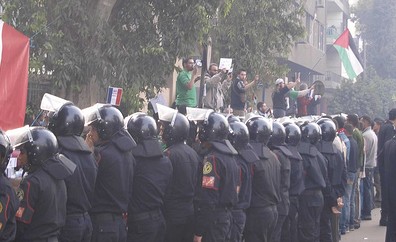
Members of an international group gathered in Cairo to protest against the siege of Gaza have rejected an Egyptian offer to allow 100 of them entry into the Palestinian territory.
Organisers of the Gaza Freedom March (GFM), which is comprised of 1,300 people from 42 different countries, declined the offer on Wednesday, saying “we refuse to whitewash the siege of Gaza”. [continued…]

Egypt’s role in the Gaza blockade

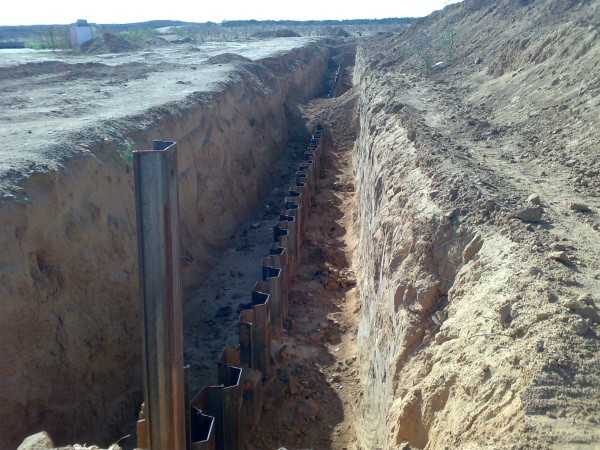
While Egypt is reported to be receiving technical assistance from the United States in constructing an underground steel barrier along Gaza’s southern border, Egypt’s foreign minister, Ahmed Aboul Gheit, told The National: “The Egyptian state and people paid a very high price and paid with their blood for more than 50 years in support of the Palestinians. No one should compare himself with what Egypt did and is still doing for the Palestinians.”

In Beirut, Hizbollah Secretary General Sayyed Hassan Nasrallah urged Egypt to stop building the barrier which could cut off the tunnels that currently provide a lifeline for the Palestinian territory which remains under an Israeli-imposed siege.

The Daily Star reported: “Nasrallah told a crowd of tens of thousands of Lebanese Shiite Muslims marking the Ashura religious ceremony that Egypt should be condemned if it does not halt the wall building. [continued…]

Facebooktwittermail

Pro-government mass rallies in Iran

Pro-government mass rallies in Iran

Tens of thousands of hard-line government supporters turned out for state-sponsored rallies Wednesday, some of them calling for the execution of opposition leaders as Iran’s police chief threatened to show “no mercy” in crushing any new protests by the pro-reform movement.

Pro-government rallies were staged in Shiraz, Arak, Qom and Tehran, among other cities. Demonstrators at a rally in Tehran chanted “Death to Mousavi,” a reference to opposition leader Mir Hossein Mousavi. Some shouted “Rioter hypocrites must be executed” and held up a banner that read: “We sacrifice our blood for supreme leader.”

The government gave all civil servants and employees a day off to attend the rallies and organized buses to transport groups of schoolchildren and supporters from outlying rural areas to the protests. [continued…]

Visit msnbc.com for breaking news, world news, and news about the economy

Qoba mosque in Shiraz under Basiji attack

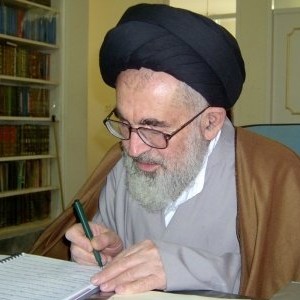
Militia forces that had been surrounding the Qoba Mosque in Shiraz since early Tuesday morning mounted attacks on the mosque where Ayatollah Seyyed Ali Mohammad Dastgheib delivers sermons.

Basijis and plainclothes agents chanted slogans against Ayatollah Dastgheib, Mir Hossein Mousavi, Mehdi Karroubi and Mohammad Khatami and attacked the mosque with bricks and stones.

Ayatollah Dasteghieb’s students positioned themselves inside the mosque and tried to keep the ‘invaders’ from entering the sacred place of worship. A group of the Grand Ayatollah’s supporters rushed to the scene to help safeguard the mosque.

Ayatollah Dastgheib issued a statement of warning on Monday against the illegal behavior of authorities and a crackdown on protestors.

Ayatollah Dastgheib is a Shia Source of Emulation and a member of the Assembly of Experts, the body tasked with appointing a new Leader for the Islamic Republic in the event of the Leader’s death.

Ayatollah Dastgheib studied under Grand Ayatollahs Rouhollah Khomeini, the founder of Iran’s revolution, Seyyed Mohammad-Reza Golpayegani and Hajj Seyyed Ali Akbar Khoei. [continued…]

Iran’s tottering regime is fighting for its very life

Many observers expected the movement, a disparate mix of opposition groups that has taken to the streets since the fraudulent presidential elections of June 12, to lose momentum after the initial protests. Repression, intimidation and disorganisation would lead to resignation among the movement’s followers. Some argued that because it was bourgeois (for which read illegitimate and superficial) and apparently confined to urban areas, it did not reflect any genuine popular desire to shake the system. In fact, the protesters were the ones rejecting the democratic return of Mahmoud Ahmadinejad to the presidency.

The opposition’s leaders – under constant surveillance, cut off from their base and with no plan (or intention) to overturn the system put in place by Ayatollah Ruhollah Khomeini – could be punished, perhaps even lured back. The regime could count on Iran’s rural poor, who had benefited from the largesse of Mr Ahmadinejad’s populist policies, and on the republic’s committed security apparatus.

That expectation and these assumptions have proved wrong: the depth of discontent with the nature and workings of the regime clearly cuts across social and regional divides. It may seem to be on a roll in the Middle East, boasting of regional political successes against the US and technological prowess in its nuclear programme, but there is something rotten at the heart of the Islamic Republic. [continued…]

John Kerry inches closer to Iran visit?

Senate Foreign Relations Committee Chairman John Kerry has filed a formal request to visit Iran, according to the Iranian-based Fars News Agency.

A spokesman for the Iranian Foreign Ministry confirmed the request today. “Since it [the request] is for a parliamentary visit, the issue has been referred to the parliament. The legislative officials are studying the case and they are in charge for providing a response,” Ramin Mehman-Parast said at a weekly press conference.

According to Fars, Iranian Parliament Speaker Ali Larijani also confirmed today that Kerry has made a formal request to visit Tehran. [continued…]

As standoff with Iran continues, U.S. prepares targeted sanctions

The Obama administration is readying sanctions against discrete elements of the Iranian government, including those involved in the deadly crackdown on Iranian protesters, marking a shift to a more aggressive U.S. posture toward the Islamic republic, U.S. officials said.

Ten months after President Obama set a year-end deadline for Iran to engage with world powers on its nuclear program, the government in Tehran has failed to respond in kind, other than an abortive gesture in the fall.

Now, in what may be a difficult balancing act, officials say the administration wants to carefully target sanctions to avoid alienating the Iranian public — while keeping the door ajar to a resolution of the struggle over Iran’s nuclear program. The aim of any sanctions is to force the Tehran government to the negotiating table, rather than to punish it for either its apparent push to develop a nuclear weapon or its treatment of its people. [continued…]

Facebooktwittermail

Afghans turn to Taleban justice as insurgents set up shadow government

Afghans turn to Taleban justice as insurgents set up shadow government

Then Habiba’s elderly husband was badly beaten in a village brawl there was only one place, she said, that she could turn to for help and justice.

Barefoot and weeping, the farmer’s wife, 50, trekked for four hours through Afghanistan’s Hindu Kush mountains to meet the local Taleban commander.

“My feet were bleeding and I cried the whole way but I didn’t care about my safety,” she said. “We are poor people. We know the Government doesn’t help people like us.”

Corruption and incompetence in President Karzai’s Government — particularly at local level — have forced a growing number of people to seek the services of the Taleban.

The shadow government is not limited to justice. In Helmand, in August, Taleban commanders issued printed travel permits on headed notepaper from the “Islamic Emirate of Afghanistan” to let people through checkpoints on the roads in and out of Lashkar Gah, the provincial capital. [continued…]

Facebooktwittermail

President Obama takes the heat President Bush did not

President Obama takes the heat President Bush did not

Eight years ago, a terrorist bomber’s attempt to blow up a transatlantic airliner was thwarted by a group of passengers, an incident that revealed some gaping holes in airline security just a few months after the attacks of Sept. 11. But it was six days before President George W. Bush, then on vacation, made any public remarks about the so-called “shoe bomber,” Richard Reid, and there were virtually no complaints from the press or any opposition Democrats that his response was sluggish or inadequate.

That stands in sharp contrast to the withering criticism President Barack Obama has received from Republicans and some in the press for his reaction to Friday’s incident on a Northwest Airlines flight heading for Detroit. [continued…]

U.S. intel lapses helped Abdulmutallab

CBS News has learned that as early as August of 2009 the Central Intelligence Agency was picking up information on a person of interest dubbed “The Nigerian,” suspected of meeting with “terrorist elements” in Yemen.

Sources tell CBS News “The Nigerian” has now turned out to be Umar Farouk Abdulmutallab. But that connection was not made when Abudulmutallab’s father went to the U.S. Embassy in Nigeria three months later, on November 19, 2009. It was then he expressed deep concerns to a CIA officer about his son’s ties to extremists in Yemen, a hotbed of al Qaeda activity.

In fact, CBS News has learned this information was not connected until after the attempted Christmas Day bombing. [continued…]

Al-Qaeda ‘groomed Abdulmutallab in London’

The Christmas Day airline bomb plot suspect organised a conference under the banner “War on Terror Week” as he immersed himself in radical politics while a student in London, The Times has learnt.

Umar Farouk Abdulmutallab, 23, a former president of the Islamic Society at University College London, advertised speakers including political figures, human rights lawyers and former Guantánamo detainees.

One lecture, Jihad v Terrorism, was billed as “a lecture on the Islamic position with respect to jihad”.

Security sources are concerned that the picture emerging of his undergraduate years suggests that he was recruited by al-Qaeda in London. Security sources said that Islamist radicalisation was rife on university campuses, especially in London, and that college authorities had “a patchy record in facing up to the problem”. Previous anti-terrorist inquiries have uncovered evidence of extremists using political meetings and religious study circles to identify potential recruits. [continued…]

Facebooktwittermail