The Brookings Doha Center (BDC) hosted a panel discussion on December 8, 2015, about the status of the Syrian conflict and the possibility of negotiating peace in Vienna next year.




The Brookings Doha Center (BDC) hosted a panel discussion on December 8, 2015, about the status of the Syrian conflict and the possibility of negotiating peace in Vienna next year.
By Amalendu Misra, Lancaster University
The world will mark the 15th anniversary of its military operations in Afghanistan under a dark cloud. After all the efforts of a coalition of 40 powerful countries, over US$1 trillion spent and thousands of uniformed lives lost, the primary objective of the mission undertaken in 2001 has not been met – and war has become the seemingly insurmountable status quo for Afghanistan.
And as the UK announced it was deploying personnel to help try and save the troubled Helmand province and the town of Sangin, one cannot but accept the fact that the dreaded Taliban is back with a bang – and that the rest of the world is nowhere near defeating it. The Taliban would appear to be in a resurgent mode across the country, and many Afghans now believe it’s winning. How did we get it so horribly wrong? Who screwed it up?
A chorus of events has helped the Taliban’s consolidation in recent years. While the end of NATO-led combat operations in 2014 removed any large strategic challenges, it is the fact that Afghanistan is a dysfunctional state, which has proved to be the biggest boon to the Taliban’s revival.

The Washington Post reports: A Kremlin official said Wednesday that Russia was exchanging information with the Taliban, the Islamist insurgency that the United States has been fighting in Afghanistan since 2001, as a bulwark against the spread of the Islamic State militant group in that country.
Zamir Kabulov, a Foreign Ministry department head and President Vladimir Putin’s special representative for Afghanistan, told the Interfax news agency that “the Taliban interest objectively coincides with ours” in the fight against the Islamic State, which has captured broad swaths of territory in Syria and Iraq.
“I have already said earlier that we and the Taliban have channels for exchanging information,” Kabulov added, in remarks reported by Interfax and confirmed to The Washington Post by a ministry spokesman.
A limited partnership with the Taliban, which announced last week that it would send “special forces” to fight the Islamic State, is a striking, and somewhat confusing, twist in Russia’s war on terror. Although Russia plunged enthusiastically into its airstrike campaign against the Islamic State in Syria in September (critics say Russia is mainly there to prop up President Bashar al-Assad), Moscow has opposed the Taliban for more than a decade as a potential vehicle for terror and instability in the former Soviet Union. [Continue reading…]
By Balsam Mustafa, University of Birmingham and Scott Lucas, University of Birmingham
After days of mounting expectation, the Iraqi government finally announced a serious offensive to retake the city of Ramadi, the capital of western Iraq’s Anbar Province, from Islamic State (IS).
This is far from the first announcement of the imminent recapture of Ramadi, occupied by IS since May 2015 after months of attacks. However, the Iraqi military and allied militias have been foiled before by IS’s tactics of improvised explosive devices, bomb-laden trucks, and booby traps, as well as the destruction of all major bridges into the city.
This has only raised the stakes for the reclaiming of Ramadi. Strategically, it is the “vein of Baghdad”, which is just over 100km to the east, and is close to the holy city of Karbala to the south and to the borders of Saudi Arabia, Syria, and Jordan. IS could use this position both to claim its ascendancy in Iraq – Ramadi is the capital of Anbar, the country’s largest province – and to maintain a route to Raqqa, its central position in Syria.
The loss of Ramadi further challenged the Iraqi Government’s already shaky authority. Thousands of Iraqi families were displaced, and many of them are still trapped on Bzeibiz Bridge. Amid fears that IS-linked men are among the homeless, officials have restricted access to the capital.
So the Iraqi joint military operations command declared its plans to retake the city – but only now has it begun to act on them.


Sharif Abdel Kouddous reports: The second floor of the dialysis clinic here looks more like a refugee camp than a kidney treatment center.
A few dozen patients have been living here for days, sleeping on either plastic chairs or the grime-covered floor. They are waiting for treatment but the clinic’s machines are not working. With each passing day the toxins in their blood increase. They get sicker. They can do nothing but wait.
Like all of Yemen, they are slowly dying.
The dialysis center represents all that is wrong with the country right now. Yemen is the site of a civil war, with one side backed by a Saudi-led coalition, the other led by the Houthi rebel movement. For nine months Saudi Arabia has been both bombing the country, at times indiscriminately. It has also imposed a crippling blockade.
The results have been dire for what was already the poorest country in the region. Food is scarce and Yemenis everywhere are going hungry. Officials say the country is on the brink of famine. The blockade has also prevented deliveries of fuel, which inhibits the ability of Yemenis to travel — for treatment at a dialysis center, for example. It has also led to an energy crisis. Electricity is intermittent at best. Meanwhile, violence has displaced millions. For all these reasons, the economy has essentially collapsed.
Saudi Arabia put together a coalition of Arab countries that is directly supported by the United States. The stated goal is to drive back the Houthi rebels and reinstall the country’s ousted president, Abdu Rabbu Mansour. Mansour is friendly to Saudi Arabia and the United States, allowing the latter to conduct its counterterrorism campaigns inside the country. For Saudi Arabia, the war is about countering perceived Iranian influence on a neighboring country.
The airstrikes alone have devastated Yemen, hitting civilian targets like weddings and hospitals with disturbing regularity. The blockade, meanwhile, is having a quieter, slower, but ultimately more deadly impact.
Saudi Arabia says the blockade is preventing weapons from reaching the Houthis. But it is also preventing humanitarian aid from reaching Yemenis. The Houthis and their allies have set up their own blockades in areas they control, making the problem even worse.
Effectively, Yemenis are being strangled to death. Every day that passes they lose more and more of the essentials: food, water, shelter, fuel and health care. [Continue reading…]

The New York Times reports: The United States on Tuesday sponsored a United Nations Security Council session intended to draw attention to the dire consequences of the war in Yemen, but the meeting also raised questions about potential crimes committed by a Saudi-led military offensive that the Pentagon actively supports.
The United States refuels military jets and provides intelligence support to the military coalition, led by Saudi Arabia, that is trying to defeat Houthi insurgents in Yemen. Since those airstrikes began in March, more than 2,700 civilians have been killed, dozens of schools and hospitals have been attacked and the United Nations has warned of breaches of international law.
But during the session on Tuesday, the United Nations’ top human rights official said that the Saudi-led coalition bore the greatest responsibility for the civilian carnage. The official, Zeid Ra’ad al-Hussein, the high commissioner for human rights, said that while both sides in the conflict had engaged in attacks on civilians, “a disproportionate amount appeared to be the result of airstrikes carried out by coalition forces.”
The United Nations deputy emergency relief chief, Kyung-wha Kang, also warned of the suffering inflicted on civilians by the war, pointing out that two million Yemenis were malnourished and that the country’s health system “is close to collapse.”
All that has placed the United States in an awkward diplomatic tangle. But the fact that American officials invited Mr. al-Hussein to brief the Council on Tuesday was an indication that cracks in the relationship between the United States and Saudi Arabia are beginning to show. [Continue reading…]
Reuters reports: Iraq’s army chief was quoted on Wednesday as saying he needed only days to drive Islamic State from Ramadi, the city whose fall in May exposed the weakness of the Baghdad government and dampened hopes of restoring control in the north and west.
Iraqi troops began advancing on Tuesday in an offensive complicated by rivalries and suspicions harbored by local Sunni tribes and by Shi’ite militia backed by Iran. U.S. officials, concerned also by militant operations over the border in Syria, have expressed frustration at delays in seizing back the city.
“In the coming days will be announced the good news of the complete liberation of Ramadi,” Iraqia TV cited army chief of staff Lt. General Othman al-Ghanemi as saying.
Government troops are now concentrating on the last district held by the militants in the center of Ramadi, a Sunni Muslim city on the river Euphrates some 100 km (60 miles) west of Baghdad and capital of Anbar province. [Continue reading…]
Residents of Ramadi welcoming Iraqi troops:
#Syria: #IS boasts about the death of another teen suicider in #Aleppo Province, Abu Yahya al-Safrani. pic.twitter.com/LzXXVgBLeV
— Charlie Winter (@charliewinter) December 23, 2015
#Syria: #IS boasts about death of another teenaged soldier in #Baraka Province, Abu Dujana al-Maghribi. pic.twitter.com/5rMoj2nOz1
— Charlie Winter (@charliewinter) December 23, 2015
#Iraq: #IS boasts about death of another teen soldier in #Fallujah Province, Abu Sumayyah al-Ansari. pic.twitter.com/zdF1aEA3IO
— Charlie Winter (@charliewinter) December 23, 2015
#Iraq: #IS boasts about another teen's battlefield death – Abu Qasura al-'Iraqi, who died in #Salahudeen Province. pic.twitter.com/XRlbubKKwl
— Charlie Winter (@charliewinter) December 23, 2015
#Iraq: #IS boasts about death of another teen soldier, Abu 'Umar al-Ansari, who died in #Fallujah Province. pic.twitter.com/eMMgtKUFsi
— Charlie Winter (@charliewinter) December 23, 2015
#Syria: #IS boasts about another teenager's death on battlefield – Abu Ja'far al-I'lami, who died in Baraka Province pic.twitter.com/uHMyB67WPN
— Charlie Winter (@charliewinter) December 23, 2015
Amnesty reports: Russian air strikes in Syria have killed hundreds of civilians and caused massive destruction in residential areas – striking homes, a mosque and a busy market, as well as medical facilities – in a pattern of attacks that show evidence of violations of international humanitarian law, said Amnesty International in a new report published today (23 December).
Amnesty’s 28-page report – ‘Civilian objects were not damaged’: Russia’s statements on its attacks in Syria unmasked – highlights the high price civilians have paid for suspected Russian attacks across the country, focusing on six attacks in Homs, Idleb and Aleppo between September and November, attacks which killed at least 200 civilians and around a dozen fighters.
The report includes evidence suggesting that Russian authorities may have lied to cover up civilian damage to a mosque from one air strike and a field hospital in another. It also documents evidence suggesting Russia’s use of internationally-banned cluster munitions and of unguided bombs in populated residential areas. [Continue reading…]
Josh Rogin writes: Early this year, a former top White House official secretly went to Damascus and met with leaders of the Syrian regime. The visit is part of a broader effort by the Syrian government to reach out to Washington’s power brokers and gain influence.
The former official, Steven Simon, served as the National Security Council senior director for Middle Eastern and North African affairs from 2011 to 2012. He has not publicly disclosed his trip, but two senior Obama administration officials said he was not acting as a back channel between the two governments. He traveled there as a private citizen and was representing only himself. The officials said he met with the Syrian president, Bashar al-Assad.
Simon had been a paid consultant at the Middle East Institute, but the think tank ended their relationship after he made the Syria trip. Two employees there told me that the institute did not want to be associated with the trip, which they did not organize and were not consulted about.
Simon declined to comment for this article. MEI also declined to comment. Several Syria scholars who were aware of this visit told me that the trip was part of Assad’s broader recent outreach to Washington scholars and officials.
The timing of Assad’s courting of Washington’s elite makes sense. The Obama administration has been slowly altering its long-held stance that Assad must give up power immediately to make way for a transitional government in Syria and the end of the long civil war. Just last week, the U.S. endorsed a United Nations Security Council resolution that would establish an 18-month transition process during which Assad could stay as Syria’s president and even run for elections sometime in 2017. [Continue reading…]
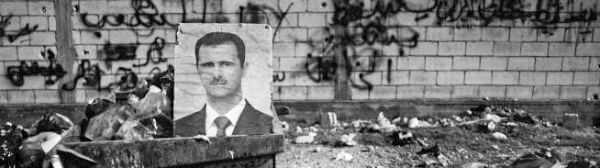
Aron Lund writes: As 2015 draws to a close and Syria prepares to enter its sixth year of conflict, the economic conditions and transformations brought by the war are taking center stage.
The country has shattered into zones under the control of rival politico-military factions, but the economy remains curiously cohesive, connecting the Syrian population through a web of trade links, transportation, service and aid distribution channels, and decaying national systems for the provision of water, gas, and electricity. The Syrian central state economy is deteriorating at a faster pace since 2014—with food subsidies now being slashed, wages left unpaid, an ever more erratic electricity grid, failing trade and fuel distribution, a rapidly depreciating currency, as well as growing discontent in government-controlled areas—which has sent shockwaves throughout the country. Meanwhile, foreign nations penetrate ever deeper into the Syrian economy. Despite the war, or perhaps because of it, the Syrian north is growing more integrated with the Turkish economy, while Iran is emerging as a major financial stakeholder in the Syrian government. [Continue reading…]

The Atlantic reports: On Sunday, The New York Times published a scorching story alleging that one of the killers in the San Bernardino attack had previously “talked openly on social media about her views on violent jihad.”
But by Thursday, the Times admitted it had gotten parts of the story wrong. Tashfeen Malik had not posted publicly about violent jihad before moving to the U.S. Instead, according to the FBI, she had written about violent jihad only in private messages—not public posts. The Times changed its story, issued a correction, and endured a particularly brutal public flogging at the hands of its public editor.
That correction, however, came far too late to put the genie back in the bottle. News of the so-called “public” posts had already rocketed around the Internet, been cited repeatedly in the Republican presidential debate, and, apparently, made quite an impression on Capitol Hill.
On Tuesday, Senator John McCain pointed to the Times report in announcing legislation to require the Department of Homeland Security to “search all public records, including Internet sites and social media profiles” when vetting applicants to enter the U.S.
The same day, nearly two dozen Democrats wrote to Homeland Security Secretary Jeh Johnson calling for “more robust social media background check process for all visitors and immigrants to the United States.” The letter references press accounts indicating that such work had been done inconsistently. And it says Malik “may have expressed radical jihadist sentiments on social media platforms.” [Continue reading…]
The Bridge Initiative: Looking back at the last twelve months, it can initially appear that Islamophobia was pretty bad in 2015.
And indeed it was. Attacks against Muslims in the United States and their institutions have occurred in rapid succession. Meanwhile, leading politicians and the voting public have expressed increasingly anti-Muslim views.
Even though FBI hate crime statistics for this year won’t be released for some time, the current climate of hostility towards Muslims in the United States indicates that 2015 could be America’s most Islamophobic year since 9/11.
Despite the bleak picture, 2015 also witnessed some positive shifts in the way the media and the public dealt with and responded to Islamophobia. As prejudice towards and discrimination against Muslims intensified and gained more media attention, many journalists, activists, and ordinary Americans felt compelled to do something about it. [Continue reading…]
The New York Times reports: The French authorities have conducted more than 2,700 police raids under a nationwide state of emergency instituted after last month’s deadly terrorist attacks in Paris.
Using extraordinary powers granted by France’s National Assembly, officers have conducted searches without warrants of dozens of homes, arrested hundreds of people and even shut down mosques and Muslim prayer rooms for fear they were preaching radicalization.
The use of such tactics has increased tensions between the government and Muslim communities.
“The Muslim minority in France feels like it’s being treated as the public enemy,” said Yasser Louati, spokesman for the Collective Against Islamophobia in France. “They are afraid of the government.”
At least 20 court complaints have been filed against the government, Reuters recently reported, citing six independent lawyers involved in the complaints. And Muslim leaders in France have said that the police tactics are excessive and unfairly target Muslims. [Continue reading…]
By Ben Curtis, Cardiff University
The reign of King Coal is a story which is central to fully understanding modern Britain. Coal powered the industrial revolution, employed over a million miners at the industry’s height, shaped and sustained communities across the country, and has played a key role in the UK’s political economy. With the closure of Kellingley colliery, the country’s last deep mine, in December 2015, a defining chapter in British history comes to an end.
Although it had been mined in small quantities in Britain since Roman times, the story of coal as a major industry begins with the industrial revolution. From the 18th century onwards, demand for coal began to grow at an increasing rate. Several factors drove this, but its most important uses were as a fuel for steam-powered engines, in ironworks and metal smelting, and for domestic energy consumption in growing cities and towns. Then in the 19th century, coal grew to become the biggest industry in Britain in terms of workforce. It expanded from 109,000 workers in 1830 to nearly 1.1 million in 1913.
The early years of the 20th century proved to be the industry’s zenith, however. The period between World War I and II was one of crisis and catastrophic decline for coal. Its seemingly unassailable position was undermined by a series of economic factors – including the decision in 1925 by the Chancellor of the Exchequer, Winston Churchill, to return sterling to the gold standard. This had the inadvertent effect of making British coal too expensive in its important, but increasingly vulnerable, overseas markets.

Coalbrookdale by Night by Philip James de Loutherbourg
As labour was the biggest cost in coal production, employers’ attempts to cut wages led to a series of bitter industrial relations disputes in the 1920s. The most well-known is the 1926 general strike, called by the Trades Union Congress in support of the miners. Although the general strike itself only lasted nine days, communities around the country’s coalfields held out for a further six months before finally conceding defeat.

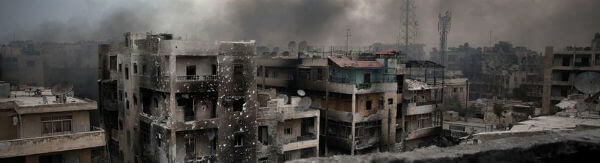
Muhammad Idrees Ahmad writes: Wishful thinking is the essence of Barack Obama’s Syria policy. In lieu of decisive action, the president opted for brave words. He has drawn red lines that he wasn’t willing to enforce. With no strategic interests at stake, he saw no reason to expend resources on mere humanitarian concerns. In an explicit break with the past decade’s neoconservative interventionism, he has chosen a policy of “realist” restraint.
This amoral policy of malleable principles and unsentimental reserve should warm the heart of any “realist.” But a recent issue of The New York Times carries a curious indictment by two luminaries of the “realist” school: Stephen Walt of Harvard and Gordon Adams of the American University. The authors deride Obama for basing his Syria policy on a wish and a prayer: “A wish that President Bashar al-Assad would leave and a prayer that the ‘moderate’ Syrian opposition would be more than it is.”
It would be brave for “realists” to admit that their prescriptions yielded a disaster: absent a deterrent, Assad bombed his opponents with impunity; the repression and slaughter precipitated a mass exodus; and with the US a mere spectator, Russia and Iran stepped in to shore up their ally. Meanwhile ISIS remains entrenched and blowback has reached Western capitals.
But “realists,” like their neoconservative counterparts, rarely admit error. They can, however, be relied upon to compound mistakes. [Continue reading…]


The New Republic reports: China wants to get in on the credit racket. At the moment, most Chinese citizens don’t have credit scores, unlike in the United States, where they have been part of the consumer landscape for decades, led by the big three credit bureaus, Equifax, Experian, and TransUnion. The Chinese government aims to fix that and fast, establishing a nationwide credit scoring system, known as the Social Credit System (SCS), by 2020.
As with China’s vast construction projects, this scoring system is fiercely ambitious, authoritarian, technologically sophisticated, and likely to disrupt the lives of millions of people. And although it is a deeply capitalist undertaking, the SCS is being positioned as a socialist effort. A 2014 planning document states that “a social credit system is an important component part of the Socialist market economy system” and that “its inherent requirements are establishing the idea of an sincerity culture, and carrying forward sincerity and traditional virtues.” That vague phrasing actually speaks to the scope of the project. With “social credit,” the Chinese authorities plan to do more than gauge people’s finances; they want to rate the trustworthiness of citizens in all facets of life, from business deals to social behavior. Eventually, all Chinese citizens will be required to be part of the SCS.
As of now, the Chinese government is allowing select companies to roll out test projects designed to rate individuals’ trustworthiness. These include efforts by Baidu and Alibaba, respectively the country’s largest search engine and e-commerce site. The involvement of these tech companies is key. Credit scoring in the U.S. has long graduated beyond simple matters of credit card debt or bankruptcy history. The credit bureaus now double as some of the country’s biggest data brokers, and they consider a range of consumer activity when creating their proprietary scores. The scores themselves have grown in value, now being used for anything from rating credit worthiness to evaluating one’s fitness for a job (some states, including New York, have banned the use of credit scores in job screenings). As a consequence many forms of consumer scoring now lie outside existing consumer protections, as a World Privacy Forum report found last year.
China’s Social Credit System promises to build on these techniques, using the vast behavioral records of its people to rate them — as consumers, as citizens, as human beings. According to that same planning document, the SCS will be used “to encourage keeping trust and punish breaking trust,” which includes violations of the “social order.” In other words, everything Chinese citizens do, especially online, may be incorporated into their scores. Doctors, teachers, construction firms, scientists, and tourism employees will be scored. So will sports figures, NGOs, companies, members of the judicial system, and government administrators.
Approved behaviors and purchases will raise a score; other activities may lower it, perhaps drawing the unwanted attention of authorities in the process. Scores in turn will be used for employment, disbursing credit, and determining eligibility for social benefits. While the Chinese government has frequently touted its desire to create “a culture of sincerity” and “trust,” the plan uses surveillance, data collection, online monitoring, and behavioral tracking to render practically all of its citizens’ affairs in market terms. Rather than being equal, China’s citizens will be in fierce competition with one another, jostling for rankings better than their peers. [Continue reading…]

Meet Oz Katerji, a volunteer who discusses the evolution of the Islamic State, the Assad Regime and the Syrian Civil War and its effect on the island of Lesvos.
