Category Archives: Lands

U.S. airstrikes back local forces in Iraq but not Syria — Kobane feels ‘deserted and furious’

Bloomberg reports: The U.S military is monitoring the threat to Kobani, and has conducted airstrikes “in and around” the town in the past several days, Pentagon spokesman Rear Admiral John Kirby told reporters in Washington yesterday. U.S. Central Command said today the coalition had carried out 14 strikes against Islamic State targets in Syria and Iraq yesterday and today. Vehicles, artillery positions and a building were destroyed near Kobani, said in an e-mailed statement.

Kirby said the U.S. operation in Syria targets areas Islamic State can use as a “sanctuary and a safe haven,” compared with strikes in Iraq that are being conducted to back local forces. That doesn’t mean “we are going to turn a blind eye to what’s going on at Kobani or anywhere else,” Kirby said.

While Turkey’s government has vowed to prevent an Islamic State takeover of Kobani, Kurds aren’t convinced, accusing authorities in Ankara of using the crisis to smother a largely autonomous Kurdish region that has evolved during Syria’s three-year civil war.

The Kurds fighting Islamic State in Syria are linked to the Kurdistan Workers’ Party, or PKK, whose separatist ambition has long been considered Turkey’s top security threat.

“The people of Kobani feel deserted and furious,” Faysal Sariyildiz, another pro-Kurdish legislator, said yesterday.

The Washington Post adds: The real reason [for the limited number of airstrikes on ISIS near Kobane] appears to be that the main focus of the U.S.-led air war remains on Iraq, with any strikes conducted in Syria intended primarily to degrade the Islamic State’s capacity to operate there, according to Andrew Tabler of the Washington Institute for Near East Policy.

“This is about stabilizing Iraq, not about minorities,” he said. “It appears Syria is secondary and strikes are not being carried out with a discernible political or humanitarian strategy.”

U.S. officials asked to explain the inaction in Kobane cast the answer in similar, if less explicit, terms.

Rear Adm. John Kirby, the Pentagon spokesman, noted to reporters Friday that airstrikes had been conducted in the vicinity of the town, adding that if they could be conducted “in such a way that we’re not going to cause any greater damage or civilian casualties, then . . . we’re going to do it,” he said.

But, he added, “we’re broadly focused, not just on one city and one town. We have to stay broadly focused on the whole region.”

“The focus in Syria has really been about the safe haven they enjoy,” he said of Islamic State fighters. “In Iraq, it’s really been much more focused on supporting Iraqi security forces and Kurdish forces on the ground.”


Facebooktwittermail

ISIS pushes forward on Kobane

Al Jazeera reports: The Islamic State in Iraq and the Levant is continuing to push its attempts to control a key Syrian border town despite resistance from local fighters and US-led air attacks.

Fighting raged on Saturday between ISIL and Kurdish fighters in Kobane, with artillery fire pounding the southwestern areas, a day after ISIL fired at least 80 mortar rounds into the town and advanced to its outskirts.

Al Jazeera’s correspondent Bernard Smith said he could hear artillery bursts and gunfire from his position in Suruc in Turkey, about 6km from Kobane.

An Al Jazeera correspondent reported that ISIL on Friday night attempted four times to storm the town from the east side, but US-led air attacks stopped the advances and killed dozens of its fighters.

The Syrian Observatory for Human Rights, a UK-based group, said the attacks hit at least four areas, killing 35 ISIL fighters and destroying some materiel. Al Jazeera cannot independently verify the report.

Juan Cole adds: Ismat Sheikh, commander of the Kurdish forces at the border town of Kobane (Ain al-Arab) that is besieged by ISIL tanks and artillery, says that he expects massacres of its inhabitants if it falls to the Sunni Arab extremists.

He warned that ISIL fighters are less than a mile from his front line.

Despite US air strikes, ISIL has drawn up some 25 tanks and a number of artillery pieces to pound Kobane repeatedly.

Facebooktwittermail

Turkey pretends to challenge ISIS but attacks Kurds instead

The BBC’s Paul Adams reports that Kobane is still under attack while a squadron of Turkish tanks sits idle a few hundred metres away.

Facebooktwittermail

Why Turkey’s parliamentary vote authorizing military action is unlikely to result in military action

Aron Lund writes: While Turkey is likely to lend assistance to the U.S.-led campaign, the parliamentary vote won’t trigger any military action by itself. Much of the reporting and commentary on the vote has overlooked that this is in fact the third year in a row that Turkey’s parliament has issued an authorization for military force.

The first of such resolutions was passed in October 2012, after several exchanges of fire across the Syrian-Turkish border. The one-year authorization took aim at the government of Syrian President Bashar al-Assad, serving as a shot across the bow by lowering Turkey’s threshold for intervention.

However, no intervention ever came. The parliament therefore extended its one-year deadline in October 2013. Again, no intervention took place during the year, and the resolution is set to expire today. That’s why the Turkish parliament has issued a resolution now—not because of the fighting in Kobane or the U.S.-led coalition against the Islamic State, although it may of course be used to join these battles. [Continue reading…]

In this useful analysis, Lund refers to the PKK as being “even now involved in violence against the [Turkish] army,” yet the evidence of this which he cites is a report on “a clash [which] erupted after a group of Turkish soldiers, deployed on a hill with four military vehicles, opened fire on a group of HPG [PKK] guerrillas.”

It looks like Lund should have written that the Turkish army is even now involved in violence against the PKK.

Facebooktwittermail

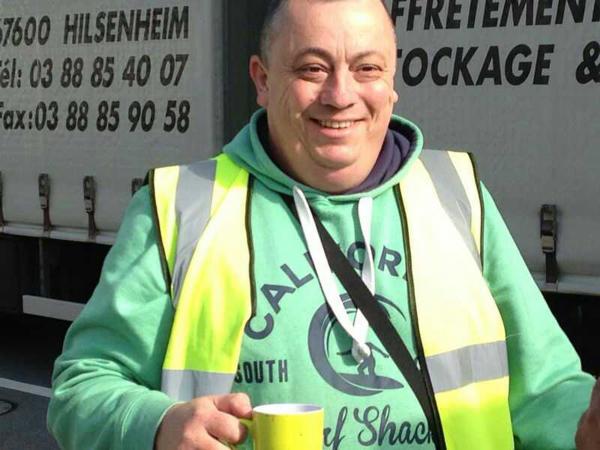
Alan Henning: ‘A taxi driver with a heart of gold who basically wanted to help people’

The Associated Press reports: Alan Henning, a British volunteer aid worker purportedly slain by the Islamic State militant group, was described by friends as a hard-working family man who felt compelled to help people suffering from the civil war in Syria.

Henning, 47, had joined an aid convoy and was taken captive on Dec. 26, shortly after crossing the border between Turkey and Syria. A cab driver from northwest England, Henning got involved in taking aid to Syria through a colleague. Friends said he had traveled to the Turkey-Syria border several times in the two years before his capture, leaving behind a wife and two teenage children to help people whose lives were shattered by war.

“He’s just a taxi driver with a heart of gold who basically wanted to help people,” said a friend, Martin Shedwick.

Henning, nicknamed “Gadget,” reportedly joined a convoy organized by an Islamic charity, Al-Fatiha Global, based in Worcester, England.

“I asked why he wanted to do it, because it was dangerous and he had family here. And he just said ‘it’s what I love to do,'” said friend Orlando Napolitano, recalling a conversation in his cafe just before Henning left in December.

“It was his passion. He’d been there twice before and would tell me about all the people there who have nothing, about all the difficulties they face. It was his passion to help them, he didn’t care if it was dangerous,” the Manchester Evening News quoted Napolitano as saying.

Henning, his wife Barbara and two teenage children lived in Eccles, near Manchester in northwest England.

A neighbor Debbie Ashton, described him as a “lovely guy.” [Continue reading…]

Facebooktwittermail

Now an ISIS hostage, former U.S. soldier Peter Kassig aided Syria’s wounded

CNN reports: Peter Kassig first went to the Middle East as a U.S. soldier and returned as a medical worker, feeling compelled to help victims of war.

“We each get one life and that’s it. We get one shot at this and we don’t get any do-overs, and for me, it was time to put up or shut up,” he said in a 2012 interview with CNN.

Now Kassig, 26, is being held hostage by ISIS.

His life was threatened Friday in an ISIS video that showed the apparent beheading of British aid worker Alan Henning.

Facebooktwittermail

Netanyahu finds himself increasingly alone on Iran

Dimi Reider writes: For Israeli Prime Minister Benjamin Netanyahu, Iran and the Islamic State, also known as ISIS, are essentially the same thing.

During a diatribe against Iran in his United Nations speech on Monday, Netanyahu asked: “Would you let ISIS enrich uranium? Would you let ISIS build a heavy water reactor? Would you let ISIS develop intercontinental ballistic missiles? Of course you wouldn’t.”

It was almost as if Netanyahu views Iran and ISIS as interchangeable. But the rest of the world doesn’t see it that way — least of all the United States, which is making a crucial last push for a comprehensive agreement with Iran on its nuclear program, even as it musters an international coalition to fight the Islamic State.

In insisting that Iran and ISIS are essentially the same enemy, Netanyahu broadcast his isolation among world leaders and underscored the jadedness of the idea that he has championed for most of his political career: the imminence of an Iranian nuclear bomb and the apocalyptic threat it would pose to the free world.

After all these years, Netanyahu still calls for every nook and cranny of Iran’s nuclear program to be demolished by military force, though preferably not Israel’s alone.

The isolation of his views was evidenced not only by the near-empty General Assembly hall when he gave his speech, but also in the Israeli media. [Continue reading…]

Facebooktwittermail

Kurdish women soldiers cherish their freedom — Updated

When I posted this four hours ago, I included a video below which is a BBC News report broadcast in early September. It features an interview with a nineteen-year-old Kurdish woman fighter who I just learned has since died.

President Obama claims he has launched an operation to “destroy” ISIS, yet there have been far too few airstrikes to prevent the assault on Kobane. Turkish forces stand idle.

If the international forces which claimed they were going to stop ISIS prefer at this point to do virtually nothing, can they not at the very least provide the Kurdish fighters — men and women who are willing to sacrifice their own lives in defense of their own people and land — enough ammunition to continue their struggle?

General Zelal, 33. Photographed at a YPJ checkpoint-base, on the outskirts of Rabia, Kurdistan, on Aug. 7, 2014.

Photographer Erin Trieb recently spent a week documenting members of the Kurdish Women’s Protection Unit (YPJ) at several military posts in Northeastern Syria and along the Syrian-Kurdish border: “There is a sense among the women,” says Trieb, “that the YPJ is in itself a feminist movement, even if it is not their main mission. They want ‘equality’ between women and men, and a part of why they joined was to develop and advance the perceptions about women in their culture — they can be strong and be leaders.”

Sa-el Morad, 20, shared with Trieb that she enlisted in order to prove that, “we can do all the same things that men can do; that women can do everything; that there’s nothing impossible for us. When I was at home,” she recalled, “all the men just thought that the women are just cleaning the house and not going outside. But when I joined the YPJ everything changed. I showed all of them that I can hold a weapon, that I can fight in the clashes, that I can do everything that they thought was impossible for women. Now, the men back home changed their opinions about me and other women. Now they see that we are their equals, and that we have the same abilities, maybe sometimes more than them. They understand we are strong and that we can do everything they can.”

According to Trieb, the women are indeed seen as just as strong, disciplined, and committed as their male counterparts. They endure many months and levels of rigorous training in weaponry and tactical maneuvers before they are even allowed to fight. They are also wholly celebrated by their community, which Trieb notes is unexpected in a part of the world where women are often seen as inferior to men.

To some in the region, they are seen as potentially more of a threat to ISIS than male soldiers. As Trieb recalls, “The saying among many Syrian Kurds is that ISIS is more terrified of being killed by women because if they are, they will not go to heaven.” [Continue reading…]

Facebooktwittermail

In rare alliance, Shi’ites join Sunnis to defend Iraqi towns against ISIS

Reuters reports: When Islamic State fighters tried to storm the Tigris River town of Dhuluiya north of Baghdad this week, they were repelled by a rare coalition of Sunni tribal fighters inside the town and Shi’ites in its sister city Balad on the opposite bank.

The assault, which began late on Tuesday and ran into Thursday, was one of several major battles in recent days in which Sunni tribes joined pro-government forces against the militants, in what Baghdad and Washington hope is a sign of increasing cooperation across sectarian lines to save the country.

Further north, another powerful Sunni tribe fought alongside Kurdish forces to drive Islamic State fighters from Rabia, a town controlling one of the main border checkpoints used by fighters pouring in from Syria.

In western Iraq, Sunni tribes have fought alongside government troops in Hit, which was captured by Islamic State fighters on Thursday, and in Haditha, site of a strategic dam on the Euphrates.

Such local alliances are still rare: in most Sunni areas of Iraq, tribes have shown little sign of turning against militants as they did when they were recruited by U.S. troops in 2006-07. Many of the leaders of that Sunni “Awakening” movement were later arrested by Baghdad, in what Sunnis see as a betrayal.

Sectarian and ethnic animosity runs deep after a decade of civil war that has touched nearly every family, making it difficult for Sunnis, Shi’ites and Kurds to trust each other.

But nearly two months into a U.S.-led bombing campaign, this week’s battles have provided the strongest early signs yet of what Washington and Baghdad hope could be a revival of the alliance with tribes to counter Islamic State. [Continue reading…]

Facebooktwittermail

ISIS assault on Kobane: Turkey’s inaction speaks louder than its prime minister’s words

The Guardian reports: The Turkish prime minister has said the country will do “whatever we can” to stop the Syrian Kurdish border town of Kobani falling to Islamic State (Isis) as MPs voted to authorise military action against the militants.

Ahmet Davutoğlu spoke hours after the vote in the Turkish parliament, which authorises cross-border raids and allows coalition forces to launch operations from Turkish territory. Isis fighters are within a few miles of the town centre on three sides.

“We wouldn’t want Kobani to fall. We’ll do whatever we can to prevent this from happening,” Davutoğlu said in a discussion with journalists broadcast on the A Haber television channel.

“No other country has the capacity to affect the developments in Syria and Iraq. No other country will be affected like us either,” he said. His comments were in contrast to the Turkish defence minister, Ismet Yilmaz, who earlier said operations should not be expected immediately. [Continue reading…]

Facebooktwittermail

Syria’s army goes on the offensive as U.S. bombs Assad’s foes

Reuters reports: As U.S. warplanes bomb his enemies in Syria’s east, President Bashar al-Assad has set loose his own forces in the west, alarming Washington’s few friends on the ground and potentially undermining the U.S.-led coalition against Islamic State.

U.S. President Barack Obama says Washington’s goal in Syria is to defeat Islamic State without helping Assad’s government. The Arab allies that have joined the U.S.-led strikes are some of Assad’s fiercest opponents.

Nevertheless, after first tamping down the use of its own air power in the initial days of the strikes, Syria’s military has intensified its own bombing against some of the rebel groups in the west of the country that Washington considers its allies.

Last Thursday alone, Syrian warplanes dropped bombs, including steel drums packed full of explosives and shrapnel, in Hama, Idlib, Homs and Aleppo provinces and around Damascus, according to the Syrian Observatory for Human Rights, a monitoring body.

“In the first two days the Syrian air strikes went down about 90 percent, but then there were more, more than before. Now they are targeting Idlib every day,” said Rami Abdelrahman, who runs the Britain-based Observatory. [Continue reading…]

Facebooktwittermail

Kurds warn of massacre by ISIS, Turkey stops short of action

Reuters reports: Kurdish fighters defending a Syrian border town warned on Friday of a likely massacre by Islamic State insurgents as the Islamists encircled the town with tanks and bombarded its outskirts with artillery fire.

Turkey said it would do what it could to prevent Kobani, a predominantly Kurdish town just over its southern border, from falling into Islamic State hands but stopped short of committing to any direct military intervention.

U.S.-led forces have been bombing Islamic State targets in Syria and Iraq but the action has done little to stop their advance in northern Syria towards the Turkish border, piling pressure on Ankara to intervene.

Esmat al-Sheikh, head of the Kurdish forces defending Kobani, said the distance between his fighters and the insurgents was now less than one km (half a mile).

“We are in a small, besieged area. No reinforcements reached us and the borders are closed,” he told Reuters by phone. “My expectation is for general killing, massacres and destruction … There is bombardment with tanks, artillery, rockets and mortars.” [Continue reading…]

Facebooktwittermail

Turkey must save the Kurds

Asli Aydintasbas writes: My generation of Turks grew up hating Kurdish separatists. Instead of questioning why Kurds weren’t allowed to speak their own language, live in their own villages or sing their own songs, we blamed the Kurdistan Workers Party, or P.K.K., which had been waging a guerrilla war against Turkey since 1984, for all of Turkey’s woes. Kurds were responsible for the death of our soldiers, we said. They were guilty of tearing up the country, draining our resources and siding with our enemies. In the mainstream press, they were simply “baby killers.”

Over the past few decades, that view started to soften as the history of human rights abuses committed in Turkey’s Kurdish regions was revealed. An ongoing peace process with the P.K.K., and the Turkish government’s post-2010 rapprochement with Iraq’s Kurdish region has begun to heal the rift between Turks and Kurds. And Iraqi Kurds, landlocked and alienated in an unstable country, started seeing Turkey as a key ally — reciprocated thanks to Turkey’s commercial appetite in the oil-rich region.

When secular Turks staged mass protests against Prime Minister Recep Tayyip Erdogan last year, Kurds came out in support of the demonstrators. They camped out in Istanbul’s Gezi Park alongside leftists, students and artists — ostensibly to save a bunch of trees from an ugly development project, but in reality to protest Mr. Erdogan’s repressive style of governance.

Today, the Kurds are showing even greater courage. In Iraq and Syria, they are fighting Islamic State terrorists on our borders. Together with Iraqi Kurdish forces, the P.K.K. and its Syrian offshoots, our Kurdish compatriots have effectively formed a buffer zone between modern Turkey and the medieval radicalism propagated by the Islamic State. They are protecting not only our physical well-being but our entire way of life — and for this we must be grateful.[Continue reading…]

Facebooktwittermail

Turkey and the PKK: How to deal with Syria’s Kurds

The Economist: Turkey is deeply unnerved by the emergence of yet another Kurdish entity on its frontier. Making matters worse is that, unlike Iraqi Kurdistan, which is now Turkey’s biggest regional ally and trading partner, the Syrian Kurdish region, known as Rojava in Kurdish, is dominated by Turkey’s biggest foe, the PKK [the Kurdistan Workers’ Party].

This unforeseen twist shoved Turkey’s long-festering Kurdish problem beyond its borders, propelling a panic-stricken AK to resume peace talks with [PKK leader Abdullah] Ocalan. “Rojava’s fate and the peace process in Turkey are inseparable,” argues Arzu Yilmaz, an academic. Turkey’s plan, she adds, is to keep the ceasefire running until next summer’s parliamentary elections by throwing titbits at the Kurds.

These were supposed to include the introduction of optional Kurdish-language lessons in state run schools. But the scheme has not taken off. “For the past three years my children have been trying to sign up for Kurdish classes but they either tell us that there are no teachers or not enough demand,” complains Altan Tan, an MP for the pro-Kurdish People’s Democracy Party. The Kurds have attempted to set up informal Kurdish-language schools of their own, but these were promptly shut by the police last month. A group calling itself the PKK’s youth wing responded by torching more than 30 government schools in the Kurdish region, provoking a barrage of outrage among ordinary citizens, Kurds included.

Yet even though the PKK moans about the lack of progress in Turkey, much of their horse-trading with the AK currently revolves around Syria’s Kurds. Turkey is pressing the PYD to end its undeclared non-aggression pact with Mr Assad and to join the rebels seeking to overthrow him. At the same time they are being told to share power with rival Syrian Kurdish groups. More implausibly still, Turkey also wants the PYD to sever ties with the PKK and perhaps even to cede control over Kobane, which would become part of a planned “safe pocket” to park refugees and to train and equip the rebels. [Continue reading…]

Facebooktwittermail

Turkish PM: Syrian Kurds paying the price for siding with Assad

Daily Sabah reports: Turkish Prime Minister Ahmet Davutoğlu has blamed a lack of cooperation between opposition groups in Syria for failing to stem the advance of extremist fighters.

Davutoğlu said the people of Kobani, a Syrian Kurdish city besieged by the Islamic State of Iraq and al-Sham (ISIS) for more than two weeks, were paying the price for the failure of the Kurdish Democratic Union Party (PYD) to join forces with the Free Syrian Army (FSA).

Speaking at Wednesday night’s reception to mark the start of the new legislative year in Ankara, the Turkish capital, Davutoğlu said the government contacted the PYD and FSA last year and told them to act together to “avert the terror threat and regime attacks in the northern belt.”

He added, “If the PYD, instead of cooperating with the regime, had joined forces with the FSA and with the opposition, ISIS would not have found that much opportunity in the field.” [Continue reading…]

Facebooktwittermail