Category Archives: Syria

By ceding northeastern Syria to the Kurds, Assad puts Turkey in a bind

Piotr Zalewski writes: The retreat of President Bashar al-Assad’s forces from parts of northeastern Syria along the Turkish border might have been welcomed by Turkey, a key supporter of the Syrian rebellion, except for one thing: The region is predominantly Kurdish, and Ankara fears the resulting power vacuum will be a major boon to its number one enemy, the Kurdistan Workers’ Party (PKK) whose three-decade separatist insurgency has seen some 40,000 people killed.

Until recently, Syria’s Kurds had been divided. A coalition of roughly a dozen Kurdish parties had tentatively backed the popular uprising against Assad, while the PKK’s Syrian ally, the Democratic Union Party (PYD), appeared to align itself with the Syrian regime, intimidating opposition activists and quashing popular protests. Others sat on the sidelines, wary of closing ranks with a Sunni Arab-dominated opposition that turned a deaf ear to Kurdish demands for new rights in a post-Assad Syria. Two weeks ago – perhaps sensing that the regime’s fall was imminent – the rival Syrian Kurdish political currents put aside their differences, under the coaching of Iraqi Kurdish leader Massoud Barzani. In Irbil, capital of Iraq’s autonomous Kurdish Regional Government, they signed a unity agreement that has allowed them to take control of several northeastern towns, Assad’s forces mostly retreating without a fight.

The news sparked a Turkish media and political clamor about the imminent rise of a “PKK Republic” or a “Western Kurdistan” on Turkey’s southern flank. Commentators fear that the rise of a second Kurdish statelet, following the emergence of the one in neighboring Iraq in 2003, would embolden Turkey’s own 12-15 million Kurds to pursue their own dream of autonomy. Worse still, it could potentially provide the PKK — branded as a terrorist organization by Turkey, the U.S., and the EU — with sanctuaries from which to launch cross-border attacks.

(MORE: Five Syria Nightmares: The Middle East Can’t Live with Assad, but Living Without Him Won’t Be Easy)

Picking up where the media left off, Turkey’s fiery leader, Prime Minister Recep Tayyip Erdogan, banged the war drums. Though he and his government proclaim the Kurds a “brother nation,” Erdogan told a TV interviewer on Wednesday, a Kurdish state in northern Syria would likely become a “terrorist entity”. If need be, he warned, Turkey would not hesitate to hit the PKK inside Syria, as it has done repeatedly in northern Iraq. “If a formation that’s going to be a problem emerges, if there is a terror operation, an irritant, then intervening would be our most natural right.”

It would not be easy. In northern Iraq — where the PKK has come under pressure from a Barzani government that seeks to improve ties with Ankara — the rebels remain ensconced in remote mountain hideouts, making it easier for Turkish forces to target them with relative impunity. In Syria, the PKK-aligned PYD is an urban-based outfit. To bring the fight to them, Turkish troops would have to operate in large population centers, many of them within a stone’s throw of the common border. [Continue reading…]

Facebooktwittermail

BBC report from Aleppo

Ian Pannell reports: We came into the city last night and since first light, we have been hearing the amplification of artillery bombardment.

There have been gunfights in a number of areas and helicopters flying overhead.

We are hearing that there is a government offensive targeting Salah el-Din, which has been one of the most restive neighbourhoods – perhaps the key district – and which has been in the hands of the opposition Free Syrian Army for a number of days now.

We had heard that government troops were massing outside the city, though on this occasion we believe they are coming from an area they control inside Aleppo.

The rebels are saying that they have destroyed a number of tanks. Though this cannot be verified, there is evidence that they have been able to do that – they have rocket-propelled grenades and know how to use them to target these vehicles.

But the truth is they are outgunned and outmanned.

A regular trickle of trucks and cars packed with civilians has been leaving from Salah el-Din and other areas.

They have a few belongings, but not much. They don’t appear to have had much time to pack before heading out into the countryside, and safety.

It is almost impossible for us to get into some areas – one has to conclude that it would be equally difficult for residents to get out and some undoubtedly must be trapped.

The atmosphere has changed since we were here three days ago. It is eerily quiet, there are very few residents around and the mood amongst the rebels is very tense.

The commander of one of the largest brigades operating in Aleppo was even deliberating pulling his men out because he was not getting enough ammunition.

He was urged by his men not to leave – they are still here, they have been fighting this morning and wounded fighters have been brought back to the area for treatment in a makeshift clinic.

The rebels may insist in interviews that they will prevail, but the mood on the ground is different.

It is very hard not to conclude that the firepower they face is so overwhelming and Aleppo so important for President Assad’s government that resisting will be incredibly difficult, if not impossible. [Continue reading…]

Facebooktwittermail

The Palestinian dilemma over Syria

Sharif Nashashibi writes: Palestinian leaders, organisations and officials were generally silent at the start of Syria’s revolution, mainly out of concern for the fate of the half million Palestinian refugees in the country.

However, that has now changed, and not in President Bashar al-Assad’s favour. Attacks on Palestinian camps by Syrian forces loyal to him – most recently last week against the Yarmouk camp – have resulted in killings, injuries, and the displacement of thousands. This has angered Palestinian refugees, many of whom are now openly supporting the revolution, as well as taking in Syrian refugees.

This is particularly damaging for the Assad regime because it has long regarded itself as a guardian of the Palestinian cause.

In an obvious reference to Palestinians, Jihad Makdissi, the Syrian foreign ministry spokesman, wrote on Facebook that “guests” in Syria “have to respect the rules of hospitality” or “depart to the oases of democracy in Arab countries”. He later removed his comments following an outcry.

The regime’s supporters often cite the fact that Palestinian refugees in Syria are treated far better than in other Arab countries. What they overlook, though, is that the law enshrining the rights of these refugees was enacted well before the Ba’ath party took power.

While several Palestinian leaders have now broken their silence about Syria, attitudes vary. Yasser Abed Rabbo, the PLO’s secretary-general, described an attack by Assad’s forces on a Palestinian camp in Latakia as “a crime against humanity.” On the other hand, Nour Abdulhadi, the PLO’s director in Syria for political affairs, later said Palestinian refugees “will remain as supporters of the Syrian government” – a claim seemingly out of step with the facts.

One major blow to Assad has been Hamas’s stance. Not only did it refuse a request to hold pro-regime rallies in refugee camps in Syria, but it also allowed residents of Gaza to stage protests against him.

Its senior leaders left Damascus earlier this year, with political leader Khaled Meshaal – who reportedly twice turned down requests to meet Assad – now living in Qatar.

Several statements from Hamas’s top echelons have unequivocally supported Syria’s revolution. In the Washington Post, Karin Brulliard described this as a stark break between the former allies – one which, according to Fares Akram in the New York Times, strips the regime “of what little credibility it may have retained with the Arab street.”

“The policy shift [of Hamas] deprives Assad of one of his few remaining Sunni Muslim supporters in the Arab world and deepens his international isolation,” a Reuters report noted.

Hamas is the only member of the “axis of resistance” (grouping the Palestinian movement, Hezbollah, and the Iranian and Syrian regimes) to denounce Assad’s crackdown. Although Hamas’s decision is in line with polls indicating that Palestinians support the Arab spring, it has come at a significant price. A subsequent drop in Iranian aid to Hamas – which has been a lifeline for the movement in recent years – has yet to be filled by other sources. [Continue reading…]

Facebooktwittermail

Secret Turkish nerve center leads aid to Syria rebels

Reuters reports: Turkey has set up a secret base with allies Saudi Arabia and Qatar to direct vital military and communications aid to Syria’s rebels from a city near the border, Gulf sources have told Reuters.

News of the clandestine Middle East-run “nerve centre” working to topple Syrian President Bashar al-Assad underlines the extent to which Western powers – who played a key role in unseating Muammar Gaddafi in Libya – have avoided military involvement so far in Syria.

“It’s the Turks who are militarily controlling it. Turkey is the main co-ordinator/facilitator. Think of a triangle, with Turkey at the top and Saudi Arabia and Qatar at the bottom,” said a Doha-based source.

“The Americans are very hands-off on this. U.S. intel(ligence) are working through middlemen. Middlemen are controlling access to weapons and routes.”

The centre in Adana, a city in southern Turkey about 100 km (60 miles) from the Syrian border, was set up after Saudi Deputy Foreign Minister Prince Abdulaziz bin Abdullah al-Saud visited Turkey and requested it, a source in the Gulf said. The Turks liked the idea of having the base in Adana so that they could supervise its operations, he added.

A Saudi foreign ministry official was not immediately available to comment on the operation.

Adana is home to Incirlik, a large Turkish/U.S. air force base which Washington has used in the past for reconnaissance and military logistics operations. It was not clear from the sources whether the anti-Syrian “nerve centre” was located inside Incirlik base or in the city of Adana.

Qatar, the tiny gas-rich Gulf state which played a leading part in supplying weapons to Libyan rebels, has a key role in directing operations at the Adana base, the sources said. Qatari military intelligence and state security officials are involved.

“Three governments are supplying weapons: Turkey, Qatar and Saudi Arabia,” said a Doha-based source.

Ankara has officially denied supplying weapons.

“All weaponry is Russian. The obvious reason is that these guys (the Syrian rebels) are trained to use Russian weapons, also because the Americans don’t want their hands on it. All weapons are from the black market. The other way they get weapons is to steal them from the Syrian army. They raid weapons stores.”

The source added: “The Turks have been desperate to improve their weak surveillance, and have been begging Washington for drones and surveillance.” The pleas appear to have failed. “So they have hired some private guys come do the job.”

President Barack Obama has so far preferred to use diplomatic means to try to oust Assad, although Secretary of State Hillary Clinton signaled this week that Washington plans to step up help to the rebels.

Reuters has established that Obama’s aides have drafted a resolution which would authorize greater covert assistance to the rebels but still stop short of arming them.

The White House’s wariness is shared by other Western powers. It reflects concerns about what might follow Assad in Syria and about the substantial presence of anti-Western Islamists and jihadi fighters among the rebels. [Continue reading…]

Facebooktwittermail

Turkey urges steps as shelling of Aleppo continues

Reuters reports: President Bashar al-Assad’s artillery continued to pound rebel-held areas in and around Aleppo in preparation for an onslaught on Syria’s biggest city, while neigbouring Turkey called for international steps to deal with the military build-up.

Opposition sources said the shelling was an attempt to drive fighters inside Aleppo from their strongholds and to stop their comrades outside the city from resupplying them.

“They are shelling at random to instil a state of terror,” said Anwar Abu Ahed, a rebel commander outside the city.

The battle for Aleppo, a major power centre that is home to 2.5 million people, is being seen as a potential turning point in the 16-month uprising against Assad that could give one side an edge in a conflict where both the rebels and the government have struggled to gain the upper hand.

Turkish Prime Minister Recep Erdogan said late on Friday that international institutions needed to work together to address the military assault on Aleppo and Assad’s threat to use chemical weapons against external threats.

“There is a build-up in Aleppo, and the recent statements with respect to the use of weapons of mass destruction are actions that we cannot remain an observer or spectator to,” he said at a joint news conference in London with British Prime Minister David Cameron.

“Steps need to be taken jointly within the United Nations Security Council, the Organisation of Islamic Countries, the Arab League, and we must work together to try to overcome the situation,” he said.

Cameron said Britain and Turkey were concerned that Assad’s government was about to carry out some “some truly appalling acts around and in the city of Aleppo”.

Turkey, a former ally of Assad and now one of his fiercest critics, cheered on the rebels in Aleppo.

“In Aleppo itself the regime is preparing for an attack with its tanks and helicopters … My hope is that they’ll get the necessary answer from the real sons of Syria,” Erdogan said earlier in remarks broadcast on Turkish TV channels.

Facebooktwittermail

As Aleppo braces for a bloodbath, Syria’s regime is far from beaten

Tony Karon writes: The ancient and storied city of Aleppo is shaping up to be the next great bloodbath of Syria’s 18-month rebellion. The regime is concentrating its elite forces, and their armor, artillery and air support, for an all-out assault to recapture those parts of the city seized by insurgents. The outcome will likely mirror last week’s battle in Damascus, where President Bashar al-Assad’s forces eventually forced the rebels to retreat. Not even the rebels are expecting to be able to hold the city against the regime’s overwhelming firepower, and its determination to stop Syria’s largest and most prosperous city falling to the rebellion. But Aleppo will not be the final or decisive battle of the war. Instead, it will more likely confirm a strategic stalemate, in which the regime is unable to destroy the rebellion, but the rebellion lacks the military power to destroy the regime. There may yet be many weeks and months of carnage ahead.

Having watched Assad bludgeon his rebellious citizenry for the past 18 months, the international media is understandably impatient to see the bloodletting brought to an end with the regime’s collapse. Perhaps it was that impatience — or the audacity of a rebel offensive in the capital, that included a devastating strike on the regime’s key command center that killed four of Assad’s top security aides, followed by the opening of a second front in Aleppo — that shifted the tone of coverage to one anticipating the regime’s rapid demise. But after the initial shock of last week’s events in Damascus, the regime regained its footing and systematically, and brutally, drove the rebels out of most of the neighborhoods they had seized in the capital. The outcome in Aleppo may be similar.

“Aleppo is a complex city,” a local rebel supporter identified only as Amir told the Guardian. “You can see people support the regime, those who are fearful and those who are pro-revolution. The middle and upper classes don’t want the rebels to come in. They want everything to be business as usual. No one can can predict what will happen but there is unhappiness that the rebels have brought all this firepower down on Aleppo.” By that description the rebels may have neither the firepower, nor the consensus within the city, necessary to hold it in the face of the counter-attack expected Friday or Saturday. Despite the many setbacks it has suffered and the clear sense that it is beyond Assad’s power to restore the status quo ante, his regime is far from beaten. Nor were the rebels necessarily expecting that their assaults on Damascus and Aleppo marked the final offensive.

The 1968 Tet Offensive, staged by the Vietcong revolutionaries against the U.S. and the local allies it was propping up in Vietnam, bears consideration here. As the lunar New Year dawned on January 30, 1968, tens of thousands Vietcong insurgents mounted simultaneous surprise attacks on command and control centers in more than 100 villages, towns and cities, including dramatic attacks on six key command centers (including the US Embassy) in South Vietnam’s capital, Saigon. They took control of the old imperial capital of Hue for close to a month, as well as besieging the U.S. base at Khe Sanh for three months. Although the Vietcong suffered massive casualties and were forced to yield those gains, the operation negated Washington’s triumphalism and convinced Americans that the Vietnam war was unwinnable. The offensive was in no sense a final assault on the bastions of U.S. power and the allies it propped up in South Vietnam. Their purpose, instead, was to send a political message: the U.S. and its allies would never eliminate the Vietcong.

There are, of course, countless differences between the situation in Syria today and what transpired in Vietnam 44 years ago, but the Tet analogy may still hold: Syria’s rebels have proved in recent weeks that the regime will not be able to restore its grip over all of the country, or to crush the rebellion by force. For many Syrians, that signals the inevitability of a change of regime — a realization that will convince many of Assad’s less committed allies to switch sides or seek alternatives. So, even if they haven’t brought the regime to the brink of collapse, the rebel offensives in Damascus and Aleppo have dramatically weakened the regime, forcing its Syria and foreign allies to begin reassessing their options. [Continue reading…]

Facebooktwittermail

Russia’s fear of radical Islam drives its support for Assad

Amal Mudallali writes: It was no coincidence that Russia vetoed a Security Council resolution on Syria just hours after twin attacks killed a moderate Muslim official and injured the Mufti in the central Russian republic, Tartarstan, last week. Russia sees the assassination as a direct attack on moderate Islam by Islamic radicals. And the veto, Russia’s third since the Syrian crisis began, is grounded in a deep-rooted policy of war against one enemy: Islamic radicals.

Russia supports Syrian President Bashar al-Assad because of a strategic relationship and what it views as the same fight in Syria and Russia against the Salafi and extremist Islamic threat.

Since the beginning of the Syrian revolution, Russia has accepted the official government line and branded the opposition as terrorists, Islamic radicals or Salafists. A wide array of explanations have been given by Russia, as well as the West, for its support of Assad, some of which are to the detriment of Russian interests in the Arab world. They cited strategic assets that the Russian Navy has in a Mediterranean seaport, arms sales to the Syrian military, a general East–West rivalry, and even Russian President Vladimir Putin’s refusal, “on principle,” of the removal of national leaders by outside intervention. But the Russian position is actually rooted in a deep-seated fear, and sometimes paranoia, of the spread of Islamic radicalism.

This factor in defining Russian policy has received scant attention. Russia does not see itself as an ally of Assad, but as a target, like him, of a Salafi-terrorist plot to destabilize Russia — just as they are doing in Syria, with help from the West. Even when regime forces massacred over 100 women and children in Houla, the Russians blamed the Wahabis, the Saudi form of Islam. After 18 months of bloodshed and over 15,000 dead, it becomes increasingly difficult to reconcile Russia’s reading of the situation in Syria with Assad’s brutal one.

Putin’s government sees the Islamic threat as one of the most important challenges to the Russian state and its neighboring countries. Most of these states have restless, largely Muslim, populations and one form or another of dictatorship. So the Russians are fearful that change in these countries might bring Islamic radicals to power and Russia will be encircled by extreme Muslim regimes. [Continue reading…]

Facebooktwittermail

My 50 minutes with Manaf Tlass

While Western powers and their Arab allies weigh up Brig. Gen. Manaf Tlass and his potential as Assad-replacement material, one observer provides a much more telling view of a man who appears to embody continuity much more than change.

Bassam Haddad writes: Tala was a friend of a friend. I met her in the early 2000s. Shortly afterward, she disappeared from the office. It turns out she got married.

Some years later, during one of my regular visits to Syria, I was with a group of friends at one of the bustling new restaurant-bars that dotted Damascus’ old city, around Bab Touma. Some places were more popular than others, frequented by internationals and a particular stratum of Damascene society that included some people who were pro-regime and others who were opposed. By the mid-2000s, one’s opinion of the regime did not matter much, in and of itself. What brought these Damascenes together was their common benefit from President Bashar al-Asad’s “economic reform” policies and the social stratification they had produced. In these circles, criticism of the regime was no longer taboo — so long as it was presented in a pleasant and “reasonable” manner. No names, no mention of sect, nothing “subversive.” Anyway, why would these people want to subvert the status quo?

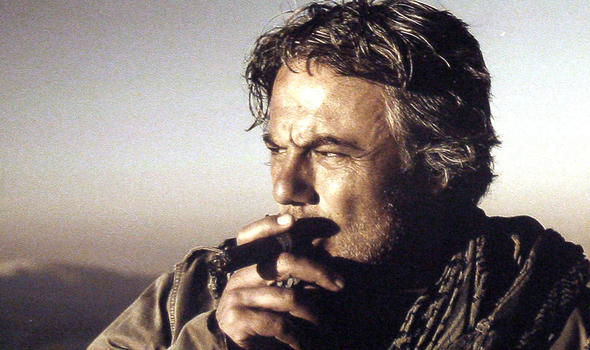
That night, I was introduced to Tala’s husband, Manaf Tlass, as a “Syria researcher” working on the “Syrian economy.” At the time, Manaf was one of the regime’s top strongmen, working side by side with Mahir al-Asad (the president’s younger brother) as a commander of elite units in the Republican Guard. It was too dark to make out his features. Most of what I saw was the big round flame at the tip of the cigar that seemed surgically attached to his fingers, if not his lips. He asked a few questions. I answered politely. I knew who he was, and thought it was odd that he mingled so freely.

That was it.

On a subsequent trip, at a birthday party in another of those restaurants, I met Manaf again. This time, he asked someone to ask me to come to his table. Usually, that is not a good thing. I obliged, and he took me aside, asking more questions about regional politics and, then, Syria. I found myself discussing post-colonial development with Manaf and his cigar as Stardust’s remix of “Music Sounds Better with You” played in the background. We talked for a few minutes before I excused myself. Later, as he said his goodbyes to his fellow diners, Manaf approached me and asked me to come to his home office in Mazzeh. I was not asked for my cell phone number but was given an office number to confirm the visit.

I was in a tricky position. My research on Syrian political economy examined state-business networks and traced the deepening relationships between state officials and businessmen.

Manaf Tlass was no businessman, having gone the route of his father, Mustafa, the former defense minister who was a close confidante of Hafiz al-Asad for decades. But his brother, Firas, was. Many offspring of the Syrian leadership had gone the entrepreneurial route, and by the late 1980s they had become big businessmen, often with the aid of connections to consummate insiders like Manaf. Firas Tlass is said not to have exploited his connections as much as others, but the fact is that policymakers and policy takers in Syria were increasingly bound together. And there was another model that proved even more efficient at generating profits: The state official himself was a businessman in his capacity as a private citizen, creating what I called “fusion” between the public and private sectors.

For about ten years, I had been trying to study the development of capitalism in Syria, how it sustained authoritarianism and the attendant social machinations. I was not interested in exposing this or that character, as the “fusion” formula is not unique to Syria, and the Syrian regime was in no need of further unmasking. I purposely avoided talking to government and regime figures because the returns from such interviews are usually meager, and there is always the risk of raising suspicions about one’s research. The last systematic fieldwork by a Western scholar on Syria’s political economy had been carried out by Volker Perthes a decade earlier, producing the staple book The Political Economy of Syria Under Asad (1995). It was not a walk in the park for Volker, and nor was it for me. Though Firas Tlass, the fast-growing tycoon, was quite accessible, I elected not to speak with him, relying instead on an interview Joseph Samaha, one of the best journalists of our time, had conducted for al-Hayat in 1999. But now Firas’ brother, on the other side of the state-business equation, wanted to speak with me. It was not easy to say yes or no.

Manaf was quite candid and seemed more interested in conversation than surveillance. Still, I hesitated for some time before friends advised me not to skip out on the meeting.

At the time, Manaf was a rising star, quite close to the Asad family. Regime strongmen had regained their swagger after several years of “consolidation” that took place after the succession of Bashar to the presidency. It was a day to begin making Syria anew, with a younger and more contemplative, though less seasoned, leadership. The theme was less “reform” than “modernization,” less “change” than “continuity.” There was an atmosphere of cautious openness.

I walked into Manaf’s office and was politely asked to sit. I politely turned down the offer of a cigar. After some back-and-forth about my heritage (my mother is Syrian), Manaf asked me to share with him my frank thoughts about the Syrian regime, without stammering or self-censorship. It was surreal.

I was not unafraid. But I spoke forthrightly because it was the only thing I could do, and, honestly, because Manaf’s bearing was anything but intimidating or reminiscent of the stereotypical interrogator.

Taking care to be respectful, I shared my views on the limits of authoritarianism in time and space, and the limits of Syria’s regional role in the absence of more inclusive power-sharing formulas inside the country. When Manaf asked about corruption, I made sure to repeat, almost verbatim, the words of ‘Arif Dalila, an independent Marxist economics professor at the University of Damascus who was incarcerated in 2001 for his anti-regime views, during the post-“Damascus spring” round of arrests. ‘Arif was one of the most courageous people around — a mentor and, later, a friend. In 1998-1999, under Asad senior, mind you, when mosquitoes shuddered at the thought of landing on a regime member’s nose, he would walk down the aisle of the packed auditorium at the Tuesday Economic Forum. He would take the stage and dismantle the state’s rhetoric regarding the causes of Syria’s economic decline after the mid-1990s. He would say to rooms crawling with informants (and worse), and I quote from my notes:

Corruption is not a moral or ethical problem at heart, and it does not start at the moment when a policeman or border officer asks for a bribe. It is a systemic practice with a social, economic and political material base intended to sustain the entire political formula in this country…. We should not blame the poor officer who cannot make ends meet on his salary, but instead we should demand accountability at the highest level possible in this regime.

Talk about goose bumps. It was scary just to witness those words uttered. The room would fall silent, as though everyone had literally died, but everyone was actually feeling hyper-alive as ‘Arif would yifish al-ghill (redeem) the listeners in the most visceral way. Almost immediately after he spoke, over half of the audience would leave. It was one of the reasons why the Forum’s general secretary, Farouq al-Tammam, would beg ‘Arif to postpone his intervention until the end, knowing that everyone would stay to hear him. ‘Arif was not just a political economist or regime critic. He was a visionary, versed in the intricacies of global politics, and someone who would tear up when discussing the loss of Palestine by Arab regimes, including Syria’s.

Manaf listened without interrupting, and without letting go of his cigar. He then responded for 20 minutes, challenging me mildly on the feasibility of genuine reform in Syria and giving his views on democracy, the United States and regional politics. He was also forthright. His ideas, however, were underdeveloped or, more precisely, developed in a mind accustomed to wielding excessive power. [Continue reading…]

Facebooktwittermail

In Syria, ‘Jihad is not al Qaeda’

Media references to jihadists in Syria typically portray them as a predominantly foreign, necessarily extremist, and largely opportunistic element in the uprising. Their intent, we are so often told, is to hijack the revolution. A report for Time magazine by Rania Abouzeid presents a much more nuanced picture.

In late January, the jihadist group Jabhat al-Nusra li Ahl Ash-Sham, or the Support Front for the People of Syria, announced its formation and its goal to bring down the regime of President Bashar Assad. In the months since, it has claimed responsibility for many of the larger, more spectacular bombing attacks on Syrian state security sites, including a double suicide car bombing in February targeting a security branch in Aleppo that left some 28 dead.

Little is known about the shadowy group, beyond that it is headed by someone using the nom de guerre Abu Mohammad al-Golani (Golani is a reference to Syria’s Golan Heights, occupied by Israel.) Some say the group is a regime creation, to prove Assad’s assertion that he is fighting terrorists, while others say it is an offshoot of the al-Qaeda group the Islamic State of Iraq.

A foot soldier in the movement told TIME that it is neither. “We are just people who follow and obey our religion,” the young man, Ibrahim said. “I am a mujahid, but not al-Qaeda. Jihad is not al-Qaeda.”

It took weeks of negotiations to secure an interview with a member of the movement, the first time anyone from the group has talked to the media. Higher-ups in the Jabhat declined to be interviewed but agreed to let Ibrahim, a 21-year-old Syrian, be interviewed.

The Jabhat has a presence in at least half a dozen towns in Idlib province, as well as elsewhere across the country, including strong showings in the capital Damascus and in Hama, according to the Jabhat member and other Islamists who are in contact with senior members of the group.

Bespectacled, with a wispy beard and thin mustache, Ibrahim said he joined the group eight months ago. He was recruited by his cousin Ammar, the military operations commander for their unit and a Syrian veteran of the Iraq war who fought alongside his Sunni co-religionists against the American invaders. (Ammar declined to be interviewed.)

Dressed in a deep aqua blue zippered track top and black track pants that were rolled up above his ankles, the young man did not look as menacing as some of his colleagues, with their short pants and above-the-ankle-galabiyas and long beards. In addition to his self-identification as a member of the Jabhat, several Free Syrian Army rebels who know him — as well as townsfolk who know his conservative Sunni family — confirmed that Ibrahim is part of the extremist group.

“Our specialty is explosives, (improvised explosives) devices. Most of our operations are explosions using (IEDs), placing them on roads, blowing up cars by remote detonation,” Ibrahim said. On the night TIME spoke to him, several members of the Jabhat were in a remote field, in the final stages of testing a homemade rocket devised with the help of Syrian veterans of the Iraq war.

The device was a copper-lined shaped charge that could penetrate armor. When the device ignited, the copper element superheated enough to pierce a tank. “It’s a very simple idea, but it works,” Ibrahim said, adding that the device was the work of the Jabhat’s engineering branch. “There’s a killing branch, I’m in the killing and chemical branch,” he said, explaining the chemical branch was responsible for obtaining the fertilizers and other components of the IEDS.

There were 60 men in Ibrahim’s unit, he said, headquartered in a nondescript building that flew two white flags bearing a stylized Muslim Shahada — ‘There is no God but God and Mohammad is the messenger of God.” (…[I]t’s more common to see the Shahada printed in white on a black background. The local printer, a sympathizer, said he reversed the colors “so that people don’t think we have al-Qaeda here.”)

The Jabhat members maintain a low profile, and keep to themselves, townsfolk said, adding that they rarely ventured outside their outpost except to head to battle. “The shabab (young men) prefer to remain in the shadows, unseen, they won’t come forward,” Ibrahim said. Their low profile also enabled some members “not known to the security forces” to pass through checkpoints, especially in and around Damascus and the northern commercial hub of Aleppo, which is currently facing aerial bombardment from Assad’s forces as well encirclement by an approaching armored column. The secrecy extended to the group’s members. “We don’t really like to accept people we don’t know. We don’t need foreigners,” Ibrahim said, although he admitted there were some foreign jihadists in his group from Kuwait, Libya and Kazakhstan.

He was fighting because he wanted to “live in freedom.” His idea of freedom, however, was an Islamic state, free of “oppression” by members of President Assad’s privileged sect, the Alawites. “The Alawites can do what they want and we have no say, that’s why we are fighting, because we are oppressed by them,” he said. “We are nothing to them. They are the head, and we are nothing.”

In another town in northern Idlib, another jihadist — belonging to a different group — also shared Ibrahim’s goal of an Islamic state. “Abu Zayd,” is a 25-year-old Sharia graduate who heads one of the founding brigades of Ahrar al-Sham, a group that adheres to the conservative Salafi interpretation of Sunni Islam.

He said minorities had nothing to worry about in any future Islamic state, despite the increasingly sectarian nature of some of the violence that has convulsed Syria. “Let’s consider that Syria becomes something other than Islamic,” he said, “a civil state. What is the role of the Alawites in it? What is the position of a Christian, a Muslim in it? They are all under the law, and it will be the same in an Islamic state. We are just exchanging one law for another.”

The young Syrian, with his neatly trimmed beard, dressed in military pants and a blue t-shirt, looked more like a member of the FSA than a Salafist. His facial hair was not fashioned in the manner of some Salafists, who shave their mustaches. (Interestingly, many FSA members have taken to wearing Salafi-style beards while not adopting the ideology. “It’s just a fashion,” one person told me, by way of explanation.)

The Ahrar started working on forming brigades “after the Egyptian revolution,” Abu Zayd said, well before March 15, 2011 when the Syrian revolution kicked off with protests in the southern agricultural city of Dara’a. The group announced its presence about six months ago, he said. Abu Zayd denied the presence of foreigners even though TIME saw a man in the group’s compound who possessed strong Central Asian features. “Maybe his mother is,” Abu Zayd said unconvincingly. “We are not short of men to need foreigners.”

Regardless, foreigners are coming across into Syria. One prominent Syrian smuggler in a border town near Turkey said that he ferried 17 Tunisians across the night before. It was a marked uptick in his business. He said he hadn’t seen many foreign fighters for about a month prior to the Tunisians. “Before that, every day there were new people, from Morocco, Libya, and elsewhere,” he said. (In the course of several hours of waiting to cross back into Turkey, I saw at least a dozen Arabs who were clearly not Syrian, and identified as foreigners by the smuggler.)

It’s unclear how large the Jabhat and Ahrar are, given their shadowy nature, but it’s clear that their activities are becoming more public. Both participate in operations alongside regular FSA units, although some FSA commanders remain suspicious of them and jealous of the deep Gulf pockets funding them. “Where were the Islamists when the revolution started?” is spray-painted on the wall of one town in Idlib. The response, spray-painted beneath it, was equally curt: “In prison.” [Continue reading…]

Facebooktwittermail

The powers that want to choose Assad’s replacement

Have tens of thousands of Syrians sacrificed their lives rising up against Bashar al Assad just so that the U.S. and its allies can have a say in who might replace him? I don’t think so.

There is, the Wall Street Journal reports, a “relative lack of Western options” for Assad’s replacement.

A relative lack? Why should there be any Western options in a choice that belongs to the Syrian people alone?

The Obama administration and officials of some Arab and Western nations are discussing ways to place Syria’s highest-ranking military defector at the center of a political transition in the Arab state, according to U.S. and Middle East officials.

The focus on Brig. Gen. Manaf Tlass, a childhood friend of President Bashar al-Assad, is increasing as hopes fade for prospects that an umbrella resistance group, the Syrian National Council, can galvanize the opposition, the officials said.

Efforts to find a transitional figure who is palatable to the Assad regime’s Russian backers and leading Arab states, as well as to the opposition, have taken on added urgency as rebel fighters make gains in major Syrian cities and more high-level officials defect, the officials said.

The officials said Gen. Tlass is one of the few figures in opposition to the regime who could potentially help restore order in Damascus and secure Syria’s vast chemical-weapons stockpile.

Gen. Tlass was a commander in Syria’s elite Republican Guard before his July 6 defection, and his father served as defense minister under Mr. Assad’s late father, Hafez al-Assad, for 30 years.

He is also, unlike the Assad clan, a Sunni Muslim—which Western officials hope could make him acceptable as a transitional figure to the country’s rebel fighters and opposition leaders, who are also largely from the Sunni sect of Islam.

“It’s too early to say if Tlass will stand the strain and pick up traction or just fade away,” a senior U.S. defense official said. “The next week or two will reveal his credentials and attractiveness to the various components internally and internationally.”

But the focus on Gen. Tlass also underscores the dearth of figures who can present a viable alternative to Mr. Assad. Many in the opposition consider Gen. Tlass and his family too closely tied to the Assads’ repression and corruption to be acceptable to Syrians. They also question his ability to win over members of Mr. Assad’s Alawite sect, which makes up 12% of Syria’s population and appears largely unified behind the regime.

“Someone like Tlass is difficult to sell to the Syrian people,” said Ammar Abdulhamid, an anti-Assad activist based in Washington. “He certainly can’t play any leading role in a transition.”

The relative lack of Western options became clear this week, when the European Union’s foreign ministers shifted from its longtime support of the Syrian National Council, a largely émigré group that Brussels had made an official interlocutor in early 2012. On Monday, EU foreign ministers dropped all reference to the group in its statement on Syria.

A turning point came at the Paris meeting of the Friends of Syria on July 6, a senior European diplomat said, when the SNC seemed to have no response to the EU’s calls for it to broaden its political base. They “just don’t seem to be making progress on this,” the diplomat said.

Gen. Tlass’s flight to Paris this month was cheered in Washington and Brussels as the clearest sign of cracks inside Damascus’s ruling elite. The majority of Syria’s officer corps hails from Mr. Assad’s Alawite sect, an offshoot of Shiite Islam. Gen. Tlass’s defection has been viewed as a potential rallying cry for the Syrian armed forces’ Sunni base to switch sides.

On Tuesday, Gen. Tlass went on television and pledged to facilitate change in his country and promote religious and racial harmony. He spoke from Saudi Arabia, looking slightly ill at ease in an open-neck shirt on the Saudi-owned Al-Arabiya network.

“I speak to you not as an official, but as one of the sons of Syria….One of the sons of the Syrian Arab army that rejects the criminal path of this corrupt regime,” he said.

Arab officials said his appearance in Saudi Arabia showed how the ruling al-Saud family is seeking a role for the Syrian officer. Saudi Arabia is the leading Sunni state backing Syria’s rebels against Mr. Assad, along with Qatar and Turkey.

A senior Arab official said Gen. Tlass’s trip to Saudi Arabia was arranged by the country’s new head of intelligence, Prince Bandar Bin Sultan. Diplomats at Saudi Arabia’s ambassador in Washington weren’t available for comment.

The website of the Saudi-owned Al Arabiya reporting on Tlass’s appearance on its own TV channel said: “The former general was believed to be speaking from Paris.” They also reported: “French officials later confirmed that he was in France.”

Since Tlass was speaking into an Al Arabiya microphone and filmed by an Al Arabiya camera, I’ll assume that Al Arabiya‘s own staff did not need to consult French officials in order to determine whether they were located in Paris or Riyadh. In other words, Al Arabiya knows exactly where Tlass gave the interview, it is only others who believed he was speaking from Paris and the French officials merely confirmed that he was in France prior to giving the interview.

I’m inclined to trust the WSJ‘s sources on the rather significant detail of Tlass’s location.

Here is Tlass making his statement in Arabic. The report below includes quotations:

Al Arabiya reports: Defected Syrian Brigadier-General Manaf Tlas called on Syrians to unite and look towards a post-revolutionary Syria, in a statement broadcast exclusively on Al Arabiya late Tuesday.

“I speak to you as a defected member of the Syrian army, who refuses criminal violence … I speak to you as one of the sons of Syria,” Tlas said, dressed in a light blue shirt with an open collar, his gray hair tussled.

The former general was believed to be speaking from Paris.

“Honorable Syrian army officers do not accept the criminal acts in Syria … Allow me to serve Syria after [President Bashar] al-Assad’s era.

“We must all unite to serve Syria and promote stability in the country, rebuilding a free and democratic Syria.”

“Allow me to call on a united Syria,” Tlas added.

Tlass said the “new Syria … should not be built on revenge, exclusion or monopoly.”

He said he did not blame those troops who have not defected, adding that “whatever mistakes made by some members of the Syrian Arab Army … those honorable troops who have not partaken in the killing … are the extension of the (rebel) Free Syrian Army.”

It was his first public appearance since he left Syria earlier this month. French officials later confirmed that he was in France.

His long silence raised questions about whether he had joined the anti-Assad uprising or merely fled the civil war.

Maybe Tlass could have a role in unifying Syria, but I doubt that his chances of doing so will be enhanced by getting the endorsement of Saudi Arabia’s autocratic rulers.

Facebooktwittermail

Planning for the day after the fall of Assad

The Palestinian intellectual and former member of Israel’s Knesset, Azmi Bishara, writes: 1) After a legendary show of resistance in the face of an unprecedented onslaught of savagery, the Syrian revolutionaries can now almost touch their main aim: a change of regime. As I have said elsewhere, a lack of wisdom at this stage could lead to a complete destruction of the very country of Syria.

2) This progress would not have been made without the sacrifices of millions of Syrians, and tens of thousands of the armed rebels. Yet it must be said that some of the members of these armed groups used the opportunity to carry out personal vendettas, and others are clearly infiltrators into the Syrian cause. It is patently clear that foreign operatives have exploited the revolutionaries’ needs for financial and logistical support, not to mention their understandable grievances against the regime, to try and effect the course of events. In this regard, the assassinations of six Syrian scientists (including a missile expert) is a threatening development. The same can be said of the attempts of Iraqi Kurdish leader Masoud Barzani to try and control some of the Kurdish-populated areas of Syria; bear in mind that the Syrian Kurds’ National Council is now well armed, whilst not having taken part in the revolution itself. We cannot assume that the Israelis and the CIA will stand backk and just watch. (Put another way: was the removal of the former head of the Saudi Arabian intelligence service a mere coincidence?) The recent statements made by Israeli and American statesmen on the question of Syria’s chemical weapons is to be taken seriously: their efforts are already underway. Anybody who doesn’t understand this point, clearly does not understand the way in which world powers and their regional counterparts attempt to achieve their aims, and does not understand the reality of the enmity [between the Israelis and the other countries in the region], nor does that person understand the strategic significance of Syria.

3) The Syrian revolutionaries are true patriots, and this is reflected in their movement. This truth does not change another fact, however: that there is no single, unified, country-wide military chain of command for the armed wing of the Syrian revolution. Added to this is the very real danger of sectarian bloodletting along the country’s fault lines. [Continue reading…]

Facebooktwittermail

Liberated Kurdish cities in Syria move into next phase

The Kurdish site Rudaw reports: Syrian governmental forces have retreated from the Kurdish regions of Syria without a fight; the liberated cities are now being ruled evenly by the People’s Council of Syrian Kurdistan (PYD) and the Kurdish National Council (KNC).

According to the information obtained by Rudaw, the Kurdish cities of Kobane, Derek, Amoude, Efrin and Sari Kani have fallen under the control of Syrian Kurdish forces.

The city of Kobane was the first Kurdish city to be liberated last Thursday, 17 months after the revolution against the regime of Syrian President Bashar al-Assad began.

The KNC and PYD agreed to jointly control the liberated Kurdish cities in a deal made in Erbil on July 11, under the supervision of Kurdistan Region President Massoud Barzani.

“According to the treaty of Erbil which was signed by the KNC and PYD, any administrative vacuum in the Kurdish cities of Syria will be occupied evenly — 50/50 — by these two signatories. These two groups will continue ruling the Kurdish regions until an election is carried out,” said Nuri Brimo, a spokesperson of the Democratic Kurdish Party of Syria.

The national flag of Kurdistan and the flag of the PKK – which the PYD is affiliated with — are now being raised over the majority of government and public buildings.

Facebooktwittermail

Inside Syria: rebels and regime trapped in cycle of destruction

Ghaith Abdul-Ahad reports: According to the rebels, a month of fierce fighting and artillery bombardment in Deir el-Zour city has seen hundreds of civilians, rebel fighters and loyalist soldiers killed, and 86 tanks and armoured vehicles destroyed.

But even as the civil war has moved into Damascus, the regime’s security forces have continued to fight on this far edge of the country. In the past week government forces managed to take over two major intersections in the city, occupying them with tanks and establishing sniper positions. Many of the rebels are close to exhaustion. Food is served once a day to the fighters and supplies have dwindled to a trickle. They take four hours to travel a gruelling route through government lines.

The soldiers fare better than the civilians, however, as smuggled food comes with smuggled ammunition. The civilians are reduced to begging food from the fighters. One day during a week-long stay, a woman approached us.

“We need food. I have four kids and nothing to feed them,” she said. “I will send you some tins later,” said the fighter, sounding tired. “I have asked three units before and no one gave me anything,” the woman retorted, before walking away.

The ragtag army can fight a war of attrition with the government, but with no leadership and no command structure, they are unable to organise a concentrated attack on its bases.

Opposition forces in Deir el-Zour are organised into around 20 battalions. The fighters consist of secularists and salafis, townspeople and tribesmen from the country, civilians and defected soldiers. They frequently bicker among themselves and accuse each other of hoarding weapons.

Some units have lost 70% of their men through casualties and desertion, and ammunition in some cases is so low that soldiers go to battle with one magazine. Others, however, hold stockpiles of brand new RPGs, Austrian-made machine guns and hand grenades, part of a shipment that the fighters say was bought with private money from Syrian donors and delivered by Turkish military intelligence over the border.

There are more weapons and men in the countryside, but many commanders prefer to protect their villages than send their men and weapons to fight in the city.

Meanwhile, the civilians who still make up most of the fighting force and who have carried the burden of fighting for the past 16 months look at officers who have defected recently with suspicion and resentment.

Khalil al-Burdany is a former English teacher who leads one of the main battalions in the town. The morning the Guardian met him, a column of pro-Assad tanks and soldiers had tried to get into the sector held by his battalion in the Umal area to the south of the city. A hundred rebels were scrambled and moved towards the front to help Khalil’s small unit, but when government soldiers started firing mortars and tank rounds, half the men retreated. Only 15 of the reinforcements reached the front, where they stood behind a corner for an hour awaiting orders and then withdrew.

Khalil said: “Some of the battalions are just sitting eating and drinking and others are fighting. I had 50 men in this sector, now I have 23. The rest are dead.

“For 30 days I fought and I lost men every day.” Khalil pointed to a burly major sitting in front of him who had defected a week earlier and continued in English: “This officer, he comes now and wants to become the supreme commander. They still have the Bashar [Assad] mentality and they only defected because they realised that we are winning.” [Continue reading…]

Facebooktwittermail

Syrian aircraft bomb Aleppo as rebels fight for city

The Washington Post reports: Syrian warplanes bombed the nation’s largest city Tuesday, activists said, a dramatic escalation in the 16-month uprising and a stark sign of the government’s growing desperation as it tries to reverse the recent momentum of rebel forces.

Aleppo, like Damascus, the Syrian capital, had long been seen as a stronghold of support for President Bashar al-Assad. But the unrest has spread to the city, Syria’s commercial capital, in recent days, adding to a sense that the regime is losing control after the assassinations last week of four of its top security officials in a bombing.

Tuesday’s aerial bombing of Aleppo, the first of its kind in the conflict, was part of a coordinated assault by government forces that included heavy artillery shelling and rockets launched from military helicopters. The attacks targeted Tariq Bab, a residential area east of Aleppo, as well as the neighborhoods of Sakhour and Masaken Hanano in Aleppo, according to the Local Coordination Committees, an activist network.

Although helicopter gunships have been used in the past, the government’s decision to deploy fixed-wing aircraft appeared to be an effort to intimidate the rebel forces by signaling that the regime had yet to use its full military arsenal. Syria has one of the largest air forces in the Middle East, and its use in battling the rebels could give the government a critical advantage over a rebel force that has struggled to acquire heavy weapons.

The BBC’s Ian Pannell, reporting from Aleppo confirms that the Syrian air force is now bombing Syria’s largest city:

Helicopter gunships spun through the skies throughout the day, firing bullets and rockets to the ground. Sustained artillery and mortar rounds pounded restive neighbourhoods.

But it was what happened late in the afternoon that underlined the grave risk to the government of losing ground in what is Syria’s largest city and its economic capital.

First came an unmistakeable sound that has so far been absent in this conflict – the roar of fighter jets.

What appeared to be Russian-made MiG planes arced through the sky. We watched as they dropped in, bombing and strafing rebel positions.

Dead and wounded civilians and fighters were taken to hospitals and makeshift clinics as the human cost of this conflict continues to grow.

The stakes for both sides here could not be higher and it is now clear that neither side is prepared to give way.

Facebooktwittermail

U.S. can’t control events in Syria

The Los Angeles Times reports: A major impediment to determining who is who is that CIA officers largely have avoided entering Syria or traveling to the battle zones since February, when the U.S. Embassy in Damascus was shuttered for security reasons after threats by groups allied with the Assad government. Closing the embassy left the agency without a secure base from which to operate, and CIA personnel left the country, the [unnamed current and former] officials said.

Critics say the CIA’s absence from Syria is a missed opportunity to influence the fractured rebel movement.

“We should be on the ground with bucket loads of money renting the opposition groups that we need to steer this in the direction that benefits the United States,” said a former CIA officer who spent years in the Middle East. “We’re not, and good officers are extremely frustrated.”

The CIA declined to comment. When asked about statements that the CIA lacks a presence in Syria, U.S. officials notably do not dispute the idea, talking, instead, about other ways of finding out what is taking place.

“We know a lot more than we did about the Syrian opposition a month ago and much more than we knew six months ago. That’s because of increased contacts diplomatically and through a variety of other means that I’m not going to discuss,” an Obama administration official said.

A variety of other means? Come on, own up: CIA analysts are spending a lot of time following Twitter.

In contrast with this view that the U.S. government is still struggling to understand what is happening inside Syria, we have the Assad regime’s assertions that the war is being steered by outside forces. This view is summarized here in a report from Iran’s semi-official Fars News Agency:

Syria has been experiencing unrest since March 2011 with organized attacks by well-armed gangs against Syrian police forces and border guards being reported across the country.

Hundreds of people, including members of the security forces, have been killed, when some protest rallies turned into armed clashes.

The government blames outlaws, saboteurs, and armed terrorist groups for the deaths, stressing that the unrest is being orchestrated from abroad.

In October, calm was eventually restored in the Arab state after President Assad started a reform initiative in the country, but Israel, the US and its Arab allies are seeking hard to bring the country into chaos through any possible means. Tel Aviv, Washington and some Arab capitals have been staging various plots in the hope of increasing unrests in Syria.

One can either believe that the hand-wringing going on in Washington is a charade whose purpose is to disguise imperial power actively shaping events inside Syria, or, see that there is now a wide and widening gap between America’s imperial mindset and its ever shrinking imperial capabilities.

Retired CIA officers can get wheeled into Congress and repeat the catechism that money is all powerful, but if that really was true then Iraq and Afghanistan should provide gleaming examples of how American money can be relied on to shape the world in accordance with American interests.

Facebooktwittermail

The myth of Palestinian neutrality in Syria

In Yarmouk camp in Damascus on Saturday, July 14, Palestinians denounced Bashar al Assad and Kofi Annan.

Budour Hassan writes: On July 14, thousands of Palestinian refugees marched in a funeral procession for 11 unarmed protesters shot dead by Syrian security forces in the al-Yarmouk refugee camp. Raucous and seething with rage, mourners chanted for Syria and Palestine, called for the downfall of Bashar Assad’s regime, and sang for freedom.

Whether this burgeoning civil disobedience movement will grow into an open, durable rebellion remains to be seen, but the significance and the potential influence of the latest wave of protests that has swept Syria’s largest Palestinian camp cannot be overlooked.

As the Syrian uprising gathered momentum and the Syrian regime escalated its repression against what started out as a peaceful revolt, concerns have emerged about the impact of the uprising on Palestinian refugees in Syria, who make up just over 2 percent of Syria’s total population.

The Palestinian political elite in Syria have been divided. Some factions have desperately attempted to appear neutral, distancing themselves from the unrest. Others, such as Ahmad Jibril’s PFLP-GC, Fatah al-Intifada, and the Palestinian-Baathist militia al-Sa’iqa, have actively supported the regime, bolstering its propaganda campaigns and crushing civil dissent inside the camps.

In stark contrast to the moribund, aging political leadership, Palestinian-Syrian youth activists, who prior to the eruption of the uprising had focused their activism on Palestine, have participated in the uprising since the very beginning as demonstrators; organizers of aid and relief work for wounded and internally-displaced Syrians; or as citizen journalists, photographers and media activists. The hub of their activism, however, remained outside the camps for most of the uprising.

Never were the tensions among Syria’s Palestinians as discernible as during the aftermath of last year’s Naksa Day protests on June 5, when dozens of unarmed Palestinians were killed by the Israeli occupation army in the occupied Golan Heights border area. Yarmouk inhabitants and martyrs’ families set the PFLP-GC building ablaze in a strong denunciation of the faction’s role in mobilizing to instigate the youths to march back home without any protection despite the anticipated deadly reaction by the Israeli army.

The faction engaged in a pathetically naked attempt to deflect attention from the regime’s crackdown. Several Palestinians were killed in the clashes that ensued between Yarmouk residents and armed PFLP-GC gunmen following the funeral. However, with the exception of the Syrian navy’s attack on the al-Raml refugee camp last summer and the occasional Syrian army shelling on refugee camps in Daraa, Hama and Homs, the situation in the refugee camps remained cautiously quiet.

Since February, the al-Yarmouk camp has regularly held protests in solidarity with the besieged Syrian cities and towns. It participated in the Damascus general strike on May 29, 2012. The protests would normally pass quietly without being attacked by Syrian security forces.

The straw that broke the camel’s back was the abduction and then killing of 13 Palestinian Liberation Army fighters from the Nayrab refugee camp in Aleppo. Though the identity of the killers is unknown, the killings sparked a large protest in Yarmouk on July 12, and an even larger protest the next day. Buoyant chants of “God bless the Free Syrian Army”, “From Syria to Palestine, one people not two”, and “Long live Syria and down with Assad” echoed in the camp’s streets. The Syrian army opened fire at protesters and for the first time, clashes between the regime army and the FSA broke out inside the camp, marking a significant tipping point. The Local Coordination Committee of Yarmouk camp called for mass protests and a general strike to protest the killings. [Continue reading…]

Facebooktwittermail

Five Syrian nightmares: The Mideast can’t live with Assad, but living without him won’t be easy

Tony Karon writes: Nobody’s expecting a happy ending any time soon to Syria’s civil war. Here are just five things that could go badly wrong when the Assad regime falls.

1. The Sectarian Bloodbath Continues, or Intensifies

Renewed Arab offers of safe passage for President Bashar al-Assad if he agrees to abdicate miss the point: His isn’t simply a personality-cult regime; it survives because many thousands of Syrians remain willing to kill for Assad — or, at least, to hold the rebellion at bay. Assad runs a system of minority rule that has empowered the Alawite minority, supported by Christians, Druze and other minorities, and an elite from within the Sunni majority. And the reason the regime’s core forces remain intact, able and willing to fight on despite the defection of many thousands of Sunni conscripts and even senior officers, is fear of their fate if the rebellion triumphs. The 18 months of violence that has killed as many as 19,000 Syrians, and seen many thousands more wounded, tortured, raped and displaced may have helped make protracted violent retribution a self-fulfilling prophecy.

That’s why even if Assad were willing to go — and there’s no sign that he is — those who have fought for his regime and now feel their backs to the wall are likely to remain armed, organized and willing to defend their turf at all costs. But a triumphant Sunni rebellion that has buried many thousands of “martyrs” would not tolerate armed enclaves of regime supporters in its midst. It’s quite conceivable that a messy sectarian war rages long after Assad loses meaningful control of Syria as a nation state.

The obvious solution, in the minds of the U.S. officials, is for the opposition to reach out and reassure Alawites, Christians and other minorities of their place in a post-Assad future. Far easier said than done. For one thing, there is no single credible political leadership center that speaks for the rebellion — and the fact that this condition persists some 18 months into the uprising is a disturbing signal of prospects for stability after Assad goes.

Western and Arab powers have spent more than a year trying to turn the exile-based Syrian National Council into a legitimate alternative national leadership, to no avail. It remains divided and ineffectual, and lacking legitimacy among popular local opposition organizations on the ground. Nor does the SNC have any authority over the Free Syrian Army — itself a catch-all term for a wide array of localized military structures — or other insurgent groups, many of them openly sectarian.

The absence of a coherent political leadership over the rebel militias raises the specter of chaos after Assad goes goes — exacerbated by the likelihood that the pro-regime shabiha militias, whose thugs have most to fear, would fight on, independent of central political leadership of their own. And the fact that unemployment among fighting-age Syrians stands at 58% doesn’t bode well for the prospects of demobilizing the armed formations that have waged the civil war. Foreign troops may be needed on the ground not to bring down Assad, but to stop the violence after he’d gone. But there are unlikely to be many takers for such a thankless mission

U.S. officials claim progress had been made recently in getting exiles to agree broadly on terms of a transition. Given the status of the exile groups, that may not be especially reassuring. “The connections between the opposition and the Free Syrian Army are still tenuous, but they’re getting better,” a State Department official told McClatchy. ”If we can get Assad and his cronies out, that will at least create an atmosphere to have a dialogue. That can’t happen now.”

The problem, of course, is that the “dialogue” that begins after Assad goes could be conducted with bombs and bullets. [Continue reading…]

Facebooktwittermail