Category Archives: News

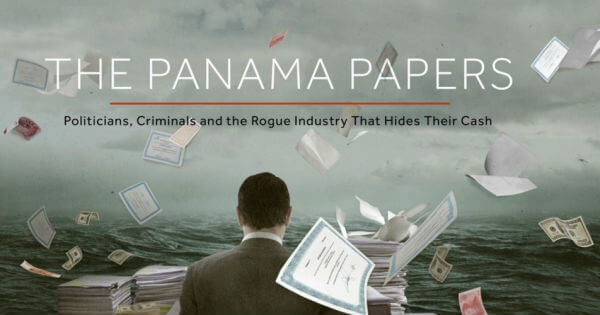
Panama Papers: How the Seychelles saved Syria

James Denselow writes: Against the backdrop of recent territorial gains, the cessation of hostilities and a peace process in Geneva that is rumbling along, President Bashar al-Assad seems more secure than ever after five years of conflict in Syria.

When people ask how he managed to stay in power despite the country having its economy collapse in half, hundreds of thousands killed, one in two Syrians being forced from their homes and the conflict dragging in four of the five UN P5 members of the Security Council, you wouldn’t necessarily think about the Seychelles.

Yet as the Panama Papers, the biggest leak in global history, has shown, the idyllic archipelago of 115 islands in the Indian Ocean off East Africa has played its part in keeping Assad in the Presidential Palace in Damascus.

What this demonstrates is that what appears from a distance to be an insular, authoritarian regime far more proficient in the tools of medieval warfare than modern capitalism, has actually used the levers of globalisation well to protect its interests.

What the 11.5 million leaked documents reveal is that three Syrian companies close to the government – Maxima Middle East Trading, Morgan Additives Manufacturing and Pangates International – used the already infamous Panama-based law firm Mossack Fonseca to create shadow or shell companies in the Seychelles to avoid the increasing pressure of global sanctions.

Considering how near the regime was to collapse before the Russian intervention, this evasion of sanctions is fairly significant. The Panama Papers suggest it paid for fuel that kept Syria’s Air Force helicopters and airplanes in the air. [Continue reading…]


Facebooktwittermail

Where are the Syrians in Assad’s Syrian Arab Army?

Richard Spencer writes: The video shows the attack on Palmyra, the historic Syrian city reclaimed from Isil for the Assad regime, and as a column of troops heads across the desert behind him a soldier is giving a commentary.

“Despite many casualties, they are moving forward in the advance,” he says.

The oddity is that he is not speaking Arabic, but Persian. The man himself is Afghan, a member of a 10-20,000-strong Afghan army recruited in Iran to fight the war in Syria.

The reconquest of Palmyra was presented to the world as a victory for President Bashar al-Assad’s Syrian Arab Army.

As Islamic State jihadists fled, regime troops forced their way into the town, known for its celebrated Roman ruins. Everyone from Russian apparatchiks to British conservative politicians congratulated Mr Assad for reclaiming the town for civilisation.

The role of the Russian air force in preparing the way for the ground advance was noted: this was the anti-Isil alliance promised at the start of Russian military intervention in Syria but which in practice seemed slow to make gains.

In fact, it is now clear it was an eccentric multinational force that took Palmyra. Analysis of photographs, social media posts and Iranian, Russian and even Syrian media has shown that the path was led by the Russians, with much of the “grunt” work done by Afghan Shia and Iraqi militiamen under generals from the Iranian Revolutionary Guard. [Continue reading…]

Facebooktwittermail

Assad’s fateful choice

David W. Lesch writes: This spring marks the fifth year anniversary of the events that launched a civil war in Syria. Typically, there were some huge miscalculations early on that set the conflict in motion, such as the Syrian opposition’s expectation that the West would militarily intervene to facilitate the overthrow of the regime of Syrian President Bashar al-Assad. And then there was the West’s mistaken assumption that Assad would be the next domino to fall following the exits of dictators elsewhere in the Arab spring. Expecting this led to calls for Assad to step down, thus backing the West into a corner regarding a negotiated settlement once it became clear the Syrian president wasn’t going anywhere anytime soon. From the regime’s perspective, it made war the only choice.

But it is important to remember that the first — and biggest — mistake occurred at the onset, when Assad made the decision to crackdown harshly on the popular protests rather than offer real concessions. Indicative of this was Assad’s speech to the nation on March 30, 2011, his first to address the rising tensions. This was a seminal moment in modern Syrian history. The whole country, supporters and opponents, waited with bated breath to hear what he had to say. Syrians believed this would be the moment when Assad would finally live up to expectations.

From interviews I have conducted with current and former Syrian officials close to Assad and involved in the speech preparation, there were pronounced differences and confusion within the regime inner circle over how to react to the crisis. [Continue reading…]

Facebooktwittermail

How Saudi Arabia’s war in Yemen has made al Qaeda stronger – and richer

Reuters reports: Once driven to near irrelevance by the rise of Islamic State abroad and security crackdowns at home, al Qaeda in Yemen now openly rules a mini-state with a war chest swollen by an estimated $100 million in looted bank deposits and revenue from running the country’s third largest port.

If Islamic State’s capital is the Syrian city of Raqqa, then al Qaeda’s is Mukalla, a southeastern Yemeni port city of 500,000 people. Al Qaeda fighters there have abolished taxes for local residents, operate speedboats manned by RPG-wielding fighters who impose fees on ship traffic, and make propaganda videos in which they boast about paving local roads and stocking hospitals.

The economic empire was described by more than a dozen diplomats, Yemeni security officials, tribal leaders and residents of Mukalla. Its emergence is the most striking unintended consequence of the Saudi-led military intervention in Yemen. The campaign, backed by the United States, has helped Al Qaeda in the Arabian Peninsula (AQAP) to become stronger than at any time since it first emerged almost 20 years ago.

Yemeni government officials and local traders estimated the group, as well as seizing the bank deposits, has extorted $1.4 million from the national oil company and earns up to $2 million every day in taxes on goods and fuel coming into the port.

AQAP boasts 1,000 fighters in Mukalla alone, controls 600 km (373 miles) of coastline and is ingratiating itself with southern Yemenis, who have felt marginalised by the country’s northern elite for years.

By adopting many of the tactics Islamic State uses to control its territory in Syria and Iraq, AQAP has expanded its own fiefdom. The danger is that the group, which organised the Charlie Hebdo magazine attack in Paris last year and has repeatedly tried to down U.S. airliners, may slowly indoctrinate the local population with its hardline ideology.

“I prefer that al Qaeda stay here, not for Al Mukalla to be liberated,” said one 47-year-old resident. “The situation is stable, more than any ‘free’ part of Yemen. The alternative to al Qaeda is much worse.” [Continue reading…]

Facebooktwittermail

ISIS sent a child to kill children

The Washington Post reports: The suicide bomber who blew up a youth soccer match late last month left barely a dent in the hard, dry earth, and only a faint scorch on a concrete wall nearby.

But he gouged a chasm of grief in the heart of the small community that lost more than two dozen of its sons in a single moment, at 6:15 on the evening of March 25.

A total of 43 people died in the bombing at the game, according to figures provided by the local government. Of those, 29 were boys younger than 17 who had either been participating in the match or watching their friends play.

The bomber also was a teenager, no more than 15 or 16 years old, judging by the picture of him released by the Islamic State, which asserted responsibility for the bombing, and the accounts of those who saw him at the match. The militants’ statement said the target was a gathering of members of the Shiite paramilitary group known as Hashd al-Shaabi, and the local government said two members of a militia were among the adults who died.

Yet that hardly explains the horror of an attack that inevitably would kill children.

The bomber “was a child, and he came to kill children,” said Mohammed al-Juhaishi, one of the sheiks from the area, who lost five relatives in the blast. “It was a children’s soccer game. Of course he knew he was going to kill children.” [Continue reading…]

Facebooktwittermail

Climate change is altering how the poles drift

Climate Central reports: The spin of the earth is a constant in our lives. It’s quite literally why night follows day.

And while that cycle isn’t going away, climate change is messing with the axis upon which our fair planet spins. Ice melting has caused a drift in polar motion, a somewhat esoteric term that tells scientists a lot about past and future climate and is crucial in GPS calculations and satellite communication.

Polar motion refers to the periodic wobble and drift of the poles. It’s been observed for more than 130 years, but the process has been going on for eons driven by mass shifts inside the earth as well as ones on the surface. For decades, the north pole had been slowly drifting toward Canada, but there was a shift in the drift about 15 years ago. Now it’s headed almost directly down the Greenwich Meridian (sorry Canada no pole for you, eh).

Like many other natural processes large and small, from sea levels to wildfires, climate change is also playing a role in this shift.

“Since about 2000, there has been a dramatic shift in this general direction,” Surendra Adhikari, a researcher at NASA’s Jet Propulsion Laboratory, said. “It is due to climate change without a doubt. It’s related to ice sheets, in particular the Greenland ice sheet.” [Continue reading…]

Facebooktwittermail

It’s amazing what America could do with the money the rich hide overseas

Max Ehrenfreund writes: The documents known as the “Panama Papers” have created a global scandal around the ways the world’s rich conceal their wealth from the authorities. The prime minister of Iceland offered his resignation after the papers reportedly revealed that he and his wife had a fortune on paper hidden away in the British Virgin Islands. British Prime Minister David Cameron is taking criticism as well, and he acknowledged that he profited from a secret family trust.

The Washington Post has not reviewed the Panama Papers or verified their authenticity, but what seems certain is that wealthy people all over the world — and in the United States — pay much less in taxes by moving their income and assets to foreign countries.

In the United States, the Treasury would collect about $124 billion a year in additional taxes — $36 billion from individual taxpayers and $88 billion from multinational corporations — if it weren’t for such schemes, according to estimates by Gabriel Zucman, an economist at the University of California at Berkeley.

That’s a lot of money — and we’re all paying for it, Zucman said.

When the wealthy pay less in taxes, the rest of the population bears the burden. Either the government spends less money, providing fewer public services, or ordinary citizens pay more to make up the cost. [Continue reading…]

Facebooktwittermail

Papal official denies report Sanders invited himself to Vatican

Reuters reports: U.S. Democratic presidential candidate Bernie Sanders was invited to speak at an April 15 Vatican event by the Vatican, a senior papal official said on Friday, denying a report that Sanders had invited himself.

“I deny that. It was not that way,” Monsignor Marcelo Sanchez Sorondo told Reuters in a telephone interview while he was traveling in New York. Sorondo, a close aide to Pope Francis, is chancellor of the Pontifical Academy of Social Sciences, which is hosting the event.

He said it was his idea to invite Sanders.

A Bloomberg report quoted Margaret Archer, president of the Pontifical Academy of Social Sciences, as saying that Sanders had broken with protocol by failing to contact her office first.

“This is not true and she knows it. I invited him with her consensus,” said Sorondo, who is senior to Archer. [Continue reading…]

Bloomberg reported: Archer, an English social scientist appointed the head the pontifical academy in 2014, said that while she “quite liked” Sanders’s program on paper, his failure to contact her first is a breach of protocol. “The president of the academy organizing this event has not been contacted with monumental discourtesy,” she said, referring to herself. [Continue reading…]

Facebooktwittermail

Mossack Fonseca: Inside the firm that helps the super-rich hide their money

panama-papers

The Guardian reports: In June 2013, two Swiss lawyers held a private telephone chat. They were annoyed. In London, David Cameron had just given a speech. The prime minister had promised to sweep away decades of offshore “tax secrecy” by introducing a central register. Anybody who owned an offshore company would have to declare it to the authorities.

The G8 summit, to be hosted by Cameron on the shores of Lough Erne, in Northern Ireland, was looming. Top of the agenda: how to stop aggressive tax avoidance.

For much of the 20th century hiding your money was simple. You got a lawyer, filled in a form and set up a Swiss bank account or offshore “shell company”.

Nobody asked questions. For a couple of thousand dollars a year, it was possible to hide away profits where governments could never find them.

But in the UK crown dependencies and overseas territories where financial services were the main source of jobs and income times were changing. In tropical tax havens such as the British Virgin Islands a chill wind – or at least the threat of one – was blowing.

One of the Swiss lawyers was Sandro Hangartner, the Zurich boss of the Panamanian law firm Mossack Fonseca.

The other man, his disgruntled caller, was Sascha Züger. Züger’s company looked after the assets of some very wealthy South Americans.

In an email to his head office in Panama, Hangartner wrote: “Sascha is not very pleased about the development in BVI [British Virgin Islands].”

He was now looking for “alternatives”, Hangartner added – in other words other secret jurisdictions where a client might park their money.

For the network of international lawyers and accountants who serviced the offshore industry, these were troubled times.

Cameron’s speech was merely the latest piece of unwelcome attention. Since 2008, and the global financial crisis, cash-strapped exchequers had been trying to get their hands on billions in potential tax revenue hidden offshore.

How serious these attempts were was a matter for debate.

What wasn’t in doubt were the vast sums involved. According to the US economist Gabriel Zucman, 8% of the world’s wealth – a vast $7.6tn (£5.3tn) – was stashed in tax havens.

Zucman estimates the loss in global tax revenues at $200bn per year. That includes $35bn in the US and $78bn in Europe.

Previous attempts to bring about transparency had flopped. But now the world’s leading economies – the G20, G8 and Organisation for Economic Cooperation and Development – were apparently pursuing the theme with zeal.

If Cameron got his way, British overseas territories such as the BVI and Gibraltar would soon have to draw up a register of beneficial owners – the real owners of a company, even though their name may not appear on the shareholder register. The crown dependencies Jersey, Guernsey and the Isle of Man would fall into line, too. [Continue reading…]

Facebooktwittermail

David Cameron’s trust problem

Therese Raphael writes: U.K. Prime Minister David Cameron didn’t lie. He’s not accused of being a tax cheat. Unlike his Icelandic counterpart, he didn’t have financial holdings that presented an obvious conflict of interest. Even so, he’s in trouble.

Cameron is under attack for revelations that he benefited, albeit legally, from shares in a fund his stock-broker father had set up in Panama. Cameron is unlikely to lose his job, as Iceland’s Sigmundur David Gunnlaugsson did, but his reputation is taking a hammering. That’s no small problem so soon before a critical vote on European Union membership, in which he is asking Britons to trust his judgement and vote to remain inside the bloc.

The ferocity of this reaction may look odd from outside the U.K. Over in Russia, reports that some $2 billion have been stashed in offshore accounts and shell companies by a group of President Vladimir Putin’s closest friends have received a dismissive collective shrug. Russians expect their leaders to enrich themselves. In Britain, the news that a privileged prime minister made 19,000 pounds ($27,000) with all taxes paid has sparked paroxysms of outrage. [Continue reading…]

Facebooktwittermail

The covert roots of the Panama Papers

Steven Cohen writes: It should come as no surprise that the CIA’s finances are a secret. One of the rare glimpses into the agency’s funding came when Edward Snowden leaked a copy of the intelligence “black budget” to The Washington Post in 2013. But if history is any indication, the CIA may well have resources that don’t appear on any congressional document, highly classified or otherwise. Covert operations, by their very nature, often require access to off-the-books funding. The CIA’s first operation was paid for with funds seized from the Nazis, and in the years since, the agency has been notoriously creative about how it obtains its money.

Adnan Khashoggi would know. A “principal foreign agent” of the United States, as one Senate report referred to him, the billionaire playboy made a fortune (more than $100 million between 1970 and 1975 alone) from commissions negotiating arms deals with his native Saudi Arabia. He used these windfalls, in turn, to cultivate political clout—including, allegedly, with President Richard Nixon. In the aftermath of Watergate, when Congress began reining in the CIA, Khashoggi helped establish the supranational intelligence partnership known as the Safari Club. Soon after, he aided the CIA in circumventing another congressional impediment. With money borrowed from the Saudi and U.S. intelligence-linked Bank of Credit and Commerce International, he financed the illegal arms sales that set off the Iran-Contra scandal.

One way Khashoggi structured his shadowy holdings during his heyday was through the specialized services of Mossack Fonseca, the law firm that is in the news for having helped global luminaries like Vladimir Putin hide their money. Thanks to a recent report from the International Consortium of Investigative Journalists, we now know Khashoggi to be among a number of former spies and CIA associates implicated by the 2.6 terabytes of offshore financial documents provided to the German newspaper Süddeutsche Zeitung last summer.

That his name should appear in an international dark money scandal suggests something about the nature of tax havens that much of the media’s coverage has thus far avoided grappling with. The Panama Papers have largely been presented as an unprecedented insight into how global elites hide their fortunes from tax collectors and other regulators. But they also underscore how tax havens are used by covert agencies and other shadowy players to launder dirty money, a practice that has a long history in which Panama, in particular, has played a notable part. [Continue reading…]

Facebooktwittermail

How global tax evasion keeps poor countries poor

Max Bearak writes: Releases of secret documents, like the whopping 11.5 million Panama Papers, are designed to result in a cascade of scandals. Since Sunday’s revelations, Iceland’s prime minister has stepped down, and Britain’s prime minister, David Cameron, admitted on Thursday that he had profited from his father’s offshore account. Leaders in Russia, China and other parts of the world have come forward to either claim the leak is a conspiracy, censor online speculation, or simply deny any illicit dealings or tax impropriety.

As journalists take a fine comb through the 2.6 terabytes of data obtained from the servers of Mossack Fonseca, the world’s fourth biggest “offshore law” firm, they are sure to uncover more and more of the web of dealings that tie politicians, businesspeople, celebrities and their kin to that tax haven and others.

But what’s so scandalous about the Panama Papers isn’t just that there’s a nexus of rich people, some elected, who make profits by evading taxes. It’s that so much of the money moved through tax havens would otherwise be taxed by some of the world’s poorest, most revenue-hungry governments.

That tax evasion disproportionately affects the poor shouldn’t come as a surprise, and it certainly isn’t a secret. Angel Gurría, the secretary general of the Organization for Economic Cooperation and Development, or OECD, an economic organization consisting of the world’s richest nations, once estimated that developing countries lose three times as much to tax evasion as they receive in foreign aid. The Tax Justice Network, pointing out that data on tax evasion is murky at best, says the real figure may be closer to 10 times. [Continue reading…]

Facebooktwittermail

Big oil spent $115m ‘obstructing’ climate laws in 2015, NGO says

Climate Change News reports: Giants of the oil and gas industry spent millions of dollars last year to manipulate lawmakers and public discourse on climate change, an NGO claimed on Thursday.

Exxon, Shell and three trade associations spent US$114 million, according to data compiled by London-based non-profit organisation Influence Map.

Lobby group the American Petroleum Institute spent the most at $65 million, followed by Exxon Mobil on $27m and Shell on $22m last year.

Two smaller trade groups, the Western States Petroleum Association (WSPA) and the Australian Petroleum Production and Exploration Association totalled about $9m. [Continue reading…]

Facebooktwittermail

Russian gunships replace jets in Syria

Al Jazeera reports: Russian President Vladimir Putin surprised the world by abruptly declaring on March 15 that Russia was withdrawing its forces from Syria in the wake of a partial ceasefire deal between regime forces and certain moderate opposition groups.

For the next few days the global media was treated to impressive footage of Su-25 attack jets, Su-24 bombers and powerful Su-34 fighter bombers steaming out of their Syrian base of operations at Latakia and returning to Russia to a rapturous reception from families of the crews and the public.

Lumbering Antonov transport aircraft flew repeated sorties back and forth between Russia and Latakia at the same time, extracting material and personnel associated with the fighter bomber squadrons.

However, as has become abundantly clear, far from being a true withdrawal or drawdown, more equipment and personnel were brought back to Syria from Russia on the return leg of these transport flights than were taken out.

What has changed is the force mix and capabilities Russia is now deploying to support President Bashar al-Assad’s war effort. The combat-proven Mi-35 Hind helicopter gunship detachment has seen its numbers increased, while the more modern Mi-28 Havoc and state-of-the-art Ka-52 Alligator have joined the fight for the first time. [Continue reading…]

Facebooktwittermail

Syria releases American freelance photographer Kevin Patrick Dawes

The Washington Post reports: The Syrian government has freed an American freelance photographer who was abducted after traveling to the country in 2012, according to two U.S. officials.

Kevin Patrick Dawes, 33, from San Diego, was released following many months of negotiations, said the officials, who spoke on the condition of anonymity because the details of Dawes’s release have not yet been made public.

Dawes had been allowed in recent months to call his family and receive care packages, a signal to officials that the Syrian government was moving toward releasing him, officials said. The U.S. State Department had taken the lead on winning Dawes’s release. [Continue reading…]

Facebooktwittermail

U.S., Russia said to team up to draft new Syria constitution

Bloomberg reports: Russia and the U.S are working on drafting a new constitution for Syria, according to three Western and Russian diplomats, in the clearest sign yet of the two powers’ determination to broker a solution to a five-year civil war that has sent a wave of refugees toward Europe.

The joint efforts are at an early stage, and Russia’s current proposals are closer to the Syrian government’s position, said one Western diplomat. The two countries are continuing to exchange ideas, a Russian diplomat said. All three envoys spoke on condition of anonymity because the discussions are confidential.

The U.S agreed with Russia on a target of August to create a framework for a political transition and a draft constitution for Syria, Secretary of State John Kerry said after talks in the Kremlin on March 24. The United Nations is leading peace talks in Geneva where the government and opposition are negotiating a settlement. [Continue reading…]

Facebooktwittermail

Turkish-backed rebels in Syria make major gains against ISIS

The Washington Post reports: Turkish-backed rebels in northern Syria have been driving Islamic State militants out of vast areas along the frontier with neighboring Turkey, seizing a key border town from the extremist group in their latest gains.

The capture overnight Thursday of Rai, about 40 miles northeast of Aleppo, by groups affiliated with the umbrella Free Syrian Army deprives the Islamic State of one of its last border crossings from Turkey into Syria. Rai had been a key conduit for the group to funnel fighters and weapons.

The takeover — confirmed by the rebel groups and the Syrian Observatory for Human Rights, a Britain-based monitoring organization — represents a major setback for the Islamic State, which depends heavily on smuggling pathways through Turkey. [Continue reading…]

Facebooktwittermail

A new all-out Nagorno-Karabakh conflict is the stuff of nightmares

Thomas de Waal writes: For almost three decades, the most dangerous unresolved conflict in wider Europe has lain in the mountains of the South Caucasus, in a small territory known as Nagorno-Karabakh. In the late 1980s, the region confounded the last Soviet leader, Mikhail S. Gorbachev. In the early 1990s, the conflict there created more than a million refugees and killed around 20,000 people. In 1994, after Armenia defeated Azerbaijan in a fight over the territory, the two countries signed a truce — but no peace agreement.

Nagorno-Karabakh erupted again last weekend. It seems one of the players — most likely Azerbaijan — decided to change the facts on the ground. Dozens of soldiers from both sides were killed before a cease-fire was proclaimed on Tuesday. It could fall apart at any moment. The situation is volatile, and there is a danger that the conflict could escalate further unless the international community stops it.

A new all-out Nagorno-Karabakh conflict is the stuff of nightmares. Given the sophisticated weaponry both sides now possess, tens of thousands of young men would most likely lose their lives. Russia and Turkey, already at loggerheads and with military obligations to Armenia and Azerbaijan, respectively, could be sucked into a proxy war. Fighting in the area would also destabilize Georgia, Iran and the Russian North Caucasus. Oil and gas pipeline routes from the Caspian Sea could be threatened, too. [Continue reading…]

Facebooktwittermail