Dan Gillmor writes: When Skype became popular just under a decade ago, I repeatedly asked the company a question that I considered crucial. The online calling and messaging service encrypted users’ communications, and it was based outside the United States. But the encryption methods were kept secret, so outside researchers couldn’t verify their quality – a technique that experts in the field sometimes deride as “security through obscurity” – and I wanted to know whether Skype had a software backdoor that it or anyone else could use to listen into users’ calls. I was repeatedly given a non-denial denial – that is, an assurance that the information was being encrypted but no guarantee beyond that. So I assumed that Skype shouldn’t be considered a foolproof way to have an absolutely private conversation.
That assumption grew firmer when eBay bought Skype in 2005, putting Skype under American legal jurisdiction at a time when the Bush administration was routinely and illegally spying on citizens’ communications and Congress was a partner in destroying civil liberties. Moreover, eBay had a reputation for giving law enforcement just about anything it requested under just about any pretext.
Washington’s attitudes are, if anything, more police-statish than before. The Republicans don’t believe in any restraints on police, while Democrats who hated the Bush policies are supine now that the Obama administration has, if anything, expanded on the worst of the prior administration’s practices. And Skype now is part of Microsoft. So I am yawning at a spate of reports, most recently in the Washington Post, that Microsoft is giving law enforcement what torture fans might call “enhanced access” to Skype users’ conversations. The company’s statement on the matter says no recent changes have been made; but Skype also says this: “Skype takes appropriate organisational and technical measures to protect your information within our control with due observance of the applicable obligations and exceptions under the relevant law.”
To be clear, I don’t know one way or the other whether Skype has been secretly helping police and security officials listen in on conversations. I do know that the company, as in its statement above, persists in giving non-answers to the question. [Continue reading…]
Video: Robin Hood tax to the rescue?
As Aleppo braces for a bloodbath, Syria’s regime is far from beaten
Tony Karon writes: The ancient and storied city of Aleppo is shaping up to be the next great bloodbath of Syria’s 18-month rebellion. The regime is concentrating its elite forces, and their armor, artillery and air support, for an all-out assault to recapture those parts of the city seized by insurgents. The outcome will likely mirror last week’s battle in Damascus, where President Bashar al-Assad’s forces eventually forced the rebels to retreat. Not even the rebels are expecting to be able to hold the city against the regime’s overwhelming firepower, and its determination to stop Syria’s largest and most prosperous city falling to the rebellion. But Aleppo will not be the final or decisive battle of the war. Instead, it will more likely confirm a strategic stalemate, in which the regime is unable to destroy the rebellion, but the rebellion lacks the military power to destroy the regime. There may yet be many weeks and months of carnage ahead.
Having watched Assad bludgeon his rebellious citizenry for the past 18 months, the international media is understandably impatient to see the bloodletting brought to an end with the regime’s collapse. Perhaps it was that impatience — or the audacity of a rebel offensive in the capital, that included a devastating strike on the regime’s key command center that killed four of Assad’s top security aides, followed by the opening of a second front in Aleppo — that shifted the tone of coverage to one anticipating the regime’s rapid demise. But after the initial shock of last week’s events in Damascus, the regime regained its footing and systematically, and brutally, drove the rebels out of most of the neighborhoods they had seized in the capital. The outcome in Aleppo may be similar.
“Aleppo is a complex city,” a local rebel supporter identified only as Amir told the Guardian. “You can see people support the regime, those who are fearful and those who are pro-revolution. The middle and upper classes don’t want the rebels to come in. They want everything to be business as usual. No one can can predict what will happen but there is unhappiness that the rebels have brought all this firepower down on Aleppo.” By that description the rebels may have neither the firepower, nor the consensus within the city, necessary to hold it in the face of the counter-attack expected Friday or Saturday. Despite the many setbacks it has suffered and the clear sense that it is beyond Assad’s power to restore the status quo ante, his regime is far from beaten. Nor were the rebels necessarily expecting that their assaults on Damascus and Aleppo marked the final offensive.
The 1968 Tet Offensive, staged by the Vietcong revolutionaries against the U.S. and the local allies it was propping up in Vietnam, bears consideration here. As the lunar New Year dawned on January 30, 1968, tens of thousands Vietcong insurgents mounted simultaneous surprise attacks on command and control centers in more than 100 villages, towns and cities, including dramatic attacks on six key command centers (including the US Embassy) in South Vietnam’s capital, Saigon. They took control of the old imperial capital of Hue for close to a month, as well as besieging the U.S. base at Khe Sanh for three months. Although the Vietcong suffered massive casualties and were forced to yield those gains, the operation negated Washington’s triumphalism and convinced Americans that the Vietnam war was unwinnable. The offensive was in no sense a final assault on the bastions of U.S. power and the allies it propped up in South Vietnam. Their purpose, instead, was to send a political message: the U.S. and its allies would never eliminate the Vietcong.
There are, of course, countless differences between the situation in Syria today and what transpired in Vietnam 44 years ago, but the Tet analogy may still hold: Syria’s rebels have proved in recent weeks that the regime will not be able to restore its grip over all of the country, or to crush the rebellion by force. For many Syrians, that signals the inevitability of a change of regime — a realization that will convince many of Assad’s less committed allies to switch sides or seek alternatives. So, even if they haven’t brought the regime to the brink of collapse, the rebel offensives in Damascus and Aleppo have dramatically weakened the regime, forcing its Syria and foreign allies to begin reassessing their options. [Continue reading…]
Russia’s fear of radical Islam drives its support for Assad
Amal Mudallali writes: It was no coincidence that Russia vetoed a Security Council resolution on Syria just hours after twin attacks killed a moderate Muslim official and injured the Mufti in the central Russian republic, Tartarstan, last week. Russia sees the assassination as a direct attack on moderate Islam by Islamic radicals. And the veto, Russia’s third since the Syrian crisis began, is grounded in a deep-rooted policy of war against one enemy: Islamic radicals.
Russia supports Syrian President Bashar al-Assad because of a strategic relationship and what it views as the same fight in Syria and Russia against the Salafi and extremist Islamic threat.
Since the beginning of the Syrian revolution, Russia has accepted the official government line and branded the opposition as terrorists, Islamic radicals or Salafists. A wide array of explanations have been given by Russia, as well as the West, for its support of Assad, some of which are to the detriment of Russian interests in the Arab world. They cited strategic assets that the Russian Navy has in a Mediterranean seaport, arms sales to the Syrian military, a general East–West rivalry, and even Russian President Vladimir Putin’s refusal, “on principle,” of the removal of national leaders by outside intervention. But the Russian position is actually rooted in a deep-seated fear, and sometimes paranoia, of the spread of Islamic radicalism.
This factor in defining Russian policy has received scant attention. Russia does not see itself as an ally of Assad, but as a target, like him, of a Salafi-terrorist plot to destabilize Russia — just as they are doing in Syria, with help from the West. Even when regime forces massacred over 100 women and children in Houla, the Russians blamed the Wahabis, the Saudi form of Islam. After 18 months of bloodshed and over 15,000 dead, it becomes increasingly difficult to reconcile Russia’s reading of the situation in Syria with Assad’s brutal one.
Putin’s government sees the Islamic threat as one of the most important challenges to the Russian state and its neighboring countries. Most of these states have restless, largely Muslim, populations and one form or another of dictatorship. So the Russians are fearful that change in these countries might bring Islamic radicals to power and Russia will be encircled by extreme Muslim regimes. [Continue reading…]
Video: Your irrational brain
In shift by Egypt, president meets Hamas leader
Reuters reports: Gaza Islamist leader Ismail Haniyeh met Egyptian President Mohamed Mursi on Thursday in an official visit that signaled a big shift in Cairo’s stance toward the Hamas movement after the election of a Muslim Brotherhood head of state in Egypt.
A Palestinian official said the head of Egyptian intelligence had promised measures to increase the flow of fuel supplied by Qatar to Gaza via Egypt and needed to ease the small Palestinian territory’s power shortages. The sides had also discussed increasing the flow of Palestinians across the border.
But there was no immediate sign that Cairo was ready to open up its border with Gaza to the extent sought by Hamas, something analysts partly attributed to the influence still wielded by the Hosni Mubarak-era security establishment.
“Mursi’s heart is with Hamas but his mind is elsewhere,” said Hany al-Masri, a Palestinian political commentator. “He will give them as much as he can but he won’t be able to give them much because his powers are restricted,” he said.
Mursi’s victory was celebrated in Gaza as a turning point for a territory whose economy has been choked by a blockade imposed by Israel and in which Egypt took part by stopping everything but a trickle of people from crossing the border.
But as head of state, Mursi must balance support for Gaza with the need to respect international commitments, including Egypt’s peace treaty with Israel. “He will be very cautious,” said Mustapha Kamel Al-Sayyid, an Egyptian analyst. “The intelligence and the military will have their say on this.”
Video: Palestinian going for gold at Olympics
My 50 minutes with Manaf Tlass

While Western powers and their Arab allies weigh up Brig. Gen. Manaf Tlass and his potential as Assad-replacement material, one observer provides a much more telling view of a man who appears to embody continuity much more than change.
Bassam Haddad writes: Tala was a friend of a friend. I met her in the early 2000s. Shortly afterward, she disappeared from the office. It turns out she got married.
Some years later, during one of my regular visits to Syria, I was with a group of friends at one of the bustling new restaurant-bars that dotted Damascus’ old city, around Bab Touma. Some places were more popular than others, frequented by internationals and a particular stratum of Damascene society that included some people who were pro-regime and others who were opposed. By the mid-2000s, one’s opinion of the regime did not matter much, in and of itself. What brought these Damascenes together was their common benefit from President Bashar al-Asad’s “economic reform” policies and the social stratification they had produced. In these circles, criticism of the regime was no longer taboo — so long as it was presented in a pleasant and “reasonable” manner. No names, no mention of sect, nothing “subversive.” Anyway, why would these people want to subvert the status quo?
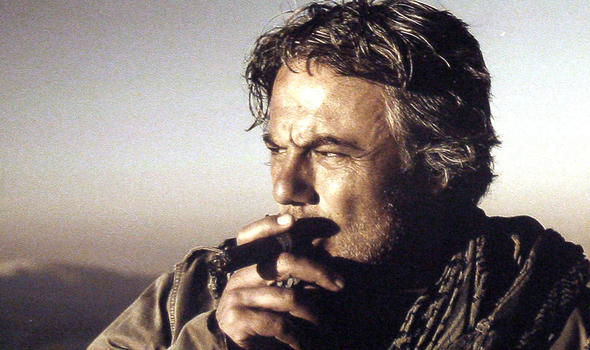
That night, I was introduced to Tala’s husband, Manaf Tlass, as a “Syria researcher” working on the “Syrian economy.” At the time, Manaf was one of the regime’s top strongmen, working side by side with Mahir al-Asad (the president’s younger brother) as a commander of elite units in the Republican Guard. It was too dark to make out his features. Most of what I saw was the big round flame at the tip of the cigar that seemed surgically attached to his fingers, if not his lips. He asked a few questions. I answered politely. I knew who he was, and thought it was odd that he mingled so freely.
That was it.
On a subsequent trip, at a birthday party in another of those restaurants, I met Manaf again. This time, he asked someone to ask me to come to his table. Usually, that is not a good thing. I obliged, and he took me aside, asking more questions about regional politics and, then, Syria. I found myself discussing post-colonial development with Manaf and his cigar as Stardust’s remix of “Music Sounds Better with You” played in the background. We talked for a few minutes before I excused myself. Later, as he said his goodbyes to his fellow diners, Manaf approached me and asked me to come to his home office in Mazzeh. I was not asked for my cell phone number but was given an office number to confirm the visit.
I was in a tricky position. My research on Syrian political economy examined state-business networks and traced the deepening relationships between state officials and businessmen.
Manaf Tlass was no businessman, having gone the route of his father, Mustafa, the former defense minister who was a close confidante of Hafiz al-Asad for decades. But his brother, Firas, was. Many offspring of the Syrian leadership had gone the entrepreneurial route, and by the late 1980s they had become big businessmen, often with the aid of connections to consummate insiders like Manaf. Firas Tlass is said not to have exploited his connections as much as others, but the fact is that policymakers and policy takers in Syria were increasingly bound together. And there was another model that proved even more efficient at generating profits: The state official himself was a businessman in his capacity as a private citizen, creating what I called “fusion” between the public and private sectors.
For about ten years, I had been trying to study the development of capitalism in Syria, how it sustained authoritarianism and the attendant social machinations. I was not interested in exposing this or that character, as the “fusion” formula is not unique to Syria, and the Syrian regime was in no need of further unmasking. I purposely avoided talking to government and regime figures because the returns from such interviews are usually meager, and there is always the risk of raising suspicions about one’s research. The last systematic fieldwork by a Western scholar on Syria’s political economy had been carried out by Volker Perthes a decade earlier, producing the staple book The Political Economy of Syria Under Asad (1995). It was not a walk in the park for Volker, and nor was it for me. Though Firas Tlass, the fast-growing tycoon, was quite accessible, I elected not to speak with him, relying instead on an interview Joseph Samaha, one of the best journalists of our time, had conducted for al-Hayat in 1999. But now Firas’ brother, on the other side of the state-business equation, wanted to speak with me. It was not easy to say yes or no.
Manaf was quite candid and seemed more interested in conversation than surveillance. Still, I hesitated for some time before friends advised me not to skip out on the meeting.
At the time, Manaf was a rising star, quite close to the Asad family. Regime strongmen had regained their swagger after several years of “consolidation” that took place after the succession of Bashar to the presidency. It was a day to begin making Syria anew, with a younger and more contemplative, though less seasoned, leadership. The theme was less “reform” than “modernization,” less “change” than “continuity.” There was an atmosphere of cautious openness.
I walked into Manaf’s office and was politely asked to sit. I politely turned down the offer of a cigar. After some back-and-forth about my heritage (my mother is Syrian), Manaf asked me to share with him my frank thoughts about the Syrian regime, without stammering or self-censorship. It was surreal.
I was not unafraid. But I spoke forthrightly because it was the only thing I could do, and, honestly, because Manaf’s bearing was anything but intimidating or reminiscent of the stereotypical interrogator.
Taking care to be respectful, I shared my views on the limits of authoritarianism in time and space, and the limits of Syria’s regional role in the absence of more inclusive power-sharing formulas inside the country. When Manaf asked about corruption, I made sure to repeat, almost verbatim, the words of ‘Arif Dalila, an independent Marxist economics professor at the University of Damascus who was incarcerated in 2001 for his anti-regime views, during the post-“Damascus spring” round of arrests. ‘Arif was one of the most courageous people around — a mentor and, later, a friend. In 1998-1999, under Asad senior, mind you, when mosquitoes shuddered at the thought of landing on a regime member’s nose, he would walk down the aisle of the packed auditorium at the Tuesday Economic Forum. He would take the stage and dismantle the state’s rhetoric regarding the causes of Syria’s economic decline after the mid-1990s. He would say to rooms crawling with informants (and worse), and I quote from my notes:
Corruption is not a moral or ethical problem at heart, and it does not start at the moment when a policeman or border officer asks for a bribe. It is a systemic practice with a social, economic and political material base intended to sustain the entire political formula in this country…. We should not blame the poor officer who cannot make ends meet on his salary, but instead we should demand accountability at the highest level possible in this regime.
Talk about goose bumps. It was scary just to witness those words uttered. The room would fall silent, as though everyone had literally died, but everyone was actually feeling hyper-alive as ‘Arif would yifish al-ghill (redeem) the listeners in the most visceral way. Almost immediately after he spoke, over half of the audience would leave. It was one of the reasons why the Forum’s general secretary, Farouq al-Tammam, would beg ‘Arif to postpone his intervention until the end, knowing that everyone would stay to hear him. ‘Arif was not just a political economist or regime critic. He was a visionary, versed in the intricacies of global politics, and someone who would tear up when discussing the loss of Palestine by Arab regimes, including Syria’s.
Manaf listened without interrupting, and without letting go of his cigar. He then responded for 20 minutes, challenging me mildly on the feasibility of genuine reform in Syria and giving his views on democracy, the United States and regional politics. He was also forthright. His ideas, however, were underdeveloped or, more precisely, developed in a mind accustomed to wielding excessive power. [Continue reading…]
In Syria, ‘Jihad is not al Qaeda’
Media references to jihadists in Syria typically portray them as a predominantly foreign, necessarily extremist, and largely opportunistic element in the uprising. Their intent, we are so often told, is to hijack the revolution. A report for Time magazine by Rania Abouzeid presents a much more nuanced picture.
In late January, the jihadist group Jabhat al-Nusra li Ahl Ash-Sham, or the Support Front for the People of Syria, announced its formation and its goal to bring down the regime of President Bashar Assad. In the months since, it has claimed responsibility for many of the larger, more spectacular bombing attacks on Syrian state security sites, including a double suicide car bombing in February targeting a security branch in Aleppo that left some 28 dead.
Little is known about the shadowy group, beyond that it is headed by someone using the nom de guerre Abu Mohammad al-Golani (Golani is a reference to Syria’s Golan Heights, occupied by Israel.) Some say the group is a regime creation, to prove Assad’s assertion that he is fighting terrorists, while others say it is an offshoot of the al-Qaeda group the Islamic State of Iraq.
A foot soldier in the movement told TIME that it is neither. “We are just people who follow and obey our religion,” the young man, Ibrahim said. “I am a mujahid, but not al-Qaeda. Jihad is not al-Qaeda.”
It took weeks of negotiations to secure an interview with a member of the movement, the first time anyone from the group has talked to the media. Higher-ups in the Jabhat declined to be interviewed but agreed to let Ibrahim, a 21-year-old Syrian, be interviewed.
The Jabhat has a presence in at least half a dozen towns in Idlib province, as well as elsewhere across the country, including strong showings in the capital Damascus and in Hama, according to the Jabhat member and other Islamists who are in contact with senior members of the group.
Bespectacled, with a wispy beard and thin mustache, Ibrahim said he joined the group eight months ago. He was recruited by his cousin Ammar, the military operations commander for their unit and a Syrian veteran of the Iraq war who fought alongside his Sunni co-religionists against the American invaders. (Ammar declined to be interviewed.)
Dressed in a deep aqua blue zippered track top and black track pants that were rolled up above his ankles, the young man did not look as menacing as some of his colleagues, with their short pants and above-the-ankle-galabiyas and long beards. In addition to his self-identification as a member of the Jabhat, several Free Syrian Army rebels who know him — as well as townsfolk who know his conservative Sunni family — confirmed that Ibrahim is part of the extremist group.
“Our specialty is explosives, (improvised explosives) devices. Most of our operations are explosions using (IEDs), placing them on roads, blowing up cars by remote detonation,” Ibrahim said. On the night TIME spoke to him, several members of the Jabhat were in a remote field, in the final stages of testing a homemade rocket devised with the help of Syrian veterans of the Iraq war.
The device was a copper-lined shaped charge that could penetrate armor. When the device ignited, the copper element superheated enough to pierce a tank. “It’s a very simple idea, but it works,” Ibrahim said, adding that the device was the work of the Jabhat’s engineering branch. “There’s a killing branch, I’m in the killing and chemical branch,” he said, explaining the chemical branch was responsible for obtaining the fertilizers and other components of the IEDS.
There were 60 men in Ibrahim’s unit, he said, headquartered in a nondescript building that flew two white flags bearing a stylized Muslim Shahada — ‘There is no God but God and Mohammad is the messenger of God.” (…[I]t’s more common to see the Shahada printed in white on a black background. The local printer, a sympathizer, said he reversed the colors “so that people don’t think we have al-Qaeda here.”)
The Jabhat members maintain a low profile, and keep to themselves, townsfolk said, adding that they rarely ventured outside their outpost except to head to battle. “The shabab (young men) prefer to remain in the shadows, unseen, they won’t come forward,” Ibrahim said. Their low profile also enabled some members “not known to the security forces” to pass through checkpoints, especially in and around Damascus and the northern commercial hub of Aleppo, which is currently facing aerial bombardment from Assad’s forces as well encirclement by an approaching armored column. The secrecy extended to the group’s members. “We don’t really like to accept people we don’t know. We don’t need foreigners,” Ibrahim said, although he admitted there were some foreign jihadists in his group from Kuwait, Libya and Kazakhstan.
He was fighting because he wanted to “live in freedom.” His idea of freedom, however, was an Islamic state, free of “oppression” by members of President Assad’s privileged sect, the Alawites. “The Alawites can do what they want and we have no say, that’s why we are fighting, because we are oppressed by them,” he said. “We are nothing to them. They are the head, and we are nothing.”
In another town in northern Idlib, another jihadist — belonging to a different group — also shared Ibrahim’s goal of an Islamic state. “Abu Zayd,” is a 25-year-old Sharia graduate who heads one of the founding brigades of Ahrar al-Sham, a group that adheres to the conservative Salafi interpretation of Sunni Islam.
He said minorities had nothing to worry about in any future Islamic state, despite the increasingly sectarian nature of some of the violence that has convulsed Syria. “Let’s consider that Syria becomes something other than Islamic,” he said, “a civil state. What is the role of the Alawites in it? What is the position of a Christian, a Muslim in it? They are all under the law, and it will be the same in an Islamic state. We are just exchanging one law for another.”
The young Syrian, with his neatly trimmed beard, dressed in military pants and a blue t-shirt, looked more like a member of the FSA than a Salafist. His facial hair was not fashioned in the manner of some Salafists, who shave their mustaches. (Interestingly, many FSA members have taken to wearing Salafi-style beards while not adopting the ideology. “It’s just a fashion,” one person told me, by way of explanation.)
The Ahrar started working on forming brigades “after the Egyptian revolution,” Abu Zayd said, well before March 15, 2011 when the Syrian revolution kicked off with protests in the southern agricultural city of Dara’a. The group announced its presence about six months ago, he said. Abu Zayd denied the presence of foreigners even though TIME saw a man in the group’s compound who possessed strong Central Asian features. “Maybe his mother is,” Abu Zayd said unconvincingly. “We are not short of men to need foreigners.”
Regardless, foreigners are coming across into Syria. One prominent Syrian smuggler in a border town near Turkey said that he ferried 17 Tunisians across the night before. It was a marked uptick in his business. He said he hadn’t seen many foreign fighters for about a month prior to the Tunisians. “Before that, every day there were new people, from Morocco, Libya, and elsewhere,” he said. (In the course of several hours of waiting to cross back into Turkey, I saw at least a dozen Arabs who were clearly not Syrian, and identified as foreigners by the smuggler.)
It’s unclear how large the Jabhat and Ahrar are, given their shadowy nature, but it’s clear that their activities are becoming more public. Both participate in operations alongside regular FSA units, although some FSA commanders remain suspicious of them and jealous of the deep Gulf pockets funding them. “Where were the Islamists when the revolution started?” is spray-painted on the wall of one town in Idlib. The response, spray-painted beneath it, was equally curt: “In prison.” [Continue reading…]

Video — U.S. policing: Institutionalising brutality?
Mohamed Morsi’s choice of prime minister confirms Egyptian fears
Magdi Abdelhadi writes: Egypt’s first democratically elected president, Mohamed Morsi, has lived up to the worst expectations of him. He may be an experienced old cadre in the Muslim Brotherhood and a dogged parliamentarian, but his choice of prime minister confirms what many suspected: he lacks imagination and flare.
Worse still, he did not seem to have the guts to make a clean break with the old establishment. Perhaps he couldn’t. He has picked a minister from the outgoing cabinet for the post. This being the same cabinet he and his Islamist Justice and Freedom party campaigned against for months, but failed to force from office through a vote of no confidence.
If this is the best he could come up with after weeks of consultations, there’s little reason to get excited about who the new prime minister might select for his cabinet in what was supposed to be Egypt’s first “revolutionary government”.
One way in which Hisham Kandil has made history is by being the youngest man to hold the position of prime minister in the history of Egypt. Another first is that he sports a salafi beard. His facial hair has sparked speculation over whether he is in fact a closet Muslim Brother. But those who harbour such fears forget that the Brothers’ conservative ideology, along with the beard, had become mainstream in Egypt long before the revolution.
Kandil has already said he will keep some ministers from the outgoing government. Few believe it is actually him calling the shots. It’s out of the question that he will choose a new defence minister for example. That post will most likely be kept by the septuagenarian Field Marshal Mohamed Hussein Tantawi, the head of the Supreme Council of the Armed Forces, who has been the not-so-much-behind-the scenes effective ruler of the country since the overthrow of Mubarak last year.
Many will be watching who gets picked to lead the second branch of the coercive machinery of the state, the interior ministry. If Kandil recycles an old police general, then Egypt will be firmly on track to reproduce the old policies that failed to solve its myriad problems, when they weren’t directly contributing to them. [Continue reading…]
The powers that want to choose Assad’s replacement
Have tens of thousands of Syrians sacrificed their lives rising up against Bashar al Assad just so that the U.S. and its allies can have a say in who might replace him? I don’t think so.
There is, the Wall Street Journal reports, a “relative lack of Western options” for Assad’s replacement.
A relative lack? Why should there be any Western options in a choice that belongs to the Syrian people alone?
The Obama administration and officials of some Arab and Western nations are discussing ways to place Syria’s highest-ranking military defector at the center of a political transition in the Arab state, according to U.S. and Middle East officials.
The focus on Brig. Gen. Manaf Tlass, a childhood friend of President Bashar al-Assad, is increasing as hopes fade for prospects that an umbrella resistance group, the Syrian National Council, can galvanize the opposition, the officials said.
Efforts to find a transitional figure who is palatable to the Assad regime’s Russian backers and leading Arab states, as well as to the opposition, have taken on added urgency as rebel fighters make gains in major Syrian cities and more high-level officials defect, the officials said.
The officials said Gen. Tlass is one of the few figures in opposition to the regime who could potentially help restore order in Damascus and secure Syria’s vast chemical-weapons stockpile.
Gen. Tlass was a commander in Syria’s elite Republican Guard before his July 6 defection, and his father served as defense minister under Mr. Assad’s late father, Hafez al-Assad, for 30 years.
He is also, unlike the Assad clan, a Sunni Muslim—which Western officials hope could make him acceptable as a transitional figure to the country’s rebel fighters and opposition leaders, who are also largely from the Sunni sect of Islam.
“It’s too early to say if Tlass will stand the strain and pick up traction or just fade away,” a senior U.S. defense official said. “The next week or two will reveal his credentials and attractiveness to the various components internally and internationally.”
But the focus on Gen. Tlass also underscores the dearth of figures who can present a viable alternative to Mr. Assad. Many in the opposition consider Gen. Tlass and his family too closely tied to the Assads’ repression and corruption to be acceptable to Syrians. They also question his ability to win over members of Mr. Assad’s Alawite sect, which makes up 12% of Syria’s population and appears largely unified behind the regime.
“Someone like Tlass is difficult to sell to the Syrian people,” said Ammar Abdulhamid, an anti-Assad activist based in Washington. “He certainly can’t play any leading role in a transition.”
The relative lack of Western options became clear this week, when the European Union’s foreign ministers shifted from its longtime support of the Syrian National Council, a largely émigré group that Brussels had made an official interlocutor in early 2012. On Monday, EU foreign ministers dropped all reference to the group in its statement on Syria.
A turning point came at the Paris meeting of the Friends of Syria on July 6, a senior European diplomat said, when the SNC seemed to have no response to the EU’s calls for it to broaden its political base. They “just don’t seem to be making progress on this,” the diplomat said.
Gen. Tlass’s flight to Paris this month was cheered in Washington and Brussels as the clearest sign of cracks inside Damascus’s ruling elite. The majority of Syria’s officer corps hails from Mr. Assad’s Alawite sect, an offshoot of Shiite Islam. Gen. Tlass’s defection has been viewed as a potential rallying cry for the Syrian armed forces’ Sunni base to switch sides.
On Tuesday, Gen. Tlass went on television and pledged to facilitate change in his country and promote religious and racial harmony. He spoke from Saudi Arabia, looking slightly ill at ease in an open-neck shirt on the Saudi-owned Al-Arabiya network.
“I speak to you not as an official, but as one of the sons of Syria….One of the sons of the Syrian Arab army that rejects the criminal path of this corrupt regime,” he said.
Arab officials said his appearance in Saudi Arabia showed how the ruling al-Saud family is seeking a role for the Syrian officer. Saudi Arabia is the leading Sunni state backing Syria’s rebels against Mr. Assad, along with Qatar and Turkey.
A senior Arab official said Gen. Tlass’s trip to Saudi Arabia was arranged by the country’s new head of intelligence, Prince Bandar Bin Sultan. Diplomats at Saudi Arabia’s ambassador in Washington weren’t available for comment.
The website of the Saudi-owned Al Arabiya reporting on Tlass’s appearance on its own TV channel said: “The former general was believed to be speaking from Paris.” They also reported: “French officials later confirmed that he was in France.”
Since Tlass was speaking into an Al Arabiya microphone and filmed by an Al Arabiya camera, I’ll assume that Al Arabiya‘s own staff did not need to consult French officials in order to determine whether they were located in Paris or Riyadh. In other words, Al Arabiya knows exactly where Tlass gave the interview, it is only others who believed he was speaking from Paris and the French officials merely confirmed that he was in France prior to giving the interview.
I’m inclined to trust the WSJ‘s sources on the rather significant detail of Tlass’s location.
Here is Tlass making his statement in Arabic. The report below includes quotations:
Al Arabiya reports: Defected Syrian Brigadier-General Manaf Tlas called on Syrians to unite and look towards a post-revolutionary Syria, in a statement broadcast exclusively on Al Arabiya late Tuesday.
“I speak to you as a defected member of the Syrian army, who refuses criminal violence … I speak to you as one of the sons of Syria,” Tlas said, dressed in a light blue shirt with an open collar, his gray hair tussled.
The former general was believed to be speaking from Paris.
“Honorable Syrian army officers do not accept the criminal acts in Syria … Allow me to serve Syria after [President Bashar] al-Assad’s era.
“We must all unite to serve Syria and promote stability in the country, rebuilding a free and democratic Syria.”
“Allow me to call on a united Syria,” Tlas added.
Tlass said the “new Syria … should not be built on revenge, exclusion or monopoly.”
He said he did not blame those troops who have not defected, adding that “whatever mistakes made by some members of the Syrian Arab Army … those honorable troops who have not partaken in the killing … are the extension of the (rebel) Free Syrian Army.”
It was his first public appearance since he left Syria earlier this month. French officials later confirmed that he was in France.
His long silence raised questions about whether he had joined the anti-Assad uprising or merely fled the civil war.
Maybe Tlass could have a role in unifying Syria, but I doubt that his chances of doing so will be enhanced by getting the endorsement of Saudi Arabia’s autocratic rulers.
Saudi Arabia brings back Bandar to manage the Arab Spring
Commenting on Prince Bandar bin Sultan’s appointment as Saudi Arabia’s new intelligence chief, Simon Henderson writes: Bandar used to be one of Saudi Arabia’s flashiest diplomats, a longtime ambassador to the United States renowned for manipulating people and policy in the kingdom’s favor, and sometimes also in favor of the U.S. government. At the very least, his appointment is a reflection of King Abdullah’s concerns about developments in the Middle East, particularly Syria, and the limited talent pool in the House of Saud to meet the challenges. Frankly, it suggests panic in Riyadh.
Where does one start? Bandar certainly used to be a firm pair of hands, but recently that grasp has been shakier. Although Bandar endeared himself to successive U.S. administrations for being able to get things done — as well as the sumptuous parties he hosted at his official residence in Virginia overlooking the Potomac — the prevailing story about him recently has been about his mental state. William Sampson, a (friendly) biographer, noted that Bandar’s “first period of full-blown depression” came in the mid-1990s. Another biographer, David Ottaway, described Bandar as a “more than occasional drinker,” and most conversations about him seemed to revolve around, only partly mischievously, whether he had finished detoxification or not.
In October 2010, the Saudi Press Agency announced that Bandar had returned to the kingdom “from abroad,” to be met at the airport by a bevy of princes. This development prompted me to write a Foreign Policy article making the case that “Bandar is back.”
To my slight embarrassment, Bandar then disappeared from sight. But I wasn’t wholly surprised about last week’s announcement because Bandar has recently reemerged. In June, when his uncle Crown Prince Nayef died, the Saudi Press Agency published a photo of Bandar, saying he offered his condolences. A week ago, when Palestinian President Mahmoud Abbas visited Jeddah, Bandar was also listed as attending his audience with King Abdullah.
Although the kingdom’s main obsession is Iran, its immediate pre-occupation is Syria. On that issue, Bandar may indeed be the man for the moment. Over the years, he has acquired a reputation for discreet diplomacy and intrigue in both Syria and Lebanon. According to a source close to the ruling family, King Abdullah regards Bandar, who bad-mouthed the then crown prince during his tenure as ambassador to the United States, with caution. At one point, Abdullah went so far as to take Bandar to the side and tell him: “I know you do not represent me in Washington.”
But Abdullah still recognizes Bandar’s talents. Although Abdullah is often depicted as a Syriaphile, the monarch changed his attitude, especially after the 2006 Israel-Lebanon war, when Syrian President Bashar al-Assad castigated his fellow Arab leaders as “half-men” for their failure to support Hezbollah.
Another more recent example of Saudi willingness to play in Syrian politics was the welcome that Bashar’s uncle, Rifaat, received in Riyadh when coming to pay his respects last month after Nayef’s death. Rifaat has lived in Paris since 1984, having tried and failed to stage a coup after President Hafez al-Assad, his brother and Bashar’s father, fell ill. Rifaat is related to King Abdullah by marriage — one of Rifaat’s wives was a sister of one of Abdullah’s wives, the mother of deputy foreign minister Prince Abdulaziz bin Abdullah. The closeness between Rifaat and Abdullah is more than just kinship: They worked together in the early 1980s when Rifaat was leading the Defense Companies, Syria’s praetorian guard, and Abdullah was commander of the Saudi Arabian national guard.
However the kingdom may be adjusting its Syria policy, there is no denying that the General Intelligence Directorate (GID), the Saudi CIA, is badly in need of a shakeup. Its recent record is, to say the least, mixed: Shortly before the 9/11 attacks, Prince Turki al-Faisal, the kingdom’s chief interlocutor with the then Taliban regime in Afghanistan, “was relieved of the post at his [own] request.” In Ghost Wars, his Pulitzer Prize-winning account of the CIA and Osama bin Laden, Steve Coll wrote: “Turki’s vast personal riches . . . bothered some of his rivals in the royal family. They felt the Saudi intelligence department had become a financial black hole. . . . Turki’s rivals clamored for accountability at the [General Intelligence Department].”
Both Muqrin and Nawaf, the men who served as Saudi intelligence chiefs between Turki and Bandar, lacked flair. Muqrin, who has now been shunted into an undefined advisory role, trained as a fighter pilot, like Bandar. But his primary credential for the job was that he was loyal to King Abdullah. His other qualification was that, like the king, he was not a Sudairi — the largest group of seven full brothers who have dominated Saudi royal politics for decades and still do, despite the passing of three of them. Nawaf, who took over from Turki, was even more of an Abdullah yes-man. The fiction that he was leading Saudi foreign intelligence was unsustainable after he suffered a stroke during the 2002 Beirut Arab summit. He is still alive, but confined to a wheelchair.
Even if Bandar has regained some of his previous form, the troubles of the Middle East, from a Saudi perspective, are surely more than can be handled by one man. In Syria, Riyadh wants Bashar out but does not want the contagion to spread to Jordan. To Riyadh’s fury, it also finds itself competing for influence in Syria with tiny Qatar, which appears to be just as generous with money and weapons but much far more nimble in responding to events on the ground. [Continue reading…]
Planning for the day after the fall of Assad
The Palestinian intellectual and former member of Israel’s Knesset, Azmi Bishara, writes: 1) After a legendary show of resistance in the face of an unprecedented onslaught of savagery, the Syrian revolutionaries can now almost touch their main aim: a change of regime. As I have said elsewhere, a lack of wisdom at this stage could lead to a complete destruction of the very country of Syria.
2) This progress would not have been made without the sacrifices of millions of Syrians, and tens of thousands of the armed rebels. Yet it must be said that some of the members of these armed groups used the opportunity to carry out personal vendettas, and others are clearly infiltrators into the Syrian cause. It is patently clear that foreign operatives have exploited the revolutionaries’ needs for financial and logistical support, not to mention their understandable grievances against the regime, to try and effect the course of events. In this regard, the assassinations of six Syrian scientists (including a missile expert) is a threatening development. The same can be said of the attempts of Iraqi Kurdish leader Masoud Barzani to try and control some of the Kurdish-populated areas of Syria; bear in mind that the Syrian Kurds’ National Council is now well armed, whilst not having taken part in the revolution itself. We cannot assume that the Israelis and the CIA will stand backk and just watch. (Put another way: was the removal of the former head of the Saudi Arabian intelligence service a mere coincidence?) The recent statements made by Israeli and American statesmen on the question of Syria’s chemical weapons is to be taken seriously: their efforts are already underway. Anybody who doesn’t understand this point, clearly does not understand the way in which world powers and their regional counterparts attempt to achieve their aims, and does not understand the reality of the enmity [between the Israelis and the other countries in the region], nor does that person understand the strategic significance of Syria.
3) The Syrian revolutionaries are true patriots, and this is reflected in their movement. This truth does not change another fact, however: that there is no single, unified, country-wide military chain of command for the armed wing of the Syrian revolution. Added to this is the very real danger of sectarian bloodletting along the country’s fault lines. [Continue reading…]
Liberated Kurdish cities in Syria move into next phase
The Kurdish site Rudaw reports: Syrian governmental forces have retreated from the Kurdish regions of Syria without a fight; the liberated cities are now being ruled evenly by the People’s Council of Syrian Kurdistan (PYD) and the Kurdish National Council (KNC).
According to the information obtained by Rudaw, the Kurdish cities of Kobane, Derek, Amoude, Efrin and Sari Kani have fallen under the control of Syrian Kurdish forces.
The city of Kobane was the first Kurdish city to be liberated last Thursday, 17 months after the revolution against the regime of Syrian President Bashar al-Assad began.
The KNC and PYD agreed to jointly control the liberated Kurdish cities in a deal made in Erbil on July 11, under the supervision of Kurdistan Region President Massoud Barzani.
“According to the treaty of Erbil which was signed by the KNC and PYD, any administrative vacuum in the Kurdish cities of Syria will be occupied evenly — 50/50 — by these two signatories. These two groups will continue ruling the Kurdish regions until an election is carried out,” said Nuri Brimo, a spokesperson of the Democratic Kurdish Party of Syria.
The national flag of Kurdistan and the flag of the PKK – which the PYD is affiliated with — are now being raised over the majority of government and public buildings.
Bill Moyers and Chris Hedges on capitalism’s ‘sacrifice zones’
There are forgotten corners of this country where Americans are trapped in endless cycles of poverty, powerlessness, and despair as a direct result of capitalistic greed. Journalist Chris Hedges calls these places “sacrifice zones,” and joins Bill this week on Moyers & Company to explore how areas like Camden, New Jersey; Immokalee, Florida; and parts of West Virginia suffer while the corporations that plundered them thrive.
“These are areas that have been destroyed for quarterly profit. We’re talking about environmentally destroyed, communities destroyed, human beings destroyed, families destroyed,” Hedges tells Bill. “It’s the willingness on the part of people who seek personal enrichment to destroy other human beings… And because the mechanisms of governance can no longer control them, there is nothing now within the formal mechanisms of power to stop them from creating essentially a corporate oligarchic state.”
The broadcast includes images from Hedges’ collaboration with comics artist and journalist Joe Sacco, Days of Destruction, Days of Revolt, which is an illustrated account of their travels through America’s sacrifice zones. Kirkus Reviews calls it an “unabashedly polemic, angry manifesto that is certain to open eyes, intensify outrage and incite argument about corporate greed.”
A columnist for Truthdig, Hedges also describes the difference between truth and news. “The really great reporters — and I’ve seen them in all sorts of news organizations — are management headaches because they care about truth at the expense of their own career,” Hedges says.
(H/t Pulse)
NYPD ‘consistently violated basic rights’ during Occupy protests – study
The Guardian reports: The first systematic look at the New York police department’s response to Occupy Wall Street protests paints a damning picture of an out-of-control and aggressive organization that routinely acted beyond its powers.
In a report that followed an eight-month study (pdf), researchers at the law schools of NYU and Fordham accuse the NYPD of deploying unnecessarily aggressive force, obstructing press freedoms and making arbitrary and baseless arrests.
The study, published on Wednesday, found evidence that police made violent late-night raids on peaceful encampments, obstructed independent legal monitors and was opaque about its policies.
The NYPD report is the first of a series to look at how police authorities in five US cities, including Oakland and Boston, have treated the Occupy movement since it began in September 2011. The research concludes that there now is a systematic effort by authorities to suppress protests, even when these are lawful and pose no threat to the public.
Sarah Knuckey, a professor of law at NYU, said: “All the case studies we collected show the police are violating basic rights consistently, and the level of impunity is shocking”.
To be launched over the coming months, the reports are being done under the Protest and Assembly Rights Project, a national consortium of law school clinics addressing America’s response to Occupy Wall Street.
The NYPD appears to be the worst offender, in large part because it has made little attempt – unlike Oakland, for example – to reassess its practices or open itself up to dialogue or review. [Continue reading…]