Memorial Day: Among post-9/11 veterans, deepening antiwar sentiment

Here are some numbers to remember this Memorial Day: Although only 1 percent of Americans have served during the wars in Iraq and Afghanistan, former service members represent 20 percent of suicides in the United States — 18 veterans kill themselves everyday. Close to a million veterans currently have pending disability claims.

Christian Science Monitor reports: Despite the end of the Iraq war and the scheduled drawdown in Afghanistan, this Memorial Day arrives against a backdrop of deepening – and some say more troublesome – antiwar sentiment among military veterans.

One of the most vivid and replayed images of protesters at the NATO summit last weekend in Chicago was a group of some 40 vets lined up to toss their war medals over the chain link fence to protest what former naval officer Leah Bolger calls “the illegal wars of both NATO and America.”

According to a recent Pew Research Center study, 33 percent of post-9/11 veterans say that neither the war in Iraq nor in Afghanistan “were worth the cost,” and this among a highly motivated cohort who chose to serve.

What this means, says retired US Army Col. Ann Wright, who resigned from a State Department post in 2006 over US policies in Iraq, is that there is a widening gap between the government, military policies, and the soldiers that carry them out.

“Military personnel know America will always have a military, but there is growing concern over the way it is being used,” says the 29-year veteran, adding that an increasing list of concerns include “the use of torture, illegal detentions, and both soldiers and the public being lied to about the actual reasons for going into combat.”

Facebooktwittermail

Why children will become crippled, thanks to the CIA

Glenn Greenwald writes: Americans of all types — Democrats and Republicans, even some Good Progressives — are just livid that a Pakistani tribal court (reportedly in consultation with Pakistani officials) has imposed a 33-year prison sentence on Shakil Afridi, the Pakistani physician who secretly worked with the CIA to find Osama bin Laden on Pakistani soil. Their fury tracks the standard American media narrative: by punishing Dr. Afridi for the “crime” of helping the U.S. find bin Laden, Pakistan has revealed that it sympathizes with Al Qaeda and is hostile to the U.S. (NPR headline: “33 Years In Prison For Pakistani Doctor Who Aided Hunt For Bin Laden”; NYT headline: “Prison Term for Helping C.I.A. Find Bin Laden”). Except that’s a woefully incomplete narrative: incomplete to the point of being quite misleading.

What Dr. Afridi actually did was concoct a pretextual vaccination program, whereby Pakistani children would be injected with a single Hepatitis B vaccine, with the hope of gaining access to the Abbottabad house where the CIA believed bin Laden was located. The plan was that, under the ruse of vaccinating the children in that province, he would obtain DNA samples that could confirm the presence in the suspected house of the bin Laden family. But the vaccine program he was administering was fake: as Wired‘s public health reporter Maryn McKenna detailed, “since only one of three doses was delivered, the vaccination was effectively useless.” An on-the-ground Guardian investigation documented that ”while the vaccine doses themselves were genuine, the medical professionals involved were not following procedures. In an area called Nawa Sher, they did not return a month after the first dose to provide the required second batch. Instead, according to local officials and residents, the team moved on.”

That means that numerous Pakistani children who thought they were being vaccinated against Hepatitis B were in fact left exposed to the virus. Worse, international health workers have long faced serious problems in many parts of the world — including remote Muslim areas — in convincing people that the vaccines they want to give to their children are genuine rather than Western plots to harm them. These suspicions have prevented the eradication of polio and the containment of other preventable diseases in many areas, including in parts of Pakistan. This faux CIA vaccination program will, for obvious and entirely foreseeable reasons, significantly exacerbate that problem.

As McKenna wrote this week, this fake CIA vaccination program was “a cynical attempt to hijack the credibility that public health workers have built up over decades with local populations” and thus “endangered the status of the fraught polio-eradication campaign, which over the past decade has been challenged in majority-Muslim areas in Africa and South Asia over beliefs that polio vaccination is actually a covert campaign to harm Muslim children.” She further notes that while this suspicion “seems fantastic” to oh-so-sophisticated Western ears — what kind of primitive people would harbor suspicions about Western vaccine programs? – there are actually “perfectly good reasons to distrust vaccination campaigns” from the West (in 1996, for instance, 11 children died in Nigeria when Pfizer, ostensibly to combat a meningitis outbreak, conducted drug trials — experiments — on Nigerian children that did not comport with binding safety standards in the U.S.).

When this fake CIA vaccination program was revealed last year, Doctors Without Borders harshly denounced the CIA and Dr. Afridi for their “grave manipulation of the medical act” that will cause “vulnerable communities – anywhere – needing access to essential health services [to] understandably question the true motivation of medical workers and humanitarian aid.” The group’s President pointed out the obvious: “The potential consequence is that even basic healthcare, including vaccination, does not reach those who need it most.” That is now clearly happening, as the CIA program “is casting its shadow over campaigns to vaccinate Pakistanis against polio.” Gulrez Khan, a Peshawar-based anti-polio worker, recently said that tribesman in the area now consider public health workers to be CIA agents and are more reluctant than ever to accept vaccines and other treatments for their children. [Continue reading…]

In March, OnIslam.net reported: The killing of Osama bin Laden in a US raid following a fake vaccination campaign to track Al-Qaeda leader is casting its shadow over campaigns to vaccinate Pakistanis against polio.

“They (tribesmen) consider us CIA agents, who under the guise of anti-polio campaign, are there to look for other Al-Qaeda and Taliban leaders,” Gulrez Khan, a Peshawar-based anti-polio worker, told OnIslam.net.

The government and NGOs have launched campaigns to vaccinate residents of north-western Pakistan against polio.

But the campaigns have been resisted by residents, who are worried that the campaigns are only meant to hunt down Taliban tribesmen.

“It’s been over ten months since the Al-Qaeda Chief Osama Bin Laden is dead, but his ghost is still haunting our efforts not only to persuade the people in the country’s northwestern parts, particularly in the tribal belt, to get their kids vaccinated, but also to move freely,” Khan said.

Facebooktwittermail

When the drone of death haunts everyday life: How America terrorizes the people of Waziristan

If the average American pauses to consider what it’s like living in the vicinity of missile attacks launched from Predator drones, I expect that the popular conception is of a sudden strike that seemingly comes out of nowhere. “You will never see it coming,” President Obama jokes.

Administration officials sell remote warfare as military precision at its most advanced, as though innocent victims are a rarity that barely merits attention. In a speech he delivered at the end of April, White House Counter Terrorism adviser John Brennan said:

With the unprecedented ability of remotely piloted aircraft to precisely target a military objective while minimizing collateral damage, one could argue that never before has there been a weapon that allows us to distinguish more effectively between an al-Qaida terrorist and innocent civilians.

Yet neither Brennan nor any other administration official talks about what it means to live with drones ever-present — what it means for the drone of death to become a background noise that haunts everyday life.

Clive Stafford Smith traveled to Peshawar in Pakistan to hear some of the victims of Obama’s war describe the waking nightmare in which a drone attack is never far away.

Rasul Mana comes from the village of Sirkut Burakhel Supulga in Waziristan. As we meet, he produces from his pocket a sheet of ES-PRAMCIT (Escitalopram), an anti-stress drug that is manufactured in Karachi. There is only one left in the packet of eight.

I come from the village of Sirkut Burakhel Supulga. There are around 40 houses in the village, with perhaps a total of population of 3000 people. I know that’s an average of 75 people crammed into each compound. That’s the way it is. We all live with extended families.

Drones have had a great effect on me. Eighteen people have been killed by them in my village alone. When the drone is 5 km away the sound is very different. It sounds like a missile. As they come closer, it turned into a repetitive humming. Bangana is the word we use for drones. It means bee in Pashtu. I first heard that term in 2005, and the killer bees have been all over us ever since.

The kids know what the voice of the drone now. Every day we hear the voice of the drones at least six or seven times. We listen for the voice 24 hours a day. We are afraid at night as we lie in our beds.

The drones are going around and around over our heads. There may be four or five at any given time. They are normally very high, but sometimes they come down if there is a dust storm or it is cloudy. They also tend to come down lower to attack, which is when you get very scared.

When the missile is launched it makes a loud noise – zzhhooo – as it drops onto its target.

Many of the strikes are in the black of night. We run to where the attack has happened, we see people dead and crying in pain. No matter what time of night, the children will all be awake and crying. When we look for the injured, or pick up the pieces of the dead bodies, we know that the Americans may do another attack. It’s called a Good Samaritan attack, aimed at anyone who tries to help the injured, as they’re assumed to be friends of the original victims, who are themselves assumed to be militants.

People curse the Americans, calling on God to destroy them with flood, lightening, pestilence or any natural disaster.

The Americans put GPS tags in places. Spies put them on their enemies, just people for whom they have animosities. The GPS is half the size of a finger. We call it a Sim card. Something like a UV light comes out of it. The spy sends a note via a satellite phone that the target is tagged.

And then death descends. [Continue reading…]

Facebooktwittermail

Drones’ new weapon: PR

Jefferson Morley writes: Stung by mounting hostility from the left and right, America’s drone industry is fighting back.

“We’re going to do a much better job of educating people about unmanned aviation, the good and the bad,” said Michael Toscano, president of the Association of Unmanned Vehicle Systems International, the industry’s trade group in Washington. “We’re working on drafting the right message and how to get it out there.”

The P.R. blitz comes after drones suffered a round of negative attention last week. Conservative columnist Charles Krauthammer called for a ban on drones in U.S. airspace, and two other conservative commentators endorsed the idea of shooting down unmanned aircraft flown by U.S. law enforcement agencies. (Opposition to the U.S. government’s deployment of unmanned vehicles had previously come from left-liberal groups concerned about civilian casualties in the drone war in Pakistan and potential threats to civil liberties at home.) The nation also witnessed drone “scares”: An unidentified flying object nearly collided with a plane over Denver, and rumors circulated of a surveillance drone flying near the NATO summit in Illinois.

After issuing a statement denouncing Krauthammer’s remarks as “irresponsible” and “dangerous,” Toscano said the AUVSI would go on the offensive against critics. While the strategy is still being shaped, Toscano made it sound like something straight out of a crisis-management textbook — or Orwell. The AUVSI wants to bombard the American public with positive images and messages about drones in an effort to reverse the growing perception of the aircraft as a threat to privacy and safety. [Continue reading…]

Facebooktwittermail

Right-wing billionaires behind Mitt Romney

Tim Dickinson writes: Presidential politics has always been a rich man’s game. But now, thanks to the Supreme Court ruling in Citizens United that upended decades of limits on campaign donations, financing a presidential race is the exclusive domain of the kind of megadonor whose portfolios make Mitt Romney look middle-class. “I have lots of money, and can give it legally now,” Texas billionaire and top GOP moneyman Harold Simmons recently bragged to The Wall Street Journal. “Just never to Democrats.”

In past elections, big donors like Simmons gave millions for advocacy groups like Swift Boat Veterans for Truth. By law, such groups were only allowed to run issue ads – but instead they directly targeted John Kerry, drawing big fines from the Federal Elections Commission. Now, with the blessing of the Supreme Court, the wealthy can legally hand out unlimited sums to groups that openly campaign for a candidate, knowing that their “dark money” donations will be kept entirely secret. The billionaire Koch brothers, for instance, have reportedly pledged $60 million to defeat President Obama this year – but their off-the-book contributions don’t appear in any FEC filings.

Even more money from megadonors is flowing into newly created Super PACs, which, unlike advocacy groups, can spend every cent they raise on direct attacks on an opponent. Under the new rules, the richest men in America are plying candidates with donations far beyond what Congress intended. “They can still give the maximum $2,500 directly to the campaign – and then turn around and give $25 million to the Super PAC,” says Trevor Potter, general counsel of the Campaign Legal Center. A single patron can now prop up an entire candidacy, as casino magnate Sheldon Adelson did with a $20 million donation to the Super PAC backing Newt Gingrich.

The undisputed master of Super PAC money is Mitt Romney. In the primary season alone, Romney’s rich friends invested $52 million in his Super PAC, Restore Our Future – a number that’s expected to more than double in the coming months. This unprecedented infusion of money from America’s monied elites underscores the radical transformation of the Republican Party, which has made defending the interests of 0.0001 percent the basis of its entire platform. “Money buys power,” the Nobel Prize-winning economist Paul Krugman observed recently, “and the increasing wealth of a tiny minority has effectively bought the allegiance of one of our two major political parties.” In short, the political polarization and gridlock in Washington are a direct result of the GOP’s capitulation to Big Money.

That capitulation is evident in Romney’s campaign. Most of the megadonors backing his candidacy are elderly billionaires: Their median age is 66, and their median wealth is $1 billion. Each is looking for a payoff that will benefit his business interests, and they will all profit from Romney’s pledge to eliminate inheritance taxes, extend the Bush tax cuts for the superwealthy – and then slash the top tax rate by another 20 percent. Romney has firmly joined the ranks of the economic nutcases who spout the lie of trickle-down economics. “Support from billionaires has always been the main thing keeping those charlatans and cranks in business,” Krugman noted. “And now the same people effectively own a whole political party.” [Continue reading…]

Facebooktwittermail

Why private equity firms like Bain really are the worst of capitalism

Josh Kosman writes: By placing his career at Bain Capital at the center of his presidential campaign, former buyout artist Mitt Romney has put the private equity industry on trial.

About time.

Romney wants us to believe that critics of private equity are against capitalism. They’re not. They’re against a predatory system created and perpetuated by Wall Street solely to pump its own profits.

Defenders of private equity say firms like Bain, which Romney co-founded in 1984, exist to build businesses, creating jobs and prosperity all the while. “We started Staples, we started the Sports Authority, we started Bright Horizons children centers,” Romney said at one of the GOP presidential debates last year. “Heck, we even started a steel mill in a farm field in Indiana. And that steel mill operates today and employs a lot of people.”

And Romney also touts Bain’s success at taking struggling companies and putting them on a path to profitability. “Sometimes we acquired businesses and tried to turn them around — typically effectively — and created tens of thousands of new jobs,” he said at the same debate.

Romney’s whole election pitch turns on the story he tells about his time at Bain, which goes like this: I, Mitt, have a record of building businesses and creating jobs, and what I did for floundering companies, I’ll do for the U.S. economy.

There’s only one problem with Romney’s story: It doesn’t describe most of what private equity firms actually do. The companies Romney holds up as successes – Staples, Sports Authority et al. – were not Bain private equity deals; they were venture capital investments in companies that Bain neither owned nor ran. All well and good: Venture capital is a good thing – essential for funding the growth of new and developing companies. But Romney didn’t make his fortune through venture capital­; he made it through private equity – and private equity, as President Obama pointed out this week, is a very different proposition. “Their priority is to maximize profits,” the president said of PE firms, and “that’s not always going to be good for businesses or communities or workers.”

Here’s what private equity is really about: A firm like Bain obtains cheap credit and uses it to acquire a company in a “leveraged buyout.” “Leverage” refers to the fact that the company being purchased is forced to pay for about 70 percent of its own acquisition, by taking out loans. If this sounds like an odd arrangement, that’s because it is. Imagine a homebuyer purchasing a house and making the bank responsible for repaying its own loan, and you start to get the picture. [Continue reading…]

Facebooktwittermail

Iran nuke talks: Don’t blow it

John Tirman writes: The news from Baghdad is good. The nuclear talks between Iran and the so-called P5+1 countries paused somewhat amicably, with signs of progress and a schedule to meet in a month in Moscow. The question is, as always, how many ways can this progress be derailed?

Details of what transpired in Baghdad will leak out over the coming days, but chief negotiator Catherine Ashton’s official statement at the end of talks Thursday made it clear that both sides regard the negotiations as promising and will return to the bargaining table very quickly.

The U.S. and its negotiating partners (China, Russia, U.K., France, and Germany) seek to rein in Iran’s enrichment program, by which uranium is brought closer to weapons grade. Iran’s position is to link any concessions on enrichment to the lifting of U.N. and U.S. sanctions, which have become very damaging to Iran’s economy. There are many more details, of course, but that is the essence of any deal.

Critics of the talks, which include Mitt Romney and Benjamin Netanyahu, insist that Iran is only delaying to build a nuclear weapon, but that old dog won’t hunt. Negotiations on complex technical issues, where suspicion and national pride are in play, take some time. There are reasonable proposals on the table, and an agreement could be within reach.

The question is, who will try to be the spoiler? Israel is the top candidate for that role. It uses the Iran issue for domestic politics and to manipulate the United States. It distracts from their 45-year occupation of Palestine and their unwillingness to negotiate for a Palestinian state. Fortunately, a number of high-level Israelis have decried Netanyahu’s Iran gambit. And Israel does not have the military prowess to eliminate Iran’s nuclear program by its oft-repeated threat to bomb.

Often forgotten in the hoopla about Iran’s program is that U.S. intelligence agencies have declared twice, in 2007 under President Bush and again 12 weeks ago, that Iran does not have a nuclear-weapons program. Israel, by contrast, is said to have as many as 200 nuclear weapons. India and Pakistan’s move to nuclear-weapons status in the 1990s was punished with a slap on the wrist compared with Iran’s non-program.

Even more vexing is that the Nuclear Non-Proliferation Treaty (NPT) obligates all nuclear powers to move toward disarmament, a legal obligation that the five nuclear powers represented in the Iran negotiations (all but Germany) have quite obviously ignored. (There is an even more taboo topic, however — which is what would happen if Iran did get a bomb or two or three, which is almost certainly not much at all; they would be completely deterred by the U.S. and Israel from ever using them. But as my friend Hugh Gusterson has argued, we are in the grip of “nuclear orientalism,” imputing to Iranians a savagery and irrationality that is baseless but convenient.) [Continue reading…]

Facebooktwittermail

How to strike a deal with Iran

Stephen Walt writes: Will the U.S. and the rest of the P5+1 manage to turn a potential diplomatic breakthrough with Iran into another counterproductive failure? It’s too soon to tell, but betting on failure has been the smart wager in the past.

The Baghdad talks between Iran and the P5+1 apparently got a lot of serious issues on the table, but didn’t achieve a breakthrough, let alone an agreement. The main reason is the hardline position adopted by the United States and its partners, and especially our refusal to grant any sort of sanctions relief. The parties will resume discussions in Moscow in June.

From a purely strategic point of view, this situation is pretty simple. Iran is not going to give up its right to enrich uranium. Period. If the West insists on a full suspension, there won’t be a deal. It’s that simple. At the same time, the U.S. and the rest of the P5+1 would like to maximize the amount of time it would take Iran to “break out” and assemble a weapon. The best way to do that is to limit Iran’s stockpile of enriched uranium to concentrations of less than 5 percent. If Iran insists on keeping a large supply of 20 percent enriched uranium on hand, we’ll walk too.

So there you have the outline of the deal–we accept low-level enrichment and lift sanctions, and Iran gives up the 20% stuff–although there are other details what will have to be worked out too. Frankly, given where we are today, it’s surprising the U.S. isn’t grabbing that deal with both hands. Why? Because unless the U.S. is willing to invade and occupy Iran (and we aren’t) or unless we are willing to bomb its facilities over and over (i.e., every time Iran rebuilds them), there is no way to prevent Iran from having the potential to obtain nuclear weapons if it decides it wants to. They know how to build centrifuges, folks, and the rest of the technology isn’t that hard to master. So the potential is there, and there’s no realistic way to eliminate it.

The smart strategy, therefore, is to keep them as far away from the bomb as possible, and to reduce Iran’s incentive to go all the way to an actual weapon. And the best way to do that — duh! — is to take the threat of military force off the table and to stop babbling about the need for regime change.

Facebooktwittermail

Syria shelling ‘kills at least 90’

The Guardian reports: At least 90 people, including many children, have been killed after Syrian forces shelled and attacked the town of Houla in Homs province, according to anti-government activists.

The death toll reported on Friday was one of the highest in one area of the country since an internationally brokered ceasefire came into effect last month.

The UK-based Syrian Observatory for Human Rights said the violence began when security forces opened fire on an opposition protest in Houla. Anti-government forces retaliated and the army began shelling the area, killing an estimated 90 people.

A spokesman for the United Nations’ envoy to Syria told the Associated Press in an email on Saturday that international monitors were travelling to Houla “as we speak” to investigate.

The surge in violence came as Ban Ki-moon, the UN secretary general told the UN security council there had been some progress in reducing violence, but the overall situation remained very serious.

Facebooktwittermail

Mauritania’s ‘overlooked’ Arab spring

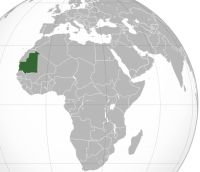
Sharif Nashashibi writes: Mauritania. Many people have never heard of it, and most would probably be unable to pinpoint it on a map, even though its land mass is larger than France and Germany combined. Many Arabs are unaware that it is a member of the Arab League.

Even BlackBerry does not recognise it. Its messenger service auto-corrects “Mauritania” to “Martian” and, given public ignorance of the country, Mauritania might as well be on Mars. However, this could and should change.

Interviewed for a TV programme recently, I was asked whether Mauritania will be the next country to experience the Arab spring. In fact, it has been part of the spring since January 2011, when Yacoub Ould Dahoud fatally set himself alight in front of the presidential palace.

Protests have taken place across Mauritania ever since, spurred by the same factors as in other Arab states: economic, political and social disenfranchisement. But unlike those in Tunisia, Egypt, Libya, Bahrain, Yemen, Syria and elsewhere in the region, Mauritania’s have been barely a blip on the news radar.

This has led al-Jazeera to describe it as the overlooked uprising. Very low internet usage in the country – reportedly less than 2% of households – has made it difficult for Mauritanians to get their views, eyewitness accounts and images out to the rest of the world as has happened among other restive Arab populations.

The international community has historically taken little interest in Mauritania since its independence from France in 1960, because until recently it was seen as a poor expanse of desert with little strategic value (it has one of the lowest GDPs in Africa, making it among the poorest countries in the world).

However, its importance is likely to increase, and with it the world’s attention. Mauritania’s extensive iron ore deposits, which account for almost half of its exports, have increased in value due to rising metal prices, leading to more mines being opened, and hundreds of millions of dollars earned last year.

Furthermore, oil was discovered in 2001, although Mauritanians have yet to benefit because the country lacks the necessary infrastructure to fully exploit its reserves. However, with production on the rise, several oil exploration deals inked in the last year, and a population of just over 3 million, the potential windfall is huge.

As China makes economic and developmental inroads into Africa it may only be a matter of time before Mauritania’s largely untapped resources come into focus. This could irk the US into also seeking greater involvement, as Africa is fast becoming an economic battleground for the current and upcoming superpowers. [Continue reading…]

Facebooktwittermail

The crisis in Europe mirrors the fall of the Roman Empire

Focusing on Britain, the historian Michael Wood writes: Rome in the 4th Century had been a great power defended by a huge army. A century later the power and the army had gone.

Instead the West was ruled by new barbarian elites, Angles and Saxons, Visigoths and Franks. And nowhere were these changes more dramatic than on the very fringe of the Roman world in Britain.

Edward Gibbon, in his great book Decline and Fall, famously blamed the collapse not only on the barbarians, but on Christianity. He thought it had undermined society with its focus on another, better world.

Modern historians, though, see it differently, and some of their ideas seem startlingly relevant to us now.

First was the widening gulf between the social classes, rich and poor. When rich and poor start to live completely different lives this leads (then as now) to the poor opting out of the state. All studies today show that society is happier when the gap between rich and poor is reduced.

Widen it and you affect the group ethos of society, and also the ability to get things done through tax.

In the Roman West real wealth lay more in land and property than in finance (though there were banks) – but in the 300s the big land-owning aristocrats who often had fantastic wealth, contributed much less money than they had in the past to defence and government.

That in turn led as it has today to a “credibility gap” between ordinary people and the bureaucrats and rich people at the top.

Not surprisingly then, many people – especially religious groups – tried to opt out altogether.

Other strands in the collapse of the Roman West are more difficult to quantify, but they centre on “group feeling”, the glue that keeps society working together towards common goals. Lose that and you get a kind of nervous breakdown in the social order, which leads to what archaeologists call “systems collapse”.

The British historian Gildas (c 500-570) in his diatribe against contemporary rulers in the early 500s, looking back over the story of the Fall of Roman Britain, lists the military failures, but behind them he speaks bitterly of a loss of nerve and direction, a failure of “group feeling”.

Gildas talks about right-wing politicians advocating glibly attractive solutions that appealed to the populace while “any leader who seemed more soft, or who was more inclined to actually tell things as they are, was painted as ruinous to the country and everyone directed their contempt towards him”.

Facebooktwittermail

Unofficial results in first round of Egypt’s presidential election

Al-Masry Al-Youm has compiled a comprehensive tabulation of results from the first round of presidential elections, which ended yesterday.

The Muslim Brotherhood’s candidate, Mohamed Morsy, looks set to lead Egypt’s first presidential election poll following the uprising that deposed Hosni Mubarak last year, taking 5,446,460, or 24.9 percent of the votes. Ahmed Shafiq, a former civil aviation minister under Mubarak who was appointed during the president’s last days in office as prime minister, is a close second, with 5,338,285, or 24.5 percent of the votes. Nasserist candidate Hamdeen Sabbahi has surprised many observers by coming in third, with 4,616,937, or 21.1 percent of the votes. Abdel Moneim Abouel Fotouh, moderate Islamist and former Muslim Brotherhood member, was fourth with 3,889,195 or 17.8 percent of the votes. Amr Moussa, former secretary general of the Arab League and diplomat, came in fifth with 2,471,559, or 11.3 percent.

The results were obtained by Al-Masry Al-Youm reporters in 27 governorates, following up on results from 13,000 polling stations. According to Al-Masry Al-Youm’s calculations, overall turnout throughout the country was 43.3 percent, lower than many had expected going into the historic election.

Facebooktwittermail

Has the FBI launched a war of entrapment against the Occupy Movement?

Arun Gupta reports: With the high-profile arrest of activists on terrorism charges in Cleveland on May Day and in Chicago during the NATO summit there, evidence is mounting that the FBI is unleashing the same methods of entrapment against the Occupy Wall Street movement that it has used against left movements and Muslim-Americans for the last decade.

In Cleveland the FBI announced on May 1 that “five self-proclaimed anarchists conspired to develop multiple terror plots designed to negatively impact the greater Cleveland metropolitan area.” The FBI claimed the five were nabbed as they attempted to blow up a bridge the night before using “inoperable” explosives supplied to them by an undercover FBI employee.

Then on May 19, the day before thousands marched peacefully in Chicago to protest NATO-led wars, the Illinois State Attorney hit three men with charges of terrorism for allegedly plotting to use “destructive devices” against targets ranging from Chicago police stations to the home of Mayor Rahm Emanuel. Defense attorneys for the Chicago activists claim their clients, like the Cleveland activists, were provided with supplies for making Molotov cocktails by undercover agents in an operation that included the participation of the FBI and Secret Service. This was followed up on May 20 by the arrest of two other men on terrorism charges in Chicago for statements they made, which critics say amount to thought crimes. The Chicago cases are also reportedly the first time the state of Illinois is charging individuals under its post-September 11 terrorism law.

To hear FBI officials describe it, “Law enforcement took swift, collaborative action…to eliminate the risk of violence and protect the public.” To many observers, however, the government itself is the overarching threat, systematically repressing peaceful dissent.

Will Potter, who analyzes FBI entrapment plots in his book Green is the New Red, says the two incidents are “a reflection of an ongoing pattern of behavior from the FBI of singling out political activists and having a direct influence in creating so-called terrorist plots for the purpose of proclaiming a victory in the war on terrorism.” Potter claims, “There have been many other cases like these in which the FBI had a role in manufacturing the plot itself. We’ve seen this time and again with animal rights activists, environmental activists and the anarchist movement.”

Simply put, the Cleveland and Chicago cases appear to be instances of the federal government foiling its own terror plots. Two days before the Cleveland plot was supposedly thwarted, David Shipler, author of Rights at Risk: The Limits of Liberty in Modern America, presciently described in the New York Times the mechanics of the FBI trap about to be sprung. Shipler wrote that FBI terror stings typically begin by targeting “suspects for pure speech” such as comments, emails and “angry postings” on the Internet. The suspects are then “woo[ed] into relationships with informers, who are often convicted felons working in exchange for leniency, or with FBI agents” working undercover. Some suspects are “incompetent and adrift, like hapless wannabes looking for a cause that the informer or undercover agent skillfully helps them find.” Noting that the FBI is “cultivating potential terrorists,” Shipler asked, “would the culprits commit violence on their own?” [Continue reading…]

Facebooktwittermail

The negation of the Palestinian state

Uri Avnery writes: On May 15, the anniversary of the founding of the State of Israel, its Arab citizens observed a day of mourning for the victims of the Naqba (“catastrophe”) – the mass exodus of half the Palestinian people from the territory which became Israel.

Like every year, this aroused much fury. Tel Aviv University allowed Arab students to hold a meeting, which was attacked by ultra-right Jewish students. Haifa University forbade the meeting altogether. Some years ago the Knesset debated a “Naqba Law” that would have sent commemorators to prison for three years. This was later moderated to the withdrawal of government funds from institutions that mention the Naqba.

The Only Democracy in the Middle East may well be the only democracy in the world that forbids its citizens to remember a historical event. Forgetting is a national duty.

Trouble is, it’s hard to forget the history of the “Palestinian issue”, because it dominates our life. 65 years after the foundation of Israel, half the news in our media concern this one issue, directly or indirectly.

Just now, the South African government has decreed that all products of the West Bank settlements sold there must be clearly marked. This measure, already in force in Europe, was roundly condemned by our Foreign Minister, Avigdor Lieberman, as “racist” (looks who’s talking!). However, it joins a boycott initiated 15 years ago by my Israeli friends and me. [Continue reading…]

Facebooktwittermail