Nouriel Roubini writes: Today’s fragile global economy faces many risks: the risk of another flare-up of the eurozone crisis; the risk of a worse-than-expected slowdown in China; and the risk that economic recovery in the United States will fizzle. But no risk is more serious than that posed by a further spike in oil prices.
The price of a barrel of Brent crude, which was well below $100 in 2011, recently peaked at $125 (U.S.). Gasoline prices in the U.S. are approaching $4 a gallon, a damaging threshold for consumer confidence, and will increase further during the high-demand summer season.
The reason is fear. Not only are oil supplies plentiful, but demand in the U.S. and Europe has been lower, owing to decreasing car use in the last few years and weak or negative GDP growth in the U.S. and the eurozone. Simply put, increasing worry about a military conflict between Israel and Iran has created a “fear premium.”
The last three global recessions (prior to 2008) were each caused by a geopolitical shock in the Middle East that led to a sharp spike in oil prices. The 1973 Yom Kippur War between Israel and the Arab states led to global stagflation (recession and inflation) in 1974-1975. The Iranian revolution in 1979 led to global stagflation in 1980-1982. And Iraq’s invasion of Kuwait in the summer of 1990 led to the global recession of 1990-1991.
The New York Times reports: A classified war simulation held this month to assess the American military’s capabilities to respond to an Israeli attack on Iran forecast that the strike would lead to a wider regional war, which could draw in the United States and leave hundreds of Americans dead, according to American officials.
The officials said the so-called war game was not designed as a rehearsal for American military action — and they emphasized that the exercise’s results were not the only possible outcome of a real-world conflict. But the game has raised fears among top American planners that it may be impossible to preclude American involvement in any escalating confrontation with Iran, the officials said. In the debate among policy makers over the consequences of any possible Israeli attack, that reaction may give stronger voice to those within the White House, Pentagon and intelligence community who have warned that a strike could prove perilous for the United States.
The results of the war game were particularly troubling to Gen. James N. Mattis, who commands all American forces in the Middle East, Persian Gulf and Southwest Asia, according to officials who either participated in the Central Command exercise or who were briefed on the results and spoke on condition of anonymity because of its classified nature. When the exercise had concluded earlier this month, according to the officials, General Mattis told aides that an Israeli first strike would be likely to have dire consequences across the region and for United States forces there.
Chris Hedges writes: The war in Afghanistan—where the enemy is elusive and rarely seen, where the cultural and linguistic disconnect makes every trip outside the wire a visit to hostile territory, where it is clear that you are losing despite the vast industrial killing machine at your disposal—feeds the culture of atrocity. The fear and stress, the anger and hatred, reduce all Afghans to the enemy, and this includes women, children and the elderly. Civilians and combatants merge into one detested nameless, faceless mass. The psychological leap to murder is short. And murder happens every day in Afghanistan. It happens in drone strikes, artillery bombardments, airstrikes, missile attacks and the withering suppressing fire unleashed in villages from belt-fed machine guns.
Military attacks like these in civilian areas make discussions of human rights an absurdity. Robert Bales, a U.S. Army staff sergeant who allegedly killed 16 civilians in two Afghan villages, including nine children, is not an anomaly. To decry the butchery of this case and to defend the wars of occupation we wage is to know nothing about combat. We kill children nearly every day in Afghanistan. We do not usually kill them outside the structure of a military unit. If an American soldier had killed or wounded scores of civilians after the ignition of an improvised explosive device against his convoy, it would not have made the news. Units do not stick around to count their “collateral damage.” But the Afghans know. They hate us for the murderous rampages. They hate us for our hypocrisy.
The scale of our state-sponsored murder is masked from public view. Reporters who travel with military units and become psychologically part of the team spin out what the public and their military handlers want, mythic tales of heroism and valor. War is seen only through the lens of the occupiers. It is defended as a national virtue. This myth allows us to make sense of mayhem and death. It justifies what is usually nothing more than gross human cruelty, brutality and stupidity. It allows us to believe we have achieved our place in human society because of a long chain of heroic endeavors, rather than accept the sad reality that we stumble along a dimly lit corridor of disasters. It disguises our powerlessness. It hides from view the impotence and ordinariness of our leaders. But in turning history into myth we transform random events into a sequence of events directed by a will greater than our own, one that is determined and preordained. We are elevated above the multitude. We march to nobility. But it is a lie. And it is a lie that combat veterans carry within them. It is why so many commit suicide.
Qais Azimy, a senior producer for Al Jazeera in Afghanistan, acknowledges that his outlet like most others, neglected to pay much attention to the victims in the recent massacre.
In the days following the rogue US soldier’s shooting spree in Kandahar, most of the media, us included, focused on the “backlash” and how it might further strain the relations with the US.
Many mainstream media outlets channelled a significant amount of energy into uncovering the slightest detail about the accused soldier – now identified as Staff Sergeant Robert Bales. We even know where his wife wanted to go for vacation, or what she said on her personal blog.
But the victims became a footnote, an anonymous footnote. Just the number 16. No one bothered to ask their ages, their hobbies, their aspirations. Worst of all, no one bothered to ask their names.
In honoring their memory, I write their names below, and the little we know about them: that nine of them were children, three were women.
The dead:
Mohamed Dawood son of Abdullah
Khudaydad son of Mohamed Juma
Nazar Mohamed
Payendo
Robeena
Shatarina daughter of Sultan Mohamed
Zahra daughter of Abdul Hamid
Nazia daughter of Dost Mohamed
Masooma daughter of Mohamed Wazir
Farida daughter of Mohamed Wazir
Palwasha daughter of Mohamed Wazir
Nabia daughter of Mohamed Wazir
Esmatullah daughter of Mohamed Wazir
Faizullah son of Mohamed Wazir
Essa Mohamed son of Mohamed Hussain
Akhtar Mohamed son of Murrad Ali
The wounded:
Haji Mohamed Naim son of Haji Sakhawat
Mohamed Sediq son of Mohamed Naim
Parween
Rafiullah
Zardana
Zulheja
But even with these names now published, it seems unlikely that this will have much impact on the perceptions of those Americans who see Robert Bales himself as the victim.
Imagine how different the story would be had he embarked on his killing spree after returning home and the victims had white faces and English names. We would by now know vastly more about them and the portraits of “Bobby” Bales would no doubt be much less sympathetic.
Exactly what set off the Army sergeant accused of massacring 16 civilians in Afghanistan’s Kandahar Province is far from clear. But already, organizations and individuals with differing agendas have portrayed Bales as the personification of something that is profoundly broken, and have seized on his case to question the war itself or to argue that the American government is asking too much of its warriors.
On the website of Iraq Veterans Against the War, organizer Aaron Hughes declared that Afghan war veterans “believe that this incident is not a case of one ‘bad apple’ but the effect of a continued U.S. military policy of drone strikes, night raids, and helicopter attacks where Afghan civilians pay the price.” Those veterans, he wrote, “hope that the Kandahar massacre will be a turning point” in the war.
“Send a letter to the editor of your local paper condemning the massacre and calling for an end to our occupation in Afghanistan,” Hughes wrote.
On March 11, authorities say, Bales, a 38-year-old married father of two from Washington state, stalked through two villages, gunned down civilians and attempted to burn some of the bodies. The dead included nine children.
In Lake Tapps, Wash., neighbors knew Bales as a patriot, a friendly guy who loved his wife and kids, and a man who never complained about the sacrifices his country repeatedly asked of him. They find it hard to believe he could be capable of such depravity.
“I kind of sympathize for him, being gone, being sent over there four times,” said Beau Britt, who lives across the street. “I can understand he’s probably quite wracked mentally, so I just hope that things are justified in court. I hope it goes OK.”
Paul Wohlberg, who lives next door to the Baleses, said: “I just can’t believe Bob’s the guy who did this. A good guy got put in the wrong place at the wrong time.” [Associated Press]
It took close to a week before Robert Bales’ name was released.
One gets the impression that this delay served a purpose: that his name should not simply be attached to a pile of dead bodies; that along with the name there would be a biography, a smiling face and as much as possible in this interval there could be created some distance between the killer and the killed.
Robert Bales is a good American who did something bad.
The home of Robert Bales, the US soldier accused of killing 16 Afghan civilians, in Lake Tapps, Washington, stood empty last night.
The family of the 38-year-old sergeant, who has plunged US policy in Afghanistan into one of its worst crises, has been moved to Lewis-McChord army base where Bales’s unit, the 3rd Stryker Brigade, has its headquarters. Now his house is up for sale.
The first journalists from a Fox news affiliate – the network that revealed his name after a six-day blackout imposed by the Pentagon – found neighbours surprised and baffled by the revelation that the man they knew as Bob was accused of massacring women and children during a murderous rampage through a village in Afghanistan’s Panjwai district.
“Bob’s a normal guy,” former neighbour Paul Wohlberg told Fox. “Not normal now but, yeah …” Another neighbour, Kassie Holland, told US media: “He always had a great attitude about being in the service. He seemed just like, yeah, it’s my job, it’s … what I do.”
The picture of Bales that is emerging is a long way from the man who spoke to the Northwest Guardian three years ago after the battle of Zarqa in Iraq, when he insisted that what differentiated soldiers like him from those they were fighting was the ability to distinguish between combatants and civilians. “I’ve never been more proud to be a part of this unit than that day,” Bales said in that article. “We discriminated between the bad guys and the non-combatants, and then afterwards we ended up helping the people who three or four hours before were trying to kill us.
“I think that’s the real difference between being an American as opposed to being a bad guy, someone who puts his family in harm’s way like that.”
But when it comes to the difference between Robert Bales, the American, and the people he killed, perhaps the most telling fact is that while the press dutifully waited until it got the go ahead to tell his story, no one bothered even attempting to tell the stories of the dead.
The Afghan government has not as far as I am aware been withholding anyone’s name, yet it appears that only one of the dead has been named: Muhammad Dawoud, a 55 year-old farmer.
Of the rest of the victims we know no more than these sparse details: that 11 belonged to the family of Abdul Samad. He lost his wife, four daughters between the ages of 2 and 6, four sons between 8 and 12, and two other relatives. The other victims were in the home of Hajji-Sayed who lost his wife, nephew, grandson and brother.*
Sixteen lives and this is as much as we are likely to ever know about them.
Why?
Because they are not Americans.
* Even these details are unclear. Another report said the four victims were in the home of Habibullah Khan who lost his wife, sisters and a baby nephew.
When it comes to press coverage, analysis, commentary, and blogging on the Arab Spring, objectivity has been a rare commodity — no more so than in the case of reporting the unrest/revolution/rebellion/civil war in Syria.
The difficulty in getting a clear picture of what’s happening inside a country now wracked by violence — a country in which so many outside powers have strong interests in the outcome — has been greatly compounded by the barriers to reporting imposed on journalists.
One journalist who has been able to conduct a more extensive investigation than any other is now being forced to defend the integrity of his work because he is being accused of spying for the Assad regime. The journalist in question is Nir Rosen and anyone who has followed his career over the last decade would know that it is absurd to imagine that he would compromise his work (and life) in this way.
Unfortunately, there are those with an endless appetite for conspiracy theories who are convinced that truth must always be a guarded secret demanding to be exposed rather than something much more complex that no one can fully discern. For those with such a mindset, there is probably little Rosen can say which will allay their suspicions, yet since his work is now being challenged he has been compelled to speak out.
Nir Rosen writes: In my nine years as a journalist I was accused of being an agent for the Americans, Iranians, Israelis, Qataris, the Afghan government and others. We journalists are used to these silly and ignorant slurs. The Taliban sentenced me to execution once because they thought I was a spy. But they are less sophisticated than others, I thought. So while I feel it is beneath me to respond to the contemptible people who now accuse of being an agent for the Syrian regime, I must do so anyway.
I have been accused of having “contact” with the Syrian regime. Of course this is true. I am not ashamed of it. I am a journalist. It is my job. We struggle to obtain contacts and access. This is the currency of our profession. I spent four months in Syria during the uprising writing and filming for al Jazeera. Though my last article was published by Foreign Policy.
I requested and received two visas which allowed me to enter Syria. No conditions or limitations were placed on me. I tried to help other journalists enter Syria one way or another as well. In January I was in touch with my friend, the late Anthony Shadid, who was frustrated that he was being denied a visa and was asking me for advice on whether he could get a visa or from where he should try to enter.
In the past I have requested and received access from American military Public Affairs Officers to embed in Iraq or Afghanistan, from Mahdi Army leaders in Sadr City, al Shabab commanders in Somalia, Mexican drug cartel leaders, Mujahedin leaders in Falluja, former Taliban Minister of Defense Mullah Baradar, and worst of all even from the Israeli Government Press Office so that I could operate in Occupied Palestine.
Some journalists compromise their work to obtain access and the privileges that come with it. I never have. As my work shows. And which is why I lose access as much as I gain it. Doing your job right often means burning those bridges and later losing access, but that’s part of the process of finding out truths people dont want to be revealed. The goal of my work has always been to challenge and subvert those in power. Any power. My own views on journalism can be found here.
I believe the trove of leaked emails from the Syrian government are indeed all real. The emails which contain my name are certainly real, I don’t mind saying. They are from people who were introduced to me and other western journalists as media and public relations advisers to the Syrian government or the president himself. They are the same people who arranged for the ABC News interview with Barbara Walters, for the Sunday Times interview with Bashar al Assad, for Agence France Presse, and for others to enter Syria. This is normal. How else does a journalist enter a country such as Syria?
And as this November email also shows, I forwarded them a link to a BBC program on Syria done by the heroic Paul Wood in order to try to persuade them that journalists are coming in anyway and they might as well let al Jazeera in formally.
Importantly, the fact that I had to send my resume and biography to establish my credentials for an interview bid with Assad and the very need for sending these things shows I was not an agent for them. And I never communicated any information to the authorities that was not already in the public domain by that point. It was normal for journalists to receive visas by communicating with the Syrian government back in November and I was not the only one. Now it is assumed that journalists have to sneak into Syria.
They did not want to let media they perceived as “hostile” to enter Syria so I sent links or told them about the many excellent (in my view) news programs that had already been aired by journalists from BBC, Sky News and other European agencies who had sneaked into Homs, meaning it was pointless to deny al Jazeera access when everybody can get in.
I did not inform on journalists who were already in Syria. In fact in my four months in Syria I never crossed paths with a journalist who had sneaked into the country and like the rest of us, I only found out that they had been in Syria once they left and published their stories or aired their news programs. These journalists, like Paul Wood, Ghaith Abdul Ahad, or my late friends Anthony Shadid and Marie Colvin, did amazing and important work. But because they were “embedded” with the opposition in one location their view was limited. My visa allowed me to travel throughout the country and obtain a more holistic picture of the situation. There is nothing else in English, Arabic or any other language as extensive as the coverage of Syria I was able to provide based on a visa that allowed me entry and my own resourcefulness which made it possible for me to travel from Daraa to Idlib unhindered. [Continue reading…]
The Telegraph reports: Syria was hit by a third car bombing of the weekend as political security offices in the northern city of Aleppo were targeted, according to human rights groups.
State media, which have said that such attacks aimed to sabotage efforts to find a political solution to Syria’s crisis, said it exploded near residential buildings and a post office.
Activists in Aleppo, the target of car bombings on February 10 that killed 28 people, told AFP in Beirut on Skype that the blast rocked the city early in the afternoon.
On Saturday, twin car bombings killed 27 people and wounded 140 others in the heart of Syria’s capital, the interior ministry said, blaming “terrorists” for the attacks near police and air force headquarters.
Today’s Zaman reports: Hamas leader Khaled Mashaal has called for a unity agreement between Palestinian factions, saying peace is mandatory for Palestinians who are united in fighting Israeli occupation.
Mashaal, speaking on Sunday after talks with Turkish leaders, dismissed rivalry between Palestinian groups as a “conspiracy” targeting the Palestinians. “We want to open a new page, and we think that we have created a domestic peace atmosphere. Peace is obligatory, and Palestinians should be unified. The Palestine issue is our cause, and our stance on occupation is the same,” Mashaal said in regards to talks between Hamas and Palestinian President Mahmoud Abbas’ Fatah.
“I would like to send a message to all Palestinian people living in and out of Palestine: Let’s exert efforts seriously and sincerely to make an internal compromise agreement. … We should sacrifice our personal and political views for the sake of the Palestine cause,” Mashaal said in an interview with Turkey’s semi-official Anatolia news agency.
Annie Murphy Paul writes: Amid the squawks and pings of our digital devices, the old-fashioned virtues of reading novels can seem faded, even futile. But new support for the value of fiction is arriving from an unexpected quarter: neuroscience.
Brain scans are revealing what happens in our heads when we read a detailed description, an evocative metaphor or an emotional exchange between characters. Stories, this research is showing, stimulate the brain and even change how we act in life.
Researchers have long known that the “classical” language regions, like Broca’s area and Wernicke’s area, are involved in how the brain interprets written words. What scientists have come to realize in the last few years is that narratives activate many other parts of our brains as well, suggesting why the experience of reading can feel so alive. Words like “lavender,” “cinnamon” and “soap,” for example, elicit a response not only from the language-processing areas of our brains, but also those devoted to dealing with smells.
In a 2006 study published in the journal NeuroImage, researchers in Spain asked participants to read words with strong odor associations, along with neutral words, while their brains were being scanned by a functional magnetic resonance imaging (fMRI) machine. When subjects looked at the Spanish words for “perfume” and “coffee,” their primary olfactory cortex lit up; when they saw the words that mean “chair” and “key,” this region remained dark. The way the brain handles metaphors has also received extensive study; some scientists have contended that figures of speech like “a rough day” are so familiar that they are treated simply as words and no more. Last month, however, a team of researchers from Emory University reported in Brain & Language that when subjects in their laboratory read a metaphor involving texture, the sensory cortex, responsible for perceiving texture through touch, became active. Metaphors like “The singer had a velvet voice” and “He had leathery hands” roused the sensory cortex, while phrases matched for meaning, like “The singer had a pleasing voice” and “He had strong hands,” did not.
Yudhijit Bhattacharjee writes: Speaking two languages rather than just one has obvious practical benefits in an increasingly globalized world. But in recent years, scientists have begun to show that the advantages of bilingualism are even more fundamental than being able to converse with a wider range of people. Being bilingual, it turns out, makes you smarter. It can have a profound effect on your brain, improving cognitive skills not related to language and even shielding against dementia in old age.
This view of bilingualism is remarkably different from the understanding of bilingualism through much of the 20th century. Researchers, educators and policy makers long considered a second language to be an interference, cognitively speaking, that hindered a child’s academic and intellectual development.
They were not wrong about the interference: there is ample evidence that in a bilingual’s brain both language systems are active even when he is using only one language, thus creating situations in which one system obstructs the other. But this interference, researchers are finding out, isn’t so much a handicap as a blessing in disguise. It forces the brain to resolve internal conflict, giving the mind a workout that strengthens its cognitive muscles.
Scott Long writes: Hassan – it’s not his real name – had a heavy metal band with two other twentysomethings. The raucous music represented rebellion, and in Iraq there was plenty to rebel against: occupation, poverty, patriarchal families – ample impetus to anger. The band made an album, but nobody would touch it; their songs and their look, people said, were satanic. Hassan uploaded a video to YouTube, and included the band members’ names. Five days ago, the other two musicians were killed on the street. Hassan is in hiding; he’s almost too terrified to speak. “Why are they doing this to us?” he asked me. “Why?”
A new killing campaign is convulsing Iraq. The express targets are “emos”, short for “emotional”: a western-derived identity, teenagers adopting a pose of vulnerability, along with tight clothes and skewed hairdos and body piercing. Starting last year, mosques and the media both began raising the alarm about youthful immorality, calling the emos deviants and devil worshippers. In early February, somebody began killing people. The net was wide, definitions inexact. Men who seemed effeminate, girls with tattoos or peculiar jewellery, boys with long hair, could all be swept up. The killers like to smash their victims’ heads with concrete blocks.
There is no way to tell how many have died: estimates range from a few dozen to more than 100. Nor is it clear who is responsible. Many of the killings happened in east Baghdad, stronghold of Shia militias such as Moqtada al-Sadr’s Mahdi army and Asaib Ahl al-Haq (the League of the Righteous). Neither, though, has claimed responsibility. Iraq’s brutal interior ministry issued two statements in February. The first announced official approval to “eliminate” the “satanists”. The second, on 29 February, proclaimed a “campaign” to start with a crackdown on stores selling emo fashion. The loaded language suggests, at a minimum, that the ministry incited violence. It’s highly possible that some police, in a force riddled with militia members, participated in the murders.
It’s logical to compare this to the militia campaign against homosexual conduct in 2009, which I documented for Human Rights Watch. Hundreds of men lost their lives then. Gay-identified men have been caught up in these killings as well, and Baghdad’s LGBT community is rife with fear. Yet there are differences. The current killings target women as well as men, and children are the preferred victims. It’s not quite true to say, as some press reports have suggested, that “emo” is just a synonym for “gay” in Iraq. Rather, immorality, western influence, decadence and blasphemy have come together in a loosely defined, poorly aligned complex of associations: and emo fashion and “sexual perversion” are part of the mix. Nobody cares much about disentangling the concepts, least of all the killers. All that matters is that all those things are bad.
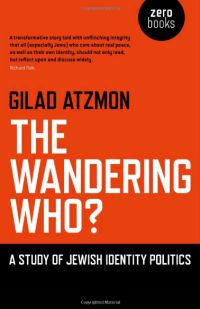
Speaking at a panel discussion on “Jewish identity politics” in London last October, shortly after the publication of his book, The Wandering Who?, Gilad Atzmon made this observation:
Identity drifts you far away from what you are.
This is the issue. This is one of the most important [issues raised in the book] — I wouldn’t like to call it a revelation because maybe I’m not the one who brought it up — but people who know who they are, they don’t need identity.
Identity is actually a form of identification.
This book is now endorsed very widely by a lot of people, a lot of Muslims and Muslim converts wrote about it, like the one I have in mind at the moment is Kevin Barrett who wrote, this is the most important text — he is definitely not a Jew, he is a Muslim — he said this is a very important text for me about identity politics. It teaches me how to drift away from this whole restricting discourse into a society where we can celebrate who we are without falling into a kind of methodical discourse that tells us who we should be or what we ought to be.
This merits repetition and reflection: people who know who they are, don’t need identity.
And the converse is also true: people who cling to an identity, don’t know who they are.
For some people, these philosophical observation are not of the slightest interest when articulated by Atzmon for the simple reason that he has been labelled an antisemite. Thus, for someone like Alan Dershowitz, Atzmon is beneath contempt. Instead, Dershowitz shamelessly directs his venom at anyone in a position of influence who dares to suggest that Atzmon’s ideas are worth reflecting upon.
Atzmon is unphased, but he isn’t just getting attacked by Zionists.
“Not only has my latest book, The Wandering Who?, rocked the boat, but it also has managed to unite Alan Dershowitz and Abe Foxman with Ali Abunimah and Max Blumenthal. That is pretty encouraging: it means that peace may prevail after all.” — Gilad Atzmon, March 14, 2012.
The Emergency Committee for Palestine has now spoken:
For many years now, Gilad Atzmon, a musician born in Israel and currently living in the United Kingdom, has taken on the self-appointed task of defining for the Palestinian movement the nature of our struggle, and the philosophy underpinning it. He has done so through his various blogs and Internet outlets, in speeches, and in articles. He is currently on tour in the United States promoting his most recent book, entitled, ‘The Wandering Who.’
With this letter, we call for the disavowal of Atzmon by fellow Palestinian organizers, as well as Palestine solidarity activists, and allies of the Palestinian people, and note the dangers of supporting Atzmon’s political work and writings and providing any platforms for their dissemination. We do so as Palestinian organizers and activists, working across continents, campaigns, and ideological positions.
Atzmon’s politics rest on one main overriding assertion that serves as springboard for vicious attacks on anyone who disagrees with his obsession with “Jewishness”. He claims that all Jewish politics is “tribal,” and essentially, Zionist. Zionism, to Atzmon, is not a settler-colonial project, but a trans-historical “Jewish” one, part and parcel of defining one’s self as a Jew. Therefore, he claims, one cannot self-describe as a Jew and also do work in solidarity with Palestine, because to identify as a Jew is to be a Zionist. We could not disagree more. Indeed, we believe Atzmon’s argument is itself Zionist because it agrees with the ideology of Zionism and Israel that the only way to be a Jew is to be a Zionist.
This statement — part of an open letter titled “Granting No Quarter: A Call for the Disavowal of the Racism and Antisemitism of Gilad Atzmon” — was preceded by a similar denunciation, “Not Quite ‘Ordinary Human Beings’ — Anti-imperialism and the anti-humanist rhetoric of Gilad Atzmon,” written by “some North American anti-imperialists,” and signed by a large number of representatives of the Palestinian solidarity movement.
They say at the end of their statement: “We wish to reiterate that we consider many of those promoting Atzmon’s work to be allies, but would ask that they reconsider their decision to do so. This is not a call for censorship, but for consistency and accountability.”
What is clear is that Atzmon offends, antagonizes and is felt as threatening by a number of anti-Zionists. The group of Palestinian activists who I facetiously labelled the Emergency Committee for Palestine are making a show of solidarity with fellow anti-Zionists. Their move might be well-intentioned, but at the same time it is by its nature, presumptuous, patronizing and authoritarian.
What should follow this disavowal? Should there be a book-burning event in order to protect the minds of those of us who might be so imprudent as to show some curiosity about Atzmon’s ideas?
Statements of disavowal and denunciation, the picketing of Atzmon’s lectures, and a campaign to persuade others not to provide Atzmon with a platform — if this is not an effort at censorship, what would be involved in actually trying to silence Atzmon?
In reality, this is clumsy neo-McCarthyism. It deserves no more respect than the pronouncements of Zionists like Dershowitz who as much as he might profess a belief in the value of free speech will do whatever he can to silence those he opposes.
A year ago, Rabbi Michael Lerner, who had heard the criticisms leveled at Atzmon, did something that few of these critics have the courage to do: he invited the-man-who-should-be-shunned into his home and engaged him in conversation. Unfortunately, it doesn’t appear that the whole discussion has been put online, but here’s a snippet that is worth watching — unless of course one wants to follow the advice of the disavowalists.
At the conclusion of a response he has written to the current round of criticism, Atzmon says: “If my opposition is concerned with my thoughts, it will have to learn to debate. Before we can proceed, I guess, my detractors may have to actually read my book and decide exactly what they are against.”
He says this in full awareness that many of his critics prefer to rely on the judgements of others rather than engage in their own inquiry. This has led to an absurd situation: Atzmon’s lectures are being picketed by individuals who when confronted by him admit that they have not actually read his work, but instead merely rely on damning quotes, cherry-picked by anti-Atzmon activists who seem to welcome neither free speech nor free inquiry.
Free speech is not some fatuous liberty like being able to shop on EBay or dye your hair purple. The reason we have free speech is because in a society governed by the people, no one can be allowed the privilege or assume the power of becoming the guardians of thought. Those who try to limit the free exchange of ideas have a casual and dangerous disregard for the value of political freedom.
No one is being forced to consider what Atzmon has to say — but neither should anyone try and coerce others to refrain from pursuing such an interest.
There is something frankly moronic about any political culture where individuals are encouraged to swallow or reject ideas simply because of the reputation of the source. This is an insult to human intelligence and an invitation to intellectual idleness.
For those with an interest in the dangerous activity of thinking — and in defiance of those who pronounce I should not be providing such a platform — here is a panel discussion on “Jewish identity politics” in which Atzmon was joined last fall by Irving Rappaport (moderator), Glenn Bowman (social anthropologist, University of Kent), Oren Ben-Dor (Reader in the Philosophy of Law, University of Southampton — who remains silent for reasons unknown), and Karl Sabbagh (author, journalist and television producer).
The discussion, followed by questions, runs for one hour forty minutes, divided into ten parts. It’s well worth watching from beginning to end.
Part One
Part Two
Part Three
Part Four
Part Five
Part Six
Part Seven
Part Eight
Part Nine
Part Ten
This website or its third-party tools use cookies, which are necessary to its functioning. By closing this banner, you agree to the use of cookies.