Daily Archives: December 27, 2007

OPINION: Replacing Bhutto

The dangerous void left behind

[Benazir Bhutto’s] longest-running battle was not with the extremists but with the army, whose leaders never trusted her. She was too secular, too worldly and perhaps too wise. Bhutto was killed leaving a political rally in Rawalpindi, just two miles from where her father, prime minister Zulfiqar Ali Bhutto, was hanged by another military dictator 30 years ago. The tragedy of the Bhutto family — her brothers also died violently, one poisoned, one shot, and her husband spent seven years in prison — has become part of the saga and struggle by Pakistanis to create a viable democratic, modern state.

Yesterday, her party’s stalwarts were on the streets, accusing Musharraf and the military of perpetrating the latest murder of a Bhutto. That is extremely unlikely, not least because last night the government itself was in despair.

The classic use of a sniper to cut her down as at least one suicide bomber blew up her vehicle bore the hallmarks of a Pakistani suicide squad expertly trained by the al-Qaeda terrorists who are ensconced in northwest Pakistan.

Her death only exacerbates the problems Pakistan has been grappling with for the past few months: how to find a modicum of political stability through a representative government that the army can accept and will not work to undermine, and how to tackle the extremism spreading in the country.

If the elections are canceled, it is imperative that Musharraf drop his single-minded desire for power and establish a national government made up of all the country’s leading politicians and parties. Together, they may agree on how to conduct an orderly election while trying to beat back the specter of extremism that is haunting this benighted land. But Musharraf may not survive the fallout of Bhutto’s death. His actions have not been honorable, and none of the political opposition is willing to sit down with him. It is unlikely that they will accept Musharraf’s continued presidency.

If rioting and political mayhem worsen, if the opposition refuses to cooperate with Musharraf and the United States finally begins to distance itself from him, then the army may be forced to tell Musharraf to call it a day. If that happens, it will be even more imperative that the world supports a national government, elections and a speedy return to civilian rule — and not another military dictatorship. [complete article]

Editor’s note: The following two articles were published a week before Benazir Bhutto’s assassination.

Aitzaz Ahsan replacing Benazir Bhutto in Washington?

The United States is silently patronizing another candidate for the post of Prime Minister or Senate or opposition leader in the next Pakistani parliament.
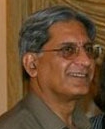
aitzaz-ahsan.jpgHe is Washington’s ‘back up man’ in Pakistan. He can replace Benazir Bhutto in case she tumbles on the way due to any reason. Aitzaz Ahsan is the next horse Washington and the CIA are betting their future on in Pakistan.

He has so far shown the required defiance to President Musharraf and is well projected within the U.S. administration as well as in the media and liberal society in the country.

Why a ‘back up man’ for Mrs. Bhutto is becoming a necessity for Washington?

The answer is simple.

Mr. Musharraf has scuttled the “conspiracy” to throw him out of power, in which at least the U.S. media played a crucial role. Washington also exerted unbelievable pressures to ease Mr. Musharraf’s supposed replacement, Benazir Bhutto, in power in Islamabad. But that entire plan has been scuttled. And Mr. Musharraf is in fact consolidating his power. He might even end up having enough majority in the next parliament to change the constitution and transform Pakistan into a presidential democracy. From the American standpoint, Musharraf needs to be restrained, since his ouster does not seem possible for the time being.

Mr. Ahsan’s ambitions have extremely offended Mrs. Bhutto and her frustration is so obvious that it is even being noted on the streets. Mr. Ahsan remains part of PPP but the party leader continues to feel seriously threatened by him as he is now the next U.S. candidate to replace her in case she fails to deliver. [complete article]

Can a democrat like Mr. Aitzaz Ahsan answer these questions?

Mr. Aitzaz Ahsan, a Pakistani politician turned rights activist, is successfully pandering to an American audience that knows zilch about Pakistan, or about Mr. Ahsan’s own history. He can wow the Americans all he wants, but only we, the ordinary Pakistanis, know Mr. Ahsan’s undemocratic history within his own political party. Welcome again to Pakistan, where the hero-of-the-month is just another feudal politician fighting for his pie. [complete article]

See also, Anti-Bhutto army factions behind murder? (B. Raman), Sharif’s party to boycott elections (AP), and Nawaz Sharif holds Musharraf responsible for Bhutto killing (Indo-Asian News Service).


Facebooktwittermail

OPINION & EDITOR’S COMMENT: What can’t be forgotten

Did Bush watch the torture tapes?

… the sequence of statements out of the White House is extremely revealing. It started with firm denials, then went silent and then pulled back rather sharply to a “President Bush has no present recollection of having seen the tapes.” This is a formulation frequently used to avoid perjury charges, a sort of way of saying “no” without really saying “no.” In between these statements, two more things unfolded that have a bearing on the question.

The New York Times squarely placed four White House lawyers in the middle of the decision about whether to destroy the tapes—Alberto Gonzales, David Addington, John Bellinger and Harriet Miers. It also reported that at least one of them was strongly advocating destruction. Suspicion immediately fell on the principle mover in support of torture, David Addington.

Second, John Kiriakou clarified his statements about the purpose for which the tapes were made. It was to brief higher ups about the process of the interrogation. Reports persist that one “higher-up” in particular had a special strong interest in knowing the details of the Abu Zubaydah case. His name is George W. Bush.

Are Bush’s denials that he has seen the torture tapes really credible? I don’t think so. [complete article]

See also, Operation stop talking (Laura Rozen).

Editor’s Comment — “I have no recollection” — a non-denial denial — is most likely a lie that could be pried open with just a few questions.

President of the United States is a unique job that includes all sorts of unusual tasks that nevertheless are quite forgettable. “In your daily intelligence briefings, do you remember being warned about imminent attacks by al Qaeda?” How could a president be expected to remember every little detail from every single briefing?

But interrogation videos — images of a man struggling against the sensation of drowning? How much time could George Bush spend watching videos of what amount to mock executions before the routine became something less than memorable? The question isn’t whether Bush remembers seeing videos of suspects being waterboarded; it is whether he believes this is something he could forget.

If the president is less than certain that such a sight is something he would never forget, then he’s apparently a sociopath. If on the other hand he can attest to the fact that, like most normal people, he would find such images unforgettable, then this is one instance where there is no reason for the president to be telling us about the power or frailty of his memory. If the president really has no recollection of seeing videos of waterboarding, he should be able to go one step further and say emphatically that he did not watch the videos. If he can’t deny watching the videos, it’s not because there are limits to his powers of recollection but because he refuses to shine any light on an indelible memory.

“I have no recollection” is not really a non-denial denial. It’s a simple lie.

Facebooktwittermail

NEWS & FEATURE: A struggle rooted in land

A West Bank struggle rooted in land

From his hilltop farm, Daoud Nassar can see the sun rise over the Jordan Valley and set in the Mediterranean, an arc that spans the territorial breadth of his people’s conflict with Israel.

He also can see the neighbors whose rival claim has drawn the idyllic 100-acre plot deeply into that fight.

The only large Palestinian property to occupy high ground in this part of the West Bank, it is ringed by expanding Jewish settlements and coveted by the one perched on the nearest hill, 800 yards away.

For nearly a generation, Nassar and his family have stood their ground, unarmed, against pistol-toting settlers who have barricaded the farm’s dirt lanes, uprooted its olive groves, tried to bulldoze their own roads and disabled a tractor and a rooftop water tank.

The family has rebuffed anonymous Jewish callers offering blank checks for the property, and spent $145,000 in a marathon legal battle to keep the land that Nassar’s grandfather, a Christian from Lebanon, bought in 1916 when it was part of the Ottoman Empire. For more than 90 years, Nassars have worked the land, growing almonds, figs, grapes, olives, pears and pomegranates.

The feuding over these stark hills, ridges and valleys south and east of Bethlehem, a 27-square-mile region that includes the Nassar farm, is emblematic of the decades-old Israeli-Palestinian conflict — a struggle rooted in land. [complete article]

Mideast talks already tangled a month after Annapolis summit

US and Egyptian officials have criticized Israel’s move to renew building in Har Homa so soon after Annapolis, indicating that it undermines trust between the parties.

Mr. Olmert’s government has gone on the defensive about the decision. On the one hand, it says that the decision to build was made by a lower-ranking official in the Housing Ministry, which issued the tender without Olmert’s knowledge. On the other, it says that it has no intention of forfeiting the land of Har Homa to the Palestinians.

“In our view, this is not part of the problem with the Palestinians, we are building in the neighborhoods inside Jerusalem, we are not building new settlements,” Defense Minister Ehud Barak said at a meeting with Egyptian President Hosni Mubarek. “The Palestinians are far from implementing phase one of the road map, which calls for rooting out the terror infrastructure.”

Palestinian officials say that the building in Har Homa is going to be at the top of the agenda for Thursday’s meeting between Olmert and Abbas. Palestinians have demanded a cessation to all settlement building as a requisite step toward rebuilding expectations for peace. [complete article]

Facebooktwittermail

NEWS & EDITOR’S COMMENT: Bhutto assassination

Bhutto: “She has been martyred”

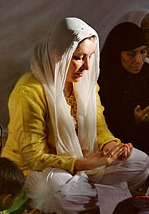
benazir_bhutto.jpgJust days before parliamentary polls in Pakistan, leading Prime Ministerial contender and anti terrorism crusader Benazir Bhutto was shot dead during an election rally in the garrison city of Rawalpindi, near Islamabad. “She has been martyred,” said party official Rehman Malik. The Associated Press, citing Malik, reported that Bhutto was shot in the neck and the chest before the gunman blew himself up. At least 20 bystanders were killed in the blast. Bhutto was rushed to a hospital But, at 6:16 p.m. Pakistan time, she was declared dead.

“How can somebody who can shoot her get so close to her with all the so-called security?” said a distraught Husain Haqqani, a former top aide to Bhutto, shortly after news of her death flashed around the world. Haqqani, who served as a spokesman and top aide to Bhutto for more than a decade, blamed Pakistani security, either through neglect or complicity, in her assassination. “This is the security establishment, which has always wanted her out,” he said through tears. [complete article]

Editor’s Comment — The evidence here certainly places the security establishment — and thus Musharraf — under suspicion. The use of explosives looks like an effort to obscure who might be responsible — both by means of killing witnesses and by providing the media and government officials with a label they have no hesitation in using: suicide bombing. To call it a suicide bombing is to instantly place this event within the narrative of Islamic extremism.

Back in November, after her return to Pakistan, Bhutto wrote:

It has now been more than two weeks since the horrific assassination attempt against me and the police have still not filed my complaint. They filed their own report without taking statements from eyewitnesses on the truck targeted for the terrorist attack which resulted in the death of more than 158 of my supporters and security guards.

Soon thereafter, I was asked by authorities not to travel in cars with tinted windows — which protected me from identification by terrorists — or travel with privately armed guards.

I began to feel the net was being tightened around me when police security outside my home in Karachi was reduced, even as I was told that other assassination plots were in the offing.

If Musharraf now postpones the upcoming election or bans political rallies, what will be the Bush administration’s response? Another lame statement about looking forward to Pakistan’s return to the democratic path? One thing we can reasonably assume is that neither from Washington nor any other Western capital are we now likely to hear any demands for an independent inquiry into Bhutto’s death. In November Islamabad adamantly rejected any assistance from forensic teams of the FBI and Scotland Yard. Will similar offers now even be made?

Facebooktwittermail