Daily Archives: October 26, 2009

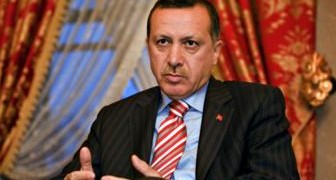
‘Iran is our friend,’ says Turkish PM Recep Tayyip Erdogan

‘Iran is our friend,’ says Turkish PM Recep Tayyip Erdogan

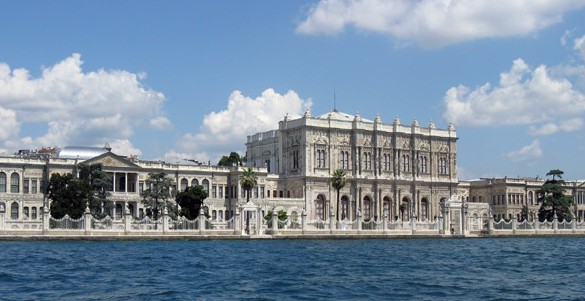
With its stunning vistas and former Ottoman palaces, the banks of the Bosphorus – the strategic waterway that cuts Istanbul in half and divides Europe from Asia – may be the perfect place to distinguish friend from foe and establish where your country’s interests lie.

And sitting in his grandiose headquarters beside the strait, long the symbol of Turkey’s supposed role as bridge between east and west, Recep Tayyip Erdogan had little doubt about who was a friend and who wasn’t.

Mahmoud Ahmadinejad, Iran’s radical president whose fiery rhetoric has made him a bête noire of the west? “There is no doubt he is our friend,” said Erdogan, Turkey’s prime minister for the last six years. “As a friend so far we have very good relations and have had no difficulty at all.”

What about Nicolas Sarkozy, president of France, who has led European opposition to Turkey’s bid to join the EU and, coincidentally, adopted a belligerent tone towards Iran’s nuclear programme? Not a friend?

“Among leaders in Europe there are those who have prejudices against Turkey, like France and Germany. Previously under Mr Chirac, we had excellent relations [with France] and he was very positive towards Turkey. But during the time of Mr Sarkozy, this is not the case. It is an unfair attitude. The European Union is violating its own rules.

“Being in the European Union we would be building bridges between the 1.5bn people of Muslim world to the non-Muslim world. They have to see this. If they ignore it, it brings weakness to the EU.” [continued…]

Editor’s Comment — When President Obama addressed the Turkish parliament on April 6, he said: “Turkey’s greatness lies in your ability to be at the center of things. This is not where East and West divide – this is where they come together.”

Turkey has since been making great strides with its “zero problems with neighbors” policy as Foreign Minister Ahmet Davutuoğlu engages erstwhile adversaries emphasising “a common history, a common fate and a common future.”

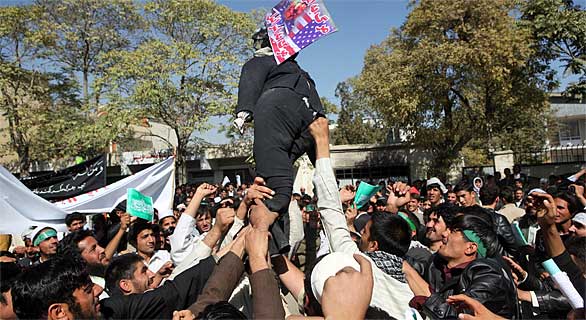
Meanwhile, at the hub of America’s active and violent engagement with the Muslim world, in Kabul, American flags and effigies of Obama are being burned in protest.

The White House should be asking: how come the Turks are having so much more success in practicing what we preach?

In the aftermath of the war on Gaza, Turkey has been uncompromising and principled in its criticisms of Israel. When asked whether he fears that this might risk harming Turkish-US relations, Erdogan dismisses the suggestion, saying: “I don’t think there is any possibility of that. America’s policy in this region is not dictated by Israel.”

Is that wishful thinking, or is it a polite and indirect way of telling Obama that it’s time to stiffen his backbone?

Facebooktwittermail

Where have all Israel’s friends gone?

“Where have all the friendships gone…”

Among all the members of our political, military and media establishments who are now suggesting an “inquiry”, there is no one – literally not one – who means by that a real investigation. The aim is to deceive the Goyim and get them to shut up.

Actually, Israeli law lays down clear guidelines for such investigations. The government decides to set up a commission of investigation. The president of the Supreme Court then appoints the members of the commission. The commission can compel witnesses to testify. Anybody who may be damaged by its conclusions must be warned and given the opportunity to defend themself. Its conclusions are binding.

This law has an interesting history. Sometime in the 50s, David Ben-Gurion demanded the appointment of a “judicial committee of inquiry” to decide who gave the orders for the 1954 “security mishap”, also known as the Lavon Affair. (A false flag operation where an espionage network composed of local Jews was activated to bomb American and British offices in Egypt, in order to cause friction between Egypt and the Western powers. The perpetrators were caught.)

Ben-Gurion’s request was denied, under the pretext that there was no law for such a procedure. Furious, Ben-Gurion resigned from the government and left his party. In one of the stormy party sessions, the Minister of Justice, Yaakov Shimshon Shapira, called Ben-Gurion a “fascist”. But Shapira, an old Russian Jew, regretted his outburst later. He drafted a special law for the appointment of Commissions of Investigation in the future. After lengthy deliberations in the Knesset (in which I took an active part) the law was adopted and has since been applied, notably in the case of the Sabra and Shatila massacre. [continued…]

Jordan’s ties with Israel turn cold

Jordan and Israel mark 15 years of peace today, but ties between both countries are cooler than ever.

Since the right-wing Israeli government of Benjamin Netenyahu took office in May, Jordan has been left further disappointed with its neighbour.

“Our relation is getting colder,” King Abdullah told Israel’s daily Haaretz newspaper this month. “Let’s remember that the peace treaty was signed as part of a process to achieve comprehensive peace. And the full potential of not just Jordanian-Israeli relations, but the whole region, will not be realised unless comprehensive peace is achieved.” [continued…]

Facebooktwittermail

Rory Stewart: The T. E. Lawrence of Afghanistan – UPDATED

Rory Stewart: The T. E. Lawrence of Afghanistan

What would [Rory] Stewart’s version of muddling through in Afghanistan look like? While General Stanley McChrystal’s counterinsurgency plan calls for more than 100,000 American troops, and Joe Biden’s bare-bones counterterrorism proposal reportedly keeps troop numbers around their current level of 68,000, Stewart believes the foreign-troop presence in Afghanistan should actually be reduced–all the way down to 20,000. Those troops would then be used exclusively to fight Al Qaeda terrorists; the Taliban would no longer be an enemy. At the same time, while Stewart’s plan envisions continued aid to Afghans to support electricity, water, health, education, and agriculture development, the United States would cease with its state-building project and essentially leave the Kabul government to its own devices.

Stewart’s plan stems from his strange mixture of pessimism and optimism. On the one hand, he argues that the Afghan central government lacks the strength or legitimacy to actually run the country, nor does he have much faith in the ability of the United States to help it on those counts. “I have some friends in Afghanistan who will say, ‘If the U.S. government is infinitely flexible, capable, superbly informed, able to deliver programs precisely in every rural area, and its soldiers are able to avoid killing anybody and can identify exactly which tribal chief at the sub-district level to deal with, everything will be fine,’” Stewart says. “To which my answer is, ‘That’s a big if, and that’s not how our bureaucracies and administrations work.'” But Stewart also believes that things in Afghanistan aren’t as precarious as some fear. “There’s a certain kind of worst-case scenario view that Afghanistan is like this horrendous nightmare and, if we don’t get in there and sort it out, we’ll have global jihad, we’ll have a completely destabilized region, terrorists will have their hands on Pakistan’s nuclear arsenal, American credibility will be finished forever,” Stewart says. “And these are not really, I think, fully developed positions.”

Under a “muddling through” plan, Stewart concedes that the Taliban might take some provincial capitals in Southern Afghanistan, but he believes that the Hazara, Tajik, and Uzbek populations are stronger than they were in 1996 and, thus, would be able to keep the Taliban out of their areas. He also thinks it would take a minimal foreign military presence to prevent the Taliban from marching into Kabul. With the Taliban confined to certain parts of Afghanistan and its ability to exploit the ideology of religious resistance lessened due to the absence of a substantial foreign military presence, the rest of the country would, with substantial foreign assistance, be able to develop. Although his walk across Afghanistan led Stewart to believe that the country is, in some respects, ungovernable, it also gave him great faith in individual Afghans, on whom he depended for food, lodging, and frequently directions. (He didn’t carry a detailed map on his trek, since it might have made people think he was a British spy.) “We do consistently overestimate our own capacity and underestimate the capacity of others,” he says. “In every case, Afghans are more competent, more canny, more capable than we acknowledge, and we are less so.” [continued…]

UPDATE: Editor’s Comment — Readers who have been following the extraordinary career of Rory Stewart may be interested to hear that yesterday he took the first step in the next chapter: he was selected as the Conservative Party candidate for the English constituency of Penrith and The Border. This is a safe Conservative seat and with the Labour Party struggling in the polls, Stewart stands a good chance of not only entering Parliament after the next general election in Britain but quite likely gaining a position in the next British government. Talent is no guarantee of success in politics, but it will be interesting to see how far Stewart advances and what he might accomplish.

Taliban demand election boycott

The Taliban called on Afghans to boycott the upcoming presidential elections runoff and threatened to attack polling sites, sparking fears that thousands of voters will stay home on election day.

“The Islamic Emirate of Afghanistan urges the people of Afghanistan to not participate in the elections, and once again prove that they are true believers,” the group said in a statement emailed to the Wall Street Journal, using a name referring to the Taliban and allied groups.

“All mujahedeen are ordered to do their best to disrupt the elections and carry out attacks on enemy outposts and prevent people from going to the polling centers,” the statement continued. The group hinted that they would target election workers and voters. “If anyone, including the participants and the workers, gets harmed they have only themselves to blame, since the Islamic Emirate warned them in advance.” [continued…]

Afghan challenger considers runoff boycott

The challenger to President Hamid Karzai is considering boycotting the upcoming runoff if his demands are not met to remove the leaders of Afghanistan’s election commission who he believes are biased against him, campaign officials said Sunday.

Despite his public promises that he will participate in the Nov. 7 runoff, Abdullah Abdullah has been discussing the possibility of pulling out, an outcome that could create a new political crisis and throw the legitimacy of any new government into question. His aides argue that it would be dangerous to enter an election that might reproduce the massive fraud that discredited the vote in August.

Abdullah’s main running mate, Homayoun Shah Assefy, said that it was clear that the United States and the international community would resist such a boycott but that it might be necessary if the Independent Election Commission is not purged of its prominent Karzai supporters. [continued…]

Facebooktwittermail

Iraq is safer – but by no means safe

Iraq is safer – but by no means safe

The savage suicide bombings in the heart of Baghdad yesterday show how far the violence in Iraq is from being over. It is as if those who order these bombings know that they only have to repeat these atrocities every couple of months to destabilise the country.

The government of Prime Minister Nouri al-Maliki makes itself even more vulnerable by boasting that it is improving security. Iraq is a safer place than it was three years ago, but it is still one of the more dangerous places in the world.

There is no need to imagine that the slaughter in Haifa Street yesterday was because American troops withdrew from the cities of Iraq three months ago. With or without US troops, the bombers have been able to get through in Baghdad ever since they destroyed the UN headquarters in 2003. [continued…]

Facebooktwittermail

American preeminence is disappearing fifteen years early

American preeminence is disappearing fifteen years early

Memo to the CIA: You may not be prepared for time-travel, but welcome to 2025 anyway! Your rooms may be a little small, your ability to demand better accommodations may have gone out the window, and the amenities may not be to your taste, but get used to it. It’s going to be your reality from now on.

Okay, now for the serious version of the above: In November 2008, the National Intelligence Council (NIC), an affiliate of the Central Intelligence Agency, issued the latest in a series of futuristic publications intended to guide the incoming Obama administration. Peering into its analytic crystal ball in a report entitled Global Trends 2025, it predicted that America’s global preeminence would gradually disappear over the next 15 years — in conjunction with the rise of new global powerhouses, especially China and India. The report examined many facets of the future strategic environment, but its most startling, and news-making, finding concerned the projected long-term erosion of American dominance and the emergence of new global competitors. “Although the United States is likely to remain the single most powerful actor [in 2025],” it stated definitively, the country’s “relative strength — even in the military realm — will decline and U.S. leverage will become more constrained.”

That, of course, was then; this — some 11 months into the future — is now and how things have changed. Futuristic predictions will just have to catch up to the fast-shifting realities of the present moment. Although published after the onset of the global economic meltdown was underway, the report was written before the crisis reached its full proportions and so emphasized that the decline of American power would be gradual, extending over the assessment’s 15-year time horizon. But the economic crisis and attendant events have radically upset that timetable. As a result of the mammoth economic losses suffered by the United States over the past year and China’s stunning economic recovery, the global power shift the report predicted has accelerated. For all practical purposes, 2025 is here already. [continued…]

Facebooktwittermail