Daily Archives: November 18, 2009

Dispatches: Inside Britain’s Israel Lobby
Dispatches: Inside Britain’s Israel Lobby


(Click on the image above to watch this 48-minute documentary — it’s essential viewing.)

Dispatches investigates one of the most powerful and influential political lobbies in Britain, which is working in support of the interests of the State of Israel.

Despite wielding great influence among the highest realms of British politics and media, little is known about the individuals and groups which collectively are known as the pro-Israel lobby.

Political commentator Peter Oborne sets out to establish who they are, how they are funded, how they work and what influence they have, from the key groups to the wealthy individuals who help bankroll the lobbying.

He investigates how accountable, transparent and open to scrutiny the lobby is, particularly in regard to its funding and financial support of MPs.

The pro-Israel lobby aims to shape the debate about Britain’s relationship with Israel and future foreign policies relating to it.

Oborne examines how the lobby operates from within parliament and the tactics it employs behind the scenes when engaging with print and broadcast media.

Editor’s Comment — It’s hard to predict when the day might come when a broadcast of this nature appears on American television, but if such a day comes, the Lobby here will suffer an irreparable damage in its foundations.

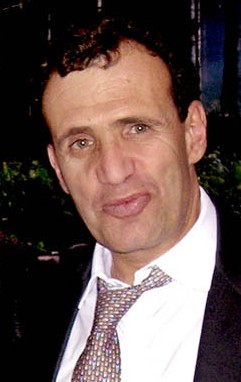
To learn more about a man who figures prominently in the Channel 4 documentary — Chaim “Poju” Zabludowicz, who sounds and looks like a Jewish mafia boss — see the article below.

How the pro-Israel lobby in Britain benefits from a generous London tycoon

Britain’s most active pro-Israeli lobbying organisation – which flies journalists to Israel on fact-finding trips and organises access to senior government figures – has received nearly £1.4m in two years from a billionaire donor whose father made a fortune manufacturing arms in Israel.
The British Israel Communication and Research Centre, known as Bicom, has been one of the most active organisations behind the scenes in the UK during the present Gaza offensive, organising briefings and interview opportunities with senior Israeli spokesmen.

Its biggest funder is Poju Zabludowicz, a London-based tycoon, who has underwritten its campaigning since 2007. The disclosure comes amid an intense struggle in Britain between lobbying organisations working for both sides in the conflict. Foreign affairs specialists say that the injection of funds has ensured that Bicom has become one of the most persistent and slickest media operations in the battle for influence over opinion formers. [continued…]


Facebooktwittermail

Who’s in charge of the language here?

“… who is in charge of the language here?”

After Israeli officials flatly refused a US request to block the approval for the construction of 900 new housing units in occupied East Jerusalem, the Obama administration “lashed out” (CBS) with “anger” (New York Times) and “sharply criticized” (Wall Street Journal) Israel’s decision.

The White House unleashed a shocking display of… “dismay.”

We are dismayed at the Jerusalem Planning Committee’s decision to move forward on the approval process for the expansion of Gilo in Jerusalem.

Thankfully, AP’s Matt Lee wasn’t as obliging as some of his colleagues in their efforts to pump vigor into a pathetic statement.

Challenging State Department spokesman Ian Kelly, Lee asked:

You can’t come up with anything stronger than “dismaying”? I mean, this flies in the face of everything you’ve been talking about for months and months and months.

Kelly: It’s dismaying.

Lee: Yeah, you can’t offer a condemnation of it or anything like that? (Laughter.) I mean, who is in charge of the language here?

On the other side of the Atlantic, Britain’s Foreign Office was a tad more forthright if not quite fiery: “this decision is wrong and we oppose it.”

That kind of language is apparently too strong for this White House. In fact, having originally put out a statement referring to planned “Settlement Expansion in Jerusalem”, the mamby pamdys in charge of language in the most powerful executive office in the world decided to retract “settlement expansion” and simply titled it a statement “on Jerusalem”.

So, the Obama administration is “dismayed” by Israel’s behavior.

It may well be that the word was chosen with exquisite care. It’s etymology is all too appropriate:

Middle English dismaien, from Anglo-Norman *desmaiier : probably de-, intensive pref.; see de- + Old French esmaier, to frighten (from Vulgar Latin *exmagāre, to deprive of power : Latin ex-, ex- + Germanic *magan, to be able to).

The White House could have said:

Prime Minister Netanyahu. You have exposed our impotence. Alas, we have no power.

Should anyone be dismayed at the White House’s language?

Only if you’ve been ignoring the news for the last few months and still imagine that Obama’s speech in Cairo was genuinely a highlight of his presidency.

Bibi goes nuclear on Jerusalem settlements

The plan, if implemented, will allow the construction of 844 units, and these units won’t be inside the existing footprint of the settlement. Rather, they will be on the settlement’s southwestern flank, expanding Gilo in the direction of the Palestinian village of Wallajeh (a village in which a large number of the homes are fighting Israeli demolition orders). This new Gilo plan clearly dovetails with another plan to build a new settlement, called Givat Yael, which would straddle the Jerusalem border and significantly extend Israeli Jerusalem to the south, further sealing the city off from the Bethlehem area and the West Bank (and connecting it to the Etzion settlement bloc). That plan, it was reported yesterday, also appears to be suddenly gaining steam. (for a map showing both the Gilo plan and Givat Yael, click here.)

The Gilo plan is thus extremely provocative on several levels. It represents a clear and public statement from the Netanyahu government that it is neither “freezing” nor acting with “restraint” in East Jerusalem. It compels the Palestinians to respond, just as it compels other regional actors to respond. Finally, it has important strategic implications, since the plan, implemented, would impact on border options for Jerusalem under a future peace agreement.

Today’s crisis was by no means inevitable. Nobody (except for those of us who obsessively follow Jerusalem at its most minute level) had any idea this Gilo plan was on the agenda for today. This means that Bibi could easily have responded positively to US concerns and quietly quashed or delayed the project, without any political cost. Alternatively, he could have offered another (deceptively) constructive course, like allowing it to be deposited for public review but promising to find other ways to hold it up later. Or he could simply have refused to intervene, but kept quiet about it – letting today’s technical approval process run it course and only react publicly, after the fact.

Bibi had a number of conventional options; he chose to go nuclear.

If this feels familiar, it should. This is basically what happened earlier this year with the Shepherds Hotel settlement in Sheikh Jarrah. The plan was on the agenda, Washington weighed in firmly but quietly, hoping for firm but quiet action by Netanyahu – and instead they got a story leaked to the Israeli media (in fact, to the same journalist who broke today’s Gilo story), turning it into an opportunity for Netanyahu to burnish his Jerusalem credentials, at the expense of the prospects for peace. [continued…]

Facebooktwittermail