Iran’s top dissident cleric, Grand Ayatollah Hossein Ali Montazeri, 87 years old, died in his sleep on Saturday night, his family said, drawing supporters to the holy city of Qom on Sunday to pay their respects.
The impromptu mourning — with reformist supporters reportedly streaming in from Tehran and further afield — threatens to set the stage for another confrontation between opposition protesters and government forces. Antiregime demonstrators have used government-sanctioned holidays and Islamic holy days to rally publicly against President Mahmoud Ahmadinejad, who won contested presidential elections in June.
Spontaneous protests erupted across several cities in Iran and at university campuses, according to video circulating on the Internet Sunday afternoon. In one clip in Najaf-Adad, Mr. Montezeri’s home town, crowds chanted, “Our green Montazeri, congratulations on your freedom,” and “Montazeri, your path will continue.” [continued…]
At the height of Iran’s bloody civil unrest this year, a young doctor named Ramin Pourandarjani defied his superiors. He refused to sign death certificates at a Tehran prison that he said were falsified to cover up murder.
He testified to a parliamentary committee that jailers were torturing and raping protesters, his family says. He told friends and family he feared for his life.
And on Nov. 10, the 26-year-old doctor was found dead in the military clinic where he lived and worked. [continued…]
The Iranian government said Saturday that an oil field that its troops occupied a day earlier was on its side of the border with Iraq, despite Iraqi claims to the contrary.
A group of about 11 Iranian soldiers seized a portion of the remote Fakka oil field in Maysan Province in southeastern Iraq early Friday, according to Iraq.
Government officials in Baghdad said they had summoned the Iranian ambassador to protest the military action, but diplomatic efforts had so far failed to resolve the dispute. [continued…]
Iraq deployed security forces Saturday near a remote oil well seized by Iran, officials said, and its government pressed Tehran to withdraw its forces from the area along their disputed southern border.
U.S. officials applauded Iraq for standing its ground against Iran — an uneasy ally that analysts said was aiming to remind its neighbor of its economic and political pull in its takeover of the oil well Thursday. The site is located in one of the largest oil fields in Iraq and has about 1.5 billion barrels in reserves.
The standoff was a dramatic display of the occasionally tense relations between the two oil-rich nations that fought an eight-year war in the 1980s but now share common ground in Shiite-led governments. [continued…]
Those who claim that the U.S. invaded Iraq in 2003 to get control of the country’s giant oil reserves will be left scratching their heads by the results of last weekend’s auction of Iraqi oil contracts: Not a single U.S. company secured a deal in the auction of contracts that will shape the Iraqi oil industry for the next couple of decades. Two of the most lucrative of the multi-billion-dollar oil contracts went to two countries which bitterly opposed the U.S. invasion — Russia and China — while even Total Oil of France, which led the charge to deny international approval for the war at the U.N. Security Council in 2003, won a bigger stake than the Americans in the most recent auction. “[The distribution of oil contracts] certainly answers the theory that the war was for the benefit of big U.S. oil interests,” says Alex Munton, Middle East oil analyst for the energy consultancy Wood Mackenzie, whose clients include major U.S. companies. “That has not been demonstrated by what has happened this week.”
In one of the biggest auctions held anywhere in the 150-year history of the oil industry, executives from across the world flew into Baghdad on Dec. 11 for a two-day, red-carpet ceremony at the Oil Ministry, broadcast live in Iraq. With U.S. military helicopters hovering overhead to help ward off a possible insurgent attack, Oil Minister Hussein Al-Shahrastani unsealed envelopes from each company, stating how much oil it would produce, and what it was willing to accept in payment from Iraq’s government. Rather than giving foreign oil companies control over Iraqi reserves, as the U.S. had hoped to do with the Oil Law it failed to get the Iraqi parliament to pass, the oil companies were awarded service contracts lasting 20 years for seven of the 10 oil fields on offer — the oil will remain the property of the Iraqi state, and the foreign companies will pump it for a fixed price per barrel. [continued…]
Sheik Abdul-Rahman Munshid al-Assi has been making up for the time he lost in an American prison, aggressively diving into Iraqi politics after being held nearly a year on charges of aiding the insurgency.
After his release last year, he formed the Arab Political Council to represent Sunni Arabs in Kirkuk. He recruited Sunni candidates to run in the coming national elections. He is forging a political bloc with Arab nationalists, other tribal leaders and former members of Saddam Hussein’s outlawed Baath Party as a counterweight to Kurds in the province.
At first glance, the fact that a vehement opponent of the Shiite-led government in Baghdad and Kurdish leaders next door is embracing democratic politics may seem to be a purely positive sign. After all, much of the American security effort of the past few years has been to channel Sunnis into just such a course.
But for Sheik Abdul-Rahman the political action is far from a concession. Rather, it is an attempt to tap into the simmering rage he says is still rampant among Sunni Arabs in Iraq. And he and many of his peers are far from becoming fully reformed democrats: he has yet to renounce the insurgency, though he denies directly supporting it, and warns that more violence could come. [continued…]
The Gaza I know By Nancy Murray, The Nation, December 18, 2009
For most Americans, the Gaza Strip is, at best, unknown territory. At worst, it is a hostile land whose “terrorist infrastructure” must be dismantled, no matter what the cost to its million and a half residents.
The Gaza I have been visiting for the past twenty-one years bears little relation to the dehumanizing imagery to which it has been reduced by the mainstream media. The Gaza I know is home to friends and strangers who are as welcoming and humane as they are resilient and determined to achieve their freedom. They have maintained their humanity despite enduring a brutal forty-two-year-old Israeli occupation that has cost them the destruction of their homes, land, economy and future and the loss of more than 4,000 lives since the dawn of the twenty-first century.
For the past two and a half years, this spit of sand–just twenty-five miles long and a few miles wide–has been virtually a closed prison. Since June 2007 Israel’s blockade has prevented the entry of all but a handful of basic items, and the exit of patients who urgently need medical treatment and students with scholarships to study abroad. Then, a year ago, came the “shock and awe” of Israel’s “Operation Cast Lead,” intended as a knockout blow not just to the crude rockets fired from Gaza but to its life-sustaining infrastructure and the will of its people to resist. [continued…]
I am a Palestinian refugee, from the village of Fallujah which lies between Gaza, Hebron and Asqalan. I’ve never been allowed to visit Fallujah; my grandparents were exiled from there in 1949 (a year after the founding of Israel) and took refuge in the Gaza Strip. My father and I were both born in the Khan Younis refugee camp-he a few years before Gaza was occupied by Israel, and I in 1988, a month after the outbreak of the first intifada. My dad married a woman from the West Bank-they had met and fallen in love while they were both studying at Birzeit University, and when I was two years old we emigrated to the UK where he received his Phd.
Fourteen years later, in 2004, we all returned to Palestine to live in Ramallah. Now British citizens, my parents were determined that my three siblings and I would forge a stronger connection to our homeland than we ever could living abroad. At first, the transition was made easier by the fact that our foreign passports gave us the freedom of movement that was denied to other Palestinians in the West Bank and Gaza. For me, this reality was shattered when in late 2005 I attempted to cross the River Jordan from the West Bank to visit my aunt in Amman. The Israeli border agents told me that I could not pass, because I had an Israeli issued Gaza ID. Under Israeli military rules, this meant that I could not ‘legally’ be present in the West Bank because the Israeli occupation had mandated that Palestinians from Gaza could not enter the West Bank, and Palestinians from the West Bank could not enter Gaza. This policy had been in force since the early 1990’s, but was applied with increasing severity after the outbreak of the second intifada.
I lived the next four years under constant fear of arrest by the Israeli military, because that would have resulted in almost certain deportation to Gaza, and isolation from my family. For those four years, I never left the confines of Ramallah, so as to avoid the Israeli checkpoints on every one of the town’s entrances-but even this couldn’t give me a sense of security because I had to commute daily to Birzeit University, on a route frequently patrolled by Israeli forces from the nearby settlement of Bet El. [continued…]
In recent years the idea of a one-state solution has been anathema to Israelis and their supporters worldwide. This has been fueled by the fear of the “demographic threat” posed by the high Palestinian birthrate. Indeed, many Israeli supporters of a two-state solution came to that position out of fear of this demographic threat rather than sympathy with Palestinian national aspirations.
At the root of their fear was the belief that despite Israel’s best efforts to push Palestinians from land and property and to import Jewish settlers in their stead, the Arab population would keep climbing. And that, when the Arabs reached the 51% mark, the state of Israel would collapse, its Jewish character would disappear and its population would dwindle into obscurity.
Yet that scenario is not necessarily the inevitable result of either demography or democracy. Religious and ethnic minorities have successfully thrived in many countries and managed to retain their distinctive culture and identity, and succeeded in being effective and sometimes even dominant influences in those countries. Those who believe in coexistence must begin to seriously think of the legal and constitutional mechanisms needed to safeguard the rights of a Jewish minority in Israel-Palestine. [continued…]
Ruhollah Solook, a retired electrician living in Santa Monica, Calif., was in a desperate bind. He urgently needed a kidney transplant, as well as a series of radiation therapy diagnoses and treatments. The nuclear medicine was available in the United States, but the kidney was not.
Solook, 78, an Iranian Jew who emigrated decades ago, never expected to find both in his native country. But there he was this month, recovering in an isolated room in Tehran’s oldest hospital with a new kidney donated by a friend.
“They have saved my life here,” he said. “Now I hope they can cure me.”
In Iran, an estimated 850,000 kidney, heart and cancer patients are facing a race against time. Although these patients are in need of post-surgery treatment with nuclear medicine, doctors and nuclear scientists here say domestic production will dry up when a research reactor in Tehran runs out of fuel, perhaps as soon as this spring. [continued…]
As Marie Pryor shuffles along a Mississippi roadside collecting discarded drink cans to sell for a few cents, her breath comes in short puffs caused by a congenital heart defect. The same condition caused her granddaughter’s death earlier this year.
The last place on earth she would look for help is Iran, a country widely regarded in America as the enemy. The US and Iran have not had diplomatic relations for 30 years and the two governments trade daily insults over Iran’s nuclear programme. Last week Tehran charged three American hikers with espionage after they apparently strayed across the border.
But with Congress acrimoniously debating the reform of healthcare, it is to Iran that one of America’s poorest communities is turning to try to resolve its own health crisis.
A US doctor and a development consultant visited Iran in May to study a primary healthcare system that has cut infant mortality by more than two-thirds since the Islamic revolution in 1979.
Then, in October, five top Iranian doctors, including a senior official at the health ministry in Tehran, were quietly brought to Mississippi to advise on how the system could be implemented there. [continued…]
A hearing in Sen. Claire McCaskill’s Contract Oversight subcommittee on contracting in Afghanistan has highlighted some important statistics that provide a window into the extent to which the Obama administration has picked up the Bush-era war privatization baton and sprinted with it. Overall, contractors now comprise a whopping 69% of the Department of Defense’s total workforce, “the highest ratio of contractors to military personnel in US history.” That’s not in one war zone — that’s the Pentagon in its entirety.
In Afghanistan, the Obama administration blows the Bush administration out of the privatized water. According to a memo [PDF] released by McCaskill’s staff, “From June 2009 to September 2009, there was a 40% increase in Defense Department contractors in Afghanistan. During the same period, the number of armed private security contractors working for the Defense Department in Afghanistan doubled, increasing from approximately 5,000 to more than 10,000. [continued…]
Scotland Yard has warned businesses in London to expect a Mumbai-style attack on the capital.
In a briefing in the City of London 12 days ago, a senior detective from SO15, the Metropolitan police counter-terrorism command, said: “Mumbai is coming to London.”
The detective said companies should anticipate a shooting and hostage-taking raid “involving a small number of gunmen with handguns and improvised explosive devices”.
The warning — the bluntest issued by police — has underlined an assessment that a terrorist cell may be preparing an attack on London early next year. [continued…]
This website or its third-party tools use cookies, which are necessary to its functioning. By closing this banner, you agree to the use of cookies.

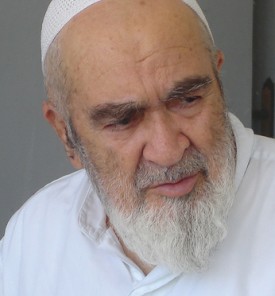 ran’s top dissident cleric, Grand Ayatollah Hossein Ali Montazeri, 87 years old, died in his sleep on Saturday night, his family said, drawing supporters to the holy city of Qom on Sunday to pay their respects.


