Author Archives: News Sources

Under Trump, favorable views of U.S. decline worldwide, except in Russia

The Washington Post reports: President Trump has alarmed citizens of the nation’s closest allies and others worldwide, diminishing the standing of the United States in their eyes, according to a wide-ranging international study released Monday.

But in the survey of 37 countries, Russia is a bright spot for Trump. As beleaguered as the president is at home, a majority of Russians say they have confidence in him. And Russians’ attitudes toward the United States have improved since Trump took office.

Elsewhere, though, and with remarkable speed, Trump’s presidency has taken a toll on the United States’ image abroad.

The international survey by the Pew Research Center found that favorable ratings of the United States have decreased from 64 percent of people across all countries surveyed at the end of Barack Obama’s presidency to 49 percent this spring. The new figures are similar to those toward the end of the George W. Bush administration.

The president himself has fared even worse: A median 22 percent are confident that Trump will do the right thing in global affairs, down from 64 percent who had confidence in Obama. [Continue reading…]


Facebooktwittermail

Tight circle of security officials crafted Trump’s Syria warning

Politico reports: President Donald Trump’s blunt, public warning to the Syrian regime issued late Monday night was cobbled together in a series of hurried discussions, squeezed in between meetings with Indian Prime Minister Narendra Modi — and kept among a small, tight circle of top officials.

Defense Secretary James Mattis and Secretary of State Rex Tillerson both arrived at the White House late Monday afternoon, ahead of the Rose Garden ceremony where Trump and Modi both read prepared statements. Upon their arrival, according to a senior defense official, they were informed of Trump’s plan to issue a public warning to Syrian president Bashar Assad, based on new intelligence that the Syrian administration was making preparations for another chemical weapons attack on its own people.

National security adviser H.R. McMaster, who also was at the White House for meetings, had already been briefed and weighed in on the plan, administration sources said.

But no stand-alone principals meeting followed to discuss the intelligence, which Trump received Monday morning, according to two senior administration officials.

Rather, over the course of the day, officials said, McMaster, Mattis, Tillerson and a few other top officials had the opportunity to “work the language” of the statement, in between Modi meetings. None of them expressed any hesitation or disagreement about the decision to issue a public warning, according to one of the senior administration officials.

But a Defense Department official acknowledged that the events were “fast moving” and that there were minimal deliberations about the bold move — and that only a limited number of top military officials were aware of the new intelligence and planned response. [Continue reading…]

Facebooktwittermail

Trump cares more about CNN and the Russia story than Syria, official says

The Daily Beast reports: Hours before the White House issued an ominous warning to Syria’s dictator against launching another chemical assault, Secretary of State Rex Tillerson gave the same message to Bashar Assad’s patron in Moscow, The Daily Beast has learned.

According to a knowledgeable senior administration official, Tillerson warned his counterpart, Sergei Lavrov: the U.S. sees that Russia and Syria may be prepping for another chemical weapons attack; and that there will be consequences if Assad follows through with it.

All this occurred this week as President Donald Trump displayed what two White House officials characterized as relative indifference and passivity towards the subject, instead opting to focus his public and private energies towards fuming at his domestic enemies in the Democratic Party and the “fake news.”

“The president cares more about CNN and the Russia story than [Syria] at the moment,” one official observed. [Continue reading…]

Facebooktwittermail

The National Enquirer’s fervor for Trump

Jeffrey Toobin writes: As the meeting wound down, the discussion turned to the following week’s issue [of the National Enquirer]. Someone suggested a story about a video from Donald and Melania Trump’s first overseas trip. The video, which had just gone viral, showed the couple walking down a red carpet on the airport tarmac in Israel. When Donald reached for Melania’s hand, she slapped it away with a sharp flick of her wrist.

“I didn’t see that,” [David] Pecker [chief executive of American Media, Inc., which owns most of the nation’s supermarket tabloids and gossip magazines] said, on the speakerphone.

The half-dozen or so men in the room exchanged looks. One then noted that the footage of Melania’s slap had received a good deal of attention.

“I didn’t see that,” Pecker repeated, and the subject was dropped.

It was a telling moment. Even if the leader of a celebrity-news empire had missed the viral video from the President’s trip, Pecker’s decision to ignore the awkward moment for the First Family was not surprising. The Enquirer is defined by its predatory spirit—its dedication to revealing that celebrities, far from leading ideal lives, endure the same plagues of disease, weight gain, and family dysfunction that afflict everyone else. For much of the tabloid’s history, it has specialized in investigations into the foibles of public personalities, including politicians. In 1987, the Enquirer published a photograph of Senator Gary Hart with his mistress Donna Rice, in front of a boat called the Monkey Business, which doomed Hart’s Presidential candidacy. Two decades later, the magazine broke the news that John Edwards had fathered a child out of wedlock during his Presidential race. When Donald Trump decided to run for President, some people at the Enquirer assumed that the magazine would apply the same scrutiny to the candidate’s colorful personal history. “We used to go after newsmakers no matter what side they were on,” a former Enquirer staffer told me. “And Trump is a guy who is running for President with a closet full of baggage. He’s the ultimate target-rich environment. The Enquirer had a golden opportunity, and they completely looked the other way.”

Throughout the 2016 Presidential race, the Enquirer embraced Trump with sycophantic fervor. The magazine made its first political endorsement ever, of Trump, last spring. [Continue reading…]

Facebooktwittermail

Trump golf courses display fake Time Magazine Trump cover

The Washington Post reports: The framed copy of Time Magazine was hung up in at least five of President Trump’s clubs, from South Florida to Scotland. Filling the entire cover was a photo of Donald Trump.

“Donald Trump: The ‘Apprentice’ is a television smash!” the big headline said. Above the Time nameplate, there was another headline in all caps: “TRUMP IS HITTING ON ALL FRONTS . . . EVEN TV!”

This cover — dated March 1, 2009 — looks like an impressive memento from Trump’s pre-presidential career. To club members eating lunch, or golfers waiting for a pro-shop purchase, it seemed to be a signal that Trump had always been a man who mattered. Even when he was just a reality-TV star, Trump was the kind of star who got a cover story in Time.

But that wasn’t true.

The Time cover is a fake. [Continue reading…]

Facebooktwittermail

Will get fooled again – Seymour Hersh, Welt, and the Khan Sheikhoun chemical attack

Eliot Higgins writes: On June 25th 2017 the German newspaper, Welt, published the latest piece by Seymour Hersh, countering the “mainstream” narrative around the April 4th 2017 Khan Sheikhoun chemical attack in Syria. The attack, where Sarin was allegedly used against the local population, dropped in a bomb by the Syrian Air Force, resulted in President Trump taking the decision to launch cruise missiles at a Syrian airbase.

As with his other recent articles, Hersh presented another version of events, claiming the established narrative was wrong. And, as with those other recent articles, Hersh based his case on a tiny number of anonymous sources, presented no other evidence to support his case, and ignored or dismissed evidence that countered the alternative narrative he was trying to build.

This isn’t the first chemical attack in Syria which Hersh has presented a counter-narrative for, based on a handful of anonymous sources. In his lengthy articles for the London Review of Books, “Whose sarin?” and “The Red Line and the Rat Line”, Hersh made the case that the August 21st 2013 Sarin attack in Damascus was in fact a false flag attack intended to draw the US into the conflict with Syria. This claim fell apart under real scrutiny, and relied heavily on ignoring much of the evidence around the attacks, an ignorance of the complexities of producing and transporting Sarin, and a lack of understanding about facts firmly established about the attacks. [Continue reading…]

Facebooktwittermail

Mattis: After Raqqa, the Syrian battlefield will only get more complicated

The Washington Post reports: As the fight against the Islamic State moves beyond its de facto capital in Raqqa, the Pentagon is readying itself for an increasingly complex battlefield in northern Syria, where U.S.-backed forces, pro-Syrian government troops and Russian jets will likely all be fighting near one another.

Speaking to reporters on his way to Germany on Monday to meet with European allies, Secretary of Defense Jim Mattis spoke broadly about the U.S. military’s future operations against the Islamic State in the Euphrates River Valley, adding that it will take “more precision” to stave off any incidents between the disparate forces operating there.

“You have to play this thing very carefully,” Mattis said. “The closer we get, the more complex it gets.”

Mattis also acknowledged that the U.S. would continue to supply Kurdish forces in the north with weapons despite objections by U.S. ally Turkey. “When they don’t need them anymore we’ll replace them with what they do need,” he said. [Continue reading…]

Facebooktwittermail

No one is paying attention to the worst humanitarian crisis since World War II

Jackson Diehl writes: The never-ending circus that is Donald Trump’s presidency has sucked attention from all kinds of issues that desperately need it, from health-care reform to the creeping expansion of U.S. engagement in Syria. Still, it’s shocking that so little heed is being paid to what the United Nations says is the worst humanitarian crisis since 1945: the danger that about 20 million people in four countries will suffer famine in the coming months, and that hundreds of thousands of children will starve to death.

Not heard of this? That’s the problem. According to U.N. and private relief officials, efforts to supply enough food to stem the simultaneous crises in South Sudan, Somalia, Yemen and Nigeria are falling tragically short so far, in part because of inadequate funding from governments and private donors. Of the $4.9 billion sought in February by the U.N.’s Office for the Coordination of Humanitarian Affairs (OCHA) for immediate needs in those countries, just 39 percent had been donated as of last week.

That resource gap could be attributed to donor fatigue, or to the sheer size of the need. But, in part, it’s a simple lack of awareness. “We can’t seem to get anyone’s attention to what’s going on,” says Carolyn Miles, the president and chief executive of Save the Children. [Continue reading…]

Facebooktwittermail

U.S. travel ban will kick off ‘summer of litigation’, advocates warn

The Guardian reports: Human rights advocates have warned of a “summer of litigation” in response to the US supreme court’s decision to partially reinstate Donald Trump’s travel ban.

The ban applies to people from six Muslim-majority countries and refugees, but one clause in the court’s order has raised more questions than it answers about who will actually be allowed entry into the US.

People from Iran, Libya, Somalia, Sudan, Syria and Yemen and all refugees are not allowed to enter the US unless they have “a credible claim of a bona fide relationship with a person or entity in the United States”, according to the court.

Naureen Shah, the director of Amnesty International USA’s Security and Human Rights Program, said that even as trained lawyer she had difficulty interpreting its meaning.

“As a bare minimum it introduces uncertainties into life-and-death decisions for people,” Shah said. “It’s so brazenly dismissive to that chaos it is going to unleash.”

For instance, if one American doctor agrees to provide medical care to a child injured in a refugee camp, does the child have a bona fide relationship with the doctor, or the hospital the doctor works at?

In addition, it is not yet clear how the departments of state and homeland security will explain the definition of a bona fide relationship to airports abroad.

Conservative supreme court Justice Clarence Thomas warned in his opinion on the case that the court’s decision “will invite a flood of litigation”.

Human rights advocates agreed. [Continue reading…]

Facebooktwittermail

At 15 I was tortured in Assad’s prisons. I escaped, but thousands still suffer

An anonymous Syrian torture victim writes: For the 10 months I spent as a detainee in the prisons of Bashar al-Assad, I only saw my family in my dreams. At night, the screams would stop for an hour or two, and I could close my eyes and remember what it was like to be human. When I slept, I would return to my life.

Today is the UN’s International Day for Support of Victims of Torture. Unfortunately in Syria, there is no shortage of victims of torture. Tens of thousands of us have been thrown in Assad’s prisons and tortured beyond what our bodies and minds can take. Many of us die there. Those of us who have survived will spend the rest of our lives being reminded of just how evil humanity is capable of being.

I was only 15 when I was arrested and subjected to months of physical and psychological torture.

I am lucky to have survived. There were times I wished for death. As happy as I am to return to life again, I am equally gripped by sadness and pain knowing more than 200,000 prisoners are still there. My freedom feels incomplete as long as my Syrian brothers and sisters suffer behind those high walls. I am a hostage of my memory.

Aleppo is my home. I was forced to leave there in 2013 to try to escape the barrel bombs and besiegement of the city by Assad and his allies. My mother, siblings and I fled to Lebanon. At the age of 14, I had to leave school and begin working to try to sustain our family. At the end of 2014, we were forced to return to Syria because we could not afford Lebanese residence and working permits.

On the way home, I was arrested by members of a political security branch in Damascus. They accused me of taking part in the peaceful demonstrations at the beginning of the popular Syrian revolution against Assad.

This is a regime known for its oppression, its tyranny, and its corruption. But it is also a regime that stands against humanity. It is a regime that could arrest a 15-year-old, a kid, and subject him to months of torture and starvation and psychological trauma. And I am not by any means a unique story in Syria. [Continue reading…]

Facebooktwittermail

China breaks ground on first ‘Forest City’ that fights air pollution

inhabitat reports: A pollution-fighting green city unlike any before is springing to life in China. Designed by Stefano Boeri Architetti, the first “Forest City” is now under construction Liuzhou, Guangxi Province. The futuristic city will use renewable energy for self sufficiency and be blanketed in almost 1 million plants and 40,000 trees—a sea of greenery capable of absorbing nearly 10,000 tons of carbon dioxide and 57 tons of pollutants annually.

Commissioned by Liuzhou Municipality Urban Planning for the north of Liuzhou along the Liujiang river, the 175-hectare Liuzhou Forest City will be the first of its kind that, if successful, may raise the bar for urban design worldwide. This first Chinese Forest City will host 30,000 people in a community where all buildings are entirely covered in nearly a million plants of over 100 species, as well as 40,000 trees, that produce approximately 900 tons of oxygen. The use of greenery-covered facades builds on Stefano Boeri’s previous works, including the Vertical Forest residential building in Milan. [Continue reading…]

Facebooktwittermail

Carbon in atmosphere is rising, even as emissions stabilize

The New York Times reports from Cape Grim, Tasmania: On the best days, the wind howling across this rugged promontory has not touched land for thousands of miles, and the arriving air seems as if it should be the cleanest in the world.

But on a cliff above the sea, inside a low-slung government building, a bank of sophisticated machines sniffs that air day and night, revealing telltale indicators of the way human activity is altering the planet on a major scale.

For more than two years, the monitoring station here, along with its counterparts across the world, has been flashing a warning: The excess carbon dioxide scorching the planet rose at the highest rate on record in 2015 and 2016. A slightly slower but still unusual rate of increase has continued into 2017.

Scientists are concerned about the cause of the rapid rises because, in one of the most hopeful signs since the global climate crisis became widely understood in the 1980s, the amount of carbon dioxide that people are pumping into the air seems to have stabilized in recent years, at least judging from the data that countries compile on their own emissions.

That raises a conundrum: If the amount of the gas that people are putting out has stopped rising, how can the amount that stays in the air be going up faster than ever? Does it mean the natural sponges that have been absorbing carbon dioxide are now changing? [Continue reading…]

Facebooktwittermail

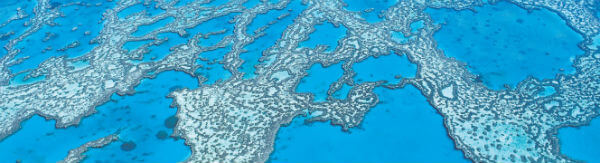
Great Barrier Reef valued at A$56bn as report warns it’s ‘too big to fail’

The Guardian reports: A new report has valued the Great Barrier Reef at A$56bn and warns of vast economic consequences for Australia unless more is done to protect it.

The Deloitte Access Economics report says the world heritage-listed reef underpins 64,000 direct and indirect jobs, and contributes $6.4bn to the national economy each year.

But without ramped-up protection efforts, it warns much of that could be at risk as the reef suffers from repeated mass coral bleaching events, poor water quality and climate change.

“The reef is critical to supporting economic activity and jobs in Australia,” says the report, prepared for the Great Barrier Reef Foundation. “The livelihoods and businesses it supports across Australia far exceeds the numbers supported by many industries we would consider too big to fail.”

Of the 64,000 jobs linked to the reef, 39,000 are direct jobs – making the reef a bigger “employer” than the likes of Telstra, the Qantas Group, National Australia Bank and the oil and gas extraction industry. [Continue reading…]

Facebooktwittermail

FBI has questioned Trump campaign adviser Carter Page at length in Russia probe

The Washington Post reports: FBI agents have repeatedly questioned former Trump campaign adviser Carter Page about his contacts with Russians and his interactions with the Trump campaign, according to people familiar with the investigation.

Over a series of five meetings in March, totaling about 10 hours of questioning, Page repeatedly denied wrongdoing when asked about allegations that he may have acted as a kind of go-between for Russia and the Trump campaign, according to a person familiar with Page’s account.

The interviews with the FBI are the most extensive known questioning of a potential suspect in the probe of possible Russian connections to associates of President Trump. The questioning of Page came more than a month before the Russian investigation was put under the direction of Special Counsel Robert S. Mueller III. [Continue reading…]

Facebooktwittermail

Trump’s bullshit on Russia frustrates even his allies

The New York Times reports: In the span of 72 hours, President Trump described the email hacking that roiled the 2016 campaign as a Democratic “hoax” and as clear aggression by Russia that his predecessor, President Barack Obama, failed to address.

Other times, Mr. Trump has said the hacking might have been done by China.

Or, as he claimed during the first general election debate, the hacking could have been the work of a lone wolf weighing 400 pounds, sitting on his bed at home.

Then there was the time Mr. Trump blamed “some guy in his home in New Jersey.”

Or, as Mr. Trump has also suggested, there might not even have been hacking at all…

On Saturday, Mr. Trump tried again to focus attention on Mr. Obama.

“Since the Obama Administration was told way before the 2016 Election that the Russians were meddling, why no action?” Mr. Trump wrote on Twitter. “Focus on them, not T!”

He followed that up with: “Obama Administration official said they ‘choked’ when it came to acting on Russian meddling of election. They didn’t want to hurt Hillary?”

Government officials, members of Congress from both parties and even some Trump supporters had hoped that, with the campaign behind him, Mr. Trump would finally speak declaratively about the email hacking and recognize the threat Russian cyberattacks present, without asterisks, wisecracks, caveats or obfuscation.

That hope has dissipated. The latest presidential tweets were proof to dismayed members of Mr. Trump’s party that he still refuses to acknowledge a basic fact agreed upon by 17 American intelligence agencies that he now oversees: Russia orchestrated the attacks, and did it to help get him elected. [Continue reading…]

Facebooktwittermail

Europe has been working to expose Russian meddling for years

The Washington Post reports: As the United States grapples with the implications of Kremlin interference in American politics, European countries are deploying a variety of bold tactics and tools to expose Russian attempts to sway voters and weaken European unity.

Across the continent, counterintelligence officials, legislators, researchers and journalists have devoted years — in some cases, decades — to the development of ways to counter Russian disinformation, hacking and trolling. And they are putting them to use as never before.

Four dozen officials and researchers interviewed recently sounded uniformly more confident about the results of their efforts to counter Russian influence than officials grappling with it in the United States, which one European cyber-official described as “like watching ‘House of Cards.’ ”

“The response here has been very practical,” observed a senior U.S. intelligence official stationed in Europe. “Everybody’s looking at it.”

In the recent French elections, the Kremlin-friendly presidential candidate lost to newcomer Emmanuel Macron, who was subjected to Russian hacking and false allegations in Russian-sponsored news outlets during the campaign. In Germany, all political parties have agreed not to employ automated bots in their social media campaigns because such hard-to-detect cybertools are frequently used by Russia to circulate bogus news accounts. [Continue reading…]

Facebooktwittermail

Kushner firm’s $285 million Deutsche Bank loan came just before Election Day

The Washington Post reports: One month before Election Day, Jared Kushner’s real estate company finalized a $285 million loan as part of a refinancing package for its property near Times Square in Manhattan.

The loan came at a critical moment. Kushner was playing a key role in the presidential campaign of his father-in-law, Donald Trump. The lender, Deutsche Bank, was negotiating to settle a federal mortgage fraud case and charges from New York state regulators that it aided a possible Russian money-laundering scheme. The cases were settled in December and January.

Now, Kushner’s association with Deutsche Bank is among a number of financial matters that could come under focus as his business activities are reviewed by special counsel Robert S. Mueller III, who is examining Kushner as part of a broader investigation into possible Russian influence in the election.

The October deal illustrates the extent to which Kushner was balancing roles as a top adviser to Trump and a real estate company executive. After the election, Kushner juggled duties for the Trump transition team and his corporation as he prepared to move to the White House. The Washington Post has reported that investigators are probing Kushner’s separate December meetings with the Russian ambassador to the United States, Sergey Kislyak, and with Russian banker Sergey Gorkov, the head of Vnesheconombank, a state development bank. [Continue reading…]

Facebooktwittermail

How Putin seduced Oliver Stone — and Trump

Masha Gessen writes: Watching four hours of Oliver Stone interviewing President Vladimir Putin of Russia is not a lesson in journalism. Mr. Stone is an inept interviewer, and he does not get Mr. Putin to say anything the world hasn’t heard from him before. Watching the interviews for entertainment is a questionable proposition, too: The four-part series contains many dull exchanges and even more filler, like footage of the two men watching “Dr. Strangelove” together.

Still, “The Putin Interviews,” which were released this month by Showtime, may be worth watching for the view they provide of a particular kind of relationship.

Many Americans have been looking for an explanation for Mr. Trump’s apparent adoration of Mr. Putin. How can a powerful, wealthy American man hold affection for the tyrannical, corrupt leader of a hostile power?

Oddly, “The Putin Interviews” provide psychological and intellectual answers to that question. For Mr. Stone appears to have the same sort of breathless admiration for Mr. Putin as Mr. Trump does. In filming their interaction, he has broadcast the conditions on which this kind of admiration rests. Should you ever wish to experience affection for a dictator, you too should make sure that these conditions are in place. [Continue reading…]

Facebooktwittermail