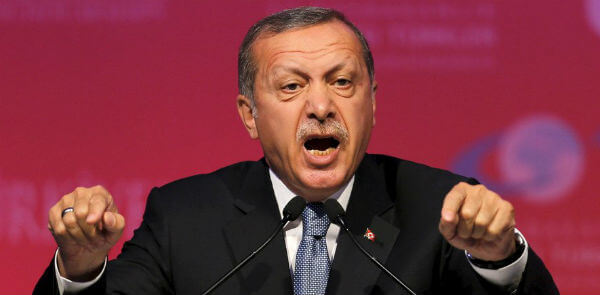
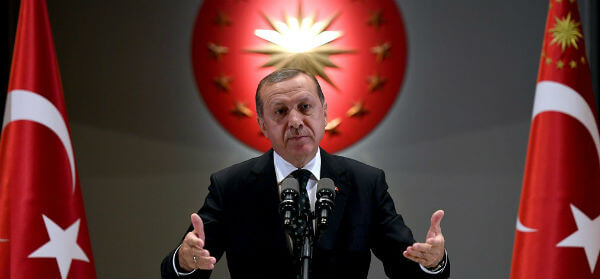
The Guardian reports: When tanks rolled across Istanbul and Ankara on Friday night, at the start of Turkey’s botched coup, many in the country were frightened. But few in Turkey had more reason to be afraid than its 2.7 million Syrians, the largest Syrian diaspora community in the world.
“When we first heard about the coup attempt, we felt an unprecedented fear,” remembers Hussein Qassoum, a 30-year-old logistics manager living in Istanbul. “Most of my friends started asking: ‘Which other country should we go to now?’”
Like many Turks, Syrians feared the violence that broke out in the early hours of Saturday might spiral into something more sustained. But Syrians also had more specific concerns about what might happen to them if the president, Recep Tayyip Erdoğan, was toppled.
Life is hard for Syrians in Erdoğan’s Turkey, where they do not have full rights. Despite recent legislative changes, the vast majority are not allowed to work. Hundreds of thousands of Syrian children are not in school, with many working in sweatshops instead. Syrians are denied official refugee status, since Turkey does not recognise key parts of the UN refugee convention.
But Erdoğan’s government has at least given about 2.7 million Syrians a basic level of sanctuary. None of his political opponents has promised to be as accommodating and there is a fear that without Erdoğan, life could get even tougher for Syrians in Turkey. [Continue reading…]
Author Archives: News Sources
Civilian deaths from U.S. airstrikes in Syria now ‘nearing Russian levels’
Charles Davies writes: somehow, someway, the news from Syria invariably manages to get worse, for those not yet fatigued by the routine of atrocity.
“It’s the worst week we’ve ever tracked,” Chris Woods, director of the monitoring group Airwars, told The Daily Beast. He was referring to a threat that emerged nearly two years ago: U.S. airstrikes, aimed at the Islamic State and Jabhat al-Nusra, al-Qaida’s Syrian affiliate, but exacting a deadly toll on those stuck between ostensibly religious and ostensibly secular extremists.
Ahmad Mohammad, a 24-year-old Syrian activist, described it as a “massacre”: On July 19, over 90 civilians in the northern Syria village of Tokhar, just outside the town Manbij, were killed by suspected U.S. airstrikes as a U.S.-backed coalition, the Syrian Democratic Forces, is fighting to reclaim the area along the Turkish border from the Islamic State.
When the uprising in Syria began in 2011, Mohammad said his goal was to spread “news of the revolution”; in 2016 his activism takes the form of “documenting abuses” — in this case, he sent along photos of women and children being buried in a mass grave, “human beings like all of us,” he said, whose only offense was living in a town occupied by terrorists from abroad.
In a statement, U.S. Central Command confirmed it carried out airstrikes in the area. “We are aware of reports alleging civilian casualties in the area,” it said. “If the information supporting the allegation is determined to be credible, we will then determine the next appropriate step.”
The CENTCOM-supported SDF, meanwhile, has dismissed reports of mass casualties in Manbij as “fabricated news” circulated by groups who “support terrorism,” according to a statement obtained by the Kurdish media network Rudaw.
Independent monitors and anti-ISIS activists on the ground, by contrast, insist that air support for the SDF has killed hundreds of innocents.
According to Airwars, the human beings dumped in that hole, along with corpses on streets and under rubble in and around Manbij that could not be afforded even a mass burial, bring the civilian death count from U.S.-led airstrikes in the area up to at least 190 since May 31.
Local activists claim the number is at least 368, and an activist with the Free Manbij Media Center told The Daily Beast the death toll on July 19 alone was “more than 150 people, mostly women and children” who were “killed while in their homes.”
The latest airstrikes have grabbed international headlines, but they are nothing new for Syrians. Since the U.S.-led coalition began bombing Syria, Airwars states there are credible reports of between 682 and 942 civilian deaths, meaning that nearly a third of what the military terms “collateral damage” has occurred in the last two months. It has gotten “so bad,” Woods said, “that we’re nearing Russian levels” (between 1,098 and 1,450 “likely” dead civilians since September 2015). The U.S. has thus far confirmed just 24 civilian deaths from its campaign in Syria. Like Russia, none of its partners — Australia, Bahrain, France, Saudi Arabia and the United Kingdom, among others — has admitted to any. [Continue reading…]

Attacker in Nice had support of several people, French prosecutors say
The Wall Street Journal reports: The man who killed 84 people in Nice on Bastille Day had the support of several people and appeared to have been plotting his attack since last year, French prosecutors said Thursday.
Paris prosecutor François Molins said he asked a judge to place five people under investigation on preliminary terrorism charges. The five are in police custody.
“The investigation has not only provided more confirmation of the premeditation of the murderous attack of Mohamed Lahouaiej Bouhlel, but also establish that he had support and complicity in preparation of his criminal act,” Mr. Molins said.
Meanwhile, antiterror police conducted raids in a Paris suburb on Thursday, police officers said, as France attempts to sweep up weapons and people suspected of links to terrorism networks after the July 14 attack in Nice.
Police locked down a neighborhood in Argenteuil, a suburb 7 miles northwest of Paris, as they raided three sites, searching for weapons and explosives, one police officer said. Around 20 people were detained in the raids, another said. [Continue reading…]
Turkish aid flows into besieged Gaza Strip
Al Jazeera reports: The night before Eid, Basem Abu Attia received a call from a local official with some good news: His food package was ready for pick-up.
“I was very surprised,” Abu Attia told Al Jazeera. “I wasn’t expecting anything … I had nothing to give my family, so when the aid came I was overjoyed.”
More aid from Turkey has started flowing into Gaza this week under the terms of the recent Turkey-Israel deal, after the Social Affairs Ministry spent weeks organising the material. Distribution to about 75,000 families dependent on government subsidies began on Tuesday, although delivery was previously expedited to some of the neediest families, including Abu Attia’s.
The aid package included rice, oil, olives, dates and flour – basic items that Abu Attia, who lives in the Nuseirat refugee camp, cannot afford himself. His 10 children, the youngest of whom is three, were elated, he said – “especially with the chocolates”. He hopes that later deliveries will include toys for his children.
Just a week into receiving the package, however, all that remained was a bag of rice and a can of olives.
“We need a long-term programme, and we’re hoping the Turks will help us with this,” said Talla Abu Jomaa, the Social Affairs Ministry representative in Nuseirat camp, who delivered the aid package to Abu Attia.
Uncertainty was cast over the Turkey-Israel deal after a failed coup attempt by members of the Turkish military last week. But as President Recep Tayyip Erdogan emerged in control, Turkish officials confirmed that the agreement remains on course. [Continue reading…]
The consequences of Durand’s border blunder continue to shape world politics
Rafia Zakaria writes: By the year 1871, British officials stationed in India had learned to ride elephants. This was in fact exactly what Sir Henry Durand, Lieutenant Governor of Punjab, was doing when he fell to his death. In the sad record of the event, Sir Henry is described riding in a howdah atop an elephant while traveling through the North-West Frontier Province, ‘which was in his charge’. The elephant, which belonged to an Indian chief, was led through a covered gateway that was ‘too low for it to pass through’. As a result, Durand the younger writes: ‘My father, a man of great height, was forced backward and thrown out across a low wall, which so injured his spine that he died the same day.’
The unceremonious death of Durand the elder, the ‘man of great height’, can well be a study of the British in India at the time. They had quashed a mutiny in 1857, and conquered both the fertile province of Punjab and the southern province of Sindh. Yet they remained curiously vulnerable to surprises on the wild edge of the northwestern corner of their empire. Mortimer Durand, then in his 20s, would attempt to tame the frontier which had taken his father. It was Mortimer, and not the elephant-riding Sir Henry, who would be the architect, and namesake, of a border that remains a frontline for battles between superpowers to this day.
Durand the son arrived in India not long after his father’s death. He was searching not simply for accolades as a diplomat and colonial administrator, but also for a connection with his much adored but distant, and now late, father. Durand left his mark on the land, literally carving a border where there was none. [Continue reading…]
Trump could seek new law to purge government of Obama appointees

Reuters reports: If he wins the presidency, Republican presidential nominee Donald Trump would seek to purge the federal government of officials appointed by Democratic President Barack Obama and could ask Congress to pass legislation making it easier to fire public workers, Trump ally, Chris Christie, said on Tuesday.
Christie, who is governor of New Jersey and leads Trump’s White House transition team, said the campaign was drawing up a list of federal government employees to fire if Trump defeats Democratic rival Hillary Clinton in the Nov. 8 presidential election.
“As you know from his other career, Donald likes to fire people,” Christie told a closed-door meeting with dozens of donors at the Republican National Convention in Cleveland, according to an audio recording obtained by Reuters and two participants in the meeting.
Christie was referring to Trump’s starring role in the long-running television show “The Apprentice,” where his catch-phrase was “You’re fired!”
The Trump campaign did not respond to requests for comment.
Trump’s transition advisers fear that Obama may convert these appointees to civil servants, who have more job security than officials who have been politically appointed. This would allow officials to keep their jobs in a new, possibly Republican, administration, Christie said. [Continue reading…]
Erdogan gathers top security chiefs as detentions, firings reach 60,000 across Turkey

Bloomberg reports: Turkey’s President Recep Tayyip Erdogan met with top security officials for the first time since Friday night’s thwarted coup amid a widening purge of state institutions, and has vowed to make an “important” announcement afterward.
Following a National Security Council meeting in Ankara that began at about 1 p.m., Erdogan will also gather with ruling AK Party government ministers as well as the full cabinet in a series of meetings that could last several hours.
Deputy Prime Minister Nurettin Canikli told BloombergHT television in an interview Tuesday that measures to be announced will include a “new framework in line with the constitution” for the prosecution of the coup plotters. Erdogan’s chief adviser Cemil Ertem told Anadolu news agency there’s no plan to impose capital controls, and Deputy Prime Minister Mehmet Simsek said on Twitter that policy steps taken will be “market friendly.”
The government’s crackdown in reprisal for the coup attempt has been swift and severe. Turkey has detained, suspended, fired or stripped the professional accreditation of around 60,000 people, according to Bloomberg calculations. Erdogan has blamed the foiled military intervention on supporters of U.S.-based religious leader Fethullah Gulen. As that purge extended to the country’s academic institutions on Tuesday evening, the lira weakened to within 1 percent of a record low. [Continue reading…]
Turkey bans all academics from travel in latest post-coup measure
The Washington Post reports: Turkey issued a blanket travel ban on all academics and opened top-to-bottom investigations into military courts Wednesday as security chiefs planned the next steps in sweeping crackdowns after last week’s failed coup.
Already, the purges and probes have touched tens of thousands of people — judges, civil servants, military, police and others — as Turkey’s leaders seek to root out opponents and perceived internal dissident.
The latest moves underscored the expanding reach of the fallout.
At least 262 military judges and prosecutors were suspended as part of a full-scale investigation by the Defense Ministry into all personnel in its judiciary, the private NTV broadcaster reported without giving additional details.
The travel restrictions on educators, reported the state broadcaster TRT, came after more than 15,000 education workers were suspended and resignations were demanded for all university deans. [Continue reading…]
Erdogan’s purge of the Gulenists is like ‘the hunt for Trotskyists under Stalin’

David Gardner writes: The size of the cull suggests the putschists precipitated a showdown they knew was coming anyway, above all at the annual meeting of the Supreme Military Council at the beginning of August. President Erdogan was then expected to purge the army of anyone suspected of supporting Fethullah Gulen, a US-based imam who, though once his ally, has become a bitter rival in an intra-Islamist struggle.
The Gulen network, most visible through its international franchise of schools, had spent decades building up invisible clusters of power in Turkey’s police, judiciary, army and security services.
It was invaluable to Mr Erdogan in defanging the military, by fair means or foul, but once the Kemalist generals were out of the picture the former allies turned on each other with a ferocity that buckled Turkey’s institutions. One erstwhile ruling party supporter likens the witch-hunt against the Gulenists to “the hunt for Trotskyists under Stalin”. [Continue reading…]
How can the U.S. count on a key NATO ally at war with itself?
Michael Weiss writes: Four days after Turkey’s failed coup, which left 300 dead and more than 1,400 injured, new details have emerged to suggest the putsch came closer to a successful overthrow of President Recep Tayyip Erdogan than many observers thought—and the operation could have a major impact on U.S.-Turkish military cooperation in the war against the so-called Islamic State just across Turkey’s borders in Syria and Iraq.
Aaron Stein at the Atlantic Council nails the core problem when he asks, “How can we credibly go to war with a NATO ally in coalition operations when that ally’s army is at war with itself?”
Turkey, remember, has the second biggest army in the North Atlantic Treaty Organization, after the United States. In the Cold War years, its borders with the Soviet Union were vital to Western strategy. In the age of jihad, the fact that its territory abuts not only ISIS-land, but Iran, gives it enormous geopolitical importance.
The putschists, it now appears, relied heavily on a key NATO installation to carry out the aerial component of their daring plot, which was spearheaded by officers in the Turkish air force. And the enormous post-coup dragnet of suspected traitors already has snared high-ranking military officials who had been responsible for securing Turkey’s frontiers and carrying out coalition policy in Syria.
Had the coup not been detected in advance by Turkish intelligence, forcing the conspiracy to be moved up in the calendar, it might well have succeeded.
According to Asli Aydintasbas, a Turkey specialist at the European Council on Foreign Relations, the head of the National Intelligence Organization, or MIT, Hakan Fidan uncovered “‘unusual activity’ within army ranks on Friday afternoon and [visited] the Chief of Staff around 5 p.m. This led to precautions and an inquiry at the senior level, forcing the coup plot to be executed at an earlier time.” CNNTurk corroborated this story.
A Sikorsky attack helicopter and putschist commandos apparently were mobilized to attack MIT headquarters in Ankara and try to kidnap Fidan.
“I think these guys missed decapitating the government by about 30 minutes and we’d have woken up on Saturday with a dead president, a surrounded parliament, and a chief of general staff in custody,” said Stein, my colleague at the Atlantic Council. [Continue reading…]
U.S. nuclear weapons stored in Turkey aren’t safe anymore
Jeffrey Lewis writes: Among the candidates for most iconic image of this past weekend’s attempted coup in Turkey has to be the many videos of Turkish F-16s, hijacked by the mutineers, flying low over Istanbul and Ankara. Eventually, those planes seem to have bombed the parliament. There were rumors that they considered shooting down the plane of President Recep Tayyip Erdogan.
What’s clear is that mutineers managed to keep the F-16s in the air only because they were able to refuel them mid-flight using at least one tanker aircraft operated out of Incirlik Air Base. Eventually Turkish authorities closed the airspace over Incirlik and cut power to it. The next day, the security forces loyal to the government arrested the Turkish commander at the base. (The images of him being escorted away in handcuffs are in the contest to qualify as the weekend’s most iconic.)
In retrospect, it is understandable why the Turkish government closed the airspace over Incirlik, even if it did temporarily disrupt air operations against the Islamic State in Syria. But that is in retrospect. In the moment, it raised a disquieting thought. There are a few dozen U.S. B61 nuclear gravity bombs stored at Incirlik. Does it seem like a good idea to station American nuclear weapons at an air base commanded by someone who may have just helped bomb his own country’s parliament? [Continue reading…]
Erdogan’s people and the Syrians
Suzy Hansen writes: In an old part of Istanbul, in a district named Fatih for the Muslim conqueror, tucked inside ancient Byzantine walls in a neighborhood known as Karagumruk, there is a narrow barbershop with pistachio green and glittery countertops called Golden Scissors. When I visited one evening in late June, during Ramadan, every chair was occupied. The religious holiday this year required 17 straight hours of daily abstinence from eating, drinking, smoking or having sex, so just before breaking fast, at the sunset hour, a happy madness set in. Out on the street, women rushed by laden with bags; spaghetti-limbed boys, delirious with hunger and hormones, threw balls against the wall, sometimes at people’s heads. Inside Golden Scissors, men visited for a trim or a cut, given by an excitable man of 40 named Murat, who wore the long, straight beard, full-bodied pants and fez-shaped cap often seen on the devout. He was talking about the events of the previous night when Istanbul’s main airport was bombed.
“We’re very sad,” Murat said. “There’s not much else to feel. The terrorists hit the international terminal. It’s not against us.”
One of the barbershop’s windows, painted with a transliteration of the Quran’s opening words — bismillahirrahmanirrahim, “In the name of God, the most Merciful, the most Compassionate” — looked out on to the neighborhood’s main drag, Professor Naci Sensoy Street. It was like all of Karagumruk’s streets: so narrow and intimate that the pastel-colored apartments, ramshackle buildings and storefronts seemed poised to embrace. Fruit and vegetable stands spilled onto the sidewalk with their piles of strawberries, cucumbers and bananas. Men sat in groups outside on footstools, and everyone walked down the middle of the street, where the weight of a thousand eyes produces a strange feeling of both protection and surveillance. Yet Karagumruk is also known as a rough-and-tumble place of nationalistic attitudes, small-time mafias, jittery drug addicts and gunfire in the night.
Karagumruk lies within the larger district of Fatih, an AK Party stronghold, intensely loyal to its leader and Turkey’s president, Recep Tayyip Erdogan. During the recent coup attempt against Erdogan’s government, after the Ministry of Religious Affairs sent texts to imams to issue a special call to prayer, all of Fatih exploded out onto the wide-laned Vatan Avenue, a couple blocks from Karagumruk. Murat put down his newborn child to join the crowd, which included men of all ages, even little boys. When a helicopter began to hover near the AK Party headquarters in Fatih, 10 minutes from Karagumruk, the protesters rushed it, preventing it from landing. As it pulled away, it fired into the crowd, killing at least one protester and injuring others. When I asked Murat why he and his neighbors took to the streets — for Islam? for Erdogan? — he replied, “Erdogan is Islam, and Islam is Erdogan.” [Continue reading…]
Iran supports Erdogan in effort to sway Turkey’s approach to Syria
Ali Hashem writes: Within hours after the coup attempt began late July 15, the SNSC [Iran’s Supreme National Security Council] convened to discuss developments in Turkey. Following the meeting, which was chaired by President Hassan Rouhani, Shamkhani publicly condemned the coup attempt, telling local media outlets, “We support Turkey’s legal government and oppose any type of coup — either [initiated] domestically or supported by foreign sides.” Shamkhani said, “What determined the fate of developments in Turkey were the will and presence of the [Turkish] nation and the vigilance of political parties, whose contribution thwarted this coup. Shamkhani concluded, “Our stance is not exclusive to Turkey either. We have pursued the same stance in Syria too. Our position toward all regional countries is that we always prefer people’s votes [to decide governments] rather than tribal, sectarian and hereditary governments, and this means democracy.”
“A coup in Turkey isn’t something Iran can tolerate,” another Iranian politician told Al-Monitor on condition of anonymity. “It’s true that there are differences over Syria, and sometimes in Iraq. Yet the fact is that there is no direct problem between Iran and Turkey; on the contrary, [bilateral] relations are always advancing for the better. Besides, Iran is opposed to any kind of change by force, and especially when the government [in question] is democratically elected.” The Iranian politician added, “The most important thing is that this experience [the coup attempt] might be an opportunity for Mr. Erdogan to understand the situation in neighboring Syria.”
Indeed, multiple Iranian officials, including Ali Akbar Velayati — foreign policy adviser to Iran’s Supreme Leader Ayatollah Ali Khamenei — brought up Syria in their condemnation of the coup attempt in Turkey. While condemning the coup, Velayati — a former foreign minister — said he hopes “the Turkish government will respect the views and votes of the Syrian people and allow them to decide their own government.” It was a clear message from Iran to Turkey regarding Syria and the future of the struggle in the region. For five years now, Iranian officials have on repeated occasions stated that they have been trying to engage the Turks on a path to address the situation in Syria, and while unsuccessful, have never given up on this approach. [Continue reading…]
Turkey sends U.S. evidence of coup plot
The Wall Street Journal reports: The Obama administration’s receipt on Tuesday of a cache of documents from Turkey as part of Ankara’s demand for the extradition of a U.S.-based cleric resident it blames for instigating last week’s failed coup formally kick-starts a lengthy process that holds far-reaching implications for the U.S.-led fight against Islamic State and for relations between two key allies.
Turkish officials said the material, sent by email, contains evidence that would prove Muslim cleric Fethullah Gulen, who has lived in Pennsylvania for nearly two decades, was behind the attempted coup.
Ibrahim Kalin, a spokesman for Turkish President Recep Tayyip Erdogan, told reporters that government evidence shows that “a clique” of Mr. Gulen’s followers serving in the Turkish army carried out the failed coup.
In response, Mr. Gulen called Turkey’s extradition demand “ridiculous, irresponsible and false” and said he had nothing to do with the “horrific” failed coup.
“Turkish President Recep Tayyip Erdogan today once again demonstrated he will go to any length necessary to solidify his power and persecute his critics,” Mr. Gulen said. “I urge the U.S. government to reject any effort to abuse the extradition process to carry out political vendettas.”
The White House said the Justice Department had begun to review the documents as part of a process that ultimately would require U.S. federal court action for approval of an extradition, while distancing President Barack Obama from the final decision. [Continue reading…]
Jihad and the French exception
Farhad Khosrokhavar writes: Whether Mohamed Lahouaiej Bouhlel, who killed more than 80 people during Bastille Day celebrations in Nice, was an agent of the Islamic State or an unhinged loner who borrowed the group’s jihadist symbols, the slaughter raises the same fundamental question: Why do so many more attacks of this magnitude occur in France than in other European countries?
Belgium has also been hit recently, but less often. In Britain and Spain no terrorist attack has killed more than 10 people in over a decade. In Germany, there hasn’t been a major attack at all.
Failures in the French security and intelligence services cannot account for the difference, because communication problems afflict such services throughout Europe. The answer lies elsewhere: When it comes to jihad, too, there is a French exception.
France’s distinctiveness arises in part from the ideological strength of the idea the nation has had of itself since the French Revolution, including an assertive form of republicanism and an open distrust of all religions, beginning, historically, with Catholicism. This model has been knocked around over the years, first by decolonization, then by decades of economic hardship, the growing stigmatization of cultural differences, the fervent individualism of new generations and globalization, which has narrowed the state’s room for maneuver.
Above all, France hasn’t been able to solve the problem of economic and social exclusion. Its system, which is too protective of those people who have jobs and not open enough to those who don’t, breeds angst all around. Young people in the banlieues, marginalized and with few prospects, feel like victims. They become prime targets for jihadist propaganda, often after a stint in prison for petty crimes. [Continue reading…]
These Brexiters will grind our environment into the dust
George Monbiot writes: The more urgent the environmental crisis becomes, the less we hear about it. It exposes the economic policies of all major parties – whether neoliberal or Keynesian – as incompatible with the times in which we live. To remark on what we are doing to the living planet is to fall into cognitive dissonance. It is easier to ignore it.
This is the spirit in which our new prime minister has engaged with our greatest predicament. Climate change clashes with the economic model, so let’s scrub it from the departmental register. Wildlife is collapsing and, at current rates of soil erosion, Britain has just 100 harvests left. So let’s appoint an extreme neoliberal fiercely opposed to constraints on industry as secretary of state for the environment. When the model is wrong, adjust the real world to make it fit.
I do not see the European Union as a lost Avalon. It brought us much that is good, such as directives that enable us to hold our governments to account for their environmental failures. But the good things it has done for the living world are counteracted – perhaps much more than counteracted – by a few astonishing idiocies. They arise from remote, unresponsive authority that is accessible to corporate lobby groups but not to mere mortals. In some respects the Brexit campaigners were right – though generally for the wrong reasons. [Continue reading…]
Stephen Hawking says pollution and ‘stupidity’ still biggest threats to humanity
The Independent reports: Professor Stephen Hawking says he believes pollution and human “stupidity” remain the biggest threats to mankind, while also expressing his concerns over the use of artificial intelligence in warfare.
The world’s leading theoretical physicist argued “we have certainly not become less greedy or less stupid” in our treatment of the environment over the past decade, during an interview on Larry King Now, which is hosted on Ora TV.
Professor Hawking said: “Six years ago, I was warning about pollution and overcrowding, they have gotten worse since then. The population has grown by half a billion since our last interview, with no end in sight.
“At this rate, it will be eleven billion by 2100. Air pollution has increased by 8 percent over the past five years. More than 80 percent of inhabitants of urban areas are exposed to unsafe levels of air pollution.
“The increase in air pollution and the emission of increasing levels of carbon dioxide. Will we be too late to avoid dangerous levels of global warming?”
The cosmologist was speaking at the Starmus science conference in Tenerife, themed this year as a tribute to his life’s work.
Professor Hawking went on to outline his concerns about the future of artificial intelligence technologies, and specifically their primary use in weaponry. [Continue reading…]
Turkish government expands massive purge of opponents following coup attempt
The Associated Press reports: The Turkish government on Tuesday escalated its wide-ranging crackdown against people it claims have ties to the alleged coup plotters, firing nearly 24,000 teachers and Interior Ministry employees across the country and demanding the resignations of another 1,577 university deans.
The dismissals touched every aspect of government life.
Turkish media, in rapid-fire reports, said the Ministry of Education fired 15,200 people across the country, the Interior Ministry fired 8,777 employees and Turkey’s Board of Higher Education requested the deans’ resignations. In addition, 257 people working at the office of the prime minister were dismissed and the Directorate of Religious Affairs announced it had sacked 492 staff including clerics, preachers and religious teachers.
Tuesday’s firings come on top of the roughly 9,000 people who have been detained by the government, including security personnel, judges, prosecutors, religious figures and others. Turkey’s state-run Anadolu news agency says courts have ordered 85 generals and admirals jailed pending trial over their roles in the coup attempt. Dozens of others were still being questioned. [Continue reading…]