Author Archives: News Sources

Munich killer was troubled, but had no terrorist ties, Germany says

The New York Times reports: He had been bullied at more than one school. He played violent video games, and developed a fascination with mass shootings. He kept a copy of the German edition of “Why Kids Kill: Inside the Minds of School Shooters,” a study by an American academic psychologist, and he was treated for psychiatric problems.

Somewhere along the way, Ali Sonboly got his hands on a 9-millimeter Glock handgun, and hundreds of rounds of ammunition for it. And at 5:52 p.m. on Friday, at a McDonald’s in Munich a few miles from where he lived with his mother, father and brother, he started shooting.

Mr. Sonboly, 18, moved on to a shopping mall across the street, then to the top level of an adjacent parking garage. By the time his rampage was done, he had killed eight other young people and one middle-aged person. Then, in front of two police officers, he killed himself with his own gun, the police said. [Continue reading…]

The Guardian reports: A copy of a German translation of the 2009 work, by the American academic Peter Langman, was found by police in the bedroom of the gunman, identified as Ali Sonbaly.

The book examines the factors that combine to turn young people into mass murderers. It classifies 10 school killers into three groups: psychopathic, psychotic, and traumatised.

The 10 include the Columbine killers Eric Harris and Dylan Klebold, who shot dead 12 students and one teacher in Littleton, Colorado in April 1999; and the Virginia Tech gunman, Cho Seung-hui, who killed 32 people at the university in April 2007.

Katherine Newman, a professor of sociology at Princeton University and senior author of the book Rampage: the Social Roots of School Shootings, described Why Kids Kill as a dispassionate but clinically powerful analysis.

“It provides an interior view of the mind of rampage school-shooters that helps us understand the origins of the narcissism, paranoia, sadism, and thwarted rage that appears to motivate them … We come to understand the differences between shooters who are psychopaths and those who are schizophrenics, and why these distinctions matter,” she said. [Continue reading…]

Facebooktwittermail

Why is Trump so popular with governments that claim to despise America?

Patrick Hilsman writes: Donald Trump is everything the Russian, Syrian and Iranian governments claim to despise about America. More than any US presidential candidate in modern history, he resembles a Soviet propaganda poster. Trump is a greedy, vain, Islamophobic, sexually amoral capitalist. He received a standing ovation at the pro-Israel lobby group AIPAC, he believes in mass violence against America’s perceived opponents, especially Muslims.

So why is Trump so popular with governments that claim to despise America?

Trump has a proven record of praising or at the very least making excuses for authoritarians, from Russian President Vladimir Putin to deposed Libyan leader Gaddafi and most recently Iraq’s Saddam Hussein. Trump’s wave of authoritarian populism comes at a perfect time for strongmen like Putin, Assad, and Israeli Prime Minister Benjamin Netanyahu, who are circling the wagons, not against invading armies or perceived threats from abroad, but rather against creeping modernity that threatens the closed belief systems their regimes are built on.

Trump has come to embody 21st century authoritarian principals and the rejection of long standing multiculturalism, and the message is resonating with governments and organizations that ostensibly hate one another. [Continue reading…]

Facebooktwittermail

NATO allies respond to Trump’s suggestion that the U.S. might not protect them from Russia

The Washington Post reports: Donald Trump has long suggested that he takes a skeptical view of the United States’ alliances. However, in an interview with the New York Times on Wednesday evening, the Republican presidential nominee went further than before, appearing to suggest that the United States should not be required to automatically defend NATO allies if they are attacked.

Trump specifically pointed to the Baltic states that sit near Russia’s borders and often complain of belligerence from Moscow. He said they would be helped only if they had “fulfilled their obligations to us.” For some in those in the Baltic states — Estonia, Latvia and Lithuania — the American businessman’s comments provoked confusion and surprise.

“Estonia is of 5 NATO allies in Europe to meet its 2% def expenditures commitment,” Estonian President Toomas Hendrik Ilves wrote on Twitter, referring to the percentage of gross domestic product that NATO members are expected to spend on defense.

The Estonian president also pointed to his country’s role in the war in Afghanistan as proof of the country’s commitment, retweeting a message that said Estonia had one of the highest casualty rates per capita in that conflict. “Estonia’s commitment to our NATO obligations is beyond doubt and so should be the commitments by others,” the Estonian Foreign Ministry added in an emailed statement.

“We take our commitments seriously,” Latvian Foreign Minister Edgars Rinkevics said in Washington, where he was attending meetings to coordinate military action against the Islamic State. “We hope and expect that all our allies, big and small, take their commitments the same.”

“There is no reason to doubt NATO’s commitment to the core function of the Alliance — collective defense,” Latvian Defense Minister Raimonds Bergmanis wrote on Twitter.

A more pointed tone was taken by Ojars Eriks Kalnins, chairman of the foreign affairs committee in Latvia’s Parliament, who called Trump’s remarks “dangerous” in comments also reported by Diena newspaper. Kalnins noted that it was unclear whether Trump was talking about the spending commitments or about generally being helpful to the United States.

“Too bad the NY Times didn’t ask Trump if he would defend NATO member Slovenia if attacked,” the U.S.-raised Latvian politician wrote on Twitter, referring to the Eastern European state where the Republican nominee’s wife, Melania Trump, was born and has family. [Continue reading…]

Facebooktwittermail

Inspired by Trump, ex-KKK leader David Duke says he plans to run for U.S. Senate

The Associated Press reports: Former Ku Klux Klan leader David Duke announced Friday on his website that he plans to run for U.S. Senate in Louisiana.

“I’m proud to announce my candidacy for the United States Senate,” Duke said in a video. “I believe in equal rights for all and respect for all Americans. However, what makes me different is I also demand respect for the rights and heritage of European Americans.”

Duke’s announcement came as the state is grappling with deep racial tensions after the shooting death of a black man by white police officers and the killing of three law enforcement officers by a black man. It also came one day after Donald Trump accepted the GOP nomination for president.

Duke said in the video, “I’m overjoyed to see Donald Trump and most Americans embrace most of the issues that I’ve championed for years. My slogan remains America first.” [Continue reading…]

Facebooktwittermail

George Harrison estate latest to blast Trump song abuse

AFP reports: George Harrison’s estate has denounced Donald Trump for playing The Beatles’ “Here Comes the Sun” at the Republican convention, joining a slew of artists angry at the candidate.

The classic ode to optimism and rebirth, written by Harrison for the Fab Four’s 1969 album “Abbey Road,” featured on the playlist at the Cleveland arena as the Republican Party nominated the populist tycoon as its presidential contender.

The use of the song at the convention “is offensive and against the wishes of the George Harrison estate,” it wrote on Twitter late Thursday.

“If it had been ‘Beware of Darkness,’ then we MAY have approved it! #TrumpYourself,” the estate tweeted.

It was referring to a 1970 solo track by Harrison who, influenced by Hindu spirituality, warned against material attachment and sang: “Beware of greedy leaders / They take you where you should not go.”

Trump, who has rose to prominence with strident denunciations of immigrant groups, has faced repeated protests from artists who oppose his playing of their songs at his rallies, which have repeatedly been marred by violence.

The Rolling Stones, Adele, Neil Young, R.E.M., Aerosmith and Queen are among acts that have lodged objections. [Continue reading…]

Facebooktwittermail

Politicians to blame for rise of ‘respectable racism’ in Britain, says Lady Warsi

The Guardian reports: Politicians have allowed xenophobia, Islamophobia and antisemitism to enter the mainstream as a result of their toxic and divisive campaigning, according to Lady Warsi.

The Conservative peer and former party co-chair told the Guardian she was deeply worried about the current political climate, claiming a surge in “respectable racism” was feeding the far right.

“I was still disgusted but more comfortable with the racism of the 70s and 80s that was overt and thuggish, than this new form of respectable xenophobia where it is done in political circles, journalism and academia,” she said.

Warsi argued that the EU referendum and London mayoralty campaigns had helped create a climate in which people feel it is acceptable to tell long-established British communities “it’s time for you to leave”. [Continue reading…]

Facebooktwittermail

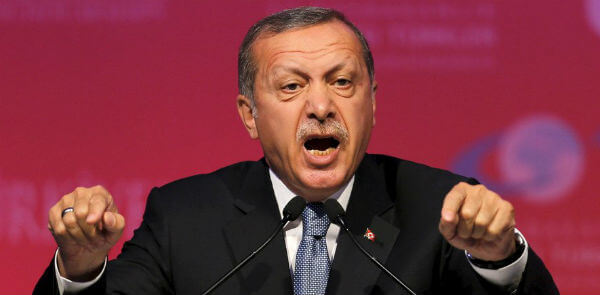
Turkey’s president is destroying the democracy that Turks risked their lives to defend

erdogan

The Economist: Much is unknown about the attempted military coup in Turkey on the night of July 15th. Why was it botched so badly? How far up the ranks did the conspiracy reach? Were the putschists old-style secularists, as their initial communiqué suggested; or were they followers of an exiled Islamist cleric, Fethullah Gulen, as the government claims?

But two things are clear. First, the people of Turkey showed great bravery in coming out onto the streets to confront the soldiers; hundreds died (see article here and here). Opposition parties, no matter how much they may despise President Recep Tayyip Erdogan, united to denounce the assault on democracy. Better the flawed, Islamist-tinged strongman than the return of the generals for the fifth time since the 1960s.

The second, more alarming conclusion is that Mr Erdogan is fast destroying the very democracy that the people defended with their lives. He has declared a state of emergency that will last at least three months. About 6,000 soldiers have been arrested; thousands more policemen, prosecutors and judges have been sacked or suspended. So have academics, teachers and civil servants, though there is little sign they had anything to do with the coup. Secularists, Kurds and other minorities feel intimidated by Mr Erdogan’s loyalists on the streets.

The purge is so deep and so wide — affecting at least 60,000 people — that some compare it to America’s disastrous de-Baathification of Iraq. It goes far beyond the need to preserve the security of the state. Mr Erdogan conflates dissent with treachery; he is staging his own coup against Turkish pluralism. Unrestrained, he will lead his country to more conflict and chaos. And that, in turn, poses a serious danger to Turkey’s neighbours, to Europe and to the West.

The failed putsch may well become the third shock to Europe’s post-1989 order. Russia’s annexation of Crimea and invasion of eastern Ukraine in 2014 destroyed the idea that Europe’s borders were fixed and that the cold war was over. The Brexit referendum last month shattered the notion of ineluctable integration in the European Union. Now the coup attempt in Turkey, and the reaction to it, raise troubling questions about the reversibility of democracy within the Western world — which Turkey, though on its fringe, once seemed destined to join. [Continue reading…]

Facebooktwittermail

How Erdogan’s erstwhile allies turned into an existential threat

Mustafa Akyol writes: When Mr. Erdogan and his Islamist Justice and Development Party, or A.K.P., came to power in 2002, they felt threatened by the hard-core secularists who have dominated Turkey’s military since the days of Ataturk, the father of the Turkish republic. Mr. Erdogan viewed the Gulenist cadres in the state as an asset, and an alliance was born. The Erdogan government supported Gulenist police officers, prosecutors and judges as they went after secularists. Starting in 2007, hundreds of secularist officers and their civilian allies were jailed.

This witch hunt was driven by Mr. Erdogan’s political agenda, but the Gulenists were even more aggressive than the A.K.P. More worrying: Some of the evidence turned out to be overblown. Two secular journalists and a police chief who exposed the fake evidence, and blamed the “The Imam’s Army,” were soon themselves imprisoned on bogus charges.

“How can they justify using fake evidence to blame innocent people?” I once asked my disillusioned Gulenist friend. “Since their end goal is so great,” he said, referring to the movement’s global, apocalyptic ambition, “they think all means are justified.”

It eventually became clear why the Gulenists had been so fervent in their persecution of the secularists: They wanted to replace them. Many of the officers who reportedly took part in last week’s coup attempt had been promoted thanks to a major purge of the military in 2009 that supposedly saved Mr. Erdogan from a coup.

By 2012, the old secularist guard had been quelled and the Gulenists and the A.K.P. were left more or less alone to run Turkey. It took less than two years before the two Islamist groups developed distrust and, ultimately, enmity. This tension came to a head in December 2013, when Gulenist police officers and prosecutors arrested dozens of government officials in a corruption investigation, most likely in the hope of toppling Mr. Erdogan, who condemned the inquiry as a “coup attempt.” At the time, this sounded like a self-serving exaggeration.

But the bloody plot of July 15 is far more destructive than anything Turkey has seen in recent years. Notably, the plot came as Mr. Erdogan was supposed to be planning a major purge of suspected Gulenists from the military. [Continue reading…]

Facebooktwittermail

Inside a failed coup and Turkey’s fragmented military

Aaron Stein writes: The recent coup attempt in Turkey revealed profound political cleavages in the Turkish armed forces. The coup pitted a minority — but nevertheless significant — faction of the Turkish military against the majority of the country’s armed forces, which remained loyal to their commander in chief, President Recep Tayyip Erdogan.

The coup nearly succeeded in achieving what, in retrospect, appears to have been its primary objective: the killing or capture of Erdogan, Prime Minister Binali Yildirim, and Hakan Fidan, the chief of the country’s intelligence agency, MIT. The plotters, using a number of well-placed insiders, did manage to take the chief of the general staff, Hulusi Akar, hostage. The clashes resulted in 240 deaths. Turkish government officials allege that the plot was hatched by followers of Fetullah Gulen, a self-exiled Turkish cleric, currently living in Pennsylvania.

The following account remains incomplete and relies on a Whatsapp conversation between some of the coup plotters, open source data, compiled by blogs like The Aviationist, as well as discussions I have had with Turkey based journalists and colleagues, all whom prefer to remain anonymous. I relied on pro-government sources, including state-owned and government aligned media outlets, but sought to compensate for their biases in my analysis. The complete story has yet to be told and all of the details have yet to be released publicly.

The story of the coup suggests a relatively large plot that drew support from numerous parts of the Turkish Armed Forces, spanning various commands around Turkey. The number of senior officers involved, including the commander of Incirlik air force base where U.S. aircraft are now based for the fight against the Islamic State, suggest that the Turkish military is divided. The narrative following the coup is that this was a small, ill-conceived group of plotters who failed to overthrow the elected government, but this narrative is at odds with information coming out about the extent of the plot. This was a larger and far more credible attempt than has thus far been reported.

The fact that this was relatively well planned — if hastily implemented — coup attempt has several implications — namely that the Turkish military’s senior leadership is deeply factionalized, with one sizeable minority of officers willing to use force, even though their decision risked civil war. This suggests that Turkey is unstable and faces serious challenges in the near term in ways that will surely impact American and Western security interests in the Middle East and Europe. [Continue reading…]

Facebooktwittermail

‘I was an ISIS jihadist — until they arrested and tortured me’

Michael Weiss writes: Now in exile in Mersin, on the Mediterranean coast of southern Turkey, the 31-year-old Abu Omar laid out a story that was equal parts Midnight Express and Darkness at Noon.

It purports to be a first-hand account of an ISIS prison system, which is every bit as gruesome as you’d imagine it to be. His account is also a useful documentary insight into how an organization that once thrived on its shrewd guerrilla intelligence and counterintelligence tradecraft, able to spot informants, spies, and sleepers, and find agents with whom to infiltrate and vitiate rival factions, has come to resemble all totalitarianisms by devouring its own.

Originally from Kafr Zita in Hama province, which, among other things, would later be the site of a deadly chlorine and ammonia gas attack by the Assad regime, Abu Omar was a house painter by trade before the revolution began — a revolution that was supposed to be gloriously concluded by now.

Instead, the uprising is entering its sixth year as an endless series of slow-burning civil wars.

Abu Omar became a protestor in 2011 after the Syrian security services and military opened fire on others carrying banners calling for economic and social reforms in the spring of 2011. [Continue reading…]

Facebooktwittermail

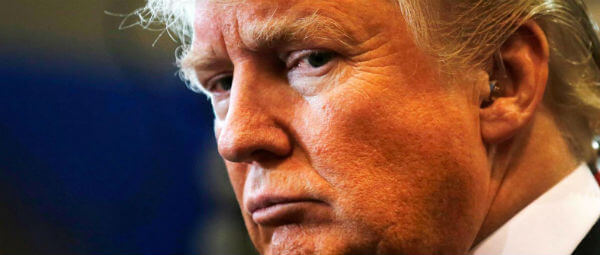
Donald Trump’s threat to NATO

trump-frown

Buzzfeed reports: The head of NATO has called for solidarity and warned that European security is tied to the safety of the United States, following remarks by Donald Trump that he would intervene to help only NATO allies who “fulfilled” their obligations to the US.

“Solidarity among allies is a key value for NATO. This is good for European security and good for US security. We defend one another,” Secretary General‎ Jens Stoltenberg told BuzzFeed News.

The Republican presidential candidate’s comments to the New York Times at the Republican National Convention in Cleveland are also expected to send a chill through Baltic members of NATO, which have witnessed growing Russian aggression on their borders in the past two years.

Asked explicitly whether the US would come to the aid of Baltic nations that are threatened by Russia, Trump responded, “If they fulfill their obligations to us, the answer is yes.”

Article 5 of the NATO treaty states that the 28 members – the US was a founding member in 1949 – agree to come to the aid of any member should they be attacked. [Continue reading…]

The only time Article 5 has been invoked was after Al Qaeda’s attack on Trump’s home town, in response to which America’s NATO allies showed no hesitation in coming to this country’s defense.

NBC News reports: NATO’s treaty states that an attack on one member state constitutes an attack on all, a principle enshrined in Article 5 of the alliance’s treaty.

“If Trump wants to put conditions through Article 5, he would endanger the whole alliance,” said Beyza Unal, a fellow at the London-based Chatham House think tank.

Sarah Lain, a fellow at the Royal United Services Institute, agreed. She said that Article 5 is the “core” of NATO’s defense strategy.

“The suggestion that Trump may consider abandoning a guarantee of protection to fellow NATO countries would in some ways indeed make NATO obsolete,” Lain told NBC News in an email. [Continue reading…]

Facebooktwittermail

Donald Trump’s de facto alliance with Vladimir Putin

Jeffrey Goldberg writes: The Republican nominee for president, Donald J. Trump, has chosen this week to unmask himself as a de facto agent of Russian President Vladimir Putin, a KGB-trained dictator who seeks to rebuild the Soviet empire by undermining the free nations of Europe, marginalizing NATO, and ending America’s reign as the world’s sole superpower.

I am not suggesting that Donald Trump is employed by Putin — though his campaign manager, Paul Manafort, was for many years on the payroll of the Putin-backed former president of Ukraine, Viktor Yanukovych. I am arguing that Trump’s understanding of America’s role in the world aligns with Russia’s geostrategic interests; that his critique of American democracy is in accord with the Kremlin’s critique of American democracy; and that he shares numerous ideological and dispositional proclivities with Putin—for one thing, an obsession with the sort of “strength” often associated with dictators. Trump is making it clear that, as president, he would allow Russia to advance its hegemonic interests across Europe and the Middle East. His election would immediately trigger a wave of global instability — much worse than anything we are seeing today — because America’s allies understand that Trump would likely dismantle the post-World War II U.S.-created international order. Many of these countries, feeling abandoned, would likely pursue nuclear weapons programs on their own, leading to a nightmare of proliferation.

Trump’s sympathy for Putin has not been a secret. Trump said he would “get along very well” with Putin, and he has pleased Putin by expressing a comprehensive lack of interest in the future of Ukraine, the domination of which is a core Putinist principle. The Trump movement also agrees with Putin that U.S. democracy is fatally flawed. A Trump adviser, Carter Page, recently denounced — to a Moscow audience — America’s “often-hypocritical focus on democratization, inequality, corruption and regime change.” Earlier this week, Trump’s operatives watered down the Republican Party’s national-security platform position on Ukraine, removing a promise to help the Ukrainians receive lethal aid in their battle to remain free of Russian control.

Now, in an interview with Maggie Haberman and David Sanger of The New York Times, Trump has gone much further, suggesting that he and Putin share a disdain for NATO. [Continue reading…]

Facebooktwittermail

Why we’re post-fact

decaycol

Peter Pomerantsev writes: As his army blatantly annexed Crimea, Vladimir Putin went on TV and, with a smirk, told the world there were no Russian soldiers in Ukraine. He wasn’t lying so much as saying the truth doesn’t matter. And when Donald Trump makes up facts on a whim, claims that he saw thousands of Muslims in New Jersey cheering the Twin Towers coming down, or that the Mexican government purposefully sends ‘bad’ immigrants to the US, when fact-checking agencies rate 78% of his statements untrue but he still becomes a US Presidential candidate – then it appears that facts no longer matter much in the land of the free. When the Brexit campaign announces ‘Let’s give our NHS the £350 million the EU takes every week’ and, on winning the referendum, the claim is shrugged off as a ‘mistake’ by one Brexit leader while another explains it as ‘an aspiration’, then it’s clear we are living in a ‘post-fact’ or ‘post-truth’ world. Not merely a world where politicians and media lie – they have always lied – but one where they don’t care whether they tell the truth or not.

How did we get here? Is it due to technology? Economic globalisation? The culmination of the history of philosophy? There is some sort of teenage joy in throwing off the weight of facts – those heavy symbols of education and authority, reminders of our place and limitations – but why is this rebellion happening right now?

Many blame technology. Instead of ushering a new era of truth-telling, the information age allows lies to spread in what techies call ‘digital wildfires’. By the time a fact-checker has caught a lie, thousands more have been created, and the sheer volume of ‘disinformation cascades’ make unreality unstoppable. All that matters is that the lie is clickable, and what determines that is how it feeds into people’s existing prejudices. Algorithms developed by companies such as Google and Facebook are based around your previous searches and clicks, so with every search and every click you find your own biases confirmed. Social media, now the primary news source for most Americans, leads us into echo chambers of similar-minded people, feeding us only the things that make us feel better, whether they are true or not.

Technology might have more subtle influences on our relationship with the truth, too. The new media, with its myriad screens and streams, makes reality so fragmented it becomes ungraspable, pushing us towards, or allowing us to flee, into virtual realities and fantasies. Fragmentation, combined with the disorientations of globalization, leaves people yearning for a more secure past, breeding nostalgia. ‘The twenty-first century is not characterized by the search for new-ness’ wrote the late Russian-American philologist Svetlana Boym, ‘but by the proliferation of nostalgias . . . nostalgic nationalists and nostalgic cosmopolitans, nostalgic environmentalists and nostalgic metrophiliacs (city lovers) exchange pixel fire in the blogosphere’. Thus Putin’s internet-troll armies sell dreams of a restored Russian Empire and Soviet Union; Trump tweets to ‘Make America Great Again’; Brexiteers yearn for a lost England on Facebook; while ISIS’s viral snuff movies glorify a mythic Caliphate. ‘Restorative nostalgia’, argued Boym, strives to rebuild the lost homeland with ‘paranoiac determination’, thinks of itself as ‘truth and tradition’, obsesses over grand symbols and ‘relinquish[es] critical thinking for emotional bonding . . . In extreme cases it can create a phantom homeland, for the sake of which one is ready to die or kill. Unreflective nostalgia can breed monsters’.

The flight into techno-fantasies is intertwined with economic and social uncertainty. If all the facts say you have no economic future then why would you want to hear facts? If you live in a world where a small event in China leads to livelihoods lost in Lyon, where your government seems to have no control over what is going on, then trust in the old institutions of authority – politicians, academics, the media – buckles. Which has led to Brexit leader Michael Gove’s claim that British people ‘have had enough of experts’, Trump’s rants at the ‘lamestream’ media and the online flowering of ‘alternative news’ sites. Paradoxically, people who don’t trust ‘the mainstream’ media are, a study from Northeastern University showed, more likely to swallow disinformation. ‘Surprisingly, consumers of alternative news, which are the users trying to avoid the mainstream media “mass-manipulation”, are the most responsive to the injection of false claims.’ Healthy scepticism ends in a search for wild conspiracies. Putin’s Kremlin-controlled television finds US conspiracies behind everything, Trump speculates that 9/11 was an inside job, and parts of the Brexit campaign saw Britain under attack from a Germano-Franco-European plot. [Continue reading…]

Facebooktwittermail

Erdoğan may be divisive, but a coup in Turkey would have been devastating

Fawaz A Gerges writes: Of all the coverage of the attempted military coup against the Erdoğan government, the many “what if” have received hardly any scrutiny. For instance, if the coup had succeeded, the fallout would have been seismic for Turkey, the Middle East and the western security architecture, particularly Nato.

Even die-hard opponents of Recep Tayyip Erdoğan, including secularists and the Kurds, were vehemently opposed to the coup for fear of the unrest and instability it would have undoubtedly caused at home and in the region. The Turkish people do not have fond memories of four military interventions in Turkish politics in 1960, 1971, 1980, and 1997, which exacted a heavy toll on state and society.

If the uprising had succeeded, it would have been likely that the military would have suspended the democratic process in Turkey and brutally persecuted Erdoğan and his allies, plunging the country into civil strife. The deep historical tensions that exist between Turkey’s military, which views its role as the guardian of the secular state, and Erdoğan, whose AKP party has its roots in moderate Islam, would have escalated into all-out war. Entrenched in both Syria and Iraq, Islamic State and al-Qaida would have found a fertile breeding ground in another conflict zone. Political instability in Turkey would have been a godsend to Isis jihadis. [Continue reading…]

Facebooktwittermail

How Turkey’s military coup failed

The Associated Press reports: Around 4 p.m. [on Friday afternoon] Turkish national intelligence flagged to the chief of staff that they had intercepted communications among a number of military personnel indicating that a coup was planned. With many of the military’s senior officers attending a wedding and the president vacationing at a seaside resort, and while a military shake-up was imminent, the coup plotters felt it was an opportune time to strike.

A former Turkish military officer, now a security analyst, Metin Gurcan, wrote that the top brass decided to move to avert a coup by closing airspace and forbidding military units from leaving their barracks. Sensing that their moves were detected and getting wind of the meeting of loyal officers, the coup plotters moved up their plans from later that evening. Ibrahim Kalin, Erdogan’s spokesman, said the plotters kidnapped Gen. Hulusi Akar, the chief of military staff, after he learned of the suspicious activities.

Gurcan said the soldiers leading the coup relied on WhatsApp to communicate commands and coordinate moves. Family members of soldiers detained after the coup attempt told reporters the soldiers thought they were being sent to training. [Continue reading…]

Facebooktwittermail