
Author Archives: News Sources

Israeli air strike in Syria

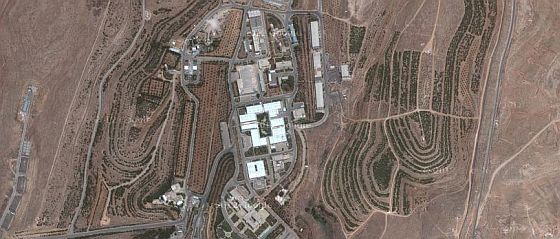
The site described by the Syrian government as a research center, north-west of Damascus, bombed by Israel Air Force fighter jets, according to Syrian TV.

The New York Times reports: Israeli warplanes carried out a strike deep inside Syrian territory on Wednesday, American officials reported, saying they believed the target was a convoy carrying sophisticated antiaircraft weaponry on the outskirts of Damascus that was intended for the Hezbollah Shiite militia in Lebanon.

The officials, who spoke on condition of anonymity, said the Israelis had notified the Americans about the attack, which the Syrian government called an act of “Israeli arrogance and aggression” that raised the risks that the two-year-old civil conflict in Syria could spread beyond the country’s borders.

In a statement, the Syrian military said a scientific research facility in the Damascus suburbs had been hit and denied that a convoy had been the target.

Israeli officials declined to comment on the airstrike. But they have been warning that they are monitoring the possible movement of weapons in the Syrian conflict, including chemical weapons, and would take action to thwart any possible transfers into Hezbollah’s possession.

It was the first time in more than five years that Israel’s air force had attacked a target in Syria, which has remained in a technical state of war with Israel although both sides have maintained an uneasy peace along their decades-old armistice line.

Hezbollah, which plays a decisive role in Lebanese politics, has long relied on Syria as both a source of weapons and a conduit for weapons flowing from Iran. Hezbollah has supported the Syrian government of President Bashar al-Assad throughout the uprising against him in part because it does not want to lose that weapons corridor, and some analysts say that Hezbollah may be trying to stock up on weapons now in case Mr. Assad falls. Other analysts say that Hezbollah would be cautious now about receiving arms from Syria because it does not want to risk drawing an Israeli attack or destabilizing its political position in Lebanon.

Hezbollah’s leader, Hassan Nasrallah, recently urged Lebanese citizens to welcome Syrian refugees regardless of their political affiliation, a move widely interpreted as aimed in part at preserving its relationship with Syria in the event of a rebel takeover, in addition to maintaining political calm in Lebanon. [Continue reading…]


Facebooktwittermail

Morsi rejects calls for new unity government in Egypt

The New York Times reports: President Mohamed Morsi of Egypt, meeting with Chancellor Angela Merkel on Wednesday, rejected calls for a new unity government in response to the violent demonstrations rocking his country and defended his decision to impose a state of emergency and curfew in three cities.

“In Egypt there is a stable government working day and night in the interest of all Egyptians,” Mr. Morsi said. A new government will not be formed before the upcoming parliamentary election, Mr. Morsi said.

At a moment of acute political crisis at home in Egypt, Mr. Morsi found himself on a previously scheduled visit to Berlin, where he also met with the economy minister, Philipp Rösler, and leading representatives of German businesses. Germany is Egypt’s third most important trading partner, and investment and development aid from Germany will be necessary if Egypt hopes to get back on its feet, analysts say.

His visit to Germany was controversial, with newspapers and television commentators questioning whether Egypt was on the path to democracy. In a country conscious of its responsibility for the Holocaust, Mr. Morsi’s past comments about Jews and Zionists have also raised concerns.

After the two leaders met, Mr. Morsi and Ms. Merkel held a joint news conference at the chancellery building on Wednesday afternoon. A German reporter asked Mr. Morsi about comments in which he described Zionists as “bloodsuckers” and “the descendants of apes and pigs.”

Mr. Morsi said his statements had been taken out of context. “I am not against Judaism as a religion,” he said. “I am not against Jews practicing their religion. I was talking about anybody practicing any religion who spills blood or attacks innocent people — civilians. I criticize such behavior.

“My religion instructs me to believe in all the prophets and to respect all religions as well as every person’s freedom of religion,” Mr. Morsi continued. “Everyone believes in and practices his religion the way he sees fit as long as it remains lawful in the country he lives in.”

Ms. Merkel made it clear that Germany would continue its support of Egypt’s transition to democracy only if Mr. Morsi’s government upheld certain democratic ideals.

“One thing that is important for us is that the channels of dialogue are always open with all political forces in Egypt, so that the different political forces can play their role,” Ms. Merkel said. [Continue reading…]

Facebooktwittermail

Egypt: Video of snipers in Port Said?

Issandr El Amrani writes: There have been some disturbing reports of what is described as sniper fire (although it may simply be gunfire, not actual snipers) in Port Said in the last two days. The videos below, some of which whose provenance cannot be verified, paint a rather scary picture

The one below, for instance, shows men dressed in black paramilitary garb – perhaps special forces – using a rooftop position to fire on people on the streets (or perhaps merely survey the streets). There is no way to confirm the place and date of the video, although it is an Egyptian flag that is seen and it is plausibly Port Said. The video is titled to suggest the armed men are Muslim Brothers, but there is nothing to confirm that.


Egypt Muslim Brotherhood Snipers Shoot People… by GWHH19

[Continue reading…]

Facebooktwittermail

Learning democracy in Iraq and Egypt

Rami G Khouri writes: The events in Iraq and Egypt these days are particularly important to follow and understand as best we can, because of what they tell us about how some Arab citizens and leaders behave at stages of the process in which they have the opportunity to shape their own political governance systems. For in Egypt and Iraq, most dramatically, alongside less striking events in Egypt, Syria, Yemen and other Arab countries, the most basic elements of state integrity, national identity and the legitimacy of power are all being challenged and reshaped. The bad news is that process includes political intemperance, violence and death. But the good news is that it mostly occurs nonviolently and will keep moving some Arab countries on the slow path to stable democratic republics.

It is not realistic to chart a single dynamic that explains disparate events in different Arab countries. However, the developments across half a dozen countries these days suggest to me that we can spot common features amid the political turbulence and violence all around us. The two most dramatic new examples in the past week to my mind have been the events in Fallujah and other parts of west-central Iraq, and the violence and unrest across several Egyptian cities. In both cases, local citizens have not only challenged the decisions of the democratically elected central government represented by the president of Egypt and the prime minister of Iraq; to some extent, they have also questioned the leader’s legitimacy in both cases, or at least challenged the leader to translate legitimacy into credibility. These are not isolated cases, either, for a deeper crisis of political integrity is spreading across many parts of the Arab world these days.

In Egypt, several local municipalities defiantly ignored the president’s curfew and martial law Monday, taking to the streets in the thousands to play football at 9 p.m., when the curfew was supposed to start. A few, like Mahalla, Suez and Alexandria, have even symbolically declared their autonomy or independence from the central government. They are not challenging the integrity of the Egyptian state, but rather the efficacy and equity of the central government’s policies.

The same applies to the tens of thousands of demonstrators in Iraq, who, like their Egyptian counterparts, are protesting the killing of demonstrators by the security services as well as a wider sense that the central government is not addressing the socio-economic and political rights of all citizens with diligence or fairness. In both cases, many ordinary citizens feel that one group is trying to monopolize power and seize control of the state. The Iraqi and Egyptian leaders have both acted with an authoritarianism that remind us of their predecessors’ policies in many ways., which Arabs now wish to leave behind them for good. [Continue reading…]

Facebooktwittermail

Chaos in Egypt stirs warning of a collapse

The New York Times reports: As three Egyptian cities defied President Mohamed Morsi’s attempt to quell the anarchy spreading through their streets, the nation’s top general warned Tuesday that the state itself was in danger of collapse if the feuding civilian leaders could not agree on a solution to restore order.

Thousands of residents poured into the streets of the three cities, protesting a 9 p.m. curfew with another night of chants against Mr. Morsi and assaults on the police.

The president appeared powerless to stop them: he had already granted the police extralegal powers to enforce the curfew and then called out the army as well. His allies in the Muslim Brotherhood and their opposition also proved ineffectual in the face of the crisis, each retreating to their corners, pointing fingers of blame.

The general’s warning punctuated a rash of violent protests across the country that has dramatized the near-collapse of the government’s authority. With the city of Port Said proclaiming its nominal independence, protesters demanded the resignation of Mr. Morsi, Egypt’s first freely elected president, while people across the country appeared convinced that taking to the streets in protests was the only means to get redress for their grievances.

Just five months after Egypt’s president assumed power from the military, the cascading crisis revealed the depth of the distrust for the central government left by decades of autocracy, two years of convoluted transition and his own acknowledged missteps in facing the opposition. With cities in open rebellion and the police unable to tame crowds, the very fabric of society appears to be coming undone. [Continue reading…]

Facebooktwittermail

Sunni discontent and Syria fears feed Iraqi unrest

Reuters reports: Across Iraq’s western desert, thousands of Sunni Muslims block highways, chant and pray in protests against Shi’ite Prime Minister Nuri al-Maliki that grow more defiant by the day.

Their demands are many, but the old Iraqi flags from Saddam Hussein’s era and Sunni tribal colours fluttering among them are a clear message to Maliki: Enough, our time has come again.

In Iraqi cities like Ramadi and Falluja, where tribal ties are strong, many Sunnis have harboured a sense of marginalisation ever since Saddam’s fall and the Shi’ite majority’s empowerment.

But the pent-up Sunni anger that erupted a month ago has many worried that Iraq is heading for an explosion of Shi’ite-on-Sunni violence that will divide it along sectarian faultlines.

Already protests are becoming volatile. Iraqi troops shot five people in clashes in Falluja on Friday, illustrating the room for miscalculation with sectarian hardliners and Islamist insurgents trying to steer unrest into crisis.

Just outside Ramadi, Sunni men sleep in tents and pray along a blockaded highway, wrapping themselves in old three-star Iraqi national flags, chanting slogans and waving migwars, the wooden mace that Iraqis used to fight the British in the 1920s. [Continue reading…]

Facebooktwittermail

Mission in Mali far from accomplished

Andy Morgan writes: The National Movement for the Liberation of Azwad (MNLA) are reported to have wrenched control of Kidal back from the Touareg-led Islamist militia Ansar Dine. They also claim to control a number of other strategic towns in northern Mali, including Tessalit and Leré. That’s quite a turn-around for the avowedly secular Touareg nationalist movement who were ousted from the region last June by the Islamist coalition after a bloody gun fight in the city of Gao. Most people thought they were a busted flush, outgunned and outmanoeuvered by better funded, better armed and better disciplined Islamist troops. Not so, it seems.

Although they’re now firmly entrenched in Kidal, the MNLA still fear reprisals from the remnants of the three Islamist groups – AQIM, MUJAO and Ansar Dine – who have held Northern Mali in their puritanical grasp since last April. Mujahedeen who have been fleeing as the main northern cities – Douentza, Gao and Timbuktu – have fallen like nine-pins to the advance of French and Malian forces, are said to be regrouping in the remote Tegharghar mountains north of Kidal. But I doubt they’re planning a counter attack on the town, which has been at the epicentre of all the Touareg uprisings in northern Mali since 1962. The Islamists coalition, or what’s left of it, has already switched from occupation to insurgency mode. Holding cities is no longer part of their strategy.

Somehow, the MNLA has found the finance and backing to take Kidal, from where they will try to negotiate a settlement, even some kind of collaborative partnership with the French in a desperate attempt to avoid their town being handed back to the Malian army and placed under a martial law far worse than the one imposed on it between 1964 and 1990. Either that or Alghabass Ag Intallah, the heir to the chiefdom of the local Ifoghas “nobility” and leader of the Islamic Movement of Azawad (MIA), has decided to let the MNLA back into Kidal because they see a deal with the nationalists as the best way of saving their own skins and avoiding execution/arrest/the ICC as well as the terrible vengeance of the Malian army. Yesterday’s demonstration in the town in favour of the MNLA and against Malian army occupation, with all the summary brutality against Touareg and Arabs that the local population fear it will bring, is clear proof that the secular nationalists are on the rise again and the Islamists are on the run. [Continue reading…]

Facebooktwittermail

French troops in Kidal; 90% of Timbuktu’s manuscripts saved

BBC News reports: The French arrival at Kidal came only 24 hours after securing Timbuktu with Malian forces.

The troops had to secure the streets after hundreds of people looted shops they said had belonged to militant sympathisers.

The retreating Islamist militants were also accused of destroying ancient manuscripts held in the city.

However on Wednesday, Shamil Jeppie, the Timbuktu Manuscripts Project director at the University of Cape Town, said that more than 90% of the 300,000 manuscripts said to be in the region were safe.

Kidal, 1,500km (930 miles) north-east of the capital Bamako, was until recently under the control of the Ansar Dine Islamist group, which has strong ties to al-Qaeda in the Islamic Maghreb (AQIM).

The Islamist militants had taken advantage of a military coup in March last year to impose Sharia in a number of cities in the north.

However, the Islamic Movement of Azawad (IMA), which recently split from Ansar Dine, says it is now in charge in Kidal.

The IMA has said it rejects “extremism and terrorism” and wants a peaceful solution.

An IMA spokesman confirmed the French arrival in Kidal and said that its leader was in talks with them.

However, another rebel group, the secular National Movement for the Liberation of Azawad (MNLA), is also influential in the area. It is ethnically driven, fighting mostly for the rights of Mali’s minority Tuareg community.

An MNLA spokesman told the BBC its fighters had entered Kidal on Saturday and found no Islamist militants there.

The MNLA has also said it is prepared to work with the French “to eradicate terrorist groups” in the north but that it would not allow the return of the Malian army, which it accused of “crimes against the civilian population”.

Facebooktwittermail

2013 World Press Freedom Index — dashed hopes after Arab Spring

Reporters Without Borders: Last year’s index was marked by the Arab spring’s major news developments and the heavy price paid by those covering the protest movements. A range of scenarios has been seen in 2012, including countries such as Tunisia, Egypt and Libya, where regime change has taken place, countries such as Syria and Bahrain where uprisings and the resulting repression are still ongoing, and countries such as Morocco, Algeria, Oman, Jordan and Saudi Arabia, where the authorities have used promises and compromise to defuse calls for political and/or social and economic change.

Some of the new governments spawned by these protests movements have turned on the journalists and netizens who covered these movements’ demands and aspirations for more freedom. With legal voids, arbitrary appointments of state media chiefs, physical attacks, trials and a lack of transparency, Tunisia (138th, -4) and Egypt (158th, +8) have remained at a deplorable level in the index and have highlighted the stumbling blocks that Libya (131st, +23) should avoid in order to maintain its transition to a free press.

The deadliest country for journalists in 2012 was Syria (176th, 0), where journalists and netizens are the victims of an information war waged by both the Assad regime, which stops at nothing in order to crack down and impose a news blackout, and by opposition factions that are increasingly intolerant of dissent. In Bahrain (165th, +8) the repression let up slightly, while in Yemen (169th, +2) the prospects continue to be disturbing despite a change of government. Oman (141st, -24) fell sharply because of a wave of arrests of netizens.

Facebooktwittermail

Tuareg rebels say they’re now in charge of Kidal

The Associated Press reports: As French and Malian soldiers held control of the fabled desert city of Timbuktu following the retreat of Islamist extremists, Tuareg fighters claimed Tuesday that they seized the strategic city of Kidal and other northern towns.

The National Movement for the Liberation of Azawad — the Tuareg group’s name for northern Mali — appears to have taken advantage of a French-led bombing and ground campaign to dislodge al- Qaida-linked Islamist fighters from the towns in northern Mali.

Phone lines were down in Kidal, making it difficult to independently confirm the group’s claim.

The Tuareg movement said on its website that it was ready to work with French troops and fight terror organizations.

However, it said it would refuse to allow Malian soldiers in Kidal, and the other towns under its control in northeastern Mali, following allegations that the troops killed civilians suspected of having links to the Islamists.

Reuters adds: The International Monetary Fund has approved an $18.4m loan to strife-torn Mali to help the West African nation stabilise its economy over the next 12 months, the IMF said.

It said on Monday that approval of the loan, under its Rapid Credit Facility, should send a signal that Mali’s economy is on the right path, prompting other donors to offer financial assistance to Mali.

“Mali’s economy is traversing a particularly difficult period as a result of the 2011 drought, insurgent attacks in the north of the country and political instability in the wake of the military coup in March 2012,” the IMF said in a statement.

Note that this is just a loan and it’s for an amount that in this case is deemed sufficient to prop up a West African economy, but in the hands of the 1% would buy a townhouse in Greenwich Village.

Facebooktwittermail

British troops to be sent to Mali

The Guardian reports: A major increase in the UK commitment to help French and African forces in Mali and the region has been confirmed by Downing Street and the defence secretary, Philip Hammond, in an urgent statement to the House of Commons.

Amid concerns on the Tory benches that Britain is being drawn into a conflict without an exit strategy, the government said that 200 UK troops would train an African regional force outside Mali, with up to 40 more on an EU training mission inside the country. A further 70 RAF personnel will oversee the use of Sentinel surveillance, to be based in Senegal with 70 supporting crew and technical staff, and 20 will staff a C-17 transport plane for a further three months.

Britain has offered a roll-on, roll-off ferry to help transport French armour to Mali by sea, landing on the African coast. Britain is also offering air-to-air refuelling capacity to operate outside the UK, but based in Britain. It is possible the US will provide air-to-air refuelling.

Facebooktwittermail

America’s widening clandestine operations in Africa

The New York Times reports: The United States military is preparing to establish a drone base in northwest Africa so that it can increase surveillance missions on the local affiliate of Al Qaeda and other Islamist extremist groups that American and other Western officials say pose a growing menace to the region.

For now, officials say they envision flying only unarmed surveillance drones from the base, though they have not ruled out conducting missile strikes at some point if the threat worsens.

The move is an indication of the priority Africa has become in American antiterrorism efforts. The United States military has a limited presence in Africa, with only one permanent base, in the country of Djibouti, more than 3,000 miles from Mali, where French and Malian troops are now battling Qaeda-backed fighters who control the northern part of Mali.

A new drone base in northwest Africa would join a constellation of small airstrips in recent years on the continent, including in Ethiopia, for surveillance missions flown by drones or turboprop planes designed to look like civilian aircraft.

If the base is approved, the most likely location for it would be in Niger, a largely desert nation on the eastern border of Mali. The American military’s Africa Command, or Africom, is also discussing options for the base with other countries in the region, including Burkina Faso, officials said.

The immediate impetus for a drone base in the region is to provide surveillance assistance to the French-led operation in Mali. “This is directly related to the Mali mission, but it could also give Africom a more enduring presence for I.S.R.,” one American military official said Sunday, referring to intelligence, surveillance and reconnaissance.

A handful of unarmed Predator drones would carry out surveillance missions in the region and fill a desperate need for more detailed information on a range of regional threats, including militants in Mali and the unabated flow of fighters and weapons from Libya. American military commanders and intelligence analysts complain that such information has been sorely lacking.

The Africa Command’s plan still needs approval from the Pentagon and eventually from the White House, as well as from officials in Niger. American military officials said that they were still working out some details, and that no final decision had been made. But in Niger on Monday, the two countries reached a status-of-forces agreement that clears the way for greater American military involvement in the country and provides legal protection to American troops there, including any who might deploy to a new drone base.

The plan could face resistance from some in the White House who are wary of committing any additional American forces to a fight against a poorly understood web of extremist groups in North Africa.

If approved, the base could ultimately have as many as 300 United States military and contractor personnel, but it would probably begin with far fewer people than that, military officials said.

Some Africa specialists expressed concern that setting up a drone base in Niger or in a neighboring country, even if only to fly surveillance missions, could alienate local people who may associate the distinctive aircraft with deadly attacks in Pakistan, Somalia and Yemen.

Last June, a Washington Post report noted that: conventional aircraft hold two big advantages over drones: They are cheaper to operate and far less likely to draw attention because they are so similar to the planes used throughout Africa.

The bulk of the U.S. surveillance fleet is composed of single-engine Pilatus PC-12s, small passenger and cargo utility planes manufactured in Switzerland. The aircraft are not equipped with weapons. They often do not bear military markings or government insignia.

The Pentagon began acquiring the planes in 2005 to fly commandos into territory where the military wanted to maintain a clandestine presence. The Air Force variant of the aircraft is known as the U-28A. The Air Force Special Operations Command has about 21 of the planes in its inventory.

Facebooktwittermail

The Pentagon’s expanding cyberwarfare capabilities

The Washington Post reports: The Pentagon has approved a major expansion of its cybersecurity force over the next several years, increasing its size more than fivefold to bolster the nation’s ability to defend critical computer systems and conduct offensive computer operations against foreign adversaries, according to U.S. officials.

The move, requested by the head of the Defense Department’s Cyber Command, is part of an effort to turn an organization that has focused largely on defensive measures into the equivalent of an Internet-era fighting force. The command, made up of about 900 personnel, will expand to include 4,900 troops and civilians.

Details of the plan have not been finalized, but the decision to expand the Cyber Command was made by senior Pentagon officials late last year in recognition of a growing threat in cyberspace, said officials, who spoke on the condition of anonymity because the expansion has not been formally announced. The gravity of that threat, they said, has been highlighted by a string of sabotage attacks, including one in which a virus was used to wipe dat a from more than 30,000 computers at a Saudi Arabian state oil company last summer.

The plan calls for the creation of three types of forces under the Cyber Command: “national mission forces” to protect computer systems that undergird electrical grids, power plants and other infrastructure deemed critical to national and economic security; “combat mission forces” to help commanders abroad plan and execute attacks or other offensive operations; and “cyber protection forces” to fortify the Defense Department’s networks. [Continue reading…]

Facebooktwittermail

Inside the war for Syria’s mountains

Martin Chulov reports from the Alawite heartland in the mountains of western Syria: The al-Nusra member the Guardian met had not been expecting strangers. His head swathed in a black turban, and with a Kalashnikov strapped to his chest, he walked slowly down a potholed road towards us before stopping warily several metres away. He scanned us purposefully from head to toe, inhaled deeply, then said: “What’s going on?”

The American-accented English was as much a surprise as finding him there in the first place, living in a house next door to the main rebel outpost in the region, along with 20 or so other members of the group at the vanguard of the fighting.

His opening remark was less an icebreaker, however, than the beginning of an interrogation. For 40 minutes, sometimes chilling, sometimes charming, he tried to gauge our provenance and our reason for journeying south into Jebel al-Krud, the giant plateau that soars above Latakia and Tartous to the south.

The region is steeped in Islamic history, and has a tradition of sectarian coexistence. About 800 years ago, the Islamic warrior Salah al-Din – a Kurd better known to Europeans as Saladin – used the mountains and valleys of the area to prepare to battle the Crusaders. Kurds travelled with him from what is now northern Iraq, and settled here. Christian and Alawite communities are also long established.

Our interrogator eventually offered tea. “You do not share my ideology,” he said. “But you are here on humanitarian grounds.” The concession amounted to a travel pass. “Where is your flak jacket? We have an obligation before God to do what we can to protect ourselves,” he said, pointing at the camouflage vest covering his shirt. “So should you.”

Sheer cliffs climbed vertically from the first stretch of the road south, soon giving way to plunging, emerald ravines still flush with blue floodwaters. Villages peppered the hilltops, grey blobs against an iridescent green whenever they emerged from the fog.

Around one bend, white crosses jutted starkly from the graves on a hilltop. This was the Christian village of Jdeida, on the edge of Idlib province and Jebel al-Krud. Barely a home here had escaped shell damage since it was taken by rebel groups six weeks earlier. And next to none of the locals had remained.

One family had stayed behind. “We don’t have an option,” the elderly Christian man said. “The situation is as you see it. This is the first time there hasn’t been shelling here in more than a week. We haven’t seen the sun or sat in our garden in all that time.”

The man’s wife picked an orange from the tree at the centre of the courtyard and offered it on a silver tray.

His 90-year-old mother sat on a stone wall, her left eye red with a chronic infection, her right streaming with tears. “We can’t go anywhere to get medicine,” she said between sobs. “We are not with anyone, my son. We are too old for this. Please let it end.”

Neither side seems to have any will to bring the war for the mountains to a close. [Continue reading…]

Facebooktwittermail