Category Archives: Analysis

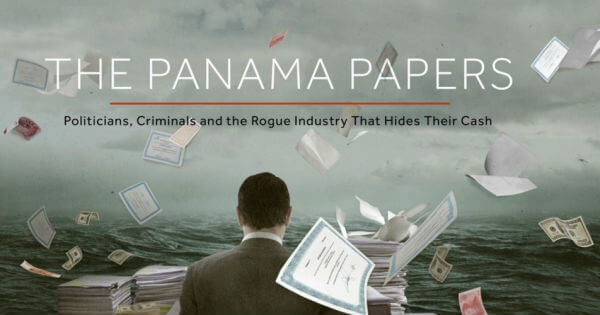
Panama paper trail goes online with massive searchable database

panama-papers

CNET reports: One of the biggest databases of leaked documents has just hit the internet, and what lies within is a massive and complicated web of corporate ownership that spans the globe.

The Panama Papers contain more than 2.5 million files, analysed by the International Consortium of Investigative Journalists and 112 reporters across 58 countries. Today’s data dump is just part of the picture, detailing the relationships between individuals, companies and offshore entities.

Think of it like a searchable corporate registry. But in this case, it’s a network made up of hundreds of thousands of individuals and companies, with seemingly endless links criss-crossing from Australia to Zimbabwe. The question now is which of these links can be used to prove the companies involved were attempting to hide massive wealth overseas.

While there’s no evidence that any of the entities have acted illegally, the “John Doe” behind the leak argues the data dump exposes the names behind growing income inequality, saying “it doesn’t take much to connect the dots.” [Continue reading…]

Facebooktwittermail

There are no conflicts in the Middle East that date back millennia

Muhammad Idrees Ahmad writes: In February 1994, during the Siege of Sarajevo, a Bosnian Serb mortar landed in a market, killing 68 and wounding 144. US President Bill Clinton, who had made his “never again” campaign promise to prevent genocide, was up in arms.

“Until those folks get tired of killing each other over there, bad things will continue to happen,” he said.

Two decades later, confronted with indiscriminate bombings in Aleppo and a starvation siege in Madaya, Barack Obama waxed similarly fatalistic. “The Middle East is going through a transformation that will play out for a generation,” he said, because it was “rooted in conflicts that date back millennia”.

There are no conflicts in the Middle East that date back millennia. The conflict in Syria is just over five years old. Nothing about it is fixed. In its scope and its intensity, in its balance of forces and its cast of characters, the conflict has been constantly evolving. The only element that has remained static, however, is the international response.

In speaking of the horrors unfolding in Syria, it is hard to avoid a certain sense of déjà vu. Everything that can be said about Aleppo has already been said about Homs, Houla, Daraya and Douma. But with each new horror comes a growing sense that, for all the obtrusive violence, for all our pleas, we are plunging into the deep, smothered by apathy, abandoned by hope. [Continue reading…]

Facebooktwittermail

Donald Trump and the authoritarian temptation

Shadi Hamid writes: When I was living in the Middle East, politics always felt existential, in a way that I suppose I could never fully understand. After all, I could always leave (as my relatives in Egypt were fond of reminding me). But it was easy enough to sense it. Here, in the era of Arab revolt, elections really had consequences. Politics wasn’t about policy; it was about a battle over the very meaning and purpose of the nation-state. These were the things that mattered more than anything else, in part because they were impossible to measure or quantify.

The primary divide in most Arab countries was between Islamists and non-Islamists. The latter, especially those of a more secular bent, feared that Islamist rule, however “democratic” it might be, would alter the nature of their countries beyond recognition. It wouldn’t just affect their governments or their laws, but how they lived, what they wore, and how they raised their sons and daughters.

Perhaps more than at any other time, millions of Americans are getting a sense, however mild in comparison, of what it might feel like to lose your country — or at least think about losing your country — because of what people decide to do in the privacy of the voting booth. It still remains (somewhat) unlikely that Donald Trump, the now presumptive Republican nominee, can win a general election. Regardless of the final outcome, however, the billionaire’s rise offers up a powerful — and frightening — reminder that liberal democracy, even where it’s most entrenched, is a fragile thing.

* * *

When I hear my friends debating how, exactly, so many of their fellow citizens could support someone like Trump, it reminds me a bit of Egypt. In my forthcoming book, I relay a telling conversation I had four years ago, which has stayed with me since. A few days after the country’s first post-revolutionary elections concluded in January 2012, I visited my great aunt in her extravagant flat in the posh Cairo suburb of Heliopolis. She was in a state of shock, but worse than that was the confusion. It was one thing for the Muslim Brotherhood, long Egypt’s largest opposition group, to win close to 40 percent of the vote, but how could 28 percent of Egyptians vote for ultraconservative Salafi parties, which believed in the strict implementation of Islamic law?

Like most Egyptians, she personally knew Brotherhood members even if she didn’t quite like them, but she hadn’t had much experience with Salafis and seemed totally unaware that they had extended their reach deep into Egyptian society. She realized, perhaps for the first time, that the country she had thought was hers for the better part of 70 years would never quite be the same. It hadn’t really even been hers to begin with.

What my aunt feared was that Egypt would become an “illiberal democracy,” a term popularized by Fareed Zakaria in his 2003 book The Future of Freedom, but one that’s still difficult for Americans to fundamentally relate to. In the American experience, democracy and liberalism seemed to go hand in hand, to such an extent that democracy really just became shorthand for “liberal democracy.”

As Richard Youngs writes in his excellent study of non-Western democracy, liberalism and democracy have historically been “rival notions and not bedfellows.” Liberalism is about non-negotiable personal rights and freedoms. Democracy, while requiring some basic protection of rights to allow for meaningful competition, is more about popular sovereignty, popular will, and accountability and responsiveness to the voting public. Which, of course, raises the question: What if voters don’t want to be liberal and vote accordingly? [Continue reading…]

Facebooktwittermail

Fort McMurray and the fires of climate change

Elizabeth Kolbert writes: No one knows exactly how the fire began — whether it was started by a lightning strike or by a spark provided by a person — but it’s clear why the blaze, once under way, raged out of control so quickly. Alberta experienced an unusually dry and warm winter. Precipitation was low, about half of the norm, and what snow there was melted early. April was exceptionally mild, with temperatures regularly in the seventies; two days ago, the thermometer hit ninety, which is about thirty degrees higher than the region’s normal May maximum. “You hate to use the ​cliché, but it really was kind of a perfect storm,” Mike Wotton, a research scientist with the Canadian Forest Service, told the CBC.

Though it’s tough to pin any particular disaster on climate change, in the case of Fort McMurray the link is pretty compelling. In Canada, and also in the United States and much of the rest of the world, higher temperatures have been extending the wildfire season. Last year, wildfires consumed ten million acres in the U.S., which was the largest area of any year on record. All of the top five years occurred in the past decade. In some areas, “we now have year-round fire seasons,” Matt Jolly, a research ecologist for the United States Forest Service, recently told the Times.

“You can say it couldn’t get worse,” Jolly added, but based on its own projections, the forest service expects that it will get worse. According to a Forest Service report published last April, “Climate change has led to fire seasons that are now on average 78 days longer than in 1970.” Over the past three decades, the area destroyed each year by forest fires has doubled, and the service’s scientists project that it’s likely to “double again by midcentury.” A group of scientists who analyzed lake cores from Alaska to obtain a record of forest fires over the past ten thousand years found that, in recent decades, blazes were both unusually frequent and unusually severe. “This extreme combination suggests a transition to a unique regime of unprecedented fire activity,” they concluded.

All of this brings us to what one commentator referred to as “the black irony” of the fire that has destroyed most of Fort McMurray.

The town exists to get at the tar sands, and the tar sands produce a particularly carbon-intensive form of fuel. (The fight over the Keystone XL pipeline is, at its heart, a fight over whether the U.S. should be encouraging — or, if you prefer, profiting from — the exploitation of the tar sands.) The more carbon that goes into the atmosphere, the warmer the world will get, and the more likely we are to see devastating fires like the one now raging. [Continue reading…]

Bloomberg reports: Wildfires raging through Alberta have spread to the main oil-sands facilities north of Fort McMurray, knocking out an estimated 1 million barrels of production from Canada’s energy hub. Fire officials say the out-of-control inferno may keep burning for months without significant rainfall.

The blaze, forecast to expand to more than 2,500 square kilometers (965 square miles) in the next few days, made an “unexpected” move to the north Saturday, rapidly encroaching bitumen mining operations run by Suncor Energy Inc. and Syncrude Canada Ltd. The fires may soon cover an area the size of Luxembourg.

“It is a dangerous and unpredictable and vicious fire that is feeding off an extremely dry Boreal forest,” federal Public Safety Minister Ralph Goodale told reporters Saturday in Regina, Saskatchewan. He said the swirling fire is not yet a threat to any additional communities.

The wildfires have led to combined productions cuts of more than 1 million barrels of oil a day, or about 40 percent of the region’s output of 2.5 million barrels, based on IHS Energy estimates. The cuts, and the mass exodus of more than 80,000 people from the fires raging in Fort McMurray, represent another blow to an economy already mired in recession from the oil price collapse. [Continue reading…]

The Los Angeles Times reports: Though the cause of the fire has not been determined, the inferno has become symbolic of the tension within Canada over its role in climate change.

Some Canadians see the fire as nature lashing back at those who mistreat it in the name of profit.

Others see the hard science: a wildfire formed in conditions consistent with climate change striking with academic irony, not vengeance, in a place that helps supply the world with a fossil fuel. The evacuees were really climate refugees, they say.

Still others view it as just very bad luck, a setback the oil industry will find a way to overcome.

The debate reflects a country wrestling within itself at a difficult moment — and it is testing that famous Canadian civility.

A provincial politician who called the fire “karmic” was quickly castigated and later apologized. When Canadian Green Party leader Elizabeth May said the fire was “very related to the global climate crisis,” Prime Minister Justin Trudeau suggested she was making “a political argument.”

Some environmentalists have been accused of lecturing to or, worse, condemning people who have lost everything. In Fort McMurray, more than 2,000 structures were consumed by the flames.

“I wish I could kick every person posting ‘That’s what you get for living by the oil sands’ comments,” a young Edmonton woman tweeted Tuesday evening at the peak of the evacuation, when flames were whipping across Highway 63, the only road out of Fort McMurray. “You’re terrible people.”

Janet Keeping, the Green Party leader within Alberta, was among several people who invoked climate change early in the week — and did so without clearly expressing support for fire victims. She soon tried to strike a new chord.

“Caring about people means caring about #climatechange,” Keeping wrote Thursday on Twitter.

Alberta’s oil sands are said to hold the third largest reserves in the world, after Saudi Arabia and Venezuela. They made Alberta rich even as they have made Canada uneasy.

Conservation groups have long despised the intensive extraction process involved in gleaning crude from the sands — Alberta would have been the source for the Keystone XL oil pipeline that President Obama rejected last year — and many Canadians loathe what they view as an excessively capitalist culture in Fort McMurray. [Continue reading…]

Facebooktwittermail

Sadiq Khan: British dream now a reality for London’s first Muslim mayor

By Parveen Akhtar, University of Bradford

In Pakistan, the chances that the son of a bus or rickshaw driver could secure a high-ranking political position in the country’s capital city are minuscule. But now, the people of London have elected Sadiq Khan – the son of an immigrant Pakistani bus driver – to be their first Muslim mayor.

While unable to influence the nation’s foreign or economic policy, Khan will have responsibility for key areas in London, such as transport, housing, policing and the environment. And being directly elected gives the London mayor a personal mandate which no other parliamentarian in Westminster – including those in the cabinet – enjoy.

Khan’s father was one of hundreds of Pakistani men who migrated to Britain in the 1950’s and 1960’s, seeking the UK’s version of the American dream: stable employment, social mobility and opportunities for a better future for themselves and their families. One of eight children, Khan grew up on a council estate in the capital. He went to university to study law and practised as a solicitor in human rights cases before becoming a member of parliament.

Now, at the age of 45, he is mayor of London: the economic and cultural heart of the UK, the largest city in western Europe and one of the most important cities in the world. He is the immigrant success story – for him, the British dream has become a reality.

Continue reading

Facebooktwittermail

Ivy League economist ethnically profiled, interrogated for doing math on American Airlines flight

Catherine Rampell writes: On Thursday evening, a 40-year-old man — with dark, curly hair, olive skin and an exotic foreign accent — boarded a plane. It was a regional jet making a short, uneventful hop from Philadelphia to nearby Syracuse.

Or so dozens of unsuspecting passengers thought.

The curly-haired man tried to keep to himself, intently if inscrutably scribbling on a notepad he’d brought aboard. His seatmate, a blond-haired, 30-something woman sporting flip-flops and a red tote bag, looked him over. He was wearing navy Diesel jeans and a red Lacoste sweater – a look he would later describe as “simple elegance” – but something about him didn’t seem right to her.

She decided to try out some small talk.

Is Syracuse home? She asked.

No, he replied curtly.

He similarly deflected further questions. He appeared laser-focused — perhaps too laser-focused — on the task at hand, those strange scribblings.

Rebuffed, the woman began reading her book. Or pretending to read, anyway. Shortly after boarding had finished, she flagged down a flight attendant and handed that crew-member a note of her own. [Continue reading…]

Facebooktwittermail

U.S.-funded Somali intelligence agency has been using kids as spies

The Washington Post reports: For years they were children at war, boys given rifles and training by al-Qaeda-backed militants and sent to the front lines of this country’s bloody conflict. Many had been kidnapped from schools and soccer fields and forced to fight.

The United Nations pleaded for them to be removed from the battlefield. The United States denounced the Islamist militants for using children to plant bombs and carry out assassinations.

But when the boys were finally disarmed — some defecting and others apprehended — what awaited them was yet another dangerous role in the war. This time, the children say, they were forced to work for the Somali government.

The boys were used for years as informants by the country’s National Intelligence and Security Agency (NISA), according to interviews with the children and Somali and U.N. officials. They were marched through neighborhoods where al-Shabab insurgents were hiding and told to point out their former comrades. The faces of intelligence agents were covered, but the boys — some as young as 10 — were rarely concealed, according to the children. Several of them were killed. One tried to hang himself while in custody.

The Somali agency’s widespread use of child informants, which has not been previously documented, appears to be a flagrant violation of international law. It raises difficult questions for the U.S. government, which for years has provided substantial funding and training to the Somali agency through the CIA, according to current and former U.S. officials.

A CIA spokesman declined to comment on the issue. But in the past the U.S. government has supported Somali security institutions — despite well-known human rights violations — citing the urgent need to combat terrorist groups such as al-Shabab. [Continue reading…]

Facebooktwittermail

Al-Qaeda leader says Syria’s Nusra free to go its own way

Al Jazeera reports: Al-Qaeda leader Ayman al-Zawahiri has released an audio recording, hinting that his organisation has no objection to if its Syrian affiliate, al-Nusra Front went its own way.

In the audio statement posted online, Zawahiri said many people talked and fought about the issue of al-Nusra and its al-Qaeda link.

He said if the people choose their own leadership, the organisational affiliation will not be an obstacle to what he described as “the great hopes of the Islamic nation”.

Al-Nusra, one of Syria’s main armed groups, has been excluded from peace talks between the country’s government and opposition in Geneva because of its affiliation with al-Qaeda and it remains on UN and US terror lists.

Al Jazeera’s Zeina Khodr, reporting from Gaziantep near the Turkey-Syria border, said Zawahiri’s message could be interpreted as a split between al-Qaeda and al-Nusra.

“This is being interpreted as a blessing from the central leadership of al-Qaeda to its branch in Syria, to dissociate itself from the group,” she said.

In recent months there have been several reports suggesting al-Nusra is trying to “rebrand” and present itself to the Syrian people, as well as outside powers such as the US, as a more moderate, purely Syrian force not linked to al-Qaeda.

But the group’s leadership was reportedly unsure about breaking the organisational bond with al-Qaeda. [Continue reading…]

Facebooktwittermail

‘The Morning They Came for Us,’ by Janine di Giovanni

In a review of The Morning They Came for Us, by Janine di Giovanni, Anand Gopal writes: These days, when politicians bring up the Middle East, they collapse a decade’s worth of occupation, civil war and revolution into a single, ineffable horror: the Islamic State. The idea is that we’ve never seen a group so horrific, so threatening to global stability — which is fueling calls for world powers to ally with, or acquiesce to, Syria’s Bashar al-Assad as a lesser evil in the war against ISIS.

But look beyond this narrow counterterrorism prism and you see the devastating truth: a regime that is willing to rape, torture, starve and gas as many of its citizens as necessary to secure its rule — and in the process, sow such apocalyptic chaos as to help spawn a global refugee crisis and the rise of ISIS. This is the searing lesson of Janine di Giovanni’s heartbreaking “The Morning They Came for Us: ­Dispatches From Syria.” Di Giovanni, a veteran foreign correspondent, visited Syria repeatedly in 2012, meeting with civilian activists and doctors, regime soldiers and pro-Assad nuns, and has written a moving portrait of a country divided by and under siege from its own president.

We meet Nada, a young woman who grew up near Qardaha, the hometown of the Assad family, and joined the revolution because she “wanted the chance to live in a democracy,” she tells the author. “As you do.” She was soon arrested by the secret police and thrown into prison, where she was beaten and whipped. Sometimes, when she asked for water, authorities would order a male prisoner to urinate in a bottle and try to force her to drink. In the end, she was raped. It’s just one example of the regime’s use of sexual violence as a tool of interrogation and punishment that di Giovanni documents in a series of harrowing passages. She describes the case of a young woman arrested for putting up revolutionary posters, who was blind­folded, tied to a chair and told she would be passed from man to man. She ­reproduces the transcript of a captured shabiha, a regime mercenary, whose stated aim was to “quash the revolution” and who admits to breaking into a school and raping women “for six continuous hours.” And later, his men discovered a woman in a house. “We were four to rape her,” he said, “and she committed suicide following her rape.” [Continue reading…]

Facebooktwittermail

Egyptian court seeks death penalty against three journalists

Reuters reports: An Egyptian court has recommended the death penalty for three journalists and three others charged with endangering national security by leaking state secrets to Qatar, in a ruling condemned by the Doha-based al-Jazeera channel as shocking.

Jordanian national Alaa Omar Sablan and Ibrahim Mohammed Helal, who both work for al-Jazeera, and Asmaa al-Khateeb, a reporter for Rassd – a pro-Muslim Brotherhood news network, were sentenced in absentia. They can appeal.

The sentence is the latest since a crackdown on the Muslim Brotherhood after an army takeover stripped former president Mohamed Morsi of power in 2013 following mass protests against his rule.

Al-Jazeera said the ruling provoked “shock and anger” and called for international action to safeguard journalists’ rights to report news freely.

“The death sentence against journalists is unprecedented in the history of world media and amounts to a real stab against freedom of expression around the world,” the satellite channel said in a statement posted on its website. [Continue reading…]

In an editorial, the New York Times says: In addition to leading a repressive and abusive regime, President Abdel Fattah el-Sisi of Egypt also appears to be running an increasingly incompetent one. On Tuesday, the Interior Ministry accidentally released confidential guidelines to stop critical reporting by the news media, including instructions not to admit mistakes and a proposed rule to stop all coverage related to the torture and murder of an Italian student.

The leak, which the ministry explained as a “technical malfunction,” offered evidence, if more was needed, of the military government’s brutal and destructive approach to the wave of discontent sweeping Egypt.

Mr. Sisi, the former chief of the Egyptian armed forces, came to power in the political struggle that followed the Arab Spring protests of 2011. The Muslim Brotherhood government of Mohamed Morsi, elected after the ouster of the dictatorial former president, Hosni Mubarak, was overthrown by the military in 2013, and in short order Mr. Sisi began a crackdown on the Brotherhood as well as any form of criticism, including that of human rights activists and independent journalists.

The intensification of political repression has been accompanied by one crisis after another, including an outcry in Italy over the torture and murder of an Italian graduate student, which the Italians believe was carried out by Egyptian security services. The unlikely trigger for the current spate of protests was the transfer of two uninhabited Egyptian islands to Saudi Arabia. With political passions running high, the transfer provoked a furious reaction from Egyptians who believed the government was peddling Egyptian land for Saudi dollars. The ensuing demonstrations led to mass arrests and confrontation with journalists, who rallied again in Cairo on Wednesday, demanding the dismissal of the interior minister.

With the government largely hidden from public view, it is not even clear whether Mr. Sisi has full control over the political repression, abductions, torture and other human-rights violations ascribed to the security services. President Obama has not concealed his frustration with Middle Eastern allies like Saudi Arabia. It’s time for him to make clear to Egypt’s rulers that the United States will not continue pumping military aid into a regime at war with its own people. [Continue reading…]

Facebooktwittermail

Why Sadiq Khan’s victory matters

Muddassar Ahmed writes: the type of aggressive, populist campaign that has so far been successful for Donald Trump in the United States will not necessarily be a blueprint for success elsewhere. Although many on the right in Britain apparently believed that capitalizing on anti-Muslim sentiment is not just acceptable, but a sure ticket to victory, the strategy was found wanting. In short, there is a limit to the ability of bigotry to capture elections.

And it is not just Britain that has demonstrated that resorting to anti-Muslim language can backfire. Take the example of former Canadian Prime Minister Stephen Harper. Last year, he resorted to crude anti-Muslim language as he sought re-election. In contrast, Harper’s opponent, Justin Trudeau, went out of his way to embrace Muslims (and other minorities). Harper didn’t just lose — he was trounced.

Why?

Many non-Muslim Canadians were repelled by seeing this faith-based bigotry in their secular politics. Just as importantly, the Muslim-bashing had another effect that Harper apparently did not seem to see coming — it prompted Canadian Muslims to vote in record numbers. You can bet that these new voters will continue and extend their political involvement, meaning that in a well deserved bit of irony, Harper’s Islamophobic campaign may have created a Canadian Muslim political consciousness where none existed before.

With this in mind, it is likely for good reason that in the United Kingdom, the Conservative group leader of the Greater London assembly, Andrew Boff, criticized Goldsmith’s divisive campaign for damaging his party’s relations with the Muslim community, something that could further hurt it down the road.

In fact, the same thing could happen in America. After all, not only is Donald Trump now a widely detested politician (polls suggest that more Americans disapprove of him than are worried about Muslims), but American Muslims are becoming more politically engaged. And although the American Muslim population is relatively small, it may hold the key to swing states like Virginia, Florida and Ohio. [Continue reading…]

Facebooktwittermail

Sadiq Khan’s victory: A triumph for a tolerant, open and diverse world city

In an editorial, The Independent says: It is customary to deride gesture politics, but there are some symbolic gestures that are well worthwhile. Not that the election of Sadiq Khan by the emphatic margin of 57 to 43 per cent is purely symbolic. The powers of the London Mayor may be limited, but his is still the most powerful directly elected office in the country. Yet it is for the symbolism of electing the Muslim son of an immigrant bus driver that Mr Khan’s victory is most striking.

It is significant because Londoners so resoundingly rejected a campaign that seemed designed to appeal to anti-Muslim prejudice. Democracy does not always eschew the baser motives, but this time Zac Goldsmith tried to make a coded connection between “Muslim” and “terrorist” and the voters of London told him to get lost.

Not only that, but they did so on a turnout sharply higher than four years ago – a welcome rebuttal of pre-election gloom about voter apathy and a promising indicator for the EU referendum vote next month.

Now that the election is over, Michael Fallon, the Defence Secretary, has come out to say that he thinks London is “safe” under Mr Khan as Mayor, and that we should not take too seriously things that might have been said in the “rough and tumble” of the campaign. This confirms that Mr Goldsmith’s campaign was not only disreputable but that most decent Conservatives knew it. [Continue reading…]

Facebooktwittermail

The agonies of Aleppo

In an editorial, The Guardian says: Aleppo was once Syria’s second largest city, with 2 million inhabitants and a vibrant tourist industry around its 13th-century citadel, its Umayyad mosque, its ancient souk. After nearly five years of civil war, the city is an open wound, the bleeding symbol of a country’s descent into hell. It has been cleaved by a frontline, endured barrel bombs and artillery fire, and in many places been reduced to a landscape of ruins. Its estimated 300,000 remaining inhabitants struggle daily for bare necessities. And their nightmare has recently got worse. Fighting has again flared up in the past few weeks, destroying two medical facilities that offered rare relief, especially to children. The ceasefire brokered from Wednesday morning promised a mere 48 hours of relief even if it were honoured, and in practice observance has been patchy.

The backdrop is the near collapse of Syria’s two-month-old partial truce, negotiated by Russia and the US. At one level, Aleppo is one battleground of many, in a seemingly endless war of attrition; and yet the fate of a nation could hinge on this city. For Aleppo is a centre for the anti-Assad groups that are meant to be part of the UN-negotiated settlement, if it ever materialises. It is also because of Aleppo’s strategic location, close to the border with Turkey, which has acted as a lifeline for supply lines and refugee movements. If Aleppo falls, all hopes for a genuine peace negotiation will be crushed. Diplomatic efforts in Geneva and elsewhere have never seemed quite so divorced from realities on the ground as they are now. [Continue reading…]

Facebooktwittermail

Mainstream Syrian rebels torn between giving up or joining extremists

The Wall Street Journal reports: Ali Othman is among a shrinking band of Syrian rebels in the mountains across from this border town who face an agonizing choice: accept a settlement with a regime they revile or fight alongside al Qaeda’s Islamist allies.

The Syrian army defector and his fellow fighters say they are weakened and cornered after enduring months of bombardment from Russian forces buttressing President Bashar al-Assad’s regime. Peace talks ended last month without progress amid a major escalation in violence in the northern city of Aleppo. On Thursday, a day after the U.S. announced a deal with Russia on a fresh cease-fire in Aleppo, Islamist groups targeted regime-held areas of the city with rocket, mortar and sniper fire, according to Syrian state media and U.K.-based Syrian Observatory for Human Rights.

“My wife begs me almost each day to leave the mountains,” Mr. Othman, 26 years old, said during a recent visit with his family in Turkey. “She keeps asking me: `Why are you still fighting?’”

The fate of Syria’s moderate rebels is critical to American efforts in the region. If rebels quit the fight or join forces with Islamist extremist groups fighting the regime, the U.S. will lose leverage to shape the war’s outcome — and potential allies against Islamic State.

Some rebel commanders close to the U.S. warn that the diplomatic deadlock and renewed airstrikes against rebel-held areas would push people into the arms of the extremists, including Nusra Front, an al Qaeda affiliate that, like Islamic State, is designated a terrorist organization by the United Nations Security Council and excluded from any potential settlement with the regime. [Continue reading…]

Facebooktwittermail

As jets kill at least 30 civilians at Syrian refugee camp, Russia hosts propaganda concert in Palmyra

The Interpreter reports: The Kremlin and Assad regimes staged a propaganda spectacular last night in the recently recaptured ruins of Aleppo, throwing a concert by the Mariinsky Theater Orchestra while, to the north, dozens of civilians were killed at a refugee camp by Syrian or Russian jets.

According to the Syrian Local Coordination Committees (LCC), more than 30 civilians were killed and dozens wounded in the attack on the Kamouna camp, outside the town of Samard, west of Aleppo city near the Turkish border.

The camp lies next to the Bab al-Hawa border crossing to the Turkish town of Reyhanli. This is the only route left out of rebel-held Aleppo to the Turkish border since regime-allied forces cut off the route to the north through Azaz earlier this year.

It is still uncertain whether it was the Russian or Syrian Arab Air Force that carried out the attack, though the LCC reports that the aircraft were believed at the time to be Russian. [Continue reading…]

Facebooktwittermail

The rest of the world has no Trump contingency plan

The New York Times reports: Alarmed by Donald J. Trump’s grip on the Republican presidential nomination, world leaders are wrestling with the possibility that, even if he loses the general election, his ascent reflects a strain of American public opinion that could profoundly reshape the way the United States addresses security alliances and trade.

From Beijing, Tokyo and Seoul to the headquarters of NATO in Brussels and the vulnerable Baltic nations along Russia’s western border, officials and analysts said in interviews that they saw the success of Mr. Trump’s “America first” platform as a harbinger of pressure for allies to pay up or make trade concessions in return for military protection.

In many capitals, Mr. Trump’s formal and off-the-cuff foreign policy proposals — his threat to pull out of NATO; his musings about removing the United States’ nuclear umbrella over Japan and South Korea; his pledge to slap huge trade tariffs on China — are regarded with a mix of alarm and confusion. Asked on Thursday if Beijing was concerned about the prospect of a Trump presidency, the Chinese Foreign Ministry spokesman, Hong Lei, replied, “We hope the U.S. people from all walks of life would view bilateral relations from a reasonable and objective perspective.”

Stefano Stefanini, a former representative of Italy to NATO and former diplomatic adviser to the Italian president, put it this way: “There is no Donald Trump contingency plan.” [Continue reading…]

Facebooktwittermail

How ‘America First’ got its nationalistic edge

Eric Rauchway writes: When Donald Trump declared,⁠ “‘America First’ will be the overriding theme of my administration,” he invoked the America First Committee, which opposed U.S. aid to the opponents of Nazi Germany before December 1941. This legacy sparked critiques⁠ and defenses⁠ alike of Trump’s appeal to nationalism. Nervous⁠ U.S. allies even worried the phrase heralded a new isolationism. One of Trump’s advisers, however, insisted the phrase was a coincidental echo that didn’t “go back to negative aspects at all.” Apparently, it was merely quaint⁠ in today’s relatively Nazi-free era. But the slogan actually predates the anti-interventionist committee, and it has a lot more to do with the proto-fascist politics of the publishing magnate and sometime politician William Randolph Hearst.

Hearst did not invent the slogan “America First”; he borrowed it from Woodrow Wilson — so he could hurl it back at the president. After World War I broke out, Wilson used the “motto” of “America First” to define his version of neutrality: The United States should bide its time and husband its resources until the warring powers had “carried the thing so far” that they “must be disposed of” — then America would wade in and sort Europe out. In keeping with this view, after the Germans declared unrestricted submarine warfare against transatlantic shipping, Wilson asked Congress for a declaration of war in April 1917.

Before the United States entered World War I, Hearst’s sympathies lay with Germany. He used his publishing empire to gather pro-German editors and writers around him, did a deal with a German agent for newsreel footage, and used a paid agent of the German government as his newspaper correspondent for German matters. But once the United States declared war on Germany, Hearst could no longer maintain this stance, so he took up a new one. With American flags decorating his newspapers’ masthead, he declared that the freshly belligerent Americans should tender no aid to the Allies also fighting Germany: “[K]eep every dollar and every man and every weapon and all our supplies and stores AT HOME, for the defense of our own land, our own people, our own freedom, until that defense has been made ABSOLUTELY secure. After that we can think of other nations’ troubles. But till then, America first!” [Continue reading…]

Facebooktwittermail