Category Archives: ISIS

Islamic State of Iraq and Syria

TV5 Monde take-down reveals key weakness of broadcasters in digital age

By Laurence Murphy, University of Salford

In what was one of the most severe outages of its kind, French national television broadcaster TV5 Monde was recently the target of a well-planned and staged cyberattack that took down its 11 television channels, website, and social media streams.

The hacker group responsible claimed to support the Islamic State, and proceeded to broadcast pro-IS material on the hijacked channels, while also exposing sensitive internal company information, and active military soldiers details.

It took TV5 three hours to regain control of its channels. The scale and completeness of the attack, and that it involved hijacking live television broadcast channels, has shocked the industry and prompted heated discussion on what steps might prevent or at least limit the likelihood of this reoccurring.

Continue reading

Facebooktwittermail

Iran and Australia pledge cooperation on fighting ISIS

Reuters: Australia and Iran have reached a tentative intelligence sharing agreement to combat Islamic State militants fighting in the Middle East, the Australian Broadcasting Corporation reported on Monday.

Australia has sent hundreds of soldiers to Iraq to help train forces fighting the Islamic State group, heightening concerns about reprisal attacks at home.

Foreign Minister Julie Bishop this week became the first top diplomat from Australia to visit Iran in a decade. She said the two countries had a common purpose in defeating Islamic State extremists.

Facebooktwittermail

The structure of ISIS: How Haji Bakr created an Islamic intelligence state

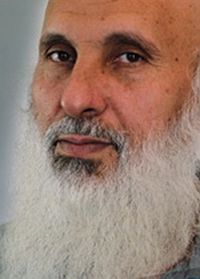
Samir Abd Muhammad al-Khlifawi aka Haji Bakr

Samir Abd Muhammad al-Khlifawi aka Haji Bakr

Christoph Reuter reports on the documents revealing Haji Bakr’s blueprint for ISIS: What Bakr put on paper, page by page, with carefully outlined boxes for individual responsibilities, was nothing less than a blueprint for a takeover. It was not a manifesto of faith, but a technically precise plan for an “Islamic Intelligence State” — a caliphate run by an organization that resembled East Germany’s notorious Stasi domestic intelligence agency.

This blueprint was implemented with astonishing accuracy in the ensuing months. The plan would always begin with the same detail: The group recruited followers under the pretense of opening a Dawah office, an Islamic missionary center. Of those who came to listen to lectures and attend courses on Islamic life, one or two men were selected and instructed to spy on their village and obtain a wide range of information. To that end, Haji Bakr compiled lists such as the following:

  • List the powerful families.
  • Name the powerful individuals in these families.
  • Find out their sources of income.
  • Name names and the sizes of (rebel) brigades in the village.
  • Find out the names of their leaders, who controls the brigades and their political orientation.
  • Find out their illegal activities (according to Sharia law), which could be used to blackmail them if necessary

The spies were told to note such details as whether someone was a criminal or a homosexual, or was involved in a secret affair, so as to have ammunition for blackmailing later. “We will appoint the smartest ones as Sharia sheiks,” Bakr had noted. “We will train them for a while and then dispatch them.” As a postscript, he had added that several “brothers” would be selected in each town to marry the daughters of the most influential families, in order to “ensure penetration of these families without their knowledge.”

The spies were to find out as much as possible about the target towns: Who lived there, who was in charge, which families were religious, which Islamic school of religious jurisprudence they belonged to, how many mosques there were, who the imam was, how many wives and children he had and how old they were. Other details included what the imam’s sermons were like, whether he was more open to the Sufi, or mystical variant of Islam, whether he sided with the opposition or the regime, and what his position was on jihad. Bakr also wanted answers to questions like: Does the imam earn a salary? If so, who pays it? Who appoints him? Finally: How many people in the village are champions of democracy?

The agents were supposed to function as seismic signal waves, sent out to track down the tiniest cracks, as well as age-old faults within the deep layers of society — in short, any information that could be used to divide and subjugate the local population. The informants included former intelligence spies, but also regime opponents who had quarreled with one of the rebel groups. Some were also young men and adolescents who needed money or found the work exciting. Most of the men on Bakr’s list of informants, such as those from Tal Rifaat, were in their early twenties, but some were as young as 16 or 17.

The plans also include areas like finance, schools, daycare, the media and transportation. But there is a constantly recurring, core theme, which is meticulously addressed in organizational charts and lists of responsibilities and reporting requirements: surveillance, espionage, murder and kidnapping. [Continue reading…]

Facebooktwittermail

Thousands of Iraqis flee as ISIS makes gains in Sunni heartland

The Washington Post reports: Thousands of families fleeing Iraq’s western city of Ramadi choked checkpoints leading to Baghdad on Friday, after an Islamic State advance spread panic and left security forces clinging to control.

A column of traffic several vehicles wide snaked for miles at a checkpoint in Sadr al-Yusufiyah, on the edge of Baghdad province, as minibuses, cars and trucks picked up families who crossed by foot carrying their possessions in bags and wheelbarrows. Suhaib al-Rawi, the governor of Anbar province, of which Ramadi is the capital, described it as a human disaster on a scale the city has never witnessed.

U.S. and Iraqi officials have warned that the city is at risk of falling to the Islamic State despite seven months of airstrikes by U.S. planes in Anbar. Such a loss would be a serious blow to Iraq’s government, which recently announced a military campaign for the province after retaking the militant stronghold of Tikrit, and to the international effort to push back the militant group, whose gains in Ramadi have demonstrated an ability to create chaos even while under pressure. [Continue reading…]

Reuters reports: More than 90,000 people have fled their homes in Iraq’s western province of Anbar where Islamic State militants have been gaining ground over the past week, the United Nations said on Sunday.

Facebooktwittermail

Purported ISIS video shows militants killing Ethiopian Christians

Bloomberg: At least two dozen Ethiopian Christians appear to have been executed by the Islamic State Group in Libya, a newly released video shows.

The footage posted on al-Menbar al-E’lamy al-Jihady, a website that reports jihadi news, shows two groups of captives. One was beheaded on a beach said to be in the Barqa region in eastern Libya. The others were shot at point blank range in an area said to be in the southwest. The video said the victims were Christians belonging to “the hostile Ethiopian Church.”

“Muslim blood that was shed under the hands of your religion is not cheap,” an armed masked man said in an American accent. “You will not have safety even in your dreams until you embrace Islam.”

Facebooktwittermail

In the face of ISIS’s atrocities, global inaction is not an option

Philippe Sands writes: Eight mass graves reportedly found in the Iraqi city of Tikrit earlier this month are believed to hold some of the bodies of 1,700 Shia military cadets who were rounded up by Islamic State in June 2014 and paraded through the streets, before disappearing.

These graves, and surely others in and around the city, will be subjected to a grim, intimate process followed too often around the world, a fruit of ethnic and religious strife. As in Rwanda and various parts of former Yugoslavia with now familiar names – such as Srebrenica and Vukovar– the sites will be mapped and documented; bodies will be identified, photographed, removed and then minutely analysed by forensic anthropologists for identity and trauma; full excavation of the site will follow, with identification and accounting for the moment of mass death. What happens next?

These sites are crime scenes, with a resonance going beyond the local. Their dimension is international because of their scale, nature and context. Such acts of unlawful killing may be war crimes in armed conflict, or “crimes against humanity” when occasioned beyond the battlefield. If it can be established that the killings were motivated by an intention to destroy Shias as a group in whole or in part (as the UN has intimated in relation to accounts of the murder by Islamic State forces of members of the Yazidi community in Iraq), then “genocide” may have been committed. [Continue reading…]

Facebooktwittermail

The terror strategist: Secret files reveal the structure of ISIS

Samir Abd Muhammad al-Khlifawi aka Haji Bakr

Samir Abd Muhammad al-Khlifawi aka Haji Bakr

Christoph Reuter reports: Aloof. Polite. Cajoling. Extremely attentive. Restrained. Dishonest. Inscrutable. Malicious. The rebels from northern Syria, remembering encounters with him months later, recall completely different facets of the man. But they agree on one thing: “We never knew exactly who we were sitting across from.”

In fact, not even those who shot and killed him after a brief firefight in the town of Tal Rifaat on a January morning in 2014 knew the true identity of the tall man in his late fifties. They were unaware that they had killed the strategic head of the group calling itself “Islamic State” (IS). The fact that this could have happened at all was the result of a rare but fatal miscalculation by the brilliant planner. The local rebels placed the body into a refrigerator, in which they intended to bury him. Only later, when they realized how important the man was, did they lift his body out again.

Samir Abd Muhammad al-Khlifawi was the real name of the Iraqi, whose bony features were softened by a white beard. But no one knew him by that name. Even his best-known pseudonym, Haji Bakr, wasn’t widely known. But that was precisely part of the plan. The former colonel in the intelligence service of Saddam Hussein’s air defense force had been secretly pulling the strings at IS for years. Former members of the group had repeatedly mentioned him as one of its leading figures. Still, it was never clear what exactly his role was.

But when the architect of the Islamic State died, he left something behind that he had intended to keep strictly confidential: the blueprint for this state. It is a folder full of handwritten organizational charts, lists and schedules, which describe how a country can be gradually subjugated. SPIEGEL has gained exclusive access to the 31 pages, some consisting of several pages pasted together. They reveal a multilayered composition and directives for action, some already tested and others newly devised for the anarchical situation in Syria’s rebel-held territories. In a sense, the documents are the source code of the most successful terrorist army in recent history. [Continue reading…]

Facebooktwittermail

Top Saddam Hussein aide reported killed in northern Iraq

The New York Times reports: An Iraqi provincial governor said Friday that militiamen had killed Izzat Ibrahim al-Douri, the highest-ranking official from Saddam Hussein’s government who was still on the loose, in clashes in a mountainous region of northern Iraq.

News of Mr. Douri’s death has been announced several times by different authorities over the years, and officials cautioned that confirmation would not come until DNA testing had been conducted.

The announcement was made by the governor of Salahuddin Province. Its capital is Tikrit, Mr. Hussein’s hometown, which was recently liberated from the Islamic State. A representative for one of the militias involved in the fighting on Friday, Asa’ib Ahl al-Haq, said a body that fighters believed was Mr. Douri’s was on its way to Baghdad on Friday evening for DNA testing. [Continue reading…]

Facebooktwittermail

Iraq: ISIS escapees describe systematic rape

Human Rights Watch: The extremist group Islamic State (also known as ISIS) has carried out systematic rape and other sexual violence against Yezidi women and girls in northern Iraq. Human Rights Watch conducted research in the town of Dohuk in January and February 2015, including interviewing 20 women and girls who escaped from ISIS, and reviewing ISIS statements about the subject.

Human Rights Watch documented a system of organized rape and sexual assault, sexual slavery, and forced marriage by ISIS forces. Such acts are war crimes and may be crimes against humanity. Many of the women and girls remain missing, but the survivors now in Iraqi Kurdistan need psychosocial support and other assistance.

“ISIS forces have committed organized rape, sexual assault, and other horrific crimes against Yezidi women and girls,” said Liesl Gerntholtz, women’s rights director at Human Rights Watch. “Those fortunate enough to have escaped need to be treated for the unimaginable trauma they endured.”

Facebooktwittermail

Pentagon: Ramadi isn’t about to fall to ISIS, but if it does, it’s not a big deal (unless you live in Ramadi)

The Wall Street Journal reports: U.S. defense officials said a provincial capital in Iraq could soon fall to Islamic State, while America’s top military officer sought to minimize the strategic importance of the city.

At a Pentagon news conference, Gen. Martin Dempsey, chairman of the Joint Chiefs of Staff, suggested that maintaining control of Ramadi, the capital of Anbar province, isn’t central to the U.S. and Iraqi aims of defeating Islamic State forces.

“The city itself is not symbolic in any way,” Gen. Dempsey said. “It’s not been declared part of the caliphate on one hand, or central to the future of Iraq.”

Earlier this week, Pentagon officials minimized the possibility that Ramadi was going to fall. But U.S. officials have monitored large numbers of civilians fleeing from the city, a sign that residents fear an imminent takeover.

Islamic State fighters have taken over a number of villages surrounding Ramadi, destroyed bridges and other infrastructure and reversed recent gains by Iraqi Security forces, defense officials said Thursday.

The U.S. has been stepping up strikes around Ramadi, but those have been insufficient to blunt the advance of Islamic State fighters.

Officials compared the city with Kobani, a Syrian city that was on the brink of being taken over before Kurdish fighters, aided by U.S. airstrikes, retook it. [Continue reading…]

Which is to say, Ramadi is like Kobane, minus the Kurdish fighters.

Facebooktwittermail

Jihad: How British Muslims have been drawn to Syria

Mary Anne Weaver writes: He was a dreamer, with Che Guevara looks — a jet-black beard and eyes — who built a new persona online, as a Muslim warrior riding into battle in the back of an open-bed truck, dressed in black, his long hair blowing in the breeze, with an AK-47 hanging from his shoulder, strapped to his back. He had just turned 22 — the product of British private schools, a computer aficionado working in customer service at Sky News — when he decided to turn his dream into reality.

In May 2013, Ifthekar Jaman left his comfortable home in Portsmouth, England, explaining to his parents, who emigrated years earlier from Bangladesh, that he wanted to learn Arabic in the Middle East. Instead, he booked a one-way ticket to Turkey. The next time his parents, Enu and Hena, heard from him, he had crossed the Turkish border into Syria and joined the Islamic State in Iraq and al-Sham — also known as ISIS or ISIL — the most brutal, and now the most powerful, of a dozen or so militant Sunni Islamist groups arrayed against President Bashar al-Assad of Syria and his equally brutal Alawite government.

Ifthekar was part of the first wave of foreign fighters, whose motives were primarily humanitarian. Everyone — not just Muslims — was outraged by the atrocities of the Assad regime. Both the U.S. and the British governments were calling for Assad to step down. So were France, and Turkey, and a number of nations in the Middle East.

The foreign fighters were arriving by the hundreds to join one of the various rebel groups challenging Assad’s military-backed dictatorship. Many were as naïve and inexperienced as Ifthekar was. Some recruits were fervent believers; others showed scant knowledge of Islam. Ifthekar was pious, though not doctrinaire. He embraced his Bengali traditions, but he appeared well integrated into British life and was popular among his classmates and his non-Muslim friends. As a boy, he spent hours immersed in the tales of “Harry Potter” and “The Lord of the Rings.” As a teenager, he played the guitar and was a member of the Portsmouth Dawah Team, which, on weekends, distributed free copies of the Quran. He had a cat, Bilai, that he adored and that, on occasion, would follow him to dawn prayers at the Portsmouth Jami mosque.

Dressed, as he’d planned, all in black, a long, Salafist beard framing his face, a black prayer cap on his head, Ifthekar set out for Syria alone — there were no established routes or support networks then, as there are now — following the dusty road from the Turkish border town Reyhanli to the Bab al-Hawa crossing into Syria. He was intent on joining Jabhat al-Nusra, Al Qaeda’s Syrian branch, which was the pre-eminent Islamist group in the early stages of the anti-Assad campaign. The only problem was, he didn’t know how.

A chance encounter with a bearded man would provide the key: As he boarded a bus near the Turkish border, Ifthekar, still lacking any plan, quickly scanned the faces of his companions. “Turkey is a pretty secular country,” he would later explain, “and I only spotted one man with a beard.” Ifthekar approached the man and, as the bus careered down the road, offered him a small bottle of attar, an alcohol-free musk oil popular with Muslims. The two began to talk. The bearded man, a Syrian from Aleppo, asked Ifthekar if he was en route to Syria to do jihad. Ifthekar responded that he was. When the bus stopped on the other side of the border, the bearded man drove him, in his waiting car, to the recruitment office of Jabhat — also known as the Nusra Front.

Ifthekar was devastated when the group turned him down. He didn’t have the required letters of recommendation.

“I got teary,” he later recalled. “This is what I’d come for!” He pleaded with the Tunisian jihadist manning the recruitment desk, even offering to be held prisoner by the Nusra Front while it did a background check on him. It was all to no avail. Finally the Tunisian offered to help him join another Islamist group, Ahrar al-Sham. Ifthekar refused. He knew that Ahrar permitted smoking, of which he most strenuously disapproved.

And so it was that Ifthekar, after being vetted for a fortnight by the group, joined ISIS.

His major complaint — which echoed the complaints of many of the foreigners who had come to these battlefields — was that of boredom. Weeks turned into months, and he and many of his fellow fighters had yet to wage jihad. Many manned roadblocks or checkpoints; others performed menial tasks. Ifthekar, whose father owned a takeout restaurant, had traveled to Syria, at considerable risk, to be drafted as a chef.

Then, in December 2013, seven months after he arrived, Ifthekar was finally sent into battle in the eastern province of Deir Ezzor.

He was killed almost immediately. [Continue reading…]

Facebooktwittermail

ISIS’ attack on Ramadi just upended U.S. war plans

Nancy A. Youssef reports: ISIS is reportedly marching on key Iraqi city of Ramadi—upending the momentum that the U.S.-led military coalition seemed to have just days ago, and threatening to shatter an already delicate recent power shift that both the U.S. and Iraq hoped to exploit.

Until Wednesday’s reports about Ramadi both U.S. and Iraqi officials were examining what effects ISIS’ recent losses could have in future battles. The officials were even talking about where they would take down ISIS next. During his visit to Washington, Iraqi Prime Minister Haider al Abadi suggested in an interview Wednesday with reporters that his troops could move on both Anbar province—where Ramadi in the local capital—and the oil-rich city of Baiji.

But that was before, according to residents, three cities near Ramadi fell into ISIS hands. Hours later, area security forces reportedly asked for more support from the central government to retain control of the city. Pentagon officials stopped short of saying the city was on the brink of falling. But they didn’t sound confident it would hold, either. [Continue reading…]

Facebooktwittermail

Inside Yarmouk refugee camp

The Daily Beast reports: Bombs and shells from all sides continue to rain down on Yarmouk, the Palestinian refugee camp on the outskirts of Damascus, as residents say the so-called Islamic States is taking ever-greater control. The jihadist assault that started April 1 has left residents trapped amid the rubble without medical aid or food while street fighting and heavy shelling by ISIS has overwhelmed Palestinian and Free Syrian Army forces trying to protect the camp. And to make matters works, the Syrian regime has been dropping barrel bombs and intensifying its own artillery barrages, raising fears it will invade with ground forces.

“It’s an absolute horror and I’m terrified,” says 27-year-old Tarek over Skype from near ISIS’s front lines. He is a longtime camp resident who became an activist in 2011 with the anti-regime protest movement. A human-rights organization put The Daily Beast in contact with him and he asked to be quoted only by a pseudonym for obvious security reasons.

Tarek worries that a regime ground invasion could trigger wide-scale massacres committed by the troops of President Bashar al Assad along with jihadist reprisal killings. He describes a situation of chaos in a camp — really a densely populated urban neighborhood — that has been increasingly crippled by the regime’s siege and bombardment since Free Syrian Army forces and Palestinian rebels rose up in December 2012.

“The streets are abandoned and filled with rubble as people hide in their homes,” Tarek says. Many residents have run out of food and water. There are desperate scenes as some of those come out to scour the area under sniper fire and shelling and look for wells. [Continue reading…]

Facebooktwittermail

Soleimani: No more selfies

Arash Karami writes: When the fighters of the Islamic State (IS) took over large parts of western Iraq in the summer of 2014, Iran did not hesitate to assist both Iraqi and Kurdish forces in pushing back against the advance of the terrorist group. Iran’s geopolitical decision was also accompanied by what seemed an unofficial media decision: to promote the status of Quds Force Cmdr. Qasem Soleimani in the fight against IS.

Pictures of Soleimani at the front line among Iraqi forces surfaced on social media overnight. The various Facebook, Twitter and Instagram pages dedicated to Soleimani had begun to act as his unofficial media arm, and his popularity has soared online. Often he could be seen looking at the camera, making no attempt to conceal that Iran had sent its commander in charge of regional policy to Iraq.

But now it seems that Soleimani has had enough. In an April 11 open letter to an Iranian filmmaker requesting that he cease producing a film about him, Soleimani also denied some of the things said about him on social media and asked officials to control the rumors. [Continue reading…]

Facebooktwittermail

My missing family in Syria: Naming and shaming in Yarmouk

Ramzy Baroud writes: Members of my family in Syria’s Yarmouk went missing many months ago. We have no idea who is dead and who is alive. Unlike my other uncle and his children in Libya, who fled the NATO war and turned up alive but hiding in some desert a few months later, my uncle’s family in Syria disappeared completely as if ingested by a black hole, to a whole different dimension.

I chose the “black hole” analogy, as opposed to the one used by UN Secretary-General Ban Ki-moon – “the deepest circle of hell” – which he recently uttered in reference to the plight of Palestinians in Yarmouk following the advances made by the notorious Islamic State (IS) militias in early April. If there is any justice in the hereafter, no Palestinian refugee – even those who failed to pray five times a day or go to church every Sunday – deserves to be in any “circle of hell”, deep or shallow. The suffering they have endured in this world since the founding of Israel atop their towns and villages in Palestine some 66 years ago is enough to redeem their collective sins, past and present.

For now, however, justice remains elusive. The refugees of Yarmouk – whose population once exceeded 250,000, dwindling throughout the Syrian civil war to 18,000 – is a microcosm of the story of a whole nation, whose perpetual pain shames us all, none excluded.

Palestinian refugees (some displaced several times) who escaped the Syrian war to Lebanon, Jordan or are displaced within Syria itself, are experiencing the cruel reality under the harsh and inhospitable terrains of war and Arab regimes. Many of those who remained in Yarmouk were torn to shreds by the barrel bombs of the Syrian army, or victimised – and now beheaded – by the malicious, violent groupings that control the camp, including the al-Nusra Front, and as of late, IS. [Continue reading…]

Facebooktwittermail

ISIS ‘withdraws from Yarmouk camp’

Channel 4 News: An activist inside Yarmouk camp in Damascus tells Channel 4 News that Islamic State militants have largely withdrawn from the centre of the camp and handed control to other jihadis.

They are still fighting Aknaf Beit al Maqdis, a local militia allied to Hamas, on the outskirts of Yarmouk.

“Today there are no more IS militants inside Yarmouk,” said “Mustafa Ahmed”, who uses a pseudonym to disguise his identity. “Most of the militants are at the frontline between IS and the Aknaf brigades in the south eastern part near the hospital.”

Last Wednesday night Syrian government aircraft dropped barrel bombs on the Palestine Hospital, the only functioning healthcare facility in Yarmouk, after IS militants started to use it as a base.

Facebooktwittermail

Pentagon: ISIS pushed out of 25% of its territory

USA Today: Iraqi forces have pushed the Islamic State out of about 25% of the territory seized during the militants’ lightning advance last year, according to a Pentagon assessment released Monday.

The area represents 5,000 to 6,500 square miles in northern and central Iraq, the assessment said.

The United States has been backing Iraqi forces with daily airstrikes against the Islamic State, also known as ISIL or ISIS.

“ISIL is no longer the dominant force in roughly 25 to 30% of the populated areas of Iraqi territory where it once had complete freedom of movement,” the Pentagon said.

The assessment comes as President Obama is to meet Tuesday with Iraqi Prime Minister Haider al-Abadi for his first White House visit as prime minister. Al-Abadi has said Iraq needs more international assistance in his country’s fight against Islamic State militants.

Facebooktwittermail

ISIS has destroyed ancient city of Nimrud

Channel 4 News: On March 6, there were reports that Islamic State fighters had looted Nimrud, in Iraq, in one of their several assaults on some of the world’s greatest archaeological and cultural treasures.

In the video uploaded on Saturday, a man said to be an IS militant said: “God has honoured us here in the Islamic State and helped us to destroy anything that used to be worshipped besides God in ancient days. Look at us here, all praise be to God, we are destroying all statues and monuments.”

Standing in front of explosives rigged in front of a stone frieze another man said: “We remove the signs of polytheism and spread monotheism in every single territory we acquire. By God, we will destroy the signs of polytheism and we will destroy the graves and shrines of the rejectionists (Shi’ites) in their homes.

“We will smash the (Christian) crosses and we will demolish the Black House (White House) in the middle of America, the home of infidels.”

This UNESCO video shows Nimrud before its destruction:

Facebooktwittermail