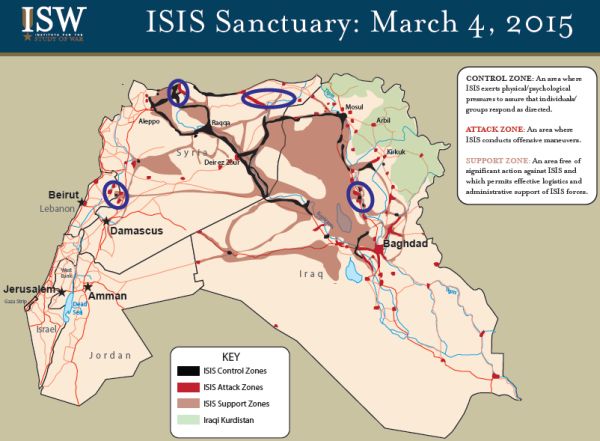
The New York Times reports: Under pressure from its allies in the West, Turkey has made it harder for would-be jihadists to slip across the border and join the ranks of the Islamic State group at its base in northern Syria.
But it has been unable — or unwilling — to halt the flow as the group, also called ISIS or ISIL, continues to replenish forces depleted in battle.
Smugglers from border villages who have long earned a living ferrying pistachios, sugar, cigarettes and fuel across the border say they are compelled by the Islamic State to traffic in jihadists, under the threat of death or the end of their livelihoods. Sometimes they receive a late-night phone call from an ISIS commander inside Syria directing them to receive a recruit at a luxury hotel in this city to escort across the border.
“Things have become more difficult because Turkey has stricter procedures on the border,” one smuggler who gave only his first name, Mustafa, said in an interview at a cafe in Killis, a border town.
Even so, he said, he always finds a way, and sometimes the Turkish border guards in his village, who know him, look the other way.
The increased pressure means the frenetic days of 2012 are over. Foreign jihadists, with long beards and trademark fanny packs who once filled the cafes and streets in border towns, now slip quietly through Turkey, trying to attract little attention. Military supply shops, which once openly sold black headbands printed with Islamist slogans, body armor and, sometimes, weapons to foreigners on their way to Syria, have taken their business into back rooms. [Continue reading…]
Category Archives: ISIS
ISIS sets its sights on Saudi Arabia
Chris Zambelis writes: The meteoric rise of the Islamic State of Iraq and Syria, which has since styled itself the Islamic State in an affirmation of its broader aspirations of dominion over a self-declared caliphate beyond the territories where it exercises control, has aggravated the Middle East’s already treacherous geopolitical landscape. Having emerged out of conflict and instability in Iraq and Syria, the Islamic State has arguably matched or otherwise exceeded the capabilities of fellow extremist groups such as al-Qaeda, its regional affiliates and other violent Islamist organizations. Despite its recent setbacks—notably in Syria’s Kurdish-majority town of Kobane (a.k.a. Ayn al-Arab), located in the northern Aleppo province—the Islamic State has demonstrated an impressive ability to capture, control and consolidate its hold on territory and sustain its insurgent and support cadres. It also operates a sophisticated information and propaganda wing that exploits social media as a force multiplier alongside its scorched earth campaign. It has also drawn support from independent sympathizers and ideological allies throughout the broader Middle East and around globe—including among locally focused extremist factions in Afghanistan, Algeria, Egypt, Libya, Pakistan and Yemen. These attributes are reminiscent of al-Qaeda’s at the pinnacle of its influence. However, they also reflect the simmering competition between the Islamic State and its al-Qaeda precursor as well as the latter’s regional affiliates such as Jabhat al-Nusra (Terrorism Monitor, February 20). The Islamic State’s increasingly strident discourse and threats also illustrate its rising ambitions; in addition to confronting the incumbent regimes in Iraq and Syria and rival militants and insurgents, the Islamic State has an ambitious set of goals that include challenging Saudi Arabia.
The Islamic State today represents the latest and potentially most complex set of challenges to Saudi Arabia, which had previously drawn the ire of al-Qaeda and its regional affiliate al-Qaeda in the Arabian Peninsula (AQAP). Due to the recent death of King Abdullah bin Abdulaziz al-Saud and the succession of King Salman bin Abdulaziz al-Saud, the Islamic State’s rise also comes amid a period of heightened domestic and regional uncertainty. This article will examine the Islamic State’s escalating threats toward Saudi Arabia, which suggest, alongside other recent trends, that the Islamic State is employing a steadily more aggressive threat posture toward Saudi Arabia that is likely to foreshadow future attacks and intensifying pressures. [Continue reading…]
Rising out of chaos: ISIS in Libya
Frederic Wehrey and Ala’ Alrababa’h write: Recent attacks in Libya by the so-called Islamic State, including the brutal slaughter of Egyptian Copts, the Corinthia Hotel attacks, car bombings in Qubbah that killed at least 45 people, and an attack on the Iranian embassy, have brought the spread of extremism in Libya to the forefront. While the Islamic State has intensified its activity in recent weeks, its spread into Libya began early in 2014 as Libyan jihadists began to return from Syria.
Jihadi groups in Libya were already deeply fragmented and localized, but the rise of the Islamic State in Iraq and Syria in 2013 and 2014 sparked new debates, eventually dividing the Libyan jihadis between supporters of the Islamic State and supporters of al-Qaeda and its regional affiliates—mainly al-Qaeda in the Islamic Maghreb (AQIM) in North Africa and the Nusra Front in Syria.
Libyans had already begun traveling to fight in Syria in 2011, joining existing jihadi factions or starting their own. In 2012, one group of Libyans in Syria declared the establishment of the Battar Brigade in a statement laden with anti-Shia sectarianism. The Battar Brigade founders also thanked “the citizens of Derna,” a city in northeastern Libya long known as a hotbed of radical Islamism, for their support for the struggle in Syria. [Continue reading…]
Iraqis living under ISIS rule fear liberation means reprisals
The Associated Press reports: Mosul resident Mohammed Younis says he had nothing to do with the Islamic State group’s capture of his city or its mass killings, beheadings and other atrocities — but that may not be enough to spare him if the extremists are driven out.
A letter left on his doorstep by a shadowy group calling itself the Freemen of Mosul said “vengeance is coming,” and contained vague threats of eye-for-an-eye retribution. Dozens of other Mosul families have reported similar threats, and as Iraqi forces backed by feared Shiite militias gradually push up from Baghdad into the Sunni heartland, some fear the retreat of the extremist group could set off a new round of violence.
Younis thinks he was targeted because his cousin is a suspected Islamic State militant. “Because of the acts of a criminal cousin, me and some of my relatives will be killed or displaced,” he said. “We have nothing to do with Daesh, but I think that nobody will listen when payback time comes,” he added, using the Arabic acronym for the group.
Iraqi troops and Iranian-backed Shiite militias launched a long-awaited offensive this month aimed at capturing Saddam Hussein’s hometown of Tikrit, a Sunni bastion on the Tigris river whose capture would pave the way for an assault on Mosul, which could come as soon as next month.
Iraq’s government has sought to rally Sunni support, hoping to recruit powerful tribes to drive out the extremists and reunite the country. But past offensives have been followed by threats and reports of vicious sectarian reprisals. [Continue reading…]
Boko Haram declaration of an ISIS alliance may be a cry for help
Simon Tisdall writes: The pledge of allegiance offered to Islamic State (Isis) by the Nigerian terrorist group, Boko Haram, over the weekend, is a superficially impressive propaganda coup for the Syria-based Islamist extremist organisation, which has been collecting affiliates around the Muslim world like some people collect stamps.
But the new alliance, unilaterally proclaimed at the weekend by Boko Haram’s leader, Abubakar Shekau, is unlikely to amount to much in terms of immediate collaboration on joint operations. It may, in fact, be more of a cry for help, given a recent string of defeats sustained by Boko Haram. Since January’s gruesome and well-publicised massacre in Baga, on the border with Chad, when it butchered hundreds of civilians, Boko Haram has faced a concerted push-back from Nigeria’s military and a nascent multinational force combining troops from Nigeria, Niger, Chad, Cameroon and Benin.
In the latest military moves, Niger and Chad said Sunday they had launched a “ground and air” offensive into Boko Haram-held territory in northeastern Nigeria. The attack followed the African Union’s decision on Friday to approve a regional force of 10,000 troops headquartered in the Chadian capital, N’Djamena, tasked with “eradicating the presence” of Boko Haram.
This evolving regional security alliance has political backing from the US, France, and Britain. But the western powers remain loth to get involved directly themselves. US bilateral relations have been complicated by concern over human rights abuses by Nigerian security forces. As Boko Haram has been forced on to the defensive, several key towns in Shekau’s self-styled caliphate have been recaptured by the army, including Baga, Gambaru, and the garrison town of Monguno. Chad’s president, Idriss Deby, claimed last week that he knew the whereabouts of the Boko Haram leader and called on him to surrender or be killed. [Continue reading…]
ISIS: Inside the army of terror
In ISIS: Inside the Army of Terror, authors Michael Weiss and Hassan Hassan set out to answer a simple question that was repeatedly being asked on cable news shows in the summer and fall of 2014: Where did ISIS come from, and how did it manage to do so much damage in so short a period of time?
As they note, while this may have seemed like a compelling question at the time, it was also strange, given that the United States has been fighting ISIS in Iraq — in the group’s various incarnations — for almost a decade.
In the book’s introduction (which follows) we learn that the path which led many young men to fight for ISIS commonly began with the desire to fight against the Assad regime.
In late 2011, Abdelaziz Kuwan approached his Syrian uncle to connect him to Riad al-Asaad, a colonel in the Syrian Air Force and one of the earliest military defectors from the dictatorship of Bashar al-Assad. Abdelaziz, a sixteen-year-old teenager from Bahrain, wanted to join the armed rebellion in Syria, but his parents forbade him from going. So he defied them.
In early 2012, he flew first to Istanbul and then, as so many other foreign fighters have done, took a thirteen-hour bus ride to the southern Turkish border town of Reyhanli. From there, he crossed into the Syrian province of Aleppo, the northern countryside that had by then completely fallen into the hands of the armed anti-Assad rebellion. Abdelaziz fought for moderate rebel factions for several weeks before deeming them too corrupt and ineffective. Then he migrated through various Islamist brigades, joining first Ahrar al-Sham and then Jabhat al-Nusra, which later revealed itself to be the al-Qaeda franchise in Syria. Having earned a reputation as a fearless and religiously devout fighter, Abdelaziz nonetheless grew disenchanted with his Islamist comrades and faced pressure from his family to return to Bahrain. He did at the end of 2012. Once home, Abdelaziz’s mother promptly confiscated his passport.
“I walk in the streets [of Bahrain] and I feel imprisoned,” Abdelaziz told the authors a year later, still pining for his days as a holy warrior. “I feel tied up. It’s like someone is always watching me. This world means nothing to me. I want to be free. I want to go back. People are giving their lives, that’s the honorable life.”
Abdelaziz’s family had moved to Bahrain from eastern Syria in the 1980s. His parents provided him with the means to lead a decent life. “His father raised him well,” one relative recalled. “He did not make him need anyone and wanted him to be of a high social status.” The relative added that Abdelaziz was “quiet,” “refined,” and “always behaved like a man.”
Abdelaziz stayed in Bahrain for three months before he managed to persuade his mother to give him back his passport. He left for Syria three days later. Once he arrived, Abdelaziz joined the Islamic State of Iraq and al-Sham (ISIS), which was then rising in prominence as one of the most disciplined and well-organized jihadist groups in Syria. Abdelaziz later said that in his last few months in Bahrain he made the decision to join ISIS after speaking with “some of the brothers” in Syria via Skype. His prior experience with other Islamist factions ideologically similar to ISIS was an advantage in joining one that was dominated by foreign fighters. Abdelaziz rose through the ranks of ISIS, first becoming a coordinator among local emirs and other rebel groups, then delivering messages and oral agreements on behalf of his leader. When ISIS seized enormous swaths of territory in both Syria and Iraq in the summer of 2014, Abdelaziz was promoted to a security official overseeing three towns near the Syrian-Iraqi border town of Albu Kamal, long a portal between the two countries for men like him.
In ISIS, Abdelaziz discovered new things about himself. He learned that he was violent, brutal, and determined. He beheaded enemies. He kept a Yazidi girl in his house as a sabiyya, or sex slave. She was his prize for his participation in battles against the Iraqi Kurdish peshmerga forces and other Kurdish militias in Sinjar, Iraq, near the Syrian border. According to ISIS’s propaganda magazine, Dabiq, one-fifth of the sex slaves taken from Sinjar was distributed to ISIS’s central leadership to do with as it so chose; the remainder was divided amongst the rank and file, like Abdelaziz, as the spoils of war.
Abdelaziz showed us a picture of his sabiyya. She was in her late teens. She “belonged” to Abdelaziz for about a month before she was handed off to other ISIS commanders.
Continue reading
Boko Haram declares allegiance to ISIS
The Observer reports: Nigeria’s militant Islamist group Boko Haram has sworn allegiance to Islamic State, which rules a self-declared caliphate in parts of Iraq and Syria, according to a video posted online. The pledge came in an Arabic audio message with English subtitles alleged to have come from Boko Haram leader Abubakar Shekau and posted Saturday on Twitter, according to the SITE Intelligence monitoring service.
“We announce our allegiance to the Caliph of the Muslims … and will hear and obey in times of difficulty and prosperity, in hardship and ease, and to endure being discriminated against, and not to dispute about rule with those in power, except in case of evident infidelity regarding that which there is a proof from Allah,” said the message.
The video script identified the caliph as Ibrahim ibn Awad ibn Ibrahim al-Awad al-Qurashi, who is better known as Abu Bakr al-Baghdadi, the leader of Islamic State and self-proclaimed caliph of the Muslim world. Baghdadi has already accepted pledges of allegiance from other jihadist groups in the Middle East, Afghanistan, Pakistan and north Africa.
Boko Haram has been waging a six-year military campaign to carve out an Islamic state in northern Nigeria. [Continue reading…]
The New York Times adds: An oath of allegiance from Boko Haram, the Nigeria-based militant group, to the Islamic State on Saturday reinforces Western fears that the terrorist group is growing beyond its base in Iraq and Syria. These worries have prompted American and allied commandos to rush to train African counterterrorism troops to fight extremists on the continent.
The expanding effort here on the edge of the Sahara to fight militancies like Boko Haram comes as the group has kidnapped schoolgirls, slaughtered thousands of people, and now has expanded its attacks from Nigeria into Cameroon, Niger and Chad.
“When your neighbor’s house is burning, you have to put it out, because if not, yours is next,” said Lt. Col. Brahim Mahanat, a Chadian Army officer who spoke during the Pentagon’s annual military exercise with 1,200 African troops, United States Army Special Forces and other Western commandos, which ends on Monday.
More than any exercise in the past decade, this year’s training — three weeks of marksmanship, mock ambushes and patrols in harsh desert terrain — is bumping up against real-world operations. The Chadian capital, Ndjamena, is just 30 miles from militant-held territory in Nigeria, and Boko Haram has vowed revenge since Chad began cross-border attacks against the militants. Police officers and army troops have stepped up patrols in the capital in response to increased risks, including suicide bombings.
Boko Haram has, in the meantime, pushed more than 200,000 Nigerian refugees across the border into neighboring countries. And on Saturday, three explosions rocked the northeastern Nigerian city of Maiduguri, killing dozens of people in the worst attack there since suspected Islamist militants tried to seize it in January. [Continue reading…]
In campaign against terrorism, U.S. enters period of pessimism and gloom
The Washington Post reports: U.S. counterterrorism officials and experts, never known for their sunny dispositions, have entered a period of particular gloom.
In congressional testimony recently, Director of National Intelligence James R. Clapper Jr. went beyond the usual litany of threats to say that terrorism trend lines were worse “than at any other point in history.”
Maj. Gen. Michael Nagata, commander of U.S. Special Operations forces in the Middle East, told participants on a counterterrorism strategy call that he regarded the Islamic State as a greater menace than al-Qaeda ever was.
Speaking at a New York police terrorism conference, Michael Morell, former deputy director of the CIA, said he had come to doubt that he would live to see the end of al-Qaeda and its spawn. “This is long term,” he said. “My children’s generation and my grandchildren’s generation will still be fighting this fight.”
The assessments reflect a pessimism that has descended on the U.S. counterterrorism community over the past year amid a series of discouraging developments. Among them are the growth of the Islamic State, the ongoing influx of foreign fighters into Syria, the collapse of the U.S.-backed government in Yemen and the downward spiral of Libya’s security situation. The latest complication came Saturday, when the terrorist group Boko Haram in Nigeria carried out a series of suicide bombings and reportedly declared its allegiance to the Islamic State. [Continue reading…]
Iraqi forces and Shi’ite militia fighters struggle in advance towards Tikrit
Reuters reports: Iraqi security forces and Shi’ite militia fighters struggled to advance on Saturday into the two towns of al-Alam and al-Dour near Tikrit, their progress slowed by fierce defense from Islamic State militants.
“We are facing a strong resistance from terrorist groups and we are trying to surround Daesh inside al-Alam and al-Dour and cut all supply routes for them,” said al-Alam mayor Laith al-Jubouri, referring to the Islamic State fighters.
Army and militia fighters entered the southern and eastern parts of al-Dour on Friday. Commanders said at the time that the town had been completely recaptured, but officials said only parts of it had been retaken. [Continue reading…]
The rapidly closing window for national reconciliation in Iraq
National Journal reports: When his three-car convoy pulled up to a police checkpoint in Baghdad on Friday the 13th of February, Sheikh Qassem al-Janabi had little reason for concern. An influential Sunni moderate who was assisting the Iraqi government’s efforts to draw Sunni tribes away from the orbit of the Islamic State of Iraq and Syria, the charismatic Sheikh Janabi had many friends in high places.
He was in the capital, supposedly far away from any likely ISIS assassins. And he was a longtime friend of the United States, which in the past year had sent military forces back to Iraq to counter the ISIS terrorist group. Sheikh Janabi was riding with seven bodyguards and his son Mohamed, recently returned to Iraq from earning a law degree from the University of Glasgow. They were traveling from their tribal homeland south of Baghdad on the Muslim day of prayer.
The men at the police checkpoint were impostors and suspected Shiite militiamen, and they bundled up Janabi and his entourage at gunpoint, quickly driving them away. Their bodies were later found across town in the ramshackle Shiite slum of Sadr City. Janabi was slumped in the back of one of the cars, his hands tied behind his back with his own belt, a bullet in his head. The bodies of his son Mohamed and seven bodyguards lay nearby, all of them shot execution style. To reach Sadr City, the gunmen would likely have passed through several police checkpoints, raising questions of possible official collusion in the murders.
When the history of the second Iraq civil war is written, the death of Sheikh Qassem al-Janabi may prove notable for what it said about the rapidly closing window for national reconciliation, and for foreshadowing the ominous turn toward outright sectarianism that the fighting in Iraq has taken. Certainly the Sunni lawmakers who walked out of parliament in mass protest on learning of his murder understood his importance, both real and symbolic. Along with other moderate Sunni tribal leaders who first turned against al-Qaida in 2006-07 and took part in the “Anbar Awakening” during Iraq’s first civil war, Janabi rejected the terrorists’ vision of a purifying civil war between Sunnis and Shiites. Instead he continued to embrace the U.S. vision of a unified and democratic Iraq until the day of this death. [Continue reading…]
Inside the Christian militias defending Iraq’s Nineveh plains
Matt Cetti-Roberts writes: Gen. Benham, the leader of a new Assyrian Christian militia in northern Iraq, sits in the sparse barracks where his men train to defend their homelands from Islamic State.
In August, the jihadi militants forced Benham from his home in the central Iraqi village of Hamdaniyah, 51 kilometers southeast of Mosul. “ISIS stole everything that I made, what my father made, what my grandfather made,” Benham says.
“They took all of this from me in one minute. I only came here with my shirt and trousers, my son and my daughter.”
Christian villages dotting the Nineveh plains fell to the Islamic State last summer when the Kurdish Peshmerga withdrew. More than 100,000 people fled from the jihadi group.
Now, seven months later, many of the villages are still under Islamic State control. Assyrian Christians have little faith in the Peshmerga — although they’re allies — and have decided to take the fight into their own hands, forming lightly armed bands of politically-aligned militias.
The Nineveh Plain Protection Units, or NPU, of which Benham is a part, is one of the new Assyrian Christian militias.
In the unit’s temporary home near Kirkuk, more than 200 Assyrian Christian men are undergoing training in infantry skills, basic weapon handling and working as a unit — with help from former U.S. soldiers.
Benham served for several decades in the Saddam-era Iraqi army, but most of his men have little or no fighting experience, and some have never even fired a rifle. [Continue reading…]
ISIS: Managers of savagery
Muhammad Idrees Ahmad reviews two recently published books on ISIS: ISIS: Inside the Army of Terror, by Michael Weiss and Hassan Hassan and The Rise of Islamic State: ISIS and the New Sunni Revolution, by Patrick Cockburn: Beyond history, the book [by Weiss and Hassan] presents a granular analysis of the IS’s organization, ideology, funding and recruitment. The book explains the strategic logic of the group’s spectacular cruelty while giving readers a glimpse of the IS mindset through a series of interviews with its cadre. It also describes the common experiences that set its leaders on the path of jihad (Zarqawi was radicalized in a Jordanian prison; Baghdadi at the American Camp Bucca). It also shows how the IS secured the loyalty of tribes under its rule by buying or bludgeoning them, using coercion or cooptation.
By contrast, Patrick Cockburn’s The Rise of Islamic State: ISIS and the New Sunni Revolution is a high-altitude polemic that blames the IS’s rise on U.S. and Saudi support for the anti-Assad rebellion. It has little or nothing to say about IS ideology or composition. Acting more as an advocate than an observer, Cockburn argues for rapprochement with the Assad regime.
But to make his case, Cockburn dispenses with proportion and distinction. Though in successive reports the U.N., Amnesty International and Human Rights Watch have indicted the Assad regime as by far the leading perpetrator of violence in the conflict, Cockburn’s account is devoted almost entirely to opposition atrocities. (He reports exclusively from regime-held areas.) Regime repression does receive cursory mention, but Nazi analogies are reserved for the opposition.
Cockburn makes no mention of the divergent interests and active rivalries between IS and Syria’s nationalist opposition. For him, to assist the opposition is to assist the IS.
To support this claim, he quotes “an intelligence officer from a Middle Eastern country neighboring Syria” who told him “ISIS members ‘say they are always pleased when sophisticated weapons are sent to anti-Assad groups of any kind because they can always get the arms off them by threats of force or cash payments.’” (Cockburn quotes many anonymous intelligence officials in the book but on no other occasion does he grant the country anonymity. Might it be because the “country neighboring Syria” is Iraq, a key Assad ally?)
Yet this bias is the least of the problems in Cockburn’s reporting—he also embellishes. On page 76 of his book, he writes about Adra: “I witnessed JAN forces storm a housing complex by advancing through a drainage pipe which came out behind government lines, where they proceeded to kill Alawites and Christians.” This would be the first independent verification of a story that had briefly surfaced before disappearing in a swirl of contradictory claims. The Russian broadcaster RT had even used fake pictures in its report on the incident.
Yet Cockburn was nowhere near Adra. This is confirmed by an unimpeachable source: Patrick Cockburn. He first reported on the incident in his January 28, 2014 column for The Independent. But instead of being personally present, the story about rebels advancing through a drainage pipe is attributed to “a Syrian soldier, who gave his name as Abu Ali.” Cockburn appears to have pulled a Brian Williams. [Continue reading…]
Iran gains influence in Iraq as Shiite forces fight ISIS
The New York Times reports: All along the green irrigated plains in the heart of what American occupying troops used to call the Sunni triangle, lampposts and watchtowers are flying the flags of the Badr Organization, a Shiite militia long hated and feared by many Iraqi Sunnis.
The road from Baghdad to Tikrit is dotted with security checkpoints, many festooned with posters of Iran’s supreme leader and other Shiite figures. They stretch as far north as the village of Awja, the birthplace of Saddam Hussein, on the edge of Tikrit, within sight of the hulking palaces of the former ruler who ruthlessly crushed Shiite dissent.
More openly than ever before, Iran’s powerful influence in Iraq has been on display as the counteroffensive against Islamic State militants around Tikrit has unfolded in recent days. At every point, the Iranian-backed militias have taken the lead in the fight against the Islamic State here. Senior Iranian leaders have been openly helping direct the battle, and American officials say Iran’s Revolutionary Guards forces are taking part.
Iraqi officials, too, have been unapologetic about the role of the militias. They project confidence about their fighting abilities and declare that how to fight the war is Iraq’s decision, as militia leaders criticize American pressure to rely more on regular forces. [Continue reading…]
ISIS attacks a major archaeological site in Iraq
The New York Times reports: The Islamic State militant group attacked the ancient archaeological site of Nimrud in northern Iraq and damaged it with heavy vehicles, Iraq’s Ministry of Tourism and Antiquities said Thursday.
It was the latest in a series of attacks on ancient structures and artifacts in Syria and Iraq that the group has destroyed in the name of its harsh interpretation of Islamic law. Last week, Islamic State militants videotaped themselves destroying statues and artifacts in the Mosul Museum and at the Nergal Gate entryway to ancient Nineveh. The militants captured the city during its offensive blitz through much of Iraq last June. “The terrorist gangs of ISIS are continuing to defy the will of the world and the feelings of humanity after they committed a new crime that belongs to its idiotic series,” the ministry said in a statement on its Facebook page, referring to the Islamic State, also known as ISIS, ISIL or Daesh.
Nimrud is the sprawling site of a city founded by the Assyrian King Shalamansar I, who died in 1245 B.C. Among the most impressive objects at Nimrud are the colossal statues known as “lamassu,” mythological creatures that depict either lions or winged bulls with bearded human heads. Pairs of the 17-ton statues are at the Metropolitan Museum of Art and the British Museum. [Continue reading…]
Defining and describing the population of ISIS supporters on Twitter
Although much ink has been spilled on ISIS’s activity on Twitter, very basic questions about the group’s social media strategy remain unanswered. In a new analysis paper, J.M. Berger and Jonathon Morgan answer fundamental questions about how many Twitter users support ISIS, who and where they are, and how they participate in its highly organized online activities.
Previous analyses of ISIS’s Twitter reach have relied on limited segments of the overall ISIS social network. The small, cellular nature of that network—and the focus on particular subsets within the network such as foreign fighters—may create misleading conclusions. This information vacuum extends to discussions of how the West should respond to the group’s online campaigns.
Berger and Morgan present a demographic snapshot of ISIS supporters on Twitter by analyzing a sample of 20,000 ISIS-supporting Twitter accounts. Using a sophisticated and innovative methodology, the authors map the locations, preferred languages, and the number and type of followers of these accounts.
Among the key findings:
• From September through December 2014, the authors estimate that at least 46,000 Twitter accounts were used by ISIS supporters, although not all of them were active at the same time.
Accounts Created, By Year• Typical ISIS supporters were located within the organization’s territories in Syria and Iraq, as well as in regions contested by ISIS. Hundreds of ISIS-supporting accounts sent tweets with location metadata embedded.
Location Claimed in Profile• Almost one in five ISIS supporters selected English as their primary language when using Twitter. Three quarters selected Arabic.
• ISIS-supporting accounts had an average of about 1,000 followers each, considerably higher than an ordinary Twitter user. ISIS-supporting accounts were also considerably more active than non-supporting users.
• A minimum of 1,000 ISIS-supporting accounts were suspended by Twitter between September and December 2014. Accounts that tweeted most often and had the most followers were most likely to be suspended.
• Much of ISIS’s social media success can be attributed to a relatively small group of hyperactive users, numbering between 500 and 2,000 accounts, which tweet in concentrated bursts of high volume.
Libya declares 11 oil fields closed after ISIS attacks
The Associated Press: Libya’s state-run oil corporation has declared 11 oil fields in the country non-operational after attacks by suspected Islamic State militants, opting for a force majeure clause that exempts the state from contractual obligations.
The National Oil Corporation blamed Islamist-backed authorities in the capital Tripoli for failing to protect the oil fields. The statement, issued late Wednesday, said “theft, looting, sabotage and destruction” of the oil fields have been on the rise despite pleas for the authorities to ensure the safety of Libya’s oil installations.
“If security deteriorates, the corporation will be forced to close all fields and ports, which will result in a total deficit in state revenues and directly impact people’s live, including with power outage,” the statement said. It urged the country’s feuding political factions to “put state interest above all and stand together against destruction.”
ISIS through the looking-glass
Peter Harling and Sarah Birke write: One of the particularities of the movement calling itself the Islamic State is its investment in the phantasmagorical. It has an instinctive understanding of the value of taking its struggle to the realm of the imagination as the best way to compensate for its real-world limits. Even as it faces setbacks on the battlefield, it has made forays into our collective psyche, where its brutality and taste for gory spectacle is a force multiplier. Perhaps more than merely evil, the Islamic State is diabolical: like the Satan of scripture, it is a creature that is many things to many people, enjoys a disconcerting allure, and ultimately tricks us in to believing that we are doing the right thing when we are actually destroying ourselves.
This may explain, in part, how it is increasingly resorting to crimes that are not just horrific but spectacularly staged, such as the immolation of Jordanian pilot Moaz al-Kassasbeh or the mise-en-scène of the beheading of 21 Egyptian Copts on a Libyan beach. The Islamic State is at its most dangerous in its interaction with the psyche, the fantasies, the frustrations and the fears of others, from the converts it attracts to policy-makers and analysts.
The semantics deployed in response to it are telling: each party projects its own national traumas and anxieties. In the West, the threat posed by Islamic State has been equated with anything from Auschwitz to the genocide in Rwanda to the siege of Sarajevo, even though none of these precedents has much in common with the phenomenon at hand. Among Muslims, the comparisons tend to point to Islam’s early traumas – Sunnis refer to the Khawarij, Islam’s first radicals, while Shias draw comparison with the Umayyads, the Sunni dynasty whose rise the partisans of Ali opposed. These sectarian-tinged views duel with the Islamic State’s own depiction of itself as the embodiment of pious, brave, ruthless and egalitarian comradeship – a utopian image of early, conquering and united Islam that it cultivates meticulously (and which works all the better the less versed in Islamic culture its audience actually is).
This is a sign of the times we are living in, not just in the region but beyond. We are emerging from a relatively well-defined, intelligible world into a moment of chaotic change and reinvention. Out of fear of the unknown and a need to categorise what is happening, we use flawed parallels and historic references. One day it is the end of Sykes-Picot borders; the next the Cold War is being revived. Iranian officials like to view current events through the lens of the 1980s, when they fought a heroic and traumatic war against Saddam Hussein’s Iraq and his backers.
In the West, rather than naming things that trouble us, we tend to use vocabulary that is designed to be reassuring rather than true. It doesn’t take much to see a “national unity government” in Baghdad instead of a profoundly unbalanced and dysfunctional cabinet; we say “Iraqi army” for what in reality is a worn-down collection of abused and often corrupt men who fled as the Islamic State advanced and left most of the fighting to Shia militias. We posit “ceasefires” in Syria to refer to surrenders under the regime’s bombardment, siege and starvation; a “Free Syrian Army” or more recently “moderate rebels” to describe unruly militias fighting Assad. The worst things get, the more we seem willing to describe things as we wish they might be rather than as they are. [Continue reading…]