Category Archives: US government

U.S. officials say American Muslims repeatedly report extremist threats

Reuters reports: Muslim-Americans have repeatedly informed authorities of fellow Muslims they fear might be turning to extremism, law enforcement officials say, contrary to a claim by presumptive Republican presidential nominee Donald Trump this week.

“They don’t report them,” Trump said in a CNN interview on Monday, in the wake of the mass shooting at an Orlando nightclub of 49 people by an American Muslim who claimed allegiance to Islamic State. “For some reason, the Muslim community does not report people like this.”

But FBI director James Comey said, “They do not want people committing violence, either in their community or in the name of their faith, and so some of our most productive relationships are with people who see things and tell us things who happen to be Muslim.

“It’s at the heart of the FBI’s effectiveness to have good relationships with these folks,” Comey said at a press conference following the Orlando shootings. [Continue reading…]

Facebooktwittermail

Andrew Cockburn: Victory assured on the military’s main battlefield — Washington

When it comes to Pentagon weapons systems, have you ever heard of cost “underruns”? I think not. Cost overruns? They turn out to be the unbreachable norm, as they seem to have been from time immemorial. In 1982, for example, the Pentagon announced that the cumulative cost of its 44 major weapons programs had experienced a “record” increase of $114.5 billion. Three decades later, in the spring of 2014, the Government Accountability Office (GAO) reported that the military’s major programs to develop new weapons systems — by then 80 of them — were a cumulative half-trillion dollars over their initial estimated price tags and on average more than two years delayed. A year after, the GAO found that 47 of those programs had again increased in cost (to the cumulative tune of $27 billion) while the average time for delivering them had suffered another month’s delay (although the Pentagon itself swore otherwise).

And little seems to have changed since then — not exactly a surprise given that this has long been standard operating procedure for a Pentagon that has proven adamantly incapable not just of passing an audit but even of doing one. What we’re talking about here is, in fact, more like a way of life. As TomDispatch regular William Hartung has written, the Pentagon regularly takes “active measures to disguise how it is spending the hundreds of billions of taxpayer dollars it receives every year — from using the separate ‘war budget’ as a slush fund to pay for pet projects that have nothing to do with fighting wars to keeping the cost of its new nuclear bomber a secret.”

When it comes to those cost overruns, Exhibit A is incontestably the F-35 Joint Strike Fighter, a plane whose total acquisition costs were pegged at $233 billion back in 2001. That price now: an estimated $1.4 trillion for far fewer planes. (Even the F-35 pilot’s helmet costs $400,000 apiece.) In other words, though in test flights it has failed to outperform the F-16, a plane it is supposed to replace, it will be, hands down (or flaps up), the most expensive weapons system in history — at least until the next Pentagon doozy comes along.

Today, Andrew Cockburn, whose recent book, Kill Chain: The Rise of the High-Tech Assassins (just out in paperback), is a devastating account of how U.S. drone warfare really works, suggests that this is anything but a matter of Pentagon bungling. Quite the opposite, it’s strategy of the first order. Tom Engelhardt

The Pentagon’s real $trategy
Keeping the money flowing
By Andrew Cockburn

These days, lamenting the apparently aimless character of Washington’s military operations in the Greater Middle East has become conventional wisdom among administration critics of every sort. Senator John McCain thunders that “this president has no strategy to successfully reverse the tide of slaughter and mayhem” in that region. Anthony Cordesman of the Center for Strategic and International Studies bemoans the “lack of a viable and public strategy.” Andrew Bacevich suggests that “there is no strategy. None. Zilch.”

After 15 years of grinding war with no obvious end in sight, U.S. military operations certainly deserve such obloquy. But the pundit outrage may be misplaced. Focusing on Washington rather than on distant war zones, it becomes clear that the military establishment does indeed have a strategy, a highly successful one, which is to protect and enhance its own prosperity.

Continue reading

Facebooktwittermail

Ryan’s honesty about Trump’s racism provokes criticism from fellow Republicans

The Hill reports: Speaker Paul Ryan’s handling of Donald Trump is coming under criticism from Senate Republicans, many of whom prefer the way their leader, Mitch McConnell, deals with the unconventional candidate.

McConnell, the Senate majority leader from Kentucky, has steadfastly declined to call Trump’s criticism of a federal judge “racist,” a term that Ryan pointedly deployed.

“It sets up journalists to ask, ‘Do you agree with Paul Ryan that it was racist?” said an aide to a vulnerable GOP senator
Trump set off a firestorm last week by claiming that a Mexican-American federal judge handling a lawsuit against Trump University was biased because of his heritage.

Republican lawmakers on both sides of the Capitol swiftly expressed strong disapproval but Ryan ratcheted up the criticism significantly by calling it “the textbook definition of a racist comment.”

Ryan’s remarks quickly became a Democratic talking point used to batter vulnerable Senate Republican incumbents. [Continue reading…]

Facebooktwittermail

Russia is recruiting the U.S.’s rebel allies in Syria

Mike Giglio reports: The rebel commander was nervous. He had changed phone numbers and been difficult to reach before finally agreeing to meet in Antakya, a city near the border with war-torn Syria that has long swarmed with rebels, refugees, and spies. On the road to an out-of-the-way hotel, he told the driver to avoid the main route through town. “It’s better not to drive among all the people,” he said.

It was an open secret that the commander had once received cash and weapons from the CIA, part of a covert U.S. program that backs rebel groups against both ISIS and the Syrian government of Bashar al-Assad.

When his battalion was eventually driven from Syria by its jihadi rivals, like a number of U.S.-backed groups, he pleaded with his U.S. handlers for better support, but it wasn’t enough. So he was, he said, “out of the game.”

Now, he said, sitting at a quiet table at the hotel, he had received an offer that could bring him back in — and potentially make him even stronger than before.

He was being recruited, he said, to work for the U.S.’s rival in Syria: Russia.

“They told me, ‘We will support you forever. We won’t leave you on your own like your old friends did,’” he said. “Honestly, I’m still thinking about it.”

The commander said that five years into a war that has killed some 400,000 people and created nearly 5 million refugees, Russia is recruiting current and former U.S. allies to its side. His revelation was confirmed by four people who said they, too, had been approached with offers from Russia and by two Syrian middlemen who said they delivered them.

The moves come as Russia ratchets up its involvement in Syria with troops and airstrikes. Russia says its military campaign is designed to target ISIS — in reality it has targeted all rebels, including some who are still backed by the U.S., while also wreaking havoc on civilians.

The secret outreach shows that as it works to muscle the U.S. out of Syria, Russia isn’t just bombing the U.S.’s current and former rebel allies — it’s also working to co-opt them, launching a shadowy campaign that seeks to highlight U.S. weakness in Syria. Ultimately, Russia could be hoping to help Assad win the war by dividing the opposition, driving a wedge between rebel groups and their traditional backers, and getting them to turn their guns on his enemies. [Continue reading…]

Facebooktwittermail

Bashar Assad’s defiance points to a Syrian peace effort in tatters

Assad-4

Michele Kelemen reports: Syrian President Bashar Assad is sounding rather confident these days. In his first major address in the past two months, he promised that his troops will reclaim “every inch” of Syrian territory.

“We have no other choice but to be victorious,” Assad told Syria’s parliament on Tuesday. He also lashed out at rebels, blaming them for the failure of peace talks backed by the United Nations.

Assad’s speech is calling into question international diplomacy on Syria. One Syria-watcher at the Atlantic Council in Washington, Faysal Itani, says it’s time to go back to the drawing board.

“It is safe to say [the peace effort] has failed,” Itani tells NPR, saying he never thought the prospects for diplomacy were good.

The diplomatic plan relied on Russia and Iran using their influence with Assad to encourage him to agree on a transitional government and make peace with more moderate rebels.

U.S. Secretary of State John Kerry, one of the key architects of this approach, was “trying to pull a rabbit out of his hat,” according to Itani. While Kerry was seeking concessions from Assad, the military balance of power was turning in favor of the Syrian regime.

“The Russians are quite committed to ensuring it stays that way. No one has any incentive to give John Kerry what he’s asking for,” Itani says. [Continue reading…]

Facebooktwittermail

CIA and Pentagon bicker while Russia wipes out U.S.-backed rebels

The Daily Beast reports: U.S.-backed opposition forces in Syria’s largest city are facing a ferocious Russian-led assault, raising fears that the rebels could be eliminated in a matter of weeks.
So how are the Pentagon and the intelligence community responding?

By catfighting among themselves.

Two Department of Defense officials told The Daily Beast that they are not eager to support the rebels in the city of Aleppo because they’re seen as being affiliated with al Qaeda in Syria, or Jabhat al Nusra. The CIA, which supports those rebel groups, rejects that claim, saying alliances of convenience in the face of a mounting Russian-led offensive have created marriages of battlefield necessity, not ideology.

“It is a strange thing that DoD hall chatter mimics Russian propaganda,” one U.S. official, who supports the intelligence community position, wryly noted to Pentagon claims that the opposition and Nusra are one in the same.

But even if the rebels were completely separated from Nusra, there would still be something of a strategic conflict with U.S. military goals. The rebels in Aleppo, these Pentagon officials note, are fighting the Bashar al-Assad regime; the American military effort, on the other hand, is primarily about defeating the self-proclaimed Islamic State. [Continue reading…]

Facebooktwittermail

Terrorism trial divides Somalis in Minneapolis

The New York Times reports: The day after his oldest son was convicted of conspiring to join and kill for the Islamic State in Syria, Abdihamid Yusuf just wanted to go home and rest. But bills were stacking up, so on Saturday morning he and his wife visited the jail and then reopened Hooyo’s Kitchen, the small Somali restaurant where they serve plates of chicken, rice and bananas.

“We try to survive,” Mr. Yusuf said.

The trial of his son and two other young Somali-American men splintered families and opinions here in the country’s largest Somali community. Former friends testified against one another, describing how they had watched propaganda videos, bought fake passports and plotted their paths to Syria. Family members squabbled in the halls of the courthouse. Some said they had been threatened or shunned.

When the jury came back on Friday afternoon, Mr. Yusuf did not even get word in time to reach the courtroom to see his 22-year-old son, Mohamed Farah, and the two other defendants, Guled Omar, 21, and Abdirahman Daud, 22, declared guilty. A total of nine men — including another of Mr. Yusuf’s sons, Adnan — have been convicted in the case.

Federal prosecutors say the case shined a light on the persistent problem of terrorist recruiting here. Law enforcement authorities have said that more than 20 young men from Minnesota have left to join the Shabab militant group in Somalia and that more than 15 have tried or succeeded in leaving to join the Islamic State.

But it also opened wounds among families, and at the end of the trial, some in the community praised justice served, while others pointed to what they called another injustice. [Continue reading…]

The New York Times reports: The F.B.I. has significantly increased its use of stings in terrorism cases, employing agents and informants to pose as jihadists, bomb makers, gun dealers or online “friends” in hundreds of investigations into Americans suspected of supporting the Islamic State, records and interviews show.

Undercover operations, once seen as a last resort, are now used in about two of every three prosecutions involving people suspected of supporting the Islamic State, a sharp rise in the span of just two years, according to a New York Times analysis. Charges have been brought against nearly 90 Americans believed to be linked to the group.

The increase in the number of these secret operations, which put operatives in the middle of purported plots, has come with little public or congressional scrutiny, and the stings rely on F.B.I. guidelines that predate the rise of the Islamic State.

While F.B.I. officials say they are careful to avoid illegally entrapping suspects, their undercover operatives are far from bystanders. In recent investigations from Florida to California, agents have helped people suspected of being extremists acquire weapons, scope out bombing targets and find the best routes to Syria to join the Islamic State, records show.

Officials said in interviews that because social media had given extremists a cloak of anonymity, these undercover stings — online and in person — had become increasingly vital to gathering evidence and deterring possible attacks in the United States.

“We’re not going to wait for the person to mobilize on his own time line,” said Michael B. Steinbach, who leads the F.B.I.’s national security branch. He added that the F.B.I. could not afford to “just sit and wait knowing the individual is actively plotting.”

Counterterrorism officials said the Islamic State had inspired loyalists to strike quickly, even within days or weeks of their radicalization. Unlike wiretaps or searches, undercover operations do not require a judge to sign a warrant. They are overseen by F.B.I. supervisors and Justice Department prosecutors, and so can usually be started more quickly.

But defense lawyers, Muslim leaders and civil liberties advocates say that F.B.I. operatives coax suspects into saying and doing things that they might not otherwise do — the essence of entrapment. [Continue reading…]

Facebooktwittermail

Guantánamo lawyers deny colluding with judge in key 9/11 case

The Guardian reports: The military lawyers prosecuting the self-proclaimed architect of the 9/11 attacks have struck back against accusations that they colluded with a military judge to destroy evidence relevant to Khalid Sheikh Mohammed’s defense.

In the latest sign that the US’s premier military commission at Guantánamo Bay is becoming what one observer likened to a “schoolyard brawl”, the prosecutors said Mohammed’s attorneys had cynically pursued a “scorched-earth litigation strategy” that involves “batter[ing] the reputation” of the army colonel presiding over the case.

In a 24 May military commissions filing recently unsealed to the public, the prosecution accuses Mohammed’s defense team of bad faith and shoddy lawyering and says the true goal of its counterparts was to destroy the credibility of the controversial military trial system.

Yet in the filing, the chief commissions prosecutor, Brigadier General Mark Martins, and his team elide the central charge in the controversy: the destruction of evidence in a death penalty case.

Last month, Mohammed’s attorneys leveled the extraordinary allegation that military judge and army colonel James Pohl had secretly issued an order permitting the government to destroy evidence that he had earlier publicly agreed to preserve. While extensive classification rules render central facts in the case difficult to conclusively determine, other rulings suggest the evidence in question concerns Mohammed’s torture by the CIA at secret prisons. [Continue reading…]

Facebooktwittermail

Syrian advance raises fear of race for Raqqa

Financial Times reports: An advance by Syrian troops into Raqqa province has raised the prospect of a race to the Isis stronghold between the US-backed opposition and regime forces supported by Moscow.

Supported by Russian air power, Syrian government troops have moved to within 65km to the south-west of the city after clashes with Isis fighters that began over the weekend, according to the UK-based Syrian Observatory for Human Rights.

The fighting comes two weeks after US-backed opposition forces, known as the Syrian Democratic Forces (SDF), began an offensive north of Raqqa, the de facto capital of Isis in Syria, which has also been the centre of its self-styled caliphate since 2014.

Isis now finds itself battling on four different fronts at once: to the north and south-west of Raqqa; around Manbij near the Turkish border with Syria; and in Fallujah in Iraq, where government forces and allied militia are attempting to retake the city. [Continue reading…]

Facebooktwittermail

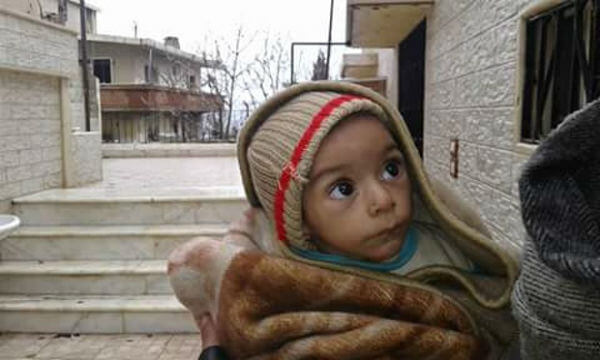
Empty stomachs, empty words: Syria’s children starve as America looks on

starving-child-madaya

In an editorial, the Washington Post says: It’s been nearly six months since the U.N. Security Council passed a resolution demanding an end to the bombing and shelling of civilian areas in Syria and calling for immediate humanitarian access to besieged areas. It’s been four months since Secretary of State John F. Kerry described the sieges as a “castastrophe” of a dimension unseen since World War II and said that “all parties to the conflict have a duty to facilitate humanitarian access to Syrians in desperate need.”

Three weeks ago, a diplomatic conference on Syria joined by Mr. Kerry issued a statement saying it “insisted on concrete steps to enable the provision of urgent humanitarian deliveries,” and warning that if none were taken, it would support airdrops to besieged towns beginning on June 1.

By Monday, there still had been no food deliveries to Darayya in the Damascus suburbs, the al-Waer district of Homs or several other of the 19 besieged areas, with a population of more than 500,000, identified by the United Nations. Nor had there been airdrops. None have been organized, and U.N. officials say none are likely in the coming days. Another deadline has been blown, another red line crossed — and children in the besieged towns are still starving. [Continue reading…]

Facebooktwittermail

FBI wants access to Internet browser history without a warrant in terrorism and spy cases

The Washington Post reports: The Obama administration is seeking to amend surveillance law to give the FBI explicit authority to access a person’s Internet browser history and other electronic data without a warrant in terrorism and spy cases.

The administration made a similar effort six years ago but dropped it after concerns were raised by privacy advocates and the tech industry.

FBI Director James B. Comey has characterized the legislation as a fix to “a typo” in the Electronic Communications Privacy Act, which he says has led some tech firms to refuse to provide data that Congress intended them to provide.

But tech firms and privacy advocates say the bureau is seeking an expansion of surveillance powers that infringes on Americans’ privacy. [Continue reading…]

Facebooktwittermail

Deadly hatred fractures anti-ISIS alliance in Iraq

Christoph Reuter reports: For over a year, the US has been pushing for the launch of an offensive on IS-held Mosul and has been bombing the city almost daily. But despite repeated announcements that an attack was imminent, very little has happened on the ground aside from the recapture of a handful of surrounding towns and villages. Nevertheless, Iraqi commanders have already made competing claims on the expected spoils.

“Nothing and nobody will stop us from marching into Mosul,” says Hadi al-Ameri, the top commander of a conglomerate of Shiite militias that are officially called the Popular Mobilization Units but which are widely known as Hashd.

“All areas of Mosul east of the Tigris belong to Kurdistan,” counters Brigadier Halgord Hikmat, spokesman of the Ministry of Peshmerga Affairs, which controls the Kurdish fighting force. “We aren’t demanding any more than that, and the river is a clear border.”

What’s more, the Sunni ex-governor of Mosul — together with several thousand fighters and the support of 1,200 Turkish troops whose presence in Iraq is tolerated by the Kurds — is planning to invade the city from the north. Under Sunni leadership.

The government in Baghdad, under the leadership of the respectable yet weak Prime Minister Haider al-Abadi, has mostly stayed out of it — despite the fact that the Iraqi army would seem best positioned to prevent a fight among the allies over the spoils of Mosul. But Abadi has been fighting for political survival ever since followers of the Shiite leader Muqtada al-Sadr stormed the government quarter in Baghdad a short time ago, the second such incident in a month. Instead of recapturing Mosul, once Iraq’s second-largest city, the military has now been tasked with first liberating Fallujah, the much smaller IS stronghold west of Baghdad.

Right in the middle, located at the halfway point between Baghdad and Mosul, is Tuz Khurmatu — the harbinger of Iraq’s future. It is a place where those groups fighting together to defeat IS are killing each other away from the front lines. [Continue reading…]

Facebooktwittermail

America’s secret engagement with Khomeini

Kambiz Fattahi writes: On 27 January, 1979, Ayatollah Ruhollah Khomeini – founder of Iran’s Islamic Republic, the man who called the United States “the Great Satan” – sent a secret message to Washington.

From his home in exile outside Paris, the defiant leader of the Iranian revolution effectively offered the Carter administration a deal: Iranian military leaders listen to you, he said, but the Iranian people follow my orders.

If President Jimmy Carter could use his influence on the military to clear the way for his takeover, Khomeini suggested, he would calm the nation. Stability could be restored, America’s interests and citizens in Iran would be protected.

At the time, the Iranian scene was chaotic. Protesters clashed with troops, shops were closed, public services suspended. Meanwhile, labour strikes had all but halted the flow of oil, jeopardising a vital Western interest.

Persuaded by Carter, Iran’s autocratic ruler, Mohammad Reza Shah Pahlavi, known as the Shah, had finally departed on a “vacation” abroad, leaving behind an unpopular prime minister and a military in disarray – a force of 400,000 men with heavy dependence on American arms and advice.

Khomeini feared the nervous military: its royalist top brass hated him. Even more worrying, they were having daily meetings with a US Air Force General by the name of Robert E Huyser, whom President Carter had sent on a mysterious mission to Tehran.

The ayatollah was determined to return to Iran after 15 years in exile and make the Shah’s “vacation” permanent. So he made a personal appeal.

In a first-person message, Khomeini told the White House not to panic at the prospect of losing a strategic ally of 37 years and assured them that he, too, would be a friend.

“You will see we are not in any particular animosity with the Americans,” said Khomeini, pledging his Islamic Republic will be “a humanitarian one, which will benefit the cause of peace and tranquillity for all mankind”. [Continue reading…]

Facebooktwittermail

ISIS at real risk of losing much of the territory it holds

The Guardian reports: For the first time in the two years since the leader of Islamic State, Abu Bakr al-Baghdadi, proclaimed the existence of an “Islamic caliphate” straddling Syria and Iraq, the jihadi group is at real risk of losing much of the territory it holds.

Four Isis strongholds – two in Syria and two in Iraq – are now under concerted attack, and in all cases the militants defending them are struggling to contain well-organised and resourced assaults planned over many months.

The attacks are heavily backed by the US, which since April has stepped up its campaign to “destroy and degrade” the terrorist organisation in its self-declared heartland of eastern Syria and western Iraq. A two-year project that had been derided by allies and proxies alike as being too limited and cautious now has military momentum. [Continue reading…]

Facebooktwittermail

What happens after ISIS?

The Daily Beast reports: Troops fighting ISIS appeared to on the verge of another victory over the self-proclaimed Islamic State Wednesday, as they moved into a city that has served as the main thoroughfare for ISIS foreign fighters and weapons. But the potential seizure of the Syrian city of Manbij by U.S.-backed forces is only likely to set off a new battle for control — this time pitting Arabs against Kurds.

The battle Wednesday reflected a growing problem for the U.S. and its push to train local fighters, even as those forces take territory from ISIS. Who exactly will govern those towns now? Will it be the Kurds who have led the fight against ISIS? Or will it be what some in the Pentagon have privately called the “token Arabs” trained by the U.S. to accompany them?

Two defense officials told The Daily Beast Wednesday they don’t know. They believe the Arabs would be in charge. But even these officials admit that asking the 5,000-or-so newly-trained Arab fighters to control three or more formerly ISIS-controlled areas — and at the same time move into the ISIS capital of Raqqa — would be difficult.

On the other hand, some worry that a Kurdish controlled Manbij could be ethnically cleansed, creating the kind of Sunni disenfranchisement that led to the rise of ISIS. The fall of Manbij into Kurdish hands, however, would give the Kurds a contiguous region in northern Syria. Moreover, a Kurdish controlled Manbij could draw the ire of U.S.-allied Turkey, which rejects a Kurdish controlled region on its border.

The question “what happens after ISIS?” looms increasingly over the U.S.-led effort. Indeed, defense officials said how the governance question is answered in Manbij could foreshadow the strategy for Raqqa, ISIS’s capital. Local U.S.-backed forces, accompanied by U.S. forces, have moved within 18 miles of the city in the last week. Over the Memorial Day weekend, one U.S. service member was injured while supporting the local fighters. [Continue reading…]

Facebooktwittermail

How the U.S. flooded Iran with weapons

PRI reports: According to the arms transfers database of the independent international think tank, Stockholm International Peace Research Institute (SIPRI), which compiled all transfers of major conventional weapons in the world since 1950, the US was the largest arms exporter to Iran from the 1950s to 1970s.

The supply of arms from the US started to climb in 1953 after Iran’s democratically elected prime minister Mohammad Mosaddegh was overthrown in a coup engineered by the British and American intelligence services. The Iranian shah, Mohammad Reza Shah Pahlavi, returned from exile to rule and become a close ally of the US.

According to a Senate Committee on Foreign Relations staff report in 1976, Iran was the largest single purchaser of US military equipment then. Military sales had increased more than sevenfold from $524 million in 1972 to $3.91 billion in 1974.

SIPRI data shows that the amount rose and peaked in 1977. [Continue reading…]

Facebooktwittermail

It wasn’t a ‘glitch’: State Department deliberately cut embarrassing questions from press briefing video

The Washington Post reports: The State Department acknowledged Wednesday that someone in its public affairs bureau made a “deliberate” request that several minutes of tape be cut from the video of a 2013 press briefing in which a reporter asked if the administration had lied about secret talks with Iran.

The embarrassing admission by State Department spokesman John Kirby came three weeks after another spokesperson insisted that a “glitch” had caused the gap, discovered only last month by the reporter whose questioning had mysteriously disappeared.

“This wasn’t a technical glitch, this was a deliberate step to excise the video,” Kirby told reporters.

Kirby said he had not been able to learn who ordered the deletion, which appeared as a jarring, undisguised white flash on the archived video posted on the State Department’s website and in its YouTube video.

“The recipient of the call doesn’t remember anything other than the caller, the individual who called this technician, was passing on a request from someone else within the public affairs bureau,” Kirby said, explaining the faulty memory by adding, “This happened three years ago.”

The curious gap in an old video of a public briefing is not of the same ilk as the famous 18 1/2- minute gap in audio tapes of President Nixon’s Oval Office conversations during the Watergate coverup. The official written transcript of the State Department briefing always carried the full exchange.

But it is likely to further fuel controversy over the administration’s nuclear deal with Iran, coming amid allegations that the White House duped the press and misled Congress and foreign policy scholars about the Iran nuclear deal that was implemented in January. [Continue reading…]

Facebooktwittermail

Fear of ‘catastrophe unfolding’ amid fighting in Falluja

The New York Times reports: Along the battle line north of Falluja, small units of Shiite fighters are raining mortar shells and rockets down on the city and its Islamic State occupiers. Militia graffiti is scrawled in red paint along a network of low walls cratered by bullets and bombs, and a wailing ambulance siren signals another load of wounded bound for treatment away from the front.

The battle for Falluja has become entrenched outside the city itself. Iraqi forces surrounding the area have been bogged down by a fierce Islamic State counterattack. A few civilians managed to escape the city as the fighting closed in, but the status of tens of thousands still trapped there is an urgent question.

Some parts of the extended battlefield are lush with date palm trees and almost bucolic, familiar to anyone who watched television images of American Marines fighting over the same territory more than a decade ago. But mostly, the land is brown and parched, scarred by the fighting. A charred tank, split in two, sits at an intersection, and smoke is always rising in the distance, from an airstrike, a mortar or a car bomb.

The landscape has also been gutted by an elaborate network of tunnels — some of which have been hit in recent days by American airstrikes — that the Islamic State was able to construct while it held the area for more than two years. [Continue reading…]

Facebooktwittermail