David Axelrod writes: The Republican base is infuriated by Mr. Obama’s activist view of government and progressive initiatives, from health care reform to immigration, gay rights to climate change.
Beyond specific issues, however, many Republicans view dimly the very qualities that played so well for Mr. Obama in 2008. Deliberation is seen as hesitancy; patience as weakness. His call for tolerance and passionate embrace of America’s growing diversity inflame many in the Republican base, who view with suspicion and anger the rapidly changing demographics of America. The president’s emphasis on diplomacy is viewed as appeasement.
So who among the Republicans is more the antithesis of Mr. Obama than the trash-talking, authoritarian, give-no-quarter Mr. Trump?
His bombast allows no room for nuance or complexity. He proudly extols his intolerance as an assault against “political correctness,” and he vows to bring the world to heel, from Mexico to China to Syria and Iraq.
Mr. Trump has found an audience with Americans disgruntled by the rapid, disorderly change they associate with national decline and their own uncertain prospects. Policies be damned, who better to set things right than the defiant strong man who promises by sheer force of will to make America great again?
Yes, we can? Hell, no!
Just leave it to me, Mr. Trump says. Yes, I can!
The robust condemnations Mr. Trump has received from media and political elites have only intensified the enthusiasm of his supporters, many of whom feel disdained and forgotten by the very same people who regularly mock and chide their man for his boorishness. To his base, he’s a truth-teller, thumbing his nose at conventional politicians, whether they are liberal or conservative. Rebukes from fact checkers and purveyors of civil discourse? They’re just so much establishment claptrap.
Relentlessly edgy, confrontational and contemptuous of the niceties of governance and policy making, Mr. Trump is the perfect counterpoint to a president whose preternatural cool and deliberate nature drive his critics mad. [Continue reading…]
Dana Milbank writes: Late Thursday night, National Review, the storied conservative magazine founded by William F. Buckley, published an issue denouncing Donald Trump.
“Trump is a philosophically unmoored political opportunist who would trash the broad conservative ideological consensus within the GOP in favor of a free-floating populism with strong-man overtones,” the editors wrote. “Donald Trump is a menace to American conservatism who would take the work of generations and trample it underfoot in behalf of a populism as heedless and crude as the Donald himself.”
The Republican National Committee reacted swiftly — immediately revoking the permission it had given National Review to host a Republican presidential debate next month. “Tonight, a top official with the RNC called me to say that National Review was being disinvited,” the magazine’s publisher wrote online. “The reason: Our ‘Against Trump’ editorial.”
That soft flapping sound you hear is the Grand Old Party waving the flag of surrender to Trump. Party elites — what’s left of the now-derided “establishment” — are acquiescing to the once inconceivable: that a xenophobic and bigoted showman is now the face of the Republican Party and of American conservatism.
The Wall Street Journal editorial page had long criticized Trump’s candidacy, publishing an editorial in July arguing that the conservative media who applaud Trump “are hurting the cause.” The editors opined: “If Donald Trump becomes the voice of conservatives, conservatism will implode along with him.”
A week ago, the Journal reversed course. “Mr. Trump is a better politician than we ever imagined, and he is becoming a better candidate,” the editorialists wrote, speculating that “he might possibly be able to appeal to a larger set of voters than he has so far.” [Continue reading…]
In December 1950, Woody Guthrie signed his name to the lease of a new apartment in Brooklyn. Even now, over half a century later, that uninspiring document prompts a double-take.
Below all the legal jargon is the signature of the man who had composed “This Land Is Your Land,” the most resounding appeal to an equal share for all in America. Below that is the signature of Donald Trump’s father, Fred. No pairing could appear more unlikely.
Guthrie’s two-year tenancy in one of Fred Trump’s buildings and his relationship with the real estate mogul of New York’s outer boroughs produced some of Guthrie’s most bitter writings, which I discovered on a recent trip to the Woody Guthrie Archives in Tulsa. These writings have never before been published; they should be, for they clearly pit America’s national balladeer against the racist foundations of the Trump real estate empire.
Recalling these foundations becomes all the more relevant in the wake of the racially charged proclamations of Donald Trump, who last year announced, “My legacy has its roots in my father’s legacy.”
David Ignatius writes: Allies and adversaries see U.S. forces living in secure compounds, eating fancy chow and minimizing their exposure to potential terrorist assaults. The United States may say it’s fighting alongside its allies, but on the ground, it often looks different. Actually living and fighting alongside our partners in Iraq and Syria will be much more dangerous, but it may be the only way to build a solid alliance that can someday eradicate the extremists.
Contrast these stern admonitions from the commanders who have lived through the Iraq and Afghanistan conflicts with the upbeat talk from political leaders. President Obama pledged that “priority number one is protecting the American people and going after terrorist networks” and then said a few moments later that these networks “do not threaten our national existence.” That sends a mixed message — one that Hillary Clinton has echoed in her campaign.
Republican rants about the Islamic State are even worse, in that they promise total victory without suggesting the level of commitment and sacrifice involved. The GOP responses sound tough, from Donald Trump’s “bomb the hell out of [the Islamic State]” to Sen. Marco Rubio’s (Fla.) assurance in last week’s debate that “the most powerful military in the world is going to destroy them.”
The next president is going to inherit an expanding war against a global terrorist adversary. The debate about how best to fight this enemy hasn’t even begun. [Continue reading…]
Matthew MacWilliams writes: If I asked you what most defines Donald Trump supporters, what would you say? They’re white? They’re poor? They’re uneducated?
You’d be wrong.
In fact, I’ve found a single statistically significant variable predicts whether a voter supports Trump — and it’s not race, income or education levels: It’s authoritarianism.
That’s right, Trump’s electoral strength—and his staying power—have been buoyed, above all, by Americans with authoritarian inclinations. And because of the prevalence of authoritarians in the American electorate, among Democrats as well as Republicans, it’s very possible that Trump’s fan base will continue to grow.
My finding is the result of a national poll I conducted in the last five days of December under the auspices of the University of Massachusetts, Amherst, sampling 1,800 registered voters across the country and the political spectrum. Running a standard statistical analysis, I found that education, income, gender, age, ideology and religiosity had no significant bearing on a Republican voter’s preferred candidate. Only two of the variables I looked at were statistically significant: authoritarianism, followed by fear of terrorism, though the former was far more significant than the latter. [Continue reading…]
In dozens of interviews with evangelical voters in 16 states, from every region of the country outside the Northeast, those supporting Mr. Trump sounded a familiar refrain: that his heart was in the right place, that his intentions for the country were pure, that he alone was capable of delivering to a troubled country salvation in the here and now.
“He is the only one who can pull us back from the abyss,” said John Juvenal, 67, a lifelong Republican and retired police officer from Oklahoma City. [Continue reading…]
Kaddie Abdul wore her hijab at a Trump rally in Reno, Nevada, and writes: I attended Sunday’s rally with the intention to educate myself and, hopefully, to educate others. I didn’t go to shout at Trump’s supporters, no matter how passionately I feel about some of their claims. And it was interesting to hear Trump and his supporters’ viewpoints for more than just the few seconds offered by most soundbites.
His supporters are people, not caricatures. They feel marginalized economically, politically, and socially; they see a world different from the one they think should exist. Many non-Trump supporters are also concerned about the current economic and political state of our planet and its implications for a stabile future for our children.
What differentiates me from many of the Trump supporters I met this weekend is that their concerns for our future have led to an overwhelming need to see all of our problems as someone else’s fault.
To Trump and his supporters, Asian countries have “dumped” their goods in America and almost bankrupted our country by causing our trade deficit; Mexico won’t keep “illegals” (who are the “source” for Americans’ drugs) on their side of the border; and, of course, Muslims have “always” been fighting us, and come from countries populated by ingrates who are unwilling to pay for the wars that we started on “their” behalf.
But solving our trade deficit isn’t as simple as ending the supply of cheap Asian goods that Americans so happily consume. Mexico is not going to pay us to build us a wall. The rest of the world will not stand by and let the US seize Iraq’s oilfields (and thus control a significant supply of the world’s oil).
Trump’s supporters, though, love him for his outrageous suggestions; it provides them with a sense of empowerment and control. And his lack of specificity allows each person to hear what they want to hear. [Continue reading…]
Murtaza Hussain writes: On May 6, 1882, U.S. President Chester Arthur signed into law the Chinese Exclusion Act, the first in a series of discriminatory legal measures aimed at curbing immigration from Asia. Speaking at the time of its passage, California Sen. John F. Miller, a leading proponent of the law, declared that the Chinese were “an inferior sort of men” and that “Chinese civilization in its pure essence appears as a rival to American civilization. It is a product of a people alien in every characteristic to our people, and it has never yet produced and can never evolve any form of government other than an imperial despotism. Free government is incompatible with it, and both cannot exist together.”
There are echoes of Miller’s demagoguery, and of contemporaneous warnings about the supposed “Yellow Peril” posed by East Asians, in the warnings politicians and prominent media figures issue today about allegedly unassimilable immigrants and refugees from Muslim countries.
“The type of rhetoric we’re seeing today about Muslims is both very similar and also slightly different from that which was used to describe Asian immigrants in the past,” said University of Minnesota professor Erika Lee. A specialist in immigration studies, Lee is also author of the 2015 book The Making of Asian America, which chronicles in part the anti-Asian sentiment that new arrivals often had to contend with. “Like Muslims, Asian immigrants were characterized as a slowly creeping civilizational threat to the security and integrity of the United States, but today, with Muslims, there is also the additional allegation that they have a violent intent to overthrow the existing order.” [Continue reading…]
I didn’t watch President Obama’s State of the Union speech on Tuesday, but news reports alerted me to this passage:
A better politics doesn’t mean we have to agree on everything. This is a big country, with different regions and attitudes and interests. That’s one of our strengths, too. Our Founders distributed power between states and branches of government, and expected us to argue, just as they did, over the size and shape of government, over commerce and foreign relations, over the meaning of liberty and the imperatives of security.
But democracy does require basic bonds of trust between its citizens. It doesn’t work if we think the people who disagree with us are all motivated by malice, or that our political opponents are unpatriotic. Democracy grinds to a halt without a willingness to compromise; or when even basic facts are contested, and we listen only to those who agree with us. Our public life withers when only the most extreme voices get attention. Most of all, democracy breaks down when the average person feels their voice doesn’t matter; that the system is rigged in favor of the rich or the powerful or some narrow interest.
It’s easy to view politics as a marketplace in which trading is taking place as competing constituencies haggle over power. From that perspective, the only question is which group best represents your interests and if no such group exists, politics then becomes a dull spectator sport. Such a marketplace is inevitably dominated by the loudest voices.
Even if that characterization is reasonably accurate, it is likely to have a constricting effect.
Politics seen as jostling power groups, makes those groups into somewhat static entities and it saps a spirit of inquiry.
If the activity of asking and answering questions — an activity that needs to be driven by curiosity — seems pointless, it gets replaced by a much less constructive exercise: the solidification of opinion through affiliation.
In other words, politics is reduced to the question of who you want to stand with and who you stand against.
In the Republican response to Obama’s speech, South Carolina Governor Nikki Haley said:
Some people think that you have to be the loudest voice in the room to make a difference. That is just not true. Often, the best thing we can do is turn down the volume. When the sound is quieter, you can actually hear what someone else is saying. And that can make a world of difference.
It would be easy to dismiss these appeals from Obama and Haley to reduce the level of rancor in politics as simply calls for a cosmetic change — as though politics can be reformed by making it more pleasant. But I don’t think these calls for a tone change should be trivialized.
The dynamic at issue is driven by the cycle of attention-seeking and attention-giving.
Donald Trump’s success has had less to do with either his financial independence or his alignment with a large segment of the population, than it has with his skill in co-opting the services of the mass media.
He took reality TV to the next level (cliche intended) by turning a presidential campaign into a form of mass entertainment. Trump supporters commonly say that a significant part of his appeal is that they find him entertaining. The tedium of politics has been turned into a raucous circus with Trump as ringmaster.
He couldn’t have done this without the help of a media which salivates at each and every opportunity to boost ratings and make more money.
Ultimately, this is an issue of American values. If creating wealth is the axis around which American life turns, then the media will inevitably function like every other branch of commerce.
The health of any society, however, requires a balance between self-interest and collective interests.
If government, the legal system, the media, education, medicine, and the arts, are controlled by commerce then we all end up as the slaves of profit.
The question is asked in the first frame of “Myroporyadok” (“World Order”), a manifesto-style documentary aired in the last days of December on Russian state television. And in the following two-plus hours, President Vladimir V. Putin, aided by diplomats, policy analysts, conspiracy theorists and retired foreign statesmen, attempts to provide an answer.
Though the Russian leader resists sounding the alarm, the audience is nonetheless convinced that if nothing changes in the coming months, the Big War could be imminent. And the Kremlin isn’t doing much to dissuade them: Days after the film’s airing, its new national security strategy, which declares NATO and the United States as fundamental threats to Russia’s future, was unveiled.
“Myroporyadok” is a powerful expression of the Kremlin’s present state of mind. It views the world as a place on the edge of collapse, chaotic and dangerous, where international institutions are ineffective, held hostage to the West’s ambitions and delusions. Nuclear weapons represent the sole guarantee of a country’s sovereignty, and sovereignty is demonstrated by a willingness and capacity to resist Washington’s hegemonic agenda. [Continue reading…]
10. The Death of Zahran Alloush.
9. The Failure of the Southern Storm Offensive.
8. Operation Decisive Quagmire.
7. Europe’s Syria Fatigue vs. Assad’s Viability
6. The Vienna Meeting, the ISSG, and Geneva III.
5. The Donald.
4. The Iran Deal.
3. The Continuing Structural Decay of the Syrian Government.
2. The American-Kurdish Alliance.
1. The Russian Intervention. [Continue reading…]
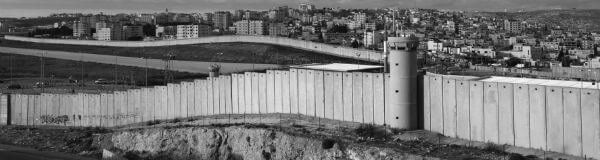
Following Trump’s logic and his imperative of vigilance, it sounds as though the world — just to be safe — can’t have too many walls.
In Europe the principle of open borders functioning in the Schengen Area is currently in peril.
If, as seems increasingly likely, the presidential election in the U.S. ends up being a contest between Trump and Clinton, it’s possible that Trump just defined the battle line in a useful way.
He obviously wants to use Israel’s wall to justify his own wall plans and he’s assuming that Clinton’s ties to Israel mean she wouldn’t dare question their security measures.
Nevertheless, Israel’s wall has symbolic significance that stretches far beyond the Israeli-Palestinian conflict.
Ever since the end of the Cold War, there has been a broad consensus that the breakdown of divisions around the world has inherent value and the creation of divisions causes trouble.
While the value of this principle has most often been measured in economic terms and the rewards concentrated in the hands of powerful corporations, the human desire for people to be able to connect seems far greater than the need to stand apart.
Those who want to wall themselves in so they can keep others out are in a minority that perceives itself as embattled.
The walls supposedly designed to make people feel safe also solidify their fears.
The wall is both a metaphor and a literal expression of the conflict between inclusion and exclusion.
Have we reached a point in history where we must now reverse tracks and head back into the past — into a world defined by its rigid divisions? Would not such a world be anything less than a retreat from humanity?
No doubt, in a debate, Clinton would skirt around Israel’s wall — perhaps just by reiterating the official line that it is a temporary measure — but she could not pick a better theme around which to shape her campaign than by presenting herself as someone dedicated to breaking down divisions versus an opponent who is actively divisive.
Am I indulging in an internationalist liberal fantasy?
Perhaps. But however deeply entrenched divisiveness has become, unless we quickly learn how to shake it off, our common fate will be ruin.
Alexander Hurst writes: In 2012, a team of academics from Europe and the U.S. — Yoel Inbar, David Pizarro, Ravi Iyer, and Jonathan Haidt — published a paper titled “Disgust Sensitivity, Political Conservatism, and Voting,” looking at the role disgust plays in political orientation. The researchers posited three different types of disgust: interpersonal disgust (i.e., the feeling produced by drinking from the same cup as someone else); core disgust (the response to maggots, vomit, dirty toilets, etc.); and animal-reminder disgust (how we react to corpses, blood, anything that evokes our animal nature).
Disgust, they write, “serves to discourage us from ingesting noxious or dangerous substances,” but also plays a role in moral and social judgments. Those who feel more disgusted by unpleasant images, smells, or tastes judge more harshly that which violates their subjective moral code.
The team had respondents position themselves on a political scale from conservative to liberal. The respondents then stated how strongly they agreed or disagreed with statements like “I never let any part of my body touch the toilet seat in a public washroom,” and rated other hypotheticals according to the level of disgust they generated. Even when controlling for age, education, geography, and religious belief, individuals with higher “disgust sensitivity” were found to be more likely to tolerate wealth inequality, view homosexuality negatively, and place more belief in authoritarian leaders and systems.
Most strikingly, interpersonal disgust was an important predictor of anti-immigrant attitudes.
Trump, of course, is a well-known, admitted germaphobe. “One of the curses of American society is the simple act of shaking hands,” he wrote in The Art of the Deal. “I happen to be a clean hands freak. I feel much better after I thoroughly wash my hands, which I do as much as possible.”
Trump even described shaking hands as “barbaric” in an interview with Dateline in 1999, saying, “They have medical reports all the time. Shaking hands, you catch colds, you catch the flu, you catch it, you catch all sorts of things. Who knows what you don’t catch?”
Beyond the aversion to hand-shaking, Trump used to pre-test his dates for AIDS, and reportedly avoids pushing elevator buttons.
The connection between modern xenophobia, disgust sensitivity, and the strength of Trump’s campaign is fairly easy to make. As Inbar, Pizarro, Iyer, and Haidt point out, “Disgust evolved not just to protect individuals form oral contamination by potential foods, but also from the possibility of contamination by contact with unfamiliar individuals or groups.” And after all, Trump’s success has come not from presenting voters with detailed policy proposals, but from connecting with them on a gut level. [Continue reading…]
After a 52-minute video made by al-Kataib, the media outlet of Somalia’s al-Qaeda-affiliate, al-Shabaab, was posted on YouTube yesterday, it was swiftly removed. YouTube has a long-standing policy of banning videos that incite violence.
As the ABC News report above shows, the element in the video which has grabbed the media’s attention is its use of Donald Trump’s recent call for Muslims to be prohibited from entering the United States.
Here’s the part of the video which features Trump — although, by the time you read this post, YouTube will have removed this clip, which is why I’m also posting a transcript:
First we see the American imam, Anwar al-Awlaki, making a prediction about the fate of Muslims who continue living in the U.S. — Awlaki was killed by a U.S. drone strike in Yemen in 2011. Then comes a clip of Trump and then Awalaki again.
Awlaki, date unknown: Muslims of the West, take heed and learn from the lessons of history. There are ominous clouds gathering in your horizon.
Yesterday, America was a land of slavery, segregation, lynching, and Ku Klux Klan. And tomorrow it will be a land of religious discrimination and concentration camps.
Trump speaking at a campaign rally on December 7: Guys remember this and listen: Donald J Trump is calling for a total and complete shutdown of Muslims entering the United States [cheers] until our country’s representatives can figure out what [expletive bleeped] is going on [cheers and applause].
Awlaki: The West will eventually turn against its Muslim citizens. Hence, my advice to you is this: You have two choices, either hijra or jihad. You either leave or you fight. You leave and live among Muslims, or you stay behind and follow the example of Nidal Hassan [perpetrator of the Fort Hood mass shooting] and others who fulfilled their duty of fighting for Allah’s cause.
In response to pressure from Western governments, YouTube and other social media channels are becoming increasingly aggressive in blocking the distribution of terrorist propaganda. There is understandable frustration at the fact that the internet is being used to threaten the very societies within which this global communications system was created.
Censorship can easily backfire, however, and this is happening with the removal of clips of the new al-Shabaab video.
After the full-length version had been removed, snippets which just showed the al-Awalaki statement and Trump, have also been removed (as I noted above).
It is clear that these videos are being posted by Trump critics rather than al-Shabaab supporters and their removal is breathing life into a conspiracy theory being propagated by some Trump supporters: that the al-Shabaab video itself is a fabrication created by the Clinton campaign!
It seems likely that there are some Trump supporters who — following the lead of Bashar al-Assad supporters — are using YouTube’s community guidelines in order to silence criticism.
Although in the short clips of the al-Shabaab, Awlaki is indeed inciting violence, the clips themselves are clearly not being posted in order to incite violence — they have been posted to show how Trump’s rhetoric serves as a propaganda gift for jihadists.
By removing these clips, YouTube is playing straight into the hands of conspiracy theorists.
At the same time, censorship also buttresses the perception among ISIS and al Qaeda supporters, that the West feels threatened by “the truth.”
It’s worth remembering the trajectory Awlaki followed which eventually led to him promoting terrorism from Yemen.
In 2000, he supported George Bush’s campaign to become president and after 9/11 believed his own emerging role must be to serve as bridge between America and all Muslims.
At midnight on Sept. 14, 2001, Awlaki, then a young Yemeni-American imam at the prominent Dar al-Hijrah mosque in Falls Church, Va., finished a long day by answering an email from his younger brother about the terrorist attacks of a few days before. ‘‘I personally think it was horrible,’’ he wrote to Ammar, a college student in New Mexico at the time. ‘‘I am very upset about it.’’ He added, ‘‘The media are all over us.’’ Anwar was disconcerted, but perhaps also pleased that an onslaught of reporters had turned his Friday prayers, or jummah, into a circus. ‘‘At jummah today we had ABC, NBC, CBS and The Washington Post.’’ He closed on a positive note, hinting at a noble purpose, to be sure, but also displaying a trace of personal ambition: ‘‘I hope we can use this for the good of all of us.’’
Though the country was in mourning, a sense of defiant unity emerged. A non-Muslim neighbor of Dar al-Hijrah organized a candlelight vigil around the building to show solidarity with the mosque. Roughly 80 residents of a nearby apartment building sent over a note saying, ‘‘We want your congregation to know that we welcome you in this community.’’ Journalists, hunting for an authoritative voice from the Muslim community, began to pass regularly under the mosque’s grand marble arches or to gather in Awlaki’s modest family home. He denounced the 9/11 attacks but in the same breath would criticize America’s record in the Middle East. Reporters were impressed. The New York Times wrote that Awlaki, just 30, was being ‘‘held up as a new generation of Muslim leader capable of merging East and West.’’ He relished the spotlight. He seemed to be quite self-consciously auditioning for a dual role: explainer of Islam to America and of America to Muslims. ‘‘We came here to build, not to destroy,’’ he declared from his pulpit. ‘‘We are the bridge between America and one billion Muslims worldwide.’’
The challenge presented by ISIS, al Qaeda and other jihadist groups is more than one of security and communications. At its core, this is a moral challenge.
The jihadists present themselves as offering the solution to a moral problem: a way for Muslims to confront the immorality, corruption, and hypocrisy they see in the contemporary Western-dominated world.
An effective counter-jihadist strategy cannot simply brush off this critique of the West. It has to present an alternative solution.
Currently, who has the more credible voice? Donald Trump, Hillary Clinton, or Anwar al-Awlaki?
Unfortunately, it’s Awlaki.
As Shane observed:
Awlaki’s pronouncements seem to carry greater authority today than when he was living, because America killed him.
Right now, it’s easy to castigate Trump for providing terrorists with fodder for propaganda, but we mustn’t forget the extent to which the U.S. led by Bush and then Obama, has helped reinforce the jihadists’ narrative — by opening Guantanamo; through the use of torture, rendition and secret prisons; through the disastrous war in Iraq; through drone strikes in Afghanistan, Yemen, and Somalia; through continuing to prop up authoritarian regimes across the Middle East; through allowing the Assad regime to destroy Syria, and through failing to broker an end to the Israeli-Palestinian conflict.
The real challenge for Western political leaders and whoever becomes the next U.S. president is not whether they can destroy ISIS and effectively tackle global terrorism.
It is this: How can they regain sufficient moral authority that their words carry weight? How can they restore some much-needed respect for democracy?
In a global failure of governance, the Middle East can be viewed as the emergency room, while in the West, governance suffers from chronic illness for which symptom-relief is the only treatment on offer.
It’s time we face up to the fact that terrorism is just a symptom what ails the world. Indeed, much of the time a global obsession with terrorism is having the effect of turning our attention away from broader issues that undermine the health of societies and our ability to survive on this planet.
This isn’t a question of striving for some kind of unattainable and contestable moral purity. No one wants to live under the control of zealots. It’s about trying to create societies in which government is no longer a dirty word, where ordinary citizens receive the respect they deserve, and in which individuals are no longer cynical about the possibilities for securing collective interests.
In a word, it’s about the restoration of honesty in public life.
Peter Beinart writes: By the time Barack Obama defeated Hillary Clinton for the Democratic presidential nomination in 2008, in part because of her support for the Iraq War, the mood inside the party had fundamentally changed. Whereas the party’s most respected thinkers had once urged Democrats to critique liberal orthodoxy, they now criticized Democrats for not defending that orthodoxy fiercely enough. The presidency of George W. Bush had made Democrats unapologetically liberal, and the presidency of Barack Obama was the most tangible result.
But that’s only half the story. Because if George W. Bush’s failures pushed the Democratic Party to the left, Barack Obama’s have pushed it even further. If Bush was responsible for the liberal infrastructure that helped elect Obama, Obama has now inadvertently contributed to the creation of two movements — Occupy and Black Lives Matter — dedicated to the proposition that even the liberalism he espouses is not left-wing enough.
Given the militant opposition Obama faced from Republicans in Congress, it’s unclear whether he could have used the financial crisis to dramatically curtail Wall Street’s power. What is clear is that he did not. Thus, less than three years after the election of a president who had inspired them like no other, young activists looked around at a country whose people were still suffering, and whose financial titans were still dominant. In response, they created Occupy Wall Street.
When academics from the City University of New York went to Zuccotti Park to study the people who had taken it over, they found something striking: 40 percent of the Occupy activists had worked on the 2008 presidential campaign, mostly for Obama. Many of them had hoped that, as president, he would bring fundamental change. Now the collapse of that hope had led them to challenge Wall Street directly. “Disenchantment with Obama was a driver of the Occupy movement for many of the young people who participated,” noted the CUNY researchers. In his book on the movement, Occupy Nation, the Columbia University sociologist Todd Gitlin quotes Jeremy Varon, a close observer of Occupy who teaches at the New School for Social Research, as saying, “This is the Obama generation declaring their independence from his administration. We thought his voice was ours. Now we know we have to speak for ourselves.”
For a brief period, Occupy captured the nation’s attention. In December 2011, Gitlin notes, the movement had 143 chapters in California alone. Then it fizzled. But as the political scientist Frances Fox Piven has written, “The great protest movements of history … did not expand in the shape of a simple rising arc of popular defiance. Rather, they began in a particular place, sputtered and subsided, only to re-emerge elsewhere in perhaps a different form, influenced by local particularities of circumstance and culture.”
That’s what happened to Occupy. The movement may have burned out, but it injected economic inequality into the American political debate. (In the weeks following the takeover of Zuccotti Park, media references to the subject rose fivefold.) The same anger that sparked Occupy — directed not merely at Wall Street but at the Democratic Party elites who coddled it—fueled Bill de Blasio’s election and Elizabeth Warren’s rise to national prominence. And without Occupy, it’s impossible to understand why a curmudgeonly Democratic Socialist from Vermont is seriously challenging Hillary Clinton in the early primary states. The day Bernie Sanders announced his candidacy, a group of Occupy veterans offered their endorsement. In the words of one former Occupy activist, Stan Williams, “People who are involved in Occupy are leading the biggest group for Bernie Sanders. Our fingers are all over this.”
It’s true that Americans have grown more conservative on some issues over the past few years. Support for gun control has dropped in the Obama era, even as the president and other Democrats have pursued it more aggressively. Republicans also enjoy a renewed advantage on combatting international terrorism, an issue whose salience has grown with the rise of the Islamic State. Still, in an era when government has grown more intrusive, African American activists have grown more confrontational, and long-standing assumptions about sexual orientation and gender identity have been toppled, most Americans are not yelling “stop,” as they began doing in the mid-1960s. The biggest reason: We’re not dealing with the same group of Americans.
On issue after issue, it is the young who are most pleased with the liberal policy shifts of the Obama era, and most eager for more. In 2014, Pew found that Americans under 30 were twice as likely as Americans 65 and older to say the police do a “poor” job of “treating racial, ethnic groups equally” and more than twice as likely to say the grand jury in Ferguson was wrong not to charge Darren Wilson in Michael Brown’s death. According to YouGov, more than one in three Americans 65 and older think being transgender is morally wrong. Among Americans under 30, the ratio is less than one in five. Millennials — Americans roughly 18 to 34 years old — are 21 percentage points less likely than those 65 and older to say that immigrants “burden” the United States and 25 points more likely to say they “strengthen” the country. Millennials are also 17 points more likely to have a favorable view of Muslims. [Continue reading…]
Still, these measures are relative.
In a recent poll of support for Trump among Millennials, 32.2% of young adults aged 18-24 said they would support his ban on Muslims entering the U.S. They were outnumbered by 46.4% being opposed, but the fact that opposition was not found in an overwhelming majority is telling.
As much as it might be true that the Bush era provoked a backlash that pushed America leftward, the ideology of the war on terrorism can be viewed by its advocates as a success in this sense: the core issue perceived by most Americans is their experience of insecurity and any remedy for that insecurity must make them feel safe.
Many Americans express opposition to policies instituted in the name of counterterrorism and yet simultaneously harbor the multifaceted fears which have become a core component in American consciousness.
Insecurity comes in many forms — economic insecurity, fear of police brutality, fear of terrorism, fear of immigrants — but whenever the problem is fear, the remedy is security.
The fact that fear has become the foundation of the American zeitgeist is evident in the varieties of isolationism found across the political spectrum.
Isolationism on the right calls for increased defense spending and stronger borders, while on the left it promotes anti-interventionism and a broad disengagement from global affairs.
This inward turning has happened not only collectively, but also individually. No generation has become less trusting of others than are Millennials.
Where trust is so lacking, how can mass movements grow? Where will a sense of human solidarity take root?
Consider the tepid response to Donald Trump’s proposal to exclude Muslims from America. As much as he might have provoked many expressions of principled outrage, why has he not been countered by calls for a massive increase in refugee intake?
The United States is almost 30 times the size of Germany and has four times the population. If the U.S. was to match Germany in its willingness to welcome refugees, President Obama, following Chancellor Merkel’s lead, would be saying we need to accept four million and not a paltry 10,000.
There are 300 cities larger than 100,000 population across America and if all were to accept an average of 500 refugees, this would only amount to a modest intake of 150,000.
The number of Syrian refugees granted asylum in the U.S. in 2015 amounted to one per 172,000 Americans.
Let’s suppose that Americans were to feel collectively strong enough that 1,000 would still feel safe if they were to welcome just one refugee in their communities. This would result in an intake of 322,000 refugees.
The issue here has much less to do with an economic burden or national security, than it has with xenophobic paranoia.
That paranoia might be at its highest concentration in Trump’s America, but it seems to exist in varying dilutions across much of the rest of this nation.
Among the presidential candidates, as the self-declared socialist, Bernie Sanders should have taken the boldest stand on Syrian refugees and he has called on his supporters to sign a petition saying “we should not turn our backs on these refugees escaping violence in the Middle East” — a feel-good sentiment. But when it comes to a call for action, all he appealed for was this:
Support continuing the refugee program that promises to resettle 10,000 Syrians, mostly women and children, who are escaping violence in their home country.
Perhaps he and those in his campaign who arrived there from the Occupy movement personally favor a more radical response to the refugee crisis but have refrained from advocating for this because they believe it would undermine Sander’s electoral viability. Or perhaps this timidity is their own.
Either way, this purported antidote to “anti-immigrant hysteria” nevertheless seems to accommodate rather than challenges America’s more pervasive fears.
San Jose Mercury News reports: On Dec. 4, William Celli stood outside the Islamic Society of West Contra Costa County and yelled “I’m going to kill you all” at worshipers as they left a prayer service, the mosque’s leader said Monday.
Members of the mosque alerted police, and they launched an investigation into the local plumber and self-proclaimed Donald Trump supporter who posted on Facebook that he would follow the Republican presidential candidate “to the end of the world.” On Sunday, police said, they arrested Celli, 55, after learning he posted a photo of a pipe bomb on social media. Inside his Richmond home, investigators said they found a pipe bomb-type device that was not armed with explosives.
The mosque, which is attended by several hundred people, has hired private security guards to ensure the safety of its worshipers, said Imam Hamza Mehter, adding it’s the first time in the nearly two decades the mosque has been in that neighborhood that threats have been made.
It also marks the latest in a string of alleged incidents targeting Bay Area Muslims in the wake of the Paris and San Bernardino attacks — and amid a heated presidential campaign dominated by Trump’s controversial remarks surrounding Muslims. [Continue reading…]
In an era of gay marriage and a black president, more than a half-century after the Civil Rights Act of 1964 became law, separatists can’t exactly swan dive into conversations with strangers about the white-power cause.
But Rachel Pendergraft — the national organizer for the Knights Party, a standard-bearer for the Ku Klux Klan — told The Washington Post that the KKK, for one, has a new conversation starter at its disposal.
You might call it a “Trump card.”
It involves, say, walking into a coffee shop or sitting on a train while carrying a newspaper with a Donald Trump headline. The Republican presidential candidate, Pendergraft told The Post, has become a great outreach tool, providing separatists with an easy way to start a conversation about issues that are important to the dying white supremacist movement. [Continue reading…]
Dominic Tierney writes: At first glance, Donald Trump looks like Islamic extremism’s worst nightmare. Trump said he would ban the billion-plus Muslims around the world from visiting the U.S. He would send the medieval ISIS back to the proverbial Stone Age: “Bomb the shit outta them.” In Tuesday’s Republican debate, Trump underscored his previously stated desire to deliberately kill the families of ISIS members. “I would be very, very firm with families. Frankly, that will make people think because they may not care much about their lives, but they do care, believe it or not, about their families’ lives.”
From another angle, however, Trump and ISIS are effectively, if not intentionally, helping each other. They don’t communicate. There’s no moral equivalence between them. Nevertheless, Trump and ISIS aid each other’s agendas in a strange combination of the coiffured and the caliphate. Even in a Republican Party that has drifted closer to Islamophobia in recent years, Trump stands out for his polarizing rhetoric, which poses a threat to openness and tolerance in the United States. “Terrorists like ISIL are trying to divide us along lines of religion and background,” as President Obama warned recently. “Prejudice and discrimination helps ISIL and it undermines our national security.”
The Trump-ISIS symbiosis reveals a bigger story. International politics often looks like a contest between opposing countries, terrorist groups, and insurgencies. But the hardliners on all sides may be working together—deliberately or inadvertently. In other words, there’s a global confederation of extremists.
“Hardliner” refers to an uncompromising mentality, which lumps enemies together; sees the world in black-and-white, “good-versus-evil” terms; and backs extreme responses to perceived threats. Today, hardliners are often found on the populist right, preying on economic insecurity and fears of terrorism: Trump in the United States, Marine Le Pen’s National Front in France, or Viktor Orban’s “illiberal state” in Hungary. But there are also plenty of hardliners in communist countries as well as in the Islamic world. The ultras — whether they’re in Raqqa, Tehran, Washington, or Tel Aviv — can form a symbiotic relationship. Like tango dancers, the hardliners move in a close embrace, taking steps that facilitate the actions of the other. [Continue reading…]
This website or its third-party tools use cookies, which are necessary to its functioning. By closing this banner, you agree to the use of cookies.