Category Archives: Issues

The filter bubble isn’t just Facebook’s fault — it’s yours

By Philip Seargeant, The Open University and Caroline Tagg, The Open University

Following the shock results of Brexit and the Trump victory, a lot of attention has focused on the role that Facebook might have played in creating online political ghettos in which false news can easily spread. Facebook now has serious political influence thanks to its development from a social networking tool into a primary source of news and opinions. And for many, the way it manages this influence is in need of greater scrutiny. But to put the blame solely on the company is to overlook how people use the site, and how they themselves create a filter bubble effect through their actions.

Much of this debate has focused on the design of Facebook itself. The site’s personalisation algorithm, which is programmed to create a positive user experience, feeds people what they want. This creates what the CEO of viral content site Upworthy, Eli Pariser, calls “filter bubbles”, which supposedly shield users from views they disagree with. People are increasingly turning to Facebook for their news – 44 % of US adults now report getting news from the site – and fake news is not editorially weeded out. This means that misinformation can spread easily and quickly, hampering the chance people have for making informed decisions.

Over the last few weeks, there have been frequent calls for Facebook to address this issue. President Obama himself has weighed in on the issue, warning of the perils that rampant misinformation can have for the democratic process.

Much of the debate around this, however, has had an element of technological determinism to it, suggesting that users of Facebook are at the mercy of the algorithm. In fact, our research shows that the actions of users themselves are still a very important element in the way that Facebook gets used.

Continue reading

Facebooktwittermail

Nobody is home

Charles Leadbeater writes: Heidegger detested René Descartes’s dictum ‘I think, therefore I am’ which located the search for identity in our brains. There, it was secured by a rational process of thought, detached from a physical world that presented itself to the knowing subject as a puzzle to be solved. Descartes’s ideas launched a great inward turn in philosophy with the subject at the centre of the drama confronting the objective world about which he tries to gain knowledge.

Had Heidegger ever come up with a saying to sum up his philosophy it would have been: ‘I dwell, therefore I am.’ For him, identity is bound up with being in the world, which in turn means having a place in it. We don’t live in the abstract space favoured by philosophers, but in a particular place, with specific features and history. We arrive already entangled with the world, not detached from it. Our identity is not secured just in our heads but through our bodies too, how we feel and how we are moved, literally and emotionally.

Instead of presenting it as a puzzle to be solved, Heidegger’s world is one we should immerse ourselves in and care for: it is part of the larger ‘being’ where we all belong. As [Jeff] Malpas puts it, Heidegger argues that we should release ourselves to the world, to find our part in its larger ebb and flow, rather than seek to detach ourselves from it in order to dominate it. [Continue reading…]

Facebooktwittermail

How Facebook hurt the Syrian Revolution

Riham Alkousaa writes: “Will I die, miss? Will I die?” asks a Syrian boy in panic. The recent video shot in a wrecked hospital in Aleppo in the aftermath of a chlorine gas attack went viral on social media. Just a few months earlier, Aleppo hit the newsfeeds with another shocking image of an injured child: five-year-old Omran Daqneesh sitting in an orange ambulance chair.

Aleppo has been one of the highest trending news on social media in the United States for a while now. People express anger, sadness, disappointment; they like and share; they tweet. And what of it? Nothing changes in Aleppo.

At the same time, across the ocean, in the US, there has been a heated discussion about the major role social media played in the recent elections. Some have argued that Donald Trump’s tweets got him more media coverage and attracted voters’ attention while fake news, which spread on social media, helped him seal his victory.

So why is it that social media can help win an election in one country and cannot stop a month-long massacre in another?

Erica Chenoweth, a professor at the School of International Studies at the University of Denver, has argued that social media is helping dictators, while giving the masses an illusion of empowerment and political worthiness.

At a recent lecture at Columbia University, when asked for an example where social media played a negative role in a social movement, Chenoweth paused a little to finally say, “what comes to my mind now is Syria.”

Indeed, social media hurt the Syrian uprising. It gave the Syrian people the hope that the old dictatorship can be toppled just by uploading videos of protests and publishing critical posts. Many were convinced that if social media helped Egyptians get rid of Hosni Mubarak, it would help them overthrow Bashar al-Assad. [Continue reading…]

The Wall Street Journal reports: Steep losses by antiregime rebels in Syria have scrambled U.S. policy calculations at a crucial moment in the country’s long-running war, with the election of Donald Trump already pointing to the possibility of a dramatic shift when he takes office in January.

Mr. Trump hasn’t detailed his plans for Syria, but has outlined a likely break from the Obama administration, which has supplied small amounts of arms and funding to militias attempting to overthrow President Bashar al-Assad and has separately fought the Islamic State extremist group.

The recent gains by Mr. Assad’s forces have added impetus to calls among some of Mr. Trump’s closest advisers, as well as other top U.S. strategists, to cut back on support for the Syrian opposition. Some believe the war to oust Mr. Assad already has been lost and the U.S. should ally with Russia and possibly the Syrian government in an all-out assault on extremists.

“Show me a strategy right now that gets rid of Assad,” former House speaker Newt Gingrich, a close Trump adviser, said in an interview, suggesting no such strategy exists. “The Russians are for him and the Iranians are for him, and there’s no coalition of forces in the region that defeats him. So it starts with reality.”

Former U.S. Defense Secretary Robert Gates, who also has met with Mr. Trump, said in an interview that it is unlikely Americans would support the kind of military commitment needed to unseat Mr. Assad.

“I think we have to begin by being realistic,” he said. “Assad is going to remain in power, and the Russians are committed to that.” [Continue reading…]

The New York Times reports: Syrian government troops pushed deeper into the rebel-held section of Aleppo on Sunday, now controlling about half of what had been for years the rebels’ enclave in the divided northern city.

Also on Sunday, airstrikes apparently carried out by the government or its ally Russia hit the towns of Maarat al-Noaman and Kafr Nabl in rebel-held Idlib Province. The strikes killed at least 20 people in each location, according to residents and White Helmets rescue workers. Footage from Maarat al-Noaman showed destroyed buildings and market stalls, and the crushed body of a toddler.

Airstrikes and shelling also continued in Aleppo, where there was no sign of a cease-fire in a bloody battle that could prove a fulcrum in the war. If the government manages to seize all of Aleppo, it will control Syria’s five largest cities. [Continue reading…]

The Guardian reports: The US and UK have been holding talks to explore ways to airdrop food and medical supplies to eastern Aleppo and other besieged populations in Syria.

The talks have been going on for months in Washington and have considered a broad range of possibilities, from parachute drops to creating an air bridge with drone flights, and even flying in edible drones that can be taken apart and eaten.

However, the discussions have been mired in disagreements between government agencies, the reluctance of the military to get involved and concern among officials that flying in aid without permission from the Damascus regime and its allies could hamper conventional humanitarian deliveries.

However, as the talks have stalled, the plight of the people of eastern Aleppo has steadily become more desperate. No road convoy has got through to the enclave for five months, hospitals have all been destroyed and rebel-held areas are under constant bombardment. [Continue reading…]

Facebooktwittermail

U.S. Army Corps of Engineers blocks Dakota Access oil pipeline route

The Associated Press reports: The U.S. Army Corps of Engineers said Sunday that it won’t grant an easement for the Dakota Access oil pipeline in southern North Dakota, handing a victory to the Standing Rock Sioux tribe and its supporters, who argued the project would threaten the tribe’s water source and cultural sites.

North Dakota’s leaders criticized the decision, with Gov. Jack Dalrymple calling it a “serious mistake” that “prolongs the dangerous situation” of having several hundred protesters who are camped out on federal land during cold, wintry weather. U.S. Rep. Kevin Cramer said it’s a “very chilling signal” for the future of infrastructure in the United States.

The four-state, $3.8 billion project is largely complete except for the now-blocked segment underneath Lake Oahe, a Missouri River reservoir. Assistant Secretary for Civil Works Jo-Ellen Darcy said in a news release that her decision was based on the need to “explore alternate routes” for the pipeline’s crossing. Her full decision doesn’t rule out that it could cross under the reservoir or north of Bismarck.

“Although we have had continuing discussion and exchanges of new information with the Standing Rock Sioux and Dakota Access, it’s clear that there’s more work to do,” Darcy said. “The best way to complete that work responsibly and expeditiously is to explore alternate routes for the pipeline crossing.”

The company constructing the pipeline, Dallas-based Energy Transfer Partners, had said it was unwilling to reroute the project. It had no immediate comment Sunday. [Continue reading…]

Facebooktwittermail

Amid higher global temperatures, sea ice at record lows at both poles

CNN reports: For what appears to be the first time since scientists began keeping track, sea ice in the Arctic and the Antarctic are at record lows this time of year.

“It looks like, since the beginning of October, that for the first time we are seeing both the Arctic and Antarctic sea ice running at record low levels,” said Walt Meier, a research scientist with the Cryospheric Sciences Laboratory at NASA’s Goddard Space Flight Center, who has tracked sea ice data going back to 1979.

While record low sea ice is nothing new in the Arctic, this is a surprising turn of events for the Antarctic. Even as sea ice in the Arctic has seen a rapid and consistent decline over the past decade, its counterpart in the Southern Hemisphere has seen its extent increasing.

In fact, each year from 2012 through 2014 reached a record high for Antarctic sea ice extent. Skeptics have long pointed to ice gain in the Southern Hemisphere as evidence climate change wasn’t occurring, but scientists warned that it was caused by natural variations and circulations in the atmosphere.

While it is too early to know if the recent, rapid decline in Antarctic sea ice is going to be a regular occurrence like in the Arctic, it “certainly puts the kibosh on everyone saying that Antarctica’s ice is just going up and up,” Meier said. [Continue reading…]

Facebooktwittermail

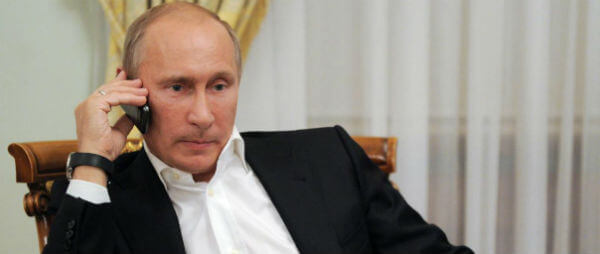
White extremists turn to a leader to protect Western values: Vladimir Putin

putin

The New York Times reports: As the founder of the Traditionalist Worker Party, an American group that aims to preserve the privileged place of whiteness in Western civilization and fight “anti-Christian degeneracy,” Matthew Heimbach knows whom he envisions as the ideal ruler: the Russian president, Vladimir V. Putin.

“Russia is our biggest inspiration,” Mr. Heimbach said. “I see President Putin as the leader of the free world.”

Throughout the presidential campaign, Donald J. Trump mystified many on the left and in the foreign policy establishment with his praise for Mr. Putin and his criticism of the Obama administration’s efforts to isolate and punish Russia for its actions in Crimea and eastern Ukraine. But what seemed inexplicable when Mr. Trump first expressed his admiration for the Russian leader seems, in retrospect, to have been a shrewd dog whistle to a small but highly motivated part of his base.

For Mr. Heimbach is far from alone in his esteem for Mr. Putin. Throughout the collection of white ethnocentrists, nationalists, populists and neo-Nazis that has taken root on both sides of the Atlantic, Mr. Putin is widely revered as a kind of white knight: a symbol of strength, racial purity and traditional Christian values in a world under threat from Islam, immigrants and rootless cosmopolitan elites. [Continue reading…]

Reuters reports: U.S. President-elect Donald Trump is a clever man and will quickly understand his new responsibilities, Russian President Vladimir Putin said in an interview with NTV TV.

Putin has spoken previously of his hope that Trump will help restore U.S.-Russia relations, and analysts said he was unlikely to want to dial up anti-Western rhetoric before Trump’s inauguration in January.

“Trump was an entrepreneur and a businessman. He is already a statesman, he is the head of the United States of America, one of the world’s leading countries,” NTV quoted Putin as saying in the interview on www.ntv.ru on Sunday.

“Because he achieved success in business, it suggests that he is a clever man. And if (he is) a clever man, then he will fully and quite quickly understand another level of responsibility. We assume that he will be acting from these positions,” Putin said. [Continue reading…]

Facebooktwittermail

Philippine proponent of vigilante justice says he has ‘good rapport’ with Trump who supports his war on drugs

The Washington Post reports: Philippine President Rodrigo Duterte’s plan to “kill all” the country’s suspected drug users and dealers has many foreign critics, including the United States, the European Parliament and the International Criminal Court. It now has at least one high-profile supporter: President-elect Donald Trump, at least according to Duterte.

In a statement Saturday, Duterte shared details of a seven-minute conversation that took place Friday. He said that during the call, Trump endorsed his campaign against drug users and dealers — a campaign that has left at least 4,500 Filipinos dead in about five months. Trump told Duterte that he was doing it the “right way,” according to Duterte’s account.

“I could sense a good rapport, an animated President-elect Trump,” he added. “And he was wishing me success in my campaign against the drug problem.” [Continue reading…]

Facebooktwittermail

Trump America: Bystanders watch as drunk white men shouting ‘Donald Trump’ attack American Muslim woman on NYC subway

BuzzFeed reports: A Muslim woman was verbally and physically attacked on a New York City subway Thursday night by three drunk white men who repeatedly yelled “Donald Trump” and attempted to remove her hijab, police said.

According to Yasmin Seweid, a business student at Baruch College in Manhattan, nobody else on the train came to her aid during the incident.

The 18-year-old told the New York Daily News that she had just left an event on campus Thursday night when three men approached her on an uptown 6 subway near the 23rd Street stop.

They yelled President-elect Donald Trump’s name over and over, and said to her, “Look, it’s a fucking terrorist,” Seweid said in a Facebook post on Friday.

She said they also yelled, “Get the hell out of the country!” and, “You don’t belong here!”

Seweid was born in Williamsburg, Brooklyn, to Egyptian immigrant parents, she told the Daily News. [Continue reading…]

Facebooktwittermail

Somali refugees are not a threat

Will Oremus writes: We still don’t know exactly what motivated the Ohio State student who wounded 11 people with his car and a knife on Monday, before a campus police officer shot and killed him. We know that the student, Abdul Razak Ali Artan, was a Somali refugee, and that he felt Muslims were subject to unfair scrutiny in his community, and in the United States in general. We know that he posted a rant on Facebook just minutes before the attack, saying he was “willing to kill a billion infidels in retribution for a single DISABLED Muslim.”

We also know that ISIS claimed credit for the attack on Tuesday, but that doesn’t tell us much. One of the group’s shrewdest strategies has been to embrace violent acts by Muslims around the globe, whether or not it played a direct role in them. The tactic makes the group seem more potent and broad-based than it really is. President-elect Donald Trump readily accepted this claim, highlighting the ISIS link along with Artan’s Somali background in a tweet on Tuesday.


The tweet echoed Trump’s past warnings about the threat posed by Somali refugees in the United States, suggesting they will face increased scrutiny under his presidency. It’s also possible that he will follow through on his campaign proposal to ban refugees from the country, despite the ongoing violence there. Somalis in Columbus, and across the country, are on edge: Many have children and other close relatives in Somalia, or in Kenyan refugee camps, who are in the midst of the already arduous application process for a family reunification visa.

To blame Somalis and ISIS for acts of violence like Artan’s, and to respond with a crackdown on the group as a whole, may strike some as an understandable reaction. But in fact, it is a misdiagnosis of the problem — and a deeply misguided solution. That’s not only because it’s unfair to blame the group for the sins of a tiny number of individuals. It’s also because it’s counterproductive and misses the point.

The time I’ve spent with Columbus’ Somali community, working on a master’s thesis about young Somalis and the threat of radicalization in 2010 and 2011, revealed that its troubles stem not from a lack of scrutiny, but a surfeit of it. Many of its members escaped the armed conflict in Somalia only to face new obstacles in the U.S. heartland: poverty, alienation, and a wholly justified sense of persecution. The reaction from Columbus Somalis in the wake of Artan’s attack was one of horror — at the act itself, but also at the likely consequences for their community. This was Somali Americans’ worst nightmare, and something that many of them have been working for years to prevent. [Continue reading…]

Facebooktwittermail

How to spot fake news: Research by Reuters establishes that ‘a tweet that is entirely in capital letters is less likely to be true’

NiemanLab reports: When it comes to automating the process of spotting breaking news, solving one problem can create several more.

Reuters discovered this firsthand over the past two years as it built Reuters News Tracer, a custom tool designed to monitor Twitter for major breaking news events as they emerge. While reporters curate their own lists of sources to get rapid alerts on stories they’re already looking for, the Reuters tool is designed to solve a different problem: detecting breaking news events while early reports are still coming in.

The development of the tool, which Reuters is speaking about publicly today the first time, emerged out of “an existential question for the news agency,” said Reg Chua, Reuters’ executive editor of data and innovation. “A large part of our DNA is built on the notion of being first, so we wanted to figure out how to build systems that would give us an edge on tracking this stuff at speed and at scale. You can throw a million humans at this stuff, but it wouldn’t solve the problem,” he said.

Once the tool identifies what it thinks are emerging stories, it clusters relevant tweets into events, generating information, and metadata about what that story might be about. Tweets that mention “explosions” and “bombs,” for example, would be clustered into a single story about a potential terrorist attack.

But detection is only the first, and probably easiest, problem to solve. Another challenge was figuring out how to identify which events are actually interesting, newsworthy, and not spam. Added to that is the problem of filtering out assertions of opinions (“I think it’s terrible that this event happened”) from assertions of facts (“This event happened”) and automating the processing of verifying whether reports are actually true.

The verification challenge was the most interesting and most valuable problem to solve, Chua said. Pulling from academic research on the verification of social media reports, Reuters designed its algorithm to assign verification scores to tweets based on 40 factors, including whether the report is from a verified account, how many people follow those who reported the news, whether the tweets contain links and images, and, in some cases, the structure of the tweets themselves. “Amazingly enough, a tweet that is entirely in capital letters is less likely to be true,” Chua said. [Continue reading…]

Facebooktwittermail

NASA’s indispensable role in climate research

Adam Frank writes: On April 1, 1960, the newly established National Aeronautics and Space Administration heaved a 270-pound box of electronics into Earth orbit. In those days, getting anything into space was a major achievement. But the real significance of that early satellite, Tiros-1, was not its survival, but its mission: Its sensors were not pointed outward toward deep space, but downward, at the Earth.

Tiros-1 was the first world’s first weather satellite. After its launch, Americans would never again be caught without warning as storms approached.

This small piece of history says a lot about the call by Bob Walker, an adviser to President-elect Donald J. Trump who worked with his campaign on space policy, to defund NASA’s earth science efforts, moving those functions to other agencies and letting it focus on deep-space research. “Earth-centric science is better placed at other agencies where it is their prime mission,” he told The Guardian.

NASA critics have long wanted to shut the agency out of research related to climate change. The problem is, not only is earth science a long-running part of NASA’s “prime mission,” but it is uniquely positioned to do it. Without NASA, climate research worldwide would be hobbled. [Continue reading…]

Facebooktwittermail

China lodges complaint with U.S. over Trump’s Taiwan phone call

The Guardian reports: China has lodged “solemn representations” with the US over a call between the president-elect, Donald Trump, and Taiwan’s leader, Tsai Ing-wen.

Trump looked to have sparked a potentially damaging diplomatic row with Beijing on Friday after speaking to the Taiwanese president on the telephone.

The call, first reported by the Taipei Times and confirmed by the Financial Times, is thought to be the first between the leader of the island and a US president or president-elect since ties between the two countries were severed in 1979, at Beijing’s behest.

The US closed its embassy in Taiwan – a democratically ruled island which Beijing regards as a breakaway province – in the late 1970s after the historic rapprochement between Beijing and Washington that stemmed from Richard Nixon’s 1972 trip to China.

Since then the US has adhered to the “one China” principle, which officially considers the independently governed island to be part of the same single Chinese nation as the mainland.

Geng Shuang, a spokesman for China’s foreign ministry, said in a statement on Saturday: “It must be pointed out that there is only one China in the world and Taiwan is an inseparable part of Chinese territory. The government of the People’s Republic of China is the sole legitimate government representing China.”

Geng added: “This is a fact that is generally recognised by the international community.”

The statement did not describe the details of China’s complaint to the US, or say with whom it had been lodged.

It said China urged “the relevant US side” – implying Trump’s incoming administration – to handle Taiwan-related issues “cautiously and properly” to avoid “unnecessary interference” in the China-US relationship. [Continue reading…]

PTI reports: China on Saturday played down US President-elect Donald Trump’s telephone talk with Taiwanese President Tsai Ing-wen, dismissing it as a “small trick by Taiwan” that cannot change the One-China framework or damage Sino-US ties.

“I do not think it will change the One-China policy that the US government has insisted on applying over the years,” Chinese Foreign Minister Wang Yi said after unprecedented move by US President-elect, Hong Kong-based Phoenix TV reported. [Continue reading…]

Facebooktwittermail

Now is the time to talk about what we are actually talking about

Chimamanda Ngozi Adichie writes: America has always been aspirational to me. Even when I chafed at its hypocrisies, it somehow always seemed sure, a nation that knew what it was doing, refreshingly free of that anything-can-happen existential uncertainty so familiar to developing nations. But no longer. The election of Donald Trump has flattened the poetry in America’s founding philosophy: the country born from an idea of freedom is to be governed by an unstable, stubbornly uninformed, authoritarian demagogue. And in response to this there are people living in visceral fear, people anxiously trying to discern policy from bluster, and people kowtowing as though to a new king. Things that were recently pushed to the corners of America’s political space — overt racism, glaring misogyny, anti-intellectualism — are once again creeping to the center.

Now is the time to resist the slightest extension in the boundaries of what is right and just. Now is the time to speak up and to wear as a badge of honor the opprobrium of bigots. Now is the time to confront the weak core at the heart of America’s addiction to optimism; it allows too little room for resilience, and too much for fragility. Hazy visions of “healing” and “not becoming the hate we hate” sound dangerously like appeasement. The responsibility to forge unity belongs not to the denigrated but to the denigrators. The premise for empathy has to be equal humanity; it is an injustice to demand that the maligned identify with those who question their humanity.

America loves winners, but victory does not absolve. Victory, especially a slender one decided by a few thousand votes in a handful of states, does not guarantee respect. Nobody automatically deserves deference on ascending to the leadership of any country. American journalists know this only too well when reporting on foreign leaders — their default mode with Africans, for instance, is nearly always barely concealed disdain. President Obama endured disrespect from all quarters. By far the most egregious insult directed toward him, the racist movement tamely termed “birtherism,” was championed by Trump. [Continue reading…]

Facebooktwittermail

Why Jews are coming to the defense of mosques in America

Christian Science Monitor reports: When Sheryl Olitzky first broached the subject of a Jewish-Muslim women’s group, Atiya Aftab didn’t buy it.

“Why is someone calling me because I’m Muslim?” Ms. Aftab recalls thinking. “This is creepy.”

But as Ms. Olitzky made her case over lattes at a Starbucks in suburban New Jersey, Aftab found herself drawn in.

“This is a woman extending her hand to me, saying, ‘I want to get to know you. I want to be your protector. I want to have your back because I know what you’re going through, because of what the Jewish community has been through,’ ” says Aftab, a professor at Rutgers University’s Center for Middle Eastern Studies. “That was so compelling, so honest.”

After that meeting in 2010, the two women launched the Sisterhood of Salaam Shalom – then just a casual gathering of local Muslim and Jewish women talking about faith and family, and sharing their experiences as religious minorities in America. Today, the group has chapters in more than 50 cities. [Continue reading…]

Facebooktwittermail

Eyes in the sky: Cutting NASA Earth observations would be a costly mistake

By David Titley, Pennsylvania State University

Donald Trump’s election is generating much speculation about how his administration may or may not reshape the federal government. On space issues, a senior Trump advisor, former Pennsylvania Rep. Bob Walker, has called for ending NASA earth science research, including work related to climate change. Walker contends that NASA’s proper role is deep-space research and exploration, not “politically correct environmental monitoring.”

This proposal has caused deep concern for many in the climate science community, including people who work directly for NASA and others who rely heavily on NASA-produced data for their research. Elections have consequences, and it is an executive branch prerogative to set priorities and propose budgets for federal agencies. However, President-elect Trump and his team should think very carefully before they recommend canceling or defunding any of NASA’s current Earth-observing missions.

We can measure the Earth as an entire system only from space. It’s not perfect – you often need to look through clouds and the atmosphere – but there is no substitute for monitoring the planet from pole to pole over land and water. These data are vital to maintaining our economy, ensuring our safety both at home and abroad, and quite literally being an “eye in the sky” that gives us early warning of changes to come. To paraphrase Milton Friedman, there’s no free lunch. If NASA is not funded to support these missions, additional dollars will need to flow into NOAA and other agencies to fill the gap.

Continue reading

Facebooktwittermail

The IP Act: UK’s most extreme surveillance law

Jim Killock writes: The Investigatory Powers Act will come into force at the start of 2017, and will cement ten years of illegal surveillance into law.

It includes state powers to intercept bulk communications and collect vast amounts of communications data and content. The security and law enforcement agencies – including government organisations such as HMRC (Her Majesty’s Revenue and Customs) – can hack into devices of people in the UK.

Under this law, the intelligence agencies can use bulk hacking powers to hack devices and networks outside the UK. They can also access and analyse entire databases, whether they are held by private companies or public organisations – even though they have admitted that most people on them will not be suspected of any crimes.

One of the new and most intrusive powers is that Internet Service Providers (ISPs) can be compelled to collect a record of our web browsing activity and this can be accessed by the police and 48 government departments, including the Food Standards Agency and the HMRC. [Continue reading…]

Facebooktwittermail

Iran says U.S. extension of sanctions act violates nuclear deal

Reuters reports: Iran threatened on Friday to retaliate against the U.S. Senate’s vote to extend the Iran Sanctions Act (ISA) for 10 years, saying it violated last year’s deal with six major powers that curbed its nuclear programme.

The ISA was first adopted in 1996 to punish investments in Iran’s energy industry and deter its pursuit of nuclear weapons. The extension was passed unanimously on Thursday.

U.S. officials said the ISA’s renewal would not infringe on the nuclear agreement, under which Iran agreed to limit its sensitive nuclear work in return for the lifting of financial sanctions that harmed the country’s economy.

But senior Iranian officials took odds with that view.

Iran’s nuclear chief, Ali Akbar Salehi, who played a key role in reaching the nuclear deal, described it as a “clear violation” of the 2015 deal if implemented.

“We are closely monitoring the developments,” state TV quoted Salehi as saying. “If they implement the ISA, Iran will take action accordingly.”

The extension risks deepening hostilities between Iran and the United States ahead of the inauguration of U.S. President-elect Donald Trump, who said during his election campaign that he would abandon the deal. [Continue reading…]

Facebooktwittermail

No one can stop President Trump from using nuclear weapons. That’s by design

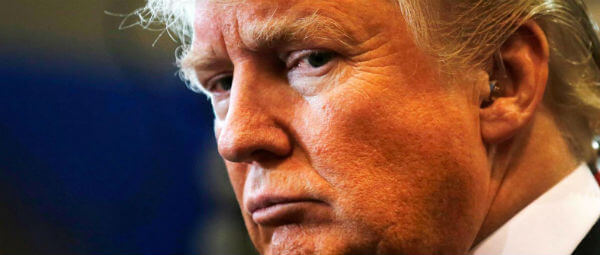
trump-frown

Alex Wellerstein, a historian of nuclear weapons, writes: Sometime in the next few weeks, Donald Trump will be briefed on the procedures for how to activate the U.S. nuclear arsenal, if he hasn’t already learned about them.

All year, the prospect of giving the real estate and reality TV mogul the power to launch attacks that would kill millions of people was one of the main reasons his opponents argued against electing him. “A man you can bait with a tweet is not a man we can trust with nuclear weapons,” Hillary Clinton said in her speech accepting the Democratic presidential nomination. She cut an ad along the same lines. Republicans who didn’t support Trump — and even some who did, such as Sen. Marco Rubio (Fla.) — also said they didn’t think he could be trusted with the launch codes.

Now they’re his. When Trump takes office in January, he will have sole authority over more than 7,000 warheads. There is no failsafe. The whole point of U.S. nuclear weapons control is to make sure that the president — and only the president — can use them whenever he decides to do so. The only sure way to keep President Trump from launching a nuclear attack, under the system we’ve had in place since the early Cold War, would have been to elect someone else. [Continue reading…]

Facebooktwittermail