Category Archives: Issues

Ben Carson’s top national security adviser says America has been ‘infiltrated’ by Muslims

James Bamford writes: When it comes to foreign policy, it’s tempting to grade Carson on a curve. A retired neurosurgeon with no political experience, Carson has promised that, as president, he would be as ready “as anybody else when foreign-policy questions come up” by surrounding himself with experts who would help him craft and, eventually implement, foreign policy.

But Carson’s foreign-policy experts are likely part of his problem. The candidate’s most outrageous statements on national security — including his shocking declaration in September that he believes Muslims are unfit to serve as president — aren’t merely a collection of ill-informed gaffes. They are a reflection of the troubling worldview of the people he has turned to for advice. Chief among them is Robert F. Dees, a retired Army officer who has indulged in anti-Muslim bigotry and advocated for a national security strategy centered on Christian evangelism.

Carson is said to have first met Dees at church last February. A four-hour dinner, and regular “study sessions,” followed that initial encounter. Carson has since called Dees “one of my most regular people” when it comes to foreign-policy briefings, and his campaign manager, Barry Bennett, has said that Carson’s national security team is headed by Dees. Dees, for his part, describes his current job title on LinkedIn as defense and national security advisor for Carson America.

It’s impossible to know the precise content of Dees’s advice to Carson. But Dees’s professional background doesn’t provide much reassurance. In 2013, he told a gathering at Wildfire Weekend, an all-male religious retreat, “My greatest pleasure has been being a private in the Lord’s army.” He also recounted being introduced to Jesus Christ by a math instructor at West Point not long after he enrolled there as a student in 1968. “Then I went off in the military,” he said, “as an ambassador for the Lord Jesus Christ.” Dees spent most of his career in the infantry and in staff positions in the United States, Germany, and Korea, eventually becoming deputy commander of the V Corps in Europe. His resume does not appear to list any combat assignments.

Dees has cited the 9/11 attacks as a personal and professional turning point. Speaking at Wildfire Weekend, Dees described visiting an intelligence center in Virginia sometime after the attacks. “I looked up on the wall … and there were cell-phone calls coming from certain places, and you could see where they would go into other places, and all of a sudden I saw Kandahar, Afghanistan, to Nashville, Tennessee; Dearborn, Michigan; Greensboro, South Carolina,” Dees told the gathering, describing the links between people in Afghanistan, where America was about to go to war, and residents of the United States.

Dees claimed to have an epiphany: When it comes to terrorism, all Muslims — some 23.4 percent of the world’s population — are equally worthy of suspicion. “It’s not about these guys who came from way out, knocked down some buildings, and then have left,” Dees explained at Wildfire Weekend. “We have a serious internal issue. We’ve been infiltrated.” [Continue reading…]


Facebooktwittermail

Scientists confirm their fears about West Antarctica — that it’s inherently unstable

The Washington Post reports: It may be the biggest climate change story of the last two years.

In 2014, several research groups suggested that the oceanfront glaciers in the Amundsen Sea region of West Antarctica may have reached a point of “unstoppable” retreat due to warm ocean waters melting them from below. There’s a great deal at stake — West Antarctica is estimated to contain enough ice to raise global sea levels by 3.3 meters, or well over 10 feet, were it all to melt.

The urgency may now increase further in light of just published research suggesting that destabilization of the Amundsen sea’s glaciers would indeed undermine the entirety of West Antarctica, as has long been feared.

In a new study published Monday in the Proceedings of the National Academy of Sciences, Johannes Feldmann and Anders Levermann of the Potsdam Institute for Climate Impact Research use a sophisticated climate model to study what will happen if these glaciers are, indeed, fully destabilized. And in essence, they find that the process of retreat doesn’t end with the region currently up against the ocean. [Continue reading…]

Facebooktwittermail

Nothing can compete with renewable energy, says top climate scientist

The Guardian reports: Catastrophic global warming can be avoided with a deal at a crunch UN climate change summit in Paris this December because “ultimately nothing can compete with renewables”, according to one of the world’s most influential climate scientists.

Most countries have already made voluntary pledges to roll out clean energy and cut carbon emissions, and Prof John Schellnhuber said the best hope of making nations keep their promises was moral pressure.

Schellnhuber is a key member of the German delegation attending the Paris summit and has advised Angela Merkel and Pope Francis on climate change.

He said there was reason for optimism about the Paris talks, where at least 80 heads of state are expected. “That is a very telling thing – a sign of hope – because people at the top level do not want to be tainted by failure,” he said.

If a critical mass of big countries implement their pledges, he said in an interview with the Guardian, the move towards a global low-carbon economy would gain unstoppable momentum. [Continue reading…]

Facebooktwittermail

The Taliban turn on each other, but that may not be good news

The Daily Beast reports: Fierce fighting reportedly broke out over the weekend between rival Taliban groups, raising concerns that no faction will be strong enough to make a peace deal, even if it were inclined to do so, and possibly opening the way to more recruitment by the growing forces in Afghanistan of the so-called Islamic State.

While the United States and the Kabul government previously sought to “divide and conquer” the group, under the current circumstances in Afghanistan, this latest development may only heighten the fracturing of society and the chaos of war.

Throughout most of the two decades the group has existed, under the leadership of the one-eyed Mullah Omar the Taliban showed remarkable unity. They took power in the mid-1990s, then were ousted by the American-led invasion in 2001 for protecting Osama bin Laden, and in the years since they’ve struggled to retake the government — but, still, they stuck together.

Almost as soon as the death of Mullah Omar was confirmed last July — and revealed to have taken place two years earlier — the cracks began to show. [Continue reading…]

Facebooktwittermail

Is the Iraqi army a lost cause?

By Jon Moran, University of Leicester

Building an army in a short space of time is a very difficult task. To be sure, there are some impressive examples. Cromwell’s republican New Model Army was put together while the English Civil War was already underway; Washington’s army of US Independence quickly wore down and beat the British in the 18th century; Napoleon’s revolutionary army was born from the French Revolution and swept all Europe before it; the Red Army of the Soviet Union was forged from the chaos of its defeat in World War I.

But the list of failures is just as spectacular. The South Vietnamese Army boasted billions of dollars, up-to-date equipment and state-of-the-art training, but couldn’t control even South Vietnam itself. It ultimately surprised observers only by holding on as long as it did after the Americans left.

The Soviet Union similarly built up the communist army in Afghanistan but always distrusted it as a fighting force; it ultimately suffered mass desertions.

And the latest ignominious addition to the list seems to be the Iraqi Army. Despite being nourished, trained and supplied by the US, it seems to be perpetually in trouble, whether failing to fend off terrorist groups or all but collapsing in the face of a stunning advance by Islamic State (IS).

Continue reading

Facebooktwittermail

Iran has stopped dismantling nuclear centrifuges, state media reports

Reuters reports: Iran has stopped dismantling centrifuges in two uranium enrichment plants, state media reported on Tuesday, days after conservative lawmakers complained to President Hassan Rouhani that the process was too rushed.

Last week, Iran announced it had begun shutting down inactive centrifuges at the Natanz and Fordow plants under the terms of a deal struck with world powers in July that limits its nuclear program in exchange for easing sanctions.

Iran’s hardliners continue to resist and undermine the nuclear deal, which was forged by moderates they oppose and which they see as a capitulation to the West.

“The (dismantling) process stopped with a warning,” Ali Shamkhani, Secretary of the National Security Council, was quoted as saying by the ISNA student news agency. [Continue reading…]

Facebooktwittermail

Calls for investigation into Saudi Arabia’s actions in Yemen

The Guardian reports: There must be “proper investigations” to ensure that Saudi Arabia has not breached international humanitarian law in the war in Yemen, according to Britain’s foreign secretary, who said that shipments of UK-supplied weapons would be halted if the Saudis fell foul of those probes.

Philip Hammond’s comments came as Britain is being urged to halt the supply of weapons to Riyadh in the light of evidence that civilians are being killed in Saudi-led attacks on rebel forces in Yemen.

Amnesty International has warned that “damning evidence of war crimes” highlights the urgent need for an independent investigation of violations and for the suspension of transfer of arms used in the attacks.

Speaking during a visit to the US, Hammond told BBC’s Newsnight on Tuesday that he had discussed the use of the weapons in Yemen when he visited Saudi Arabia recently.

“The Saudis deny that there have been any breaches of international humanitarian law,” he said. “Obviously that denial alone is not enough. We need to see proper investigations. We need to work with the Saudis to establish that international humanitarian law has been complied with. We have an export licensing system that responds if we find that it is not. We will then find that we cannot licence additional shipments of weapons.” [Continue reading…]

Facebooktwittermail

The riddle of ISIS leader, Haji Bakr

Kyle Orton writes: Al-Khlifawi [better-known by his pseudonym Haji Bakr and as the architect of ISIS’s expansion in Syria] was one of several military-intelligence officers who joined JTJ/AQI [Jamaat at-Tawhid wal-Jihad/al-Qaeda in Iraq] in the immediate aftermath of Saddam’s downfall. The changes to the Saddam regime in its last fifteen years, notably the Islamic Faith Campaign, which created a religious movement I have taken to calling “Ba’athi-Salafism” under Saddam’s leadership, had transformed a hard-secular regime into an Islamist State, and transformed Iraqi society, leaving a much more Salafized and sectarian population. The Iraqi security forces were deeply affected by the Islamization of Saddam’s regime. Ba’athism was a spent force; religion had filled the void. There is every indication that al-Khlifawi was among those who had taken to a variant of Salafism long before the Saddam regime’s deposition.

The years between 2004 and 2012 are murky for al-Khlifawi, but two things are known for certain. One is al-Khlifawi lived; the other is that he was expanding his power within AQI/ISI.

Al-Khlifawi’s longevity can partly be ascribed to the fact that military professionals like him moved into the insurgency “not necessarily as its foot soldiers but more as its planners and logistical experts,” as Ali Allawi explains in The Occupation of Iraq: Winning the War, Losing the Peace, meaning these men were away from the frontlines where casualties among the insurgents were inevitably highest.

Two American actions then accidentally helped al-Khlifawi to live and to rise through ISI’s ranks.

First, al-Khlifawi was arrested in 2006 and held between Camp Bucca — now notorious as “little more than social-networking furloughs for jihadists“ — and Abu Ghraib until 2008, according to [Der Spiegel reporter, Christoph] Reuter, which would have kept him out of harm’s way during ISI’s darkest days. (There is a claim in ISIS’s eulogy that al-Khlifawi was imprisoned twice, on one occasion for four years. No further details are available at present.)

Second, the Coalition took apart ISI’s leadership structure, including essentially decapitating it by capturing or killing eighty percent of its top forty-two leaders between April and June 2010. The survivors of this cull were largely FREs [former (Saddam) regime elements]. [Continue reading…]

Facebooktwittermail

How those who cling to ‘stability’ end up fueling terrorism

Mohamad Bazzi writes: In Sisi, the House of Saud found a new strongman for Egypt. Sisi had served as an Egyptian military attaché to Saudi Arabia, and as he led the crackdown against the Brotherhood, the kingdom became his most important sponsor. The Sauds provided more than $12 billion to keep the Egyptian economy afloat, and they pressed two other Gulf monarchies, the United Arab Emirates and Kuwait, to pledge more aid. Since the coup, Sisi’s regime has received over $30 billion in support from the three Gulf monarchies.

A series of leaked audio recordings of Sisi and other top generals showed that the Emirates had provided funds to the Egyptian military to finance the protest campaign against Morsi. “Sir, we will need 200 tomorrow from Tamarod’s account—you know, the part from the UAE, which they transferred,” Sisi’s chief of staff, General Abbas Kamel, tells another general, later clarifying that he means 200,000 Egyptian pounds — about $30,000. At the time, the group that led the popular protests, Tamarod (Arabic for “Rebellion”), was portrayed in much of the Arab and Western press as a grassroots campaign that emerged spontaneously to agitate against Morsi’s misrule. After the coup, one recording captured Sisi instructing Kamel to keep billions of dollars in Saudi and other Gulf aid in accounts controlled by the defense ministry, rather than the civilian government. On other recordings, Sisi and his fellow generals can be heard snickering at their Gulf patrons and how easy it is to demand large sums from them. “Why are you laughing?” Sisi asks his chief of staff. “They have money like rice, man!”

In another recording, Sisi sounds incredulous of the sums he and the generals have received from their Gulf allies. “No, no, no! It’s not $8 billion in six months, no!” he says, before one of his deputies convinces him they have received a total of over $30 billion. “May God continue providing!” Sisi responds.

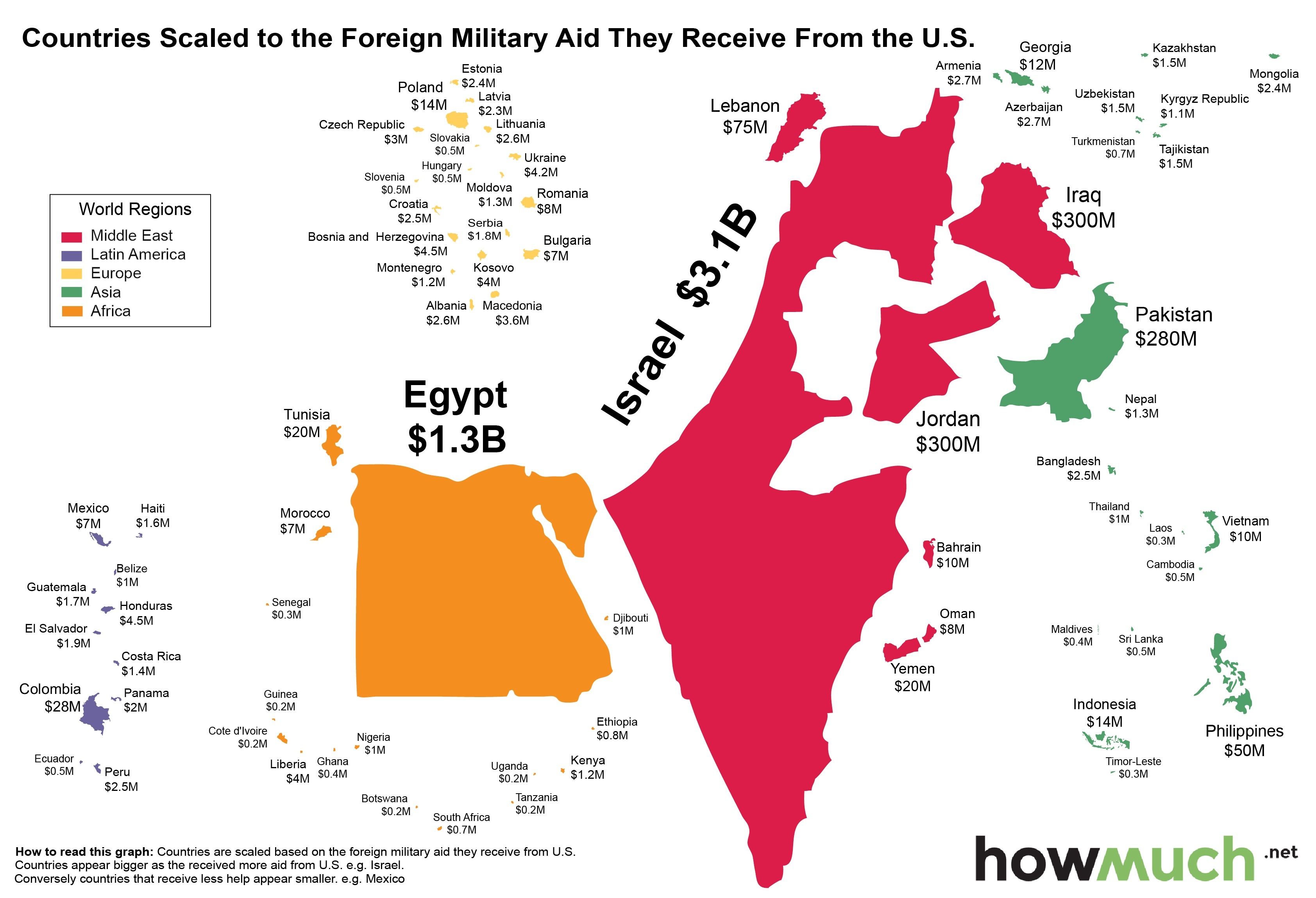
Today, Sisi’s regime can continue its crackdown with impunity partly because the United States and other world powers made clear that they favor stability over democracy. Much of the West accepted the coup and has remained largely silent about the sham trials and mass death sentences being handed down by the Egyptian judiciary. The United States provides Egypt with $1.3 billion in military aid each year, but it has been reluctant to use that as leverage against the Egyptian regime. Neither President Barack Obama nor Secretary of State John Kerry has substantively criticized Sisi’s dictatorship. [Continue reading…]

An editorial in the New York Times says: Viewing its alliance with Egypt as too crucial to fail, the Obama administration has done too little to confront the Sisi government’s expanding authoritarianism. Congress has continued to award Egypt $1.3 billion in military aid each year, despite ample evidence that its armed forces commit human rights abuses with impunity. The Obama administration and other Western governments have sought to nudge the Egyptian government to protect civil liberties with gentle public admonishments.

That approach is clearly not working. Egypt desperately needs international investment and deeply values its military relationship with the United States. Trade and military aid should be conditioned on clear signs that the government will respect freedom of expression and what’s left of the country’s civil society. [Continue reading…]

Facebooktwittermail

Hossam Bahgat, journalist and advocate, is released by Egypt’s military

The New York Times reports: The Egyptian military on Tuesday released the journalist Hossam Bahgat, hours before planned demonstrations in Cairo, London and other cities to call for his freedom.

Mr. Bahgat, 36, founded a highly respected human rights advocacy group, the Egyptian Initiative for Personal Rights, in 2002. Over the last two years, he has become a leading investigative journalist in Egypt, writing in English and Arabic for the online news organization Mada Masr. [Continue reading…]

Facebooktwittermail

Hillary Clinton is an enemy of Israel

Gideon Levy writes: Hillary Clinton’s election as U.S. president would ensure Israel’s continued decline and degeneration. And so she is not a friend, but an enemy. She must not be allowed to deceive and present herself as a friend of Israel, as she tried so ingratiatingly to do in an article published in The Forward (“How I would reaffirm unbreakable bond with Israel — and Benjamin Netanyahu”) last week. The tear ducts were targeted as she wrote of how she assisted Magen David Adom in being accepted to the International Red Cross. But she and those like her – false friends of Israel – have been one of the curses on this country for years. Because of them, Israel can continue to act as wildly as it likes, thumbing its nose at the world and paying no price. Because of them, it can destroy itself unhindered.

Whether Clinton believes what she wrote or simply wanted once again to sell her soul for a fistful of dollars from Haim Saban and other Jewish donors, the result is extremely embarrassing. A love letter to Israel, the likes of which no U.S. statesman would ever write to another country. Americans believe “Israel is more than a country – it’s a dream,” she states. Most of the world calls it a nightmare, yet Clinton says a dream. What dream exactly? The dream of tyrannical control over another people? Racism? Nationalism? The killing of women and children in Gaza?

What happened to the Hillary Rodham Clinton who in her youth fought for civil rights and against the Vietnam War, and as a lawyer specialized in children’s rights? Did she not hear what her dream state is doing to Palestinian children? What happened to the glorious career woman who was considered liberal and justice-seeking on her way up? Did she forget it all? Does money buy everything? Or, when it comes to Israel, do all principles suddenly change?

Did the former secretary of state not hear about the Israeli occupation? After all, she didn’t mention it once in her article. This is not the time or place to anger Saban. To Clinton, Israel is a “thriving democracy” and to hell with the violent and totalitarian regime in its backyard. And so Clinton is also an enemy of peace and justice. She doesn’t believe there has been the slightest damage to Palestinian rights. Israelis being stabbed in Jerusalem “appalls” Clinton. Palestinians being unjustifiably shot to death, meanwhile, fails to register with her. They will love her for that on Fifth Avenue. Religious figures who encourage killing are, of course, only Muslim; only Israeli security must be vouchsafed. The synagogues of Manhattan will love that, too. [Continue reading…]

Facebooktwittermail

Divide in Tehran grows over crackdown by Revolutionary Guards

EA Worldview reports: Tension is continuing to build within Iran’s regime over the crackdown by the Revolutionary Guards, with arrests of journalists and businessmen, following President Rouhani’s criticism of hardliners on Sunday.

Rouhani said at the Tehran Press Fair:

It is not tolerable that some media are permanently immune from the threat of closure and banning and enjoy permanent security [services] support. So they not only write whatever they please, but also play the role of the secret police in such a way that by reading certain newspapers, one finds out who will be arrested tomorrow, which [newspaper] will be banned and whose honor will be done away with.

Alaeddin Boroujerdi, the chair of Parliament’s National Security Commission, defended the Guards by saying that “one of [its] missions and responsibilities is to protect the country’s security”. He said the arrests of journalists, including five in the past two weeks, was “not without reason”: “The speculations being uttered that these arrests are political and connected to the JCPOA [the July 14 nuclear deal with the 5+1 Powers] are not fair and realistic.”

Others hit back at the President. Head of judiciary Sadegh Larijani accused Rouhani of “insulting” the judicial authorities by claiming that some media enjoy “immunity” against bans and closure. [Continue reading…]

Facebooktwittermail

Classified report on the CIA’s secret prisons is caught in limbo

The New York Times reports: A Senate security officer stepped out of the December chill last year and delivered envelopes marked “Top Secret” to the Pentagon, the C.I.A., the State Department and the Justice Department. Inside each packet was a disc containing a 6,700-page classified report on the C.I.A.’s secret prison program and a letter from Senator Dianne Feinstein, urging officials to read the report to ensure that the lessons were not lost to time.

Today, those discs sit untouched in vaults across Washington, still in their original envelopes. The F.B.I. has not retrieved a copy held for it in the Justice Department’s safe. State Department officials, who locked up their copy and marked it “Congressional Record — Do Not Open, Do Not Access” as soon as it arrived, have not read it either.

Nearly a year after the Senate released a declassified 500-page summary of the report, the fate of the entire document remains in limbo, the subject of battles in the courts and in Congress. Until those disputes are resolved, the Justice Department has prohibited officials from the government agencies that possess it from even opening the report, effectively keeping the people in charge of America’s counterterrorism future from reading about its past. There is also the possibility that the documents could remain locked in a Senate vault for good. [Continue reading…]

Facebooktwittermail

Judge deals a blow to NSA data collection program

The New York Times reports: A federal judge on Monday partly blocked the National Security Agency’s program that systematically collects Americans’ domestic phone records in bulk just weeks before the agency was scheduled to shut it down and replace it. The judge said the program was most likely unconstitutional.

In a separate case challenging the program, a federal appeals court in New York on Oct. 30 had declined to weigh in on the constitutional issues, saying it would be imprudent to interfere with an orderly transition to a replacement system after Nov. 29.

But on Monday, in a 43-page ruling, Judge Richard J. Leon of United States District Court for the District of Columbia wrote that the constitutional issues were too important to leave unanswered in the history of the program, which traces back to after the Sept. 11 terrorist attacks and came to light in 2013 in leaks by Edward J. Snowden, the former intelligence contractor. [Continue reading…]

Facebooktwittermail

Egyptian military arrests investigative journalist who exposed recent coup plot

The New York Times reports: Egyptian military intelligence on Sunday detained an investigative journalist who is also the founder of Egypt’s premier human rights group on charges of publishing false news, raising alarms about attempts to suppress domestic dissent as the government grapples with questions about the crash of a Russian passenger jet.

The journalist, Hossam Bahgat, 36, founded the Egyptian Initiative for Personal Rights, a highly regarded rights organization, in 2002. Since the military takeover in 2013, however, he has distinguished himself as a unique voice in the Egyptian news media by writing a series of painstakingly researched investigative reports that have called into question government statements.

Mr. Bahgat was summoned to military intelligence on Sunday and interrogated for hours before he was allowed to meet with lawyers. He was ordered to spend the night in detention, with his lawyers saying that military prosecutors would most likely decide on Monday whether to formally send him to trial. He also faces charges of insulting the military, his lawyers said.

Mr. Bahgat’s most recent report — and apparently the one that set off the ire of the military — investigated the low-key convictions of 26 military officers accused of having plotted a coup against the current government. The report raised questions about possible dissent in the ranks and about potential retribution against officers who had crossed the secret police. The article was the focus of questions by the prosecutor, according to Ragia Omran, a human rights lawyer who attended the interrogation in support of Mr. Bahgat. [Continue reading…]

Here is Bahgat speaking in Brazil two years ago:

Facebooktwittermail

Russian war propaganda in Syria much like America’s in Iraq

Aron Lund writes: When the United States was occupying Iraq, senior Bush administration officials like Washington Don kept blaming “terrorists” of the “Baathist dead-ender” or “al-Qaeda” variety for everything new setback. To be sure, Baathists and al-Qaeda loyalists were a prominent part of the mix, and they would later become dominant. But in the early days, Iraq’s insurgency seems to have been considerably more diverse than what we now see in Syria. In 2003-2004, it consisted of innumerable little local groups that spanned the full range of ideologies from secular nationalism to jihadism; they would even on occasion bridge the Sunni-Shia divide. And yet, U.S. President George W. Bush could get away with telling his people that the Iraqi resistance was all “al-Qaeda types, Ansar al-Islam types, terrorist groups” and conclude that it was better to “fight them there than here.”

A decade later in Syria, the roles are reversed. Russian politicians will contemptuously label any Syrian who has taken up arms to stop the depredations of Bashar al-Assad’s army a “jihadi terrorist” and in lieu of a political strategy, they smirk and puff their chests and say “bring ‘em on.” Their American counterparts sound like the anti-Iraq War tankie left in 2003-2004, eyes darting nervously around the room as they try to explain that there are good salafi insurgents and bad salafi insurgents. Give it a year more, and they’ll be complaining about Russia’s “cowboy attitude.”

Not that their respective supporters seem to notice, or care. But if you’re not a die-hard partisan of either Vladimir Putin or of the late and unlamented presidency of George W. Bush, you will by now have noticed that the Kremlin’s “anti-terrorist” discourse is essentially indistinguishable from the bullshit shoveled into the media by the American White House ten years ago, and equally self-serving, misleading, and destructive. [Continue reading…]

Facebooktwittermail

Refugees helping refugees: How a Palestinian camp in Lebanon is welcoming Syrians

By Elena Fiddian-Qasmiyeh, UCL

Established in 1955, northern Lebanon’s Baddawi refugee camp is home to between 25,000 and 40,000 “established” Palestinian refugees. Like other Palestinian camps across Lebanon, it has long been violent and lawless. This summer, I conducted fieldwork there.

Such camps are outside Lebanese jurisdiction, and have commonly been referred to as “islands of insecurity”. Nonetheless, the established residents of Baddawi camp have offered protection and assistance to tens of thousands of new arrivals from Syria since 2011.

These recent arrivals include Syrian nationals who have fled violence and persecution in their country, but also displaced Syrian-Palestinians and Iraqis. While they are new to Lebanon and Jordan when compared with “established” refugee communities, refugees from Syria are now officially categorised as “protracted” refugees. And for many hundreds of thousands of Palestinian and Iraqi refugees, this is the second, third or fourth time that they have been displaced by conflict.

Baddawi is a stark reminder of the urgent reality of this crisis. We’ve been saturated with stories and images about the refugee crisis (really a protection crisis) in Europe – and yet the vast majority of refugees from Syria are still hosted by Syria’s neighbouring countries. At the end of August 2015, there were 1,114,000 in Lebanon, 630,000 in Jordan and 1,939,000 in Turkey.

Continue reading

Facebooktwittermail