The Wall Street Journal reports: Gunning to win more advertising dollars, Facebook Inc. is using new ways to cull personal information from outside the social network and match it with data submitted by its billion-plus users.
The efforts are winning over advertisers such as General Motors Co. and Neiman Marcus Group Inc. but are further raising privacy concerns as Facebook harnesses a mosaic of information about its users.
On Wednesday, Facebook officially plans to roll out a new advertiser tool to help advertisers directly target Facebook users based on their offline spending history.
The tool marries what Facebook already knows about people’s friends and “likes” with vast troves of information from third-party data marketers such as Datalogix Inc., Acxiom Corp. and Alliance Data Systems Corp.’s Epsilon. That includes data on the Web pages that consumers visit, the email lists they have signed up for, and the way they are spending money online and offline.
A data broker like Datalogix, for example, aggregates information about which items and brands a consumer buys through sources like loyalty-card programs. Through software that obscures users’ identifying information such as email addresses and phone numbers, Datalogix and Facebook can combine their databases, and group users based on their offline purchases. Then, through the “partner categories” tool, brands can select which groups should see their advertisements.
For instance, a review of the “partner categories” tool by The Wall Street Journal found that categories often apply to tens of millions of people—for instance, there are some 20 million U.S. users who are heavy juice buyers on the social network.
A small chocolatier can target young parents in New York who buy lots of organic food products, for example. Hyundai Motor Co. recently ran a test to send ads to people identified as “intenders,” or those likely to buy a car soon based on their use of auto-research sites.
While Facebook doesn’t provide data on individuals to advertisers, it now can feed advertisers information on broad swaths of its members including their behavior outside of the social network. [Continue reading…]
Category Archives: Issues
Video: Mark Mazzetti on CIA’s post-9/11 move from spying to assassinations
Classified reports raise doubts about the legality of Obama’s drone war
McClatchy reports: Contrary to assurances it has deployed U.S. drones only against known senior leaders of al Qaida and allied groups, the Obama administration has targeted and killed hundreds of suspected lower-level Afghan, Pakistani and unidentified “other” militants in scores of strikes in Pakistan’s rugged tribal area, classified U.S. intelligence reports show.
The administration has said that strikes by the CIA’s missile-firing Predator and Reaper drones are authorized only against “specific senior operational leaders of al Qaida and associated forces” involved in the Sept. 11, 2001, terror attacks who are plotting “imminent” violent attacks on Americans.
“It has to be a threat that is serious and not speculative,” President Barack Obama said in a Sept. 6, 2012, interview with CNN. “It has to be a situation in which we can’t capture the individual before they move forward on some sort of operational plot against the United States.”
Copies of the top-secret U.S. intelligence reports reviewed by McClatchy, however, show that drone strikes in Pakistan over a four-year period didn’t adhere to those standards.
The intelligence reports list killings of alleged Afghan insurgents whose organization wasn’t on the U.S. list of terrorist groups at the time of the 9/11 strikes; of suspected members of a Pakistani extremist group that didn’t exist at the time of 9/11; and of unidentified individuals described as “other militants” and “foreign fighters.”
In a response to questions from McClatchy, the White House defended its targeting policies, pointing to previous public statements by senior administration officials that the missile strikes are aimed at al Qaida and associated forces.
Micah Zenko, an expert with the Council on Foreign Relations, a bipartisan foreign policy think tank, who closely follows the target killing program, said McClatchy’s findings indicate that the administration is “misleading the public about the scope of who can legitimately be targeted.”
The documents also show that drone operators weren’t always certain who they were killing despite the administration’s guarantees of the accuracy of the CIA’s targeting intelligence and its assertions that civilian casualties have been “exceedingly rare.” [Continue reading…]
Has the CIA used drones to engaged in contract killing?
Rolling Stone: In a major story in Sunday’s New York Times, national security reporter Mark Mazzetti details the troubling origins of the CIA’s targeted killing program in Pakistan – which he says began in 2004 with the killing of one of that country’s internal enemies, not a member of al Qaeda. The piece, which is adapted from Mazzetti’s new book, The Way of the Knife, also claims that the agency switched to killing accused terrorists – rather than capturing them – because of a 2004 internal review that was highly critical of the agency’s detention and interrogation program.
Targeted killing gave the CIA a way out of the prison business – but into the assassination business – and, as Mazzetti tells it, also a way to get access to Pakistani skies by taking out one of their enemies. Nek Muhammad was a tribal leader who had led a rebellion against Pakistan’s army and had been declared an “enemy of the state.” Pakistan wanted him dead. The CIA wanted access to airspace to conduct drone strikes in Pakistan’s tribal regions, which that country had previously considered a breach of sovereignty. The two countries made a deal – a high-stakes game of “you scratch my back, I’ll scratch yours” – that resulted in the CIA killing Nek Muhammad with a Predator drone, and Pakistan opening up part of its skies for CIA use. Pakistan’s military claimed responsibility for the killing, which Mazzetti notes was a lie, and to this day neither country has publicly given the real story.
The revelation that this first target was not part of al Qaeda, but rather a target picked by an ally country, has raised serious questions for critics of the CIA’s actions. “How many other killings have been carried out not pursuant to a strict legal analysis and examination of threat to the U.S., but rather as a bargaining chip, at the request of another government?” Sarah Knuckey, a lawyer and the director of NYU Law School’s Project on Extrajudicial Executions, asks Rolling Stone.
The secrecy in which the targeted killing program is shrouded makes that question impossible to answer conclusively at this time, but there is reason to believe that some of the individuals on the kill list (or lists) are known as “side payment” targets – people who are enemies of a U.S. ally, not the U.S. itself. Blogger Marcy Wheeler has argued that Nek Muhammad’s case “is surely” such a side-payment strike. [Continue reading…]
Drone war causing suffering on unprecedented scale in northwest Pakistan
AFP reports: After nine friends and relatives were killed in a US drone strike four years ago, Mohammed Fahim took tranquillisers to blot out the nightmares.
The 19 year-old is one of a growing number of Pakistanis living in the tribal areas on the Afghan border who has suffered from conditions related to depression, anxiety and mental health problems because of war.
US drone strikes, fighting between Pakistani Taliban and the army, mass displacement, chronic unemployment and disillusionment are all causing mental suffering on an unprecedented scale in northwest Pakistan, say psychiatrists.
Mohammed lost an eye in the January 2009 attack, but the mental scarring has been even more traumatic. The flashbacks are still sudden and powerful.
“I feel like my head is exploding,” he says when he remembers how four uncles, a cousin and four neighbours died when they came round for tea in North Waziristan, the most notorious of Pakistan’s Taliban and Al-Qaeda bastions.
“We heard the sound of a missile. A fraction of a second later, they were all dead, their bodies mutilated,” says Mohammed, who happened to be in the other room when the missile struck.
He insists that no one in his family was associated with Islamist militancy. US officials say the covert drone war in Pakistan involves surgical, pin-pointed strikes against known killers that cause few if any civilian casualties.
Video: U.S. states offering legal protection for animal abuse
How Obama follows in the footsteps of Pinochet
Remi Brulin writes: Imagine a world where the security forces of several non-democratic states “coordinate intelligence activities closely,” “operate in the territory of one another’s countries” and have established a program “to find and kill terrorists” anywhere around the world as part of a “war” against “terrorism.” Such a dystopian reality appears to be precisely what Executive Director of Human Rights Watch Kenneth Roth had in mind when writing, in his December 7, 2010 letter to President Obama, that current US policies of “targeted killings” may “set a dangerous precedent for abusive regimes around the globe to conduct drone attacks or other strikes against persons who they describe in vague or overly broad terms as terrorists.”
Such a nightmarish vision is much more, however, than a description of what could be. The first sentence above is a description of what was, taken verbatim from an August 3, 1976 secret memorandum by Assistant Secretary for Latin America Harry Shlaudeman to Secretary of State Henry Kissinger and describing the system of international cooperation between Argentina, Bolivia, Brazil, Chile, Paraguay and Uruguay known as Operation Condor. Between 1976 and 1980 these regimes would, thanks to an elaborate and modern intelligence network, closely collaborate to “disappear” hundreds of people across state borders, among them some members of guerrilla movements but mostly political opponents, former legislators and even Presidents, journalists, religious personalities, often killed after having been submitted to the worst kinds of torture. Entitled “The “Third World War” and South America,” this memorandum makes for fascinating reading as it highlights how, over 35 years ago, close allies of the United States had already developed both a set of specific practices implemented in secret and aimed at fighting “the terrorists,” and a full discourse emphasizing at every turn the fact that they were “at war” against “terrorism.” Only a few weeks later, Orlando Letelier would become the most prominent victim to date of Operation Condor, a Chilean citizen assassinated by the Chilean intelligence services in the streets of Washington D.C.
A few week ago, Argentina opened a major trial into Operation Condor. In contrast, no US official has ever been held accountable for their potential role in this program, a form of impunity bolstered by the continued refusal of the US government to declassify hundreds of documents that would shed light onto the exact nature and extent of its knowledge and involvement at the time. The Shlaudeman memorandum testifies to the dangers of a policy shrouded in secrecy and a complete lack of accountability. It also underlies the importance of current calls on the government to provide much greater transparency regarding “war on terrorism” policies such as “targeted killings” or the resort to extraordinary renditions and torture, policies which, at least to some degree, bear resemblance to some of Operation Condor’s practices.
At the most basic level, this memorandum reminds us that long before America’s current “war on terrorism,” other States did develop a similar discourse. That various regimes have, historically, used the concept of “terrorism” to delegitimize their enemies (and the cause they claim to fight for) and thus justify the use of often profoundly immoral methods against them (think France in Algeria in the 1950s, or South Africa in its fight against Mandela’s African National Congress from the 1960s onward) is neither a new nor a very original notion. The Latin American case is especially relevant to current discussions however, for at least a couple reasons. First, because the United States government was intimately involved in some of the worst practices of these regimes, although the extent and exact nature of this involvement remains, to this day and especially as it pertains to Operation Condor, mostly unknown and classified. Second, because, as I document in my PhD dissertation, it is precisely in the Latin American context that the Reagan administration put the “fight against terrorism” at the heart of the American foreign policy discourse for the very first time. Not only that but, as I discussed in some detail in this interview with Glenn Greenwald, in doing so the US government essentially adopted the discourse used and developed by these authoritarian regimes during the previous decade. [Continue reading…]
In March, Democracy Now interviewed John Dinges, author of “The Condor Years: How Pinochet and his Allies Brought Terrorism to Three Continents,” who talked about the Operation Condor trial currently underway in Argentina.
Monsanto’s next target: democracy
AlterNet: Big Food’s greatest fear is materializing. A critical mass of educated consumers, food and natural health activists are organizing a powerful movement that could well overthrow North America’s trillion-dollar junk food empire. Savvy and more determined than ever, activists are zeroing in on the Achilles heel of Food Inc. — labeling.
But as consumers demand truth and greater transparency in labeling, it isn’t just Big Food whose empire is vulnerable. The biotech industry, which makes billions supplying junk food manufacturers with cheap, genetically engineered (GE) ingredients, has even more to lose. Monsanto knows that if food producers are forced to label the genetically modified organisms (GMOs) in their food products, they’ll reformulate those products to meet consumer demand for GMO-free alternatives. That’s why companies like Monsanto, DuPont and Dow, along with Coca-Cola and Pepsi, last year spent more than $46 million to defeat Proposition 37, California’s GMO labeling initiative.
The junk food and biotech industries narrowly (48.5% – 51.5%) prevailed in California, but they know it’s only a matter of time before one or more states pass a mandatory GMO labeling law. More than 30 state legislatures are now debating GMO labeling bills. And consumers have broadened the fight beyond just labeling. Five counties and two cities in California and Washington have banned the growing of GE crops. In addition, given the near total absence of FDA regulation, 19 states have passed laws restricting GMOs.
How is the biotech industry fighting back? By attacking democracy. Experts say the laws are on the side of consumers. But consumers will no doubt still have to defend democracy against an increasingly desperate, and aggressive, industry bent on protecting the highly profitable business of genetically engineered food. [Continue reading…]
Rogue state: For the U.S. killing is more convenient than capture
Scott Shane reports: When Sulaiman Abu Ghaith, a son-in-law of Osama bin Laden, was taken into American custody at an airport stopover in Jordan last month, he joined one of the most select groups of the Obama era: high-level terrorist suspects who have been located by the American counterterrorism juggernaut, and who have not been killed.
Mr. Abu Ghaith’s case — he awaits a federal criminal trial in New York — is a rare illustration of what Obama administration officials have often said is their strong preference for capturing terrorists rather than killing them.
“I have heard it suggested that the Obama administration somehow prefers killing Al Qaeda members rather than capturing them,” said John O. Brennan, in a speech last year when he was the president’s counterterrorism adviser; he is now the C.I.A. director. “Nothing could be further from the truth.”
In fact, he said, “Our unqualified preference is to only undertake lethal force when we believe that capturing the individual is not feasible.”
Despite Mr. Brennan’s protestations, an overwhelming reliance on killing terrorism suspects, which began in the administration of George W. Bush, has defined the Obama years. Since Mr. Obama took office, the C.I.A. and military have killed about 3,000 people in counterterrorist strikes in Pakistan, Yemen and Somalia, mostly using drones. Only a handful have been caught and brought to this country; an unknown number have been imprisoned by other countries with intelligence and other support from the United States.
This policy on targeted killing, according to experts on counterterrorism inside and outside the government, is shaped by several factors: the availability of a weapon that does not risk American casualties; the resistance of the authorities in Pakistan and Yemen to even brief incursions by American troops; and the decreasing urgency of interrogation at a time when the terrorist threat has diminished and the United States has deep intelligence on its enemies.
Though no official will publicly acknowledge it, the bottom line is clear: killing is more convenient than capture for both the United States and the foreign countries where the strikes occur. [Continue reading…]
Criminalizing justice: Taping of farm cruelty is becoming the crime
The New York Times reports: On one covert video, farm workers illegally burn the ankles of Tennessee walking horses with chemicals. Another captures workers in Wyoming punching and kicking pigs and flinging piglets into the air. And at one of the country’s largest egg suppliers, a video shows hens caged alongside rotting bird corpses, while workers burn and snap off the beaks of young chicks.
Each video — all shot in the last two years by undercover animal rights activists — drew a swift response: Federal prosecutors in Tennessee charged the horse trainer and other workers, who have pleaded guilty, with violating the Horse Protection Act. Local authorities in Wyoming charged nine farm employees with cruelty to animals. And the egg supplier, which operates in Iowa and other states, lost one of its biggest customers, McDonald’s, which said the video played a part in its decision.
But a dozen or so state legislatures have had a different reaction: They proposed or enacted bills that would make it illegal to covertly videotape livestock farms, or apply for a job at one without disclosing ties to animal rights groups. They have also drafted measures to require such videos to be given to the authorities almost immediately, which activists say would thwart any meaningful undercover investigation of large factory farms.
Critics call them “Ag-Gag” bills.
Some of the legislation appears inspired by the American Legislative Exchange Council, a business advocacy group with hundreds of state representatives from farm states as members. The group creates model bills, drafted by lobbyists and lawmakers, that in the past have included such things as “stand your ground” gun laws and tighter voter identification rules.
One of the group’s model bills, “The Animal and Ecological Terrorism Act,” prohibits filming or taking pictures on livestock farms to “defame the facility or its owner.” Violators would be placed on a “terrorist registry.”
Officials from the group did not respond to a request for comment.
Animal rights activists say they have not seen legislation that would require them to register as terrorists, but they say other measures — including laws passed last year in Iowa, Utah and Missouri — make it nearly impossible to produce similar undercover exposés. Some groups say that they have curtailed activism in those states. [Continue reading…]
Young America doesn’t love Israel
Haaretz columnist, Chemi Shalev, writes: A Pew Research poll released this week found that for the first time, a majority of Americans favor the legalization of marijuana, by a 52%-45% margin. Support is lowest among older, conservative Republicans and highest among younger, liberal Democrats.
The same trend holds true, in varying degrees, in all the recent polling on the issues that top the current American domestic agenda, such as gun control, gay marriage and immigration reform. The younger and more liberal you are, the more you are likely to support such measures; the older and more conservative you are, the more you are likely to oppose them.
Support for Israel, on the other hand, runs in the opposite direction: older, conservative and Republican Americans tend to prefer Israel over the Palestinians by overwhelming numbers, while younger, liberal and Democratic Americans are more ambivalent. In a January Pew poll, the gap between “conservative Republicans” and “liberal Democrats” on this matter was no less than a staggering 75%-33%.
Thus, while Israel continues to enjoy substantial overall support in the American public, its weakest links are to be found among the groups that are now on the ascendant on most domestic and social issues of the day. Generational gaps and demographic trends have combined to produce a significant shift in American public opinion, as the National Journal wrote this week: “The culture wars now favor the Democrats. The wind is in their backs.”
The question, therefore, is whether this wind might not eventually erode traditional support for Israel in American public opinion as well. Is the so-called “partisan gap” on Israel a permanent feature of the American political landscape that should worry Israelis or is it a reversible trend that will change with the times?
It is tempting, for example, to comfort oneself with the assumption that support for Israel comes with age, that young liberals who are now equivocating about the Jewish state will evolve over the years and become strong Israel-supporters, just like their elders. But that intuitive theory is rebuffed in a paper published earlier this year by Israel’s Institute of National Strategic Studies (INSS) in which researchers Owen Alterman and Cameron Brown cite polls showing that in the late 1970s, the generational divide was the other way round: Americans aged 18-29 were more supportive of Israel than those 65+ and over.
“Generations seem to develop views toward Israel that guide their opinions throughout their lifetime,” the authors note. If that is true, then the so-called Millenials born after 1980, will maintain their tepid support for Israel throughout the coming decades as the Israel-backing Silent Generation and Baby Boomers slowly leave the stage.
Alterman and Cameron also dissect the correlation between religiosity and support for Israel, and come to the far less surprising conclusion that the most supportive are the most religious, both Christian and Jewish, and that the coolest toward Israel are those who cite “none” as their main religion. The entire “partisan gap” on support for Israel created in the past two decades, after all, isn’t so much a decrease in left-wing backing for Israel as a dramatic increase in right-wing support that stems from the growing prominence of Israel among Evangelical Christians and their increasing dominance of Republican politics.
Right-wing Jewish ideologues like to gloat over the growing political divide as proof of liberal perfidy in general and the left’s animus toward Israel in particular. They tend to gloss over their own role in turning Israel into a “wedge issue” which they unsuccessfully tried to exploit in order to pry Jewish voters away from U.S. President Barack Obama in the recent elections. By portraying support for Israel as a uniquely Republican and conservative cause, Republican Jewish propagandists are steadily ensuring that many young liberals will be instinctively repelled from embracing Israel too ardently. [Continue reading…]
Iain Banks: why I’m supporting a cultural boycott of Israel
Iain Banks writes: I support the Boycott, Divestment and Sanctions (BDS) campaign because, especially in our instantly connected world, an injustice committed against one, or against one group of people, is an injustice against all, against every one of us; a collective injury.
My particular reason for participating in the cultural boycott of Israel is that, first of all, I can; I’m a writer, a novelist, and I produce works that are, as a rule, presented to the international market. This gives me a small extra degree of power over that which I possess as a (UK) citizen and a consumer. Secondly, where possible when trying to make a point, one ought to be precise, and hit where it hurts. The sports boycott of South Africa when it was still run by the racist apartheid regime helped to bring the country to its senses because the ruling Afrikaaner minority put so much store in their sporting prowess. Rugby and cricket in particular mattered to them profoundly, and their teams’ generally elevated position in the international league tables was a matter of considerable pride. When they were eventually isolated by the sporting boycott – as part of the wider cultural and trade boycott – they were forced that much more persuasively to confront their own outlaw status in the world.
A sporting boycott of Israel would make relatively little difference to the self-esteem of Israelis in comparison to South Africa; an intellectual and cultural one might help make all the difference, especially now that the events of the Arab spring and the continuing repercussions of the attack on the Gaza-bound flotilla peace convoy have threatened both Israel’s ability to rely on Egypt’s collusion in the containment of Gaza, and Turkey’s willingness to engage sympathetically with the Israeli regime at all. Feeling increasingly isolated, Israel is all the more vulnerable to further evidence that it, in turn, like the racist South African regime it once supported and collaborated with, is increasingly regarded as an outlaw state. [Continue reading…]
Israel’s most pro-settlement government ever
Geoffrey Aronson writes: The only time the word “peace” is mentioned in the coalition government of the newly installed Israeli government led by Prime Minister Benjamin Netanyahu is in the section promising a member of Yesh Atid a place in on the negotiations committee to be headed by Tzippi Livni. Livni, of course, will not be making policy. Netanyahu’s alter ego, Yitzhak Molcho, promises to be in the room at all times. And the rejectionist tone of the government will be set by a diplomatic mini-cabinet including Netanyahu, Minister of Defense Moshe Ya’alon and Minister of Economy and Trade Naftali Bennet, a former director of the Council of settlements in Judea and Samaria (Yesha).
This aspect of the new government’s priorities is not surprising. It promises to be the most unambiguously partisan in favor of Jewish settlement in the occupied territories of any of its predecessors. Acting so will be no mean achievement, given the record of success established by previous Israeli governments during the last four-plus decades, particularly those led by Labor Party leaders — from Golda Meir to Yitzhak Rabin and Ehud Barak.
It is not for nothing that it has long been said that “the Likud will announce 10 settlements and build one while the Labor Party will announce one and build 10.” Leaders from the heart of the Labor Zionist movement — the same one that transformed 78% of Mandatory Palestine into a Jewish state — were the principal architects of Israel’s post-1967 settlement policies in the occupied territories and employed all the instruments of Israel’s national power and authority to place the territorial future of the “liberated territories” beyond Palestinian reach. [Continue reading…]
How the fear of war crimes charges led the CIA to abandon torture and take up murder
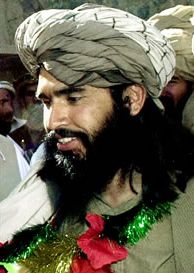
Mark Mazzetti writes: Nek Muhammad knew he was being followed.
On a hot day in June 2004, the Pashtun tribesman was lounging inside a mud compound in South Waziristan, speaking by satellite phone to one of the many reporters who regularly interviewed him on how he had fought and humbled Pakistan’s army in the country’s western mountains. He asked one of his followers about the strange, metallic bird hovering above him.
Less than 24 hours later, a missile tore through the compound, severing Mr. Muhammad’s left leg and killing him and several others, including two boys, ages 10 and 16. A Pakistani military spokesman was quick to claim responsibility for the attack, saying that Pakistani forces had fired at the compound.
That was a lie.
Mr. Muhammad and his followers had been killed by the C.I.A., the first time it had deployed a Predator drone in Pakistan to carry out a “targeted killing.” The target was not a top operative of Al Qaeda, but a Pakistani ally of the Taliban who led a tribal rebellion and was marked by Pakistan as an enemy of the state. In a secret deal, the C.I.A. had agreed to kill him in exchange for access to airspace it had long sought so it could use drones to hunt down its own enemies.
That back-room bargain, described in detail for the first time in interviews with more than a dozen officials in Pakistan and the United States, is critical to understanding the origins of a covert drone war that began under the Bush administration, was embraced and expanded by President Obama, and is now the subject of fierce debate. The deal, a month after a blistering internal report about abuses in the C.I.A.’s network of secret prisons, paved the way for the C.I.A. to change its focus from capturing terrorists to killing them, and helped transform an agency that began as a cold war espionage service into a paramilitary organization.
The C.I.A. has since conducted hundreds of drone strikes in Pakistan that have killed thousands of people, Pakistanis and Arabs, militants and civilians alike. While it was not the first country where the United States used drones, it became the laboratory for the targeted killing operations that have come to define a new American way of fighting, blurring the line between soldiers and spies and short-circuiting the normal mechanisms by which the United States as a nation goes to war.
Neither American nor Pakistani officials have ever publicly acknowledged what really happened to Mr. Muhammad — details of the strike that killed him, along with those of other secret strikes, are still hidden in classified government databases. But in recent months, calls for transparency from members of Congress and critics on both the right and left have put pressure on Mr. Obama and his new C.I.A. director, John O. Brennan, to offer a fuller explanation of the goals and operation of the drone program, and of the agency’s role.
Mr. Brennan, who began his career at the C.I.A. and over the past four years oversaw an escalation of drone strikes from his office at the White House, has signaled that he hopes to return the agency to its traditional role of intelligence collection and analysis. But with a generation of C.I.A. officers now fully engaged in a new mission, it is an effort that could take years.
Today, even some of the people who were present at the creation of the drone program think the agency should have long given up targeted killings. [Continue reading…]
Israel’s draconian system of arrest and detention
Sandy Tolan writes: Imagine being confined to a small sliver of land, in plain view of a wider homeland that you cannot touch. Your house is in a refugee camp, surrounded by fine red-roofed homes built by and for strangers who seized your territory without warning or permission.
The strangers, perched on hills that make it possible for them to spy into your home, are protected by one of the world’s most powerful armies, with its tanks, rockets and helicopter gunships supplied by the top military power on earth. The soldiers tightly restrict your movements through your own territory.
They subject your family to random searches at military posts along the road, where you are forced to submit your documents and sometimes to strip down to your underwear. At night, without warning, the army may enter your home and take your teen-aged children. In fact, they often do.
Once you finally find out where they are, they may or may not face any charges. If they are not charged, the military courts can hold them there indefinitely. If they are, the chances they will be found innocent are 1 in 400.
Imagine that you lived in such place, in a land you had long dreamt would be your own sovereign country, but which is now cut up into tiny enclaves that keep you thus confined. What would you do?
If you chose to resist, how would you do so?
Oday Khatib fought back by singing. Unlike many of the boys and young men in Al-Fawwar, the Palestinian refugee camp near Hebron, who fought occupation by throwing stones at Israeli soldiers, Oday, the internationally-recognised singer of the acclaimed Ramallah-based Al Kamandjati music school, has long found his resistance in Palestinian protest songs.
“He is not interested in throwing stones or getting involved in this,” Oday’s father, Jihad, said in an interview with my colleague Anan Abu-Shanab. Oday’s brothers have long hurled stones, but “since he was nine years old he was interested only in music”.
Nevertheless, Oday was arrested on March 19 under questionable circumstances at Al-Fawwar refugee camp.
His family says Oday was standing on hill, waiting to meet a friend. Nearby, his father said, children were throwing stones, “and when the soldiers chased the kids, it did not come to his mind that the soldiers would go for him. Otherwise he would have run away”.
The Israeli military spokesman asserts that Oday was arrested “after security forces identified him engaged in rock throwing during the course of a violent riot”. (“Violent riot” is a curious description for a clash between well-armed soldiers wearing chest protectors, helmets and face shields, who fire live ammunition at stone-throwers.)
Oday is charged under Section 212 of Military Order 1651, which states that anyone convicted of throwing stones “[a]t a person or property, with the intent to harm the person or property shall be sentenced to ten years imprisonment”. In other words, the law is so sweeping that if you throw a rock at a road sign, you could go to prison for a decade. Oday’s trial is scheduled for Monday, April 8. [Continue reading…]
Iran nuclear talks reveal gulf between sides
Laura Rozen reports: Iran and six world powers remained far apart at the conclusion of two days of talks here without agreeing to meet again, but American and European diplomats said the Iranians had engaged more deeply than ever before on the details of a potential nuclear compromise.
“Two days of talks just concluded that were indeed quite substantive,” a senior US official, speaking not for attribution, told journalists at the conclusion of talks Saturday. “Each session involved a robust discussion….[that were] more natural and free-flowing than past talks.”
“I’ve never seen anything quite like it,” the US diplomat said. “There was intensive dialogue on key issues at the core of [the proposed confidence building measure.]. Both sides came away with better understanding of each others’ positions.” [Continue reading…]
How do you ask a jihadist to be the last jihadist to die in Afghanistan?
Sami Yousafzai and Ron Moreau report: As the spring weather warms and the snow melts off the high mountain passes separating Pakistan and Afghanistan, hundreds of Taliban fighters who spent the winter in Afghan refugee camps and other safe havens inside Pakistan are preparing to return to battle. But this year some insurgents are having second thoughts about fighting in Afghanistan at a time when it appears that peace talks between the US and the Taliban are about to resume in Qatar after a year’s hiatus.
Indeed, there are heated debates raging among the fighters as to the wisdom of returning to fight and perhaps die as peace prospects are being discussed. “The leadership hopes to dispatch a big number of fighters to Afghanistan this year,” says Zabihullah, a senior Taliban operative whose information has proved reliable in the past. “But now there is great confusion among the fighters whether to go and fight or stay behind in Pakistan and await the results of the Qatar peace talks.”
In a mosque made of mud-bricks in the middle of the Haripur Afghan refugee camp, some 40 miles north of Islamabad, five Taliban fighters are relaxing, enjoying the warm spring weather, and sipping green tea from discolored tea cups. “Take advantage of the rest and the sunshine because in less than one month we have to return to the jihad,” says Mullah Mohammad Khan, 30, the senior fighter among the group. But his comrade-in-arms, Mohidain Akhund, does not share Khan’s enthusiasm. “This year my heart really does not want to go back to the jihad,” Akhund tells Khan frankly. “Our leaders are talking to the kafirs in Qatar and then asking us to return to Afghanistan to resist the Americans. Allah, pardon me, but I cannot make up my mind whether or not to go to the jihad this year.”
Khan, a sub-commander from northern Baghlan province, tries to argue with Akhund, warning him that he’s in danger of losing his faith. “These are satanic temptations,” he says. “If you say no to the jihad then how will you answer to Allah on Judgment Day?” Akhund is still not convinced. “I am proud to have been in the jihad for the past five years in Helmand [Province] and to have lost a brother and a nephew,” he tells Khan. “But how can I continue fighting when our leaders are enjoying the Americans’ hospitality in Qatar and we’re told we have to kill Afghan soldiers?” Another fighter named Abdullah pipes up, agreeing with Akhund, saying he is also confused about what to do this year. “Our leaders are enjoying air conditioned rooms, driving luxury cars and living in good houses while we live a troubled life fighting in Afghanistan,” says Abdullah. Khan still tries to cajole them. “We do not perform jihad for this or that personality,” he says. “We offer our sweet breath for Allah and we should expect rewards from Allah, not the leaders who are human and far from perfect.” [Continue reading…]
Despair among the victims of injustice at Guantánamo
New York Times editorial: The hunger strike that has spread since early February among the 166 detainees still at Guantánamo Bay is again exposing the lawlessness of the system that marooned them there. The government claims that around 40 detainees are taking part. Lawyers for detainees report that their clients say around 130 detainees in one part of the prison have taken part.
The number matters less than the nature of the protest, however: this is a collective act of despair. Prisoners on the hunger strike say that they would rather die than remain in the purgatory of indefinite detention. Only three prisoners now at Guantánamo have been found guilty of any crime, yet the others also are locked away, with dwindling hope of ever being released.
Detainees there have gone on hunger strikes many times since the facility opened in 2002. A major strike in 2005 involved more than 200 detainees. But those earlier actions were largely about the brutality of treatment the detainees received. The protest this time seems more fundamental. Gen. John Kelly of the Marines, whose Southern Command oversees Guantánamo Bay, explained the motivation of the detainees at a Congressional hearing last month by saying, “They had great optimism that Guantánamo would be closed” based on President Obama’s pledge in his first campaign, but they are now “devastated” that nothing has changed.
For 86 detainees, this is a particular outrage. They were approved for release three years ago by a government task force, which included civilian and military agencies responsible for national security.
But Congress outrageously has limited the president’s options in releasing them, through a statute that makes it very difficult to use federal money to transfer Guantánamo prisoners anywhere. Fifty-six of those approved for release are Yemenis. The government, however, has said it will not release them to Yemen for the “foreseeable future,” apparently because they might fall under the influence of people antagonistic to the United States. That false logic would mean that no Yemenis could ever travel to this country, but that is not the case.
The other 30 detainees approved for release are from different countries, though the government will not say where they are from. Over the past decade, the government has sent detainees to at least 52 countries, The Times and NPR have determined, so it surely can find countries to take detainees who cannot be returned home.
As for the remaining 80 prisoners, the three who have been convicted and the 30 or so who are subjects of active cases or investigations can be transferred to a military or civilian prison. The rest are in indefinite detention — a legal limbo in which they are considered by the government to be too dangerous to release and too difficult to prosecute. Such detention is the essence of what has been wrong with Guantánamo from the start. The cases of these detainees must be reviewed and resolved according to the rule of law.
The government is force-feeding at least 10 of the hunger strikers. International agreements among doctors say doctors must respect a striker’s decision if he makes “an informed and voluntary refusal” to eat. But under American policy, Guantánamo doctors cannot adhere to those principles. The Obama administration justifies the force-feeding of detainees as protecting their safety and welfare. But the truly humane response to this crisis is to free prisoners who have been approved for release, end indefinite detention and close the prison at Guantánamo.

On a hot day in June 2004, the Pashtun tribesman was lounging inside a mud compound in South Waziristan, speaking by satellite phone to one of the many reporters who regularly interviewed him on how he had fought and humbled Pakistan’s army in the country’s western mountains. He asked one of his followers about the strange, metallic bird hovering above him.