Category Archives: Issues

Bill Moyers and Chris Hedges on capitalism’s ‘sacrifice zones’

There are forgotten corners of this country where Americans are trapped in endless cycles of poverty, powerlessness, and despair as a direct result of capitalistic greed. Journalist Chris Hedges calls these places “sacrifice zones,” and joins Bill this week on Moyers & Company to explore how areas like Camden, New Jersey; Immokalee, Florida; and parts of West Virginia suffer while the corporations that plundered them thrive.

“These are areas that have been destroyed for quarterly profit. We’re talking about environmentally destroyed, communities destroyed, human beings destroyed, families destroyed,” Hedges tells Bill. “It’s the willingness on the part of people who seek personal enrichment to destroy other human beings… And because the mechanisms of governance can no longer control them, there is nothing now within the formal mechanisms of power to stop them from creating essentially a corporate oligarchic state.”

The broadcast includes images from Hedges’ collaboration with comics artist and journalist Joe Sacco, Days of Destruction, Days of Revolt, which is an illustrated account of their travels through America’s sacrifice zones. Kirkus Reviews calls it an “unabashedly polemic, angry manifesto that is certain to open eyes, intensify outrage and incite argument about corporate greed.”

A columnist for Truthdig, Hedges also describes the difference between truth and news. “The really great reporters — and I’ve seen them in all sorts of news organizations — are management headaches because they care about truth at the expense of their own career,” Hedges says.

(H/t Pulse)

Facebooktwittermail

NYPD ‘consistently violated basic rights’ during Occupy protests – study

The Guardian reports: The first systematic look at the New York police department’s response to Occupy Wall Street protests paints a damning picture of an out-of-control and aggressive organization that routinely acted beyond its powers.

In a report that followed an eight-month study (pdf), researchers at the law schools of NYU and Fordham accuse the NYPD of deploying unnecessarily aggressive force, obstructing press freedoms and making arbitrary and baseless arrests.

The study, published on Wednesday, found evidence that police made violent late-night raids on peaceful encampments, obstructed independent legal monitors and was opaque about its policies.

The NYPD report is the first of a series to look at how police authorities in five US cities, including Oakland and Boston, have treated the Occupy movement since it began in September 2011. The research concludes that there now is a systematic effort by authorities to suppress protests, even when these are lawful and pose no threat to the public.

Sarah Knuckey, a professor of law at NYU, said: “All the case studies we collected show the police are violating basic rights consistently, and the level of impunity is shocking”.

To be launched over the coming months, the reports are being done under the Protest and Assembly Rights Project, a national consortium of law school clinics addressing America’s response to Occupy Wall Street.

The NYPD appears to be the worst offender, in large part because it has made little attempt – unlike Oakland, for example – to reassess its practices or open itself up to dialogue or review. [Continue reading…]

Facebooktwittermail

The people who ask no questions

Chris Hedges writes: The greatest crimes of human history are made possible by the most colorless human beings. They are the careerists. The bureaucrats. The cynics. They do the little chores that make vast, complicated systems of exploitation and death a reality. They collect and read the personal data gathered on tens of millions of us by the security and surveillance state. They keep the accounts of ExxonMobil, BP and Goldman Sachs. They build or pilot aerial drones. They work in corporate advertising and public relations. They issue the forms. They process the papers. They deny food stamps to some and unemployment benefits or medical coverage to others. They enforce the laws and the regulations. And they do not ask questions.

Good. Evil. These words do not mean anything to them. They are beyond morality. They are there to make corporate systems function. If insurance companies abandon tens of millions of sick to suffer and die, so be it. If banks and sheriff departments toss families out of their homes, so be it. If financial firms rob citizens of their savings, so be it. If the government shuts down schools and libraries, so be it. If the military murders children in Pakistan or Afghanistan, so be it. If commodity speculators drive up the cost of rice and corn and wheat so that they are unaffordable for hundreds of millions of poor across the planet, so be it. If Congress and the courts strip citizens of basic civil liberties, so be it. If the fossil fuel industry turns the earth into a broiler of greenhouse gases that doom us, so be it. They serve the system. The god of profit and exploitation. The most dangerous force in the industrialized world does not come from those who wield radical creeds, whether Islamic radicalism or Christian fundamentalism, but from legions of faceless bureaucrats who claw their way up layered corporate and governmental machines. They serve any system that meets their pathetic quota of needs.

These systems managers believe nothing. They have no loyalty. They are rootless. They do not think beyond their tiny, insignificant roles. They are blind and deaf. They are, at least regarding the great ideas and patterns of human civilization and history, utterly illiterate. And we churn them out of universities. Lawyers. Technocrats. Business majors. Financial managers. IT specialists. Consultants. Petroleum engineers. “Positive psychologists.” Communications majors. Cadets. Sales representatives. Computer programmers. Men and women who know no history, know no ideas. They live and think in an intellectual vacuum, a world of stultifying minutia. They are T.S. Eliot’s “the hollow men,” “the stuffed men.” “Shape without form, shade without colour,” the poet wrote. “Paralysed force, gesture without motion.” [Continue reading…]

Facebooktwittermail

The three lies Michele Bachmann tells about American Muslims

Doug Saunders writes: The attacks on two of the most prominent Muslims in American public life last week seemed to have come out of the blue. It appeared as if five Republican Representatives had arbitrarily chosen this moment to lash out at Hillary Clinton aide Huma Abedin and Representative Keith Ellison for no reason other than their religion, in a bid to discredit the entire concept of Muslims taking part in national politics and government.

A sequence of letters and public denunciations, led by Rep. Michele Bachman and backed by four other Representatives, accused the two of being somehow indirectly affiliated with Egypt’s Muslim Brotherhood. The charges were so devoid of substance that senior Republican leaders and many members of Congress were quick to condemn them as bizarre and inappropriate. Still, even though they came from a marginal corner of Congress (albeit one representing millions of Americans), the language of the attacks was drawn from an increasingly mainstream set of claims about Muslims in the West. The letters from the Representatives argued that Muslims in the U.S. government are part of a wide plot involving numerous ordinary Muslim-Americans to “impose shariah worldwide,” to “undermine the U.S. Constitution,” and to advocate “that Muslims not integrate into the cultures of non-Muslim countries.” For a surprising number of Americans, these phrases represent commonsense thought about the Muslims in their midst.

These myths are strikingly similar to the set of charges that were commonly directed toward Roman Catholic and East European Jewish immigrants between the 1890s and the 1960s – that these groups are disloyal, supportive of violence, unwilling to integrate into Western values, driven by a religion that is actually an ideology of conquest, and poised to swamp our society through high reproduction rates. The people who hold these ideas, then as now, are not simply racists or xenophobes but often liberals who have come to believe – – based on misleading or distorted information – – that religious-minority outsiders are a threat to their freedoms and liberties.

In the years after the Sept. 11 attacks, these ideas came to be applied to Muslims in the West in a sequence of bestselling books, YouTube videos, websites, op-eds and activist campaigns organized by a small circle of anti-immigration authors and activists, increasingly often with funding from conservative foundations. The notion of a “Muslim tide” penetrated the American imagination. The millions of people who bought their books and watched their videos may not have subscribed to the movement’s full idea of an Islamic plot to take over Western civilization through immigration. In many cases they were simply trying to understand the different and sometimes strange-looking newcomers in their midst, and the simultaneous emergence of Islamic terrorism – – but the effect has been to popularize an interlocking set of myths about Muslim immigration.

In my book The Myth of the Muslim Tide, I explain the history of these ideas and trace their emergence in twenty-first century popular and political thought, and provide a detailed, research-based examination of the realities behind them. Luckily, the past five years have seen a number of very large-scale international studies and surveys that have revolutionized our understanding of the beliefs, views, behaviours and loyalties of Muslim immigrants and their offspring. What emerges is a picture of a set of communities undergoing the classic experience of immigration and integration – – with the same difficulties and challenges experienced by poor Catholics and Jews in their time – but burdened with a set of popular myths that are leading them increasingly to be rejected and marginalized by the wider population.

I have identified three nested groups of myths that together have created a widespread misunderstanding of Muslims in the West and poisoned our political environment. [Continue reading…]

Facebooktwittermail

The world is closer to a food crisis than most people realise

Lester R. Brown writes: In the early spring this year, US farmers were on their way to planting some 96m acres in corn, the most in 75 years. A warm early spring got the crop off to a great start. Analysts were predicting the largest corn harvest on record.

The United States is the leading producer and exporter of corn, the world’s feedgrain. At home, corn accounts for four-fifths of the US grain harvest. Internationally, the US corn crop exceeds China’s rice and wheat harvests combined. Among the big three grains – corn, wheat, and rice – corn is now the leader, with production well above that of wheat and nearly double that of rice.

The corn plant is as sensitive as it is productive. Thirsty and fast-growing, it is vulnerable to both extreme heat and drought. At elevated temperatures, the corn plant, which is normally so productive, goes into thermal shock.

As spring turned into summer, the thermometer began to rise across the corn belt. In St Louis, Missouri, in the southern corn belt, the temperature in late June and early July climbed to 100F or higher 10 days in a row. For the past several weeks, the corn belt has been blanketed with dehydrating heat.

Weekly drought maps published by the University of Nebraska show the drought-stricken area spreading across more and more of the country until, by mid-July, it engulfed virtually the entire corn belt. Soil moisture readings in the corn belt are now among the lowest ever recorded. [Continue reading…]

Facebooktwittermail

America has surrendered to the NRA

Lawrence Martine writes: Noteworthy among the responses to the movie theatre massacre in Colorado was that of New York Mayor Michael Bloomberg, a strong advocate of gun control. He was reacting to the words of Barack Obama and Mitt Romney. Both gentlemen expressed deep sorrow. Neither advocated measures to address their country’s sick gun culture.

“Soothing words are nice,” Mr. Bloomberg said, “but maybe it’s time that the two people who want to be president of the United States stand up and tell us what they are going to do about it.”

He had a point. of course. It would have been good if one of the contenders had mentioned that the country does have a bit of a problem on its hands: 30,000 gun deaths a year from about 300,000 gun-related assaults; a gun in 47 per cent of American households; assault weapons available at every pop stand; Columbine, Virginia Tech, Fort Hood and so on.

But really, who was Mr. Bloomberg trying to kid? Did the mayor, who doesn’t have to worry about rural votes, really think Mr. Obama or Mr. Romney would risk the wrath of the National Rifle Association just months before election day. If Mr. Bloomberg were running for president, does anyone think he would be standing up to the gun lobby?

Here is the trendline: In 1959, Gallup asked Americans whether there should be a law banning the possession of handguns except by police and other authorized persons; 60 per cent said yes. In 2011, 26 per cent replied in the affirmative.

Instructive about the reaction to the latest slaughter is just how firmly the pro-gun forces are in control. The attitude is not suggestive of urgency, but resignation. There is every sign that the battle has been lost – that the country has surrendered to the power of the NRA. [Continue reading…]

Facebooktwittermail

The Salafist democratic trend

Aaron Y. Zelin looks at the emerging democratic trend among Salafists, most recently expressed by Sheikh Salman al-Awdah in Saudi Arabia.

“Important questions remain about Salafi groups’ shift to democracy. Is it pragmatic or a true ideological commitment to democratic principles?” But who, one might ask, sets the benchmark for such a commitment? A Democratic Party tied by the hip to the Israel lobby? Or a Republican Party that repeatedly tries to disenfranchise minority voters? Maybe Americans should not get too sanctimonious about who qualifies as a real democrat.

The Muslim Brotherhood has so far emerged as the clear political winner from the popular uprisings that have seized the Arab world. In Egypt and Tunisia, its affiliated political parties have either won power outright in democratic elections. But the Brotherhood isn’t the only movement mixing faith and politics in the new Middle East: Salafis — hardline conservatives who model their lives on Prophet Mohamed and the first three generation of Muslim leaders following his death — are setting aside years of theological opposition to democracy to participate in the political game.

This sea change was driven home earlier this week when Saudi Salafi heavyweight Sheikh Salman al-Awdah took to his Twitter feed and Facebook page to proclaim: “Democracy might not be an ideal system, but it is the least harmful, and it can be developed and adapted to respond to local needs and circumstances.” Although Awdah notably made his announcement on his English and not Arabic social media platforms, where his audience numbers in the millions rather than the tens of thousands, the sentiment is still positively Churchillian — echoing as it does the late British prime minister’s maxim: “It has been said that democracy is the worst form of government except all the others that have been tried.”

Awdah’s pronouncement is significant due to his history and popularity within the Salafist milieu. He was one of the key leaders of Saudi Arabia’s sahwa (“awakening”) movement, which butted heads with the House of Saud most prominently during the Gulf war in the early 1990s. During those years, key Saudi religious scholars and sahwa activists signed two petitions admonishing the Saudi royals for their reliance on the United States, and calling for the creation of a shura (“consultative”) council that would grant greater authority to the religious establishment to determine whether legislation was truly in line with Islamic law.

The House of Saud viewed these letters as a direct threat to its power, and consequently arrested Awdah and other sahwa figures in 1994. Awdah would not be released until 1999. Although he has not been as overt in his criticisms of the regime since his release, he is not part of the official religious establishment and has a level of independence, which has afforded him the ability to maintain a large following without being viewed as a lackey of the government.

Osama bin Laden was one of the young Saudis deeply affected by Awdah’s stand against the Saudi regime in the early 1990s. The al Qaeda chief viewed him as an intellectual mentor, and allegedly told his former bodyguard Abu Jandal that if Awdah had not been imprisoned, he would not have had to raise his voice up against the Saudi ruling family.

The al Qaeda leader’s admiration highlights Awdah’s influence among not only mainstream Salafists, but some of the more radical wings of the movement.

Actually, what this highlights is the radicalizing effect of political repression in Saudi Arabia.

Facebooktwittermail

From an unlikely source, a serious challenge to Wall Street

Matt Taibbi writes: Something very interesting is happening.

There’s been so much corruption on Wall Street in recent years, and the federal government has appeared to be so deeply complicit in many of the problems, that many people have experienced something very like despair over the question of what to do about it all.

But there’s something brewing that looks like it might be a blueprint to effectively take on the financial services industry: a plan to allow local governments to take on the problem of neighborhoods blighted by toxic home loans and foreclosures through the use of eminent domain. I can’t speak for how well the program will work, but it’s certaily been effective in scaring the hell out of Wall Street.

Under the proposal, towns would essentially be seizing and condemning the man-made mess resulting from the housing bubble. Cooked up by a small group of businessmen and ex-venture capitalists, the audacious idea falls under the category of “That’s so crazy, it just might work!” One of the plan’s originators described it to me as a “four-bank pool shot.”

Here’s how the New York Times described it in an article from earlier this week entitled, “California County Weighs Drastic Plan to Aid Homeowners”:

Desperate for a way out of a housing collapse that has crippled the region, officials in San Bernardino County … are exploring a drastic option — using eminent domain to buy up mortgages for homes that are underwater.

Then, the idea goes, the county could cut the mortgages to the current value of the homes and resell the mortgages to a private investment firm, which would allow homeowners to lower their monthly payments and hang onto their property.

I’ve been following this story for months now – I was tipped off that this was coming earlier this past spring – and in the time since I’ve become more convinced the idea might actually work, thanks mainly to the extremely lucky accident that the plan doesn’t require the permission of anyone up in the political Olympus.

Cities and towns won’t need to ask for an act of a bank-subsidized congress to do this, and they won’t need a federal judge to sign off on any settlement. They can just do it. In the Death Star of America’s financial oligarchy, the ability of local governments to use eminent domain to seize toxic debt might be the one structural flaw big enough for the rebel alliance to exploit. [Continue reading…]

Facebooktwittermail

The anti-Semitism that goes unreported

Amira Hass writes: Here’s a statistic that you won’t see in research on anti-Semitism, no matter how meticulous the study is. In the first six months of the year, 154 anti-Semitic assaults have been recorded, 45 of them around one village alone. Some fear that last year’s record high of 411 attacks – significantly more than the 312 attacks in 2010 and 168 in 2009 – could be broken this year.

Fifty-eight incidents were recorded in June alone, including stone-throwing targeting farmers and shepherds, shattered windows, arson, damaged water pipes and water-storage facilities, uprooted fruit trees and one damaged house of worship. The assailants are sometimes masked, sometimes not; sometimes they attack surreptitiously, sometimes in the light of day.

There were two violent attacks a day, in separate venues, on July 13, 14 and 15. The words “death” and “revenge” have been scrawled in various areas; a more original message promises that “We will yet slaughter.”

It’s no accident that the diligent anti-Semitism researchers have left out this data. That’s because they don’t see it as relevant, since the Semites who were attacked live in villages with names like Jalud, Mughayer and At-Tuwani, Yanun and Beitilu. The daily dose of terrorizing (otherwise known as terrorism ) that is inflicted on these Semites isn’t compiled into a neat statistical report, nor is it noticed by most of the Jewish population in Israel and around the world – even though the incidents resemble the stories told by our grandparents.

The day our grandparents feared was Sunday, the Christian Sabbath; the Semites, who are not of interest to the researchers monitoring anti-Semitism, fear Saturday, the Jewish Sabbath. Our grandparents knew that the order-enforcement authorities wouldn’t intervene to help a Jewish family under attack; we know that the Israel Defense Forces, the Israel Police, the Civil Administration, the Border Police and the courts all stand on the sidelines, closing their eyes, softballing investigations, ignoring evidence, downplaying the severity of the acts, protecting the attackers, and giving a boost to those progromtchiks.The hands behind these attacks belong to Israeli Jews who violate international law by living in the West Bank. But the aims and goals behind the attacks are the flesh and blood of the Israeli non-occupation. This systemic violence is part of the existing order. It complements and facilitates the violence of the regime, and what the representatives – the brigade commanders, the battalion commanders, the generals and the Civil Administration officers – are doing while “bearing the burden” of military service.

They are grabbing as much land as possible, using pretexts and tricks made kosher by the High Court of Justice; they are confining the natives to densely populated reservations. That is the essence of the tremendous success known as Area C: a deliberate thinning of the Palestinian population in about 62 percent of the West Bank, as preparation for formal annexation.

Day after day, tens of thousands of people live in the shadow of terror. Will there be an attack today on the homes at the edge of the village? Will we be able to get to the well, to the orchard, to the wheat field? Will our children get to school okay, or make it to their cousins’ house unharmed? How many olive trees were damaged overnight?

In exceptional cases, when there is luck to be had, a video camera operated by B’Tselem volunteers documents an incident and pierces the armor of willful ignorance donned by the citizens of the only democracy in the Middle East. When there is no camera, the matter is of negligible importance, because after all, you can’t believe the Palestinians. But this routine of escalating violence is very real, even if it is underreported.

For the human rights organization Al-Haq, the escalation is reminiscent of what happened in 1993-1994, when they warned that the increasing violence, combined with the authorities’ failure to take action, would lead to mass casualties. And then Dr. Baruch Goldstein of Kiryat Arba came along and gunned down 29 Muslim worshipers at the Ibrahim Mosque. The massacre set the stage for a consistent Israeli policy of emptying the Old City of Hebron of its Palestinian residents, with the assistance of Israeli Jewish pogromtchiks. Is there someone among the country’s decision-makers and decision-implementers who is hoping for a second round?

Facebooktwittermail

The insanity of anti-Iran propaganda

A Times of Israel article that I referred to yesterday turns out to have been total bunk — surprise, surprise. (At least I covered my ass a tiny bit by acknowledging I had no idea whether the translations of quotes by Mahmoud Ahmadinejad were accurate.)

Nima Shirazi provides the details:

The Times of Israel, the same “news” outfit that was quick to identify former Guantanamo detainee Mehdi Ghezali as the bomber based on half-baked Bulgarian media reports (a claim immediately denied by all intelligence agencies involved in the case) is back at it, this time with a report declaring that Iranian president Mahmoud Ahmadinejad has revealed (and reveled in) Iran’s culpability for the attack in Bulgaria.

The Times opens its piece with what could not be mistaken for anything other than what it presents as a clear statement of fact: “Iran’s President Mahmoud Ahmadinejad gloated publicly on Thursday over the deaths of Israelis in a terror bombing in Bulgaria, and hinted that Iran was responsible for the attack.” Claiming that, just hours after the attack itself, “Ahmadinejad described the attack as ‘a response’ to Israeli ‘blows against Iran,'” the report continues:

“The bitter enemies of the Iranian people and the Islamic Revolution have recruited most of their forces in order to harm us,” he said in a speech reported by Israel’s Channel 2 TV. “They have indeed succeeded in inflicting blows upon us more than once, but have been rewarded with a far stronger response.”

He added: “The enemy believes it can achieve its aims in a long, persistent struggle against the Iranian people, but in the end it will not. We are working to ensure that.”

Ahmadinejad’s speech was interpreted in Israel as asserting that the Burgas bombing was a revenge attack for the killing of Iranian nuclear scientists, for which Iran has repeatedly blamed Israel.

This report spread like wildfire around the internet, from right-wing sites like The Blaze and Commentary to progressive outlets like Paul Woodward’s War in Context.

But it’s a lie.

Ahmadinejad’s speech, delivered in commemoration of World Mosque Day, has absolutely nothing to do with the bus bombing in Bulgaria. The quotes cherry-picked and bizarrely analyzed by the Israeli media have nothing to do with boasting or bragging about the attack. [Continue reading…]

Facebooktwittermail

What did Ahmadinejad just say?

Soon after the Burgas bombing, the Times of Israel was quick to jump on a story first appearing in Bulgarian media claiming that the culprit was a former Guantanamo detainee and Swedish citizen. It didn’t take long before that story was shown to be false, so, I’m not sure how much weight to attach to the following report, “Gloating Ahmadinejad hints at Iranian responsibility for Burgas terror attack.”

All I can say is that it doesn’t look good. So far this has not been picked up by other media outlets, but if it turns out that Mahmoud Ahmadinejad has been quoted accurately and that he is indeed claiming responsibility for the attack, then it looks like he effectively just issued an invitation for Israel to strike back.
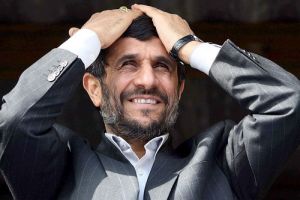
Iran’s President Mahmoud Ahmadinejad gloated publicly on Thursday over the deaths of Israelis in a terror bombing in Bulgaria, and hinted that Iran was responsible for the attack.

Speaking hours after Israel’s Prime Minister Benjamin Netanyahu had publicly blamed the bombing Wednesday at Bulgaria’s Burgas airport on “Hezbollah, directed by Iran,” Ahmadinejad described the attack as “a response” to Israeli “blows against Iran.”

“The bitter enemies of the Iranian people and the Islamic Revolution have recruited most of their forces in order to harm us,” he said in a speech reported by Israel’s Channel 2 TV. “They have indeed succeeded in inflicting blows upon us more than once, but have been rewarded with a far stronger response.”

He added: “The enemy believes it can achieve its aims in a long, persistent struggle against the Iranian people, but in the end it will not. We are working to ensure that.”

Ahmadinejad’s speech was interpreted in Israel as asserting that the Burgas bombing was a revenge attack for the killing of Iranian nuclear scientists, for which Iran has repeatedly blamed Israel.

His remarks contrasted with a condemnation of the Burgas bombing by the Iranian Foreign Ministry earlier Thursday.

“The Islamic republic, the biggest victim of terrorism, believes terrorism endangers the lives of innocents… is inhumane and so strongly condemns” it, the Arabic-language television channel Al-Alam cited foreign ministry spokesman Ramin Mehmanparast as saying. “Iran’s position is to condemn all terrorist acts in the world,” he added.

Earlier in the day, Iran’s state TV rejected accusations of Tehran’s involvement in the attack.

Iran’s president has a habit of making provocative statements and it is possible in this instance that he made the ill-judged choice of praising an attack even when Iran had not in fact instigated it.

A suicide attack of this type would seem to fit the profile of a jihadist operation rather than tit-for-tat revenge in response to Israel’s bombing attacks on Iranian nuclear scientists. Indeed, less than a month ago, European intelligence services warned that a Norweigian man trained by al Qaeda was ready to strike.

A trained terrorist from Norway is awaiting orders to carry out an attack on the West, officials from three European security agencies have revealed.

The man is believed to have received terrorist training from Al Qaeda’s offshoot in Yemen and is ready to strike.

Western intelligence officials have long feared such a scenario – a convert to Islam who is trained in terrorist methods and can blend in easily in Europe and the U.S., traveling without visa restrictions.

Officials from three European security agencies confirmed the man is ‘operational,’ meaning he has completed his training and is about to receive a target.

All spoke on condition of anonymity because they were not authorized to discuss the case publicly. They declined to name the man, who has not been accused of a crime.

‘We believe he is operational and he is probably about to get his target,’ one security official said. ‘And that target is probably in the West.’

A security official in a second European country confirmed the information, adding: ‘From what I understand, a specific target has not been established.’

European security services, including in Norway, have warned in recent years of homegrown, radicalised Muslims traveling to terror training camps in conflict zones. Many of the known cases involve young men with family roots in Muslim countries.

But the latest case involves a man in his 30s with no immigrant background, the officials said.

After converting to Islam in 2008, he quickly became radicalized and traveled to Yemen to receive terror training, one of the officials said.

The man spent ‘some months’ in Yemen and is still believed to be there, he said.

The official said the man has no criminal record, which would also make him an ideal recruit for Al Qaeda.

‘Not even a parking ticket,’ he said. ‘He’s completely clean and he can travel anywhere.’

Facebooktwittermail

How Morocco handled the Arab Spring

Nicholas Pelham writes: Since the Tunisian street vendor Mohammed Bouazizi set himself and the Arab world aflame in December 2010, young men all over the Middle East have tried to imitate him. In no country have they done so more often than in Morocco, where some twenty men, with many of the same economic grievances, are reported to have self-immolated. Five succeeded in killing themselves, but none in sparking a revolution.

It is not for want of causes. Morocco’s vital statistics are worse than Tunisia’s. Its population earns half as much on average as its smaller North African counterpart. One of every two youth are unemployed, and the number is rising: failed rains have cut the country’s wheat harvest in half and have compounded a mounting budget deficit hiked by rising fuel prices and a downturn in tourism and exports to Europe, Morocco’s beleaguered main trading partner. In late May, tens of thousands of people took to the streets in Casablanca to protest the government’s failure to tackle the country’s social ills.

Meanwhile, widely circulated accounts by veteran Moroccan and French journalists describe the cronyism clawing through the palaces. The personal assets of King Mohammed VI — based on his control of the country’s phosphate mines, it is reported — have quintupled to $2.5 billion over the past decade. This makes the monarch of the impoverished realm more wealthy — according to Forbes — than Britain’s Queen Elizabeth II.

But whereas Ben Ali, Tunisia’s policeman, pigheadedly sought to keep power when the streets erupted in late 2010, Morocco’s po-faced but retiring King has kept one step ahead by offering to share it. On March 9, 2011 — just weeks after Ben Ali’s exile — King Mohammed unveiled a new constitution that gave up his claim to divine rights as sovereign, but left him as Commander of the Faithful, much — said palace advisers — as Britain’s Queen remains head of the Anglican Church. And while other Arab monarchs, like Jordan’s, dithered about whether to risk parliamentary elections, Mohammed held them quickly and fairly last November; when an Islamist party won the most seats, the King declared its leader, Abdelilah Benkirane, the prime minister.

I first met Benkirane 13 years ago, in 1999, when he was standing for election in the shanties of Sale, a squalid adjunct to Morocco’s serene capital, Rabat, from which it is separated by the picturesque Bouregreg estuary. Unable to deliver running water to his constituents, he ranted against a beauty pageant that the kingdom’s elite were staging in the Rabat Hilton. His core demand was that female contestants replace their swimsuits with kaftans, the hooded woolen tunics that turn hour-glass figures into dumplings. Benkirane won both the campaign and the ballot.

Abdelilah Benkirane of the Islamist Justice and Development Party in the Moroccan parliament, Rabat, December 19, 2011

At the time, Benkirane’s claim that he would be running the country within two elections was met with guffaws. Andre Azoulay, the King’s debonair Jewish adviser, summoned me for a reprimand after I reported his prediction on the BBC. “Bullshit,” he pronounced, horrified that an Islamist might ever sully the makzhen, Morocco’s royal establishment. Benkirane was wrong — but only by an election, and he now holds more power than any previous prime minister. At his investiture, he hurriedly pecked His Majesty on the shoulder, dispensing with the tradition of kissing the hand of a man nine years his junior.

One day this spring, I met Benkirane again, by knocking on his front door in Les Orangers, an ordinary middle class neighborhood just beyond Rabat’s medieval walls — he has until now declined to leave his aging town house for the stately home that comes with his office. Unlike the more high-falutin’ Arabic of traditional courtiers, Benkirane—who is popularly known as Benky — speaks in a language Moroccans understand, a dialect called derija, which mixes the various cultures that have swept through its mountains: Tifinagh, the Berber tongue, French, and Spanish. [Continue reading…]

Facebooktwittermail

Living under siege in Iran

Mohammad Ali Shabani writes: Hassan is in his late 40s. He has worked at an Iranian state bank all his life and is about to retire. His son is in his late teens and his daughter is still in primary school. Two years ago, around the same time a fourth round of UN sanctions was imposed on Iran over its nuclear programme, he was diagnosed with stomach cancer. After extensive treatment in Tehran, which included chemotherapy, he beat the disease.

But late this spring, the cancer came back – with a vengeance. Last month, when the New York Times’ Nicholas Kristof argued that he was in favour of sanctions after having toured Iran and wrote about the great generosity and hospitality he had experienced, I got a frantic call from Hassan’s wife. The drugs he needed were nowhere to be found.

I joined her in her hunt all around Tehran for the needed medicines, to no avail. Repeatedly, we were told that there was a shortage of many foreign drugs because of the sanctions, even though the West’s punitive measures don’t directly target supplies such as medicines.

This is only one of the many stories of how ordinary Iranians are bearing the brunt of the West’s economic war against the Islamic Republic. Since Iran came under scrutiny over its nuclear energy programme in 2002, it has come under several sets of UN Security Council sanctions, and life has become progressively more difficult for all but the wealthy. In Tehran, the dominant perception is that the aim of the sanctions is to create pressure from below so the leadership will back down on the nuclear issue. In this context, how are Iranians to interpret the US and the EU’s move to target oil exports and shipping; the main artery of Iran’s economy?

The latest US and EU sanctions on Iran are set to inflict serious hardship on the people. The International Energy Agency estimates that Iranian oil exports have been cut by around 40 per cent this year. Meanwhile, the excision of Iran from many international banking channels means it is finding it difficult to pay for basic items that are not targeted by sanctions, such as food. The pressure Iran is facing is unprecedented. However, things need to be put into perspective. The ruling elite in Tehran has survived eight years of war, punitive measures for decades and most recently, widespread civil turmoil. Suffice to say, the Islamic Republic is resilient. [Continue reading…]

Facebooktwittermail

The Battle of Blair Mountain

Chris Hedges writes: Joe Sacco and I, one afternoon when we were working in southern West Virginia on our book “Days of Destruction, Days of Revolt,” parked our car on the side of a road. We walked with Kenny King into the woods covering the slopes of Blair Mountain. King is leading an effort to halt companies from extracting coal by blasting apart the mountain, the site in the early 1920s of the largest armed insurrection in the United States since the Civil War.

Blair Mountain, amid today’s rising corporate exploitation and state repression, represents a piece of American history that corporate capitalists, and especially the coal companies, would have us forget. It is a reminder that citizens have a right to resist a corporate machine intent on subjugating them. It is a reminder that all the openings of our democracy were achieved with the toil, anguish and sometimes blood of radicals and popular fronts, from labor unions to anarchists, socialists and communists. But this is not approved history. We are instructed by the power elite to worship at approved shrines—plantation estates erected for wealthy slaveholders and land speculators such as George Washington, or the gilded domes of authority in the nation’s capital.

As we walked, King, a member of the Friends of Blair Mountain, an organization formed to have the site declared a national park, swept a metal detector over the soil. When it went off he knelt. He dug with a trowel until he unearthed a bullet casing, which he handed to me. I recognized it as a .30-30, the kind of ammunition my grandfather and I used when we hunted deer in Maine. Winchester lever-action rifles, which took the .30-30 round, were widely used by the rebellious miners.

In late August and early September 1921 in West Virginia’s Logan County as many as 15,000 armed miners, some of them allegedly provided with weapons by the United Mine Workers of America, mounted an insurrection after a series of assassinations of union leaders and their chief supporters, as well as mass evictions, blacklistings and wholesale firings by coal companies determined to break union organizing. Miners in other coal fields across the United States had concluded a strike that lasted two months and ended with a 27 percent pay increase. The miners in West Virginia and eastern Kentucky wanted the same. They wanted to be freed from the debt peonage of the company stores, to be paid fairly for their work, to have better safety in the mines, to fight back against the judges, politicians, journalists and civil authorities who had sold out to Big Coal, and to have a union. They grasped that unchallenged and unregulated corporate power was a form of enslavement. And they grasped that it was only through a union that they had any hope of winning. [Continue reading…]

Facebooktwittermail

The revolution will not be identified

Nic Halverson writes: After Iran’s 2009 presidential elections, in what came to be known as the Green Movement, protesters flooded the streets and demanded that Mahmoud Ahmadinejad be removed from office after he was accused of rigging votes to get reelected.

During that time, the Islamic Revolutionary Guard Corps asked people to help identify dissenters in videos and photos, many of which were obtained from YouTube and social media sites. Since then, corrupt regimes, military and law enforcement agencies from across the Middle East, Europe and North America have routinely trolled YouTube and social media sites to try and identify protesters.

According to the 2011 Cameras Everywhere Report by human rights organization Witness, “No video-sharing site or hardware manufacturer currently offers users the option to blur faces or protect identity.”

Well, not anymore. YouTube has an announcement to make:

“As citizens continue to play a critical role in supplying news and human rights footage from around the world, YouTube is committed to creating even better tools to help them…Today we’re launching face blurring — a new tool that allows you to obscure faces within videos with the click of a button.” [Continue reading…]

Facebooktwittermail

