Category Archives: Issues

How to strike a deal with Iran

Stephen Walt writes: Will the U.S. and the rest of the P5+1 manage to turn a potential diplomatic breakthrough with Iran into another counterproductive failure? It’s too soon to tell, but betting on failure has been the smart wager in the past.

The Baghdad talks between Iran and the P5+1 apparently got a lot of serious issues on the table, but didn’t achieve a breakthrough, let alone an agreement. The main reason is the hardline position adopted by the United States and its partners, and especially our refusal to grant any sort of sanctions relief. The parties will resume discussions in Moscow in June.

From a purely strategic point of view, this situation is pretty simple. Iran is not going to give up its right to enrich uranium. Period. If the West insists on a full suspension, there won’t be a deal. It’s that simple. At the same time, the U.S. and the rest of the P5+1 would like to maximize the amount of time it would take Iran to “break out” and assemble a weapon. The best way to do that is to limit Iran’s stockpile of enriched uranium to concentrations of less than 5 percent. If Iran insists on keeping a large supply of 20 percent enriched uranium on hand, we’ll walk too.

So there you have the outline of the deal–we accept low-level enrichment and lift sanctions, and Iran gives up the 20% stuff–although there are other details what will have to be worked out too. Frankly, given where we are today, it’s surprising the U.S. isn’t grabbing that deal with both hands. Why? Because unless the U.S. is willing to invade and occupy Iran (and we aren’t) or unless we are willing to bomb its facilities over and over (i.e., every time Iran rebuilds them), there is no way to prevent Iran from having the potential to obtain nuclear weapons if it decides it wants to. They know how to build centrifuges, folks, and the rest of the technology isn’t that hard to master. So the potential is there, and there’s no realistic way to eliminate it.

The smart strategy, therefore, is to keep them as far away from the bomb as possible, and to reduce Iran’s incentive to go all the way to an actual weapon. And the best way to do that — duh! — is to take the threat of military force off the table and to stop babbling about the need for regime change.

Facebooktwittermail

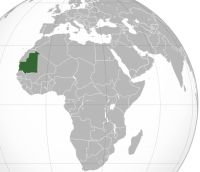
Mauritania’s ‘overlooked’ Arab spring

Sharif Nashashibi writes: Mauritania. Many people have never heard of it, and most would probably be unable to pinpoint it on a map, even though its land mass is larger than France and Germany combined. Many Arabs are unaware that it is a member of the Arab League.

Even BlackBerry does not recognise it. Its messenger service auto-corrects “Mauritania” to “Martian” and, given public ignorance of the country, Mauritania might as well be on Mars. However, this could and should change.

Interviewed for a TV programme recently, I was asked whether Mauritania will be the next country to experience the Arab spring. In fact, it has been part of the spring since January 2011, when Yacoub Ould Dahoud fatally set himself alight in front of the presidential palace.

Protests have taken place across Mauritania ever since, spurred by the same factors as in other Arab states: economic, political and social disenfranchisement. But unlike those in Tunisia, Egypt, Libya, Bahrain, Yemen, Syria and elsewhere in the region, Mauritania’s have been barely a blip on the news radar.

This has led al-Jazeera to describe it as the overlooked uprising. Very low internet usage in the country – reportedly less than 2% of households – has made it difficult for Mauritanians to get their views, eyewitness accounts and images out to the rest of the world as has happened among other restive Arab populations.

The international community has historically taken little interest in Mauritania since its independence from France in 1960, because until recently it was seen as a poor expanse of desert with little strategic value (it has one of the lowest GDPs in Africa, making it among the poorest countries in the world).

However, its importance is likely to increase, and with it the world’s attention. Mauritania’s extensive iron ore deposits, which account for almost half of its exports, have increased in value due to rising metal prices, leading to more mines being opened, and hundreds of millions of dollars earned last year.

Furthermore, oil was discovered in 2001, although Mauritanians have yet to benefit because the country lacks the necessary infrastructure to fully exploit its reserves. However, with production on the rise, several oil exploration deals inked in the last year, and a population of just over 3 million, the potential windfall is huge.

As China makes economic and developmental inroads into Africa it may only be a matter of time before Mauritania’s largely untapped resources come into focus. This could irk the US into also seeking greater involvement, as Africa is fast becoming an economic battleground for the current and upcoming superpowers. [Continue reading…]

Facebooktwittermail

Has the FBI launched a war of entrapment against the Occupy Movement?

Arun Gupta reports: With the high-profile arrest of activists on terrorism charges in Cleveland on May Day and in Chicago during the NATO summit there, evidence is mounting that the FBI is unleashing the same methods of entrapment against the Occupy Wall Street movement that it has used against left movements and Muslim-Americans for the last decade.

In Cleveland the FBI announced on May 1 that “five self-proclaimed anarchists conspired to develop multiple terror plots designed to negatively impact the greater Cleveland metropolitan area.” The FBI claimed the five were nabbed as they attempted to blow up a bridge the night before using “inoperable” explosives supplied to them by an undercover FBI employee.

Then on May 19, the day before thousands marched peacefully in Chicago to protest NATO-led wars, the Illinois State Attorney hit three men with charges of terrorism for allegedly plotting to use “destructive devices” against targets ranging from Chicago police stations to the home of Mayor Rahm Emanuel. Defense attorneys for the Chicago activists claim their clients, like the Cleveland activists, were provided with supplies for making Molotov cocktails by undercover agents in an operation that included the participation of the FBI and Secret Service. This was followed up on May 20 by the arrest of two other men on terrorism charges in Chicago for statements they made, which critics say amount to thought crimes. The Chicago cases are also reportedly the first time the state of Illinois is charging individuals under its post-September 11 terrorism law.

To hear FBI officials describe it, “Law enforcement took swift, collaborative action…to eliminate the risk of violence and protect the public.” To many observers, however, the government itself is the overarching threat, systematically repressing peaceful dissent.

Will Potter, who analyzes FBI entrapment plots in his book Green is the New Red, says the two incidents are “a reflection of an ongoing pattern of behavior from the FBI of singling out political activists and having a direct influence in creating so-called terrorist plots for the purpose of proclaiming a victory in the war on terrorism.” Potter claims, “There have been many other cases like these in which the FBI had a role in manufacturing the plot itself. We’ve seen this time and again with animal rights activists, environmental activists and the anarchist movement.”

Simply put, the Cleveland and Chicago cases appear to be instances of the federal government foiling its own terror plots. Two days before the Cleveland plot was supposedly thwarted, David Shipler, author of Rights at Risk: The Limits of Liberty in Modern America, presciently described in the New York Times the mechanics of the FBI trap about to be sprung. Shipler wrote that FBI terror stings typically begin by targeting “suspects for pure speech” such as comments, emails and “angry postings” on the Internet. The suspects are then “woo[ed] into relationships with informers, who are often convicted felons working in exchange for leniency, or with FBI agents” working undercover. Some suspects are “incompetent and adrift, like hapless wannabes looking for a cause that the informer or undercover agent skillfully helps them find.” Noting that the FBI is “cultivating potential terrorists,” Shipler asked, “would the culprits commit violence on their own?” [Continue reading…]

Facebooktwittermail

The negation of the Palestinian state

Uri Avnery writes: On May 15, the anniversary of the founding of the State of Israel, its Arab citizens observed a day of mourning for the victims of the Naqba (“catastrophe”) – the mass exodus of half the Palestinian people from the territory which became Israel.

Like every year, this aroused much fury. Tel Aviv University allowed Arab students to hold a meeting, which was attacked by ultra-right Jewish students. Haifa University forbade the meeting altogether. Some years ago the Knesset debated a “Naqba Law” that would have sent commemorators to prison for three years. This was later moderated to the withdrawal of government funds from institutions that mention the Naqba.

The Only Democracy in the Middle East may well be the only democracy in the world that forbids its citizens to remember a historical event. Forgetting is a national duty.

Trouble is, it’s hard to forget the history of the “Palestinian issue”, because it dominates our life. 65 years after the foundation of Israel, half the news in our media concern this one issue, directly or indirectly.

Just now, the South African government has decreed that all products of the West Bank settlements sold there must be clearly marked. This measure, already in force in Europe, was roundly condemned by our Foreign Minister, Avigdor Lieberman, as “racist” (looks who’s talking!). However, it joins a boycott initiated 15 years ago by my Israeli friends and me. [Continue reading…]

Facebooktwittermail

Why South Africa’s decision to rebrand some Israeli imports packs a punch

Karl Vick writes: The international effort to boycott products made in Israeli settlements got a boost recently from a formidable quarter. South Africa announced it would label imports from the West Bank not “Made in Israel” but perhaps “Made in Occupied Palestine.” It seems a small thing. The new regulation stops well short of calling for a boycott on Ahava beauty products and other exports manufactured or grown by Israeli companies on Palestinian land occupied by the Israeli military since 1967.

But the labeling regulation makes such a boycott more feasible, which is one reason Israel is making a big deal of it. Another reason, of course, is that on the question of moral heft, South Africa ranks as a heavyweight. From the 1960s to the end of the 80s, an international boycott and disinvestment campaign against the Pretoria regime was one of the factors that led to abandoning the apartheid system that long let the white minority rule the black majority.

“It hurts, yes,” says Itzhak Galnoor, a political scientist at Hebrew University in Jerusalem. “It does send a message to the Israeli people and the Israeli government that the stalemate between Israel and the Palestinians is not acceptable. And I think that countries have the right to send the message.”

Galnoor is among the minority of Israelis who have long boycotted settlement products – making a point at the supermarket of not purchasing goods produced by Israeli companies on the Palestinian territory. Mostly that’s fruits and vegetables – Israeli plantation agriculture has turned the occupied Jordan River Valley into one big truck farm – but also fine wines and other temptations. To avoid “normalizing” the occupation, some Israelis also refuse to drive on Hwy. 443, a freeway cut into the West Bank for the convenience of Israelis commuting to Jerusalem from the coastal plain. (This can be a real sacrifice: The 443 is the only alternative to the steeper, almost alpine and frequently backed up Hwy 1, which except for a short span on “no-man’s land” lies entirely within Israel’s 1948 sovereign borders). The settlement product boycott is also being debated among American Jews at the urging of author Peter Beinart whose book The Crisis of Zionism argues that the occupation is endangering Israeli democracy.

But being judged by South Africa carries a special weight. The country went from pariah state to paragon overnight when the white President F.W. DeKlerk freed Nelson Mandela and agreed to give the black majority the vote. Galnoor himself worked as an advisor to the African National Congress, helping organize voter education seminars and bearing witness to the moving April 1994 election that brought the presidency to Mandela, followed by forgiveness to former oppressors, the dismantling of South Africa’s nuclear arsenal and a new constitution regarded as a modern model of a liberal democracy.

Facebooktwittermail

Did Iran kill one of its own nuclear scientists?

ABC News reports: Iranian dissidents have long suspected that the country’s Islamist regime has used the cover of its not-so-covert war with Israel to crack down on internal opponents, and that a leading Iranian nuclear scientist whose death was blamed on Mossad might really have been killed by his own government.

Now a prominent opposition blogger based in London says that discrepancies in the recent trial and execution of the “Israeli spy” officially charged with killing scientist Masoud Ali Mohammadi are yet more evidence that Iranian intelligence agents may have been the real assassins.

Mohammadi, a nuclear physicist, died in January 2010 when a motorcycle parked outside his house was detonated by remote control when he walked past.

A half dozen scientists and officials linked to the nation’s nuclear and long-range missile programs have died under suspicious circumstances since 2010, deaths the Iranian regime usually blames on Israel, the U.S., and the U.K. When Mohammadi died, the regime immediately blamed his murder on a “triangle of wickedness,” meaning the U.S., Israel and their “hired agents.”

“Zionists did it,” said President Mahmoud Ahmadinejad. “They hate us and they don’t want us to progress.” Ali Larjani, chairman of the Iranian parliament, said the government had “clear information that the intelligence regime of the Zionist regime and the CIA wanted to implement terrorist acts.”

But Western intelligence agencies had conflicting information about whether Mohammadi, a particle physicist, was really contributing to the nuclear program. Iranian dissidents, meanwhile, said Mohammadi had been killed by the regime because he was a supporter of reformist candidate Mir Hossein Mousavi, whom many believe actually won the 2009 Iranian presidential election before vote-tampering handed the victory to Ahmadinejad. A German-based opposition group released a photo of an alleged Arab hitman who had supposedly carried out Mohammadi’s assassination on regime orders.

At Mohammadi’s funeral, hundreds of regime loyalists waving anti-Israel banners packed the procession, where they clashed with supporters of Mousavi’s Green Movement.

More than two years later, on May 15, 2012, the Iranian government executed 24-year-old Majid Jamali Fashi, who had been convicted of assassinating Mohammadi.

Iranian authorities claimed that Fashi, 24, was recruited and trained by Mossad and was paid $120,000 to kill Mohammadi. In January 2011, Iranian media had broadcast Fashi’s confession, in which he said he “received different training including chasing, running, counter-chasing and techniques for planting bombs in a car” while in Tel Aviv. Fashi also confessed to receiving forged travel documents in Azerbaijan to travel to Israel, Iran’s Press TV reported.

A report which refers to Iran’s “not-so-covert war with Israel” stumbles at the gate. Can the reporter possibly not know that he got that back to front? It could just be standard mainstream sloppy journalism. Really, most of the content of this article is recycled news — the one new element comes not from ABC’s own reporting but from the London-based Iranian dissident Potkin Azarmehr in this post.

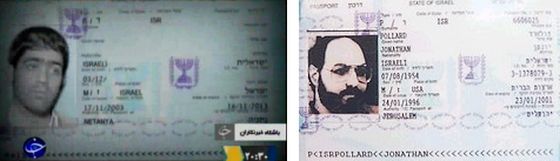
Azarmehr points to two rather glaring discrepancies in the fake Israeli passport that the Iranian hitman, Jamali Fashi, was supposedly provided by Mossad. The photo of Jamali would have been taken before the passport was issued in 2003 at which time Jamali would only have been 15, but he appears older. Also, he is not posing in the standard face-forward position used universally for passport photos. But then commenters on Azarmehr’s blog noticed an even more glaring problem: the passport contains exactly the same information as can be found on an image of an Israeli passport appearing on Wikipedia.

What others have not noted is perhaps the most basic problem with Jamali’s Israeli passport: it shows no name nor birth year!

Whatever Mossad is or is not capable of doing, I have no doubt that they could provide an agent with a flawless passport. (As for why they would be handing out such passports is a question I’ll come back to in a moment.)

So, whoever made Jamali’s Israeli passport it seems they were more likely serving the Iranian rather than the Israeli government and their objective was not to construct a physical document that could be shown to an immigration official but instead a document that could appear on TV. For that purpose, Wikipedia might have appeared to provide enough information.

Even so, the passport-maker seems to have been singularly lacking in imagination. Where Wikipedia redacted personally identifying information from an image of what is obviously a real Israeli passport, in the fake passport, instead of filling in the gaps the passport-maker just left these spaces blank — hence no surname or given name.

However, there was one blank he had to fill: the photo — and here’s where he seems to have been inspired by a creative impulse. How should Jamali pose? Just like another Israeli spy, Jonathan Pollard. Perhaps Israel has a special format it reserves for passports issued to spies, the counterfeiter thought.
OK. Enough of this blogger’s attention to detail.

There is a more basic question: why in heaven’s name would Mossad give an Iranian agent an Israeli passport? An Israeli passport is like the kiss of death and thus Mossad goes to great lengths to disguise the Israeli identity of its own operatives. So while the Israelis move around under assumed non-Israeli identity, they give their Iranian assassin an Israeli passport as though they wanted to pin a target on his back?

There is of course the much more obvious explanation: the Jamali-Mossad story was a dumb Iranian plot designed to cover up their own assassination of one of their own nuclear scientists.

But why is this story emerging now? Jamali’s confession was used by Iranian authorities to demonstrate that the dissident People’s Mujahedin of Iran or MEK have been collaborating with Israel in conducting assassinations inside Iran. The MEK, designated a terrorist organization by the U.S. government, is attempting to get this label removed. For that purpose there’s little doubt that the Jamali story, as it is now being retold, could serve as a useful element in the MEK’s PR campaign.

There is also another question: does this story have some relevance to the current negotiations between Iran and the P5 Plus One? Perhaps.

Can a government that’s willing to assassinate its own nuclear scientists operate a viable nuclear program whether that be for peaceful or military purpose?

As Jacques E.C. Hymans has noted, authoritarian governance and the challenges of scientific development do not work well together. Fear shackles creativity. That Iran’s nuclear program has advanced at a snail’s pace might not simply be a reflection of caution among Iran’s leaders but rather that the scientific community upon whose efforts progress depends has become so risk-averse that they are incapable of moving any faster. For those who fear the creation of an Iranian bomb, probably the smartest thing to do would be to do nothing.

Facebooktwittermail

Warrantless spying fight

Glenn Greenwald writes: In 2006, The New York Times‘ James Risen and Eric Lichtblau won the Pulitzer Prize for their December, 2005 article revealing that the Bush administration was eavesdropping on the electronic communications of Americans without the warrants required by the FISA law (headline: “Officials Say U.S. Wiretaps Exceeded Law”). Even though multiple federal judges eventually ruled the program illegal, that scandal generated no accountability of any kind for two reasons: (1) federal courts ultimately accepted the arguments of the Bush and Obama DOJs that the legality of Bush’s domestic spying program should not be judicially reviewed; and (2) the Democratic-led Congress, in 2008, enacted the Bush-designed FISA Amendments Act, which not only retroactively immunized the nation’s telecom giants for their illegal participation in that spying program and thus terminated pending lawsuits, but worse, also legalized the vast bulk of the Bush spying program by vesting vast new powers in the U.S. Government to eavesdrop without warrants (in his memoir, President Bush gleefully recounted that the 2008 eavesdropping bill supported by the Democrats gave him more than he ever expected).

It was then-Sen. Obama’s vote in favor of the FISA Amendments Act that caused the first serious Election Year rift between him and his own supporters. Obama’s vote in favor of the bill was so controversial for two independent reasons: (1) when he was seeking the Democratic nomination only a few months earlier and needed the support of the progressive base, Obama unequivocally vowed to filibuster “any bill that includes retroactive immunity for telecommunications companies,” only to turn around once he had secured the nomination and not only vote against a filibuster of that bill but then vote in favor of the bill itself; and (2) the bill itself legalized vast new powers of warrantless eavesdropping: powers which the Democratic Party (and Obama) had spent years denouncing (as Yale Law Professor Jack Balkin put it at the time: “Through the FISA Amendments Act of 2008, Congress has legitimated many of the same things people are now complaining about”). When Obama announced his reversal, his defenders insisted he was only doing it so that he could win the election and then use his power as President to stop warrantless eavesdropping abuses, while Obama himself claimed he voted for the FISA bill “with the firm intention — once I’m sworn in as President — to have my Attorney General conduct a comprehensive review of all our surveillance programs, and to make further recommendations on any steps needed to preserve civil liberties and to prevent executive branch abuse in the future.”

The only positive aspect of the FISA Amendments Act of 2008 was that Congress imposed a four-year sunset provision on the new warrantless eavesdropping powers it authorized. That sunset provision is set to expire and — surprise, surprise — the Obama administration, just like it did for the Patriot Act, is demanding its full-scale renewal without a single change or reform: [Continue reading…]

Facebooktwittermail

Breakdown or breakthrough? Iran nuclear talks hit a snag

Tony Karon writes: Nobody was expecting a breakthrough at Wednesday’s nuclear talks in Baghdad, but most weren’t expecting a breakdown, either. Indeed, predictions were that Iran and the P5+1 (the U.S., Britain, France, Germany, Russia and China) would engage on more detailed proposals for concrete, reciprocal confidence building measures, and then adjourn by day’s end having scheduled a new round of talks in a few weeks. But in what may be an exercise in brinkmanship, or a sign of an impending crisis, Iranian officials balked at the offer from the Western powers. ”The points of agreement are not yet sufficient for another round,” an anonymous Iranian official at the talks told AFP.

Iran’s state media, whose upbeat spin on the talks in recent weeks had many analysts concluding that Tehran was preparing its public for a deal, slammed what it called the “outdated” and “unbalanced” proposals by the Western powers in Baghdad. At Iranian insistence, Thursday will see a second day of talks in Baghdad, and the parties remained locked in negotiations until midnight. That looked like a tactic to create a mini crisis on the key sticking point in the talks: the question of whether Iran will be granted any relief from escalating Western sanctions if it agrees to the immediate confidence-building steps demanded by the P5+1. [Continue reading…]

Facebooktwittermail

Not all Israeli citizens are equal

Yousef Munayyer writes: I’m a Palestinian who was born in the Israeli town of Lod, and thus I am an Israeli citizen. My wife is not; she is a Palestinian from Nablus in the Israeli-occupied West Bank. Despite our towns being just 30 miles apart, we met almost 6,000 miles away in Massachusetts, where we attended neighboring colleges.

A series of walls, checkpoints, settlements and soldiers fill the 30-mile gap between our hometowns, making it more likely for us to have met on the other side of the planet than in our own backyard.

Never is this reality more profound than on our trips home from our current residence outside Washington.

Tel Aviv’s Ben-Gurion International Airport is on the outskirts of Lod (Lydda in Arabic), but because my wife has a Palestinian ID, she cannot fly there; she is relegated to flying to Amman, Jordan. If we plan a trip together — an enjoyable task for most couples — we must prepare for a logistical nightmare that reminds us of our profound inequality before the law at every turn.

Even if we fly together to Amman, we are forced to take different bridges, two hours apart, and endure often humiliating waiting and questioning just to cross into Israel and the West Bank. The laws conspire to separate us.

If we lived in the region, I would have to forgo my residency, since Israeli law prevents my wife from living with me in Israel. This is to prevent what Prime Minister Benjamin Netanyahu once referred to as “demographic spillover.” Additional Palestinian babies in Israel are considered “demographic threats” by a state constantly battling to keep a Jewish majority. (Of course, Israelis who marry Americans or any non-Palestinian foreigners are not subjected to this treatment.)

Last week marked Israel’s 64th year of independence; it is also when Palestinians commemorate the Nakba, or “catastrophe,” during which many of Palestine’s native inhabitants were turned into refugees.

In 1948, the Israeli brigade commander Yitzhak Rabin helped expel Lydda’s Palestinian population. Some 19,000 of the town’s 20,000 native Palestinian inhabitants were forced out. My grandparents were among the 1,000 to remain.

They were fortunate to become only internally displaced and not refugees. Years later my grandfather was able to buy back his own home — a cruel absurdity, but a better fate than that imposed on most of his neighbors, who were never permitted to re-establish their lives in their hometowns.

Three decades later, in October 1979, this newspaper reported that Israel barred Rabin from detailing in his memoir what he conceded was the “expulsion” of the “civilian population of Lod and Ramle, numbering some 50,000.” Rabin, who by then had served as prime minister, sought to describe how “it was essential to drive the inhabitants out.”

Two generations after the Nakba, the effect of discriminatory Israeli policies still reverberates. Israel still seeks to safeguard its image by claiming to be a bastion of democracy that treats its Palestinian citizens well, all the while continuing illiberal policies that target this very population. There is a long history of such discrimination.

It’s worth reading in full the 1979 report by David Shipler that Munayyer cites. The fact that Rabin’s account of Jews driving Palestinians from their homes at gun point was censored could be assumed to indicate that it was an account of unusual candor. But even if was such an account it was also an example of what is called in Hebrew yorim u’vochimwe shoot and we cry.

Rabin writes: “Great suffering was inflicted upon the men taking part in the eviction action. Soldiers of the Yiftach Brigade included youth-movement graduates, who had been inculcated with values such as international brotherhood and humaneness. The eviction went beyond the concepts they were used to.

“There were some fellows who refused to take part in the expulsion action. Prolonged propaganda activities were required after the action, to remove the bitterness of these youth-movement groups, and explain why we were obliged to undertake such a harsh and cruel action.”

At a time when Israeli leaders and Israel’s supporters frequently bemoan the fact that Israel is subject to harsh criticism, we are told that Israel is unfairly being singled out in a world where injustice is pervasive. Even so, there truly is something unique about the sentiment that Rabin and others describe.

Their message to the Palestinians is this: when you hurt, we empathize with your suffering so much that it hurts us too. We are not guilty of unfeeling brutality. Our brutality is garnished with sensitivity. Indeed, we are so sensitive that it hurts us deeply when onlookers who don’t carry the same moral burden that we do, judge us harshly. That is perhaps the greatest injustice.

Contrast this with the brutality of those who shoot and don’t cry. Ostensibly that is a worse brutality because it is bereft of empathy. Sometimes so, but, I would argue, this unfeeling brutality is unfeeling for a reason: callousness is a way of protecting those who inflict pain from the power of their own conscience. They know that if they were to allow themselves to empathize with their victims they would cry and stop shooting.

What those who shoot and cry are expressing is a narcissistic form of brutality. Empathy, instead of serving as an antidote to cruelty makes cruelty easier. And this empathy is in truth no such thing; it is a form of vanity — a conviction of those who refuse to doubt their own virtue.

Facebooktwittermail

Long-term uncertainty remains in nuclear talks with Iran

Tony Karon writes: Anyone banking on a big-win breakthrough in Wednesday’s nuclear talks with Iran will likely find themselves in the same boat as investors who bet on an instant surge in the Facebook stock price last week. If there’s value to be found in nuclear negotiations with Iran, then — like an investment in Facebook — it’s likely to emerge over time. And in both cases, even the long-term outcome remains uncertain.

After weeks of upbeat assessments, Western officials seemed to tamp down expectations ahead of the meeting that got underway in Baghdad on Wednesday. “If we talk substantively on elements of a deal and agree to meet again in three weeks, Baghdad will have been a success,” a senior U.S. official told al-Monitor on Monday. The spin ahead of the talks in recent weeks has been positive — almost too positive for diplomats, who naturally prefer diminished expectations. At home, Iran’s leaders are proclaiming a great victory in the willingness of Western powers to negotiate while Iran continues to enrich uranium, suggesting that they’re preparing their public for a compromised deal that will be sold as a great victory. The Western narrative paints Iran’s willingness to negotiate as a consequence of ever tightening economic sanctions, implying that such pressure must be maintained to curb its nuclear ambitions.

There are some positive signs: Sunday’s talks in Tehran between IAEA chief Yukiya Amano and Iran’s nuclear negotiator Saeed Jalili appear to have yielded an in-principle agreement, not yet inked or finalized, to expand the nuclear-watchdog agency’s access to sensitive sites in Iran. Amano, who has taken a tough line in dealing with Iran, was upbeat, expecting a signed agreement “quite soon.” But the IAEA talks are the undercard to the negotiations between Iran and the P5+1 (the U.S., France, Britain, Germany, Russia and China). Even if they improve the atmosphere for the Baghdad meeting, a breakdown between Iran and the P5+1 would likely imperil any progress made by the IAEA.

Facebooktwittermail

Why nuclear weapons programs often fail on their own — and why Iran’s might, too

It is widely assumed that the only things standing in the way of Iran developing nuclear weapons are either external pressures (sanctions, sabotage, assassinations, the threat of military strikes, and the constraints imposed by the NPT), or that Iran has yet to decide to apply its nuclear know-how to the creation of weapons.

Jacques E.C. Hymans suggests a third obstacle which is an authoritarian political culture that undermines the pursuit of such a goal.

Nuclear research and development organizations depend heavily on intense commitment, creative thinking, and a shared spirit of cooperation among large numbers of highly educated scientific and technical workers. To elicit this positive behavior, management needs to respect their professional autonomy and facilitate their efforts, and not simply order them around. Respect for professional autonomy was instrumental to the brilliant successes of the earliest nuclear weapons projects. Even in Stalin’s Soviet Union, as the historian David Holloway has written, “it is striking how the apparatus of the police state fused with the physics community to build the bomb. . . . [The physics community’s] autonomy was not destroyed by the creation of the nuclear project. It continued to exist within the administrative system that was set up to manage the project.”

By contrast, most rulers of recent would-be nuclear states have tended to rely on a coercive, authoritarian management approach to advance their quest for the bomb, using appeals to scientists’ greed and fear as the primary motivators. That coercive approach is a major mistake, because it produces a sense of alienation in the workers by removing their sense of professionalism. As a result, nuclear programs lose their way. Moreover, underneath these bad management choices lie bad management cultures. In developing states with inadequate civil service protections, every decision tends to become politicized, and state bureaucrats quickly learn to keep their heads down. Not even the highly technical matters faced by nuclear scientific and technical workers are safe from meddling politicians. The result is precisely the reverse of what the politicians intend: not heightened efficiency but rather a mixture of bureaucratic sloth, corruption, and endless blame shifting.

Although it is difficult to measure the quality of state institutions precisely, the historical record strongly indicates that the more a state has conformed to the professional management culture generally found in developed states, the less time it has needed to get its first bomb and the lower its chances of failure. Conversely, the more a state has conformed to the authoritarian management culture typically found in developing states, the more time it has needed to get its first bomb and the higher its chances of failure.

Facebooktwittermail

How did genocide denial become a doctrine of the internationalist left?

George Monbiot writes: The term genocide conjures up attempts to kill an entire people: the German slaughter of the Jews or the Herero, the Turkish slaughter of the Armenians, the near-extermination of the Native Americans. But the identity of the crime does not depend on its scale or success: genocide means “acts committed with intent to destroy, in whole or in part, a national, ethnical, racial or religious group.”

Though, in 1995, the women and children of Srebrenica were first removed from the killing grounds by Bosnian Serb troops, though the 8,000 men and boys they killed were a small proportion of the Bosnian Muslim population, it meets the definition. So the trial of Ratko Mladic, the troops’ commander, which began last week, matters. Whatever one thinks of the even-handedness of international law, and though it remains true that men who commissioned or caused the killing of greater numbers of people (George Bush and Tony Blair for example) have not been brought to justice and are unlikely to be, every prosecution of this kind makes the world a better place.

So attempts to downplay or dismiss this crime matter too, especially when they emerge from the unlikely setting of the internationalist left. I’m using this column to pursue a battle which might be hopeless and which many of you might regard as obscure. Perhaps I have become obsessed, but it seems to me to be necessary. Tacitly on trial beside Mladic in the Hague is a set of ideas: in my view the left’s most disturbing case of denial and doublethink since the widespread refusal to accept that Stalin had engineered a famine in the Ukraine.

I first raised this issue a year ago, when I sharply criticised a book by two luminaries of the left, Edward Herman and David Peterson. The Politics of Genocide seeks to downplay or dismiss both the massacre of Bosniaks at Srebrenica in 1995 and the genocide of Tutsis committed by Hutu militias in Rwanda in 1994. Their claims are extraordinary: that the cause of death of the “vast majority” of the Bosniaks at Srebrenica remains “undetermined”; that rather than 800,000 or more Tutsis being killed by Hutu militias in Rwanda, “the great majority of deaths were Hutu, with some estimates as high as two million”, while members of the Hutus’ Interahamwe militia were the “actual victims” of genocide.

What has changed since then is that the movement to which I thought I belonged has closed ranks: against attempts to challenge this revisionism, against the facts, in effect against the victims of these genocides. My attempts to pursue this question number among the most dispiriting experiences of my working life. [Continue reading…]

Facebooktwittermail

America’s permanent state of war

Peter Maass writes: The phrase “war on terror” is rarely heard these days. Our fight in Iraq ended last year with the pullout of the remaining troops. Combat forces are set to be withdrawn from Afghanistan in 2014, and their fade-away has been highlighted by the fact that more private contractors are getting killed in the country than GIs. President Obama has declared, with apparent justification, that the end of our post-9/11 wars is near. Quite soon, Dover Air Force Base, where the fallen are brought home, will no longer have its grim intake of Americans who have seen the true end of war. The flow of flag-draped coffins ceased long ago; although Obama overturned a Bush-era ban on photos of them, they have been infrequently shown in newspapers or even on the web. No one cares to look.

That does not mean we’re done with war, however. There is talk of attacking Iran and Syria; American forces all but led the NATO assault in Libya, drone strikes are taking place from Pakistan to Somalia and Yemen, prisoners continue to be held at Guantánamo Bay, a shadowy game of cyber-war rages around the globe and the US government, in the name of national security, is prosecuting more whistleblowers than ever before while accumulating (or trying to accumulate) wide powers to conduct domestic surveillance of computers and cellphones. The paradox is that although war is waning in the classic configuration of brigades fighting an enemy on foreign shores, we are not rid of its specter, burdens, threats, costs and restrictions. What should we make of wartime that has the appearance of peacetime?

Mary Dudziak’s new book, War Time: An Idea, Its History, Its Consequences, is a crucial document. Dudziak, a legal historian at the University of Southern California, argues that we are experiencing “not a time without war, but instead a time in which war does not bother everyday Americans.” Her smooth foray into legal and political history reveals that in not just the past decade but the past century, wartime has become a more or less permanent feature of the American experience, though we fail to recognize it. She doesn’t say so explicitly, but we are experiencing a reverse Orwellian situation, in which the state, rather than elevating war to perpetuate itself, obscures war to perpetuate itself.

Dudziak assembles an intellectual Rubik’s Cube, playing with ideas of time, law, killing and politics, and arranging them into a pattern that all but eliminates the distinctions we long assumed to have existed between war and peace. “We tend to believe that there are two kinds of time, wartime and peacetime, and history consists of moving from one kind of time to the next,” she writes. “Built into the very essence of our idea of wartime is the assumption that war is temporary…. When we look at the full time line of American military conflicts, however, including the ‘small wars’ and the so-called forgotten wars, there are not many years of peacetime. This shows us that war is not an exception to normal peacetime, but instead an enduring condition.” [Continue reading…]

Facebooktwittermail

Obama’s Afghanistan problem: Neither Karzai nor the Taliban like the ‘reconciliation’ script

Tony Karon writes: President Barack Obama huddled with President Hamid Karzai in Chicago on Sunday, urging Afghanistan’s leader to accelerate negotiations with the Taliban over a political solution to the longest war in America’s history. But the prospect for Karzai negotiating successfully with the insurgents is clouded by a question raised by Josef Stalin, on the eve of World War II, in response to the suggestion that he offer concessions to the Pope: “How many divisions does he have?” The Taliban now ask the same question about Karzai. And should the Afghan leader also ask himself the question, he might reach a similarly dispiriting conclusion. Karzai’s independent power base is minimal, as is his ability to influence the outcome of his country’s civil war absent direct U.S. involvement. And that gives neither Karzai nor the Taliban much incentive to cut a deal with the other.

While acknowledging “hard days ahead,” Obama was painting a picture of the “Afghan war as we understand it (being) over” after the U.S. combat role ends in 2014 and Afghanistan entering a “transformational decade of peace and stability and development.” But his commander on the ground offered a more chilling assessment on Sunday. ”I don’t want to, again, understate the challenge that we have ahead of us,” Gen. John Allen, commander of NATO’s ISAF mission in Afghanistan, told a media briefing on the sidelines of the NATO summit in Chicago on Sunday. “The Taliban is still a resilient and capable opponent in the battle space. There’s no end of combat before the end of 2014. And, in fact, the Taliban will oppose the ANSF (Afghan National Security Forces) after 2014.”

In other words, the war won’t end with NATO withdrawal.

It’s the realization that the Taliban will remain very much alive and kicking after NATO leaves that has prompted Obama to press upon Karzai the need to engage with greater urgency in reconciliation talks with the Taliban — and also to implement electoral reforms to diminish corruption and make elections more transparent. But Karzai is a survivor by instinct, and neither electoral reform nor serious talks with the Taliban do much to enhance his prospects of political survival. [Continue reading…]

Facebooktwittermail