



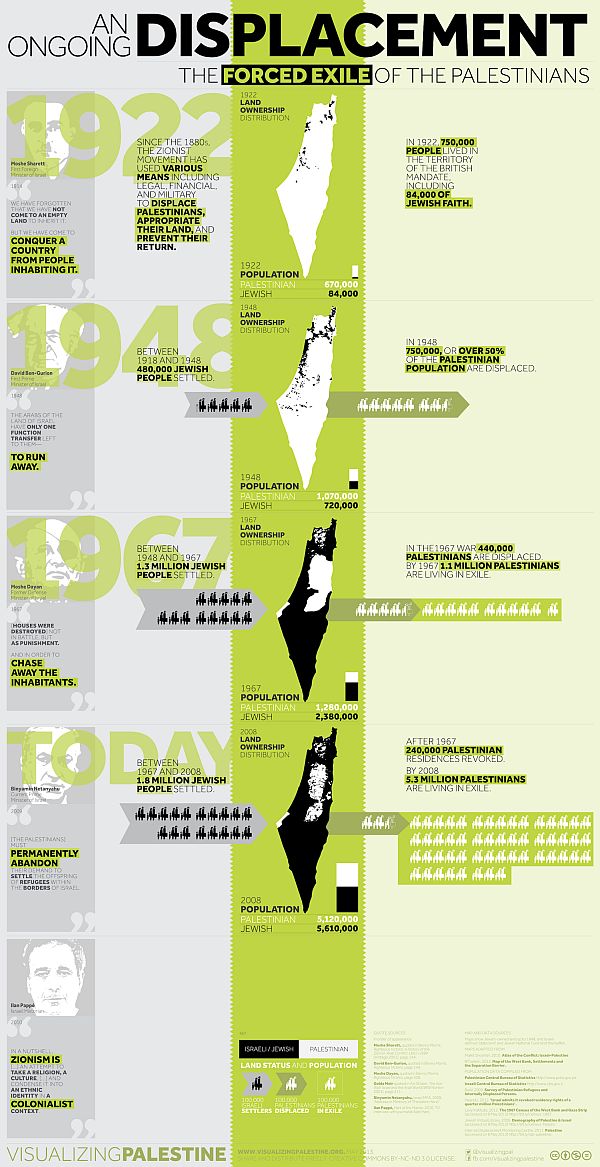
Click on image below to enlarge:

Asmaa al-Ghoul writes: “Is it easier to get a visa to Belgium or Sweden? How do I apply for asylum? Should I tear up my passport or hide it? Will the iris scan be conducted in the first country in which I arrive or the country in which I will seek asylum?” These questions, among others, are what busy the mind of 23-year-old Mahmoud Yahya these days.
Only a year ago Mahmoud was optimistic for change, and two years ago in 2011, Mahmoud took to the streets to effect that change. He says he felt like a giant then, capable of anything.
Mahmoud told Al-Monitor, “With every passing year, my despair increases. When I recall what I was like a year ago, I remember the hope I had that our hate-filled political and social reality could change. But when I look at how I was at the beginning of 2011, I cannot believe how convinced I was that I was Superman, and the same goes for how I saw all the other young people. The Arab revolutions had truly changed us.”
He added, “For the first time we felt like we had some agency. We went out to the streets on Dec. 5, 2010, and we confronted Central Security of the deposed government without blinking an eye. We broke through our collective fear and took to the streets protesting the closure of the Sharek Youth Forum. We took to the streets again in 2011 during the Egyptian and Syrian revolutions and were imprisoned and beaten, which also happened to our counterparts in the West Bank. Finally we had our own revolution on Mar. 15, 2011. Our defining chant was, “The people want to end the division!” They beat us, slandered us, broke our limbs, smeared our reputation and blackmailed us, which culminated in the killing of our Italian comrade Vittorio by unknown assailants. From that moment on, sadness and frustration would silence us forever.”
Mahmoud gazed at the ceiling, eyes welling up, “We believe in our strength, but we were romantic. When I saw all of the March 15 activists emigrating and traveling away from Gaza, I knew that we had failed to bring about our Palestinian Spring, so I decided to travel as well.” [Continue reading…]
The Guardian reports: The Palestinian president, Mahmoud Abbas, is facing widespread condemnation and anger in the Palestinian territories and abroad after he publicly waived his right to return to live in the town from which his family was forced to flee in 1948, a repudiation of huge significance for Palestinian refugees.
After his image was burned in refugee camps in Gaza, Abbas rejected accusations that he had conceded one of the most emotional and visceral issues on the Palestinian agenda, the demand by millions of refugees to return to their former homes in what is now Israel.
He insisted that comments made in an interview with an Israeli television channel were selectively quoted and the remarks were his personal stance, rather than a change of policy.
Abbas told Channel 2 he accepted he had no right to live in Safed, the town of his birth, from which his family was forced to flee in 1948 when Abbas was 13.
“I visited Safed before once, he said. “But I want to see Safed. It’s my right to see it, but not to live there.”
Referring to the internationally-recognised pre-1967 border, he went on: “Palestine now for me is ’67 borders, with East Jerusalem as its capital. This is now and forever … This is Palestine for me. I am a refugee, but I am living in Ramallah. I believe that the West Bank and Gaza is Palestine and the other parts are Israel.”
The comments sparked protests in Gaza, where people in refugee camps burned images of the Palestinian president. Abbas was denounced on Twitter by pro-Palestinian activists.
Ismail Haniyeh, the Hamas ruler in Gaza, said the issue was not about Abbas’s right to return to Safed but “the rights of 6 million Palestinians”.
Reuters reports: Palestinians in the West Bank go to the polls on Saturday in long-delayed municipal elections that have already highlighted deep divisions in the occupied territory and stoked complaints about a lack of leadership.
The October 20 ballot will hold up a cracked mirror to a political landscape clouded by financial crises, failure to reconcile the major Palestinian factions and stalemate in peacemaking efforts with Israel.
The powerful Islamist group Hamas is boycotting the election and preventing voting from taking place in the Gaza Strip, leaving the field largely clear for the mainstream Fatah party in the race to take charge of 94 West Bank towns and villages.
But, as has happened so often in the past, President Mahmoud Abbas’s nationalist Fatah movement has failed to present a united face, with party rivals presenting their own candidates.
Roger Waters, newest Jury member of the Russell Tribunal on Palestine, explains why he supports the initiative.
Jillian Kestler-DAmours reports: For Palestinian farmer Esam Foqaha, agriculture is more than a profession, it’s a way of life. “Farming is not only a job. It’s our lifestyle and we will do it forever,” Foqaha said.
Foqaha lives in Ein Al-Beida, a Palestinian agricultural village located in the West Bank’s northern Jordan Valley area. With his three brothers, he cultivates about 300 dunams (0.3km) of agricultural land. Most of his produce – tomatoes, cucumbers, eggplant and other vegetables – is marketed to Jenin, Nablus and other major Palestinian cities in the West Bank.
A member of the Ein Al-Beida Agricultural Union, which represents 70 farmers in the area, Foqaha said a combination of harsh Israeli restrictions on Palestinian farmers, Israel’s near total control of resources, and neglect on the part of Palestinian authorities has made Palestinian agriculture in the West Bank almost impossible.
“Israeli restrictions have a political purpose: to increase the economic reliance of the people on Israel. Some will leave the land and work in settlements instead of farming. They want people to leave,” Foqaha said.
Foqaha’s case isn’t unique. Instead, according to human rights groups, it represents a growing inability among Palestinian farmers to engage in sustainable agriculture in the occupied West Bank. [Continue reading…]
David Shulman writes: In 1949, shortly after Israel’s War of Independence, S. Yizhar—the doyen of modern Hebrew prose writers—published a story that became an instant classic. “Khirbet Khizeh” is a fictionalized account of the destruction of a Palestinian village and the expulsion of all its inhabitants by Israeli soldiers in the course of the war. The narrator, a soldier in the unit that carries out the order, is sickened by what is being done to the innocent villagers. Here he is in Nicholas de Lange and Yaacob Dweck’s translation (Ibis Publications, 2008):
I felt a terrifying collapse inside me. I had a single, set idea, like a hammered nail, that I could never be reconciled to anything, so long as the tears of a weeping child still glistened as he walked along with his mother, who furiously fought back her soundless tears, on his way into exile, bearing with him a roar of injustice and such a scream that—it was impossible that no one in the world would gather that scream in when the moment came….
Still, the narrator goes along with the expulsion without overt protest. Yizhar himself was an intelligence officer during the war; he describes events he may well have seen himself: “We came, we shot, we burned; we blew up, expelled, drove out, and sent into exile. What in God’s name were we doing in this place?”
Somewhat surprisingly, this story was taught for many years in Israeli secondary schools as part of the modern Hebrew canon; even today it is still on the books as an optional text for the matriculation exam (unless the Netanyahu government has secretly removed it). The story embodies the conscience of Israel at the moment of the state’s formation. It also gives voice to a much older Jewish tradition of moral protest and the struggle for social justice. When I was growing up in the Midwest in the 1950s and 1960s, I mistakenly thought that this tradition was at the core of what it meant to be Jewish.
Sixty-three years have passed since Yizhar wrote “Khirbet Khizeh.” I wish I could say that what he described was an ugly exception and that such actions don’t happen any more. It is not, and they do. This week I find myself in Susya, in the South Hebron hills, near the southern corner of the West Bank. Like their counterparts in many other Palestinian villages, Susya’s approximately 300 inhabitants are impoverished, badly scarred, terrified, and defenseless. The week before last the officers of the Civil Administration, that is, the Israeli occupation authority, turned up with new demolition orders in their hands; these orders apply to nearly all the standing structures in the village — mostly tents, ramshackle huts, sheep-pens, latrines, and the wind-and-sun-powered turbine that Israeli activists put up some three years back to generate electricity on this stony, thirsty hilltop in the desert. If the orders are carried out — this could happen at any moment — then it means the nearly complete destruction of an entire village and the violent expulsion of its people. They will be, quite literally, cast into the desert. [Continue reading…]
Mosab Qasho writes: Anyone following the Palestinian struggle will have heard about Mahmoud Sarsak, the imprisoned Palestinian footballer who this week ended a hunger strike of over three months. Meanwhile, the Palestinian Authority (PA) and the Palestine Liberation Organization (PLO) have been publicizing their upcoming meeting with the head of the Israeli Kadima party, Shaul Mofaz, leaving a striking absence of any official comment on Sarsak’s situation.
It seems very bizarre that the PA and PLO ignored one of their national heroes, a rising star in the society’s most popular sport, who was on the brink of death. He was the easiest person to defend. He has never been involved in politics, is not a member of a political party, and had all the necessary Israel-issued permits. He was one of the youngest people to make the Palestinian National soccer team. Above all, he has not been charged or convicted by Israel of any wrongdoing, although Israel held him for three years.
Even considering the PA and the PLO more cynically, any politician could have seen a man in such a situation as a gift from the political gods. Imagine the affirmation they would have received if they negotiated his release. Imagine the photo-ops of officials visiting the soccer team Sarsak was supposed to join when he was seized by Israel. They could have even organized children’s soccer games in his honor. Yet these authorities didn’t not take advantage of this opportunity, neither for selfless nor for self-serving gains.
According to his mother, Sarsak remains in Marash clinic in the Ramle prison, refused access to a proper civilian hospital. He has been refused family visits, which was a condition that Israel had agreed to in previous deals with other hunger strikers. Instead, he was allowed a three-minute phone call with his mother. His eventual release was negotiated so late that Sarsak easily could have died before agreeing to anything.
Most importantly, if Israel decides that he incited other prisoners to go on hunger strike or does any political organizing after his release, he will be arrested again. Agreeing to these terms indicates that the lawyers who negotiated his release, who are paid by the Palestinian Authority, seem to be more interested ending the hunger strikes rather than ameliorating the prisoners’ conditions. Instead of fighting for the rights of their clients, these lawyers appeared to pressure them into accepting whatever deal Israel presents. [Continue reading…]
Areej Sabbagh-Khoury: “Politics is the continuation of war by other means,” Michel Foucault wrote in “Society Must Be Defended” (2003), reversing Clausewitz’s well-worn dictum. Foucault’s point is that there is a continuous battle of sorts that takes place in times of peace, and the public space that hosts civil society, with all its depth, substance, and methods of influence, is the ultimate field of battle. Foucault asserts the importance of replacing the juridical discourse with the discourse of war. According to him, the law and official political agreements are imbued with violence and the modern ”achievements” of establishing governmental political institutions only serve to obscure a continuous infrastructure of war that is inherent to such institutions. Utilizing this interpretation, I hope to show how the war waged on Palestinians in Israel rages on.
The 1948 war has not ended for Palestinians from within the borders of Israel established by the 1949 armistice (the so-called Green Line). The establishment of Israel and the cease-fire agreements with neighboring Arab countries set the stage for “the continuation of war by other means” through the imposition of Israeli law over the Palestinian population. This war that started with Zionist settlement in the pre-state era lies within the system of Israeli citizenship.
Following the establishment of the Israeli state, this war was waged through the enactment of legislation to enable the conquest of as much Palestinian land as possible; attempts to forbid Palestinian internally displaced persons (IDPs) from returning to their homes even as they remained in Israel; and the deportation of residents of some villages even after the armistice. One such case of the latter is the villages of Iqrit and Biram. This war has been quite explicit: from 1948-66, Palestinian-populated areas were governed through a military government inside Israel. After the military government ended, the implementation of policies discriminating against Palestinian citizens in the political, social, and economic fields continued. Among other Israeli ambitions, this “war” sought the Judaization of entirely or predominantly Arab areas. Since 2000, following the start of the second intifada, these practices have only escalated, and there has been an unprecedented pursuit of aggressive legislation targeting Palestinian citizens of Israel. [Continue reading…]