Category Archives: Iran

Unlike Iran, Israel won’t face sanctions

Zvi Bar’el writes: U.S. Secretary of State Hillary Clinton got it badly wrong: Israel isn’t Iran, and comparing it to Iran – as she did during her remarks at a closed session of the Saban Forum where she expressed shock over the treatment of women in Israel – demonstrates either ignorance or malice.

First, Iran isn’t considered a democracy: It openly and proudly adopted a system of government in which a religious scholar is the supreme leader. Israel, in contrast, wears a facade of democracy even as a select group of religious scholars who are only ostensibly committed to the law dictate the state’s way of life.

Israel isn’t Iran. Iran officially and openly separates unmarried men and women in public venues. In Israel, such segregation is against the law, but in practice, it is alive and well and sneering at the law. In the army, on buses that serve the ultra-Orthodox community and in state religious schools financed by the government, segregation flourishes.

Israel isn’t Iran. In Iran, human rights organizations can receive assistance from a defined list of international organizations and institutions, “with the approval of the relevant government ministers,” as Iranian law puts it. In Israel, proposed legislation would bar some organizations from receiving any money at all from foreign governments, while others would have to run the gauntlet of a Knesset hearing to get an exemption from, or at least a reduction on, the 45 percent tax.

Israel isn’t Iran. In Iran, the supreme leader appoints the head of the judicial system. In Israel, the supreme leader uses every trick in the book to try to shape the Supreme Court’s composition to his liking without soiling the facade of democracy.

This is a difference of vast proportions. Iran doesn’t put on sanctimonious airs, doesn’t cluck its tongue at others, doesn’t disguise what it is and doesn’t try to sell its system of government to the world as “an island of democracy.”

Facebooktwittermail

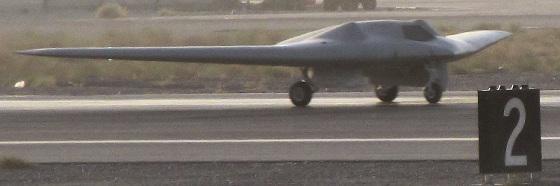
Iran shows off captured RQ-170 Sentinel drone

After it became known a few days ago that Iran had captured a CIA RQ-170 surveillance drone, this was the assessment of one of Washington’s most frequently quoted defense technology experts:

Loren Thompson

“[W]hat the Iranians have is a pile of wreckage — many small and damaged pieces from which they could glean little in the way of technological insights,” said Loren Thompson, defense policy analyst for the Lexington Institute in Arlington, Virginia, earlier this week.

Even now that Iran has released video of the captured drone, the Los Angeles Times isn’t ready to assert that it’s the real thing. “Iran shows off alleged captured U.S. drone,” (my emphasis) says their headline.

Alleged? I think it’s already fair to assume that this is the real thing — and we’re getting a much closer view of it than the CIA ever wished.

U.S. officials (and journalists dutifully repeating what they have been told) have insisted that this unmanned aircraft “crashed”.

All I can say is this: however this thing came down it had a pretty soft landing. It doesn’t look like it was shot down — as Iran originally claimed. But neither does it look like it completely lost control.

Did it gently glide down onto the perfectly smooth surface of a conveniently located dry salt lake? Maybe. Or — even though all the experts insist this is highly improbable — did the Iranians somehow manage to conduct a remote hijacking?

Facebooktwittermail

War on Iran has already begun. Act before it threatens all of us

Seumas Milne writes: They don’t give up. After a decade of blood-drenched failure in Afghanistan and Iraq, violent destabilisation of Pakistan and Yemen, the devastation of Lebanon and slaughter in Libya, you might hope the US and its friends had had their fill of invasion and intervention in the Muslim world.

It seems not. For months the evidence has been growing that a US-Israeli stealth war against Iran has already begun, backed by Britain and France. Covert support for armed opposition groups has spread into a campaign of assassinations of Iranian scientists, cyber warfare, attacks on military and missile installations, and the killing of an Iranian general, among others.

The attacks are not directly acknowledged, but accompanied by intelligence-steered nods and winks as the media are fed a stream of hostile tales – the most outlandish so far being an alleged Iranian plot to kill the Saudi ambassador to the US – and the western powers ratchet up pressure for yet more sanctions over Iran’s nuclear programme.

The British government’s decision to take the lead in imposing sanctions on all Iranian banks and pressing for an EU boycott of Iranian oil triggered the trashing of its embassy in Tehran by demonstrators last week and subsequent expulsion of Iranian diplomats from London.

It’s a taste of how the conflict can quickly escalate, as was the downing of a US spyplane over Iranian territory at the weekend. What one Israeli official has called a “new kind of war” has the potential to become a much more old-fashioned one that would threaten us all.

Facebooktwittermail

U.S. made covert plan to retrieve Iran drone

The Wall Street Journal reports: U.S. officials considered conducting a covert mission inside Iran to retrieve or destroy a stealth drone that crashed late last week, but ultimately concluded such a secret operation wasn’t worth the risk of provoking a more explosive clash with Tehran, a U.S. official said…

The officials considered various options for retrieving the wreckage of the RQ-170 drone.

Under one plan, a team would be sent to retrieve the aircraft. U.S. officials considered both sending in a team of American commandos based in Afghanistan as well as using allied agents inside Iran to hunt down the downed aircraft.

Another option would have had a team sneak in to blow up the remaining pieces of the drone. A third option would have been to destroy the wreckage with an airstrike.

However, the officials worried that any option for retrieving or destroying the drone would have risked discovery by Iran.

“No one warmed up to the option of recovering it or destroying it because of the potential it could become a larger incident,” the U.S. official said.

If an assault team entered the country to recover or destroy the drone, the official said, the U.S. “could be accused of an act of war” by the Iranian government.

The New York Times adds: The stealth C.I.A. drone that crashed deep inside Iranian territory last week was part of a stepped-up surveillance program that has frequently sent the United States’ most hard-to-detect drone into the country to map suspected nuclear sites, according to foreign officials and American experts who have been briefed on the effort.

Until this week, the high-altitude flights from bases in Afghanistan were among the most secret of many intelligence-collection efforts against Iran, and American officials refuse to discuss it. But the crash of the vehicle, which Iranian officials said occurred more than 140 miles from the border with Afghanistan, blew the program’s cover.

The overflights by the bat-winged RQ-170 Sentinel, built by Lockheed Martin and first glimpsed on an airfield in Kandahar, Afghanistan, in 2009, are part of an increasingly aggressive intelligence collection program aimed at Iran, current and former officials say.

Facebooktwittermail

In Syria crisis, Turkey is caught between Iran and a hard place

Zvi Bar’el reports: “We have agreed that the free Syrian army will not carry out any independent attacks against the Syrian regime,” Ahmed Ramadan, one of the heads of the Syrian National Council, the chief opposition group, stated with satisfaction after meeting with the commander of the Free Syrian Army. “The commander of the free army, Col. Riyad al-Asad, agreed with us that the Syrian protest movement will continue to be a civilian movement and that the free army would open fire only to defend civilians or in cases of danger to life.”

It is not clear whether this agreement – arrived at last Wednesday during a secret meeting in Turkey – will last. It was the first such meeting between the National Council and the free Syrian army, which until now have not worked together, and it seems that the leaders are trying to set up a joint opposition council so that they can close ranks and offer a unified plan of action.

The fear of the National Council – which includes 200 opposition members led by Burhan Ghalioun, a Syrian intellectual living in Paris – is that wildcat attacks like the strike on the Air Force Intelligence base at Harasta near Damascus on November 17 and the attacks on Syrian army convoys, could play into the hands of the regime, which has been trying since the beginning of the uprising to prove that it is fighting a legitimate war against armed gangs.

Another concern is that the establishment of “a military arm” of the protest movement could eventually lead to an internal power struggle between different sections of the opposition and divert the struggle against the regime to the struggle between the various opposition groups.

Asad, an engineer and a member of the Syrian air force who defected to set up the free army at the end of July, now has 15,000 soldiers under his command. He is hoping for a leadership position in the new Syria.

The army he has put together has 11 battalions that are operating in large towns across Syria. Each one consists of companies that rely on local logistic assistance, plus weapons and equipment seized from Syrian army bases or imported from abroad.

According to Turkish and Syrian reports, large quantities of weapons were smuggled into Syria from Libya, via Turkey. Libyan rebels have reportedly also made the journey to Syria to partake in the uprising.

The New York Times reports: The seemingly routine flow of life in central Damascus could leave the impression that there is no crisis, or that the security approach is effective. Yet beneath the mundane, unease grips this capital as fear of civil war supplants hopes for a peaceful transition to democracy. Damascus residents describe the restive suburbs as severed from the city by government checkpoints, and while the security forces control those areas by day, the night belongs to the rebels. A request to visit the suburbs was denied “for your own safety” by a Syrian government official.

Protesters hold “flying demonstrations” inside the city, trying to subvert the control of security forces with a few people gathering briefly to be filmed shouting antigovernment slogans. Damascenes say that they have become so accustomed to hearing slogans chanted in the background, given the almost daily progovernment rallies organized by the government, that it takes a couple minutes to register that people are cursing President Assad. By the time they seek the source, the protesters have faded away.

Yet security forces seem omnipresent, usually materializing in minutes. Government critics say myriad supporters have been recruited into the shabiha, or ghosts, as the loyalist forces are known.

A recent flash demonstration near the central Cham Palace Hotel was dispersed by a group of waiters who flew out of a nearby cafe with truncheons, said an eyewitness. Many university campuses remain tense because student members of the ruling Baath Party have been reporting antigovernment classmates to the secret police.

Facebooktwittermail

Israel’s war drums over Iran drown out common sense

Tony Karon writes: It has become an article of faith among Israeli leaders and their neoconservative partners in Washington that the only way Iran can be persuaded to back down in the nuclear standoff is if Tehran believes it’s in real danger of being bombed. Hence the relentless war drums pounded by Prime Minister Benjamin Netanyahu and Defence Minister Ehud Barak, despite the obvious misgivings of the Obama administration.

Mr Barak last week told a TV interviewer that Israel didn’t want to start a war with Iran, but that Iran may leave it no choice (although he offered no benchmarks for this assessment). Mr Netanyahu, meanwhile, offered a somewhat clumsy parable about Israel’s founder, David Ben Gurion, making decisions that went against the best advice he was getting, and in so doing ensuring Israel’s creation. The subtext: just because everyone’s telling me bombing Iran is a really stupid idea doesn’t mean I won’t do it; history will absolve me.

But the dark warnings of Mr Netanyahu and Mr Barak notwithstanding, it’s obvious that Iran isn’t expecting to be bombed any time soon, much less planning to back down on its nuclear programme. On the contrary, Tehran remains as defiant as ever, even allowing itself such potentially reckless luxuries as playing out domestic political rivalries by sending militiamen to trash the British embassy. (That appears to have been the work of rivals to President Mahmoud Ahmadinejad). Iran also raised the ante with the United States, announcing it had brought down a surveillance drone that had crossed into Iranian territory from Afghanistan – signalling to its own public that Iran was under attack by the US and potentially raising a public clamour for retaliation. (By contrast, Iran had largely avoided acknowledging that recent explosions at a missile site and uranium conversion plant may have been the work of saboteurs, perhaps to avoid raising pressure to strike back).

On the whole, though, Iran’s regime doesn’t seem to be shrinking from confrontation with western powers and Israel. It may be strengthened politically by that confrontation, and it has reason to doubt any attack is imminent. Key figures in the security establishment in both the US and Israel are certainly pouring cold water on the “military option” bandied about by politicians and pundits.

Facebooktwittermail

CIA has operated fleet of stealth drones spying on Iran for years

The Associated Press reports: U.S. officials say a drone that crashed inside Iran over the weekend was one of a fleet of stealth aircraft that have spied on Iran for years from a U.S. air base in Afghanistan.

They say the CIA stealth-version of the RQ-170 unmanned craft was also used to survey Osama bin Laden’s compound before the May raid in Pakistan.

According to these officials, the U.S. has built up the air base Shindad, Afghanistan, with an eye to keeping a long-term presence there to launch surveillance missions and even special operations missions into Iran if deemed necessary.

In July, the US Air Force reported: By expanding to nearly three times its original size, Shindand Air Base recently became the second largest airfield throughout Afghanistan.

Colonel Larry Bowers, the 838th Air Expeditionary Advisory Group commander, opened the new expansion area upon completion of construction of approximately eight miles of perimeter fence line.

Having been in the works since fall of 2010, completion of the “Far East Expansion” makes the base second only to Bastion Field in Lashkar Gah in size.

The project is part of a $500 million military construction effort to support Regional Command West and turn Shindand AB into the premier flight-training base in Afghanistan, officials said.

The new expansion is slated to become the new living and working area for more than 3,000 coalition forces and government contractors, officials said. The relocation of these members will make room for a new a 1.3-mile NATO training runway, with construction scheduled to begin in early 2012.

Facebooktwittermail

While Iran dismantles a prize stealth drone, Lockheed’s PR consultants cover up the damage

Lockheed Martin RQ-170 Sentinel spy drone

It’s always strange when the main thrust of a news story is the message that it really isn’t news. It’s as though the business of journalism is in part a form of mind control — identifying the things which we shouldn’t trouble ourselves to think about.

As soon as Iran proudly announced that they had captured a Lockheed RQ-170 Sentinel stealth drone that had flown from Afghanistan, a stream of reports followed about how this will be of little consequence. An unfortunate mishap. Once in a while the US loses a drone. What to do. Let’s just move on because there’s nothing worth paying attention to here.

“I don’t think this is a dagger pointed at the heart of democracy,” said Loren Thompson, defense policy analyst for the Lexington Institute in Arlington, Va. “A lot of information about this aircraft was already known by foreign military intelligence officials.”

Harper’s Ken Silverstein has called the Lexington Institute the “defense industry’s pay-to-play ad agency” so I guess Thompson’s statement to the Los Angeles Times is predictably reassuring — at least it might serve as little bit of damage control as Lockheed Martin and the Pentagon try to account for the RQ-170’s loss.

Apparently the drone should have had a fail-safe mechanism that would have enabled it to return home or self-destruct.

The most likely reason that the Sentinel didn’t self-destruct or safely return is that it was lost because of an onboard mechanical malfunction, said Thompson…

“That means what the Iranians have is a pile of wreckage — many small and damaged pieces from which they could glean little in the way of technological insights,” he said.

The question is: why is the Los Angeles Times even quoting Thompson when they have also spoken to a U.S. official with access to intelligence who says that Iran recovered the drone largely intact?

“It’s bad — they’ll have everything” in terms of the secret technology in the aircraft, the official said. “And the Chinese or the Russians will have it too.”

That sounds like the real story — or at least a major part of it.

So why fill the reporting with chaff pumped out by an expert like Thompson — who also just happens to work as a paid consultant for Lockheed Martin?

Facebooktwittermail

Prepare for war: The insane plan to outlaw diplomacy with Iran

Dominic Tierney writes: Working its way through the congressional digestive tract like a poison pill is one of the worst ideas in modern legislative history: a bill that would make it illegal to conduct diplomacy with Iran.

In an almost unprecedented move, the Iran Threat Reduction Act of 2011 (H.R. 1905) includes a clause that reads, “No person employed with the United States Government may contact in an official or unofficial capacity any person that … is an agent, instrumentality, or official of, is affiliated with, or is serving as a representative of the Government of Iran.”

The notion of outlawing contact with Iran is one of those ideas that at first glance sounds merely awful — and then upon reflection, seems truly dreadful.

The United States does not have formal relations with Iran but Washington engages in a variety of unofficial contacts, most of which would become illegal. The bill would outlaw discussion with Iran about ways to end its nuclear program, even though this is a supposed aim of U.S. foreign policy. It would also stop the United States and Iran from cooperating in areas like Afghanistan, where there is actually some overlap of interests in avoiding a Taliban resurgence.

Facebooktwittermail

Iran captures ‘lost’ U.S. spy drone — the first remote hijacking?

Lockheed Martin RQ-170 Sentinel spy drone

The Los Angeles Times reports:

A drone that Iranian officials claimed to have shot down may be an unarmed U.S. reconnaissance aircraft that went missing over western Afghanistan late last week, according to U.S.-led forces in that country.

“The operators of the UAV [unmanned aerial vehicle] lost control of the aircraft and had been working to determine its status,” NATO’s International Security Assistance Force in Afghanistan said in a statement.

Iranian media reported Sunday that the country’s armed forces had shot down a U.S. drone that they said violated Iranian airspace along the eastern border. Iran borders Afghanistan and Pakistan in the east.

An Iranian military official quoted by the official Islamic Republic News Agency said the aircraft suffered minor damage and was in the possession of the armed forces. He identified the aircraft as an “RQ170” type drone and said Iranian forces were “fully ready to counter any aggression.”

When the existence of the RQ-170 first entered the public domain after it was photographed in Afghanistan, it quickly got dubbed the “Beast of Kandahar.”

As a highly classified stealth aircraft the question was: why would the US be flying a drone designed to evade radar when the Taliban have no radar? Speculation suggested that its areas of operation were more likely over Pakistan and perhaps spying on nuclear facilities in Iran.

In May this year the Washington Post reported that this aircraft had indeed been used to “fly dozens of secret missions deep into Pakistani airspace and monitor the compound where Osama bin Laden was killed.”

So how did the operators manage to lose such valuable piece of equipment last week? Someone fell asleep at the wheel? Very unlikely during such a critical intelligence operation. A technical malfunction? Maybe, but in such an event it would seem more likely that the aircraft would have crashed and been destroyed.

Another possibility is that “lost control” is another way of saying hijacked. In other words, U.S. remote pilots lost control as Iranians took control.

There maybe a connection with another drone story — this one about a drone that Israel lost.

Late last month, Richard Silverstein “revealed” that an Israeli drone brought down over Southern Lebanon by Hezbollah had been booby-trapped and later unwittingly taken to a weapons depot where it was remotely detonated. It was a story so implausible that it seemed like Israeli intelligence could only feed it to a scoop-hungry blogger since most journalists simply wouldn’t take it seriously.

If the story was indeed an Israeli fabrication then it was probably concocted in order to cover up a much more important story: that Hezbollah has managed to refine its tools of electronic warfare to a point that puts in jeopardy all of Israel’s drone missions over Lebanon.

If that was the case this would have serious consequences since it is widely assumed that in the event of an Israeli attack on Iran’s nuclear facilities, reprisal attacks on Israel from Lebanon would swiftly follow. In such a situation, Israel could not afford to have lost one of its most valuable intelligence gathering tools — the means on which it might depend to prevent missile strikes on Tel Aviv.

In other words, if Israel’s ability to defend itself from attacks from Lebanon has been significantly degraded, it might need to be a bit more cautious about threatening to attack Iran.

Israel is flying less sophisticated drones than the RQ-170, but even so, whatever skills Hezbollah has been acquiring in its counter-drone operations it has very likely been sharing with Iran’s Revolutionary Guard.

Might this provide part of the explanation about how the U.S. lost and Iran found a drone that supposedly went “missing”?

Facebooktwittermail

Neocons worst fear: a shift in the balance of power in the Middle East

M.J. Rosenberg writes: Suddenly the struggle to stop Iran is not about saving Israel from nuclear annihilation. After a decade of scare-mongering about the second coming of Nazi Germany, the Iran hawks are admitting that they have other reasons for wanting to take out Iran, and saving Israeli lives may not be one of them. Suddenly the neoconservatives have discovered the concept of truth-telling, although, no doubt, the shift will be ephemeral.

The shift in the rationale for war was kicked off this week when Danielle Pletka, head of the American Enterprise Institute’s (AEI) foreign policy shop and one of the most prominent neoconservatives in Washington, explained what the current obsession with Iran’s nuclear program is all about.

The biggest problem for the United States is not Iran getting a nuclear weapon and testing it, it’s Iran getting a nuclear weapon and not using it. Because the second that they have one and they don’t do anything bad, all of the naysayers are going to come back and say, “See, we told you Iran is a responsible power. We told you Iran wasn’t getting nuclear weapons in order to use them immediately.” … And they will eventually define Iran with nuclear weapons as not a problem.

Watch:

Hold on. The “biggest problem” with Iran getting a nuclear weapon is not that Iranians will use it but that they won’t use it and that they might behave like a “responsible power”? But what about the hysteria about a second Holocaust? What about Prime Minister Netanyahu’s assertion that this is 1938 and Hitler is on the march? What about all of these pronouncements that Iran must be prevented from developing a nuclear weapons because the apocalyptic mullahs would happily commit national suicide in order to destroy Israel? And what about AIPAC and its satellites, which produce one sanctions bill after another (all dutifully passed by Congress) because of the “existential threat” that Iran poses to Israel? Did Pletka lose her talking points?

Apparently not.

Pletka’s “never mind” about the imminent danger of an Iranian bomb seems to be the new line from the bastion of neoconservativism.

Facebooktwittermail

The undeclared war against Iran

Jeffrey Goldberg often sounds like he’s agitating for war on Iran, but even for impartial observers, there is as he notes, plenty of evidence that the war has already begun.

Following a (perhaps not-so-mysterious) explosion on a military base last month that took with it the life of Gen. Hassan Tehrani Moghaddam — one of the Iranian missile program’s most distinguished OGs — comes news of a second explosion in Isfahan this past Monday, which according to sources “struck the uranium enrichment facility there, despite denials by Tehran.”

Of course, accurate news out of Tehran is hard to come by, but if you want to take this a step further, one might consider Tuesday’s (perhaps not-so-spontaneous) storming of the British embassy by Iranian “students” to be quite an effective smokescreen in keeping news of this second explosion from making serious waves. If you’ve had a lot of coffee, it’s also worthy to note that on Monday evening, following the explosion in Iran, four missiles fired from southern Lebanon struck Israel–the first such incident in over two years.

I’m not entirely convinced, but it’s not unreasonable to group these recent explosions with the Stuxnet virus of last summer that haywired an uranium enrichment facility in Natanz; last October’s explosion at a Shahab missile factory; the killing of three Iranian nuclear scientists in the past two years, last November’s attempted assassination of Fereydoun Abbasi-Davan — a senior official in the nuclear program — and rumblings of a second supervirus deployed this month as proof that the West’s war on Iran’s nuclear program is getting less covert by the minute.

Greg Scoblete spells out why Washington has not and will not seek public support for this war.

If President Obama told the public that America was working with Israel to murder Iranian scientists and blow up Iranian buildings and sabotage Iranian infrastructure and that the Iranians might seek to retaliate in kind, it would implicitly cast Iranian motives as rational.

As we saw in the run up to the Iraq war, one of the key arguments advanced against Saddam Hussein is that he would do something irrational (hand over WMD to al-Qaeda) and hence couldn’t be trusted. Iranian irrationality and religious fanaticism is also a critical component in the case for taking military action against their nuclear program. A key to sustaining the aura of irrationality is to strip out any of the strategic context of Iranian actions.

This is how the Soviet Union handled political dissent: portray your political enemies as insane. Then you can refuse to listen to whatever they say and justify whatever sanction is deemed necessary for their restraint.

Facebooktwittermail

Will the U.S. get dragged into Israel’s next war?

Reuters reports: The top U.S. military officer told Reuters on Wednesday he did not know whether Israel would alert the United States ahead of time if it decided to take military action against Iran.

General Martin Dempsey, the chairman of the Joint Chiefs of Staff, also acknowledged differences in perspective between the United States and Israel over the best way to handle Iran and its nuclear program.

He said the United States was convinced that sanctions and diplomatic pressure was the right path to take on Iran, along with “the stated intent not to take any options off the table” – language that leaves open the possibility of future military action.

“I’m not sure the Israelis share our assessment of that. And because they don’t and because to them this is an existential threat, I think probably that it’s fair to say that our expectations are different right now,” Dempsey said in an interview as he flew to Washington from London.

Asked whether he was talking about the differences between Israeli and U.S. expectations over sanctions, or differences in perspective about the future course of events, Dempsey said: “All of the above.” He did not elaborate.

He also did not disclose whether he believed Israel was prepared to strike Iran.

Meanwhile, Israel’s Defense Minister Ehud Barak told Israel Radio on Thursday: “Israel is a sovereign state and it is the government of Israel, the Israeli army and security forces who are responsible for Israel’s security, future and survival.”

Ali Gharib notes:

Barak reportedly rebuffed U.S. Defense Secretary Leon Panetta last month when Panetta sought assurances that Israel would give the U.S. a heads up if it decided to attack Iran. Barak refused to “give any assurances that Israel would first seek Washington’s permission, or even inform the White House in advance” of an impending attack, according to an unnamed source in the U.K.’s Telegraph newspaper.

So here’s the question Panetta, Dempsey, President Obama, and all the GOP presidential candidates need to answer: In the event that without warning or contrary to U.S. advice, Israel preemptively attacks Iran, will the United States nevertheless be obliged to intervene on Israel’s behalf?

In other words, is the United States a pawn that Israel is free to move whenever it chooses?

Facebooktwittermail

Britain expels Iranian diplomats and closes Tehran embassy

The Guardian reports: The foreign secretary, William Hague, has ordered the expulsion of Iranian diplomats from the UK and announced that the UK is closing its embassy in Tehran, saying that the storming of the mission on Tuesday had the backing of the regime.

Hague said Iranian diplomats would have to leave Britain within 48 hours, and that all British embassy staff in Tehran had now left Iran.

He said that the move would not mean the severance of all ties, as the two countries could continue to have a dialogue at international meetings, as the US has done since the seizure and closure of its embassy in 1979, but the move marks a new low in relations, which have been growing increasingly strained.

The foreign secretary said it was not possible to maintain an embassy in the current circumstances, adding that the estimated 200 protesters who invaded the embassy and the British diplomatic compound yesterday were “student basij militia”. The basiji operate as a youth wing of Iran’s Revolutionary Guards, one of the most powerful institutions in the country.

Hague said it would be “fanciful” to think that the embassy invasion could have taken place without “without some degree of regime consent”.

Facebooktwittermail

Images show devastation at Iran base after blast

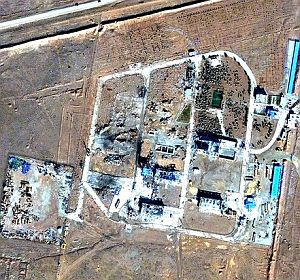
The New York Times reports: The large, deadly explosion at an Iran military base in Iran on Nov. 12, which Iranian authorities have called an accident that set back research work there by a few days, appears to have been far more devastating than their description suggested, according to an analysis of newly released commercial satellite images of the blast site.

The images reveal vast destruction and chaotic disarray across a sprawling complex composed of more than a dozen buildings and large structures.

The Institute for Science and International Security, a private group in Washington, made the satellite images public Monday, along with an analysis of the damage. “It was pretty amazing to see that the entire facility was destroyed,” Paul Brannan, the report’s author, said Tuesday in an interview. “There were only a few buildings left standing.”

It was impossible to determine from the images whether the explosion had been a simple accident or an act of sabotage.

The force of the explosion was so great that it shook windows in many surrounding towns, according to Iranian news sites and witnesses quoted at the time. But no photographs of the blast damage were released by the Iranian government, which has become increasingly sensitive about its military capabilities as tensions escalate with the West over its missile and nuclear programs.

The base, set in an isolated patch of Iranian desert ringed by a security cordon, is about 30 miles west of Tehran and three miles west of the town of Bidganeh.

The explosion is already known to have killed 17 members of the armed forces, including a founder of the country’s missile program, Gen. Hassan Tehrani Moghaddam.

Iran’s supreme leader, Ayatollah Ali Khamenei, presided over a vast state funeral for General Moghaddam and 16 other members of the Islamic Revolutionary Guards Corps two days after the explosion. The showy memorial service underscored General Moghaddam’s importance.

Hassan Firouzabadi, the Iranian military chief of staff, said on Nov. 16 that the blast occurred while researchers were working on weapons capable of delivering Israel a “strong punch in the mouth.” He also said their research would result in only a “short-term delay of a few days.” But it was hard to reconcile his appraisal with the obliteration seen in the satellite image.

Facebooktwittermail

Iranian exile terrorist group has bipartisan support in Washington

The New York Times reports: At a time of partisan gridlock in the capital, one obscure cause has drawn a stellar list of supporters from both parties and the last two administrations, including a dozen former top national security officials.

That alone would be unusual. What makes it astonishing is the object of their attention: a fringe Iranian opposition group, long an ally of Saddam Hussein, that is designated as a terrorist organization under United States law and described by State Department officials as a repressive cult despised by most Iranians and Iraqis.

The extraordinary lobbying effort to reverse the terrorist designation of the group, the Mujahedeen Khalq, or People’s Mujahedeen, has won the support of two former C.I.A. directors, R. James Woolsey and Porter J. Goss; a former F.B.I. director, Louis J. Freeh; a former attorney general, Michael B. Mukasey; President George W. Bush’s first homeland security chief, Tom Ridge; President Obama’s first national security adviser, Gen. James L. Jones; big-name Republicans like the former New York mayor Rudolph W. Giuliani and Democrats like the former Vermont governor Howard Dean; and even the former top counterterrorism official of the State Department, Dell L. Dailey, who argued unsuccessfully for ending the terrorist label while in office.

The American advocates have been well paid, hired through their speaking agencies and collecting fees of $10,000 to $50,000 for speeches on behalf of the Iranian group. Some have been flown to Paris, Berlin and Brussels for appearances.

Tom Ridge expresses the sentiment and rationale shared by most of the MEK’s Washington supporters: the enemy of my enemy is my friend. No doubt the MEK itself used the same reasoning when aligning itself with Saddam Hussein (as did the U.S.). For the MEK’s current allies in Washington it apparently matters little that the organization actually has a long history of befriending America’s enemies and opposing America’s friends — but maybe that says more about the capricious nature of American friendship than it says about the MEK.

Maybe the solution is not the removal of the MEK from the State Department’s list of Foreign Terrorist Organizations. Instead, the U.S. government can simply start designating countries and organizations as “Enemies” and “Friends” and then at the beginning of the springtime awards season, before the Oscars, there can be a televised event where the president hands out awards and opprobrium to this year’s winners in each category.

As far as what might be the implications for Iran (apart from continuation of the current campaign of terrorism targeting Iranian scientists), there is one curious dimension to the support the MEK now enjoys in Washington: the defining event in modern US-Iranian relations — the 1979 takeover of the US embassy in Tehran — turns out not to have been so unforgivable as it is generally portrayed.

“MEK members participated in and supported the 1979 takeover of the U.S. Embassy in Tehran and … the MEK later argued against the early release the American hostages,” says the State Department. But let’s not dwell on the past, says Woolsey, Ridge et al.

On the other hand, for those who retain an interest in the past and the State Department’s description of the MEK’s activities, here it is:

The group’s worldwide campaign against the Iranian government uses propaganda and terrorism to achieve its objectives. During the 1970s, the MEK staged terrorist attacks inside Iran and killed several U.S. military personnel and civilians working on defense projects in Tehran. In 1972, the MEK set off bombs in Tehran at the U.S. Information Service office (part of the U.S. Embassy), the Iran-American Society, and the offices of several U.S. companies to protest the visit of President Nixon to Iran. In 1973, the MEK assassinated the deputy chief of the U.S. Military Mission in Tehran and bombed several businesses, including Shell Oil. In 1974, the MEK set off bombs in Tehran at the offices of U.S. companies to protest the visit of then U.S. Secretary of State Kissinger. In 1975, the MEK assassinated two U.S. military officers who were members of the U.S. Military Assistance Advisory Group in Tehran. In 1976, the MEK assassinated two U.S. citizens who were employees of Rockwell International in Tehran. In 1979, the group claimed responsibility for the murder of an American Texaco executive. Though denied by the MEK, analysis based on eyewitness accounts and MEK documents demonstrates that MEK members participated in and supported the 1979 takeover of the U.S. Embassy in Tehran and that the MEK later argued against the early release the American hostages. The MEK also provided personnel to guard and defend the site of the U.S. Embassy in Tehran, following the takeover of the Embassy.

In 1981, MEK leadership attempted to overthrow the newly installed Islamic regime; Iranian security forces subsequently initiated a crackdown on the group. The MEK instigated a bombing campaign, including an attack against the head office of the Islamic Republic Party and the Prime Minister’s office, which killed some 70 high-ranking Iranian officials, including Chief Justice Ayatollah Mohammad Beheshti, President Mohammad-Ali Rajaei, and Prime Minister Mohammad-Javad Bahonar. These attacks resulted in an expanded Iranian government crackdown that forced MEK leaders to flee to France. For five years, the MEK continued to wage its terrorist campaign from its Paris headquarters. Expelled by France in 1986, MEK leaders turned to Saddam Hussein’s regime for basing, financial support, and training. Near the end of the 1980-1988 Iran-Iraq War, Baghdad armed the MEK with heavy military equipment and deployed thousands of MEK fighters in suicidal, mass wave attacks against Iranian forces.

The MEK’s relationship with the former Iraqi regime continued through the 1990s. In 1991, the group reportedly assisted the Iraqi Republican Guard’s bloody crackdown on Iraqi Shia and Kurds who rose up against Saddam Hussein’s regime. In April 1992, the MEK conducted near-simultaneous attacks on Iranian embassies and consular missions in 13 countries, including against the Iranian mission to the United Nations in New York, demonstrating the group’s ability to mount large-scale operations overseas. In June 1998, the MEK was implicated in a series of bombing and mortar attacks in Iran that killed at least 15 and injured several others. The MEK also assassinated the former Iranian Minister of Prisons in 1998. In April 1999, the MEK targeted key Iranian military officers and assassinated the deputy chief of the Iranian Armed Forces General Staff, Brigadier General Ali Sayyaad Shirazi.

In April 2000, the MEK attempted to assassinate the commander of the Nasr Headquarters, Tehran’s interagency board responsible for coordinating policies on Iraq. The pace of anti-Iranian operations increased during “Operation Great Bahman” in February 2000, when the group launched a dozen attacks against Iran. One attack included a mortar attack against a major Iranian leadership complex in Tehran that housed the offices of the Supreme Leader and the President. The attack killed one person and injured six other individuals. In March 2000, the MEK launched mortars into a residential district in Tehran, injuring four people and damaging property. In 2000 and 2001, the MEK was involved in regular mortar attacks and hit-and-run raids against Iranian military and law enforcement personnel, as well as government buildings near the Iran-Iraq border. Following an initial Coalition bombardment of the MEK’s facilities in Iraq at the outset of Operation Iraqi Freedom, MEK leadership negotiated a cease-fire with Coalition Forces and surrendered their heavy-arms to Coalition control. Since 2003, roughly 3,400 MEK members have been encamped at Ashraf in Iraq.

In 2003, French authorities arrested 160 MEK members at operational bases they believed the MEK was using to coordinate financing and planning for terrorist attacks. Upon the arrest of MEK leader Maryam Rajavi, MEK members took to Paris’ streets and engaged in self-immolation. French authorities eventually released Rajavi.

Facebooktwittermail