Category Archives: Lands

Here’s why Turkey’s Syria intervention is a huge gamble

Borzou Daragahi reports: Abu Mostafa was elated. Backed by Turkey’s armed forces, his Free Syrian Army unit racked up a series of rare victories against ISIS fighters in northern Syria this week, retaking five villages from the jihadi group on Tuesday.

Turkey’s intervention in Syria is meant to push ISIS and Kurdish militants away from a narrow strip of the northern Aleppo province along its southern borders. But Abu Mostafa, a nom de guerre, and the fighters from his Abu Bakir al-Sadeeq brigade already harbor grander ambitions.

“We are aiming for more than those areas, hopefully even the liberation of all of Syria and not only Aleppo,” he told BuzzFeed News this week over a spotty internet connection. “The Turks do not command us.”

A few weeks after a surprise ground incursion, dubbed Operation Euphrates Shield, Turkish armed forces and allied Syrian rebel groups managed to carve out a long-sought buffer zone along Syrian territory to prevent cross-border infiltrations by jihadi and Kurdish militant organizations, while designating a potential safe zone for civilians fleeing the conflict. The Turks launched a ground operation, backed by Turkish and US air support, after reassuring Russia and Iran that their aims were solely to roll back the territories under the control of ISIS fighters and Kurdish-led fighting groups with separatist agendas.

But Turkey’s calibrated strategy depends in part on both limiting its own involvement and reining in the ambitions of its FSA partners, whose battles against ISIS and Kurdish-led militias in northern Syria are secondary to their goal of bringing down the regime of Bashar al-Assad. [Continue reading…]

Facebooktwittermail

What defined Ahmad Shah Massoud

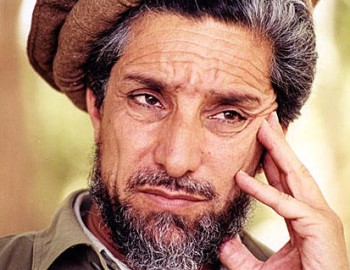
ahmed-shah-massoud2Frud Bezhan writes: Resistance fighter and anti-Taliban leader Ahmad Shah Masud was killed by Al-Qaeda assassins on September 9, 2001, ushering in a chain of events that would place Afghanistan at the center of the global war on terrorism.

Two days after his death, Al-Qaeda operatives would carry out the 9/11 terrorist attacks on U.S. soil. Within a month, the United States military was leading a bombing campaign and invasion of Afghanistan with the intention of overthrowing the Taliban and capturing Al-Qaeda leader and 9/11 orchestrator Osama Bin Laden.

In life and as in death, the military strategist who had made his name as a commander of anti-Taliban forces would have a significant impact on life in Afghanistan. Here are some stories behind the man whose battlefield exploits earned him the moniker “The Lion of Panjshir.” [Continue reading…]

Facebooktwittermail

North Korea will have the skills to make a nuclear warhead by 2020, experts say

The New York Times reports: North Korea’s fifth nuclear test is ominous not only because the country is slowly mastering atomic weaponry, but because it is making headway in developing missiles that could hurl nuclear warheads halfway around the globe, threatening Washington and New York City.

The reclusive, hostile nation has been rushing to perfect missiles that are small, fast, light and surprisingly advanced, according to analysts and military officials. This spring and summer, Pyongyang successfully tested some of these missiles, while earlier efforts had fizzled or failed.

“They’ve greatly increased the tempo of their testing — in a way, showing off their capabilities, showing us images of ground tests they could have kept hidden,” John Schilling, an aerospace engineer and expert on North Korea’s missile program, said in an interview on Friday. “This isn’t something that can be ignored anymore. It’s going to be a high priority for the next president.”

Military experts say that by 2020, Pyongyang will most likely have the skills to make a reliable intercontinental ballistic missile topped by a nuclear warhead. They also expect that by then North Korea may have accumulated enough nuclear material to build up to 100 warheads. [Continue reading…]

Facebooktwittermail

A reminder of the permanent wars: Dozens of U.S. airstrikes in six countries

The Washington Post reports: While Americans savored the last moments of summer this Labor Day weekend, the U.S. military was busy overseas as warplanes conducted strikes in six countries in a flurry of attacks. The bombing runs across Asia, Africa and the Middle East spotlighted the diffuse terrorist threats that have persisted into the final days of the Obama presidency — conflicts that the next president is now certain to inherit.

In Iraq and Syria, between Saturday and Monday, the United States conducted about 45 strikes against Islamic State targets. On the other side of the Mediterranean, in the Libyan city of Sirte, U.S. forces also hit fighters with the militant group. On Sunday in Yemen, a U.S. drone strike killed six suspected members of ­al-Qaeda in the Arabian Peninsula. The following day, just across the Gulf of Aden in Somalia, the Pentagon targeted al-Shabab, another group aligned with ­al-Qaeda. The military also conducted several counterterrorism strikes over the weekend in Afghanistan, where the Taliban and the Islamic State are on the offensive.

Militants in each of those countries have been attacked before, but the convergence of so many strikes on so many fronts in such a short period served as a reminder of the endurance and geographic spread of al-Qaeda and its mutations.

“This administration really wanted to end these wars,” said Paul Scharre, a former Army Ranger and Pentagon official now at the Center for a New American Security. “Now, we’ve got U.S. combat operations on multiple fronts and we’re dropping bombs in six countries. That’s just the unfortunate reality of the terrorism threat today.”

In meeting those threats, Obama has sought to limit the large-scale deployments of the past, instead relying on air power, including drones; isolated Special Operations raids; and support for foreign forces.

But militant groups have defied eight years of these sustained counterterrorism efforts.

Nowhere are the unexpected turns of Obama’s foreign-policy record more visible than in Iraq, where thousands of U.S. troops returned after the 2011 withdrawal to support local forces’ battle against the Islamic State. [Continue reading…]

Facebooktwittermail

Aleppo, Syria, and the U.S. presidential election

“What would you do — if elected — about Aleppo?” asked Mike Barnicle, when questioning Libertarian presidential candidate, Gary Johnson, on Morning Joe yesterday.

“What is Aleppo?” Johnson responded. He later explained that he thought he was being asked about an acronym with which he was unfamiliar.

Johnson has been mocked for his guileless response — what’s that? — but what’s much worse than not knowing something one should know is to feign knowledge so as to conceal ones ignorance. Politicians do it all the time and most people do it more often than they’re likely to admit.

When called on to comment on Johnson’s gaffe, Christopher Hill, former U.S. ambassador to Iraq who is currently Dean of the Josef Korbel School of International Studies at the University of Denver, thought it was “mind-blowing” that Johnson would have drawn a blank on the Aleppo question. Hill’s authority on the subject instantly evaporated, however, when he referred to the Syrian city as the ISIS capital. Likewise, the New York Times, reporting on Johnson, made the same mistake as Hill and compounded it by also referring to Aleppo as Syria’s capital city.

A presidential candidate, or a president, who can ask honest questions is much more desirable than one who concocts fake answers.

At the same time, the task of asking politicians questions generally falls on journalists who typically take on this responsibility with insufficient imagination, determination, or courage.

What would you do about Aleppo? is a case in point.

To circumscribe the war in Syria by giving it an epicenter (Aleppo) reinforces a narrative in which an administration that claims to be doing as much as it can — pushing diplomatic initiatives that have mostly gone nowhere — is contrasted with a yet-to-be formed administration that might do something — though as yet, no one’s really clear about what that something might be. The fact is, no one actually knows what the situation in Aleppo and more widely in Syria will be four months from now, when the next U.S. president takes office. The one thing that appears close to a certainty is that President Obama is committed to watching the clock on this issue until he leaves the White House.

Barnicle’s question could be construed as reasonable and appropriate if treated less literally as an effort to tease out a credible prescription for the immediate crisis in Aleppo, but instead viewed as a method for gauging the strategic sensibilities of the candidate.

Political discourse on Syria has been hamstrung for five years by a false debate between interventionism and anti-interventionism. The conventional wisdom drawn from the experience of the war in Iraq is that nothing is more important than avoiding another such war.

The rationale for fighting that war (after the WMD rationale evaporated) was that we need to fight them over there so we don’t end up fighting them herethem being the terrorists.

Ironically, even though the proponents of that argument mostly knew at the time that they were engaging in cynical fearmongering, it turned out that there was a kernel of truth to the interconnected world they were describing.

What Syria has demonstrated, not through predictions but by demonstrable, quantifiable facts, is that what happens in Syria doesn’t stay in Syria.

The Obama administration has treated the war in Syria as an exercise in containment. Its early nominal demands that Assad must go were never actually part of a policy of regime change. They were merely the expression of hopes and expectations that the U.S. could, in advance, place itself on the right side of history.

Ultimately, Obama’s approach to Syria has been shaped primarily by a domestic political calculus: that Americans are more concerned about ISIS than Syria.

Obama’s cynical choice has been to seek the short-term higher political dividends from battlefield successes against ISIS, than to become more deeply involved in a war that would risk becoming seen as his biggest foreign affairs legacy and failure.

But as Obama leaves office he will not actually leave Syria behind. Indeed, whoever becomes the next U.S. president will be inheriting a foreign policy headache shaped in large part by American inaction.

The war in Syria is the epicenter of regional conflict, widening instability, and a refugee crisis leading to the corrosion of democracy across the West, thus setting the course of the twenty-first century.

Like climate change, the situation in Syria has mostly grown worse because so many people thought it could safely be ignored.

An American president who imagines that what happens in the Middle East matters as little as the average American thinks it does, merely suffers from the same pathology that has always diseased the American mind: an outlook in which this nation and the world somehow magically stand apart.

Call me a globalist — I don’t mind — but there is only one world and through a lack of collective ownership over its affairs we are letting it fall apart.

Facebooktwittermail

Americans are more worried about terrorism than they were after 9/11

The Atlantic reports: In 2002, with the footage of collapsing World Trade Centers still fresh in American minds, the pollsters at Pew Research posed a question. “Do you think the ability of terrorists to launch another major attack on the U.S.,” they asked, “is greater, the same, or less than it was at the time of the September 11th terrorist attacks?”

A slim plurality of respondents, 39 percent, said nothing had changed in the past year. A third allowed that things had gotten better. The rest — 22 percent — said America was actually less safe, despite the billions spent on a military incursion into Afghanistan and the creation of an entire new cabinet-level department devoted to homeland security.

It turns out 2002 was a relatively optimistic year. According to Pew’s latest figures, 40 percent of Americans now believe the country is more vulnerable to terrorism than it was in 2001, the highest ever. Republicans lead that charge: More than half think terrorists have grown stronger, while only a third of Democrats agree. And if the GOP is scared, Donald Trump is there to help — or rile things up. “If we don’t get tough, and if we don’t get smart, and fast, we’re not going to have our country anymore,” he said in June, following the mass shooting at a nightclub in Orlando. “There will be nothing — absolutely nothing –left.” [Continue reading…]

Facebooktwittermail

Why Kim Jong Un tested a nuclear warhead now

Gordon G Change writes: North Korea is hailing a “successful” fifth nuclear test, which it carried out Friday morning local time.

The device tested, which created a 5.3-magnitude tremor at its Punggye-ri test site, was reportedly in the 20- to 30-kiloton range, much more powerful than the North’s previous detonations. The last test, in January, yielded only about seven to nine kilotons.

The North Koreans have been ready to test this device since May. So why did they wait until now? Some are suggesting the detonation celebrated North Korea’s Foundation Day, marking the 68th anniversary of the establishment of the Democratic People’s Republic of Korea. But from all indications, the Kim regime tested at this time because it realized China would not impose costs for the detonation.

The test took place three days after Pyongyang’s nuclear envoy traveled to Beijing. Choe Son Hui, deputy director general of the Foreign Ministry’s U.S. affairs bureau, arrived in the Chinese capital on Tuesday.

We don’t know what Choe — who was deputy chief envoy to the six-party denuclearization talks, which have been dormant since 2008 — and her interlocutors said this week. Nonetheless, it was evident that the North Koreans were confident of the Chinese reaction.

At the moment, Beijing is far more upset with Seoul than Pyongyang.

In July, South Korea and the United States announced they would deploy the American-made Terminal High Altitude Area Defense system on South Korean soil. Beijing is worried that THAAD’s high-powered radars will reach into China and could help the U.S. shoot down Chinese missiles. Washington denies that is the case and has been willing to share technical information, but Beijing has not been mollified. [Continue reading…]

Facebooktwittermail

How Jill Stein and Donald Trump became allies of Vladimir Putin

Casey Michel writes: Last December, at a gala honoring the 10th anniversary of the Russian propaganda channel RT, Russian President Vladimir Putin nestled himself between a pair of visitors at the head table. To the president’s right: A former head of the US’s Defense Intelligence Agency, known best for his hard-right views on Islam, which he would later compare to “cancer.” And to Putin’s left: The soon-to-be Green Party nominee for the White House, whose presidential debate would be carried on, of all things, RT.

The two – Lt. Gen. Michael Flynn, an adviser to Republican nominee Donald Trump, and Jill Stein, the presidential nominee from the Green Party – chummed with Putin throughout the evening, later joined at the table by RT (formerly Russia Today) head Margarita Simonyan and then-Chief of Staff Sergei Ivanov. Soon, Putin took the dais, running through rote commentary on RT’s accomplishments. When he finished, applause rang. Stein shook his hand. Flynn offered a standing ovation.

Within that gala, leading figures of America’s far-left, in Stein, and hard-right, in Trump’s surrogate, found common cause. The bookends of the American political spectrum had gathered in Moscow, glad-handing with Kremlin officials. The two camps, aligned in post-fact views on American foreign policy, discovered themselves aligned in celebration of the Kremlin’s foremost foreign propaganda vehicle.

Unsurprisingly, the policy prescriptions of Stein and Flynn don’t align on much else. As it pertains to Moscow, though, it’s clear that the distance between the Stein and the Trump campaigns have effectively disappeared. [Continue reading…]

Philip Bump notes: Russia scored an 83 out of 100 in the annual press freedom scores compiled by the watchdog organization Freedom Press. (100 is the worst possible score.) By contrast, the United States scored a 21. What’s more, in January, Politifact determined that since 2000, when Putin was first elected to the presidency, 34 journalists have been murdered in Russia.

When Trump was confronted with Putin’s track record on journalists on MSNBC’s “Morning Joe” earlier this year, he was unfazed.

“He’s running his country, and at least he’s a leader, unlike what we have in this country,” Trump said, when presented with some critiques of Putin.

“But, again: He kills journalists that don’t agree with him,” host Joe Scarborough replied.

“Well,” Trump said, “I think that our country does plenty of killing, too, Joe.”

Trump has consistently berated the media for what he views as unfair coverage of his campaign. For an extended period, he barred media outlets (including The Post) from attending his events, a ban that was recently lifted. He has talked about somehow changing libel laws so that it would be easier to sue media outlets for coverage that he didn’t like.

So the through-line here is this: Trump thinks Putin should be emulated because he is viewed positively in his country. He is viewed positively in part because he crushes dissenting media opinions, something that Trump has also either praised or tacitly accepted. It’s part of being a “leader,” it seems. [Continue reading…]

Facebooktwittermail

Aid groups suspend cooperation with UN in Syria because of Assad ‘influence’

The Guardian reports: More than 70 aid groups have suspended cooperation with the UN in Syria and have demanded an immediate and transparent investigation into its operations in the country because of concerns the Syrian president, Bashar al-Assad, has gained “significant and substantial” influence over the relief effort.

The coalition, which includes some of Syria’s most widely known aid organisations, told the UN it intends to withdraw from the UN’s information-sharing programme in protest at the way some of its agencies are functioning within the country.

In a letter to the UN (pdf), the 73 groups made clear they could no longer tolerate the “manipulation of humanitarian relief efforts by the political interests of the Syrian government that deprives other Syrians in besieged areas from the services of those programmes”.

The groups include the Syrian American Medical Society (Sams) and the Syrian Civil Defence, or “White Helmets”, which help 6 million Syrians.

Their ultimatum is the culmination of months of frustration about the delivery of aid to besieged areas of the country, and mounting concern over the UN’s strategy – criticism the UN maintains is unfair. [Continue reading…]

Facebooktwittermail

U.S. gets ready to assist offensive with additional troops to retake Mosul from ISIS

The Wall Street Journal reports: The U.S. is gearing up to assist in an offensive to reclaim the Iraqi city of Mosul from Islamic State, and has sent 400 additional troops to the country in anticipation Iraqi forces will begin the long-delayed battle in October, officials said.

The troops have been sent into Iraq to assist Iraqi forces consolidating south of Mosul in what is known as the launchpad for the allied operation in the city of Qayyarah, defense officials said on Thursday. There now are more than 5,000 U.S. military personnel in the country.

Despite rising optimism over chances for success in Mosul, the new commander of the U.S.-led coalition fighting Islamic State, Lt. Gen. Stephen Townsend, said he thinks the battle to retake the jihadist group’s last major Iraqi stronghold will be a difficult and dangerous operation.

“We’re preparing for a hard fight, a long, difficult fight” in Mosul, Gen. Townsend told The Wall Street Journal late Wednesday here at his office at the coalition’s base in Baghdad. “Really, it’s a siege I’m talking about here.” [Continue reading…]

Facebooktwittermail

Russia says Palestinian, Israeli leaders agree to meet

Al Jazeera reports: Israeli and Palestinian leaders have agreed “in principle” to meet in Moscow in what Russia hopes will relaunch Middle East peace talks after more than two years’ break, according to the Russian foreign ministry.

While it is not clear when the meeting will take place, Maria Zakharova, Russia’s foreign ministry spokeswoman, said on Thursday Moscow had heard from the offices of Palestinian President Mahmoud Abbas and Israeli Prime Minister Benjamin Netanyahu that the two agreed to meet in the Russian capital.

“The leaders of Palestine and Israel have given their general consent to meet in Russia,” Zakharova told reporters.

“The most important thing is to pick the right timing,” she added. “Intensive contacts on this are ongoing.”

Al Jazeera’s Mohamed Jamjoom, reporting from Moscow, said the Russian statement “hardly sounded like a sure thing at this point”, highlighting a comment by a Kremlin spokesperson on Wednesday saying that a meeting between the two sides was “not on the schedule and not on the agenda”.

Earlier this week, Abbas said a scheduled meeting in Moscow had been postponed at Israel’s request.

Abbas has said that he would only meet Netanyahu if Israel freezes settlement construction on occupied lands and carries out a previously agreed-on release of Palestinian prisoners. [Continue reading…]

Facebooktwittermail

Losing ground, fighters and morale – is it all over for ISIS?

Martin Chulov reports: It has been a bad few months for Islamic State (Isis). For the first time since the terror group laid claim to much of Iraq and Syria, it no longer has a direct path to Europe. Black flags are no longer flying over towns and villages near the Turkish border and the militants of the so-called caliphate are on the run. If the decay continues, Isis will soon lose much of its remaining foothold in Syria. Its last bastion will be Raqqa and the north-eastern deserts, where it all began for the group’s latest incarnation in April 2013, and from where much of its subsequent rampage was plotted.

Since mid-July, Isis has been methodically pushed from towns and villages it controlled near the Turkish frontier by the most concerted ground advance of the past two years. The jihadist group now looks to be far less of a threat to the regional order than when its leader, Abu Bakr al-Baghdadi, proclaimed his rule over a swath of eastern Syria and western Iraq in mid-2014.

But little about what comes next is clear. The group’s loss of territory has shifted geopolitical ground in ways that could not easily have been predicted. And, in the eyes of many European governments, its danger has metastasised into a global threat that a loss of land won’t mitigate. A military victory over one of modern history’s most savage band of marauders may yet prove pyrrhic. [Continue reading…]

Facebooktwittermail

Trump praises Putin at national security forum

The Washington Post reports: Donald Trump defended his admiration for Russian President Vladi­mir Putin at a forum here Wednesday focused on national security issues, even suggesting that Putin is more worthy of his praise than President Obama.

“Certainly, in that system, he’s been a leader, far more than our president has been a leader,” Trump said. “We have a divided country.”

The Republican presidential nominee said that an alliance with Russia would help defeat the Islamic State, and when asked to defend some of Putin’s aggressions on the world stage, he asked, “Do you want me to start naming some of the things Obama does at the same time?” [Continue reading…]

Facebooktwittermail

Saudi Arabia and Iran accuse each other of not really being Muslim

Ishaan Tharoor writes: The Middle East’s two great geopolitical adversaries entered into a war of words ahead of the annual hajj pilgrimage to Mecca, which starts this weekend. Their rivalry, shaped by sectarian Sunni-Shia divisions, can be seen in numerous bloody proxy conflicts across the region. But it also flares up in heated rhetorical broadsides.

The latest round began with comments from Iran’s supreme leader, Ayatollah Ali Khamenei, who in full bluster condemned the Saudis for prohibiting Iranian pilgrims from joining the hajj after talks about security and logistics collapsed. Last year’s pilgrimage was marred by the deaths of hundreds of pilgrims caught in a stampede with more than 2,000 killed, according to one unofficial tally, although the Saudis say the death toll is lower.

Khamenei ventured that the slain devotees, including many Iranian nationals, lost their lives either because of Saudi complicity or incompetence. (He errs toward the former.) [Continue reading…]

Facebooktwittermail

U.S. defense secretary warns Russia to stay out of U.S. elections

The New York Times reports: Defense Secretary Ashton B. Carter lashed out at Russia on Wednesday, accusing the government of President Vladimir V. Putin of demonstrating a “clear ambition to erode” international order and warning Russia to stay out of the American elections.

Speaking on Wednesday at Oxford University in England, Mr. Carter used language that evoked a time before the fall of the Berlin War, when leaders in Washington and Moscow were entrenched global adversaries. “The United States does not seek a cold, let alone a hot, war with Russia,” Mr. Carter said. “But make no mistake, we will defend our allies, the principled international order, and the positive future it affords all of us.”

He also warned Moscow that Washington “will not ignore attempts to interfere with our democratic processes.” The F.B.I. is investigating whether Russia hacked into computer systems of the Democratic National Committee. Mr. Carter accused Russia of “undercutting the work and contributions of others rather than creating or making any positive contributions on its own,” and said that Moscow was sowing “instability rather than cultivating stability.” [Continue reading…]

Facebooktwittermail

Russia’s Trump, Vladimir Zhirinovsky, wants to build a wall, ban Muslims, and nuke the White House

Anna Nemtsova writes: Vladimir Zhirinovsky recently boasted of taking a DNA test to prove that he’s related to Donald Trump. The 70-year-old Russian right-wing nationalist and populist who founded the (not very) Liberal Democratic Party often is compared to the 70-year-old American populist now slightly ahead in the contest to win presidency of the United States. Zhirinovsky is called a “Russian Trump” and Trump, at least in Russia, is labeled an “American Zhirinovsky.”

What similarities do Russians see in them? It could be their brash, fiery rhetoric, the roughness of their style, the way their faces distort with anger, or, as one Russian pointed out, the way that spittle tends to build on the corners of their mouths.

Certainly they share an ability to feed the public with fury, and change their message as they find convenient. Depending on what tune he needed at any given moment in the political arena, Zhirnovsky can act as the Kremlin’s clown or as a calm, even cold, opposition leader.

Now he is in this second mode.

In an exclusive interview with The Daily Beast, Zhirinovsky described his plan to fight organized crime in Russia. He describes it as a web that’s penetrated all law enforcement agencies and regional administrations, reaching all the way to the highest echelons of the Kremlin’s leadership. [Continue reading…]

Facebooktwittermail

Soviet document suggests Mahmoud Abbas was a KGB spy in the 1980s

The New York Times reports: Mahmoud Abbas, the president of the Palestinian Authority, and President Vladimir V. Putin of Russia may have more in common than an interest in Middle East peace talks. According to a newly discovered Soviet document, Mr. Abbas may have once worked for the K.G.B., too.

The possibility, trumpeted by the Israeli media on Wednesday night and just as quickly dismissed by Palestinian officials, emerged from a document in a British archive listing Soviet agents from 1983. A reference to Mr. Abbas is tantalizing but cryptic, just two lines identifying him by the code name “Mole.” At the end of his entry are two words: “K.G.B. agent.”

The suggestion that Mr. Abbas may have been on Moscow’s roster more than three decades ago might have been just a historical curiosity but for the fact that it comes at the same time that Mr. Putin has been trying to organize new talks between Mr. Abbas and Prime Minister Benjamin Netanyahu of Israel. A Russian envoy was in Jerusalem this week to meet with Mr. Netanyahu, but the Israeli and Palestinian leaders remain at odds and no direct talks appear imminent.

“We thought it was important now in the context of the Russian attempt to arrange a summit between Abbas and Netanyahu, particularly because of Abbas’s joint K.G.B. past with Putin,” said Gideon Remez, one of two researchers at the Truman Institute at Hebrew University of Jerusalem, who found and disclosed the Soviet document to Israel’s Channel 1. (At the end of the Soviet era, Mr. Putin was a K.G.B. lieutenant colonel.)

Mr. Remez’ research partner, Isabella Ginor, said Mr. Abbas’s past was relevant because of Russia’s possible continuing influence on him. “We don’t know what happened later on and if Abu Mazen went on with his service or work for the Soviets,” she said, using another name for Mr. Abbas. “But now that he is head of the Palestinian Authority, this can be a lever on him.” [Continue reading…]

Facebooktwittermail

Some see anti-women backlash in ouster of Brazil’s president

The New York Times reports: At one heated moment in the impeachment trial of Dilma Rousseff, a powerful senator pushing for her ouster decided that some of his outspoken female colleagues in the chamber needed scolding.

“Calm down, girls,” the senator, Cássio Cunha Lima, part of a political dynasty from northeastern Brazil, told Senators Vanessa Grazziotin and Gleisi Hoffmann, both supporters of Ms. Rousseff, Brazil’s first female president. His remark drew sharp rebukes from the two women.

“Men believe they are the owners of this space, as if we’re just here by chance,” said Ms. Grazziotin, 55, a prominent leftist senator from Amazonas State.

For senators like Ms. Grazziotin, the episode reflected the emboldening of conservative voices after the impeachment of Ms. Rousseff, who argued that she had been the target of misogynistic attacks by opponents. Female politicians across Brazil are debating what her downfall means in a political realm dominated by men.

Despite the inroads made by Ms. Rousseff and others, Brazil ranks remarkably low in the representation of women in politics. Of the 513 members of the Chamber of Deputies, the lower house of the Brazilian Congress, 51 are women, placing the country 155th in the world in the percentage of women elected to the lower house of a national legislature, according to the Inter-Parliamentary Union. It trails places like Saudi Arabia and Turkmenistan. [Continue reading…]

Facebooktwittermail