Category Archives: Lands

U.S. struggles with goal of admitting 10,000 Syrians

refugees3

The New York Times reports: President Obama invited a Syrian refugee to this year’s State of the Union address, and he has spoken passionately about embracing refugees as a core American value.

But nearly eight months into an effort to resettle 10,000 Syrian refugees in the United States, Mr. Obama’s administration has admitted just over 2,500. And as his administration prepares for a new round of deportations of Central Americans, including many women and children pleading for humanitarian protection, the president is facing intense criticism from allies in Congress and advocacy groups about his administration’s treatment of migrants.

They say Mr. Obama’s lofty message about the need to welcome those who come to the United States seeking protection has not been matched by action. And they warn that the president, who will host a summit meeting on refugees in September during the United Nations General Assembly session, risks undercutting his influence on the issue at a time when American leadership is needed to counteract a backlash against refugees. [Continue reading…]

Facebooktwittermail

America’s Middle East allies could win friends for ISIS

Hassan Hassan writes: The tortuous war against Isis is taking a treacherous turn. Two years after the militant Sunni group declared its brutal caliphate, the US and its allies in Iraq and Syria have begun a two-front offensive to dislodge the militant group from its strongholds in the Iraqi city of Fallujah and Raqqa in Syria. But, while the campaign has made progress, the composition of the forces leading the battles in the two Arab Sunni cities is intensifying sectarian and ethnic tensions in the bitterly divided nations and beyond. The danger is that the US-led action will, ultimately, help Isis gain legitimacy as a defender of Sunnis — even if it cedes territory.

Heightened fears in Syria, Iraq and the wider region about the offensive in Falluja and Raqqa bode ill for the long-term fight against the group. With western help channelled to militias beholden to the Shia regime in Iran and close to Tehran’s allies in Damascus, the fight is widely seen in the region as nakedly sectarian.

The US-backed offensive is the first of its kind since the American-led anti-Isis campaign began soon after the group swept into Iraq. America has long sought to avoid providing air support for Shia and Kurdish militias to fight in two Sunni areas at once: when Baghdad launched the battle to retake the city of Tikrit from Isis in March last year, Washington refrained from providing air strikes in support of the estimated 30,000 Shia fighters until the battle stalled three weeks later. [Continue reading…]

Facebooktwittermail

Elite U.S. soldiers and Kurdish troops moving on ISIS near Mosul

Florian Neuhof reports: The operation is the largest by the Kurds in Iraq since they took Sinjar from the Islamic State last November. Intent on driving ISIS out of nine villages facing them at the Khazir front, the Kurdistan Regional Government (KRG) threw 4,700 men into the offensive, according to Arif Tayfor, the sector commander at Khazir.

By Monday afternoon, seven of those nine villages had been taken.

The Kurds, without question, benefitted from some hands-on U.S. support. A few miles from Mufti, on the road leading directly to Mosul, I came across a U.S. special operations commando shoveling empty machine-gun cartridge cases out of the turret of an armored car.

These camera-shy elite soldiers usually refrain from engaging the enemy directly, instead gathering intelligence and directing air strikes. But at Khazir, U.S. ammunition clearly was expended.

It is not the first time American special operations forces have tangled with ISIS on the Kurdish front lines in Iraq. Early in May, U.S. Navy Seal Charlie Keating was killed when a group of Seals helped contain an ISIS attack on Telskuf, an abandoned Christian town near Mosul.

The Khazir operation’s immediate aim is to relieve the pressure on the nearby frontline town of Gwer and push ISIS further away from Erbil, the capital of the autonomous Kurdish region that is barely an hour’s car ride away.

The long-term goal is to carve out a greater Kurdistan from the crumbling caliphate and a disintegrating Iraq. The villages at Khazir are part of the disputed territories, areas claimed by both the KRG and the central government in Baghdad. [Continue reading…]

Facebooktwittermail

Erdogan warns Muslims against using birth control

Middle East Eye reports: Turkish President Tayyip Erdogan said on Monday that Muslim families should refrain from birth control and have more children.

Erdogan said it was the responsibility of mothers to ensure the continued growth of Turkey’s population, which has expanded at a rate of around 1.3 percent in the last few years.

“I will say it clearly … We need to increase the number of our descendants,” he said in a speech in Istanbul.

“People talk about birth control, about family planning. No Muslim family can understand and accept that!

“As God and as the great prophet said, we will go this way. And in this respect the first duty belongs to mothers.”

Erdogan and his wife Emine have two sons and two daughters. Earlier this month, the president attended the high-profile marriage of his younger daughter Sumeyye to defence industrialist Selcuk Bayraktar.

His elder daughter Esra, who is married to the up-and-coming Energy Minister Berat Albayrak, has three children.

The Platform to Stop Violence Against Women, which campaigns to stop the killings of hundreds of woman every year, condemned Erdogan’s comments as violating the rights of women.

“You [Erdogan] cannot usurp our right to contraception, nor our other rights with your declarations that come out of the Middle Ages,” the group said in a statement on Twitter. [Continue reading…]

Facebooktwittermail

Syrian opposition negotiator quits peace talks

The Wall Street Journal reports: The chief Syrian opposition negotiator in Geneva resigned, citing both the international community’s failure to make concrete progress toward ending the country’s conflict and continuing hostilities by the regime.

Mohammad Alloush’s departure could be a particularly troubling development for the fractured opposition, which has faced difficulties nominating consensus leaders wielding both political clout with the international community and influence among rebels on the ground.

The High Negotiations Committee, the opposition’s representative body in Geneva, will meet in Riyadh in 10 days to form a delegation for coming peace talks and select his successor, a spokeswoman said.

The resignation is the latest hitch in the continuing peace negotiations, as President Bashar al-Assad’s regime, the opposition and their respective allies appear no closer to finding a mediated solution to the five-year conflict.

The latest cease-fire attempt, brokered by the U.S. and Russia, broke down weeks after it began in February.

“The last three rounds of negotiations in Geneva under U.N. auspices have been unsuccessful because of the unwillingness of the regime to compromise and its continuation in the bombing and aggression against the Syrian people,” Mr. Alloush said Sunday night in the letter to the HNC. “Also, the international community [has been unable] to implement its decisions especially with regard to the humanitarian angle from breaking the siege, allowing aid into besieged areas, the release of detainees and a commitment to cessation of hostilities.” [Continue reading…]

Facebooktwittermail

Russia’s draft constitution: End of Syria’s Baath era?

Assad-4

Al Jazeera reports: Last Tuesday, Lebanese daily newspaper, Al-Akhbar, reported that Russia had finished drafting a constitution for Syria that would remove many of the Syrian president’s powers and set up a more decentralised government, both possible concessions to rebel groups fighting the regime of President Bashar al-Assad.

According to the Al-Akhbar report, the new constitution, done with the blessing of the United States, would be put to referendum before the end of the year. This would put the countries on pace to meet their self-imposed deadline to draft a Syrian constitution by August 2016.

The Syrian presidency quickly dismissed the report, describing it as “untrue”.

“No draft constitution has been shown to the Syrian Arab Republic. Everything which has been said in the media about this subject is totally untrue,” a statement on the Syrian Presidency’s official Facebook page said.

Barely six weeks after their military intervention began, Russian officials put forth an eight-point plan called: “Approach to the Settlement of the Syrian Crisis” that provided the basic contours of Russia’s vision for ending the conflict.

This vision was rather narrow, however, as the first five points dealt specifically with the fight against the Islamic State group (ISIL, also known as ISIS), and the remaining three carried vague commitments to a political process carried out under international auspices.

For most observers, the plan represented little more than the fulfilment of the regime’s wish-list and carried with it no substantive political concessions. [Continue reading…]

Facebooktwittermail

Fears ISIS will use 50,000 trapped civilians as human shields as Iraqi forces storm Fallujah in dawn offensive

The Telegraph reports: The Iraqi army entered Islamic State-held Fallujah in a major dawn offensive on Monday as it made its “final push” to recapture the city from jihadists.

Troops pincered Isil from three directions and managed to push into urban areas for the first time since the operation began a week ago.

With the help of an Iran-backed Shia militia and air support from the US-led coalition, the army said it had gained control of 80 per cent of the towns and villages around Fallujah and was now focused on retaking the city itself.

Some 1,500 Isil fighters holed up in the centre, which has been under their control for more than two years, were putting up fierce resistance with suicide bombings and rocket attacks. [Continue reading…]

Facebooktwittermail

As rich nations turn their backs on those in need

refugee5

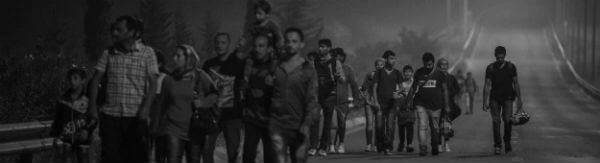
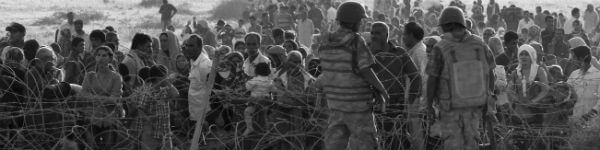
In an editorial, the New York Times says: The world is witnessing the largest exodus of refugees in generations, spawned by armed conflicts in the Middle East, North Africa and South Asia. But “witnessing” is perhaps the wrong word. Many world leaders, including those who run most of the richest countries, are choosing to look the other way. They are more interested in barricading their nations from the fallout of conflict than in investing in peacekeeping and stability.

This willful neglect was on display last week at the inaugural World Humanitarian Summit, convened to face the needs of the world’s most vulnerable people. Most heads of state from the richest nations — including the United States — didn’t bother to show up, drawing a rebuke from the United Nations secretary general, Ban Ki-moon.

“It’s disappointing that some world leaders could not be here, especially from the G-7 countries,” he said at a news conference on Tuesday. “We have reached a level of human suffering without parallel since the founding of the United Nations” 70 years ago. [Continue reading…]

Contrast Ki-moon’s words with the happy talk from Barack Obama two weeks ago when he gave the commencement address at Rutgers:

by almost every measure, America is better, and the world is better, than it was 50 years ago, or 30 years ago, or even eight years ago.

This assessment has I believe less to do with the dry statistical arguments made by the likes of Steven Pinker, than it has with the group-think inside the Obama administration.

The easiest way to counter criticism on Syria, with the refugee crisis, and elsewhere, is by insisting we did all that we could.

This self-administered anesthetic is designed to suppress remorse, guilt and a keen sense on personal responsibility.

Obama’s faith in inexorable progress derives from his refusal to “look backwards” — a conviction not unlike that of a hit-and-run driver who keeps his eyes firmly on the road ahead.

Likewise, the notion that the United States can extricate itself from its Middle East entanglements by simply walking away, is really no different from the attitude of a deadbeat father who thinks he can leave his past behind.

Our need to understand the past derives from our need to understand the present — it has nothing to do with (as Obama claims) a fear of the future.

The simplistic approach favored inside the White House reduces everything to a choice over which Obama had no control: the decision to invade Iraq.

Those who make that the beginning of history, have very often thereafter indulged in the conceit that by having personally opposed that misadventure, they can thereby shed any sense of collective responsibility for what followed — as though the neocons’ war never actually became America’s war.

What is ostensibly geographically circumscribed by a neat divide between domestic and foreign is really a separation between those things we claim as our own and those we don’t.

The convenient reflex to which most people are susceptible is simply to disown whatever becomes problematic.

We turn our backs on refugees because we prefer to believe that they are not our problem.

Facebooktwittermail

Iran-led push to retake Falluja from ISIS worries U.S.

The New York Times reports: American commandos are on the front lines in Syria in a new push toward the Islamic State’s de facto capital in Raqqa, but in Iraq it is an entirely different story: Iran, not the United States, has become the face of an operation to retake the jihadist stronghold of Falluja from the militant group.

On the outskirts of Falluja, tens of thousands of Iraqi soldiers, police officers and Shiite militiamen backed by Iran are preparing for an assault on the Sunni city, raising fears of a sectarian blood bath. Iran has placed advisers, including its top spymaster, Qassim Suleimani, on the ground to assist in the operation.

The battle over Falluja has evolved into yet another example of how United States and Iranian interests seemingly converge and clash at the same time in Iraq. Both want to defeat the Islamic State, also known as ISIS or ISIL. But the United States has long believed that Iran’s role, which relies on militias accused of sectarian abuses, can make matters worse by angering Sunnis and making them more sympathetic to the militants. [Continue reading…]

Facebooktwittermail

The Morning They Came For Us by Janine di Giovanni – heroic dispatches from Syria

Robin Yassin-Kassab writes: Reading this book by the war correspondent Janine di Giovanni is at once necessary, difficult and elating. Her reporting from the Syrian revolution and war is clear-eyed and engaged in the best sense – engaged in the human realm rather than the abstractly political.

Giovanni’s account is deeply personal. She was once obsessed with Bosnian crimes; in the introduction, she says that Syria may similarly “engulf her”. She finds herself unable to trim her baby son’s nails for thinking of an Iraqi who’d had his ripped out. Later, accepting a cigarette pack from a student of human rights, she notes the old cigarette burns on his arms.

Her Syrian visits fell between March and December 2012. During the first, she describes an uneasy silence in central Damascus even as the suburbs burned. Class in this society is a more significant divider than religion, and the bi-national elite are in denial, spinning conspiracy theories and attending pool parties. In these “last days of a spoilt empire that was about to implode”, Giovanni delineates the two different kinds of regime “believer” – true devotees, and those simply scared of the alternatives. A few hundred frustrated UN monitors are confined to their hotel, and war is “descending with stunning velocity”.

The book continues by recounting the ramifications for Syrian civilians of Assad’s various scorched earth strategies. An estimated 200,000 people disappeared into the regime gulag. Most have experienced torture. “I struggle to remember a place where torture has been so widespread and systematic,” a Human Rights Watch official tells Giovanni, who sets about uncovering some of the individual stories, by means of interviews and recollections of beatings, burnings and cuttings, perpetrated to the torturer’s usual refrain: “You want freedom? Is this the freedom you want?” [Continue reading…]

Facebooktwittermail

Iran’s Rouhani may now control parliament, but do his economic reforms stand a chance?

By Nader Habibi, Brandeis University

Iranian President Hassan Rouhani and his policies are set to get a boost this week after voters elected a parliament that favors reform.

While Rouhani’s reformists didn’t win a majority of seats, it appears likely that the “moderate” independents also elected will side with his faction, giving the reformists an effective majority in the parliament for the first time since 2004.

So now that Rouhani may finally have the backing of parliament, will he be able to pursue the economic and social reforms he has promised since first taking office in 2013? And does this mean the nuclear deal that he helped champion will lead to an Iran that’s more open to foreign businesses and the West?

While a parliamentary majority helps – along with his general popularity – other power centers have enormous influence over economic policy, constraining Rouhani’s ability to implement reforms. These powerful institutions, such as the judiciary and the Revolutionary Guards, remain under the strong influence of Iran’s Supreme Leader Ayatollah Ali Khamenei, who also enjoys veto power over all executive and parliamentary decisions.

To reach these conclusions, I’ve drawn upon more than two decades of research on political and economic conditions in Iran.

Continue reading

Facebooktwittermail

The last remaining Pentagon-trained rebel group in Syria is now in jeopardy

The Washington Post reports: Throughout the fiasco of the Pentagon’s $500 million effort to train and equip a force of Syrian rebels to take on the Islamic State, one small group endured.

The New Syrian Army completed the U.S. training course in Jordan, infiltrated into Syria and then, in March, without fanfare or publicity, seized a pinprick of territory from the militants at the remote Tanaf border crossing with Iraq in the far southeast corner of the Syrian province of Homs.

There they have remained, holding their ground without deserting, defecting or getting kidnapped, unlike many of the other similarly trained rebels whose mishaps prompted the temporary suspension of the program last year.

Even this modest success is now in jeopardy, however, following an Islamic State suicide attack this month. An armored vehicle barreled into the rebels’ base shortly before dawn on May 7, killing a number of them, said Lt. Col. Mohammed Tallaa, a Syrian officer who defected and is the group’s commander. [Continue reading…]

Facebooktwittermail

Brazil: ‘Unhappy is the nation that needs heroes’

Bruno Cava writes: The fall of Dilma seems to demand an obvious reading on the part of the left. Again in the history of Latin America, a national-popular government is overthrown by the neocolonial elites. Again, the geopolitical attempt to build an alternative axis to the imperialism of Washington, this time through the BRICs, ends up crushed by a restoration of the conservatives. The history of coups d’etat again returns to the stage in the subcontinent, and an echo is heard of the coups of 1964 (Brazil), 1973 (Chile) and 1976 (Argentina), and the military uprising against Chavez in Venezuela (2002), or again the so-called “soft coups” against Zelaya in Honduras (2009) and Lugo in Paraguay (2012). This time the victims have been the largest mass party in the Americas, the biggest domino piece that now threatens the entire wave of progressive governments. There are more than enough signs to reinforce that interpretation. Taking to the streets in favour of the Partido de Trabalhadores (PT) are Lula, the MST (Movimiento de los Trabajadores Sin-Tierra, Landless Workers’ Movement) and a pantheon of leftist intellectuals, along with stars and red flags, exposing the immediate ramifications of the coup and denouncing it.

The end of the Workers Party’s 2003 to 2016 hold on federal government affects the current situation of those who feel themselves to be directly involved in the project. Regardless of what this “project” may mean, to admit its collapse is interpreted as the end of a worldview. As truncated and full of contradictions as it may be, when the curtain falls to end the petista play, the feeling that manifests is a mixture of melancholy and rage. So great was the hope placed in the PT that the present moment feels like the end of an era, and, shipwrecked with it, the left, progressivism, and every possible horizon of struggle. Future, present and past come together at a point where everything appears to gain depth and everything is put in doubt: not only who occupies the governmental seat will be decided, but also the social gains of the past two decades, the institutional legacy of the 1988 Constitution, and the memory of the struggles against dictatorship.

During the impeachment vote in Congress, parliamentarians repeatedly invoked sacred values and patriotic institutions in dramatic speeches. A deputy praised a torturer colonel of the 1964 regime, another proclaimed the end of the “lulopetista dictatorship” grounded in the Bolsa Familia (Family Allowance programme), described by another deputy as “creating paid vagrants”. Time constraints also impelled the opposing deputies to invoke the martyrs of the resistance, from Zumbi, the insurgent leader of the slaves, to Olga Benário, the communist deported from the Vargas dictatorship to the Third Reich and subsequently gassed. The dramatised scenes of the Brazilian parliamentary representation’s tableau vivant sounded like successive blows of theatre, jumping uncharacteristically from scene to scene.

It should provoke at least curiosity, in those less easily persuaded by histrionics and melodramatic effects, to qualify as a coup the procedure carried out under the country’s presidential constitution, foreseen precisely for the removal of an elected president, when the procedure itself is carried out to the letter and under the supervision of a supreme court composed of eleven members, eight of whom proposed by the PT governments. Or, that the person who will take the place of Dilma, if the impeachment is confirmed in October, will be the vice president who was elected along with her in 2014 and 2010. More than two thirds of MPs in both Brazilian legislative chambers voted to open the impeachment process, with an interval of nearly a month between the first and second deliberation, during which time government forces exercised their defence in forums and media and in the appropriate bodies, before which appeal after appeal were filed, in a microscopic dissection of the ritual. [Continue reading…]

Facebooktwittermail

On nuclear weapons, nations must cooperate to avoid catastrophe

Sam Nunn writes: President Obama’s visit to Hiroshima comes almost 71 years after the conclusion of a world war that was fought and ended with tremendous sacrifice, huge casualties and immense devastation. Today, global nuclear arsenals are capable of destroying not only cities but also civilization itself. Albert Einstein’s prophesy bears repeating: “I do not know how the Third World War will be fought, but I can tell you what they will use in the Fourth — rocks!”

Since the end of World War II, the United States and our allies have relied on the ultimate threat of mutual assured destruction for our security, as the Soviet Union did and Russia does now. Today, with nine nations possessing nuclear arms and terrorists seeking them, this strategy has become increasingly hazardous and decreasingly effective.

Warren Buffett, a man who knows how to calculate risk, has reminded us that if the chance of an event occurring is 10 percent in a given year, and that same risk persists over 50 years, there is a 99.5 percent probability that it will happen during those 50 years. For more than 70 years, the United States and Russia have beaten the odds, avoiding a number of near-disasters. The recent deterioration in relations between the United States and Russia has greatly increased these risks.

The two nations still deploy thousands of nuclear weapons ready to fire on a moment’s notice, risking a catastrophic accident or miscalculation based on a false warning. Cold War dangers compelled dialogue between Washington and Moscow on nuclear security and strategic stability. This dialogue is dangerously absent now, even as our planes and ships have close encounters in Europe and the Middle East. [Continue reading…]

Facebooktwittermail

In Syria, a slow-motion genocide while diplomats chatter

Janine di Giovanni writes: The International Syria Support Group, consisting of 20 countries and organizations, met in Vienna earlier this month to once again attempt to decide the fate of the Syrian people. Predictably, the diplomats left the Austrian capital with little more than promises for a “cessation of hostilities.”

“The challenge we face now is to transform these possibilities into the reality of an agreement,” U.S. Secretary of State John F. Kerry declared, referring to a “basic framework” for a united, non-sectarian Syria.

Those words mean nothing to the fighters on the ground, who continue to push for more territory. In Aleppo, missiles fall and helicopters whir in the sky. In Daraya, a suburb of Damascus that has been besieged by Syrian government forces since 2012, 8,000 inhabitants are starving.

The Syria Campaign, an independent advocacy group, estimates that a Syrian dies every 51 minutes. On the day the diplomats gathered in Vienna, 28 civilians were killed, 94 rockets were launched and 40 barrel bombs dropped. There is a disconnect, to say the least, between the “peace process” and what is actually happening in real time. [Continue reading…]

Facebooktwittermail

Assad’s allies in the West

Shawn Carrié writes: If there’s one thing everyone can agree on about Syria, it’s that nobody can agree on anything.

After five years of constantly evolving strife, the world still looks on in occasional waves of horror, pity, outrage and apathy – before returning to the stoic conclusion that the conflict is just too complicated to understand.

The laws of war, human rights and geopolitics have gone out the window. With them, regrettably, the rules of responsible journalism seem to have gone, too.

At one time, open-source activists and “Facebook revolutionaries” made the Arab Spring history’s most documented tectonic societal shift. Today, Syria’s war is a dangerously polarised nebula of partisans, as much in the media as on the battlegrounds.

Few non-aligned journalists remain to report unbiased and trustworthy news. Without credible information, it’s hard to understand anything that happens in Syria, contributing to a political and public consensus of apathy. What’s left is a news landscape driven less by actual events than by a narrow set of available perspectives.

“The Syrian conflict involves a public relations war with a level of sophistication we’ve never seen before,” American writer Patrick Henningsen said in an report published by Russia Today. Ironically, it’s an accurate assessment of a reality which Russia had a primary role in fostering.

In areas where Russian intervention hasn’t decisively turned the tide militarily in favour of Syrian President Bashar al-Assad, the allies’ powerful public relations machine has been working to pick up the slack.

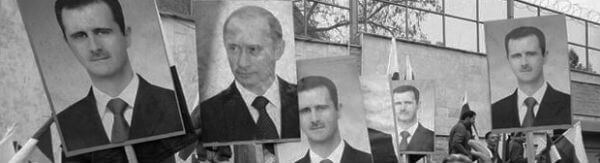
The alliance with Putin has availed Assad of the full gauntlet of Moscow’s superior state-controlled media apparatus. The result: a highly efficient and centralised narrative spread throughout the international press. For every report, a favourable counter-narrative filters down from the regime megaphone to a wide network of smaller websites and blogs. [Continue reading…]

Facebooktwittermail