The Guardian reports: The president of Iraq’s autonomous Kurdish north has called on global leaders to acknowledge that the Sykes-Picot pact that led to the boundaries of the modern Middle East has failed, and urged them to broker a new deal paving the way for a Kurdish state.
Massoud Barzani, who has led the troubled country’s Kurds for the past decade, said the international community had started to accept that Iraq and Syria in particular would never again be unified and that “compulsory co-existence” in the region had been proven wrong.
“I think that within themselves, [world leaders] have come to this conclusion that the era of Sykes-Picot is over,” Barzani told the Guardian. “Whether they say it or not, accept it or not, the reality on the ground is that. But as you know, diplomats are conservatives and they give their assessment in the late stages of things. And sometimes they can’t even keep up with developments.”
The political map of northern Iraq has changed drastically in the 18 months since Islamic State overran Iraq’s second city, Mosul. Kurdish forces are now in full control of Kirkuk and Sinjar and have claimed control of thousands more miles of land that had been under control of Iraq’s central government. [Continue reading…]
Category Archives: Lands
Rouhani enters Iran election row over barred candidates
AFP reports: Iran’s president has criticised moves by a powerful committee to exclude thousands of candidates, mostly reformists, from next month’s parliamentary election, saying Thursday the decision could undermine the vote’s legitimacy.
Hassan Rouhani openly questioned the actions of the Guardian Council, a conservative-dominated panel that vets all prospective lawmakers, after it said Monday that 60 percent of 12,000 election hopefuls had been excluded.
Reformists, largely sidelined from Iranian politics since the disputed 2009 re-election of hardline conservative president Mahmoud Ahmadinejad, bore the brunt of the vetting, with just one percent of its hopefuls winning approval.
Speaking in Tehran, Rouhani was warmly applauded when he suggested the public would see through steps that could amount to favouritism, saying it would dent the ballot’s competitiveness.
“It is called the House of the Nation, not the house of one faction,” he told an audience of provincial governors, implying that not only conservatives should contest the election for seats in parliament.
“If there is one faction and the other is not there, they don’t need the February 26 elections, they go to the parliament,” Rouhani said, laughing but then scorning such a prospect. [Continue reading…]
A nation of field mice where fear runs rampant
In an article titled, “One Nation Under Fear,” Mark Edmundson writes:
How did a people who settled a continent, created enormous wealth, and fought and (mostly) won war after war devolve into a nation of such tremulous souls? And how did it happen so quickly? Where once there was the generation of the Second World War, ready to leave home and fight fascists on the far sides of the world, we now have a nation that at times seems composed largely of field mice, prone to quiver when they detect an unfriendly shadow.
In the latest wave of mass hysteria, the barriers of entry to the United States imposed on people with darker skins will once again be raised higher.
The Visa Waiver Program Improvement and Terrorist Travel Prevention Act of 2015 does not make any mention of skin color, yet the officials who are responsible for enforcing this law will inevitably notice skin color when determining if it needs to be applied. Since the law will apply, for instance, to British citizens who are also Iranian nationals simply by virtue of having an Iranian father — such an individual might have been born in the UK, have never visited Iran and not possess an Iranian passport — the way in which they will get flagged for questioning will most likely be because they are Middle Eastern in appearance.
Ostensibly, the law was designed to block U.S. entry to Europeans who have joined ISIS.
Let’s imagine how that would work: A British citizen who fought with ISIS in Syria has now returned home and then decides to fly to New York. He shows up at the airline check-in desk, presents his passport and the clerk, seeing the stamp entered when he visited Syria, says: “Sorry mate, no trip to America for you!” The thwarted traveler responds: “Damn that Terrorist Travel Prevention Act!” … except, of course, such an individual would in reality neither declare nor present any evidence that they had been in Syria or belonged to ISIS. The terrorist would — surprise, surprise — break the rules.
In truth, this isn’t a serious piece of legislation. Those who drafted and passed this law were engaged in a piece of political theater. Indeed, anyone who can coin a phrase like “terrorist travel prevention” would be better employed at The Onion than in the U.S. Congress.
The only people who will be reliably prevented from travel are those innocently trying to do what most travelers do — visit relatives and friends; engage in tourism or business.
The terrorists are not so dumb that they would run afoul of such restrictions — just as no terrorist would subvert his own objectives by tangling himself in the vetting process imposed on asylum seekers. Continue reading
Yassin al-Haj Saleh: ‘Syria is a unique symbol of injustice, apathy and amnesia’
How do you feel when you see so many of your fellow citizens on the run from the most horrible conflict of our time? Did you expect an exodus like that?
Weeks ago, I helped smuggle my sister-in-law and my nephew from Turkey to Greece. As a beginner, I consulted friends, met smugglers, and chose one.
I was anxious about their safety, and was relieved when they arrived in a European country, even if it was not the one they wanted to go to. The other half of my brother’s family, he and his two younger sons, are to join the first half someday. With the help of friends, we are trying to arrange things for another brother and his family to take refuge in another European country, after a mutual friend of ours, the journalist and film maker Naji Jerf, was assassinated in Turkey on 27 December 2015.
We are helping ourselves to a world that did not help to liberate us at home. Never had I contemplated the possibility of such an exodus. I did not expect that the regime would kill hundreds of thousands of people and that its chances of staying in power would grow bigger as the numbers of its victims soared. I did not expect the emergence of a monstrous creature like Da’esh [ISIS]. I did not expect that around 70 countries would be partners in bombing my country: not against the ruling criminal, but against an offshoot of his monstrosity.
How do you see the European handling of the refugee crisis?
I am impressed by many people from many European countries, mostly individual volunteers. Their generosity, courage and humanity dignify the human race. I was touched by a message from a Norwegian woman who was in Lesbos helping refugees. As for governments, while it is not fair to include all of them in one category – Germany is not like Hungary, Sweden is not Denmark – I think they are unified in building higher walls in the face of the influx of refugees, specifically the poorest and most vulnerable ones.
For months now, European governments have been pressuring Ankara not to allow refugees to depart from Turkey. In November, they promised to pay €3 billion to the Turkish governments to guard European borders.
With all this blood that has been spilt over the past five years right under the world’s nose, humanity has led itself down the path to full ethical numbness. I suppose the indifference the world showed towards the Syrian ordeal will lead to even less sensitivity to human suffering in political institutions everywhere. [Continue reading…]
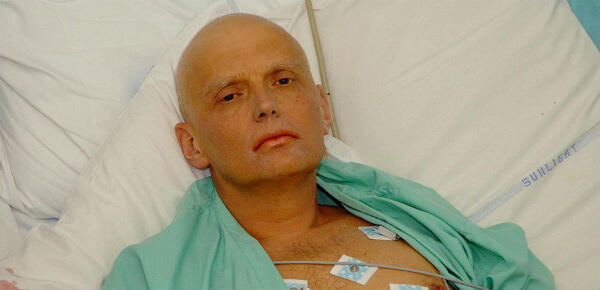
Litvinenko ‘probably murdered on personal orders of Putin’
The Guardian reports: The former Russian spy Alexander Litvinenko was probably murdered on the personal orders of Vladimir Putin, the UK public inquiry into his death has found.
Litvinenko, who died from radioactive poisoning in a London hospital in November 2006, was killed by two Russian agents, Andrei Lugovoi and Dmitry Kovtun, the inquiry report said. There was a “strong probability” they were acting on behalf of the Russian FSB secret service, the report added.
Sir Robert Owen, the inquiry chair, said that taken as a whole the open evidence that had been heard in court amounted to a “strong circumstantial case” that the Russian state was behind the assassination.
But when he took into account all the evidence available to him, including a “considerable quantity” of secret intelligence that was not aired in open court, he found “that the FSB operation to kill Mr Litvinenko was probably approved by [Nikolai] Patrushev [head of the security service in 2006] and also by President Putin”.
Marina Litvinenko, Alexander’s widow, welcomed the report’s “damning finding” and called for the UK to impose sanctions on Russia, in a statement read outside the Royal Courts of Justice, where the inquiry took place. But she claimed she had been given indications that the UK would do nothing. [Continue reading…]

Luke Harding writes: The Soviet Union had a long tradition of bumping off its enemies. They included Leon Trotsky (ice-pick in the head), Ukrainian nationalists (poisons, exploding cakes) and the Bulgarian dissident Georgi Markov (ricin pellet fired from an umbrella, on London’s Waterloo Bridge). There was a spectrum. It went from killings that were demonstrative, to those where the KGB’s fingerprints were nowhere to be found, however hard you looked. Such murders were justified by what you might call Leninist ethics: they were necessary to defend the Bolshevik revolution, a noble experiment.
Under Boris Yeltsin these exotic killings mostly stopped. Moscow’s secret poisons lab, set up by Lenin in 1917, was mothballed. After 2000 though, with Putin in the Kremlin, such Soviet-style operations quietly resumed. Critics of Russia’s new president had an uncanny habit of ending up … well, dead. In power, Putin steered the country in an increasingly authoritarian direction, snuffing out most sources of opposition and dissent. The president’s fellow KGB comrades, once subordinate to the Communist party, were now in sole charge.
The murders of journalists and human rights activists could not be explained in terms of protecting socialism. Rather, the state was now synonymous with something else: the personal financial interests of Putin and his friends.
As an FSB officer in the 1990s, Litvinenko had been shocked to discover how thoroughly organised crime had penetrated Russia’s security organs. In his view, criminal ideology had replaced communist ideology. He was the first to describe Putin’s Russia as a mafia state, in which the roles of government, organised crime and the spy agencies had grown indistinguishable. [Continue reading…]
Litvinenko poisoning: Polonium explained
By Simon Cotton, University of Birmingham
The murder of former Russian spy Alexander Litvinenko was one of the most high-profile assassinations of the decade. It particularly captured the public imagination because Litvinenko was killed using polonium-210, a rare but deadly substance that was thought to have been slipped into Litvinenko’s tea. Now a UK public inquiry has issued its findings on the case. But what is polonium?
Rare and radioactive
Polonium is a radioactive element that occurs naturally in tiny amounts (which are harmless to us). It was discovered in 1898 by Marie Curie, during her research on pitchblende, an ore of uranium. It has the chemical symbol “Po” and Curie named it after Poland, her native country. If you look at a periodic table, you’ll find polonium at the bottom of the group headed by oxygen and sulfur.
Putin’s people are not happy with The Interpreter
James Miller writes: The last two years have been rather tough for the Russian government’s main English-language propaganda outlet, RT.
Following Russia’s illegal and nearly-universally-condemned annexation of the Crimean peninsula, RT anchor Liz Wahl, then anchor and correspondent Sara Firth, quit in protest of what they called “propaganda” which they were forced to spread in order to cover up the Kremlin’s foreign policy activity.
Many of the personalities who remained on the network had their reputations damaged by their own words. The Interpreter alone documented an RT editor who knew information on their website was fake but kept the content up for weeks; a German “expert” and frequent guest who is really a major neo-Nazi leader and publicist; another frequent RT guest who is a 9/11 truther and avowed racist; an RT host who believes that some of the victims of 9/11 knew about the attack beforehand and tried to capitalize on it; a “whistle-blower” and financial expert for RT who thinks that the World Bank and the Vatican are run by a species of non-human coneheads (which is why the pope wears a big hat); yet another RT host who thinks North Korea would be a nice place to live; an anchor who interviewed an entertainer (named by RT as a journalist) who thinks HIV does not cause AIDS; an (already discredited) RT field correspondent who made up a story about being shot at in Ukraine and filmed evidence that proves he was lying; a “human rights expert” who, despite being a holocaust denier who is friends with convicted hate criminals, is a frequent guest on RT; and an RT columnist who is an associate of a now-deported Russian agent and who threatened to sue us just for asking basic questions about his resume. Our work on RT had an effect — basic Google searches of some of RT’s favorite guests and personalities netted our articles exposing these people as cranks. And this, of course, does not even mention our near-daily debunking of Kremlin propaganda, spread by RT, concerning Russia’s foreign and domestic policy, and our special reports tearing apart RT’s coverage of the Russian invasion of Ukraine and the shooting down of civilian airliner MH17. [Continue reading…]
Russian airstrikes in Syria have ‘killed more than 1,000 civilians’
AFP reports: Russian airstrikes in Syria have killed more than 1,000 civilians since they were launched almost four months ago, a monitoring organisation has said.
The raids, which started on 30 September, have killed 1,015 civilians, including more than 200 children, the Britain-based Syrian Observatory for Human Rights (SOHR) said on Wednesday.
The group, which relies on a network of sources on the ground for its reports, said the strikes had also killed 893 Islamic State jihadis and 1,141 other opposition militants, including members of al-Qaida affiliate al-Nusra Front.
The toll of 3,049 includes almost 700 deaths in just three weeks. [Continue reading…]
UN envoy says Syria peace talks may be delayed, pressure needed
Reuters reports: Internationally brokered talks between Syria’s government and opposition groups due to start on Jan. 25 may be delayed, but major powers must keep up the pressure to bring participants to the table, the United Nations envoy said on Wednesday.
A Syrian opposition council backed by Saudi Arabia said on Wednesday it will not attend the negotiations in Geneva with the government if a third group takes part, a reference to a Russian bid to widen the opposition team.
U.N. Special Envoy Staffan de Mistura spoke in an interview with broadcaster CNN, hours after U.S. Secretary of State John Kerry and Russian Foreign Minister Sergei Lavrov held talks in Zurich despite no sign of agreement on who should represent the opposition. [Continue reading…]
Why Burkina Faso is a choice target as al-Qaeda bids to reclaim stolen thunder
By Berny Sèbe, University of Birmingham
The latest terror attack in Burkina Faso’s capital, Ouagadougou, on Friday 15 January, announced the bloody entry of an al-Qaeda franchise into a country that had so far been spared the traumas of radical Islamism.
At first glance, this looks like the spillover from a wider conflict with militant Islamists across North and West Africa – but the attacks have as much to do with Burkina Faso itself as with global jihadist movements and their goals.
Nestled just underneath Mali and Niger in West Africa, Burkina Faso is still in the midst of a democratic transition which began in 2014 with the ousting of its president of 27 years, Blaise Compaoré. Compaoré was a towering regional figure: having orchestrated the assassination of his predecessor Thomas Sankara in 1987, he changed course and made his country a staunch ally of the West.
As abductions by militant groups in the region steadily mounted from the early 2000s onwards, he became a go-to negotiator whenever Western powers tried to free hostages held in the Sahara. Ouagadougou became a natural base for negotiations and regional dealmaking, whilst at the same time remaining a crucial logistical base for the French army.
Israel spraying toxins over Palestinian crops in Gaza
Al Jazeera reports: On January 7, a low-flying agricultural aircraft sprayed herbicides on to Palestinian farmlands along the eastern border, eradicating or damaging up to 162 hectares of crops and farmland along the Israeli border fence.
“Herbicides are sprayed in high concentrations. Thus, they remain embedded in the soil, and then find their way to the water basin. This constitutes a real hazard for the population,” said Anwar Abu Assi, manager of the chemical laboratory at the Ministry of Agriculture.
The sprayed areas belong to Israel’s unilaterally imposed and poorly delineated “buffer” or “no-go zone”.
The zone, which amounts to an estimated 17 percent of the entire territory of the Gaza Strip and a third of its agricultural lands, erodes into the Strip’s most vital and fertile soils. [Continue reading…]
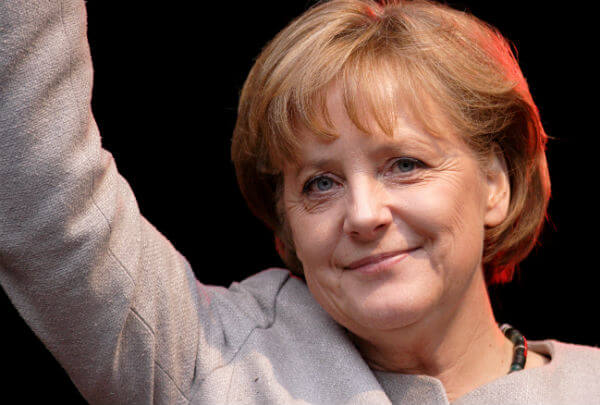
Can Angela Merkel save Europe?

An interview of George Soros by Gregor Peter Schmitz of the German magazine WirtschaftsWoche: Gregor Peter Schmitz: When Time put German Chancellor Angela Merkel on its cover, it called her the “Chancellor of the Free World.” Do you think that is justified?
George Soros: Yes. As you know, I have been critical of the chancellor in the past and I remain very critical of her austerity policy. But after Russian President Vladimir Putin attacked Ukraine, she became the leader of the European Union and therefore, indirectly, of the Free World. Until then, she was a gifted politician who could read the mood of the public and cater to it. But in resisting Russian aggression, she became a leader who stuck her neck out in opposition to prevailing opinion.
She was perhaps even more farsighted when she recognized that the migration crisis had the potential to destroy the European Union, first by causing a breakdown of the Schengen system of open borders and, eventually, by undermining the common market. She took a bold initiative to change the attitude of the public. Unfortunately, the plan was not properly prepared. The crisis is far from resolved and her leadership position—not only in Europe but also in Germany and even in her own party—is under attack.
Schmitz: Merkel used to be very cautious and deliberate. People could trust her. But in the migration crisis, she acted impulsively and took a big risk. Her leadership style has changed and that makes people nervous.
Soros: That’s true, but I welcome the change. There is plenty to be nervous about. As she correctly predicted, the EU is on the verge of collapse. The Greek crisis taught the European authorities the art of muddling through one crisis after another. This practice is popularly known as kicking the can down the road, although it would be more accurate to describe it as kicking a ball uphill so that it keeps rolling back down. The EU now is confronted with not one but five or six crises at the same time.
Schmitz: To be specific, are you referring to Greece, Russia, Ukraine, the coming British referendum, and the migration crisis?
Soros: Yes. And you haven’t even mentioned the root cause of the migration crisis: the conflict in Syria. Nor have you mentioned the unfortunate effect that the terrorist attacks in Paris and elsewhere have had on European public opinion.
Merkel correctly foresaw the potential of the migration crisis to destroy the European Union. What was a prediction has become the reality. The European Union badly needs fixing. This is a fact but it is not irreversible. And the people who can stop Merkel’s dire prediction from coming true are actually the German people. I think the Germans, under the leadership of Merkel, have achieved a position of hegemony. But they achieved it very cheaply. Normally hegemons have to look out not only for their own interests, but also for the interests of those who are under their protection. Now it’s time for Germans to decide: Do they want to accept the responsibilities and the liabilities involved in being the dominant power in Europe?
Schmitz: Would you say that Merkel’s leadership in the refugee crisis is different from her leadership in the euro crisis? Do you think she’s more willing to become a benevolent hegemon?
Soros: That would be asking too much. I have no reason to change my critical views on her leadership in the euro crisis. Europe could have used the kind of leadership she is showing now much earlier. It is unfortunate that when Lehman Brothers went bankrupt in 2008, she was not willing to allow the rescue of the European banking system to be guaranteed on a Europe-wide basis because she felt that the prevailing German public opinion would be opposed to it. If she had tried to change public opinion instead of following it, the tragedy of the European Union could have been avoided.
Schmitz: But she wouldn’t have remained chancellor of Germany for ten years.
Soros: You are right. She was very good at satisfying the requirements and aspirations of a broad range of the German public. She had the support of both those who wanted to be good Europeans and those who wanted her to protect German national interest. That was no mean feat. She was reelected with an increased majority. But in the case of the migration issue, she did act on principle, and she was willing to risk her leadership position. She deserves the support of those who share her principles.
I take this very personally. I am a strong supporter of the values and principles of an open society because of my personal history, surviving the Holocaust as a Jew under the Nazi occupation of Hungary. And I believe that she shares those values because of her personal history, growing up under Communist rule in East Germany under the influence of her father, who was a pastor. That makes me her supporter although we disagree on a number of important issues. [Continue reading…]
Behind disputed views of Jewish identity looms a much larger question about the future of inclusive societies
The Guardian reports: The US State Department has moved to back America’s ambassador to Israel in a febrile and escalating row over his remarks on Monday that Israel applied law in the occupied West Bank differently to Palestinians and Israelis.
Ambassador Daniel Shapiro’s unusually critical comments drew harsh criticism from ministers in Israel’s rightwing government – including from the Israeli prime minister, Binyamin Netanyahu.
Shapiro was also publicly lambasted on Israeli television on Tuesday by a former aide to Netanyahu who used the deeply offensive Hebrew word “yehudon” – which translates as “little Jew boy” – to disparage the ambassador. The term is used by rightwing Israelis against other Jews – particularly those in the diaspora – whom they regard as not being sufficiently Jewish or pro-Israel. [Continue reading…]
The remarks by Aviv Bushinsky, who served as Netanyahu’s chief of staff when he was finance minister in Ariel Sharon’s governmen, are reminiscent of an incident reported by the Washington Post in 1997.
U.S. Ambassador Martin Indyk, still seething at a two-week-old slur, ran into his accuser Thursday and fixed him with a glare. According to Ephraim Sneh, a Labor Party member of Israel’s legislature, this is what happened next:
“The last time someone called me a Jew boy,” Indyk said, harking back to school days in Australia, “I was 15 years old and he got a punch in the face.”
A right-wing legislator, Rehavam Zeevi, had indeed called Indyk a yehudon — Hebrew invective translated variously as “Jew boy,” “yid,” or “kike” — at a parliamentary caucus late last month. He looked up from his seat at a memorial service for the late Yitzhak Rabin and glared back at Indyk. “Try me,” Zeevi replied. Then, taunting Indyk, he added distinctly: “yehudon, yehudon.”
Zeevi, a retired general who is chief of the ultranationalist Moledet (Homeland) party, apparently meant to say that Indyk, the first Jewish U.S. ambassador here, betrayed his coreligionists by pressuring the Israeli government for concessions in peace talks with the Palestinian Authority. Zeevi’s political platform, the most extreme of any party in the parliament, calls for expulsion of Arabs from the West Bank to make room for Jews.
A.B. Yehoshua, one of Israel’s most famous novelists, has for many years been among the most vocal in promoting this view that Jews who remain living outside Israel are only, as he says, “partial Jews.”
But instead of being preoccupied with where Jews plant their bodies, he and those who share his views, might consider where the Jewish conscience may better thrive.
In 2003, Avraham Burg, former member of the Knesset, a chairman of the Jewish Agency for Israel and a Speaker of the Knesset, who was born in Jerusalem, wrote:
It turns out that the 2,000-year struggle for Jewish survival comes down to a state of settlements, run by an amoral clique of corrupt lawbreakers who are deaf both to their citizens and to their enemies. A state lacking justice cannot survive. More and more Israelis are coming to understand this as they ask their children where they expect to live in 25 years. Children who are honest admit, to their parents’ shock, that they do not know. The countdown to the end of Israeli society has begun.
It is very comfortable to be a Zionist in West Bank settlements such as Beit El and Ofra. The biblical landscape is charming. From the window you can gaze through the geraniums and bougainvilleas and not see the occupation. Traveling on the fast highway that takes you from Ramot on Jerusalem’s northern edge to Gilo on the southern edge, a 12-minute trip that skirts barely a half-mile west of the Palestinian roadblocks, it’s hard to comprehend the humiliating experience of the despised Arab who must creep for hours along the pocked, blockaded roads assigned to him. One road for the occupier, one road for the occupied.
This cannot work. Even if the Arabs lower their heads and swallow their shame and anger forever, it won’t work. A structure built on human callousness will inevitably collapse in on itself. Note this moment well: Zionism’s superstructure is already collapsing like a cheap Jerusalem wedding hall. Only madmen continue dancing on the top floor while the pillars below are collapsing.
As much as all of this might sound purely like a struggle over Jewish identity, it mirrors an affliction in which people across the globe withdraw into their various ethnic, religious, or ideological ghettos of identification and their cherished definitions of my people.
The testing ground for challenging this trend is now Europe.
Last year, Burg wrote:
In a generation in which we Israelis have forgotten how to be sensitive and empathetic to minorities, to those who are different, to the persecuted, and many American Jews are swallowed up in their comfort zones of white society and are abandoning their partnership with the “others,” in America, the “United States of Europe” is presenting a new model of identity – a union between those who are different, and the “other.” It’s a model no different from the American one which seeks to assimilate all into a monochromatic American democracy.
Further, Europe is the current meeting point between Islam and the West. Some of that encounter involves clashes, and some involves learning. The Christian continent is learning to make space for other, rich and varied identities. My friends, Ziya from Bangladesh, Shaida whose family is from Turkey and Rob from Jamaica, are impressive Europeans, and Europe is better off with them. Just like Shaul from Venice, Yoop from Amsterdam and Brian from London – there is no dissonance between their Jewish heritage and their European identity. The discourse between white, Christian Europe and those who are different is fascinating. More important is the dialogue between Western Europe and the Muslim forces in its midst.
The Muslim world and some of its members are embarking on a long journey toward the Western values of freedom, equality and brotherhood. The institutionalization of Western Islam in the heart of Europe – that which is absorbing values of democracy while remaining true to Muslim tradition – is where the strategic potential exists for bridging the gaps peacefully in the generations to come. It’s not happening in the Middle East or North America, but only in Europe. That is where the vanguard of humanity and humaneness is to be found.
Since Burg wrote this, the vision of Europe has become profoundly challenged by an expanding refugee crisis, acts of terrorism, growing nationalism, cultural protectionism, and the drumbeats of xenophobia and Islamophobia.
Both in Europe and the U.S., it often seems like the political momentum favors those who promote retreat in its various forms — through strengthening borders, heightened national security, and disengagement from foreign affairs.
At the same time, the inexorable global trends point in the opposite direction as populations expand and people choose or are compelled to cross borders.
In such a world, the task of building more inclusive societies is not an idealistic goal; it has become an urgent necessity.

Canadians learning Arabic to welcome Syrian refugees
CBC News reports: Many Syrian refugees have already arrived and more are coming to the Waterloo Region [in Southern Ontario], leading some to wonder about what we can do to make these people feel at home in a new country.
In Waterloo Region, a crash course in conversational Arabic is available to residents and several have leaped at the opportunity to learn new language while becoming more useful to those arriving. The workshop is meant to teach private refugee sponsors and volunteers.
An organization known as Bring Back Hope, which was founded by Iman Arab, is working in association with Muslim Social Services to put together the four-hour course. The sessions are facilitated by Dr. Amir Al-Azraki, who teaches Arabic at the University of Waterloo and is also a lecturer and playwright.
Leanne Brown works with Carizon Family and Community Services as a school mental health co-ordinator and told CBC’s Melanie Ferrier that the opportunity to help others makes her feel really good.
“I’m here to learn Arabic because of the new refugees coming into our city and just to know how to make them feel welcome,” Brown said. “It’s pretty easy, actually. And I guess for me, learning a new language is very exciting.” [Continue reading…]
How British do British Muslims feel?
By Saffron Karlsen, University of Bristol
The prime minister, David Cameron, has launched a number of measures aimed at improving integration among Muslims – in particular, Muslim women – in the UK. Polls show that around 70% of people don’t think Muslims are well integrated into British society and concern that Muslim people living in Britain do not feel British has long been part of broader discussions around extremism.
So, now seems like a good time to take a closer look at how British Muslims actually feel about their place in society and to explore the link between segregation and extremism in greater depth. Along with Professor James Nazroo, I conducted research into these issues using nationally representative data, collected in 2008/09 from almost 5,000 people with different ethnic and religious backgrounds, as a part of the Home Office Citizenship Survey. We found that these ideas about British Muslims are not backed up by evidence.
Rebuilding Kobane
Tom Anderson and Eliza Egret write: “We have cleared 1.5 million tonnes of rubble,” Abdo Rrahman Hemo (known as Heval Dostar), head of the Kobanê Reconstruction Board, tells us humbly as we sit in his office in Kobanê city in November 2015. But as we walk through the bombed streets, with collapsed buildings all around us and dust filling our lungs, it’s hard to believe that Kobanê could have been any worse. “We have estimated that 3.5 billion dollars of damage has been caused,” he continues.
It’s been one year since the US bombing of Kobanê – then partly occupied by Daesh – and most of the buildings are still in tatters. Kobanê is in Rojava (meaning ‘west’ in Kurdish), a Kurdish majority region in the north of Syria that declared autonomy from the Assad regime in 2012.
When Daesh approached, the majority of those who were not involved in defending the city left, most to neighbouring Turkey. The People’s Protection Units of the YPG and YPJ remained to defend the city, and were eventually given air support by the US. Most of the refugees have now returned, only to find a city almost entirely destroyed and littered with mines and booby traps, planted by Daesh before they were defeated. As we walk around, a family waves at us from the wreckage of their home, which no longer has three of its walls. Washing lines are hung up and clothes are dried amongst the wrecked houses as people continue their daily lives.
So why is Kobanê still in ruins one year on? Unsurprisingly, the US – whose bombs caused the majority of destruction in Kobanê – has not provided any support for the reconstruction. This is a mixed blessing, as US reconstruction efforts are aimed at creating markets for US companies and generating allies for US foreign policy. But it leaves a vacuum that grassroots solidarity movements need to fill. [Continue reading…]
Northern Iraq: Satellite images back up evidence of deliberate mass destruction in Peshmerga-controlled Arab villages
Amnesty International reports: Peshmerga forces from the Kurdistan Regional Government (KRG) and Kurdish militias in northern Iraq have bulldozed, blown up and burned down thousands of homes in an apparent effort to uproot Arab communities in revenge for their perceived support for the so-called Islamic State (IS), said Amnesty International in a new report published today.
The report, Banished and dispossessed: Forced displacement and deliberate destruction in northern Iraq, is based on field investigation in 13 villages and towns and testimony gathered from more than 100 eyewitnesses and victims of forced displacement. It is corroborated by satellite imagery revealing evidence of widespread destruction carried out by Peshmerga forces, or in some cases Yezidi militias and Kurdish armed groups from Syria and Turkey operating in coordination with the Peshmerga.
“KRG forces appear to be spearheading a concerted campaign to forcibly displace Arab communities by destroying entire villages in areas they have recaptured from IS in northern Iraq. The forced displacement of civilians and the deliberate destruction of homes and property without military justification, may amount to war crimes,” said Donatella Rovera, Amnesty International’s Senior Crisis Response Advisor, who carried out the field research in northern Iraq. [Continue reading…]
U.S. ‘takes control’ of Rmeilan airfield in Syria
Al Jazeera reports: US troops have taken control of Rmeilan airfield in Syria’s northern province of Hasakah to support Kurdish fighters against the Islamic State of Iraq and the Levant (ISIL), a spokesperson for the Syrian Democratic Forces (SDF) told Al Jazeera.
The airfield near the city of Rmeilan, which will become the first US-controlled airbase in Syria, was previously controlled by the US-backed Kurdish People’s Protection Units (YPG).
The airfield is close to Syria’s borders with Iraq and Turkey.
“Under a deal with the YPG, the US was given control of the airport. The purpose of this deal is to back up the SDF, by providing weapons and an airbase for US warplanes,” Taj Kordsh, a media activist from the SDF told Al Jazeera on Tuesday.
“This airport was previously controlled by the YPG for over two years now. This strategic airport is close to several oil bases – one of the biggest in this area. [Continue reading…]