Category Archives: Lands

Iran’s elite Guards to gain regional, economic power in post-sanctions era

Reuters reports: Iran’s Revolutionary Guards did well under international sanctions, and the elite military force is destined to become still richer now they’ve been lifted.

Iran’s clerical rulers have supported economic growth of the Guards, rewarding the group for sanctions-busting as well as suppressing dissent at home and helping Tehran’s allies abroad – notably Syrian President Bashar al-Assad.

Now the country is expecting an economic boom in the post-sanctions era and the Iranian Revolutionary Guards Corps (IRGC), will be a beneficiary. Likewise, the leadership will ensure it is well funded to continue the effort in the regional crisis, including the Syrian civil war.

The Guards aren’t entirely off the hook, even though the United States, European Union and United Nations lifted most sanctions on Saturday under a deal with world powers where Tehran agreed to curbs on its nuclear program. [Continue reading…]

Facebooktwittermail

UN reports nearly 19,000 Iraqi civilian deaths in 22 months

The New York Times reports: Nearly 19,000 Iraqi civilians have died and more than three million have fled their homes over a 22-month period marked by a “staggering” level of violence, the United Nations said on Tuesday, in a report that starkly demonstrated why huge numbers of Iraqis were seeking refuge in Europe.

Fighting between the Islamic State, Iraqi security forces and pro-government militias from the start of 2014 to the end of October 2015 left at least 18,802 civilians dead, the United Nations mission in Iraq said in a report compiled jointly with the organization’s human rights office in Geneva.

Nearly double that number of civilians has been wounded in the fighting, the report said, adding that officials had emphasized that the casualty estimates were a minimum.

“Even the obscene casualty figures fail to accurately reflect exactly how terribly civilians are suffering in Iraq,” the United Nations human rights chief, Zeid Ra’ad al-Hussein, said in a statement, which noted that “countless others” had died from the lack of access to food, water and medical care. [Continue reading…]

Facebooktwittermail

The opening up of Iran will mean a return to barbarity as usual

Paul Mason writes: “This is a good day,” said Barack Obama, announcing the end of nuclear sanctions against Iran, “because, once again, we’re seeing what’s possible with strong American diplomacy.” The deal, accompanied by a prisoner swap and the release of frozen Iranian funds, signals the end of Iran’s nuclear ambitions.

But it is not a triumph of “strong American diplomacy”. It is testimony to America’s weakness and incoherence, in the very region where it has concentrated its military and diplomatic force for decades. As for Iran, with the nuclear programme gone, and its iconic American prisoners released, normal levels of barbarity can now be resumed.

First, there is the ordinary repression: convicts – two-thirds of them drug dealers or drug users according to the UN – were being executed at the rate of three per day last year, the highest per-capita execution rate in the world. Then there’s the suppression of trade unions. Iran arrested 233 labour activists in the year to May 2015. All strikes and labour agitation are treated as threats to national security by the Revolutionary Guards, the hardline military force that enforces Islamic discipline at home while spearheading military operations abroad. Finally, there is the outright political repression that has left two presidential candidates from the “green” protests of 2009 – Mehdi Karroubi and Mir Hossein Mousavi – under house arrest, and hundreds of other human rights activists, lawyers, journalists and scientists detained.

As western businesses rub their hands at the prospect of renewed access to this market of 78 million consumers, it’s worth remembering what the purpose of all this repression is. Industry is militarised: huge swathes of the economy are owned by the Revolutionary Guards themselves. With their front companies de-listed and given new access to the international bank clearing system, many of the Guards’ leaders will now get very rich. The workforce, deprived of all basic rights to organise, their jobs totally precarious, and with 70% earning less than the official poverty level, will get the chance to be exploited by global capital, not just the Guards, the mullahs and their cronies.

You could lament all of the repression, yet still celebrate the Iran deal as a diplomatic achievement and de-escalation of conflict, if Washington was demonstrating any sign of a coherent regional policy. But it is not.

On the same day Obama lifted nuclear sanctions, he imposed a whole new set of sanctions on Iran for testing a long-range missile. At the same moment, Iran’s Lebanese proxy, Hezbollah, was fighting alongside its ally President Assad in Syria – against both Islamic State and the moderate opposition backed by America. Soldiers from Iran’s Quds force continue to prop up the Shia dominated government in Iraq. And the west’s regional ally, Saudi Arabia, continues to escalate its standoff with Iran after failing to scupper the nuclear deal by executing a Shia cleric.

If your brain is struggling to impose coherence on this picture of half-alliances, provocations and incessant death, that is no accident. Even those with intricate knowledge of the region cannot fathom what the Obama administration is trying to achieve. [Continue reading…]

Facebooktwittermail

UN knew for months that Syrians were starving in Madaya under Hezbollah siege

Roy Gutman writes: Until the beginning of this month, Madaya was an obscure town in southwestern Syria, overshadowed by nearby Zabadani, where opposition rebels had fought a fierce battle against President Bashar al-Assad’s regime and more recently Hezbollah. But today, as international relief convoys arrive with food and medicine to lift a starvation siege, Madaya has become the focal point of Syrian aid workers’ anger at the United Nations, who accuse the international body of giving higher priority to its relationship with Damascus than to the fate of Madaya’s beleaguered residents.

Madaya was the worst off of all the besieged towns in Syria, relief workers say. As early as October, locals in the town had been raising alarms about the dire humanitarian situation there. At least six children and 17 adults starved to death in December, and hundreds more risked starvation.

U.N. officials knew this — but until shocking images of starving infants started circulating and news media sounded the alarm, it remained silent, reserving alarm for an unpublished internal memo.

The “Flash Update” issued on Jan. 6 by the U.N. Office for the Coordination of Humanitarian Affairs (OCHA), which negotiates aid deliveries, spoke of “desperate conditions,” including “severe malnutrition reported across the community,” and said there was an “urgent need” for humanitarian assistance. In October, community leaders reported some 1,000 cases of malnutrition in children under the age of 1, it said.

But the general public could not have known this, because OCHA classified the bulletin as “Internal, Not for Quotation.” OCHA had no immediate comment on why the update, leaked to Foreign Policy, wasn’t published.

The U.N.’s months-long silence on the starvation in Madaya is one of the reasons for the disquiet roiling the community of international and Syrian relief officials. Another is its oft-repeated claim that no one siege is that important but that all should be lifted, a goal that appears beyond reach. When Yacoub el-Hillo, the U.N.’s humanitarian coordinator for Syria, addressed reporters on Jan. 12, a day after leading the first convoy into the town, he described Madaya residents as “a people that are desperate; a people that are cold; a people that are hungry; a people that have almost lost hope” — but he blamed no one in particular for this state of affairs and made no mention of the Lebanese paramilitary group Hezbollah, which in fact is maintaining the siege against Syrian civilians in Madaya.

Instead, he swung into a familiar U.N. litany: The siege of rebel-held Madaya was just like the sieges mounted by the Islamic State or Syrian rebels against government-held regions. [Continue reading…]

Facebooktwittermail

ISIS is leading Turkey’s AK Party into a trap

While reviewing a recent ISIS propaganda video, “Turkey and the Fire of Racism,” Hilmi Demir writes: [ISIS] presents itself as a force for correcting nationalism and returning humanity to the natural flow of its history. In this sense, it is not unlike Communism, which advertised a humane post-capitalist utopia. In the video, scenes displaying nationalism, such as Hitler’s Germany, Nasser’s Egypt and Atatürk’s Turkey have an industrial feel to them, often from old newsreels or deliberately distorted images. In contrast, ISIL militants talking into the camera invariably sit against a background of greenery — trees or shrubbery. Before the militants speak, the camera shows cuts of children playing, and birds gliding over a pristine pond. The underlying message is that ISIL is the only polity in the world in sync with God’s creation.

A part of the video features a militant speaking in Kurdish (with Turkish and Arabic subtitles), in an appeal to “Muslim Kurds, especially those living in Turkey.” ISIL here is seeking to establish its credentials as a post-racial society. Addressing the Marxist-Leninist Kurdish Workers’ Party (PKK), the militant asks, “Do you believe that your salvation will come from the hands of atheists [the PKK and its backers]?” He continues, “Under the shadow of Sharia, the only thing separating Arab and non-Arab alike is their piety,” he says. In its own way, ISIL is making a progressive claim. Unlike Turkey, which it sees as being dominated by a single “tribe,” everyone in ISIL territory is equal under its law.

International observers who accuse the ruling Justice and Development Party (AK Party) of aiding ISIL might be surprised that the video takes the longtime Islamist government into its crosshairs. The AK Party, according to the video, clothes itself in Islamist rhetoric while acting as the “Crusaders’ hand of tyranny in the region.” Turkish President Recep Tayyip Erdogan is specifically labeled an apostate who perpetuates the secular agenda of Turkey’s foundation. [Continue reading…]

Facebooktwittermail

Jailed Turkish editor slams EU deal with Erdoğan’s ‘fascist government’

The Guardian reports: The editor of Turkey’s most influential dissident newspaper has said in an interview from his prison cell that the country’s ongoing crackdown on journalists is the worst in its history and that he was imprisoned for doing his job.

Can Dündar, the editor-in-chief of Cumhuriyet, also said the EU was betraying its democratic values by seeking a rapprochement with the Turkish president, Recep Tayyip Erdoğan, in the hope that he would stem the flow of refugees into Europe while ignoring human rights violations.

“We always looked at the European Union as an anchor, a model to raise the standard of democracy in Turkey to universal levels, not as leverage to dictatorships,” he said. “Now, if the EU, in order to stop the influx of refugees by turning our lands into a big concentration camp, agrees to turn a blind eye while Erdoğan spurns democracy, human rights, freedom of press and rule of law, it means that the EU is discarding its founding principles in order to protect its short-term interests.” [Continue reading…]

Facebooktwittermail

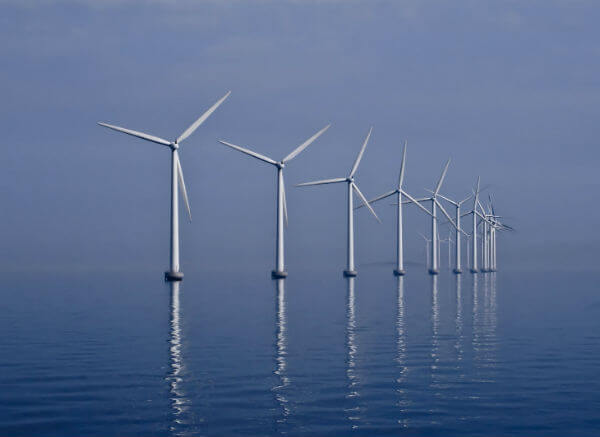
Denmark just broke a world record for wind power — again

denmark-wind-power

Climate Progress reports: One European country can’t seem to stop breaking records when it comes to wind power.

In 2015, Denmark produced almost half of its electricity from wind power, breaking a world record for the most wind production ever recorded — a world record set last year, by Denmark.

The record 42 percent electricity generated from wind represents a three percent increase from the 39 percent it generated in 2014, which at the time broke the world record for the most electricity from wind production by a single country. According to the Danish national grid operator Energinet, this year’s number represents both the highest figure ever and the highest proportion of electricity from wind for any country.

Moreover, for 16 percent of the year, two Western regions in Denmark produced more electricity than the region’s residents consumed, leading to an electricity surplus. While it’s not unusual for wind power production to exceed consumption some of the time, the fact that it happened for such a significant period of time means that Denmark can sell surplus energy to consumers in Norway, Sweden, and Germany. Denmark also imports some hydroelectric power from Norway and solar energy from Germany. [Continue reading…]

Facebooktwittermail

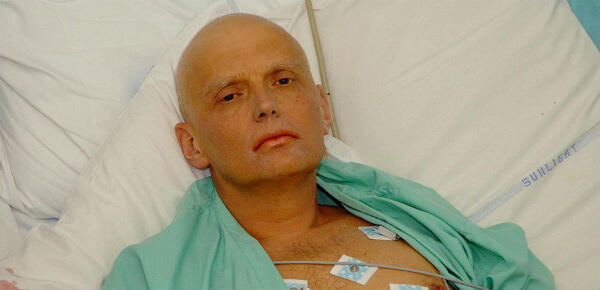
Alexander Litvinenko: The man who solved his own murder

Alexander-Litvinenko

Luke Harding writes: The Millennium hotel is an unusual spot for a murder. It overlooks Grosvenor Square, and is practically next door to the heavily guarded US embassy, where, it is rumoured, the CIA has its station on the fourth floor. A statue of Franklin D Roosevelt – wearing a large cape and holding a stick – dominates the north side of the square. In 2011 another statue would appear: that of the late US president Ronald Reagan. An inscription hails Reagan’s contribution to world history and his “determined intervention to end the cold war”. A friendly tribute from Mikhail Gorbachev reads: “With President Reagan, we travelled the world from confrontation to cooperation.”

The quotes would seem mordantly ironic in the light of events that took place just around the corner, and amid Vladimir Putin’s apparent attempt to turn the clock back to 1982, when the former KGB boss Yuri Andropov – the secret policeman’s secret policeman – was in charge of a doomed empire known as the Soviet Union. Next to the inscriptions is a sandy-coloured chunk of masonry. It is a piece of the Berlin Wall, retrieved from the east side. Reagan, the monument says, defeated communism. This was an enduring triumph for the west, democratic values, and for free societies everywhere.

Five hundred metres away is Grosvenor Street. It was here, in mid-October 2006, that two Russian assassins had tried to murder someone, unsuccessfully. The hitmen were Andrei Lugovoi and Dmitry Kovtun. Their target was Alexander Litvinenko, a former officer in Russia’s FSB spy agency. Litvinenko had fled Moscow in 2000. In exile in Britain he had become Putin’s most ebullient and needling critic. He was a writer and journalist. And – from 2003 onwards – a British agent, employed by MI6 as an expert on Russian organised crime. [Continue reading…]

Facebooktwittermail

Palestine must stand in solidarity with the Syrian people

Mariam Barghouti writes: When Syrians were chanting “revolution, revolution, Syria! Revolution of dignity and freedom” in the streets of Damascus in 2011, they undoubtedly expected suppression from the regime of Bashar al-Assad. What they probably did not foresee, however, is complacency from the international community, including from Palestinians.

But, that is what they received. The Syrian conflict has uncovered disturbing shortcomings and contradictions among those who fight in the name of Palestine.

When Palestinians are being assaulted by Israeli forces, we often cry out “Where are the Arabs! Where are you, oh Arabs?” Yet, now that it is our turn to extend solidarity, we have become as faceless as our revered Handala.

Renowned Palestinian writer and thinker Ghassan Kanafani once wrote, “[i]f we were failing in defending the cause; then we ought to change the fighters and not the cause.” By failing to stand with our Arab brethren fighting in Syria, we have betrayed Palestine and tainted the principles that gave birth to the Palestinian cause, namely dignity and justice.

As we enter the Syrian civil war’s fifth year, I say to my fellow Palestinians: it is time – albeit very late – to stand in solidarity with the Syrian people. [Continue reading…]

Facebooktwittermail

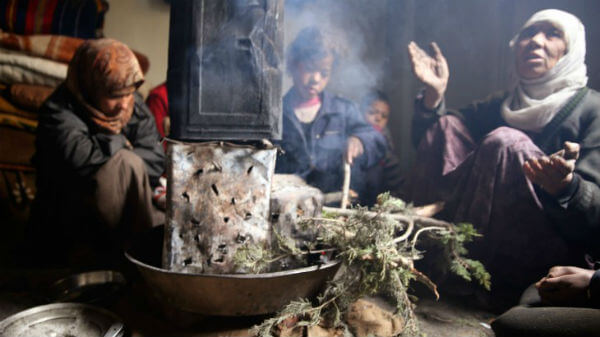
Madaya: A huge concentration camp where Hezbollah starves people to death

madaya

Azzam Tamimi writes: Lebanon’s Hezbollah was, until a few years ago, an inspiration to millions of people in the Middle East and around the world. It was a symbol of heroic resistance putting up a long fight to liberate the occupied territories of south Lebanon and continuing to stand up to Israeli aggression post-liberation.

There was a time when Hassan Nasrallah, Hezbollah’s leader, was hailed as “master of the resistance”. His pictures were posted all over Palestinian refugee camps in Lebanon and were treasured by households across the Arab world. When he gave one of his usually long speeches, people were glued to TV sets and his Almanar satellite TV channel was no less popular than Al Jazeera itself. Many Palestinians truly believed Nasrallah was such a great resistance leader and they wished they had someone like him to lead their own resistance.

Yet today Hezbollah has lost much of the popular support and sympathy it once enjoyed and its leader Nasrallah is ridiculed and condemned by many of those who previously adored him. It is fighting a completely different type of war. Acting upon instructions from its sponsors in Tehran, where a reactionary clerical regime reigns, it is fighting a war in defence of a corrupt despotic regime that reigns in Damascus.

Unlike Hezbollah, Hamas, the Palestinian Islamic Resistance Movement – which saw itself as a partner of Hezbollah in the struggle against Zionism, refused to bow to pressure from the Iranians. Although Syria was, according to Hamas leader Khaled Meshaal, the best haven Hamas ever had outside Palestine, the movement opted to sacrifice all the privileges it had there so as to avoid taking any part in oppressing the Syrian people.

Since leaving Damascus four years ago, Meshaal turned down several invitations from the Iranians to visit Tehran, whose rulers made his visit a precondition for the resumption of any financial aid. Undoubtedly, the Syrian crisis drove deep a wedge between Hamas on the one hand and Hezbollah and Iran on the other. [Continue reading…]

Facebooktwittermail

Iran parliament candidates: 99% of reformists rejected

AFP reports: Around 60 percent of would-be candidates for Iran’s parliamentary vote in February including many reformists have been rejected by the authorities, official media reported Monday.

“Out of more than 12,000 registered candidates, 4,700 — or about 40 percent — were approved,” Siamak Rah-Peyk, a spokesman for the Central Elections Supervising Committee was quoted as saying by state television.

The committee is dependent on the Guardian Council, a panel of conservative clerics and jurists, to vet registered candidates and overseeing the elections.

Reformist parties have protested against the rejections.

“Out of over 3,000 reformist candidates across the country, only 30 have been approved — only one percent,” Hossein Marashi, an official from the reformist camp, was quoted as saying in the Shaugh daily. [Continue reading…]

Facebooktwittermail

U.S. prisoner swap may help Iran arm Assad

Josh Rogin writes: In exchange for the release of four American prisoners, the Barack Obama administration agreed to free seven Iranians in U.S. custody and stop trying to arrest 14 others, two of whom the U.S. government had accused of funneling weapons to the Bashar al-Assad regime and Hezbollah in Syria.

For years, Iran’s privately-owned Mahan Air has been using its planes to bring soldiers and arms directly to the Syrian military and the Lebanese terrorist group Hezbollah by flying them from Tehran to Damascus, according to the U.S. Treasury Department. In 2013, Treasury sanctioned Mahan’s managing director, Hamid Arabnejad, for overseeing the company’s efforts to evade U.S. and international sanctions and aiding the Iranian Revolutionary Guards Corps’ elite Quds Force.

“Arabnejad has a close working relationship with IRGC-QF personnel and coordinates Mahan Air’s support and services to the paramilitary group,” the Treasury Department said. “He has also been instrumental in facilitating the shipment of illicit cargo to Syria on Mahan Air aircraft.” [Continue reading…]

Facebooktwittermail

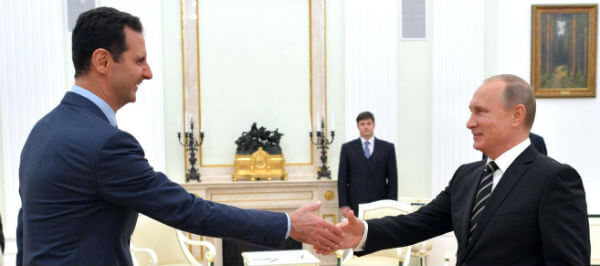
The secret pact between Russia and Syria that gives Moscow carte blanche

assad-putin

The Washington Post reports: When you are a major nuclear power and you want to make a secretive deployment to a faraway ally, what is the first thing you do? Draw up the terms, apparently, and sign a contract.

That’s what the Kremlin did with Syria in August, according to an unusual document posted this week on a Russian government website that details the terms of its aerial support for Syrian President Bashar al-Assad.

Among other revelations in the seven-page contract dated Aug. 26, 2015, the Kremlin has made an open-ended time commitment to its military deployment in Syria, and either side can terminate it with a year’s notice.

Russian military personnel and shipments can pass in and out of Syria at will and aren’t subject to controls by Syrian authorities, the document says. Syrians can’t enter Russian bases without Russia’s permission. And Russia disclaims any responsibility for damage caused by its activities inside Syria. Since Russia’s bombing campaign started at the end of September, Assad’s forces have been able to recapture some territory from rebels, and much of the humanitarian aid to the country has come to a halt. A war that already looked intractable now seems more so. [Continue reading…]

Jadaliyya has an English translation of the contract.

Facebooktwittermail

Two Iranian poets, facing lashings and prison, escape country

Fatemeh-Ekhtesari-Mehdi-Mousavi

The Associated Press reports: Two Iranian poets who face lashings and prison sentences have fled Iran, one of the writers said Monday, a rare escape for local artists and activists ensnared in an ongoing crackdown on expression in the country.

Fatemeh Ekhtesari and Mehdi Mousavi’s freedom came as world powers lifted sanctions on Iran over its contested nuclear program and as the country separately freed four Iranian-Americans in exchange for seven Iranians held in the U.S.

The poets’ escape is a reminder that despite the growing detente with the West, hard-liners still exert control over much of life in the Islamic Republic.

Ekhtesari told The Associated Press on Monday that both she and Mousavi escaped from Iran in recent days and made it to another country. She declined to elaborate out of continuing concerns about their safety.

Ekhtesari faced an 11½-year prison sentence, while Mousavi faced nine years on charges ranging from propaganda against the state to “insulting sanctities.” Each was sentenced to 99 lashings. They likely were targeted because their work is known abroad. Both are self-described “postmodern Ghazal” poets who seek to revive the traditional Persian love sonnet by applying it to contemporary political and social issues. [Continue reading…]

Facebooktwittermail

U.S. investigating Moscow’s divide and rule strategy in Europe

The Telegraph reports: American intelligence agencies are to conduct a major investigation into how the Kremlin is infiltrating political parties in Europe, it can be revealed.

James Clapper, the US Director of National Intelligence, has been instructed by the US Congress to conduct a major review into Russian clandestine funding of European parties over the last decade.

The review reflects mounting concerns in Washington over Moscow’s determination to exploit European disunity in order to undermine Nato, block US missile defence programmes and revoke the punitive economic sanctions regime imposed after the annexation of Crimea.

The US move came as senior British government officials told The Telegraph of growing fears that “a new cold war” was now unfolding in Europe, with Russian meddling taking on a breadth, range and depth far greater than previously thought.

“It really is a new Cold War out there,” the source said, “Right across the EU we are seeing alarming evidence of Russian efforts to unpick the fabric of European unity on a whole range of vital strategic issues.”

A dossier of “Russian influence activity” seen by The Sunday Telegraph identified Russian influence operations running in France, the Netherlands, Hungary as well as Austria and the Czech Republic, which has been identified by Russian agents as an entry-point into the Schengen free movement zone.

The US intelligence review will examine whether Russian security services are funding parties and charities with the intent of “undermining political cohesion”, fostering agitation against the Nato missile defence programme and undermining attempts to find alternatives to Russian energy.

Officials declined to say which parties could come into the probe but it is thought likely to include far-right groups including Jobbik in Hungary, Golden Dawn in Greece, the Northern League in Italy and France’s Front National which received a 9m euro (£6.9m) loan from a Russian bank in 2014. [Continue reading…]

Facebooktwittermail

ISIS in Gaza

Sarah Helm writes: In a house in Rafah, at the southern edge of Gaza, I met Sheikh Omar Hams, fifty-one years old, a slender figure dressed in a simple white robe and seated on a mattress on the floor. Hams is director of the Ibn Baz Islamic Institute, based in Rafah, where it also runs a bakery and charity outlets. His mission, he says, is to spread the word of the Prophet Muhammad and to give bread and other aid to the homeless and the poor.

Hams is a Salafist sheikh. “A Salaf means an original ancestor—one of those who lived close to the Prophet and observed his actions intimately, followed his ways and his words literally,” he explains. The sheikh teaches his students how to return to those ways, and they in turn spread the word. Unlike many Salafis, who abhor any rational argument about the literal meaning of the Koran, Hams is open to at least some debate. And though sometimes willing to support violent jihad, he accepts that violence is often not justified, preferring instead to secure a return to original Islam through the use of prayer, study, and preaching.

Pulling his legs underneath him, the sheikh prepares for questions on how the Prophet might have viewed the methods of Daesh (ISIS) — also Salafists — and on the battle to contain its influence across the world, most particularly here in Gaza.

Since 2007 Hamas has been the de facto government of Gaza, albeit under Israeli rule — a rule implemented nowadays by means of a military and naval blockade by air, land, and sea, which is described by the United Nations Secretary General, Ban Ki Moon, as “a collective penalty against the people of Gaza.” Hamas is itself an Islamist resistance movement, with a resistance “army” called al-Qassam, but Hamas members are seen as infidels by ISIS since they place the nationalist battle for a Palestinian state before the campaign for a caliphate. Hamas’s willingness to negotiate with Israel and to agree to a cease-fire last summer was seen by ISIS as the latest demonstration of its collaboration. ISIS supporters inside Gaza have shown their opposition and tried to break the cease-fire by firing rockets into Israel, thereby angering Hamas and risking heavy Israeli retaliation. [Continue reading…]

Facebooktwittermail

Genocide in Diyala: Iraqi officials warn of sectarian cleansing

The New Arab reports: Iraqi officials have raised the alarm of a “genocide” against Sunni Muslims in the eastern province of Diyala, where Shia militia groups wield huge influence.

The warnings come after the Islamic state group [IS] carried out twin bombings at a cafe frequented by government-allied militiamen in the Diyala town of Miqdadiyah on Monday, killing at least 24 people and wounding 52.

Angry mobs responded to the Miqdadiyah bombings by blowing up several Sunni mosques, completely destroying two of them, killing an imam, and burning Sunni-owned houses and shops. [Continue reading…]

Facebooktwittermail

Was the Iran deal worth it?

iran-deal

Last July, after the Joint Comprehensive Plan of Action agreement on Iran’s nuclear program had been reached in Vienna, Shadi Hamid wrote: It was clear from the start of the uprising [in Syria] that Obama did, in fact, have a clear objective – minimizing U.S. involvement as much as possible. But there are other places, such as Iraq, where the Obama administration was pulled back in despite (or, more likely, because of) its best efforts. The unwillingness to rethink Syria strategy in any serious way has been reinforced by the momentum of the Iran negotiations. Why rock the boat and potentially provoke a major international incident, when progress was being made on Iran’s nuclear program? Why even take the chance with so much at stake? “Linkage,” moreover, was been built in to the policy process. As the journalist Josh Rogin noted: “All Syria proposals at State must go through the office of the undersecretary for political affairs, Wendy Sherman, who is also the administration’s lead negotiator over a nuclear deal with Iran.”

On the specifics of a deal, I tend to think, like many, that the U.S. made too many concessions, without getting enough in return. According to the New York Times, in the final days of talks, a television anchor on a hardline Iranian channel said: “The fact is, Obama needs this deal much more than we do.” She went on: “The American president needs a victory, and only a deal with Iran can give him that. They have retreated on several issues and compromised on their own red lines.” Whether or not this perception is fair, it’s a perception nonetheless, and perceptions drive behavior.

Others have noted that Iran, due to its deteriorating economy, needed a deal more than the U.S. did. This is almost certainly true. But while Iran may have needed it more, the U.S. wanted it more – or, at the very least, seemed like it did. Some of this, to be fair, was outside the U.S.’s control. The perception had already solidified throughout the region, drawing on 6 years of observing the Obama administration’s handling of various crises, most notably the backing down from stated “red lines” in Syria. Allies, such as Egypt, and enemies, such as Syria, have grown confident that we’ll blink first in a staring contest, in part because we usually do. This was why I was skeptical that any final deal could ever be the best possible deal. The administration has had tendency to misuse and/or underestimate its leverage in some of our most important bilateral relationships. As the negotiations wrapped to a close, there was no obvious way to address this. It was too late. We couldn’t change how Iran viewed the Obama administration.

There was a related asymmetry during the negotiations. As Pollack writes, “I don’t think that Iran values a nuclear deal as much as it does its positions in these various countries.” With us, it was the reverse: we cared less about Iran’s positions in various countries and more about its nuclear program. This, too, was built in to the talks.

Some are troubled that most people had strong opinions about the deal before reading the actual text of the agreement. One certainly hopes that legislators will eventually read at least some of it. But the specifics of the deal aren’t, ultimately, as important as the broader issues and implications, and those aren’t anywhere to be found in the text. Here, I tend to agree with my colleague Jeremy Shapiro who argued in April that that the devil wasn’t in the details. The details “really don’t matter.” He goes on: “At heart, this is a fight over what to do about Iran’s challenge to U.S. leadership in the Middle East and the threat that Iranian geopolitical ambitions pose to U.S. allies.”

In other words, your position on the Iran deal is likely to depend on how you view the Middle East and America’s role in it more broadly. If you see the Syrian civil war as a, or even the, core regional conflict, then you’re probably worried about the $100 billion in potential sanctions relief. Iran, even we assume it chooses butter over guns as American officials hope and uses, say, only 3 percent of that total, will have $3 billion more to prop up the Syrian regime and other regional allies and proxies. It also depends on your starting assumptions about the nature of the Iranian regime. Are Iranian leaders “rational,” and do you think it matters whether “moderates,” such as President Rouhani and Foreign Minister Zarif, are empowered over their “hardline” counterparts?

For me, at least one other issue comes into play, and it’s a factor which has pushed me to be more supportive of the Iran deal than I expected to be. It’s striking how little discussion there has been about what Iranians think and want. As small-d democrats, Americans should always at least take into account public opinion in other countries. Presumably, Iranians know their country better than American politicians do. According to opinion polls, a majority of Iranians favor a deal. We all saw the pictures of ordinary Iranians celebrating the framework agreement in April. This time around, the regime has been more careful, closing off public spaces, with hardliners warning of the dangers of Iran Deal-induced “happiness.” Importantly, as Nader Hashemi notes, “some of the most vociferous defenders of a nuclear deal with the West are Iranian civil society and human rights activists.” It makes little sense for us to say that an Iran deal will make progress on human rights less likely, when Iran’s own human rights activists seem to think the opposite. In a survey of 22 leading human rights activists, support for ongoing negotiations was “unanimous,” while over half believed that a deal would lead to a significant improvement in human rights in Iran. Of course, they could be wrong, but we shouldn’t bet on that.

To be sure, the link between a deal and the empowerment of Iranian reformers, as intuitive as it might seem, is far from guaranteed. As many have noted, conservatives may be just as likely to gain from a deal for any number of reasons. What seems inescapable, however, is that the failure of negotiations would have been a major, perhaps even decisive loss for Iran’s reformist trend. President Hassan Rouhani, who buoyed expectations with his come-from-behind election victory two years ago, has been losing popularity and goodwill. On human rights, he pledged to expand personal freedoms and broaden space for civil society. As for the economy, it can sputter along, as it has, but without sanctions relief, Rouhani’s hands are tied. His raison d’etre, then, depends on a successful deal. Without one, we would have likely had more of the same: conservatives in control and dominating the country’s politics. Now at the least there is a glimmer of possibility, even if the road toward substantive reforms remains a difficult one.

Taking these various, and very different, factors into account, the deal is, on balance, a mixed bag. I don’t think an Iran nuclear deal deserved the near-obsessive focus it received from this administration. Too much was subsumed and compromised due to the desire for a deal, an administration priority which took precedence over nearly everything else. Now that a deal has been concluded, U.S. officials may have more room to maneuver. Of course, the implementation of a deal will still require constant attention, to say nothing of the domestic fight which is still to come. But perhaps, at some point, the U.S. will be able to act and think beyond Iran’s nuclear program and re-focus attention on the broader issues and conflicts in which Iran plays a major role. The U.S. will now come under pressure to “compensate” (or overcompensate depending on your perspective). It will need to reassure skeptical Gulf allies that it will do more to counter Iran’s regional designs. I agree with Ken Pollack that the best place to do this is probably in Syria. As he writes: “In the aftermath of an Iranian nuclear deal, finally executing the Administration’s proclaimed strategy for Syria, may be the best and only way to regain control over the dangerous confrontation escalating between Iran and America’s Arab allies.”

Now that President Obama’s legacy, however controversial, is secure (both on domestic and foreign policy), he can afford to do the very things he wasn’t willing to do when Iran negotiations were the overwhelming focus. That doesn’t mean he will do them, but that’s where, I hope, the debate over a post-Iran deal Middle East can now turn.

Even after the deal was signed, Obama may have felt his hands remained tied on at least two counts: it remained to be seen whether Iran would follow through in implementing the requirements for sanctions to be lifted, and as we have now just learned, secret negotiations were still under way to secure the release of five Americans imprisoned in Iran. They have now been released and sanctions have been lifted.

One thing that no one was anticipating last July was the impact of Russia’s unforeseen intervention in Syria.

Iran’s president today tweeted:


But stock markets across the Middle East just saw “£27bn wiped off their value” in anticipation of the new wave of Iranian oil flowing into an already flooded market.

Al Jazeera reports:

With the sanctions now removed, Iran is ready to increase its crude oil exports by 500,000 barrels a day, Deputy Oil Minister Amir Hossein Zamaninia was quoted as saying by the Shana news agency on Sunday.

Iran’s return to an already glutted oil market is one of the factors contributing to a global rout in oil prices, which fell below $30 a barrel last week for the first time in 12 years. Iran is the world’s fourth largest oil producer.

The administration sold the Iran deal by claiming that no deal would make another major war inevitable. The ongoing war in Syria was left out of the equation.

The question now is whether that war is any closer to ending or whether, on the contrary, its conclusion is even further away.

I’m inclined to believe that Shadi Hamid’s assessment last July — that Obama’s objective has always been to minimize U.S. involvement in Syria as much as possible — is just as accurate today as it was then.

If Obama is preoccupied with his legacy, he should be asking himself whether his presidency will be remembered more for what he accomplished through negotiations with Iran or more for what he failed to do as the rest of the region unraveled.

Facebooktwittermail