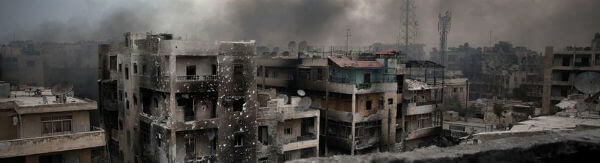
Channel 4 News reports: Abdullah Kurdi, the father of the drowned Syrian boy whose body was photographed on a Turkish beach, will deliver Channel 4’s Alternative Christmas message.
The heartbreaking images, which will be shown as part of the broadcast, shocked the world and came to symbolise the horror of the refugee crisis.
They prompted European leaders to do more to tackle the stark reality of the desperate situation facing many refugees. Abdullah lost his wife Rehanna and two sons: Alan, 3 and Galeb, 5, as they attempted to flee the war ravaging their Syrian homeland.
Over 4 million people have fled the country since the start of the civil war. More than 250,000 have been killed. This year alone 500,000 Syrian refugees attempted to reach Europe and North America.
In the Alternative Christmas Message, which will be broadcast on Christmas Day at 3.35pm on Channel 4, Kurdi calls for empathy and understanding for those caught up in the current refugee crisis:
My message is I’d like the whole world to open its doors to Syrians. If a person shuts a door in someone’s face, this is very difficult. When a door is opened they no longer feel humiliated.
Kurdi appeals as a parent, speaking of the desperation of the Syrian people:
At this time of year I would like to ask you all to think about the pain of fathers, mothers and children who are seeking peace and security.
We ask just for a little bit of sympathy from you.
Kurdi’s powerful words are interspersed with footage of the refugee crisis and the dangerous Mediterranean crossings from Libya to Italy and from Turkey to Greece. [Continue reading…]
Category Archives: Lands
U.S. pursued secret contacts with Assad regime for years
The Wall Street Journal reports: At the center of that effort was a businessman and confidante of Mr. Assad, Khaled Ahmad, who has served as the Syrian leader’s main interlocutor in recent years with Western officials, including U.S. diplomats. Mr. Ahmad didn’t respond to questions sent by The Wall Street Journal.
“Assad was looking for ways to talk to the White House,” said Joshua Landis, a Syria expert and professor at the University of Oklahoma. Mr. Ahmad, a businessman from Homs province, was his point man.
In late 2013, the former ambassador to Damascus Mr. Ford—then a special administration envoy on Syria—met Mr. Ahmad in Geneva ahead of planned peace talks there. Mr. Ford told Mr. Ahmad the U.S. was still seeking a political transition away from Mr. Assad’s rule.
Mr. Ahmad countered that the U.S. and the West should help the Syrian government fight terrorism.
The rise of Islamic State in 2013 caught the U.S. administration off guard. Mr. Assad found in it a better opening to position himself as a partner in a fight against terror consuming the region, and rippling to the West.
By 2014, when the U.S. expanded airstrikes against the militants from Iraq to Syria, State Department officials were making phone calls to their counterparts at the Syrian foreign ministry to make sure Damascus steered clear of U.S. jets in Syrian skies, U.S. officials and others familiar the communications said.
Today, when Washington wants to notify Damascus where it is deploying U.S.-trained Syrian fighters to battle Islamic State so the fighters aren’t mistaken for rebels, Samantha Power, the U.S. envoy to the U.N., dispatches a deputy to talk to the Syrian envoy, Bashar Jaafari, these people said.
The White House says the notifications are not collaboration with the regime. But Mr. Assad has used them to his advantage.
“The regime was re-legitimized,” said Ibrahim Hamidi, a Syrian journalist who until 2013 ran the Damascus bureau for Al Hayat, a major pan-Arab newspaper. “Any communication with the U.S.—even the perception of it—gives them the upper hand.” [Continue reading…]
Syria: Steps toward peace or deepening intractability?
The Brookings Doha Center (BDC) hosted a panel discussion on December 8, 2015, about the status of the Syrian conflict and the possibility of negotiating peace in Vienna next year.
The Taliban winter offensive bodes ill for Afghanistan’s future
By Amalendu Misra, Lancaster University
The world will mark the 15th anniversary of its military operations in Afghanistan under a dark cloud. After all the efforts of a coalition of 40 powerful countries, over US$1 trillion spent and thousands of uniformed lives lost, the primary objective of the mission undertaken in 2001 has not been met – and war has become the seemingly insurmountable status quo for Afghanistan.
And as the UK announced it was deploying personnel to help try and save the troubled Helmand province and the town of Sangin, one cannot but accept the fact that the dreaded Taliban is back with a bang – and that the rest of the world is nowhere near defeating it. The Taliban would appear to be in a resurgent mode across the country, and many Afghans now believe it’s winning. How did we get it so horribly wrong? Who screwed it up?
A chorus of events has helped the Taliban’s consolidation in recent years. While the end of NATO-led combat operations in 2014 removed any large strategic challenges, it is the fact that Afghanistan is a dysfunctional state, which has proved to be the biggest boon to the Taliban’s revival.
Russia gives intelligence to Taliban and weapons to their enemy, the Afghan government
The Washington Post reports: A Kremlin official said Wednesday that Russia was exchanging information with the Taliban, the Islamist insurgency that the United States has been fighting in Afghanistan since 2001, as a bulwark against the spread of the Islamic State militant group in that country.
Zamir Kabulov, a Foreign Ministry department head and President Vladimir Putin’s special representative for Afghanistan, told the Interfax news agency that “the Taliban interest objectively coincides with ours” in the fight against the Islamic State, which has captured broad swaths of territory in Syria and Iraq.
“I have already said earlier that we and the Taliban have channels for exchanging information,” Kabulov added, in remarks reported by Interfax and confirmed to The Washington Post by a ministry spokesman.
A limited partnership with the Taliban, which announced last week that it would send “special forces” to fight the Islamic State, is a striking, and somewhat confusing, twist in Russia’s war on terror. Although Russia plunged enthusiastically into its airstrike campaign against the Islamic State in Syria in September (critics say Russia is mainly there to prop up President Bashar al-Assad), Moscow has opposed the Taliban for more than a decade as a potential vehicle for terror and instability in the former Soviet Union. [Continue reading…]
ISIS and the war in Iraq

Those who brand others as heretics are not generally amenable to the proposition that the heretic deserves a fair hearing. Which is to say: the very idea of a heresy is that it represents a form of belief that must be dealt with by suppression rather than analysis.
Kyle Orton, a young Middle East analyst from England, has just been granted the opportunity to propagate an unthinkable heresy on the op-ed pages of the New York Times: he asserts that ISIS did not come into existence as a result of the war in Iraq but instead that its emergence can be traced to a process of Islamization in Iraq that began in the 1980s.
A kneejerk response comes from Glenn Greenwald:
NYT publishes an op-ed from a neocon think tank exonerating Iraq War as the cause of ISIS, instead blaming Saddam https://t.co/FytKEPzaRQ
— Glenn Greenwald (@ggreenwald) December 23, 2015
As someone who so often likes to deploy a lazy guilt-by-association line of attack, Greenwald dismisses the article by branding it as having come from a neocon think tank — that being the Henry Jackson Society — along with an implicit rebuke directed at the New York Times.
Sal Rotman makes an appropriate response:
@ggreenwald labelling the author a neocon is not a worthy substitute for a substantive critique of the arguments.
— Sal Rotman (@TwistedPuck) December 23, 2015
Indeed, but for Greenwald to make such a critique, he’d probably have to know much more about Iraq’s recent history than he does — so he opts for the easy route of denunciation by branding. Call someone a neocon and it goes without saying — supposedly — than anything they say can be dismissed.
The question as to whether Orton is a neocon (even if one accepts the label being applied to his employer), seems somewhat trivial — unless one is convinced that a neocon is someone whose every utterance is false. Which is to say: unless one views a neocon as a kind of heretic.
The only serious question is whether Orton’s historical analysis is sound — a judgement that many of us are not in a position to make. What many of us can do, however, is assess the coherence of the argument, its plausibility and the extent to which it rings true.
Interestingly, although Greenwald thinks Orton is exonerating the war in Iraq, he apparently missed the fact that Orton views the trend of Islamization in the 1990s as having occured while “Iraqis fell back on their faith for solace under the harsh international sanctions.”
One might argue, therefore, that ISIS was just as much a product of the 1991 Gulf War as it was the 2003 Iraq War — but not wholly a product of either.
Orton writes:
It’s true that disbanding the Iraqi Army after 2003 put professional soldiers at the service of the Sunni insurgency. It’s also true that Al Qaeda in Iraq — the small, foreign-led nucleus of what became the Islamic State — used poorly run American prisons like Camp Bucca to recruit former regime elements. But the significant fact is that those who assumed leadership roles in the Islamic State’s military council had been radicalized earlier, under Mr. Hussein’s regime.
There was never any “Baathist coup” of former regime elements inside the Islamic State, as some analysts assume, because these men had long since abandoned Baathism. They joined Al Qaeda in Iraq early after the invasion as an act of ideological conviction, and when Al Qaeda in Iraq’s leadership was nearly destroyed in 2008-10, these officers were the last men standing precisely because of their superior counterintelligence and security skills.
It was these Salafized former military intelligence officers — led by Samir al-Khlifawi, also known as Haji Bakr, who had joined the group in 2003 and rose to be the so-called caliph’s deputy, until he was killed in 2014 — who planned the Islamic State’s dramatic expansion into Syria. There, they set up a Saddam Hussein-style authoritarian regime that was the launchpad for the jihadists’ invasion of Iraq in 2014.
From a cursory look at his earlier blog posts, it appears Orton’s analysis is based in part on the research findings of Samuel Helfont, whose PhD dissertation on religion and politics in Saddam Hussein’s Iraq was itself based on newly-released records from the Iraqi state and Baath Party. That sounds like a stronger foundation for a thesis than would be provided, for instance, by an individual like “curveball.” It’s certainly worth more careful consideration than for it to simply be dismissed with a tweet.
For those still concerned about which political litmus tests Orton might pass or fail, I would point out that the route he followed in order to recently get hired by the Henry Jackson Society did not seem to be distinctly ideological.
On the “about” page on his blog, Orton writes:
After a misbegotten degree in zoology (biology), I completed a social science Masters in Humanitarian Studies at the Liverpool School of Tropical Medicine that comprised elements of geopolitics, history, and practical skills in running a humanitarian program, the logical end-point of which would be work with a non-governmental organisation.
I have travelled quite widely, especially in Eastern Europe having been to all of the old Soviet satellite States except Romania, and in the Balkans — Bosnia, Serbia, and Croatia. I have also been to Turkey and Israel, took part in a voluntary course (teaching) in Kenya, and worked in Lebanon for my Masters on the healthcare system for the Syrian refugees.
Having long been interested in the Arab world, and especially in ways that it might be reformed, I was very interested when the rebellions came to that region at the end of 2010, and followed the course of this “Arab Spring” from its inception. The carnage in Syria and its obvious importance for that whole region have made the subject my primary focus.
Iraq’s battle for Ramadi isn’t just about defeating ISIS
By Balsam Mustafa, University of Birmingham and Scott Lucas, University of Birmingham
After days of mounting expectation, the Iraqi government finally announced a serious offensive to retake the city of Ramadi, the capital of western Iraq’s Anbar Province, from Islamic State (IS).
This is far from the first announcement of the imminent recapture of Ramadi, occupied by IS since May 2015 after months of attacks. However, the Iraqi military and allied militias have been foiled before by IS’s tactics of improvised explosive devices, bomb-laden trucks, and booby traps, as well as the destruction of all major bridges into the city.
This has only raised the stakes for the reclaiming of Ramadi. Strategically, it is the “vein of Baghdad”, which is just over 100km to the east, and is close to the holy city of Karbala to the south and to the borders of Saudi Arabia, Syria, and Jordan. IS could use this position both to claim its ascendancy in Iraq – Ramadi is the capital of Anbar, the country’s largest province – and to maintain a route to Raqqa, its central position in Syria.
The loss of Ramadi further challenged the Iraqi Government’s already shaky authority. Thousands of Iraqi families were displaced, and many of them are still trapped on Bzeibiz Bridge. Amid fears that IS-linked men are among the homeless, officials have restricted access to the capital.
So the Iraqi joint military operations command declared its plans to retake the city – but only now has it begun to act on them.
Yemen might be the world’s most urgent humanitarian crisis

Sharif Abdel Kouddous reports: The second floor of the dialysis clinic here looks more like a refugee camp than a kidney treatment center.
A few dozen patients have been living here for days, sleeping on either plastic chairs or the grime-covered floor. They are waiting for treatment but the clinic’s machines are not working. With each passing day the toxins in their blood increase. They get sicker. They can do nothing but wait.
Like all of Yemen, they are slowly dying.
The dialysis center represents all that is wrong with the country right now. Yemen is the site of a civil war, with one side backed by a Saudi-led coalition, the other led by the Houthi rebel movement. For nine months Saudi Arabia has been both bombing the country, at times indiscriminately. It has also imposed a crippling blockade.
The results have been dire for what was already the poorest country in the region. Food is scarce and Yemenis everywhere are going hungry. Officials say the country is on the brink of famine. The blockade has also prevented deliveries of fuel, which inhibits the ability of Yemenis to travel — for treatment at a dialysis center, for example. It has also led to an energy crisis. Electricity is intermittent at best. Meanwhile, violence has displaced millions. For all these reasons, the economy has essentially collapsed.
Saudi Arabia put together a coalition of Arab countries that is directly supported by the United States. The stated goal is to drive back the Houthi rebels and reinstall the country’s ousted president, Abdu Rabbu Mansour. Mansour is friendly to Saudi Arabia and the United States, allowing the latter to conduct its counterterrorism campaigns inside the country. For Saudi Arabia, the war is about countering perceived Iranian influence on a neighboring country.
The airstrikes alone have devastated Yemen, hitting civilian targets like weddings and hospitals with disturbing regularity. The blockade, meanwhile, is having a quieter, slower, but ultimately more deadly impact.
Saudi Arabia says the blockade is preventing weapons from reaching the Houthis. But it is also preventing humanitarian aid from reaching Yemenis. The Houthis and their allies have set up their own blockades in areas they control, making the problem even worse.
Effectively, Yemenis are being strangled to death. Every day that passes they lose more and more of the essentials: food, water, shelter, fuel and health care. [Continue reading…]
Saudi-led war in Yemen frays ties with the U.S.
The New York Times reports: The United States on Tuesday sponsored a United Nations Security Council session intended to draw attention to the dire consequences of the war in Yemen, but the meeting also raised questions about potential crimes committed by a Saudi-led military offensive that the Pentagon actively supports.
The United States refuels military jets and provides intelligence support to the military coalition, led by Saudi Arabia, that is trying to defeat Houthi insurgents in Yemen. Since those airstrikes began in March, more than 2,700 civilians have been killed, dozens of schools and hospitals have been attacked and the United Nations has warned of breaches of international law.
But during the session on Tuesday, the United Nations’ top human rights official said that the Saudi-led coalition bore the greatest responsibility for the civilian carnage. The official, Zeid Ra’ad al-Hussein, the high commissioner for human rights, said that while both sides in the conflict had engaged in attacks on civilians, “a disproportionate amount appeared to be the result of airstrikes carried out by coalition forces.”
The United Nations deputy emergency relief chief, Kyung-wha Kang, also warned of the suffering inflicted on civilians by the war, pointing out that two million Yemenis were malnourished and that the country’s health system “is close to collapse.”
All that has placed the United States in an awkward diplomatic tangle. But the fact that American officials invited Mr. al-Hussein to brief the Council on Tuesday was an indication that cracks in the relationship between the United States and Saudi Arabia are beginning to show. [Continue reading…]
Iraqi troops expected to drive ISIS from Ramadi in days
Reuters reports: Iraq’s army chief was quoted on Wednesday as saying he needed only days to drive Islamic State from Ramadi, the city whose fall in May exposed the weakness of the Baghdad government and dampened hopes of restoring control in the north and west.
Iraqi troops began advancing on Tuesday in an offensive complicated by rivalries and suspicions harbored by local Sunni tribes and by Shi’ite militia backed by Iran. U.S. officials, concerned also by militant operations over the border in Syria, have expressed frustration at delays in seizing back the city.
“In the coming days will be announced the good news of the complete liberation of Ramadi,” Iraqia TV cited army chief of staff Lt. General Othman al-Ghanemi as saying.
Government troops are now concentrating on the last district held by the militants in the center of Ramadi, a Sunni Muslim city on the river Euphrates some 100 km (60 miles) west of Baghdad and capital of Anbar province. [Continue reading…]
Residents of Ramadi welcoming Iraqi troops:
Amnesty: Russia’s bombing in Syria has killed hundreds of civilians
Amnesty reports: Russian air strikes in Syria have killed hundreds of civilians and caused massive destruction in residential areas – striking homes, a mosque and a busy market, as well as medical facilities – in a pattern of attacks that show evidence of violations of international humanitarian law, said Amnesty International in a new report published today (23 December).
Amnesty’s 28-page report – ‘Civilian objects were not damaged’: Russia’s statements on its attacks in Syria unmasked – highlights the high price civilians have paid for suspected Russian attacks across the country, focusing on six attacks in Homs, Idleb and Aleppo between September and November, attacks which killed at least 200 civilians and around a dozen fighters.
The report includes evidence suggesting that Russian authorities may have lied to cover up civilian damage to a mosque from one air strike and a field hospital in another. It also documents evidence suggesting Russia’s use of internationally-banned cluster munitions and of unguided bombs in populated residential areas. [Continue reading…]
Assad is reaching out to Washington insiders
Josh Rogin writes: Early this year, a former top White House official secretly went to Damascus and met with leaders of the Syrian regime. The visit is part of a broader effort by the Syrian government to reach out to Washington’s power brokers and gain influence.
The former official, Steven Simon, served as the National Security Council senior director for Middle Eastern and North African affairs from 2011 to 2012. He has not publicly disclosed his trip, but two senior Obama administration officials said he was not acting as a back channel between the two governments. He traveled there as a private citizen and was representing only himself. The officials said he met with the Syrian president, Bashar al-Assad.
Simon had been a paid consultant at the Middle East Institute, but the think tank ended their relationship after he made the Syria trip. Two employees there told me that the institute did not want to be associated with the trip, which they did not organize and were not consulted about.
Simon declined to comment for this article. MEI also declined to comment. Several Syria scholars who were aware of this visit told me that the trip was part of Assad’s broader recent outreach to Washington scholars and officials.
The timing of Assad’s courting of Washington’s elite makes sense. The Obama administration has been slowly altering its long-held stance that Assad must give up power immediately to make way for a transitional government in Syria and the end of the long civil war. Just last week, the U.S. endorsed a United Nations Security Council resolution that would establish an 18-month transition process during which Assad could stay as Syria’s president and even run for elections sometime in 2017. [Continue reading…]
The state of the Syrian economy: An expert survey

Aron Lund writes: As 2015 draws to a close and Syria prepares to enter its sixth year of conflict, the economic conditions and transformations brought by the war are taking center stage.
The country has shattered into zones under the control of rival politico-military factions, but the economy remains curiously cohesive, connecting the Syrian population through a web of trade links, transportation, service and aid distribution channels, and decaying national systems for the provision of water, gas, and electricity. The Syrian central state economy is deteriorating at a faster pace since 2014—with food subsidies now being slashed, wages left unpaid, an ever more erratic electricity grid, failing trade and fuel distribution, a rapidly depreciating currency, as well as growing discontent in government-controlled areas—which has sent shockwaves throughout the country. Meanwhile, foreign nations penetrate ever deeper into the Syrian economy. Despite the war, or perhaps because of it, the Syrian north is growing more integrated with the Turkish economy, while Iran is emerging as a major financial stakeholder in the Syrian government. [Continue reading…]
Islamophobia in America in 2015: The year in review
The Bridge Initiative: Looking back at the last twelve months, it can initially appear that Islamophobia was pretty bad in 2015.
And indeed it was. Attacks against Muslims in the United States and their institutions have occurred in rapid succession. Meanwhile, leading politicians and the voting public have expressed increasingly anti-Muslim views.
Even though FBI hate crime statistics for this year won’t be released for some time, the current climate of hostility towards Muslims in the United States indicates that 2015 could be America’s most Islamophobic year since 9/11.
Despite the bleak picture, 2015 also witnessed some positive shifts in the way the media and the public dealt with and responded to Islamophobia. As prejudice towards and discrimination against Muslims intensified and gained more media attention, many journalists, activists, and ordinary Americans felt compelled to do something about it. [Continue reading…]
French police make 2,700 raids in month, raising tension with Muslims
The New York Times reports: The French authorities have conducted more than 2,700 police raids under a nationwide state of emergency instituted after last month’s deadly terrorist attacks in Paris.
Using extraordinary powers granted by France’s National Assembly, officers have conducted searches without warrants of dozens of homes, arrested hundreds of people and even shut down mosques and Muslim prayer rooms for fear they were preaching radicalization.
The use of such tactics has increased tensions between the government and Muslim communities.
“The Muslim minority in France feels like it’s being treated as the public enemy,” said Yasser Louati, spokesman for the Collective Against Islamophobia in France. “They are afraid of the government.”
At least 20 court complaints have been filed against the government, Reuters recently reported, citing six independent lawyers involved in the complaints. And Muslim leaders in France have said that the police tactics are excessive and unfairly target Muslims. [Continue reading…]
The life and death of King Coal
By Ben Curtis, Cardiff University
The reign of King Coal is a story which is central to fully understanding modern Britain. Coal powered the industrial revolution, employed over a million miners at the industry’s height, shaped and sustained communities across the country, and has played a key role in the UK’s political economy. With the closure of Kellingley colliery, the country’s last deep mine, in December 2015, a defining chapter in British history comes to an end.
Although it had been mined in small quantities in Britain since Roman times, the story of coal as a major industry begins with the industrial revolution. From the 18th century onwards, demand for coal began to grow at an increasing rate. Several factors drove this, but its most important uses were as a fuel for steam-powered engines, in ironworks and metal smelting, and for domestic energy consumption in growing cities and towns. Then in the 19th century, coal grew to become the biggest industry in Britain in terms of workforce. It expanded from 109,000 workers in 1830 to nearly 1.1 million in 1913.
The early years of the 20th century proved to be the industry’s zenith, however. The period between World War I and II was one of crisis and catastrophic decline for coal. Its seemingly unassailable position was undermined by a series of economic factors – including the decision in 1925 by the Chancellor of the Exchequer, Winston Churchill, to return sterling to the gold standard. This had the inadvertent effect of making British coal too expensive in its important, but increasingly vulnerable, overseas markets.

Coalbrookdale by Night by Philip James de Loutherbourg
As labour was the biggest cost in coal production, employers’ attempts to cut wages led to a series of bitter industrial relations disputes in the 1920s. The most well-known is the 1926 general strike, called by the Trades Union Congress in support of the miners. Although the general strike itself only lasted nine days, communities around the country’s coalfields held out for a further six months before finally conceding defeat.
What would Clausewitz recommend we do about ISIS?

Mark Perry recently posed this theoretical question to a number of military strategists and found a broad consensus: Oddly, those most familiar with Clausewitz’s thinking issue nearly identical responses to this question. “Clausewitz would start by asking us what it is that we want to accomplish,” the Rand Corporation’s David Johnson, a retired U.S. Army Colonel says. Johnson, who has read On War “from cover to cover numerous times” notes that, for Clausewitz, finding answers to fundamental questions is the key to shaping a military strategy. “You have to understand the war you’re in, and I would bet that, with ISIS, Clausewitz would say that we haven’t done that. We’re too enthralled with trying to figure out who ISIS is — instead of focusing on what they do. In truth, I don’t think it’s much of a mystery. If you go to Istanbul and look south the Caliphate is right there. You can point to it. It’s a state that views us as an enemy. What’s the mystery?”
[Historian and Clausewitz scholar Christopher] Bassford agrees. “I think the first thing ‘Chuck’ Clausewitz would do is wonder why the U.S. government, and the West in general, is reluctant to acknowledge ISIS as a ‘state,’” he wrote to me in an email. “ISIS controls territory, has a capital city in Raqaa, and for the most part practices a fundamentally conventional, though particularly vicious, kind of warfare. It uses terrorism, but it’s not just a terrorist group. And I also think Clausewitz would wonder why the French say they’re surprised to find themselves ‘at war’ after the Paris attack. They have been bombing ISIS for months.” While Clausewitz’s ideas are not restricted to state-on-state warfare, Bassford argues that we should accept that, for practical purposes, ISIS is a state. Indeed, in a strategy he calls “Let-the-Wookiee-Win,” we should do what we can to make ISIS more state-like. “After all, we know how to destroy states — we’re very good at it,” he argues.
One of the things that [U.S. Naval War College professor Donald] Stoker, Bassford, Johnson and many in the military find compelling about Clausewitz is that he views war as a subject that can be studied, understood and that, like engineering (say) or architecture, or any other discipline, improved on. It is possible to get good at killing, and if you’re better at it than your enemy — if you break your enemy’s will to resist (as he would say) — you’ll win. On War provides a slew of these undiluted but axiomatic understandings. Though Clausewitz was a civilized man who recognized war’s horrors, he issued these axioms with a stern warning: “Kind-hearted people might think there was some ingenious way to disarm or defeat an enemy without too much bloodshed,” he writes, “and might imagine this is the true goal of the art of war. Pleasant as it sounds, it is a fallacy that must be exposed: war is such a most dangerous business that the mistakes which come from kindness are the very worst . . . This is how the matter must be seen. It would be futile — even wrong — to try and shut one’s eyes to what war really is from sheer distress at its brutality.”
It is this unblinking ability to call war what it is that has given Clausewitz such a dedicated following that large numbers of military officers have worked to grasp his thinking, and vocabulary. “Clausewitz says that the purpose of war is to achieve a particular political end,” Stoker says. “He argues that the best route to doing this is to attack the enemy’s center of gravity, the center of his strength. That might seem obvious now, but many of the most important parts of our current military thinking were first identified by him.”
Of course much of what Clausewitz tapped into in On War was a reflection of what professional soldiers already knew, and know. Thus, Union General William Tecumseh Sherman issued his famously Clausewitzian statement on war without, apparently, ever having read him. “War is cruelty. There is no use trying to reform it,” he said. “The crueler it is, the sooner it will be over.” Sherman’s unflinching calculus (that true humanity consists in waging war unrelentingly, so as to end it sooner) is, in many ways, a perfect distillation of the U.S. military’s traditional mistrust of the narrative propounded by counterinsurgency advocates that the “center of gravity in a counterinsurgency is the protection of the population that hosts it.” That might have been true in western Iraq, but few would argue that it’s the case with ISIS — particularly after the attacks in Paris. “The Germans and Japanese were held in a vice grip by their leaders in World War Two,” Christopher Bassford says, “but that didn’t stop us from burning down their cities. If it’s safer to be with ISIS than against it, ISIS will retain its hold on the population it now controls.”
In fact, Bassford’s views reflect a growing consensus inside the U.S. military’s upper echelons that a cruel war against ISIS now, no matter how distasteful, will save the lives of many decent people — including many Americans — later. [Continue reading…]
“I think in Syria the primary focus now must be destroying ISIS,” says Bernie Sanders.
Donald Trump promises that if he becomes president, he will “bomb the hell out of ISIS.”
There’s no shortage of tough talk among those who want to become commander-in-chief.
But how would these words be translated into action when it comes to the major population centers under ISIS’s control?
Does destroying ISIS in Mosul, for instance, mean destroying a city in which more than a million Iraqi civilians still live?
Clearly, if the remedy for dealing with ISIS ends up being more destructive than ISIS itself, it is no remedy at all.
Moreover, as much as it is true that ISIS needs to be recognized as a state, it is also more than a state. It has a physical base in the territory under its control, but its ideological base is globally dispersed.
For ISIS followers, already convinced that the world stands in violent opposition to Islam, the destruction of their embryonic state is less likely to represent defeat than have the opposite effect by empowering a death-defying passion for revenge.
The flaws in what is physically manifest can easily be forgotten if through its destruction, ISIS as a state is then reinvigorated as an inspiring legend.
Bombs can destroy buildings and kill people, but they don’t destroy ideas.
As American presidential candidates currently vie with each other in a contest over who can make the most compelling expression of their desire to crush ISIS, they are, as much as anything else, articulating a view of America’s rightful dominance in the world. In the eyes of ISIS fighters and their supporters, they themselves are thus made the underdog in a contest between right and might.
In reality, it is ISIS which is the oppressive force which must be toppled from below rather than above.
ISIS can only be destroyed by those who will directly benefit from its elimination.
If liberation from ISIS only brings renewed subjugation from Damascus and Baghdad, then those who might take up this fight are being told what they must fight against without being offered any real reward.
Clausewitz’s answer to the question, what do we do about ISIS?, might be less blunt than the military analysts are assuming. Indeed, he may well have said it’s the wrong question.
Without changing the basic conditions that facilitated ISIS’s emergence, it’s destruction is likely to be impossible.
ISIS is the beneficiary of the status quo which is sustained above all by the Assad regime, Iran, Hezbollah, and Russia — a coalition of armies, air forces, and militias that in spite of their declared opposition to ISIS, have actually done little to inhibit its growth.

Syria and surrealism

Muhammad Idrees Ahmad writes: Wishful thinking is the essence of Barack Obama’s Syria policy. In lieu of decisive action, the president opted for brave words. He has drawn red lines that he wasn’t willing to enforce. With no strategic interests at stake, he saw no reason to expend resources on mere humanitarian concerns. In an explicit break with the past decade’s neoconservative interventionism, he has chosen a policy of “realist” restraint.
This amoral policy of malleable principles and unsentimental reserve should warm the heart of any “realist.” But a recent issue of The New York Times carries a curious indictment by two luminaries of the “realist” school: Stephen Walt of Harvard and Gordon Adams of the American University. The authors deride Obama for basing his Syria policy on a wish and a prayer: “A wish that President Bashar al-Assad would leave and a prayer that the ‘moderate’ Syrian opposition would be more than it is.”
It would be brave for “realists” to admit that their prescriptions yielded a disaster: absent a deterrent, Assad bombed his opponents with impunity; the repression and slaughter precipitated a mass exodus; and with the US a mere spectator, Russia and Iran stepped in to shore up their ally. Meanwhile ISIS remains entrenched and blowback has reached Western capitals.
But “realists,” like their neoconservative counterparts, rarely admit error. They can, however, be relied upon to compound mistakes. [Continue reading…]