Category Archives: Russia

What the people of Nagorno-Karabakh think about the future of their homeland

By Kristin M. Bakke, UCL and Lee J. M. Seymour, Université de Montréal

The disputed territory of Nagorno-Karabakah has been caught in a tug-of-war between Armenia and Azerbaijan for decades. Internationally recognised as part of Azerbaijan, it’s home to an estimated 120,000 people, primarily ethnic Armenians, who want to separate from Azerbaijan. It’s been a de facto independent state since a fragile ceasefire was brokered in 1994, and low-level violence has flared up every spring ever since.

But while much remains unclear about the alarming fighting that began on April 2 this year, the scale of what’s happened is without precedent.

This year’s warfare has involved advanced weapons systems such as drones, helicopters, tanks, and artillery, including indiscriminate Grad rockets. Territory appears to have changed hands for the first time since the ceasefire. While combat has subsided, a full-scale war, with the potential for a wider conflict involving Russia and Turkey, remains a serious risk.

Continue reading

Facebooktwittermail

Syria cease-fire crumbles as bombings kill dozens

The New York Times reports: For 38 straight days, the streets of the northwestern Syrian town of Maarat al-Noaman had been the scene of protests against the government and the Islamic extremists of the Nusra Front. On Tuesday, they became a scene of carnage, as government warplanes attacked the town’s marketplace, killing dozens of people, according to residents and rescue workers.

The attack confirmed the apparent unraveling of a fragile cease-fire agreement between Syrian government forces and some armed opposition groups. The attack in Maarat al-Noaman, and a similar one in the nearby town of Kafr Nabl, came several days after the start of a new insurgent offensive in a neighboring province, and a day after the main Syrian opposition group said it would no longer participate in diplomatic discussions in Geneva.

The opposition has accused the government of repeatedly violating the partial cease-fire, and Tuesday’s attacks were seen as a violent end to the relative respite from airstrikes that had lasted nearly two months.

Some residents in Maarat al-Noaman, 68 miles north of Homs, and in other towns in Syria that had been afforded a modicum of free space, had resumed the street protests that began the uprising against President Bashar al-Assad more than five years ago. The recent protests have signaled residents’ opposition to the government that has been bombing them and their distaste for extremists fighting among the rebel groups.

As Syrians at home have again raised their voices in protest, insurgent groups have been pressing representatives of the opposition to take a harder line in talks in Geneva, which have produced little progress. The bombings Tuesday were, for many in Syria, the last straw. [Continue reading…]

Facebooktwittermail

Russia moves artillery to northern Syria, U.S. officials say

The Wall Street Journal reports: Russia has been moving artillery units to areas of northern Syria where Assad government forces have been massing, raising U.S. concern that the two allies may be preparing for a return to full-scale fighting after a nearly two-month cease-fire with the main opposition, U.S. officials say.

The recent Russian redeployments within Syria have been accompanied by the return of some Iranian army forces to government-controlled areas close to the front lines, according to officials briefed on the intelligence. Russia, Iran and the Lebanese movement Hezbollah have been President Bashar al-Assad’s main supporters in the conflict.

U.S. concerns about the Russian buildup in northern Syria, and the negative impact it could have on the cease-fire and political negotiations in Geneva, prompted President Barack Obama’s call to Russian President Vladimir Putin on Monday, officials said.

Josh Earnest, the White House press secretary, used unusually harsh language in describing the exchange between the two leaders, calling it an “intense conversation.”

Russian officials have voiced support for the partial cease-fire and the United Nations-mediated negotiations in Geneva, both in public and in private settings, according to U.S. officials.

But both are on the verge of complete collapse. Citing widening attacks by government forces, representatives of the main opposition broke off the latest round of indirect talks on Monday. Government forces have stepped up attacks in some areas in northern and central Syria in recent days, and one opposition negotiator on Tuesday described the truce as over. [Continue reading…]

Facebooktwittermail

German spies imply Snowden leaked files for Russia

The Local reports: NSA whistleblower Edward Snowden could have been acting under the influence of the Russian government, the heads of Germany’s foreign and domestic intelligence agencies said on Friday.

“It’s very remarkable that he exclusively published files about the work of the NSA with the BND [Germany’s foreign intelligence service] or the British secret service GCHQ,” BND head Gerhard Schindler told Focus magazine.

“Leaking the secret service files is an attempt to drive a wedge between western Europe and the USA – the biggest since the Second World War,” Hans-Georg Maaßen, head of Germany’s domestic intelligence agency (Verfassungsschutz), told Focus in the double interview. [Continue reading…]

Facebooktwittermail

Russian forces remain heavily involved in Syria, despite appearances

The New York Times reports: Russia’s war in Syria is slowly fading from view here, even as events on the ground give every indication that Russian forces remain heavily engaged.

President Vladimir V. Putin, when he talks about it at all, tends to refer to Syria as an accomplished victory, yet hedges a bit. “We did indeed withdraw a substantial portion of our forces,” Mr. Putin said in response to a question on his live national call-in show on Thursday. “But we made sure that after our withdrawal, the Syrian Army would be in a fit state to carry out serious offensives itself, with our remaining forces’ support.”

That support, according to numerous military analysts and diplomatic sources, amounts to virtually the same level of engagement since Russia first deployed in Syria in September. The tenor has changed, however. Syria is gradually becoming another more secretive, hybrid war of the sort that fits into Mr. Putin’s comfort zone, they said.

Russia’s agenda in Syria at the moment is a tightrope act. It wants to keep enough forces engaged in Syria to ensure it can influence any political transition, so that Damascus remains a client. Yet, it does not want to become visibly mired in a messy, prolonged war, as American officials predicted it would.

“The level of Russian involvement in Syria is relatively high, and includes a wide range of assistance to the Syrian government forces,” said Mikhail Barabanov, a senior research fellow at the Center for Analysis of Strategies and Technologies.

He and others suggested that Russia was providing close air support, including attack helicopters on the battlefield; high-precision strikes with missiles like the short-range Iskander; artillery support; special forces backup; intelligence; targeting; electronic warfare and, as seen recently in Palmyra, mine clearance.

Although the bulk of the fighter jets flew home to great fanfare, they were replaced by attack helicopters that are less susceptible to the sandstorms that blow this time of year. [Continue reading…]

Facebooktwittermail

Iranian army boots on the ground in Syria

Alex Rowell writes: The first deployment of foreign regular army ground troops to the front lines of the five-year-long battle between supporters and opponents of Syrian President Bashar al-Assad came with rather less fanfare and controversy than might have been expected.

On April 4, less than two months after US Secretary of State John Kerry told Congress Iran was winding down its direct presence in Syria, Iranian Brigadier General Ali Arasteh declared the Islamic Republic was in fact sending its official armed forces, known as the Artesh, onto the Syrian battlefield for the first time, naming the 65th Airborne Special Forces Brigade in particular as one among “other units” joining the fray. The occasion marked the army’s first deployment outside Iranian territory since the 1980-88 war with Iraq.

While there have been Iranian ‘boots on the ground’ in Syria since as early as 2012, these had hitherto all belonged to the irregular Revolutionary Guard (IRGC), the parallel military organization established after the 1979 Revolution in part as an ultra-Islamist counterweight to the Artesh, viewed suspiciously at the time for its roots in the secular ancien régime. A contingent of several hundred IRGC militants fighting in Syria surged to an estimated 3,000 last October, coinciding with the Russian air campaign masterminded in the summer of 2015 by the IRGC’s external operations commander Qassem Soleimani. In strictly literal terms, what Secretary Kerry said in February was true: the IRGC itself had by then withdrawn most if not all of the reinforcements added in October. However, those withdrawals have now been offset by the dispatch of the Artesh. [Continue reading…]

Facebooktwittermail

Fighting surges in Syria amid apparent collapse of truce backed by U.S., Russia

The Washington Post reports: A surge in fighting across Syria on Thursday signaled the apparent collapse of a landmark cease-fire that has been under mounting stress in recent days because of intensifying assaults by government forces and rebels.

The partial truce, which took effect in late February, represented a rare moment of agreement over the Syrian conflict between its most powerful outside players: Russia and the United States.

Although Moscow backs Syrian President Bashar al-Assad and Washington supports his opposition, the powers cajoled their Syrian allies into an agreement to cease hostilities to promote peace talks in Geneva that resumed Wednesday. The burst of fighting will almost certainly complicate those talks — now in their second round — and prolong a civil war that has killed more than 250,000 people and displaced millions.

“The more breaches of the truce we see, the more it shows that Assad does not want a political solution,” said the head of the opposition delegation in Geneva, Mohammed Alloush.

The opposition insists that a political solution requires Assad’s exit from power, but the Syrian leader and his allies have firmly rejected this. [Continue reading…]

Facebooktwittermail

Russia almost delivers S-300 missiles to Iran soon really perhaps

Sputnik News reports: Russia has delivered the first batch of the S-300 air defense systems to Iran, Deputy Prime Minister Dmitry Rogozin said Monday. [Continue reading…]

Mehr News Agency reports: Foreign Ministry Spokesman Jaberi Ansari who was speaking in his weekly press conference announced the implementation of first phase of S-300 missile contract between Iran and Russia.

Hossein Jaberi Ansari also reaffirmed the upcoming visit of EU Foreign Policy Chief Federica Mogherini who is scheduled to arrive in Tehran on Sarturday. Mogherini will head a 7-member delegation of High-ranking EU officials.

In response to a question on delivery of Russian advanced defense missile system S-300, of which the first part is reportedly delivered to Iran through Caspian Sea, Jaberi Ansari confirmed that the first phase of the Iran-Russia contract on the systems is implemented; “we had already announced that despite several times of change in time of delivery, the deal is on its path of implementation and today I should announce that the first phase of the agreement is implemented and the process will continue.” [Continue reading…]

Sputnik News reports: Kremlin spokesman Dmitry Peskov on Monday declined to comment on reports that deliveries of Russian S-300 air defense systems to Iran have begun. [Continue reading…]

Tasnim News Agency reports: The head of Russia’s industrial conglomerate Rostec had said last month that Iran would take delivery of the first shipment of S-300 missile defense system in August or September this year.

“I think we will deliver the S-300 by the end of the year,” Sergei Chemezov said on March 11. “The first delivery will be in September or August.” [Continue reading…]

The Times of Israel reports: The incident sowed confusion in both English and Persian media. [Continue reading…]

Facebooktwittermail

Russia’s best hope of survival is to ensure the EU collapses first

shadow6

Eerik-Niiles Kross writes: In modern 21st-century warfare, non-military approaches — propaganda, and economic, cultural and humanitarian sabotage — will play a greater role than purely military methods, Russian Armed Forces chief Valery Gerasimov argued, a year before the Russian occupation of Crimea.

“In a couple of months, even days, a well-functioning state can be turned into a theater of fierce armed conflict, can be made a victim of invasion from outside, or can drown in a net of chaos, humanitarian disaster and civil war,” he wrote.

The purpose of war today is not the physical destruction of the enemy, but the internal eroding of our readiness, will, and values.

Through the lens of Russia’s aggression in Crimea, the invasion of eastern Ukraine, the destabilization of Moldova, the escalating war in Syria and the refugee crisis, Gerasimov’s doctrine shows Russian activities over the past two years — both overt and covert, across the Middle East and Europe — to be part of a single, unified war against the (partially imagined) “hegemony of the West.”

Gerasimov’s doctrine draws on “reflexive control theory” — a favorite among Soviet military theorists — and asserts that control can be established through reflexive, unconscious responses from a target group. This group is systematically supplied with (dis)information designed to provoke reactions that are predictable and, to Russia, politically and strategically desirable. [Continue reading…]

Facebooktwittermail

Syrian PM says Russia to back new Aleppo attack; opposition says truce near collapse

Reuters reports: The Russian air force and Syrian military are preparing a joint operation to take Aleppo from rebels, the Syrian prime minister was quoted saying on Sunday, and an opposition official said a ceasefire was on the verge of collapse.

With a U.N. envoy due in Damascus in a bid to advance struggling diplomatic efforts, the “cessation of hostilities agreement” brokered by Russia and the United States came under new strain as government and rebel forces fought near Aleppo.

The ceasefire came into effect in February with the aim of paving the way for a resumption of talks to end the five-year-long war. But it has been widely violated, with each side blaming the other for breaches. The fighting south of Aleppo marks the most significant challenge yet to the deal.

Diplomacy has meanwhile made little progress with no compromise over the future of President Bashar al-Assad, his position strengthened by Iranian and Russian military support. [Continue reading…]

The Wall Street Journal reports: The Syrian regime, emboldened by battlefield victories, is pushing a political solution to end the war that keeps President Bashar al-Assad in power, in defiance of the agenda supported by Russia, his vital ally.

The plan will begin to unfold with Syrian parliamentary elections on Wednesday; the following day, Mr. Assad’s representatives will travel to peace talks in Geneva, where they are expected to push for a resolution to the conflict on Mr. Assad’s terms. [Continue reading…]

Facebooktwittermail

These days, the worst multinational corporations have names you’ve never heard

Michael Hobbes describes how Joyce Chachengwa, a farmer in Zimbabwe, lost the land upon which she, her daughters and grandchildren depended, after a corporate takeover turning the land over to sugarcane for ethanol production. He writes: You know where I’m going with this, right? I’m about to tell you that the company behind all this is Monsanto, or Shell, or Coca-Cola. That your car is running on the ethanol this plant is producing. That the U.S. government is funding or facilitating or failing to prevent what is taking place here.

But none of that is true. The company responsible for all this is called Green Fuel. It is headquartered in Zimbabwe, it isn’t listed on any stock exchange, it doesn’t sell any products in the United States, and it has no Western investors.

And it is, increasingly, the rule rather than the exception. When you think of the worst abuses in poor countries — land grabs, sweatshops, cash-filled envelopes passed to politicians — you probably think they’re committed by companies based in rich ones: Nike in Indonesia, Shell in Nigeria, Dow in Bhopal, India.

These are the cases you’re most likely to hear about, but they are no longer representative of how these abuses actually take place — or who commits them. These days, the worst multinational corporations have names you’ve never heard. They come from places like China and South Africa and Russia. The countries where they are headquartered are unable to regulate them, and the countries where they operate are unwilling to.

For the last 10 years, I’ve worked at an NGO dedicated to preventing multinational corporations from violating human rights. Here’s why every actor in the West that could have prevented what happened in Chisumbanje — the media, the international agencies, my own NGO — is becoming increasingly powerless to do so. [Continue reading…]

Facebooktwittermail

Where are the Syrians in Assad’s Syrian Arab Army?

Richard Spencer writes: The video shows the attack on Palmyra, the historic Syrian city reclaimed from Isil for the Assad regime, and as a column of troops heads across the desert behind him a soldier is giving a commentary.

“Despite many casualties, they are moving forward in the advance,” he says.

The oddity is that he is not speaking Arabic, but Persian. The man himself is Afghan, a member of a 10-20,000-strong Afghan army recruited in Iran to fight the war in Syria.

The reconquest of Palmyra was presented to the world as a victory for President Bashar al-Assad’s Syrian Arab Army.

As Islamic State jihadists fled, regime troops forced their way into the town, known for its celebrated Roman ruins. Everyone from Russian apparatchiks to British conservative politicians congratulated Mr Assad for reclaiming the town for civilisation.

The role of the Russian air force in preparing the way for the ground advance was noted: this was the anti-Isil alliance promised at the start of Russian military intervention in Syria but which in practice seemed slow to make gains.

In fact, it is now clear it was an eccentric multinational force that took Palmyra. Analysis of photographs, social media posts and Iranian, Russian and even Syrian media has shown that the path was led by the Russians, with much of the “grunt” work done by Afghan Shia and Iraqi militiamen under generals from the Iranian Revolutionary Guard. [Continue reading…]

Facebooktwittermail

Russian gunships replace jets in Syria

Al Jazeera reports: Russian President Vladimir Putin surprised the world by abruptly declaring on March 15 that Russia was withdrawing its forces from Syria in the wake of a partial ceasefire deal between regime forces and certain moderate opposition groups.

For the next few days the global media was treated to impressive footage of Su-25 attack jets, Su-24 bombers and powerful Su-34 fighter bombers steaming out of their Syrian base of operations at Latakia and returning to Russia to a rapturous reception from families of the crews and the public.

Lumbering Antonov transport aircraft flew repeated sorties back and forth between Russia and Latakia at the same time, extracting material and personnel associated with the fighter bomber squadrons.

However, as has become abundantly clear, far from being a true withdrawal or drawdown, more equipment and personnel were brought back to Syria from Russia on the return leg of these transport flights than were taken out.

What has changed is the force mix and capabilities Russia is now deploying to support President Bashar al-Assad’s war effort. The combat-proven Mi-35 Hind helicopter gunship detachment has seen its numbers increased, while the more modern Mi-28 Havoc and state-of-the-art Ka-52 Alligator have joined the fight for the first time. [Continue reading…]

Facebooktwittermail

U.S., Russia said to team up to draft new Syria constitution

Bloomberg reports: Russia and the U.S are working on drafting a new constitution for Syria, according to three Western and Russian diplomats, in the clearest sign yet of the two powers’ determination to broker a solution to a five-year civil war that has sent a wave of refugees toward Europe.

The joint efforts are at an early stage, and Russia’s current proposals are closer to the Syrian government’s position, said one Western diplomat. The two countries are continuing to exchange ideas, a Russian diplomat said. All three envoys spoke on condition of anonymity because the discussions are confidential.

The U.S agreed with Russia on a target of August to create a framework for a political transition and a draft constitution for Syria, Secretary of State John Kerry said after talks in the Kremlin on March 24. The United Nations is leading peace talks in Geneva where the government and opposition are negotiating a settlement. [Continue reading…]

Facebooktwittermail

A new all-out Nagorno-Karabakh conflict is the stuff of nightmares

Thomas de Waal writes: For almost three decades, the most dangerous unresolved conflict in wider Europe has lain in the mountains of the South Caucasus, in a small territory known as Nagorno-Karabakh. In the late 1980s, the region confounded the last Soviet leader, Mikhail S. Gorbachev. In the early 1990s, the conflict there created more than a million refugees and killed around 20,000 people. In 1994, after Armenia defeated Azerbaijan in a fight over the territory, the two countries signed a truce — but no peace agreement.

Nagorno-Karabakh erupted again last weekend. It seems one of the players — most likely Azerbaijan — decided to change the facts on the ground. Dozens of soldiers from both sides were killed before a cease-fire was proclaimed on Tuesday. It could fall apart at any moment. The situation is volatile, and there is a danger that the conflict could escalate further unless the international community stops it.

A new all-out Nagorno-Karabakh conflict is the stuff of nightmares. Given the sophisticated weaponry both sides now possess, tens of thousands of young men would most likely lose their lives. Russia and Turkey, already at loggerheads and with military obligations to Armenia and Azerbaijan, respectively, could be sucked into a proxy war. Fighting in the area would also destabilize Georgia, Iran and the Russian North Caucasus. Oil and gas pipeline routes from the Caspian Sea could be threatened, too. [Continue reading…]

Facebooktwittermail

Vladimir Putin says allegations in Panama Papers are an American plot

The New York Times reports: President Vladimir V. Putin dismissed on Thursday reports based on leaked legal documents that some of his close associates had shoveled around $2 billion through offshore accounts in the Caribbean, calling the allegations an American plot to try to undermine Russian unity.

The Russian president, making his first public remarks on the subject, also defended the cellist Sergei P. Roldugin, an old and close friend who was named in reports about the leaked documents, known as the Panama Papers. The cellist was at the center of a scheme to hide money from Russian state banks offshore, the reports said.

Mr. Putin said that Mr. Roldugin, like many Russians, had tried his hand at business, in his case to support his love of music by getting the money to buy expensive instruments.

“Almost all the money he earned he spent on musical instruments that he bought abroad,” Mr. Putin said at a public forum for regional journalists in St. Petersburg, broadcast live by state-run television. The musician had then donated the instruments to government institutions.

On paper, Mr. Roldugin’s shares in various enterprises linked to friends of Mr. Putin, especially Bank Rossiya, give him a net worth of hundreds of millions of dollars. Mr. Roldugin is the artistic director of the House of Music, which trains classical musicians in St. Petersburg. [Continue reading…]

Facebooktwittermail

Distract, deceive, destroy: Putin at war in Syria

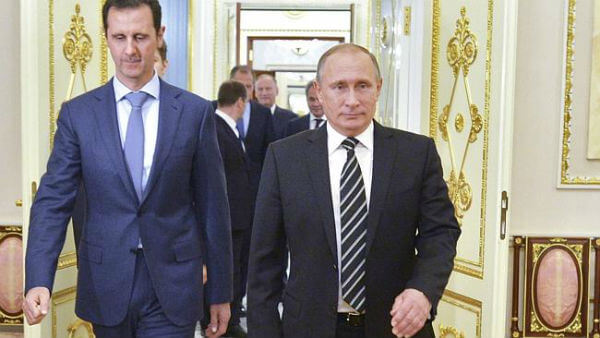
assad-putin

Atlantic Council: A new Atlantic Council report uses open-source data to debunk Russian claims that its military mostly struck Islamic State of Iraq and al-Sham (ISIS) targets, and links Russia to attacks on civilian facilities and the use of cluster bombs in Syria. So why haven’t Western governments that have more sophisticated intelligence capabilities employed similar technologies and techniques to counter Russian propaganda?

“Just as we saw an abuse of intelligence under the [George W.] Bush administration to make a case for specific action [in Iraq], I think you are seeing not as large an abuse but not proper use of intelligence right now because if they were to put this stuff out this would push their policy in a direction in which I don’t think they want to go,” said John E. Herbst, Director of the Atlantic Council’s Dinu Patriciu Eurasia Center.

Eliot Higgins, a Nonresident Senior Fellow at the Council’s Future Europe Initiative, said he didn’t think that the US government is using open-source data as much as one would assume. “In any bureaucratic establishment, it is going to take a long time for the wheels to turn and for this to be actually something that they do on a regular basis,” he said.

Herbst and Higgins are co-authors of the Atlantic Council report “Distract, Deceive, Destroy: Putin at War in Syria,” which was launched in Washington on April 5. [Continue reading…]

Facebooktwittermail

Saudi Arabia passes Russia as world’s third biggest military spender

The Washington Post reports: Global military spending reached almost $1.7 trillion in 2015, marking a year-on-year increase for the first time since 2011, according to the Stockholm International Peace Research Institute, which tracks arms expenditure around the world.

The United States remained far and away the top spender, which despite a dip from 2014, accounted for more than a third of total global spending. It was followed by China and then, perhaps surprisingly, Saudi Arabia, which supplanted Russia in third place. [Continue reading…]

Facebooktwittermail