When Saudi Arabia led an OPEC decision to end a restraint put on oil production in November 2014, it marked the beginning of a new era in oil economics. It has given us a tumbling oil price, prompted huge losses and job cuts at oil firms like BP and might yet give us economic and political drama in the heart of Moscow. To understand why, it’s worth drilling down to the start of the whole process, and the costs of getting oil out of the ground in the first place.
Historically, the OPEC cartel of oil-producing nations has been able to manage oil prices because of the lack of flexibility in global supply. The whole business of setting up wells, operating pipelines and building rigs entails large and long-term investments which makes producers slow to respond to price movements. And a small cut in OPEC supply can have a significant impact on the global oil price.
The advent of the US shale oil boom changed this dynamic. The industry has lower fixed costs but higher variable costs and is more like an industrial process than a major one-off investment. That makes it more responsive to price movements and more flexible in adjusting short-term output.
Overall though, shale is a relatively high cost source of oil, especially compared to Middle East production. As a result, when US shale threatened OPEC’s market share, the cartel allowed a position of global oversupply to develop. It was a simple trick: make oil prices fall to make shale unprofitable.
The New York Times reports: President Obama plans to substantially increase the deployment of heavy weapons, armored vehicles and other equipment to NATO countries in Central and Eastern Europe, a move that administration officials said was aimed at deterring Russia from further aggression in the region.
The White House plans to pay for the additional weapons and equipment with a budget request of more than $3.4 billion for military spending in Europe in 2017, several officials said Monday, more than quadrupling the current budget of $789 million. The weapons and equipment will be used by American and NATO forces, ensuring that the alliance can maintain a full armored combat brigade in the region at all times.
Though Russia’s military activity has quieted in eastern Ukraine in recent months, Moscow continues to maintain a presence there, working with pro-Russian local forces. Administration officials said the additional NATO forces were calculated to send a signal to President Vladimir V. Putin that the West remained deeply suspicious of his motives in the region.
“This is not a response to something that happened last Tuesday,” a senior administration official said. “This is a longer-term response to a changed security environment in Europe. This reflects a new situation, where Russia has become a more difficult actor.” [Continue reading…]
Huffington Post reports: As Syria peace talks begin in Geneva, America’s key partners on the ground feel neglected, excluded and increasingly receptive to a man who says the U.S has the war-torn country all wrong — Russian President Vladimir Putin.
Putin’s government this week used the process of deciding who would attend the negotiations to endear Russia to the Syrian Kurds, whose militia has chalked up high-profile victories against the self-described Islamic State group with U.S. air support.
Moscow repeatedly demanded that the talks should include the most powerful Kurdish political organization, the radically leftist PYD. Its co-president Salih Muslim said this week that the party — controversial among Western and Muslim-backed Syrian Arab nationalist groups — did not receive an invitation. The Middle East Eye reported Friday that he stopped by Geneva and then promptly left.
Conversely, Washington stayed relatively silent.
The Kurds now feel that though they have become close enough to the United States to host America’s Special Operations troops, receive U.S. weapons through a Pentagon-vetted program for an Arab-Kurdish rebel force and share Islamic State targets with American intelligence, the Obama administration abandoned them in the run-up to the high-profile talks, according to analysts close with Kurdish leaders.
“These talks started in a very troublesome manner with the Kurds not being there,” said Mutlu Civiroglu, a Washington-based analyst who monitors the Syrian Kurds. “Kurds being the pioneers of the fight against ISIS, having lost more than 4,000 fighters, were sure they were going to be invited.”
Michael Werz, a senior fellow at the Center for American Progress who just returned from a major Kurdish conference in Brussels, told The Huffington Post the current view among some in the PYD is, “we know that the Russians are going to betray us, but they’re the only ones actually lobbying for us to be part of the Geneva talks.”
“‘We are the only secular fighting force, we are the only movement giving freedom to women, and the United States doesn’t even stand up to the Turks when it comes to participating in the peace negotiations,” Werz added in his summing up of Kurdish sentiment. “‘Nobody is publicly supporting us, so what are we supposed to do?'”
Syria Direct reports: This past weekend, regime forces backed by “unprecedented Russian airstrikes” captured the last rebel stronghold of Jabel Turkman in northern Latakia, the director of the majority-Turkman, Free Syrian Army affiliated Second Army of the Coast’s media office told Syria Direct earlier this week.
For those fleeing the advance, the Syrian side of the Turkish border is as far as they can go. The border with Turkey in this area is no longer open, and anyone willing to cross must produce valid and current passports and identification.
Nearly six years into this war, documentation has expired, been destroyed or gotten lost. For young children, they were likely born with no birth certificates or any formal recognition that they exist. All of which begs the question posed by Abu Ahmed, who fled to the Turkish border from his home in Jabal al-Akrad after Russian airstrikes intensified and regime forces captured Salma. “Where do we go now?”
“Our children left school, there is no firewood or water, we are dying from the cold, and now we have become a target of the bombing since the regime is approaching,” said Abu Ahmad, who, along with his family slept in sewage pipes for the first two days after fleeing their mountain village.
“From the beginning, the regime has been taking revenge on civilians,” said Umr, the resident from Jabal Turkman now living in a north Latakia camp. [Continue reading…]
The Telegraph reports: Russian warplanes severely damaged a British-funded bakery in northern Syria a few hours before the facility was due to start providing food for 18,000 people.
Hundreds of civilians have been killed by Russian air strikes since the onset of the Kremlin’s intervention on Sept 30. The targets of Russian bombs have included mosques, field hospitals and schools – all of which should enjoy protection under international humanitarian law.
The raid on the rebel-held village of Hazano in Idlib province was the latest occasion when a British-funded humanitarian facility was hit. Eight people were killed – including three children – during this air strike on Jan 20.
The attack took place at around 3pm on the day the bakery was due to open. Russian warplanes fired two rockets into a residential apartment just 30ft from the bakery, killing two families inside and injuring over 100 people. [Continue reading…]
Aron Lund writes: Syria news right now is all about the peace process that is set to start on Friday in Geneva, Switzerland, despite its limited chances of success. But even as they talk, the parties continue to fight and the Russian-Iranian military intervention continues to wear down Syrian rebels. On September 30, the Russian Air Force dropped its first bombs in Syria. The government of Iran joined in by raising an expeditionary corps of Iranian, Iraqi, and Afghan Shia Islamists for the front south of Aleppo.
In a recent article for Vice News, the American freelance writer and Syria expert Sam Heller notes a flurry of desperate-sounding calls for outside support from rebels in northwestern Syria. Though most frontlines have held with little or limited change, four months of relentless Russian bombardment and offensives by the Syrian Arab Army and its Shia allies seem to have left the insurgents exhausted.
In early December, I tried to evaluate the extent of government progress in a post on Syria in Crisis. As far as I could tell, it was clear then that Assad stabilized his positions, but overall progress seemed underwhelming and the picture was mixed. We would have to wait and see.
Joshua Landis and Steven Simon write: Three months ago, Assad’s army was beleaguered. A large confederation of jihadist and Islamist militias calling themselves the Victory Army had achieved something resembling unity. Built around Syria’s two strongest militias — al-Nusra, al Qaeda’s Syria franchise; and Ahrar al-Sham, the most powerful Salafi militia in the country — the Victory Army conquered two strategic northern cities, Idlib and Jisr al-Shughour, in quick succession this spring. These victories attracted many other militias into their orbit and promised success. The expulsion of regime forces from Jisr al-Shughour not only meant the independence of Idlib more generally but put Latakia, a regime stronghold, in serious jeopardy. The new resistance army seemed to overcome the opposition’s chronic fragmentation; it was also well armed and supported by the region’s Sunni states.
But Assad’s greatest advantage — a fragmented opposition divided into more than 1,000 constantly feuding militias — seems to be back. Recently, over 20 rebel militia leaders have been assassinated, most by a breakaway faction of the Victory Army. The militias that the United States trained and armed at great expense have been crushed, not by Assad but by other rebels.
Meanwhile, Russia’s advanced aircraft, helicopters, and tanks have been pounding the Victory Army for months. Russian aircrews fly close to 200 sorties a day, allowing Assad and his allies to go on the offensive in both the north and south of Syria. Ahrar al-Sham has agreed to go to talks in Geneva, an about-face, after snubbing the UN envoy Staffan de Mistura as an Assad lackey only months ago. Al Qaeda’s Syria leader pronounced those who head to Geneva guilty of “high treason,” a clear death threat but also an indicator of clear anxiety. Another sign of desperation was the call put out by the Victory Army to foreign fighters to come join their ranks. Non-jihadist members of the coalition were infuriated by this tactic, which would inevitably associate them with the self-proclaimed Islamic State (also known as ISIS), and withdrew from the coalition. Assad, in short, is dividing his enemies and counting on his ability to pick off one at a time. [Continue reading…]
Financial Times reports: Just weeks before his death on January 3, Colonel-General Igor Sergun, director of Russia’s GRU military intelligence agency, was sent to Damascus on a delicate mission.
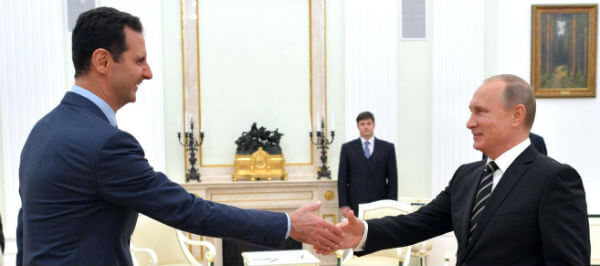
The general, who is believed to have cut his teeth as a Soviet operative in Syria, bore a message from Vladimir Putin for President Bashar al-Assad: the Kremlin, the Syrian dictator’s most powerful international protector, believed it was time for him to step aside.
Mr Assad angrily refused.
Two senior western intelligence officials have given the FT details of Sergun’s mission. The Russian foreign ministry referred a request for comment to the defence ministry, which said it was unable to comment.
Russia’s failed gamble in Damascus left Mr Assad more entrenched than before, and hopes for a diplomatic solution to the vicious civil war appear again to be ebbing away.
UN officials have spent the past week lowering expectations that the talks between the warring factions planned for January 25 in Geneva will go ahead, let alone produce a diplomatic breakthrough.
It is a dramatic reversal of fortunes. News of the secret proposal delivered by Sergun — a choreographed transition of power that would maintain the Alawite regime but open the door to realistic negotiations with moderate rebels — added to a growing mood of optimism among western intelligence agencies in late 2015. [Continue reading…]
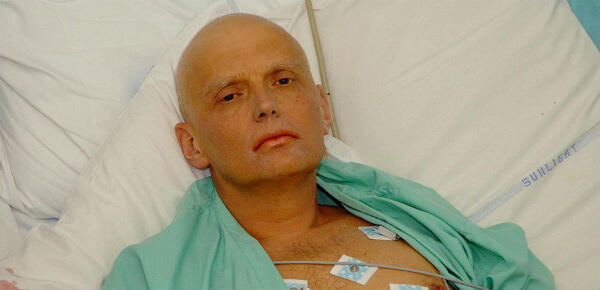
Following the release of the UK report on the 2006 death of Alexander Litvinenko, Julia Ioffe writes: It’s a salacious tale of revenge and espionage, straight out of a John le Carre novel: an F.S.B. man turned whistleblower meets in a posh London hotel with his former colleagues, who slip polonium 210 into his green tea. Investigators find a clump of debris laced with the radioactive stuff in a sink drainpipe a few floors above, near where one of the F.S.B. men was staying. The other suspected assassin gave Litvinenko’s wealthy benefactor, the banished oligarch Boris Berezovsky, a T-shirt that said, “nuclear death is knocking your door [sic].”
And yet, in Russia the report merited little more than a yawn. Immediately, the familiar reactions kicked in. Putin’s spokesman, Dmitry Peskov, said the report wasn’t of any interest to the Kremlin and, in a pointed turn of phrase, expressed regret that the report “only poisoned” relations between Russia and Britain. Maria Zakharova, spokeswoman for the Russian Foreign Ministry, called the findings “politicized,” and a report on the main evening-news program on Russia’s Channel One hinted that the British killed two key witnesses in the case. The British, in turn, said they would freeze the assets of Andrei Lugovoi and Dmitry Kovtun, the two former F.S.B. agents accused of poisoning Litvinenko. Theresa May, the British home secretary, said that the Russian ambassador to London was summoned for a talking-to.
All of this changes exactly nothing. Relations between Russia and Britain could hardly have been worse before the report was released, and Lugovoi and Kovtun haven’t been to London in ages — not since the British police fingered them in Litvinenko’s murder and sought their extradition, which Russia has flatly refused. Lugovoi now has immunity as a member of the Russian Parliament, as well as a medal from Putin for “service to the nation.” The murder itself took place nine years ago, and since then, the sordid details have become endlessly familiar. Even the le Carre comparison has become a nauseatingly common cliché, bandiedaboutendlessly since Litvinenko’s death.
It may be crass to be bored by the details of a man’s murder, but here we are. The West and Putin’s opponents at home believe that the Kremlin killed Litvinenko — that his death was a Cosa Nostra-style murder of a traitor. Putin loyalists and the masses who will see the news on Russian television believe this is all a Western ploy to tarnish Russia’s image. Nothing that came out in Judge Owen’s report will sway them; in fact, it only hardens the two positions. The same happened this summer with the release of another supposedly scandalous report on Russia’s nefarious deeds: The Dutch marshaled reams of evidence in the shooting down of Malaysia Airlines Flight 17 over eastern Ukraine, carefully laying it out in a report that pointed to Moscow’s role in the tragedy. The Russians pooh-poohed it and showed their own report on television, one that directly contradicted the Dutch investigation. Only 3 percent of Russians believe the Dutch narrative of the crash. [Continue reading…]
The Guardian reports: The former Russian spy Alexander Litvinenko was probably murdered on the personal orders of Vladimir Putin, the UK public inquiry into his death has found.
Litvinenko, who died from radioactive poisoning in a London hospital in November 2006, was killed by two Russian agents, Andrei Lugovoi and Dmitry Kovtun, the inquiry report said. There was a “strong probability” they were acting on behalf of the Russian FSB secret service, the report added.
Sir Robert Owen, the inquiry chair, said that taken as a whole the open evidence that had been heard in court amounted to a “strong circumstantial case” that the Russian state was behind the assassination.
But when he took into account all the evidence available to him, including a “considerable quantity” of secret intelligence that was not aired in open court, he found “that the FSB operation to kill Mr Litvinenko was probably approved by [Nikolai] Patrushev [head of the security service in 2006] and also by President Putin”.
Marina Litvinenko, Alexander’s widow, welcomed the report’s “damning finding” and called for the UK to impose sanctions on Russia, in a statement read outside the Royal Courts of Justice, where the inquiry took place. But she claimed she had been given indications that the UK would do nothing. [Continue reading…]
Luke Harding writes: The Soviet Union had a long tradition of bumping off its enemies. They included Leon Trotsky (ice-pick in the head), Ukrainian nationalists (poisons, exploding cakes) and the Bulgarian dissident Georgi Markov (ricin pellet fired from an umbrella, on London’s Waterloo Bridge). There was a spectrum. It went from killings that were demonstrative, to those where the KGB’s fingerprints were nowhere to be found, however hard you looked. Such murders were justified by what you might call Leninist ethics: they were necessary to defend the Bolshevik revolution, a noble experiment.
Under Boris Yeltsin these exotic killings mostly stopped. Moscow’s secret poisons lab, set up by Lenin in 1917, was mothballed. After 2000 though, with Putin in the Kremlin, such Soviet-style operations quietly resumed. Critics of Russia’s new president had an uncanny habit of ending up … well, dead. In power, Putin steered the country in an increasingly authoritarian direction, snuffing out most sources of opposition and dissent. The president’s fellow KGB comrades, once subordinate to the Communist party, were now in sole charge.
The murders of journalists and human rights activists could not be explained in terms of protecting socialism. Rather, the state was now synonymous with something else: the personal financial interests of Putin and his friends.
As an FSB officer in the 1990s, Litvinenko had been shocked to discover how thoroughly organised crime had penetrated Russia’s security organs. In his view, criminal ideology had replaced communist ideology. He was the first to describe Putin’s Russia as a mafia state, in which the roles of government, organised crime and the spy agencies had grown indistinguishable. [Continue reading…]
The murder of former Russian spy Alexander Litvinenko was one of the most high-profile assassinations of the decade. It particularly captured the public imagination because Litvinenko was killed using polonium-210, a rare but deadly substance that was thought to have been slipped into Litvinenko’s tea. Now a UK public inquiry has issued its findings on the case. But what is polonium?
Rare and radioactive
Polonium is a radioactive element that occurs naturally in tiny amounts (which are harmless to us). It was discovered in 1898 by Marie Curie, during her research on pitchblende, an ore of uranium. It has the chemical symbol “Po” and Curie named it after Poland, her native country. If you look at a periodic table, you’ll find polonium at the bottom of the group headed by oxygen and sulfur.
James Miller writes: The last two years have been rather tough for the Russian government’s main English-language propaganda outlet, RT.
Following Russia’s illegal and nearly-universally-condemned annexation of the Crimean peninsula, RT anchor Liz Wahl, then anchor and correspondent Sara Firth, quit in protest of what they called “propaganda” which they were forced to spread in order to cover up the Kremlin’s foreign policy activity.
AFP reports: Russian airstrikes in Syria have killed more than 1,000 civilians since they were launched almost four months ago, a monitoring organisation has said.
The raids, which started on 30 September, have killed 1,015 civilians, including more than 200 children, the Britain-based Syrian Observatory for Human Rights (SOHR) said on Wednesday.
The group, which relies on a network of sources on the ground for its reports, said the strikes had also killed 893 Islamic State jihadis and 1,141 other opposition militants, including members of al-Qaida affiliate al-Nusra Front.
The toll of 3,049 includes almost 700 deaths in just three weeks. [Continue reading…]
Reuters reports: Internationally brokered talks between Syria’s government and opposition groups due to start on Jan. 25 may be delayed, but major powers must keep up the pressure to bring participants to the table, the United Nations envoy said on Wednesday.
A Syrian opposition council backed by Saudi Arabia said on Wednesday it will not attend the negotiations in Geneva with the government if a third group takes part, a reference to a Russian bid to widen the opposition team.
U.N. Special Envoy Staffan de Mistura spoke in an interview with broadcaster CNN, hours after U.S. Secretary of State John Kerry and Russian Foreign Minister Sergei Lavrov held talks in Zurich despite no sign of agreement on who should represent the opposition. [Continue reading…]
Luke Harding writes: The Millennium hotel is an unusual spot for a murder. It overlooks Grosvenor Square, and is practically next door to the heavily guarded US embassy, where, it is rumoured, the CIA has its station on the fourth floor. A statue of Franklin D Roosevelt – wearing a large cape and holding a stick – dominates the north side of the square. In 2011 another statue would appear: that of the late US president Ronald Reagan. An inscription hails Reagan’s contribution to world history and his “determined intervention to end the cold war”. A friendly tribute from Mikhail Gorbachev reads: “With President Reagan, we travelled the world from confrontation to cooperation.”
The quotes would seem mordantly ironic in the light of events that took place just around the corner, and amid Vladimir Putin’s apparent attempt to turn the clock back to 1982, when the former KGB boss Yuri Andropov – the secret policeman’s secret policeman – was in charge of a doomed empire known as the Soviet Union. Next to the inscriptions is a sandy-coloured chunk of masonry. It is a piece of the Berlin Wall, retrieved from the east side. Reagan, the monument says, defeated communism. This was an enduring triumph for the west, democratic values, and for free societies everywhere.
Five hundred metres away is Grosvenor Street. It was here, in mid-October 2006, that two Russian assassins had tried to murder someone, unsuccessfully. The hitmen were Andrei Lugovoi and Dmitry Kovtun. Their target was Alexander Litvinenko, a former officer in Russia’s FSB spy agency. Litvinenko had fled Moscow in 2000. In exile in Britain he had become Putin’s most ebullient and needling critic. He was a writer and journalist. And – from 2003 onwards – a British agent, employed by MI6 as an expert on Russian organised crime. [Continue reading…]
The Washington Post reports: When you are a major nuclear power and you want to make a secretive deployment to a faraway ally, what is the first thing you do? Draw up the terms, apparently, and sign a contract.
That’s what the Kremlin did with Syria in August, according to an unusual document posted this week on a Russian government website that details the terms of its aerial support for Syrian President Bashar al-Assad.
Among other revelations in the seven-page contract dated Aug. 26, 2015, the Kremlin has made an open-ended time commitment to its military deployment in Syria, and either side can terminate it with a year’s notice.
Russian military personnel and shipments can pass in and out of Syria at will and aren’t subject to controls by Syrian authorities, the document says. Syrians can’t enter Russian bases without Russia’s permission. And Russia disclaims any responsibility for damage caused by its activities inside Syria. Since Russia’s bombing campaign started at the end of September, Assad’s forces have been able to recapture some territory from rebels, and much of the humanitarian aid to the country has come to a halt. A war that already looked intractable now seems more so. [Continue reading…]
The Telegraph reports: American intelligence agencies are to conduct a major investigation into how the Kremlin is infiltrating political parties in Europe, it can be revealed.
James Clapper, the US Director of National Intelligence, has been instructed by the US Congress to conduct a major review into Russian clandestine funding of European parties over the last decade.
The review reflects mounting concerns in Washington over Moscow’s determination to exploit European disunity in order to undermine Nato, block US missile defence programmes and revoke the punitive economic sanctions regime imposed after the annexation of Crimea.
The US move came as senior British government officials told The Telegraph of growing fears that “a new cold war” was now unfolding in Europe, with Russian meddling taking on a breadth, range and depth far greater than previously thought.
“It really is a new Cold War out there,” the source said, “Right across the EU we are seeing alarming evidence of Russian efforts to unpick the fabric of European unity on a whole range of vital strategic issues.”
A dossier of “Russian influence activity” seen by The Sunday Telegraph identified Russian influence operations running in France, the Netherlands, Hungary as well as Austria and the Czech Republic, which has been identified by Russian agents as an entry-point into the Schengen free movement zone.
The US intelligence review will examine whether Russian security services are funding parties and charities with the intent of “undermining political cohesion”, fostering agitation against the Nato missile defence programme and undermining attempts to find alternatives to Russian energy.
Officials declined to say which parties could come into the probe but it is thought likely to include far-right groups including Jobbik in Hungary, Golden Dawn in Greece, the Northern League in Italy and France’s Front National which received a 9m euro (£6.9m) loan from a Russian bank in 2014. [Continue reading…]
The Guardian reports: Russia is breaching all the norms of war by deliberately targeting rescue workers, schools and hospitals in Syria, the UK foreign secretary has claimed, accusing the Russians of running return raids on targets inside Syria solely to hit civilian rescue workers.
Philip Hammond levelled his charges after meeting Syrian civil defence workers in Adana, southern Turkey. The rescue workers are being trained by the Turks to extract the injured and dying from the rubble of buildings struck by Syrian regime bombs or Russian raids.
In probably his toughest condemnation of Russian tactics since Vladimir Putin surprised the west by intervening militarily in Syria at the end of September, Hammond said: “The Russians are deliberately attacking civilians, and the evidence points to them deliberately attacking schools and hospitals and deliberately targeting rescue workers.
“If you go back for a second strike you know what you are doing.”
The west has long argued Russia is not targeting Islamic State but instead opponents of the Assad regime, but this is the furthest Hammond has gone in condemning the tactics of Russian pilots. [Continue reading…]
This website or its third-party tools use cookies, which are necessary to its functioning. By closing this banner, you agree to the use of cookies.